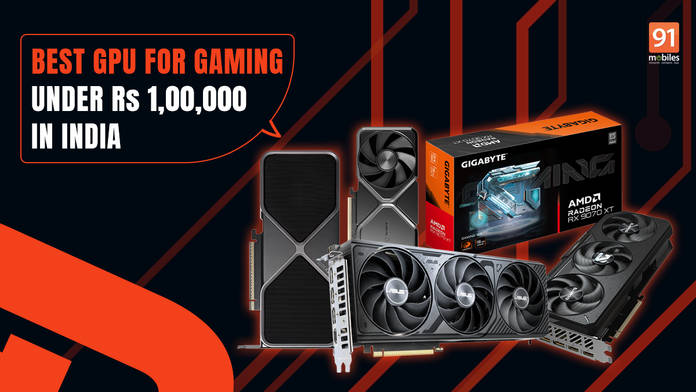
Buying a graphics card in India in May 2026 requires making peace with two uncomfortable facts: the best card for the money is not from NVIDIA, and the prices you’re paying are nowhere near what the rest of the world is.
In the span of a few months, NVIDIA launched the RTX 50-series Blackwell cards with DLSS 4 and Multi Frame Generation, AMD responded with the RDNA 4 architecture in the form of the RX 9070 and RX 9070 XT, and prices on the previous Ada Lovelace generation have dropped sharply enough that several of those cards have become genuinely compelling value propositions.
The result is a market where knowing the spec sheet is not enough. You also need to know what each card actually costs in India, where to buy it, how it benchmarks relative to the competition, and which compromises you are making at each price point.
In this guide, we cover all of that. We looked at four graphics cards available in India right now, all within the Rs 1,00,000 ceiling, ranked them by synthetic benchmark performance, and added real gaming context drawn from our own internal testing and published reviews from outlets like GamersNexus and PCGuide.
Table of Contents
1. AMD Radeon RX 9070 XT
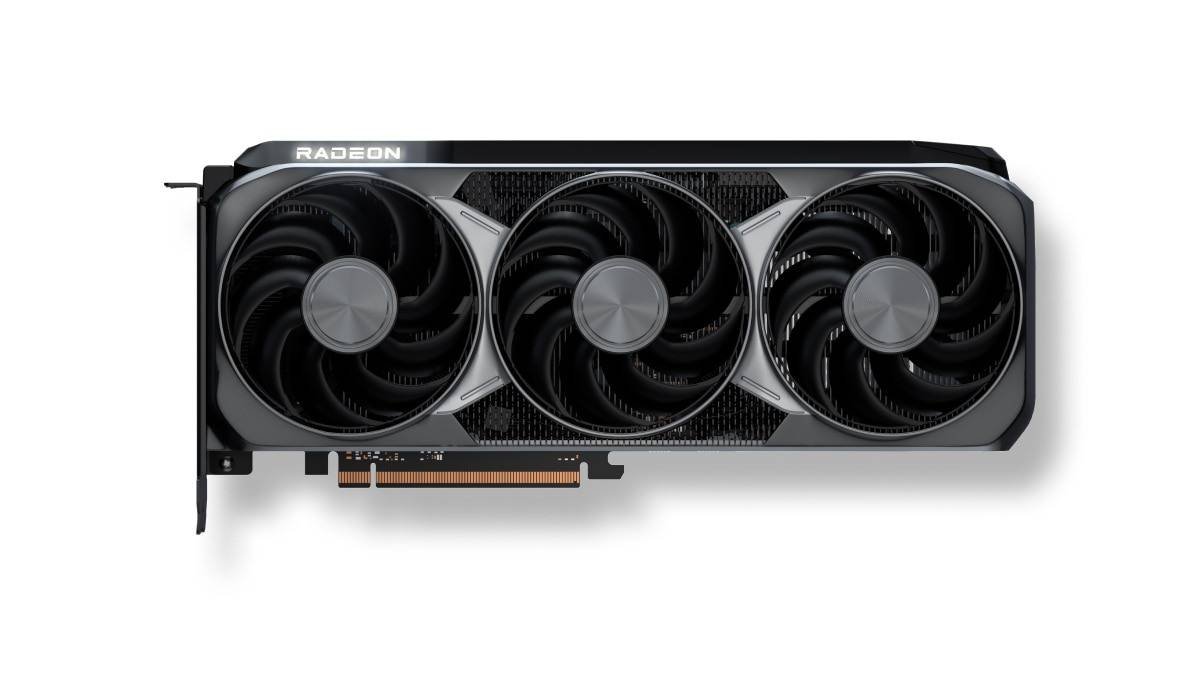
- Architecture: RDNA 4
- VRAM: 16GB GDDR6
- TBP: 304W
This is the card that genuinely shifted the conversation about AMD’s place in the mid-range. The RX 9070 XT arrived in March 2025 with wide availability, competitive pricing, and performance numbers that put real pressure on NVIDIA’s lineup at this tier.
In our internal testing, it posted a 3DMark Time Spy score of 22,554 and a Time Spy Extreme of 14,219, placing it in direct competition with the RTX 5070 in synthetic workloads. Fire Strike came in at 48,556 and Port Royal at 18,297.
In gaming, the numbers are strong across the board. Cyberpunk 2077 at 1440p native delivered 133 fps, climbing to 219 fps with FSR Balanced. At 4K native, it posted 63 fps, rising to 95 fps with FSR. Enable RT Overdrive, and the figures drop to 56 fps at 1440p and 28 fps at 4K, which is consistent with AMD’s historically weaker ray tracing performance. With FSR Frame Generation at 2x, the card recovered to 109 fps at 1440p and 55 fps at 4K.
God of War Ragnarok gave us 138 fps at 1440p native, 87 fps at 4K native, and a very healthy 245 fps at 1440p and 123 fps at 4K with frame generation active. Red Dead Redemption 2, a rasterisation-favourable title for AMD, returned 156 fps at 1440p native and 191 fps with FSR. Indiana Jones came in at 120 fps at 1440p native and 84 fps at 4K. Black Myth: Wukong, one of the most punishing titles in our test suite, posted 78 fps at 1440p native, 86 fps at 4K native, and 97 fps at 4K with FSR. Forza Horizon 5 delivered 205 fps at 1440p and 152 fps at 4K with RT Extreme settings active.
The ray tracing numbers are where you’ll want to temper expectations. At 4K with RT Overdrive in Cyberpunk, the card dropped to 28 fps, playable only with upscaling assistance. Indiana Jones with full RT at 4K came in at 19 fps native and 11 fps with frame generation, which reflects how demanding path tracing has become and how AMD’s RT hardware compares to NVIDIA’s at this tier. For players who run ray tracing selectively or not at all, none of this changes the value proposition. For those who want RT on at all times, it is a genuine consideration.
The 16GB of GDDR6 on a 256-bit bus is a differentiator that only grows more relevant over time. Several AAA titles at 4K with high texture settings have started exceeding 12GB in peak VRAM usage, and that trend is not reversing. The 9070 XT has headroom that 12GB cards do not. Whether it matters today in every game you play depends on your specific library, but as a two-to-three-year purchase, the extra VRAM is a buffer worth having.
FSR 4, AMD’s latest upscaling implementation, is meaningfully better than FSR 3 and narrows the quality gap with DLSS 4 in supported titles. It is not a full equivalent, but it is no longer the clear second choice it once was.
One practical note: stock unpredictability has been a consistent issue for the 9070 XT in the Indian market. Entry-level variants sell through quickly, and pricing on remaining stock can creep upward. The Rs 71,000 figure reflects the lowest verified listings at the time of writing. Check actual availability before building a budget around that number.
Where to buy in India:
- Elitehubs: From Rs 71,095 to Rs 1,05,000 depending on variant
- PrimeABGB: Multiple variants in stock
- MDComputers: Multiple brands in stock
Key Specs:
- Architecture: RDNA 4
- Compute Units: 64
- VRAM: 16GB GDDR6, 256-bit
- Boost Clock: Up to 3,060 MHz
- TBP: 304W
- 3DMark Time Spy: 22,554 (internal testing)
- 3DMark Time Spy Extreme: 14,219 (internal testing)
- 3DMark Fire Strike: 48,556 (internal testing)
- 3DMark Port Royal: 18,297 (internal testing)
2. NVIDIA GeForce RTX 5070
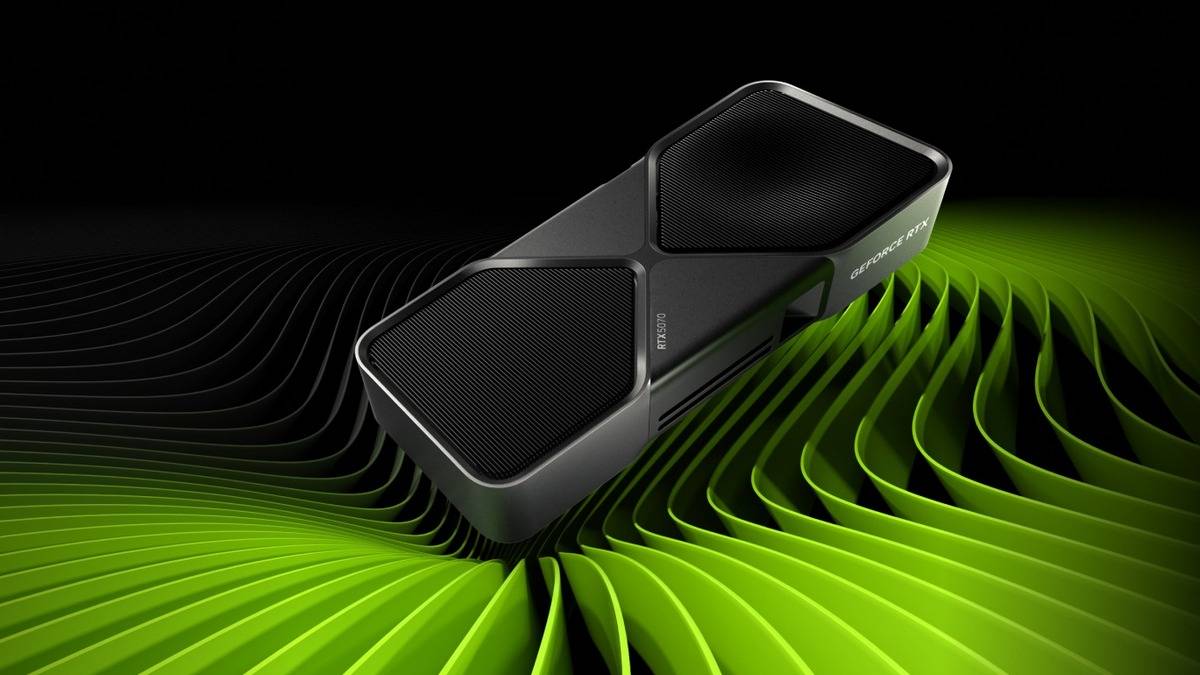
- Architecture: Blackwell (GB205)
- VRAM: 12GB GDDR7
- TBP: 250W
The RTX 5070 is a genuinely capable graphics card that gets more complicated the more closely you examine its position in the market. It ships with 12GB of GDDR7 while the AMD competition offers 16GB, and in rasterisation, it trails the RX 9070 XT in most scenarios. What it offers in return is the NVIDIA software ecosystem, and specifically, DLSS 4 with Multi Frame Generation.
In synthetic testing, our GIGABYTE RTX 5070 posted a 3DMark Time Spy score of 22,274 against the RX 9070 XT’s 22,554 ie. the two cards are essentially level in that benchmark. Time Spy Extreme tells a more differentiated story: the 5070 scored 11,146 against the 9070 XT’s 14,219, a 27 percent gap that reflects AMD’s stronger compute architecture at higher-resolution synthetic workloads. Fire Strike came in at 41,488 and Port Royal at 14,207.
In gaming, the native rasterisation numbers favour AMD in most titles. Cyberpunk 2077 at 1440p native delivered 111 fps on the RTX 5070, versus 133 fps on the RX 9070 XT. At 4K native, the 5070 posted 50 fps against the 9070 XT’s 63 fps. God of War Ragnarok at 1440p native came in at 119 fps, Red Dead Redemption 2 at 128 fps, and Black Myth: Wukong at 69 fps. Forza Horizon 5 delivered a strong 164 fps at 1440p native and 121 fps at 4K native.
The NVIDIA card makes its ground back with DLSS and MFG. Cyberpunk at 1440p with DLSS Balanced rose to 152 fps, and with MFG 4x active it hit 181 fps. At 4K with MFG 4x, it reached 123 fps. Alan Wake 2 with RT Ultra and MFG 4x returned 155 fps at 1440p and 86 fps at 4K. God of War, with frame generation, reached 216 fps at 1440p. Black Myth: Wukong with MFG 4x posted 132 fps at 1440p and 113 fps at 4K, and Forza with frame generation hit 216 fps at 1440p and 151 fps at 4K.
Ray tracing is where the RTX 5070 holds a consistent lead. Cyberpunk with RT Overdrive at 1440p returned 60 fps on the NVIDIA card against 56 fps on the 9070 XT. Spider-Man 2, a title not in our 9070 XT dataset, posted 78 fps at 1440p with RT Ultimate and 61 fps at 4K, climbing to 114 fps and 68 fps, respectively, with frame generation active.
The key context here is what MFG actually measures. When the RTX 5070 posts 181 fps in Cyberpunk at 1440p with MFG 4x, the card is rendering roughly 45 frames and generating the rest algorithmically. The rendered fps figure,111 fps native at 1440p, is the meaningful number when comparing raw GPU performance head-to-head with the RX 9070 XT’s 133 fps. MFG adds real smoothness in single-player scenarios at the cost of increased latency, which is a reasonable tradeoff outside competitive multiplayer.
For competitive gaming at high refresh rates where smoothness and low latency must coexist, the RTX 5070 with DLSS 4 is a strong pick. For visual fidelity-focused gaming where native resolution and minimal upscaling are the priority, the RX 9070 XT is more powerful at an equal or lower price.
On Indian pricing: the Rs 60,000 figure reflects select lower-spec variants listed at Elitehubs as of May 2026. Several listings show inflated “original price” tags with heavily discounted display prices that may not reflect genuine available stock. Realistic expectation for most variants is Rs 70,000 to Rs 80,000.
Where to buy in India:
- Elitehubs: From Rs 60,000 (select variants) to Rs 93,000+
- MDComputers: In stock across multiple brands
- PrimeABGB: Multiple models listed
Key Specs:
- Architecture: Blackwell GB205x
- CUDA Cores: 6,144
- VRAM: 12GB GDDR7
- Boost Clock: 2,512 MHz
- TBP: 250W
- 3DMark Time Spy: 22,274 (internal testing)
- 3DMark Time Spy Extreme: 11,146 (internal testing)
- 3DMark Fire Strike: 41,488 (internal testing)
- 3DMark Port Royal: 14,207 (internal testing)
3. NVIDIA GeForce RTX 4070 Ti Super
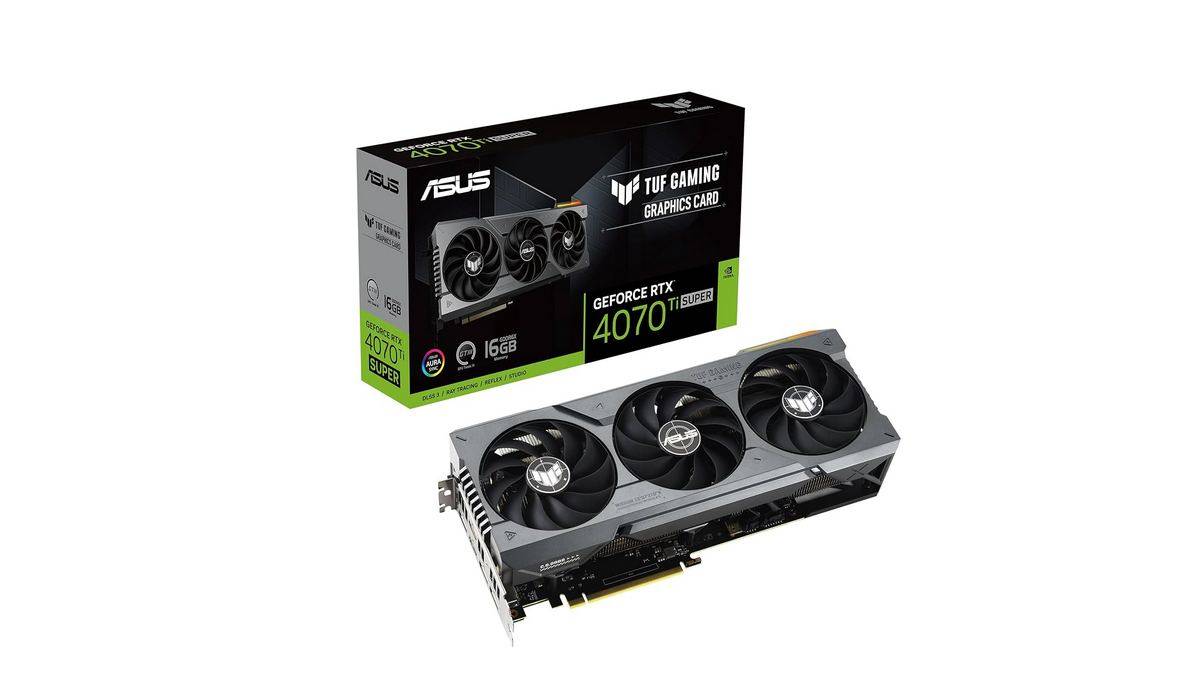
- Architecture: Ada Lovelace (AD103)
- VRAM: 16GB GDDR6X
- TBP: 285W
The RTX 4070 Ti Super launched in January 2024 as NVIDIA’s upper mid-range refresh within the Ada Lovelace lineup. It remains a capable card in 2026, but its current Indian pricing puts it in a difficult position relative to the RX 9070 XT.
In synthetic benchmarks, the ASUS TUF RTX 4070 Ti Super achieved a 3DMark Time Spy score of 21,297, which places it roughly 4 percent behind our RX 9070 XT’s internal Time Spy result of 22,554. In Fire Strike, the same card scored 42,724 at 1080p, 26,435 at 1440p (Extreme), and 14,209 at 4K (Ultra).
In gaming, the card performs well across a range of titles. In GamersNexus testing, it delivered 62 fps avg in Starfield at 4K and 129 fps avg in Final Fantasy XIV at 1440p. With ray tracing and upscaling in Resident Evil 4 at 4K, it hit 101 fps avg ie. 22% ahead of the RTX 4070 Super in the same test. At 1440p in RE4 with RT and DLSS, it reached 165 fps avg.
Tom’s Hardware measured 55 fps avg in Alan Wake 2 at 1440p with full path tracing, noting it was one of the few sub-$1,000 cards to remain playable in that scenario. In Worthplaying’s testing, Forspoken at 1440p without ray tracing averaged 111 fps, rising to 137 fps with DLSS and dropping to 88 fps with RT enabled.
The AD103 chip with 8,448 CUDA cores and 16GB of GDDR6X on a 256-bit bus gives it the same VRAM headroom as the RX 9070 XT. The memory bandwidth upgrade over the original 4070 Ti, from 192-bit to 256-bit, is what makes the card meaningfully stronger at 4K, where that extra bus width and framebuffer capacity translate into real gains over its predecessor.
The pricing problem remains clear: at Rs 73,000, it sits almost level with the RX 9070 XT, a newer card that outperforms it in synthetic benchmarks and most native rasterisation scenarios. The case for the 4070 Ti Super is the NVIDIA ecosystem, including DLSS 3 frame generation, NVIDIA Broadcast, and broader software integration, rather than raw performance per rupee. At Rs 70,000 or below, that case becomes easier to make.
Where to buy in India:
- Elitehubs: From Rs 73,000 to Rs 91,000+
- PrimeABGB: Multiple variants listed
- MDComputers: Available across brands
Key Specs:
- Architecture: Ada Lovelace AD103
- CUDA Cores: 8,448
- VRAM: 16GB GDDR6X
- Memory Bus: 256-bit
- Boost Clock: 2,610 MHz
- TBP: 285W
- 3DMark Time Spy: 21,297
- 3DMark Time Spy Extreme: 10,364
- 3DMark Fire Strike (1080p): 42,724
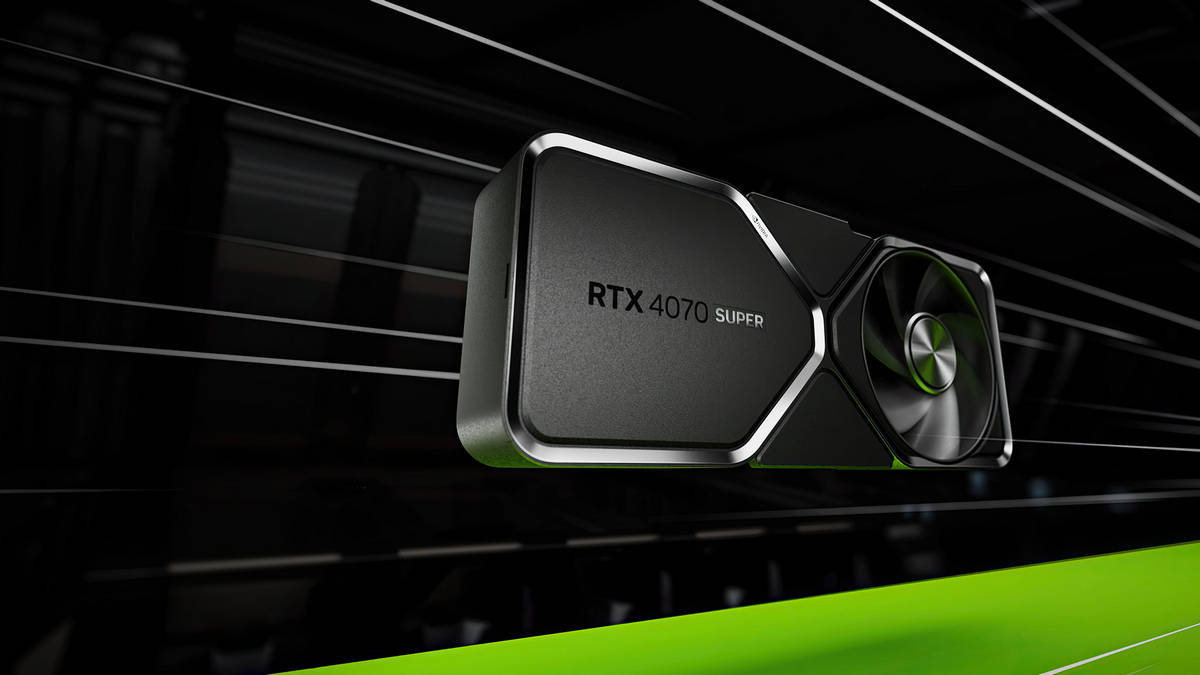
4. NVIDIA GeForce RTX 4070 Super
- Architecture: Ada Lovelace (AD104)
- VRAM: 12GB GDDR6X
- TBP: 220W
The RTX 4070 Super is the only card on this list that sits comfortably below the Rs 70,000 mark, and that gap matters more than it might initially appear. At Rs 57,000 to Rs 60,000, it opens up meaningful headroom in a build budget for a better monitor, faster storage, or more RAM.
In synthetic benchmarks, the RTX 4070 Super Founders Edition scored 9,830 in 3DMark Time Spy Extreme, compared to 8,610 on the original 4070 and 10,624 on the 4070 Ti, placing it cleanly between the two in compute workloads.
In gaming, the card’s 1440p performance is its clearest selling point. Engadget recorded 157 fps avg in Cyberpunk 2077 at 1440p with Overdrive ray tracing and DLSS enabled, a result that demonstrates how much DLSS 3 can recover in RT-heavy workloads. At 4K with DLSS in Cyberpunk, Engadget measured 78 fps avg; native 4K without upscaling came in at around 38 fps, which reflects the card’s real 4K ceiling in demanding titles. Halo Infinite at 1440p with maxed settings, no DLSS, delivered 160 fps avg.
KitGuru’s testing of Alan Wake 2 at 1440p returned 58 fps avg, just 5 percent behind the RTX 4070 Ti in the same test, and Forza Horizon 5 at 1440p averaged 137 fps, a 16% lead over the vanilla RTX 4070. TechSpot recorded 140 fps avg in Resident Evil 4 at 1440p. In PCGamesN’s testing, Avatar: Frontiers of Pandora delivered 100 fps at 1080p and 66 fps at 1440p, with the card consistently placing between the 4070 and the 4070 Ti across the test suite.
The efficiency argument is real. At 220W TBP, it draws 30 fewer watts than the RTX 5070 and 65 fewer than the RX 9070 XT. In a smaller case or a system on an older PSU, that distinction matters. The 12GB VRAM is a genuine long-term limitation for some 2026 titles at 4K with maximum textures pushing against that ceiling. But at 1440p, it remains a non-issue for most games currently available.
Where to buy in India:
- Elitehubs: From Rs 57,000 to Rs 68,000
- MDComputers: Listed across multiple brands
- PrimeABGB: Multiple in-stock variants
Key Specs:
- Architecture: Ada Lovelace AD104
- CUDA Cores: 7,168
- VRAM: 12GB GDDR6X
- Memory Bus: 192-bit
- Boost Clock: 2,475 MHz
- TBP: 220W
- 3DMark Time Spy Extreme: 9,830
Final Thoughts
If you want the best raw gaming performance under Rs 1,00,000 in India right now and have no strong reason to stay within the NVIDIA ecosystem, the RX 9070 XT is the clear recommendation. It leads on synthetic benchmarks, ships with 16GB of VRAM, and is available at prices that match or undercut both the RTX 5070 and RTX 4070 Ti Super. The only genuine caveat is ray tracing performance, where NVIDIA maintains an advantage that matters specifically when RT is enabled.
If DLSS 4 with Multi Frame Generation is important to you, for competitive gaming on high-refresh displays, for smooth single-player experiences, or because you use NVIDIA’s broader software tools, the RTX 5070 is the pick. You are accepting lower rasterisation performance and less VRAM in exchange for an ecosystem and frame generation system that AMD cannot fully match today.
The RTX 4070 Ti Super is worth buying at Rs 70,000 or below, primarily for NVIDIA ecosystem users or those with a specific need for Ada Lovelace’s DLSS 3 implementation. At Rs 73,000 and above, the RX 9070 XT is a better card for less money.
The RTX 4070 Super at Rs 57,000 to Rs 60,000 delivers the strongest rupee-per-frame value on this entire list. It handles 1440p gaming comfortably, runs efficiently, and leaves meaningful room in the overall build budget. If the goal is to maximise the total gaming experience per rupee spent across the whole system, not just on the GPU, this is where to start.