The television space in India has become the ultimate battleground for brands. You have premium OLEDs winking at buyers with their perfect blacks, budget LEDs begging to be picked up for everyday viewing, and a whole bunch of QLEDs squeezing themselves into the middle, trying to strike that balance of affordability and wow factor. The Blaupunkt 55QC7025 is one such warrior.
It walks into the ring flaunting a 55-inch QLED panel, 4K resolution, Dolby Atmos-certified speakers, and the ever-popular Google TV platform. All while being priced at under Rs 30,000, which is a steal compared to big-brand QLEDs. But the question is, does it deliver the magic it promises, or does it buckle under the compromises that naturally come at this price point? Time to find out.
Table of Contents
Key Specifications
Before we dive into the review, here’s a quick look at the specifications of this TV.
- Screen: 55-inch QLED
- Resolution: 3840 × 2160 (4K Ultra HD)
- Refresh Rate: 60 Hz
- Backlighting: Direct LED / Direct Lit (no local dimming zones)
- Brightness: ~450 nits
- HDR Support: HDR10, Wide Colour Gamut
- Dolby Vision: Yes
- Dolby Atmos: Yes
- Speakers: 4 speakers, 70W RMS output
- CPU / Chipset: Quad-core ARM Cortex-A55
- RAM: 2 GB
- Storage: 16 GB
- Operating System: Google TV (2025 Edition)
- HDMI Ports: 3 (1 with ARC/eARC)
- USB Ports: 2
- In the Box: TV unit, remote, wall mount kit, manual, batteries
Where the Blaupunkt 55QC7025 Shines
First things first: design and build. The Blaupunkt 55QC7025 doesn’t look like a cheap TV, which is a big win at this price point. The bezels are slim, and the stance is confident, whether you put it on its tabletop stand or mount it on a wall. On the whole, it just blends seamlessly into most living rooms or bedrooms without looking out of place. Sure, if you compare it side by side with something like a Samsung Frame, you’ll notice that the materials aren’t as refined, but for under 30K, you’re still getting a set that feels reassuringly sturdy.
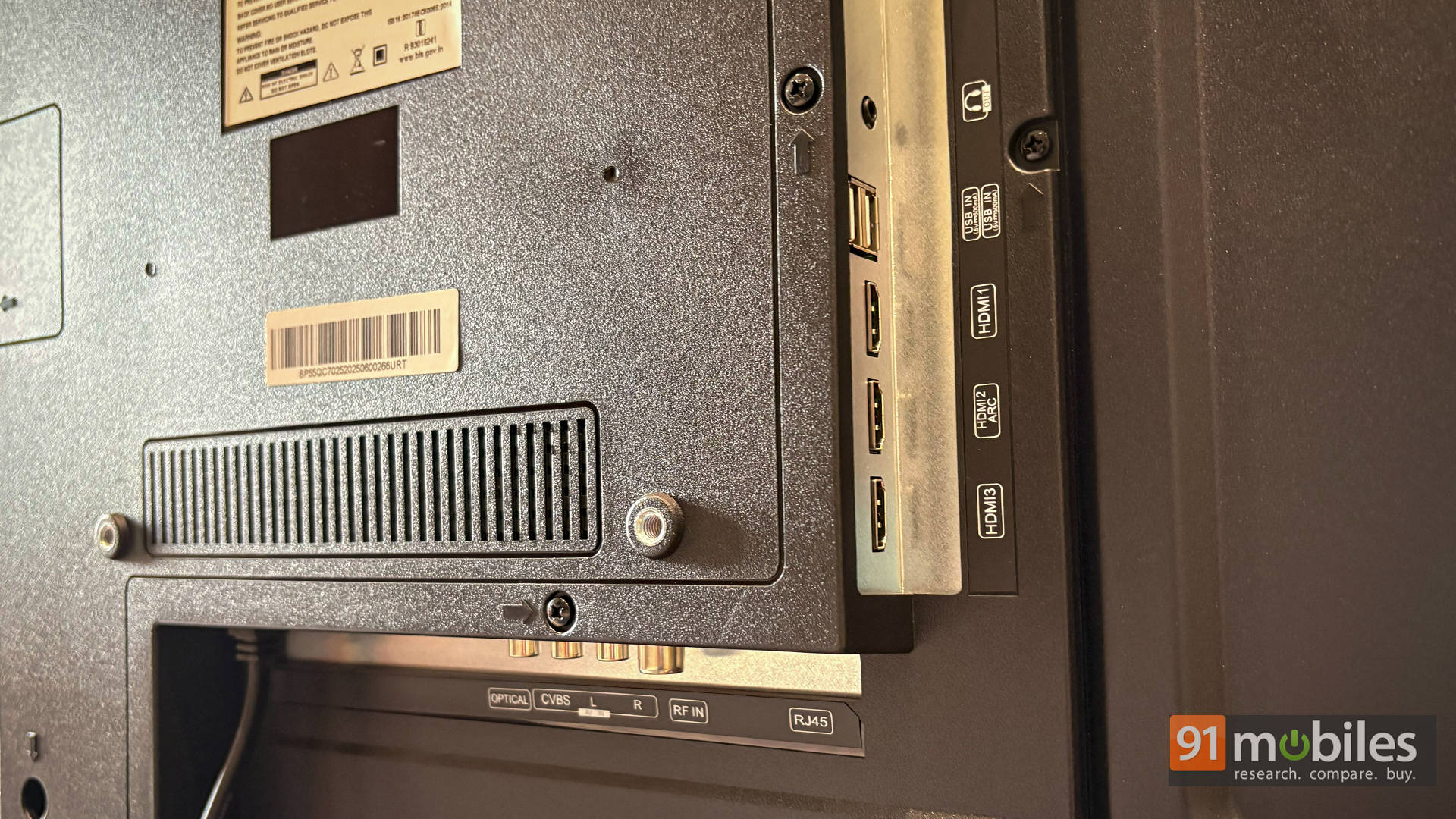
Moving to the ports and connectivity, you’re given the basics and just enough flexibility for a household setup. Three HDMI ports (one with ARC), two USB slots, optical audio, Ethernet, Bluetooth, and dual-band Wi-Fi. For most people, that’s all they’ll ever need. Connect a Fire TV Stick or a console, a soundbar if you want to, and you’re good. That said, gamers may feel a pang of disappointment because the HDMI standard here doesn’t unlock advanced gaming features like ALLM or VRR. But we’ll get to that later.
The Display Doesn’t Disappoint
Now, the real charm of this TV is its QLED 4K panel. Rated at 450 nits, the display is impressively bright for its class. What does that mean in the real world? Well, imagine watching Avatar: The Way of Water in the afternoon with sunlight filtering through the curtains. On a regular LED, you’d be squinting at blue hues that look washed out. On this Blaupunkt QLED, however, the colours hold their ground. The water sequences shimmer, the bright tones stand out, and you don’t feel like you need blackout curtains just to enjoy a movie.
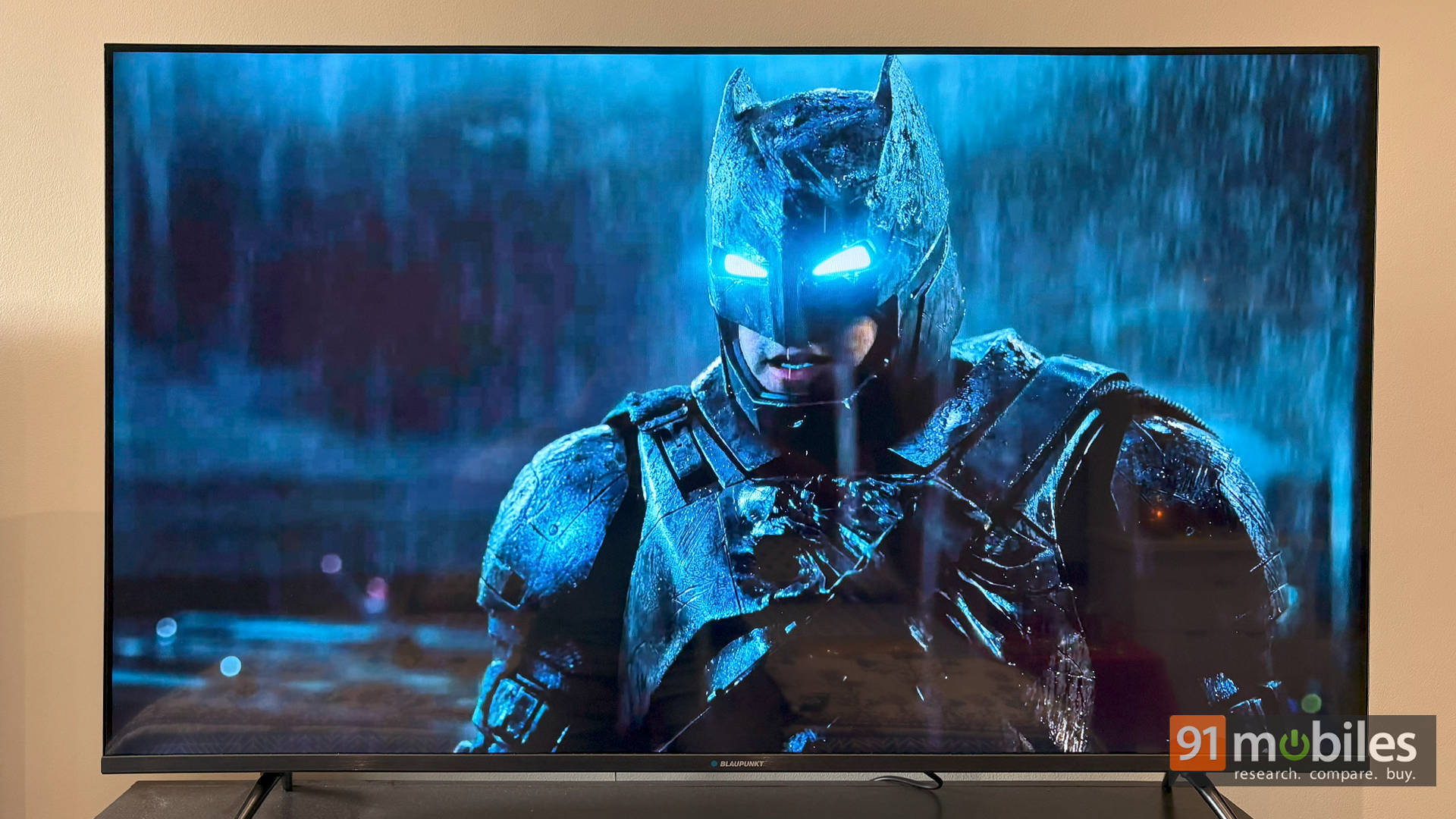
And then comes HDR. The TV supports HDR10 and makes good use of it. Bright highlights pop nicely, and reflections don’t get completely blown out. Yes, blacks aren’t OLED-level deep, but the contrast is still respectable. In a dimly lit room, you can enjoy dark dramas like The Batman without feeling like Gotham’s alleys have turned into grey mush. The recent Tron: Ares trailer also looks quite good, with the reds popping off nicely, so that’s good. That balance of brightness and contrast is what makes this panel one of the better HDR performers in its price bracket.
Audio That Rivals Soundbars?
Then there’s audio, which honestly deserves its own round of applause. Blaupunkt has packed in a 70W, four-speaker setup with Dolby Atmos tuning, and it shows. The soundstage is wider than you’d expect. In a movie like Dune: Part Two, the heavy drums and chants come through with authority, while dialogue remains clear even during chaotic battle sequences. The volume goes up loud without distortion, which is something you rarely find on built-in TV speakers. No, it’s not going to rival a dedicated soundbar with a subwoofer, but here’s the thing: for many casual households, it genuinely makes a soundbar optional. And that’s saying something.
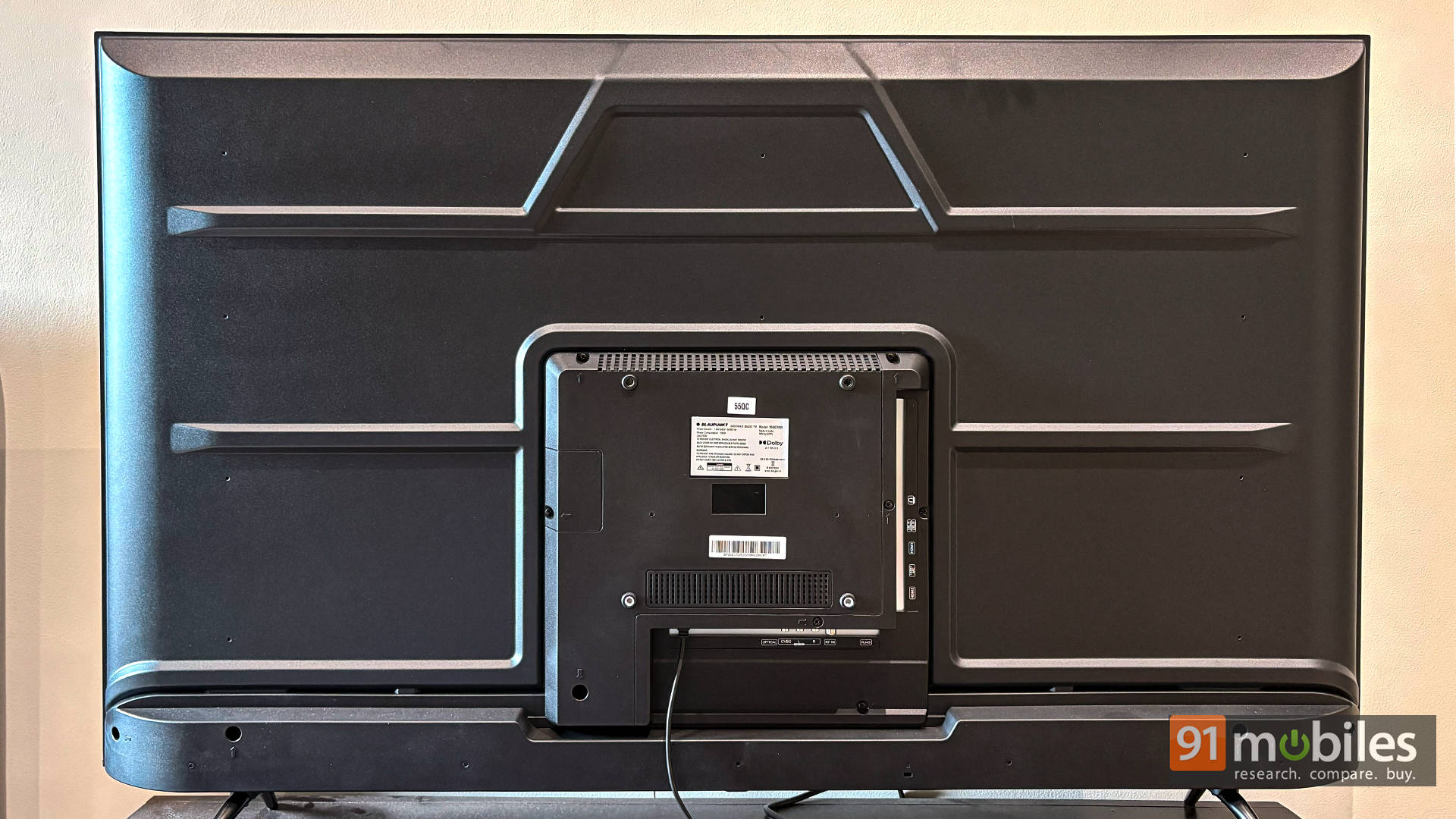
Put it all together, and you have a TV that, for everyday streaming like Netflix marathons, IPL nights, and family YouTube sessions, delivers a vibrant, lively experience that feels like it should cost more than it does.
Where the Shine Starts to Fade
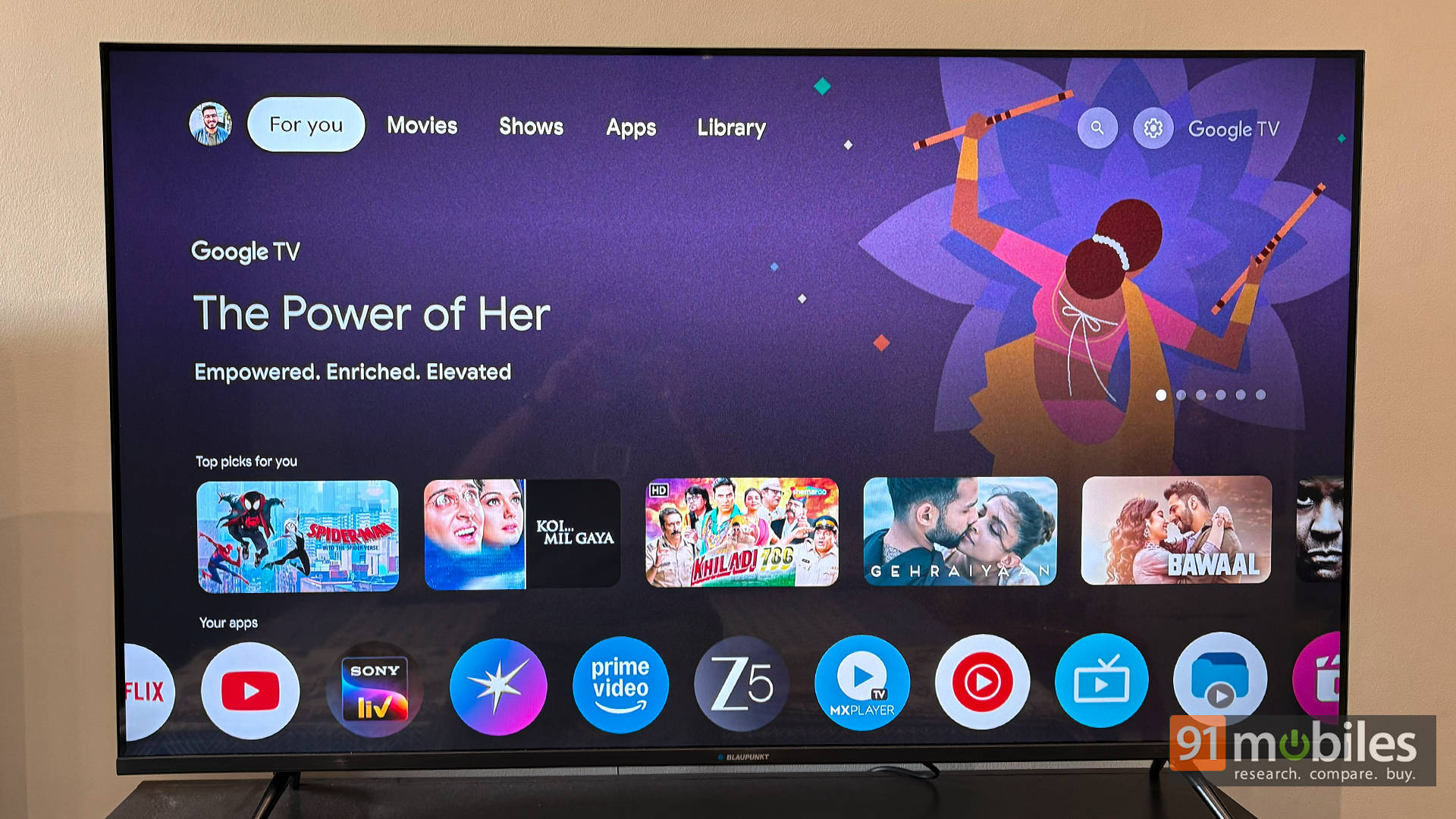
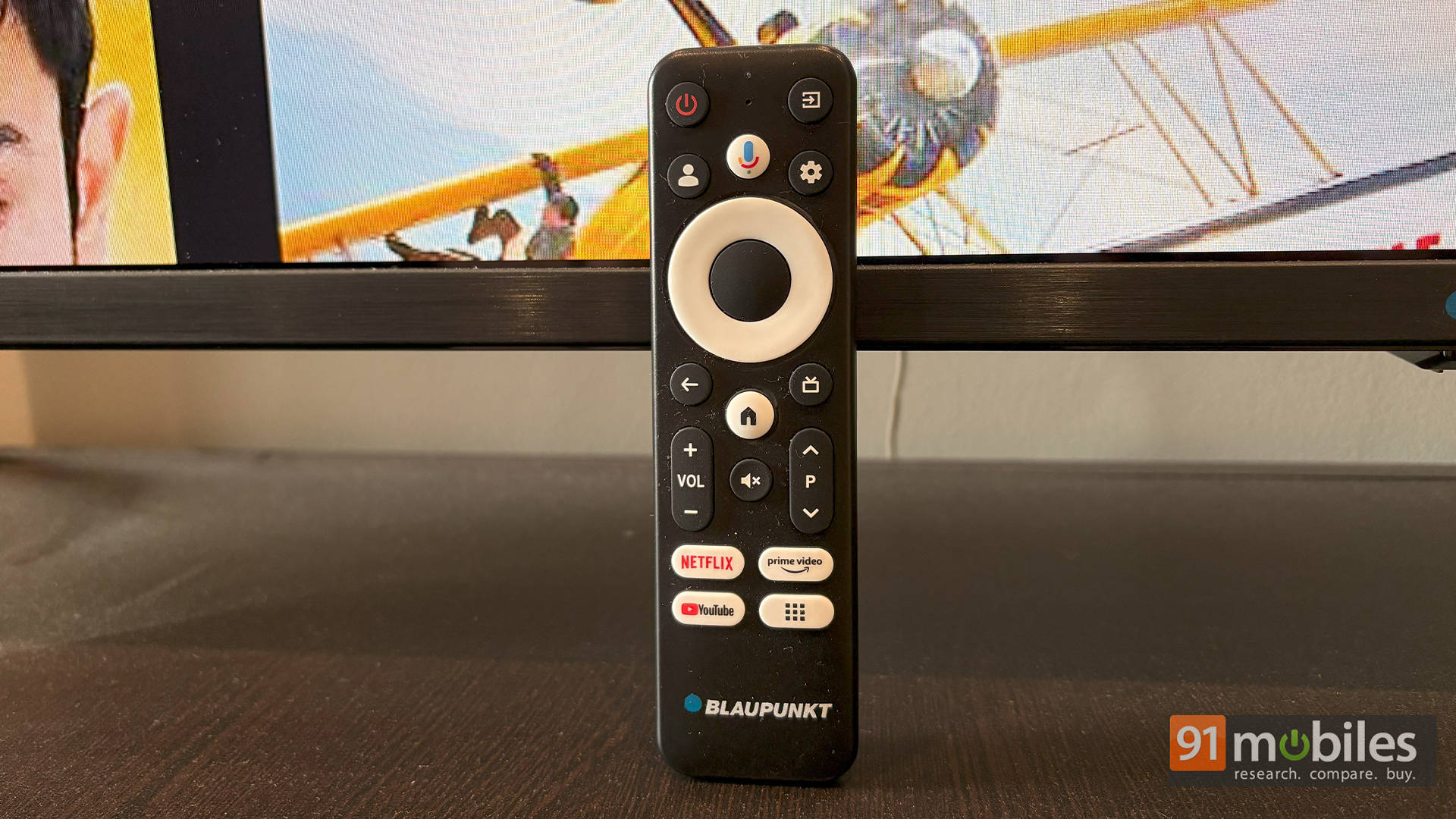
Of course, not everything shines equally. Let’s start with software performance. The TV runs on Google TV, which means you get the full package: app support for Netflix, Prime Video, JioHotstar, Apple TV+, Chromecast built-in, and Google Assistant. The interface is modern, content recommendations are helpful, and voice search works well. That being said, a quad-core Cortex-A55 CPU with 2GB of RAM and 16GB of storage just isn’t powerful enough to make the experience buttery smooth. Switching between apps feels a tad sluggish, and scrolling through menus occasionally stutters.
Now, to be fair, this is something you’ll notice most when you’re in a hurry or when multiple apps are running in the background. If you’re the kind of person who launches Netflix, picks a show, and just watches, you may never be bothered. But if you’re used to premium Android or Google TVs that respond instantly, you’ll notice the difference. That’s one area where we feel that the Lumio Vision 7 is still unmatched, since most other budget TVs still offer mediocre performance at best.
Upscaling & Motion Handling Will Raise Some Eyebrows
Then there’s upscaling and motion handling. When playing native 4K content, the actual experience is actually pretty good. Fire up Our Planet on Netflix, and the crisp details of fur, leaves, and water drops look stunning. But throw in an old SD broadcast of a daily soap or a 480p YouTube upload, and things fall apart quickly. The AI upscaler here simply doesn’t have the finesse to clean up low-res feeds. Edges look soft, motion can get jittery, and sometimes you’ll see a bit of noise. Effectively, on this TV, 720p looks passable, 1080p is decent, but you’ll always know it’s not true 4K.
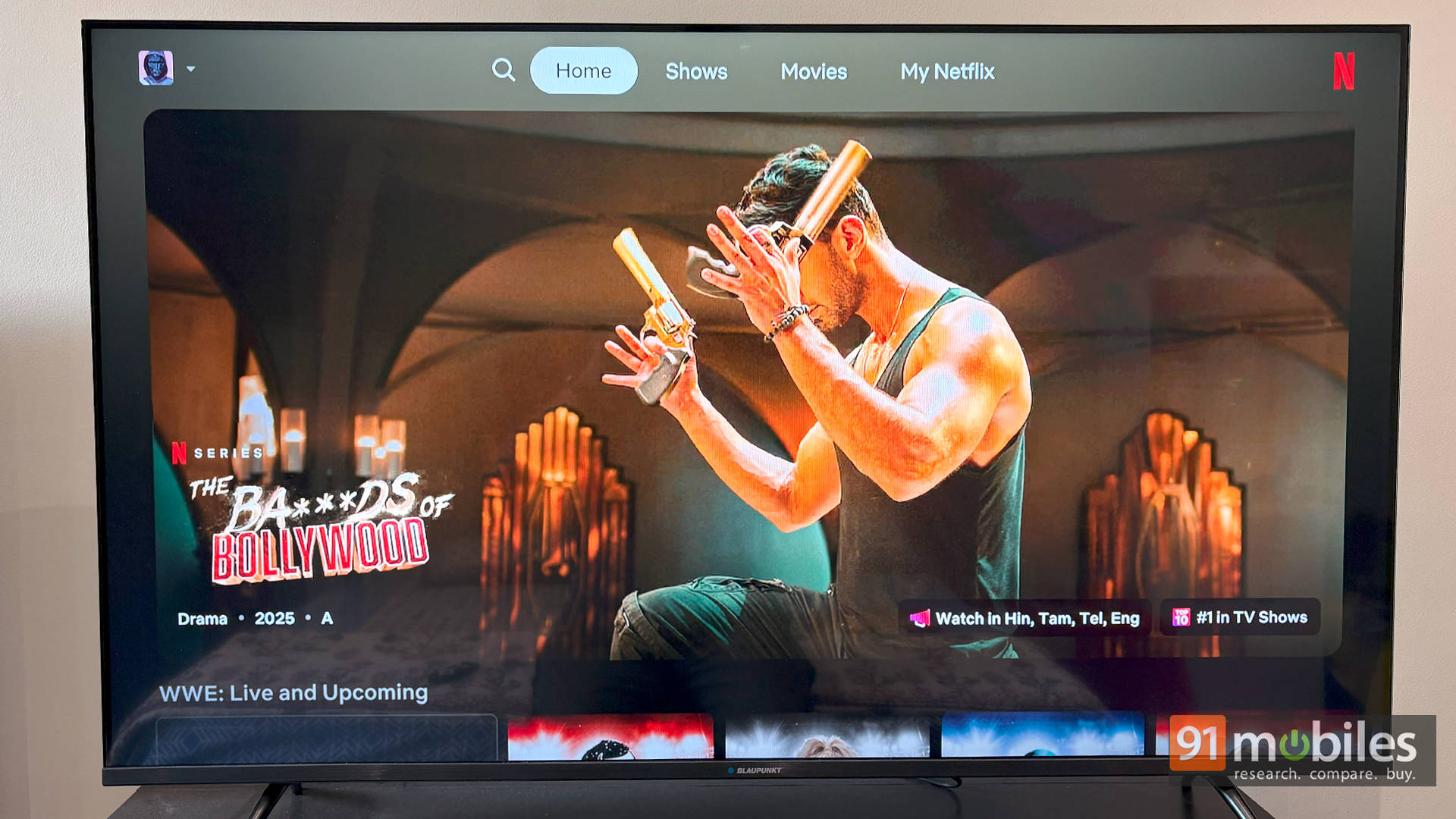
Motion smoothening, too, is more promise than delivery. The TV advertises AI Motion Smooth, but in practice, fast-paced action like a John Wick fight sequence or a cricket ball sailing at high speed doesn’t always look as fluid as you’d like. Sometimes there’s a slight blur, other times a faint soap-opera effect creeps in. For casual viewing, it’s acceptable, but sports enthusiasts or cinephiles might raise an eyebrow. Personally, I just kept the motion smoothing feature disabled, just for a more balanced experience.
What About Gaming?
Also, as far as gaming goes, yes, you can plug in a console and enjoy casual gaming. FIFA, Spider-Man, or lighter titles will run fine, and casual players won’t complain. But serious gamers, such as the ones who care about response times in Call of Duty: Warzone or buttery-smooth racing in Forza Horizon 5, will feel restricted. Without ALLM or VRR, input lag is higher than ideal, and you’re stuck at 60Hz. Then again, this isn’t marketed as a gaming TV, so it’s worth keeping your expectations realistic.
The Quirks You Should Know
Now for the quirky bits that don’t necessarily ruin the TV, but are worth knowing. The first is branding. The Blaupunkt 55QC7025 is, in reality, not a “Blaupunkt-built” product. It’s manufactured in India by SPPL (Super Plastronics Pvt. Ltd.), the same company behind Thomson and Kodak TVs. In fact, dive into the settings and you’ll see the TV identifying itself as a Thomson_Kodak_TV. It’s a classic case of brand licensing, and Avneet Singh Marwah, CEO of SPPL, recently did shed some light on this. Does this affect your experience? Not really, but it’s a fun quirk that buyers should be aware of.
Secondly, if you evaluate everything, you’ll realise that at Rs 28,500, this TV is a tremendous bargain if you’re looking for a secondary screen. For a bedroom where you watch Netflix before crashing, or a kids’ room where cartoons rule, or even a guest room where occasional viewers just need decent quality, this TV is perfect. But as the main living room TV for someone who takes picture quality very seriously? That’s where compromises start showing. Spend another 5–10K and you can jump to models with smoother UI, better upscaling, and panels that handle dark scenes with more finesse.
So the ugly truth isn’t really ugly in a deal-breaking way. It’s more about knowing what this TV is, and what it isn’t. At the end of the day, it’s not a flagship killer, nor is it a cinephile’s dream machine. What it is, however, is a smartly priced QLED with vibrant colours, strong sound, and enough smarts to satisfy the average household.
So Should You Buy It?
Which essentially brings us to the verdict. The Blaupunkt 55QC7025 (2025) is a TV that sets realistic expectations and then slightly over-delivers in the right areas. The panel is bright, colourful, and genuinely enjoyable for 4K HDR content. The 70W speakers punch well above their weight, making this one of the few budget TVs where you don’t feel forced to immediately buy a soundbar. The design is sleek enough, the ports cover most needs, and Google TV brings all the apps and features you want.
Yes, the UI lags, upscaling isn’t great, motion smoothing is meh, and gaming isn’t its forte. But that’s the trade-off you sign up for at this price. And when you consider the price, which is less than 30K for a 55-inch QLED with these features, those trade-offs feel more forgivable. If you want a budget-friendly 55-inch QLED for a secondary room, or even as an entry point into big-screen 4K viewing without splurging, the Blaupunkt 55QC7025 makes a very strong case for itself. Just don’t expect it to punch above its class in every department.
That said, if you’re looking for some alternatives, there are plenty of options to choose from. For about the same price, the acerpure Nitro AP55UG75PNTO5 is a great panel for gamers. The panel supports a 120Hz refresh rate with added support for both ALLM and VRR. Alternatively, for cinephiles, a little extra will fetch you either the Lumio Vision 7 or the Xiaomi F Pro L55MB-FPIN, both of which offer better overall colours and an immersive experience.
Editor’s Rating: 7.3 / 10
Pros:
- Bright and vibrant 55-inch 4K QLED panel
- Impressive 70W Dolby Atmos speakers
- Google TV with wide app support
- Great value at under ₹30K
Cons:
- UI lags with occasional stutters
- Weak upscaling and average motion smoothening