The Garmin Forerunner series is primarily designed for runners, but it also offers a range of features that make it equally suitable for triathletes, duathletes, and other multisport enthusiasts. The latest addition to the smartwatch lineup, the Forerunner 570, brings several advanced upgrades, including triathlon training plans via Garmin Coach, structured multisport workout creation, enhanced GPS accuracy, and a range of new sport modes. Yet, the smartwatch may not be chased by many runners, given its asking price of Rs 66,990. For that price, you would expect the wearable to excel in every category, not just offer features that can be found in more affordable smartwatches.
Nevertheless, for seasoned runners, the Garmin Forerunner 570 could well be one of the most accurate smartwatches available today. Read on for my take on what it’s like to live with this fitness companion.
Table of Contents
No-nonsense design
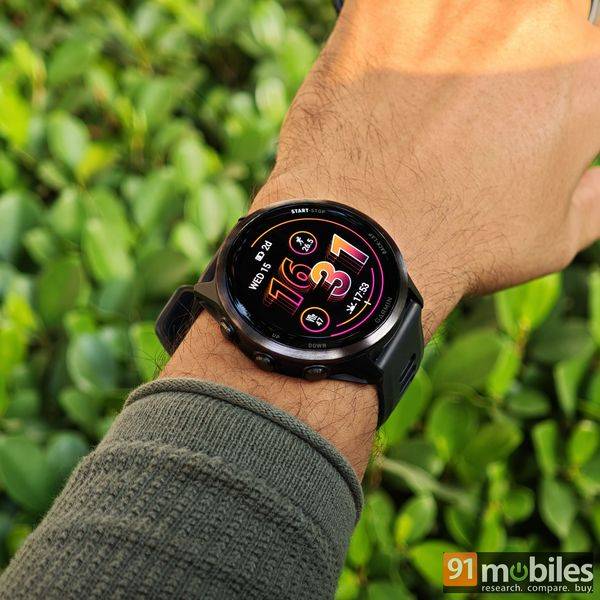
The Garmin Forerunner 570 features a relatively simple, minimalistic design. The black variant I received for review doesn’t immediately draw attention, but its understated look will appeal to those who prefer subtle styling. For users who like a bit more personality, Garmin offers the watch in Yellow, Raspberry, Whitestone, and Indigo, all featuring vibrant bands that add a splash of colour. The silicone straps use quick-release pins, allowing easy swaps with other bands of the same size. They’re soft to the touch and comfortable for all-day wear, as long as it doesn’t get sweaty for you.
The Garmin Forerunner 570 features a circular dial housed in an aluminium body, complemented by a set of five physical buttons, two on the right spine and three on the left. The buttons sit almost flush with the frame, giving the watch a clean, streamlined look. Each serves a distinct purpose, which is etched onto the bezel for quick reference. On the right, the top button acts as the action key to start or stop workouts or any other activity, while the bottom button doubles as a back and lap control. On the left, the top button activates the backlight, and the lower two are used for navigating up and down through menus.
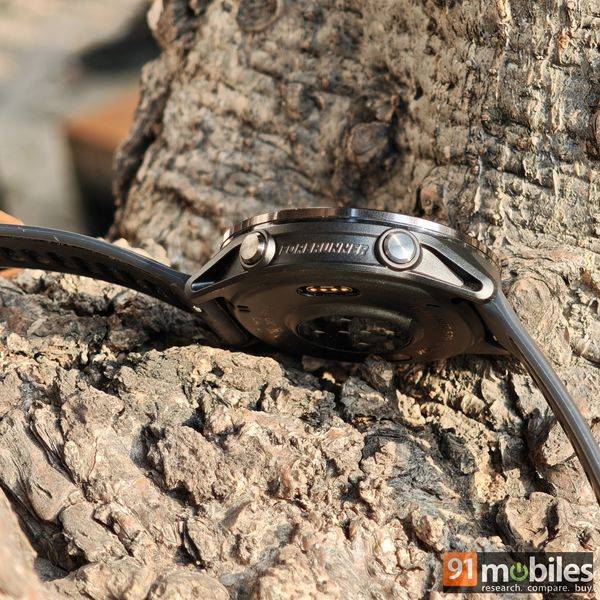
This approach is quite different from most smartwatches I’ve used, where the buttons and touchscreen work in tandem. On the Garmin Forerunner 570, however, the touchscreen feels almost optional. In fact, Garmin seems to encourage button-based interaction over touch input. For instance, during workouts, the Forerunner 570 disables single-touch gestures, likely to prevent accidental taps caused by sweat or movement. The buttons respond flawlessly, offering reliable control even mid-run.
That said, there’s a learning curve. Even after a few weeks of use, I often found myself instinctively swiping down on the screen to end or interact with a session, only to remember that the buttons handle that instead. Perhaps I’ve just grown a bit too accustomed to touchscreen controls. Also, every time I would try to press the buttons, hair strands on my hand would get snagged or pulled, making the experience slightly unpleasant.
Crisp, readable display
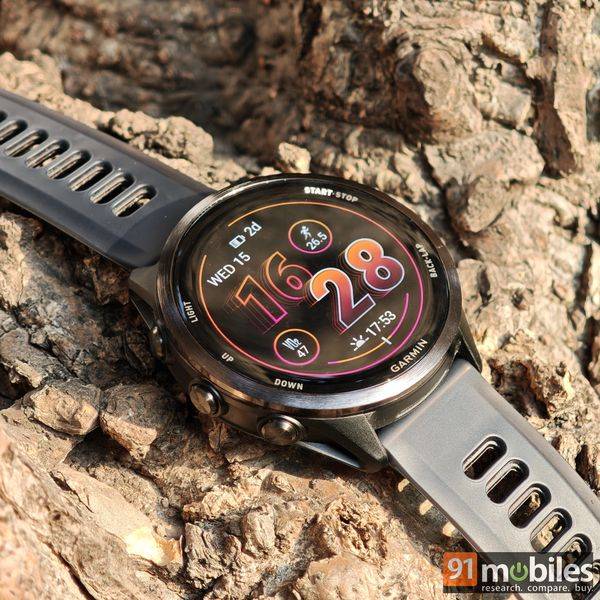
The Garmin Forerunner 570 comes in two case sizes — 47mm and 42mm. I tested the 47mm variant, and it never felt too large or cumbersome on my wrist. Tipping the scales at just 42 grams, the watch is impressively lightweight, making it comfortable to wear throughout the day and even while sleeping. The display measures 1.2 inches in diameter, with a 360 x 360p resolution and ample brightness levels (that adjust automaticaly) to be legible outdoors under direct sunlight. The content looks crisp, colourful, and easily readable, and there is sufficient screen real estate to interact with it, although typing on an on-screen keyboard might appear cramped.
The display also doubles as a torch, using concentric light rings rather than lighting up the full screen. You can adjust the brightness and switch between white and red hues, but the illumination is too dim to be genuinely helpful in an emergency.
Plenty to offer, but some major gaps
The Garmin Forerunner 570 comes with all the necessary features, but to some users, they might appear modest for the price. The wearable lacks ECG, as well as eSIM connectivity and support for offline maps. However, the smartwatch does boast dual-band GNSS for accurate location tracking, support for over 90 sports modes, an array of health tracking features, and features like Garmin’s unique stats covering Body Battery, HRV, sleep, and training readiness.
For runners, Garmin has added new features like Finish Line Estimates, Auto Lap by Timing Gates, Multisport profiles, and personalised Garmin Coach training plans. These additions could be especially useful for someone training for a triathlon, given how accurate the tracking proved in my casual use. Moreover, the Connect+ subscription, which can cost up to $89.99 (~Rs 8,000) annually, offers AI-powered insights into the wearer’s sleep, stress, and training program, along with 3D maps of the activities, training guidance from experts, exclusive badges, and more.
The Garmin Forerunner 570 takes care of safety with features like Incident Detection, LiveTrack, and the capability of alerting your emergency contact and sending your location to specified contacts in case you fall during a run. While there are no offline maps, the Forerunner 570 offers breadcrumb trails for your runs with turn-by-turn notifications shared through the compatible Garmin Connect app.
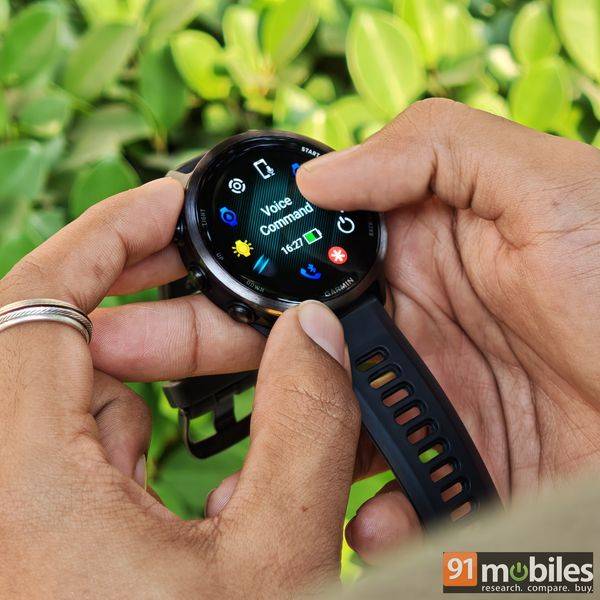
As for the other features on the smartwatch, you get 8GB of storage to store music locally and link up with YT music, Spotify, and other music services. The wearable also comes with a built-in mic, speaker, Bluetooth calling support, voice assistant support, NFC for online payments, notifications mirroring, reminders, a variety of watch faces, and more. The speaker is loud enough for small talks in quiet environments, alarms, and voice commands. One will need to connect the watch with their smartphone using Garmin’s Connect app, available for download for both Android and iPhone users, to access these smart features.
I paired the Garmin Forerunner 570 with a Google Pixel 10 Pro, and the process was seamless. The Garmin Connect app (version 5.18) ran smoothly throughout my testing, without any crashes or freezes. Despite offering a vast range of options, the app felt fairly intuitive, with a card-style layout for all the stats and tabs for different options. However, I would have preferred a search icon on the app to quickly look up desired settings, such as an option to enable a voice assistant.
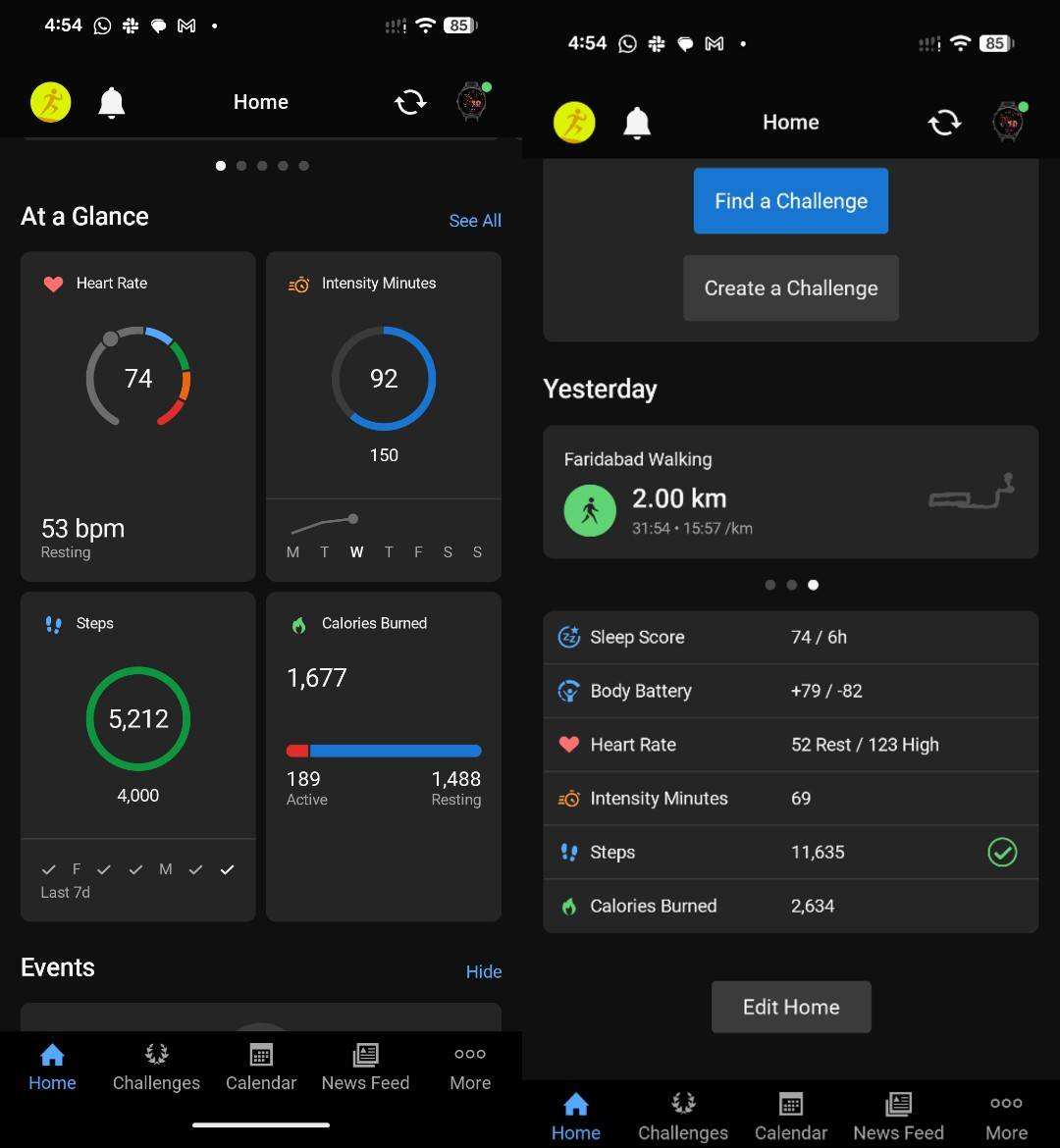
Users can customise the dashboard to prioritise the metrics and options that matter most to them, keeping key information front and centre. Syncing data between the watch and phone was quick and effortless, typically taking just a few seconds. Moreover, Garmin offers several companion apps, such as Connect IQ for downloading watch faces and third-party apps – though the library may feel limited – and Garmin Golf for golfing enthusiasts, among others.
Basic interface, powerful wellness tracking
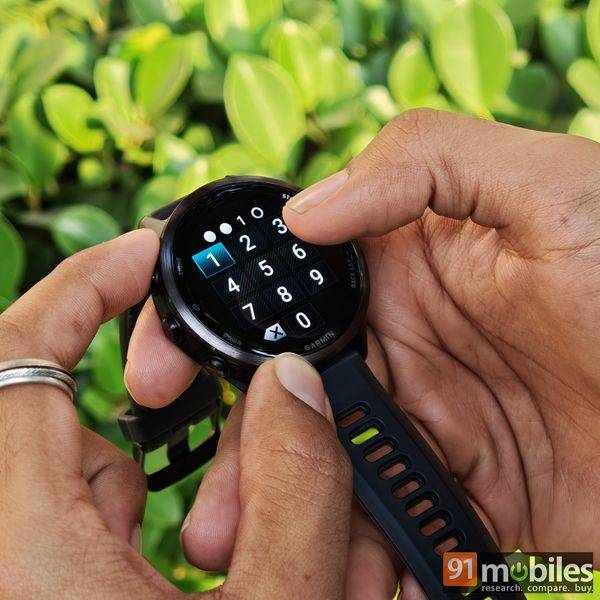
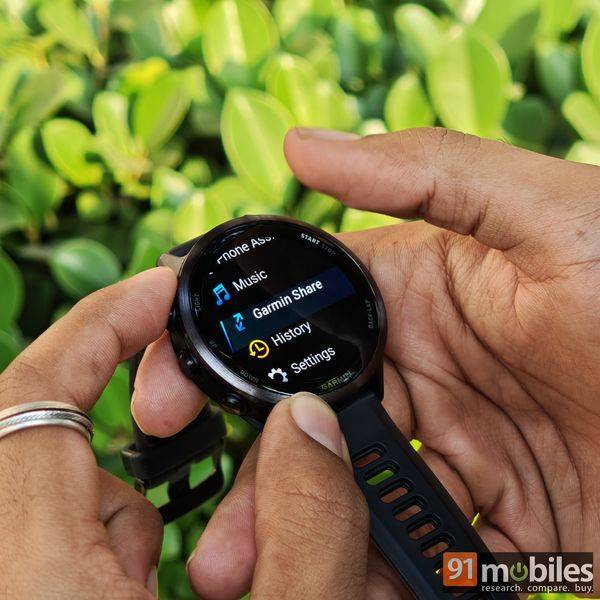
Speaking of the smartwatch experience, the Forerunner 570 runs on Garmin’s proprietary OS, which is easy to navigate, highly customisable, and runs smoothly without stutters. However, coming from the Samsung Watch8 Classic, which runs Wear OS, the interface does feel a little less polished and engaging by comparison. For better or worse, the UI feels similar to that offered by affordable smartwatches. That said, I like the glance folders of the watch for body battery, HRV, sleep, and training readiness. Users have the option to add more folders via compatible apps to avoid scrolling fatigue just to get a glimpse of their stats.
Additionally, the watch provides a morning report with a readiness score that reflects how well-rested and prepared you are for the day based on your previous night’s sleep, and an evening report, comprising recaps of your activities, insights into your recovery, and how much sleep you should aim for that night to be ready for the following day. This is something that should be helpful for fitness enthusiasts seeking a holistic view of their wellbeing.
That said, I’ll admit the reports sometimes had an unintended psychological effect on me. Following nights when I didn’t sleep well, seeing a low readiness score the next morning made me feel less productive, almost as if the watch had already decided how my day would turn out. Yet, once I got into my routine, I often performed just as well as usual, without feeling any real difference physically. The readiness score is not unique to the Garmin Forerunner 570. Many smartwatches offer similar readiness metrics, and I have managed to use quite a few of them. However, none have influenced me quite as strongly as Garmin’s implementation, which proactively delivers these reports and makes you confront your body’s data head-on.
Users can choose to disable these morning and evening reports in the Garmin Connect app. Nevertheless, no device knows your body better than you do. On days when your body doesn’t feel up to it, it’s wiser to listen to what it’s telling you, even if the watch insists you’re fully charged and ready to take on the day.
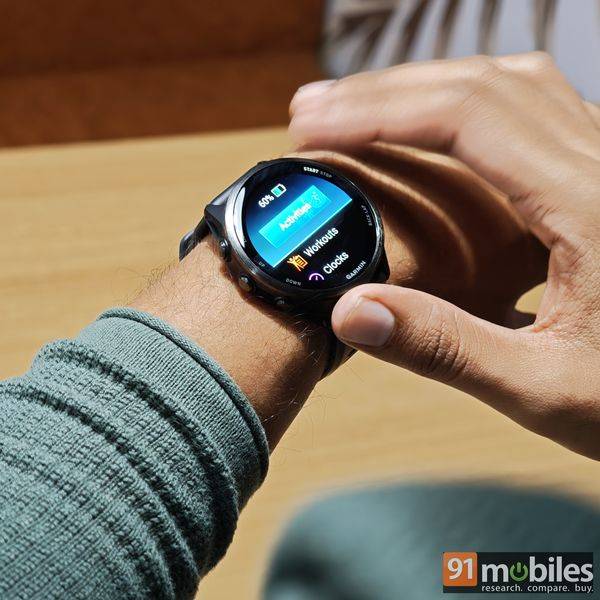
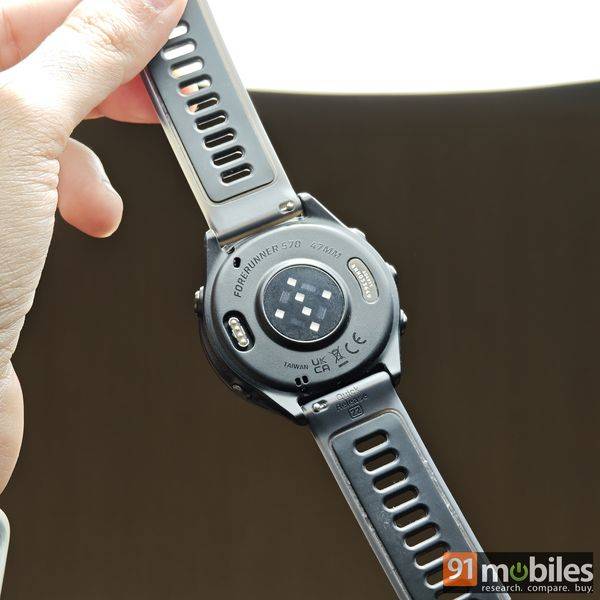
Moving on to the Garmin Forerunner 570’s tracking capabilities, they have generally been impressively accurate. The watch features Garmin’s Elevate Gen 5 sensor, which tracked my heart rate with remarkable precision, capturing every fluctuation during sleep, workouts, and everyday activities. Interestingly, the same sensor is used in the relatively affordable Garmin Venu 3, which also supports ECG measurements, but on the Forerunner 570, the monitoring is limited to just heart rate.
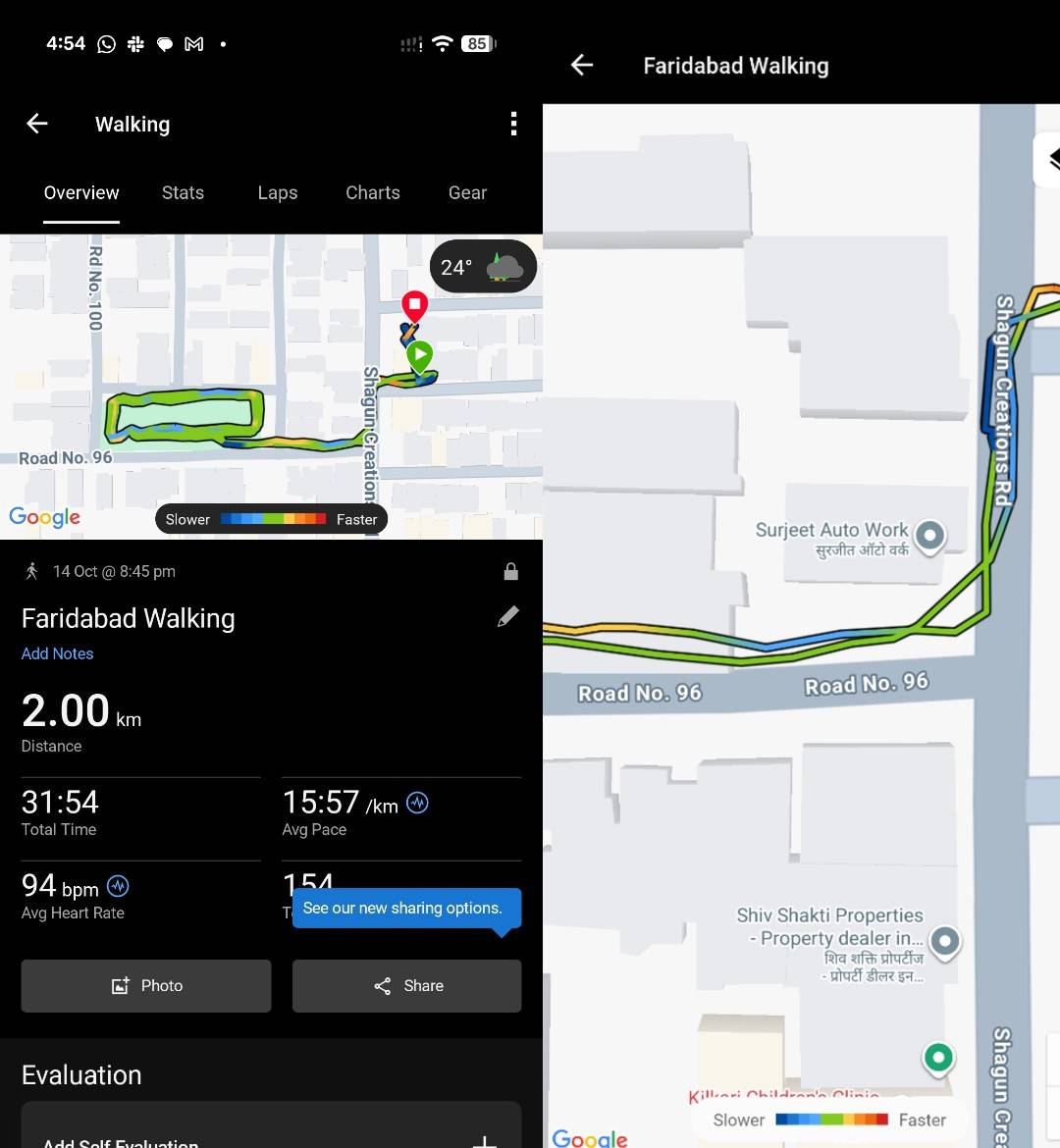
The built-in dual-band GNSS system, on the other hand, is quick to lock onto your GPS location and generally stays accurate throughout your activity. This allows for precise tracking of distance, which was on par with my smartphone’s data, steps walked, pace, and elevation. That said, when reviewing trails in the app, I noticed occasional drift, where the recorded path veered off the pavement and into nearby trees or buildings in certain sections. This is a minor setback for an otherwise excellent tracking system.
Be that as it may, I used the watch more actively to track my gym workouts, using its Strength Training mode, which can automatically detect the primary and secondary muscles engaged from the movements. The wearable can also pick the number of reps, although it may not be an accurate time. However, you do have the option to correct the count on the watch during the workout or afterwards within the app. The latter even lets you fix the sets in case of any discrepancies. The workouts can be enhanced with exercise videos and live workout stats through the paid Connect+ subscription.
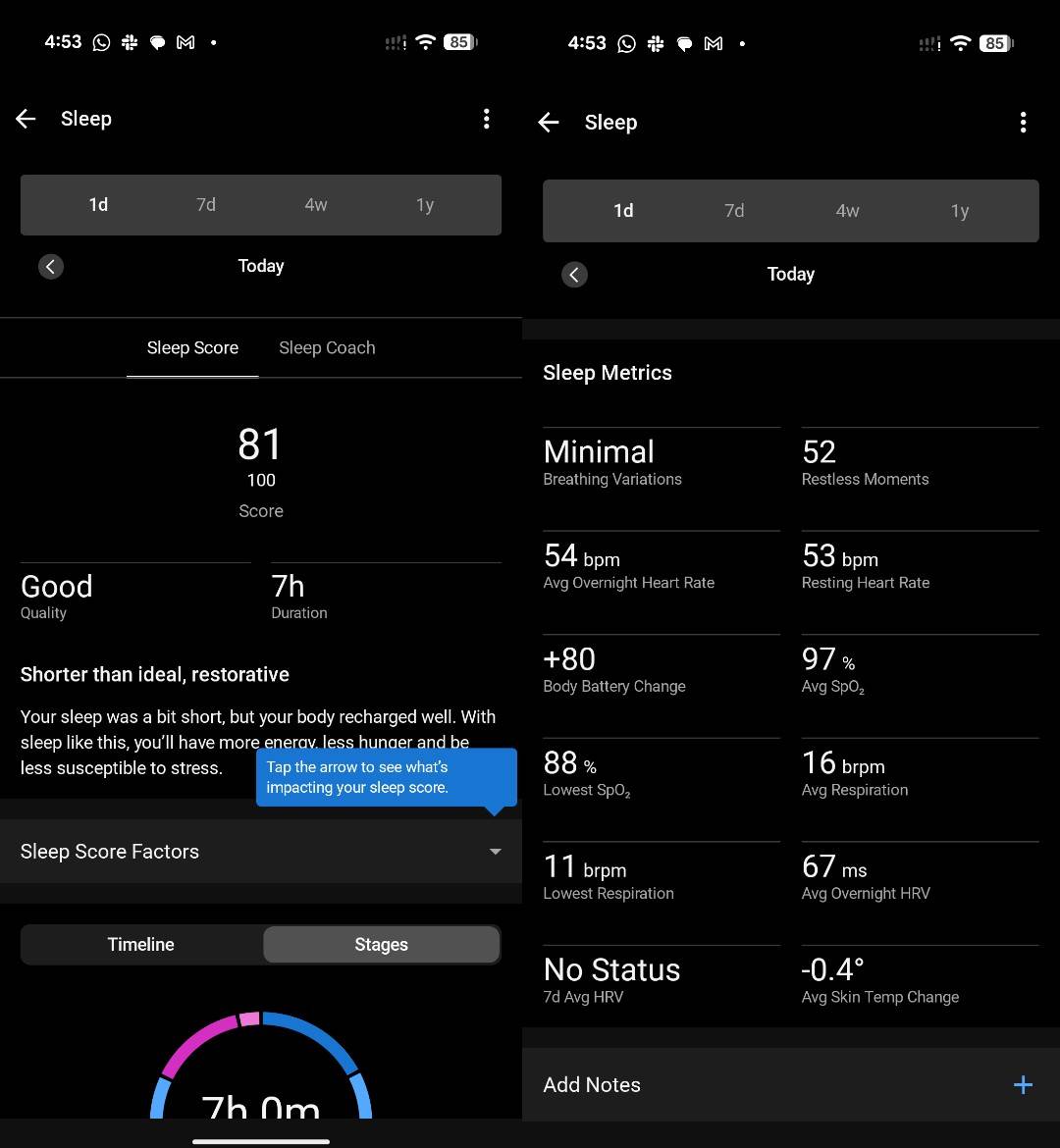
The sleep tracking feature, meanwhile, doesn’t require any paid subscription to access detailed insights — a welcome change in an era of paywalled health data. The Forerunner 570 does an impressive job of recording total sleep duration, awake periods, and sleep stages, including deep, light, and REM. It also provides a sleep score that breaks down how well you slept, highlighting what went right and offering suggestions for improvement. Even though I couldn’t follow the tips due to my terrible schedule, the insights can be helpful for anyone who wants to fix his/her sleeping habits.
Reliable, but usage dependent
The Garmin Forerunner 570 promises up to 10 days of battery life on a single charge, which is impressive, though that figure applies only to smartwatch mode. Actual endurance varies based on usage. In my experience, the watch lasted around a week with all key smartwatch features enabled, including notifications and call alerts, as well as an hour-long gym workout each day. According to Garmin, this can drop to as little as eight hours when multi-band GNSS tracking and music playback are also active. That may sound modest, but it is in extreme usage, equivalent to an athlete pushing full throttle on the track, burning through energy faster to deliver peak performance.
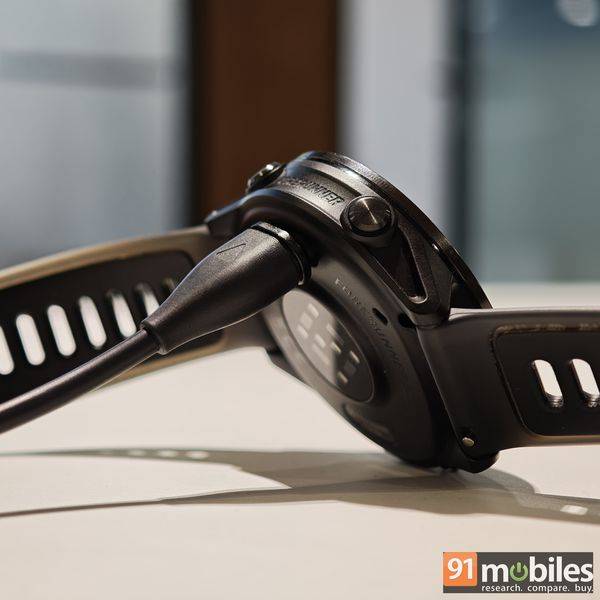
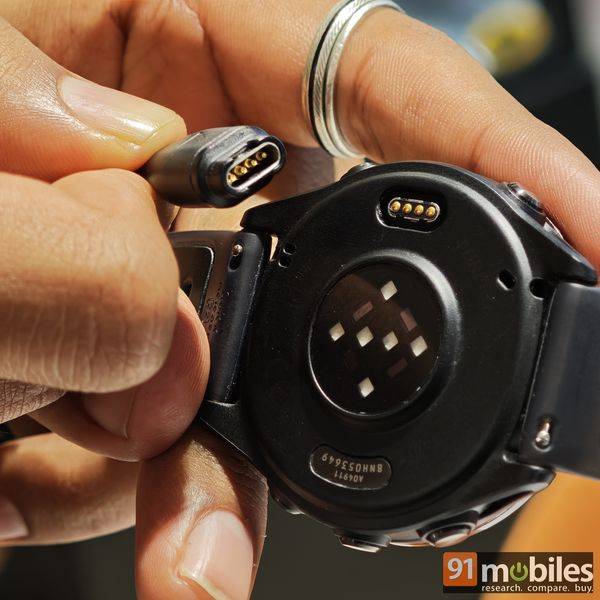
To charge the Forerunner 570, Garmin includes a proprietary pogo-pin cable that connects to the port that sits flush with the back of the watch. The other end plugs into any USB Type-C charging adaptor. While I’m not a big fan of carrying a separate cable just for the watch, Garmin deserves credit for avoiding the bulky magnetic-dock design seen on many wearables. The slim connector feels secure, clicks into place cleanly, and doesn’t get dislodged with a nudge. The charger can take anywhere between 90 and 120 minutes to achieve a full charge.
Verdict
The Garmin Forerunner 570 isn’t the flashiest smartwatch around, and style doesn’t seem to be its focus anyway. Instead, it delivers on the aspects Garmin is known for — accuracy, reliability, and data depth that few competitors can match. Its wealth of metrics, advanced training features, and thoughtfully designed reports make it an excellent choice for serious runners and triathletes who value performance insights over playful aesthetics.
However, since it doesn’t come cheap, the Forerunner 570 demands commitment. Its lack of ECG, support for offline maps and LTE connectivity make it a tough sell for casual users, especially when more affordable smartwatches offer richer smart features. But for athletes who prioritise precise tracking, detailed analysis, and a watch that pushes them towards better results, the Forerunner 570 stands out as one of the most dependable training companions in its class.
Editor’s rating: 7.5 / 10
Pros
- Light & comfortable to wear
- Accurate tracking capabilities
- Customisable OS & app interface
- Meaningful insights & readiness report
Cons
- No ECG & eSIM support
- UI feels basic
- Pricey