


Review Summary
Expert Rating
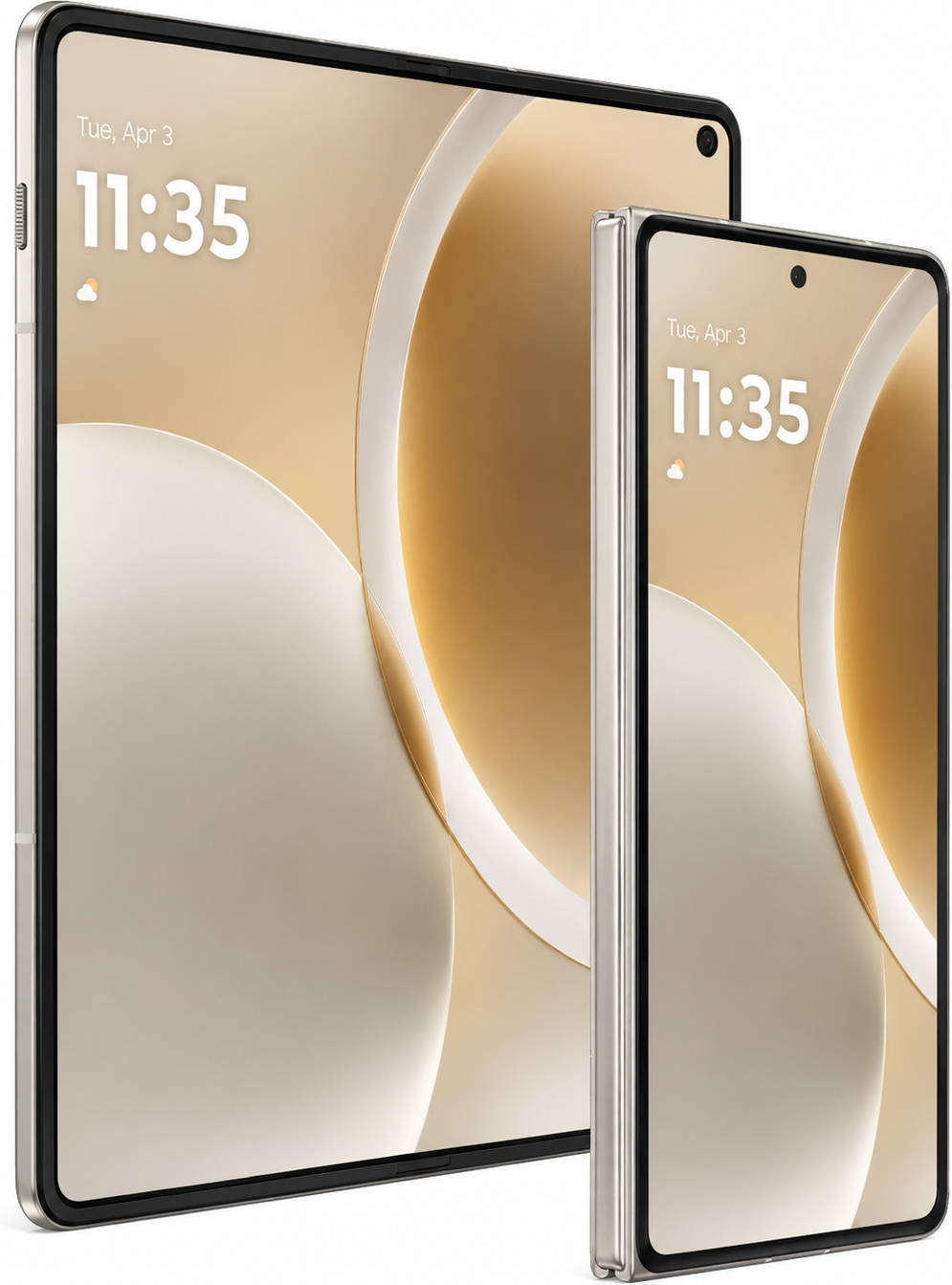
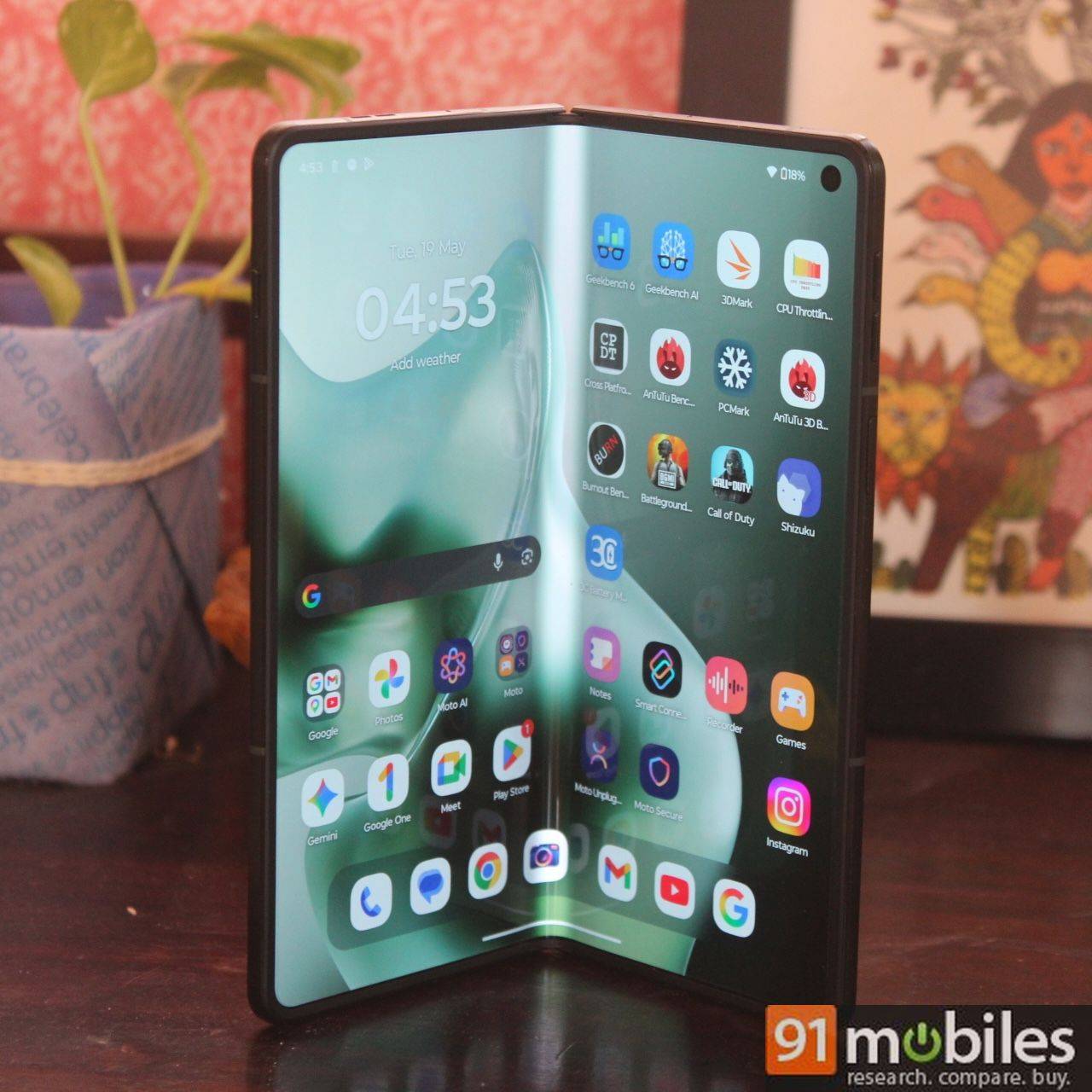
The Razr Fold might be Motorola’s first book-style foldable, but that doesn’t mean the brand is new to this segment. Motorola is no stranger to foldables, having launched several flip-style foldables since 2019. This, according to Motorola, has given the brand enough learning around screen and hinge technologies, among other things, to launch a book-style foldable to take on existing players like Samsung, Google, and Vivo. To wit, the Razr Fold claims to have the best camera system on a foldable yet. And it might just be a good foldable in general.
Table of Contents
Verdict
The Motorola Razr Fold is a remarkably polished debut in the book-style foldable segment. While it compromises slightly on bulk and pure benchmark numbers, it compensates with industry-leading dual displays, an exceptional 6,000mAh battery life, and a highly capable camera system that doesn’t feel like a foldable compromise.
Design
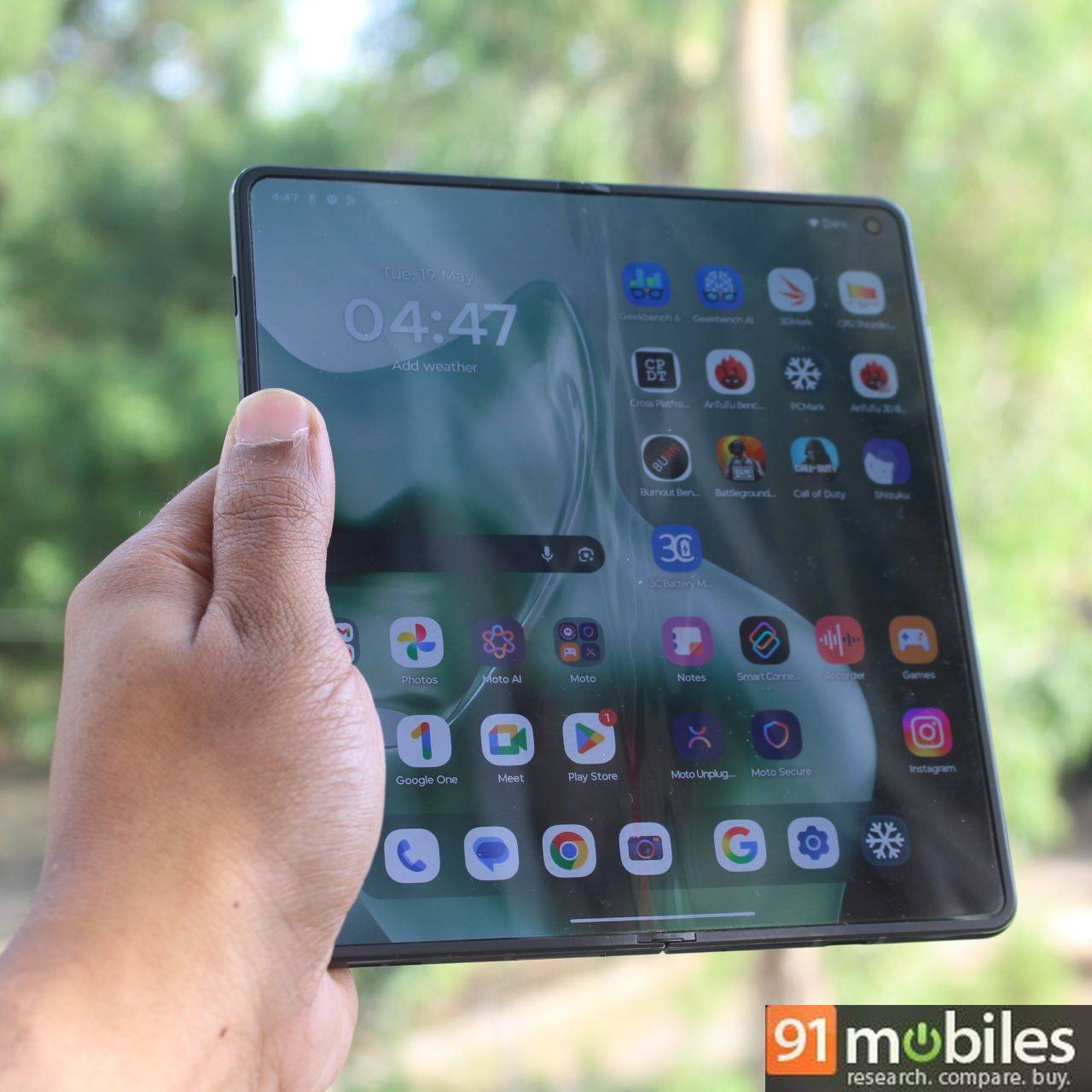
Unlike the Samsung Galaxy Z Fold7’s flat frame design, Motorola’s aesthetics are slightly more curvaceous. I say “slightly” because there’s a bit of both here. While the Razr Fold has curved corners like the Razr 60 Ultra, the sides are slightly flat down the middle, just rounded enough to give a nice in-hand feel.
| Specs | Razr Fold | Galaxy Z Fold7 | Vivo X Fold5 |
| Dimensions (folded) | 160.05 x 73.6 x 9.89mm | 158.4 x 72.8 x 8.9mm | 159.7 x 72.6 x 9.2mm |
| Dimensions (unfolded) | 160.05 x 144.47 x 4.55mm | 158.4 x 143.2 x 4.2mm | 159.7 x 142.3 x 4.3mm |
| Weight | 243 grams | 215 grams | 217 grams |
The Razr Fold is slightly thicker and heavier than both the Galaxy Z Fold7 and Vivo X Fold5. The Samsung foldable, in fact, is the slimmest and lightest of the three, which is worth noting if that matters to you when purchasing a foldable. I’m not too surprised by this – Samsung and Vivo have had multiple iterations to achieve this level of sleekness, whereas Motorola hasn’t.
Still, the Razr Fold is a comfortable foldable to use day-to-day. I found the weight quite manageable, although prolonged one-handed use, especially when unfolded, can put some strain on the wrist.
| Smartphone | IP rating |
| Motorola Razr Fold | IP46, IP48, and IP49 |
| Samsung Galaxy Z Fold7 | IP48 |
| Vivo X Fold5 | IP58, IP59 |
| Google Pixel 10 Pro Fold | IP68 |
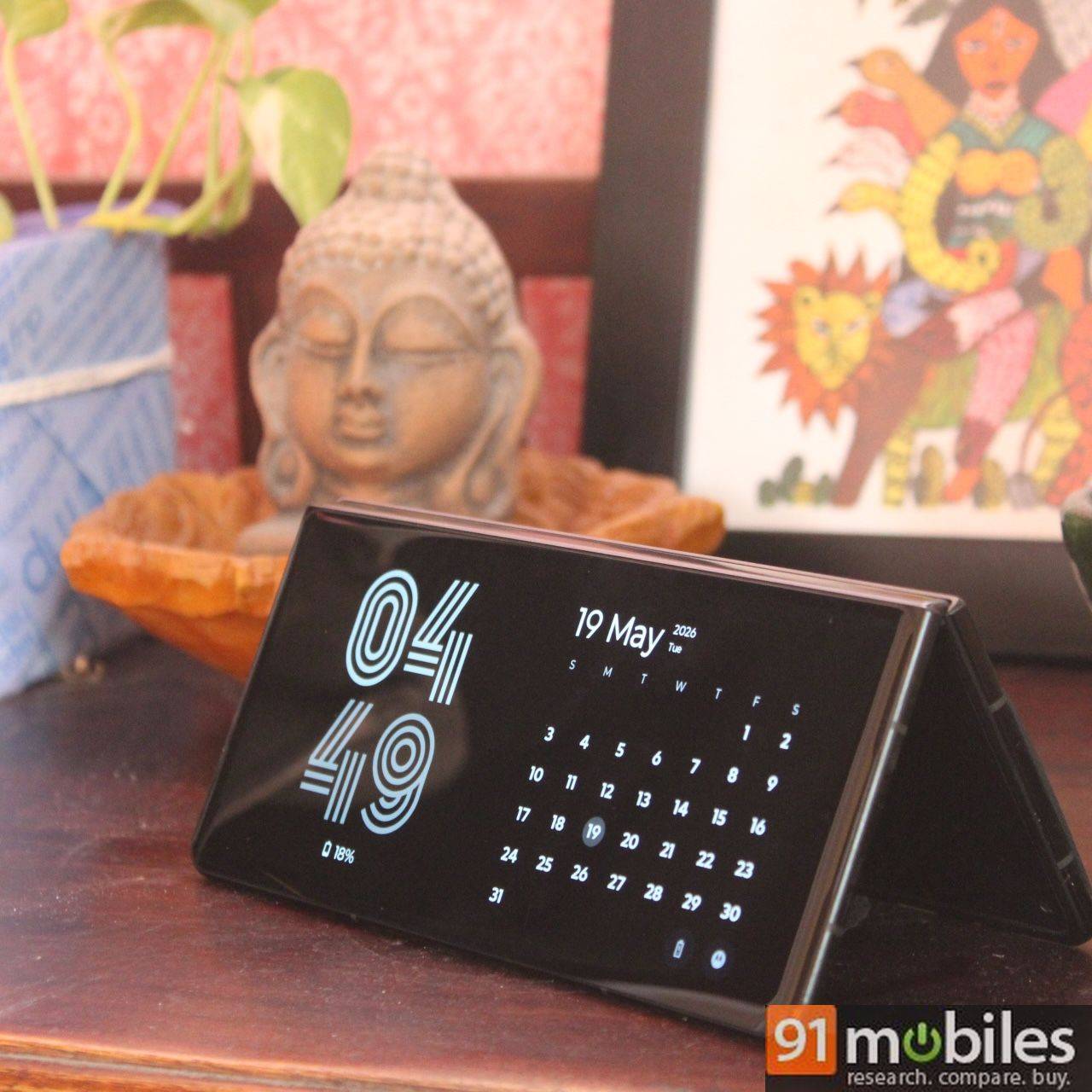
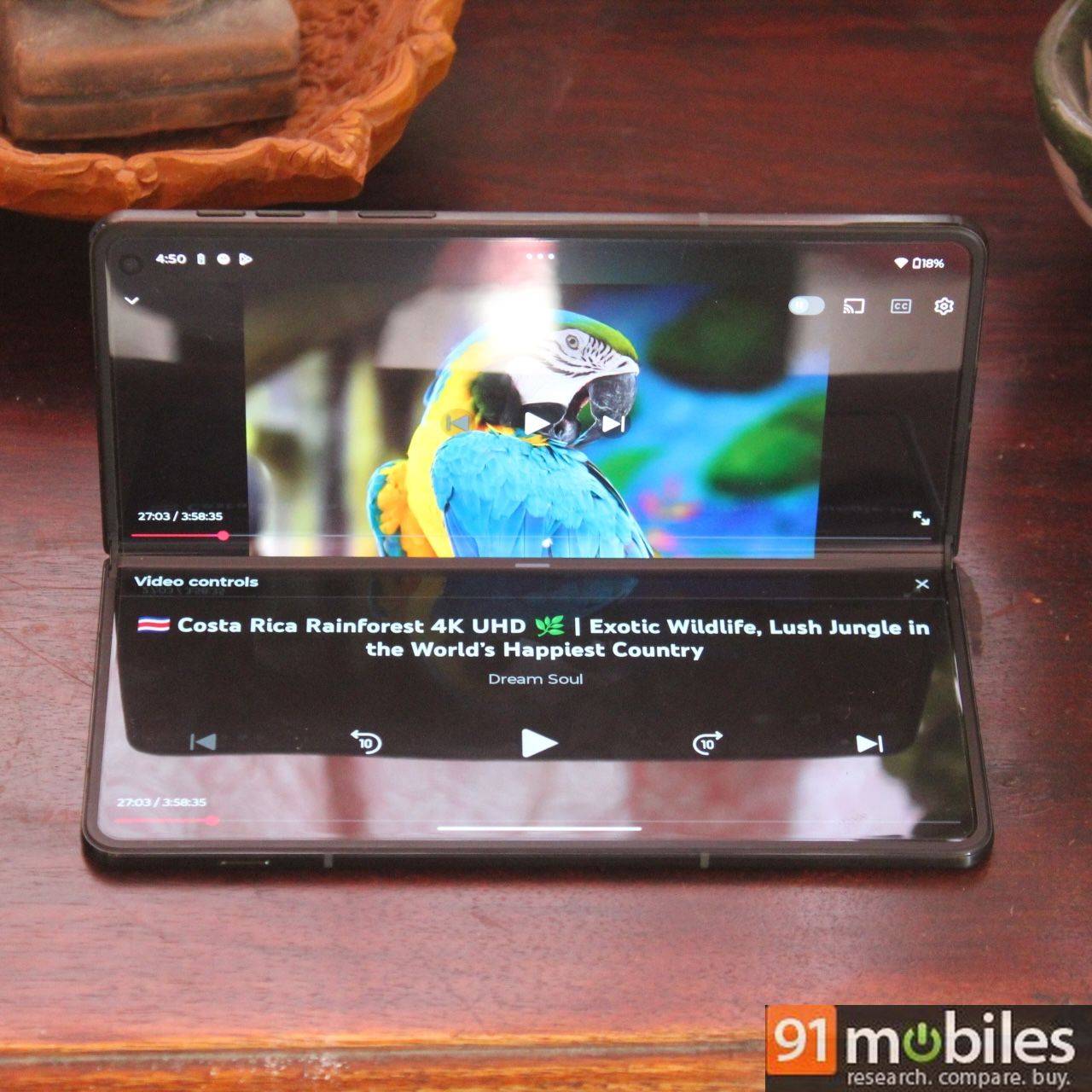
Motorola truly did its homework when it came to design cause the Razr Fold’s steel hinge mechanism is sturdy and solid, allowing you to fold it open at various angles, whether you want to use it as a tiny laptop or prop it up as a stand or tent to activate desk mode.
Camera
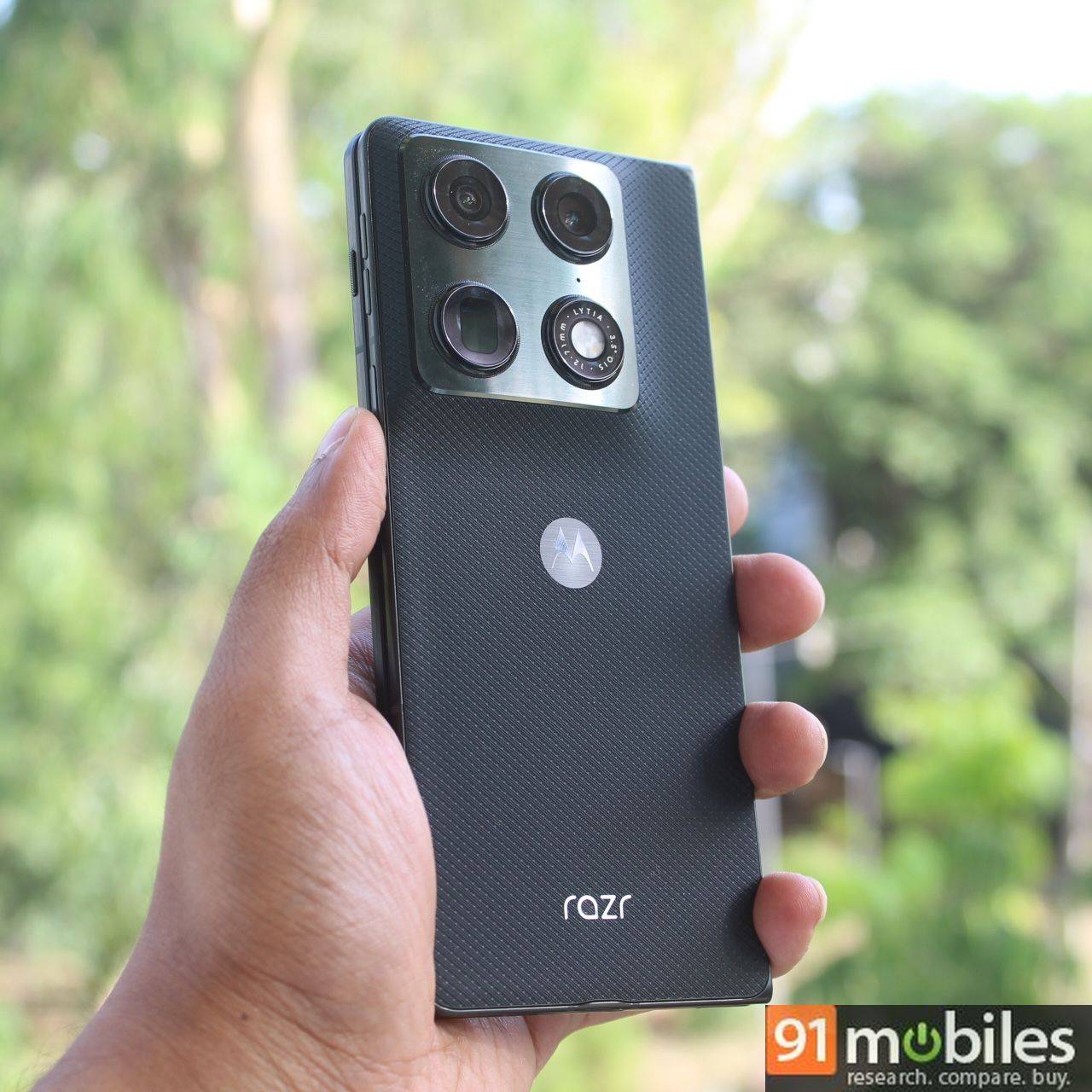
Motorola is quite proud of the camera system on the Razr Fold. The company believes that it is the best camera system on a foldable right now, backed by a DxOMark score of 164. The rear camera setup is identical to the Motorola Signature, comprising a 50MP primary sensor with OIS, a 50MP ultrawide macro camera, and a 50MP periscope telephoto lens with OIS. There’s a 10MP camera on the cover display and a 32MP camera on the inner screen.
For a first-generation book-style foldable, the camera system is genuinely impressive. I didn’t have the Galaxy Z Fold7, or any other foldable for that matter, with me for a side-by-side comparison. However, when analysed in isolation, the primary camera delivers reliable exposure, accurate white balance, and good detail in both daylight and indoor conditions. Noise is well controlled in photo mode, though colour fringing and some ghosting on moving subjects can appear in more challenging scenes.

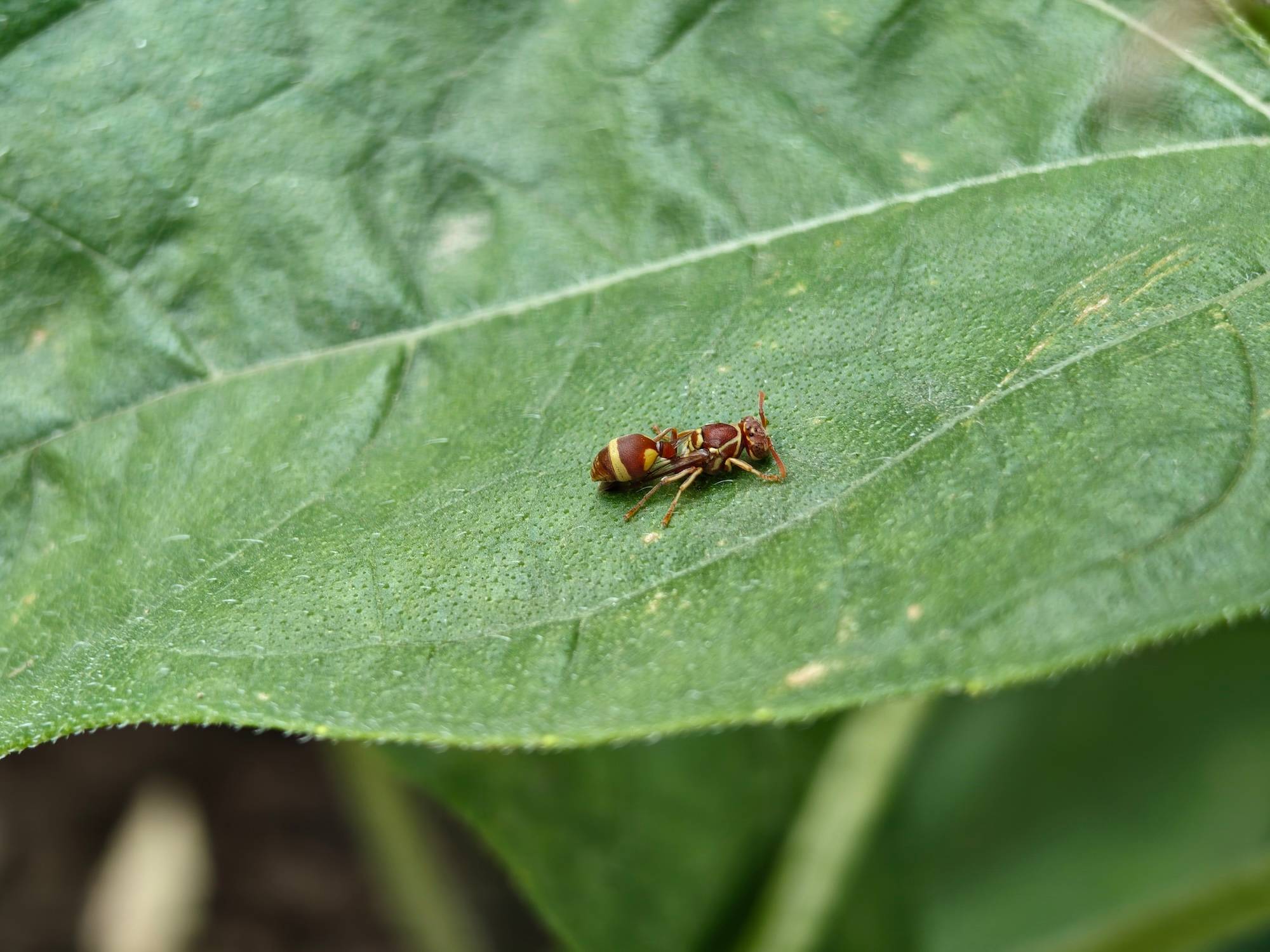
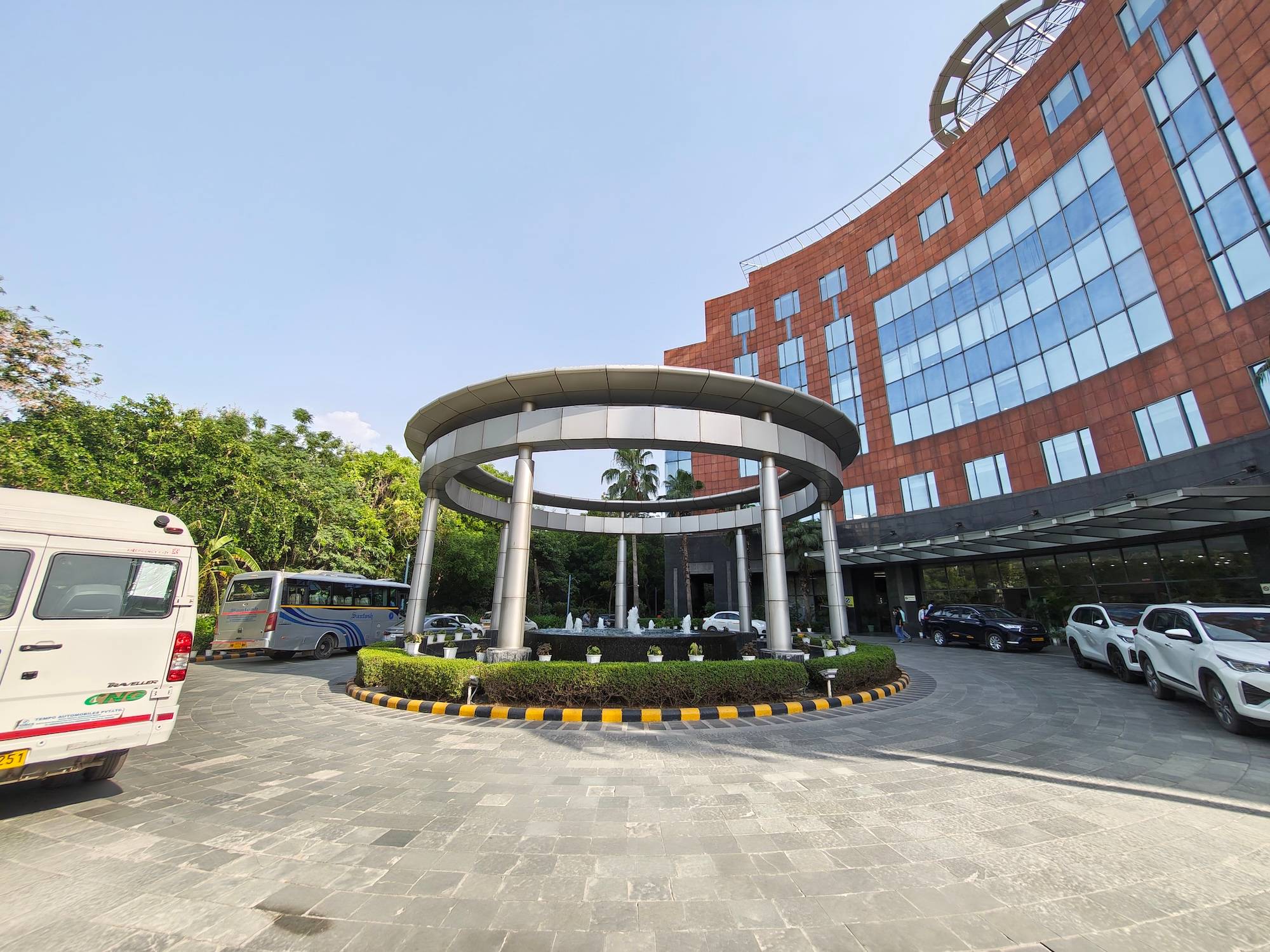





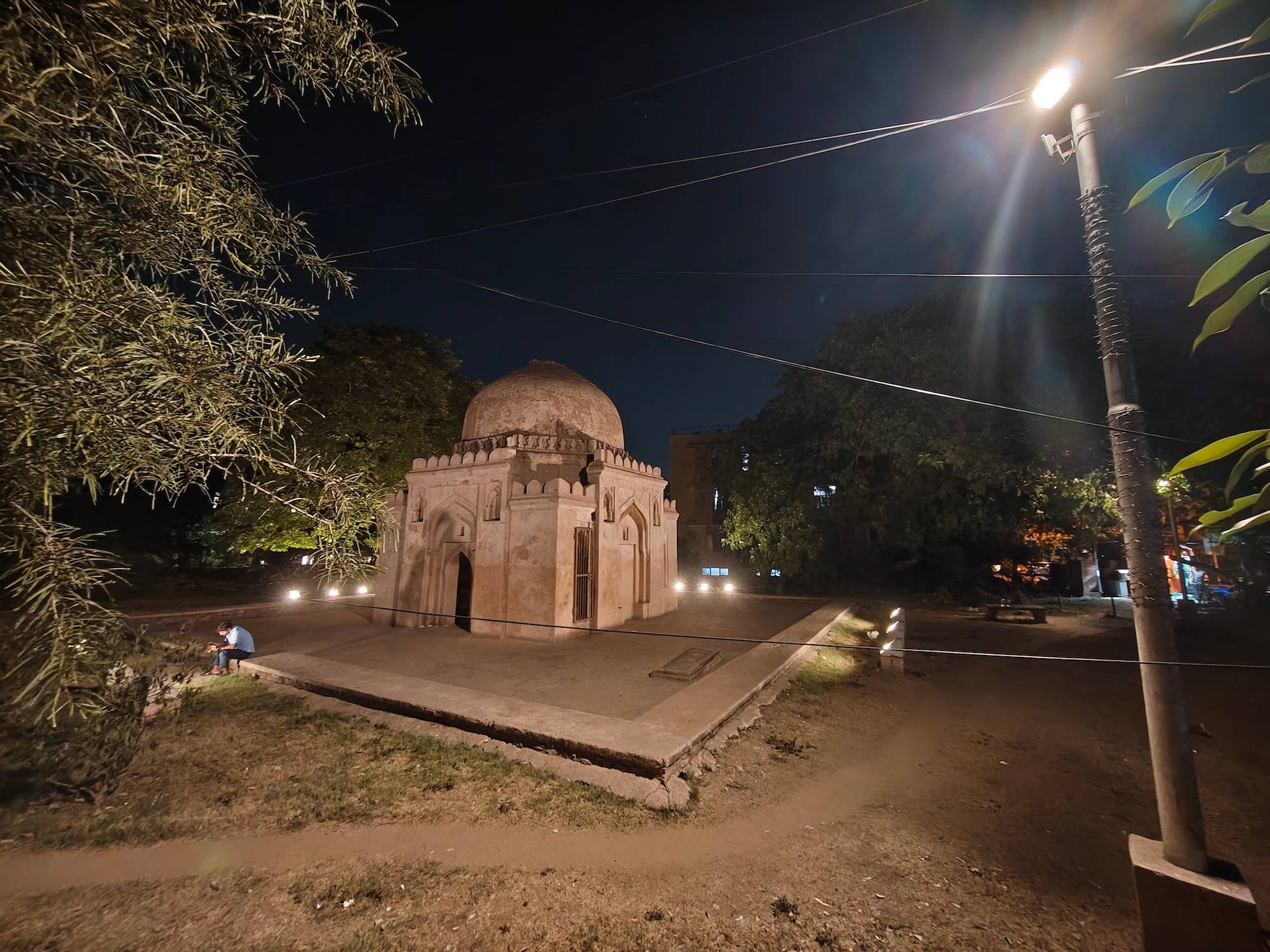


Portrait shots are a highlight. The camera produces natural-looking background blur with good subject isolation and consistent skin tones, without the over-processed look that you see on some rival foldables. For a phone that doubles as a tablet, getting portraits right matters more than it might seem, and the Razr Fold handles them well.
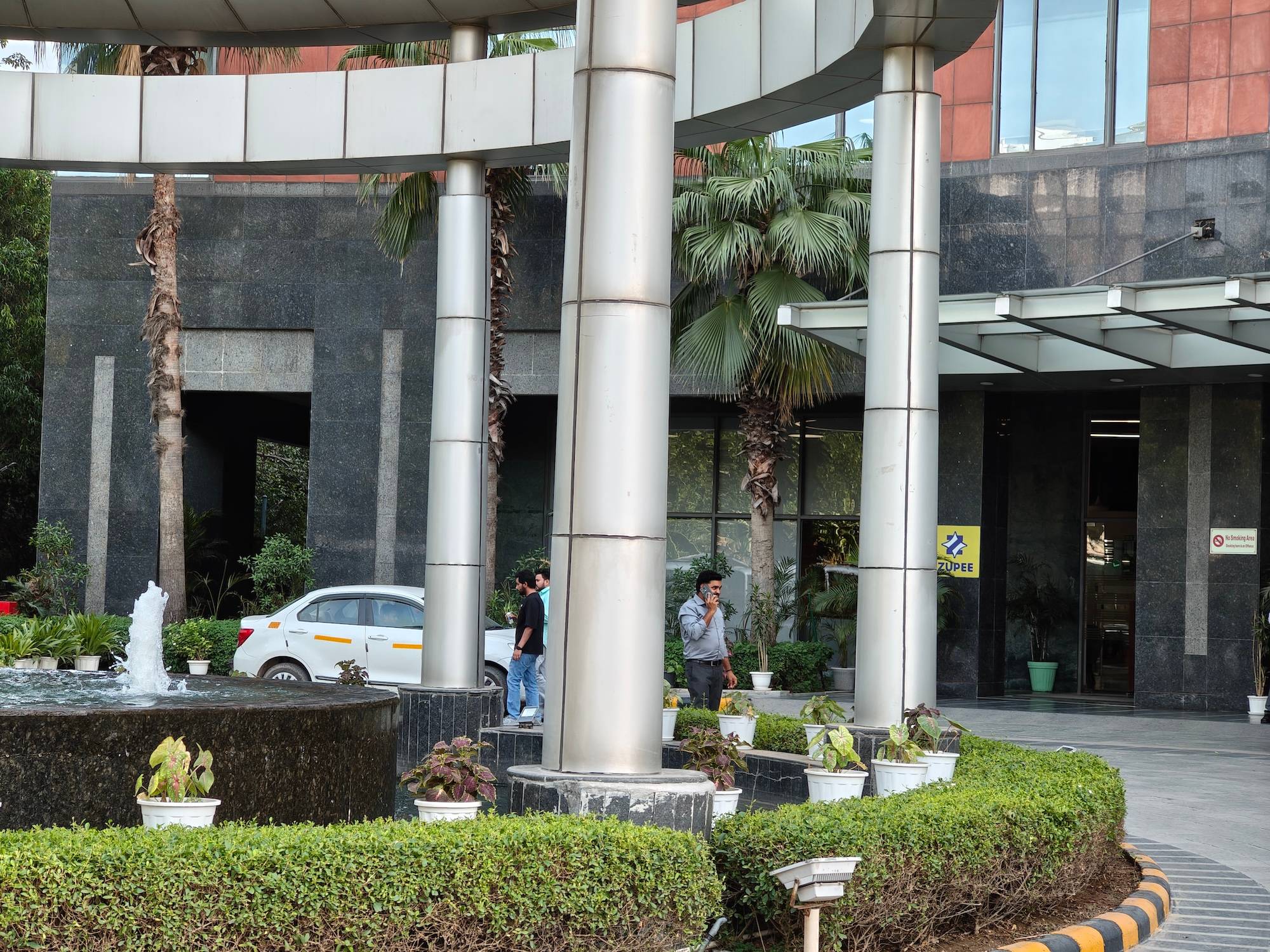
Zoom is the most pleasant surprise. The dedicated 3x periscope telephoto transitions smoothly between focal lengths in photo mode, maintaining good detail and colour consistency from primary through ultrawide through tele. This is one of the few areas where the Razr Fold does not feel like a foldable compromise at all.
Low light is where the limitations show most clearly. The primary camera’s OIS helps with shake, but noise becomes noticeably more intrusive in backlit scenes, and the autofocus slows down in the dark. It is a solid performer for casual night shots, but it cannot match the best dedicated camera phones in challenging lighting. Take a look at the comparison below between the Razr Fold and OPPO Find X9 Ultra. The OPPO phone delivers a better overall image, with good colour reproduction and excellent exposure control, ensuring the illuminated restaurant signs and billboards are clear rather than overexposed.
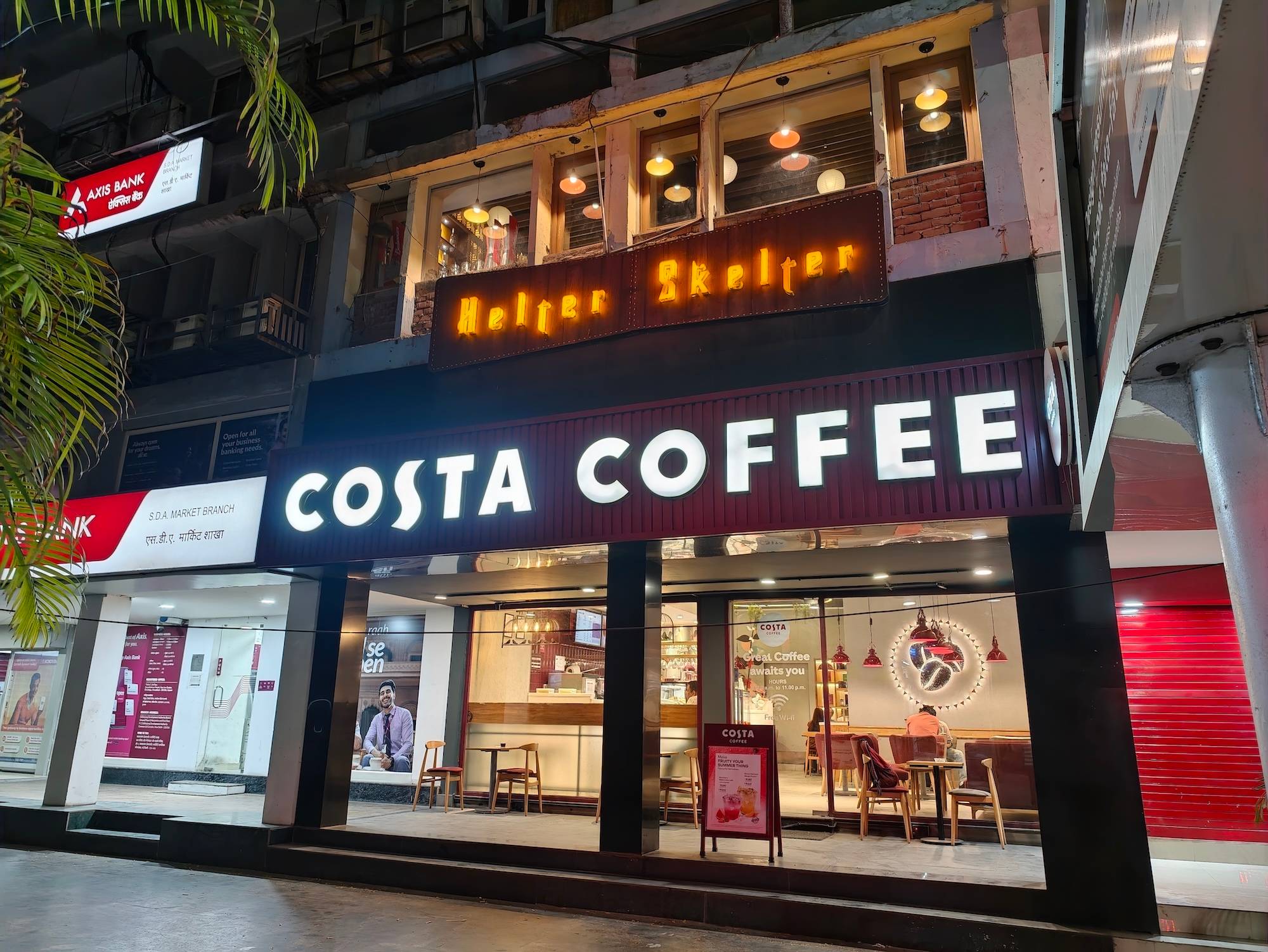
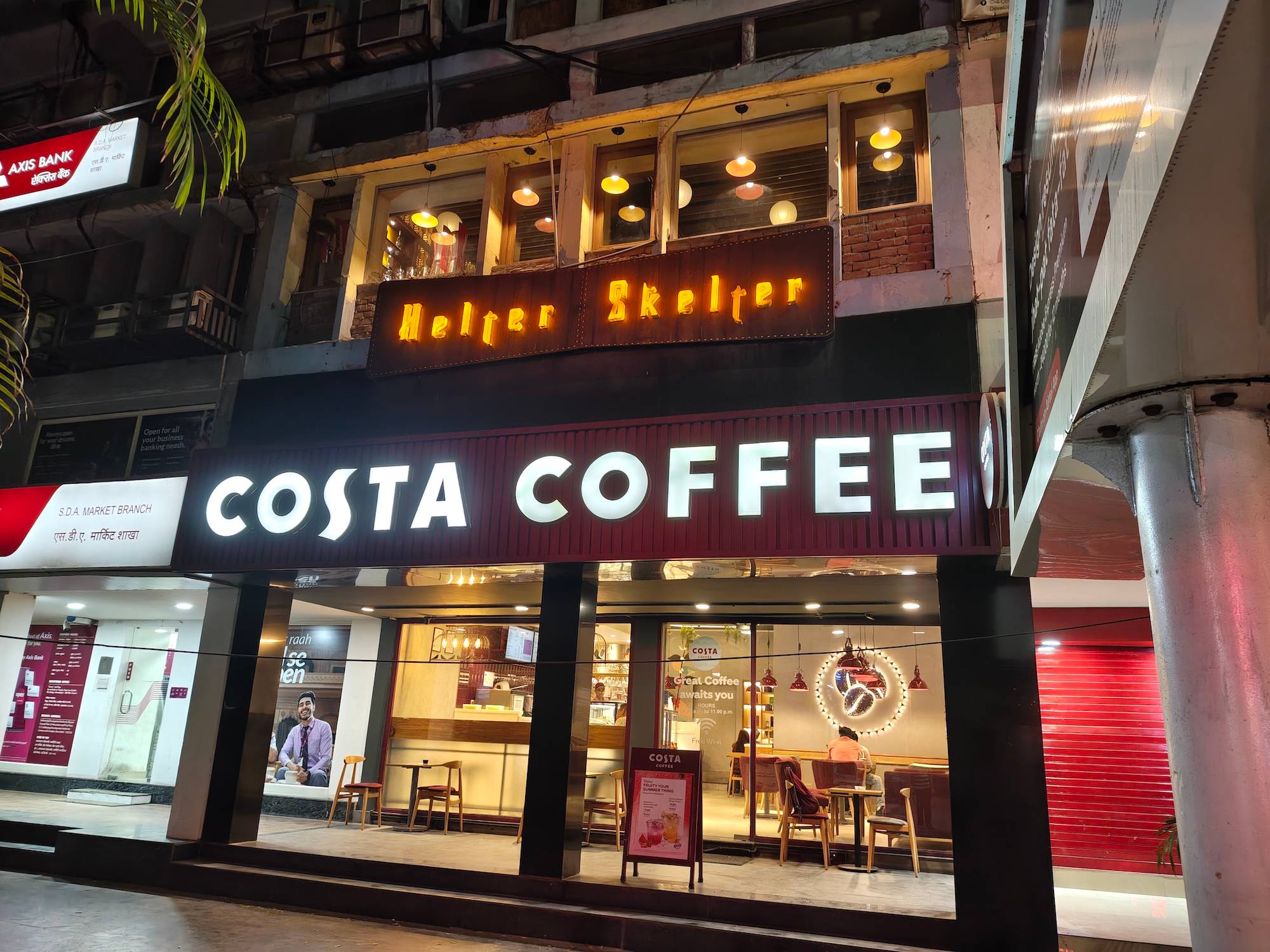
This outcome wasn’t a surprise, as we noticed something similar in our Motorola Signature review, and both devices have identical camera systems. That is a reasonable trade-off for a foldable in 2026, and it does not take away from what is otherwise a very capable camera system on a book-style foldable.
Displays
The Razr Fold has two displays, and both are excellent. The 8.1-inch inner display is marginally larger than the Galaxy Z Fold7 and Vivo X Fold5, and it is quite useful, particularly for multitasking and reading. It is a 2K p-OLED panel with a 120Hz refresh rate, Dolby Vision, HDR10+, 100% DCI-P3 coverage, and peak brightness of 6,200 nits. In practice, it is vivid, sharp, and bright enough to use comfortably under direct sunlight, which has historically been a weakness of foldable displays. The screen crease is present, as it is on every book-style foldable, but it is subtle enough that you stop noticing it within the first day of use.
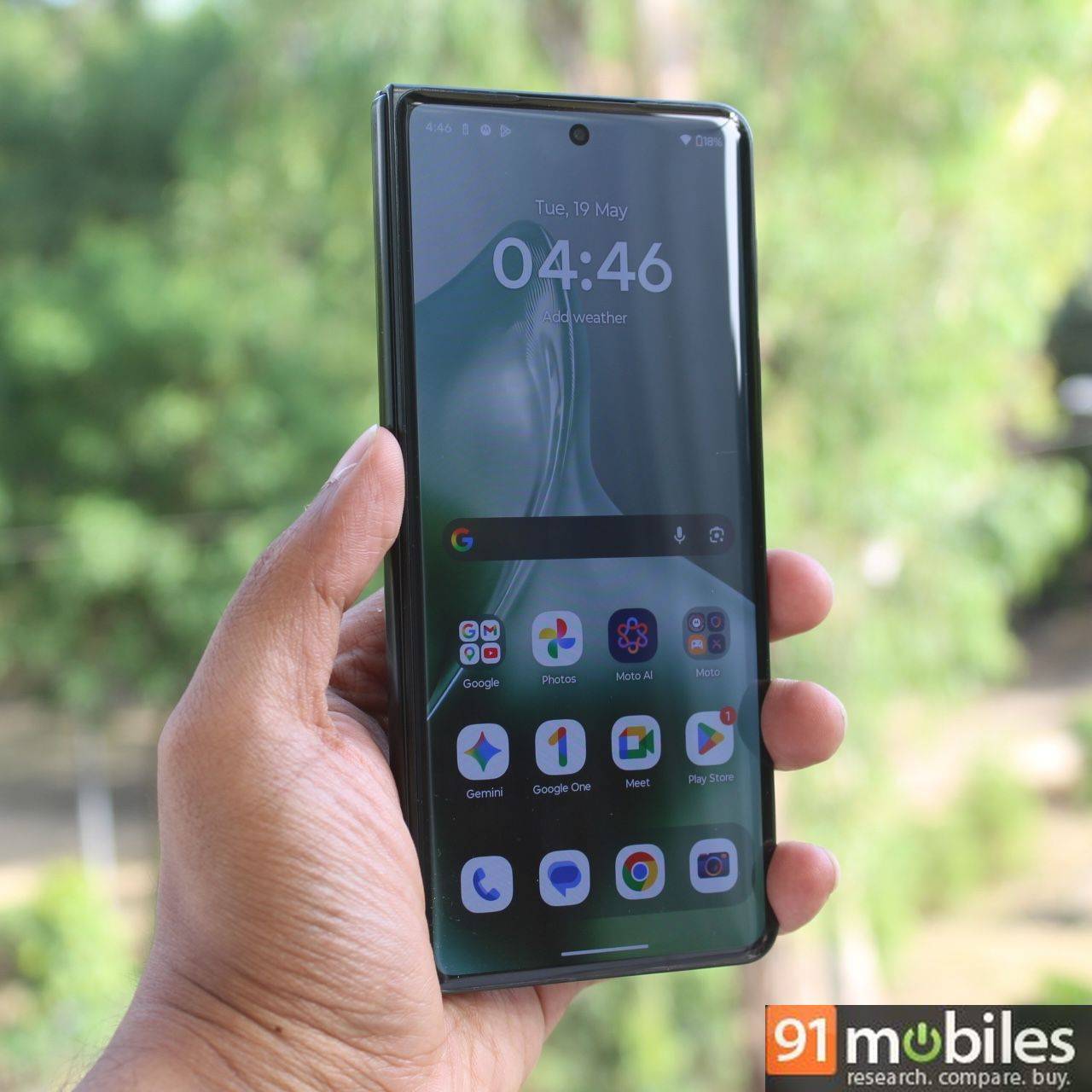
Screenshot of Flicker Prevention
All in all, the Razr Fold delivers one of the best dual-display experiences currently available on a book-style foldable, and the inner screen is particularly impressive for a first-generation device from Motorola in this category.
Performance
The Razr Fold runs the Snapdragon 8 Gen 5, not the Snapdragon 8 Elite Gen 5 that powers this year’s flagship smartphones. So, while it doesn’t achieve the 3.5 million+ AnTuTu scores that flagships like the Xiaomi 17 Ultra and Samsung Galaxy S26 Ultra do today, the Razr Fold is still faster than its foldable peers.


In practice, the Razr Fold feels responsive and fluid in everyday use. Apps open quickly, switching between them is smooth, and multitasking across the large inner display works as well as it should. The 16GB of LPDDR5X RAM means the phone keeps plenty of apps alive in the background without having to reload them. I did not notice any slowdowns during my time with the device on daily tasks.
Where Motorola’s chip choice pays off is in thermals. The Razr Fold throttles noticeably less than the Galaxy Z Fold7 under sustained load, which means performance stays more consistent over heavy use. In the Burnout throttle test, the Razr Fold throttled to 40% of peak performance, whereas the Galaxy Z Fold7 and Pixel 10 Pro Fold throttled to less than 30%.
The liquid cooling system helps here. The phone did get warm during gaming, but never uncomfortably so. Whether the lower benchmark ceiling bothers you depends entirely on what you are buying this phone for. For productivity, multitasking, and everyday use on the Razr Fold’s large display, the Snapdragon 8 Gen 5 has no trouble keeping up.
Software
The Razr Fold runs Android 16 with Hello UI on top, and it is a largely clean and well-considered software experience. Motorola’s UI has always been closer to stock Android than most rivals, and that remains true here. There are fewer than 40 pre-installed apps, though the Pixel 10 Pro Fold is perhaps the best in this regard, with only 28 apps out of the box.
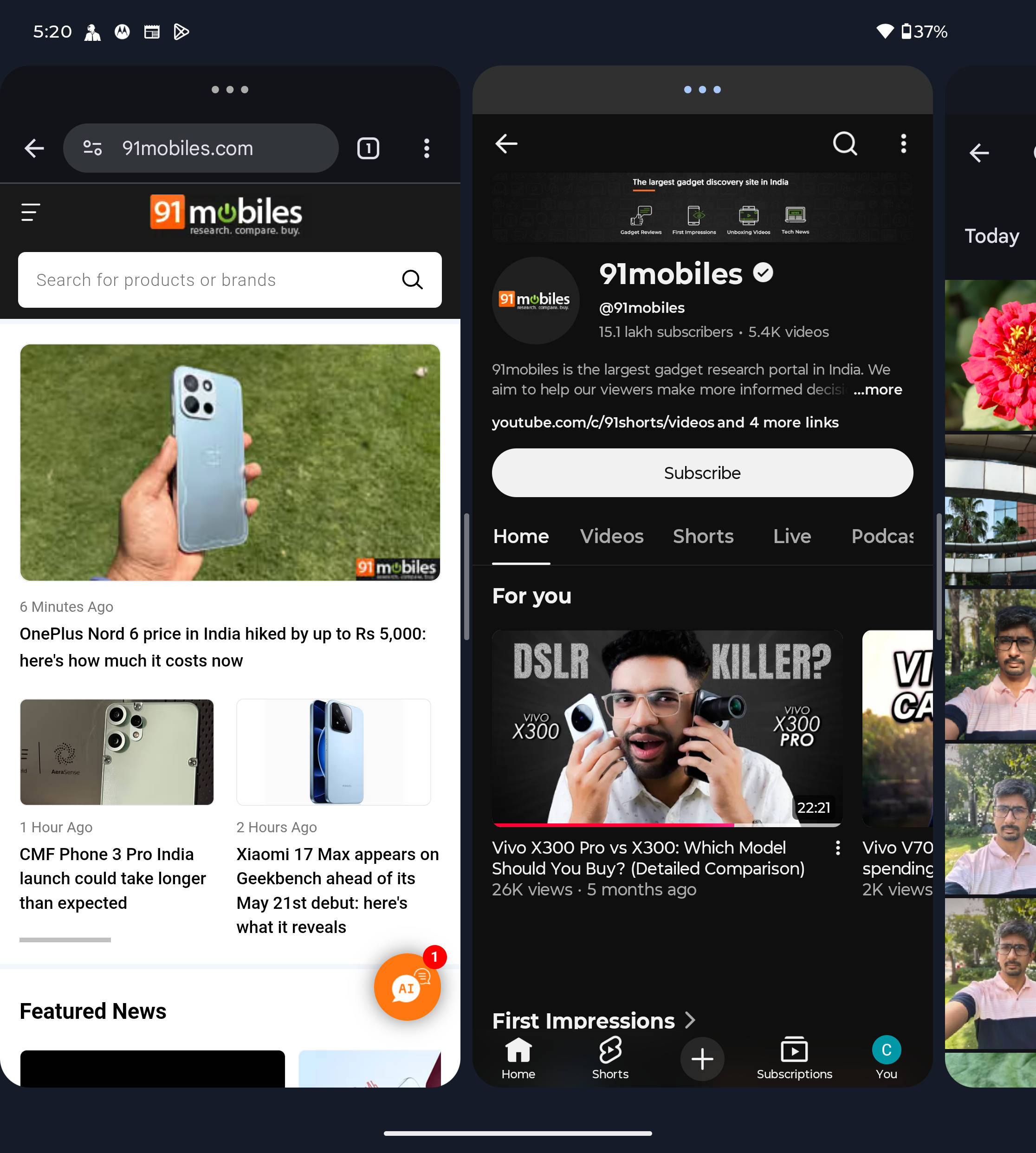
The interface is clean, and the animations are smooth. The larger inner display is put to good use with a split-screen system that lets you save frequently used app pairs as shortcuts, which becomes genuinely useful for productivity-heavy workflows over time. You can have up to three apps working simultaneously in split-screen. Apps can also be popped out into free-form floating windows, giving the Razr Fold a multitasking flexibility that suits the form factor. You can have up to five floating windows. However, resizing the windows is fairly restrictive compared to what you get on the Galaxy Z Fold7. It’s not a deal-breaker, but I do hope Motorola adds more freedom to customise via future software updates.
The Moto AI suite is the one area that needs work. You get access to Google Gemini, Microsoft Copilot, and Perplexity alongside Motorola’s own AI tools, including notification summarisation and real-time call transcription. The third-party AI access is useful, but Motorola’s own AI features feel a step behind what Samsung and Google are offering on their respective flagships.
While Motorola’s software optimisation for the foldable form factor is decent, it’s still lacking the polish that Samsung’s OneUI currently offers. This isn’t surprising, and I do believe Motorola is on the right track to improve this further with future iterations.
Battery
Book-style foldables have two large displays that tend to use up a lot of battery. While the foldable design currently makes it difficult to add 8,000mAh or 9,000mAh batteries, as you see in regular smartphones nowadays, it’s worth having the best possible battery that current technology allows. Thankfully, the Motorola Razr Fold and Vivo X Fold5 are the only two foldables currently in India to offer a 6,000mAh battery.
The 6,000mAh silicon-carbon battery (split in two) inside the Razr Fold comfortably delivers a full day of battery life and then some. During my review, I forced myself to use the larger display more than I usually would to stress the battery, and I was happy with what the foldable delivered. I managed between 4 to 5 hours of screen on time. Unfortunately, the PCMark battery benchmark test kept crashing, so I don’t have any synthetic benchmark numbers for you.
What’s even better is that the Razr Fold charges at 80W using the bundled 90W charger. It takes roughly 46 minutes to charge the phone from 20 to 100 percent, faster than the Galaxy Z Fold7, which takes around 75 minutes on 25W speeds. Interestingly, the Vivo X Fold5, which supports a similar 80W charging and battery capacity as the Razr Fold, takes the least amount of time to fully charge.
| Smartphone | Battery Capacity | Charging Support | Charging time (20% to 100% ) |
| Motorola Razr Fold | 6000 mAh | 80W Turbo Power Charging | 46m |
| Samsung Galaxy Z Fold7 | 4400 mAh | 25W Fast Charging | 1h 14m |
| vivo X Fold 5 | 6000 mAh | 80W Flash Charging | 38m |
| Google Pixel 10 Pro Fold | 5015 mAh | 30W Fast Charging | 1h 16m |
Final verdict
Motorola’s first book-style foldable looks quite polished, which is saying something. The Razr Fold avoids the classic “first-generation pitfalls” by leveraging years of flip-phone expertise, resulting in a device that is robust, practical, and highly competitive right out of the gate.
It does require a few intentional trade-offs. If your priority is the absolute slimmest chassis or the bleeding-edge benchmark scores of the Snapdragon 8 Elite Gen 5, rivals like Samsung and Vivo remain ahead. Motorola’s software environment, while clean and highly customisable, also still needs a bit of large-screen optimisation to match the mature multitasking polish of OneUI.
However, where the Razr Fold chooses to win, it wins decisively. By prioritising physical endurance, both in the form of a massive, fast-charging 6,000mAh battery and a robust steel hinge, alongside a genuinely excellent periscope camera system and unmatched eye-comfort display tech, Motorola has built a foldable designed for the real world. Backed by an industry-best 7-year software update promise, the Razr Fold isn’t just a great first attempt; it is one of the most reliable and practical book-style foldables you can buy in 2026.
Editor’s rating: 8.3 / 10
Pros:
- Superb dual displays
- Class-leading battery and charging
- Impressive camera system
- Long-term software support
Cons:
- Thicker and heavier than rival foldables
- Lower peak performance
- Low-light camera performance could be better
 | vs |  |
| vs |  |