Review Summary
Expert Rating

OPPO has expanded its K13-series lineup in India with two new smartphones, the OPPO K13 Turbo and K13 Turbo Pro. Both target the growing mid-range gaming segment, something that both POCO and iQOO have been doing for a while. OPPO, however, is entering the field with its own twist. Instead of relying solely on a powerful chipset and passive cooling, the K13 Turbo series comes with an active cooling solution that includes a built-in fan and vents, a feature more commonly found on laptops than smartphones. This design helps dissipate heat more effectively, enabling the chipset to sustain peak performance during extended gaming sessions.
Beyond the fan, the K13 Turbo series also packs a vapour chamber cooling system, a high-performance processor, bypass charging, and other gaming-focused enhancements. Both smartphones come with similar specifications, with the chipset being the most notable difference. The OPPO K13 Turbo Pro boasts a more powerful chipset than the standard K13 Turbo, along with a higher price, starting at Rs 37,999 for the 8GB RAM variant.
Is the OPPO K13 Turbo Pro worth its asking price? Read this OPPO K13 Turbo Pro review to find out.
Table of Contents
Verdict
The OPPO K13 Turbo Pro should appeal to dedicated gamers. The handset has plenty to offer in that regard, with its powerful chipset, large battery, and advanced cooling system. Its design is also likely to attract users. However, if you want a smartphone that excels in photography and provides a clean software experience, you may want to look elsewhere.
Distinctive, yet appealing design

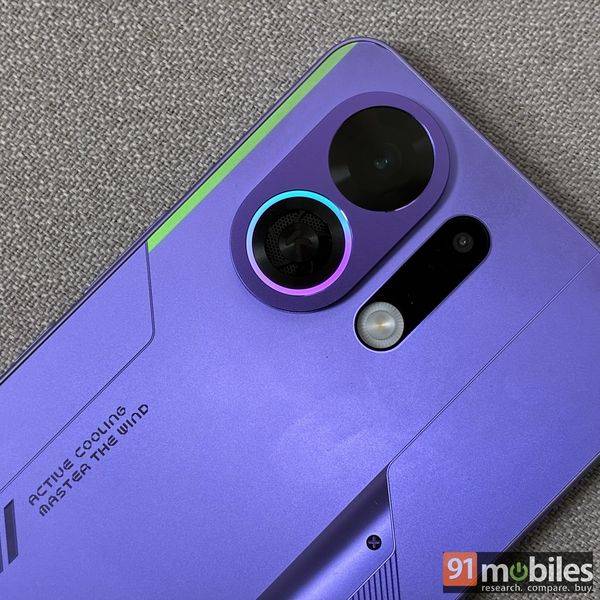
While the OPPO K13 Turbo Pro is all about performance, it also stands out for its design. The back panel is visually busy but striking, with racing-inspired accents, sharp angular contours, and an active cooling fan encircled by a metallic ring on the slightly raised camera module. The phone comes in three colourways: Silver Night, Purple Phantom, and Midnight Maverick. Our review unit was the Purple Phantom variant, which OPPO says draws inspiration from neon-lit streets and futuristic speed. True to the claim, the handset incorporates neon-coloured branding and graphic lines that capture that vibrant, cyber-punk aesthetic.
| Smartphone | Thickness | Weight | IP Rating |
| OPPO K13 Turbo Pro | 8.3 mm | 208 grams | IPX8 +IPX6 +IPX9 |
| POCO F7 | 7.98 mm | 222 grams | IP68 +IP66 +IP69 |
The phone sports a matte finish that does a good job of resisting fingerprints and smudges, helping it maintain a clean look even with regular use. OPPO also includes a matching protective case in the box, which adds an extra layer of safety without compromising the design. In terms of durability, the handset comes with IPX6, IPX8, and IPX9 water-resistance ratings, meaning it can withstand heavy splashes, immersion, and even high-pressure sprays of water. However, there’s no official dust protection rating. This could be due to the vents on the right spine that do well to dissipate heat during extensive workloads, but can let fine dust particles slip in. The brand even provides a small brush to clean those vents from time to time, but our advice to you would be to keep the K13 Turbo Pro away from sandy environments like beaches.
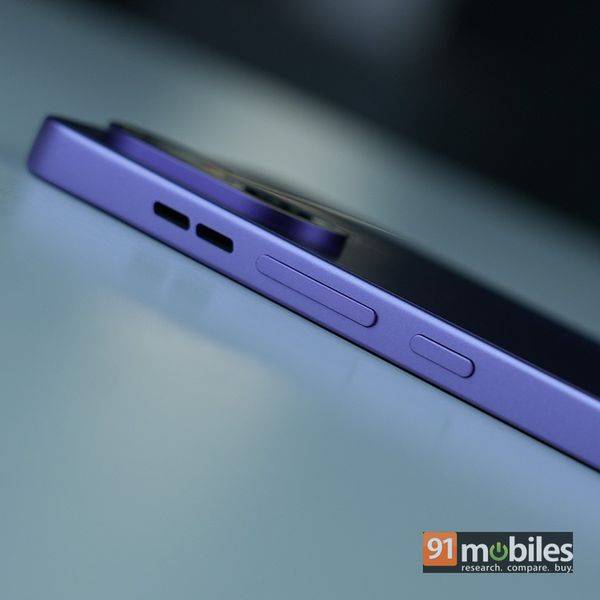
Moving on, the OPPO K13 Turbo Pro can feel slightly hefty. At 207 grams in weight and 8.31mm thickness, the handset is neither the lightest nor the slimmest smartphone out there. I also feel the weight is not evenly distributed, as the top portion feels slightly heavier than the bottom. This can make the phone feel a touch top-heavy during one-handed use or when scrolling for extended periods. However, the trade-off is less noticeable in gaming scenarios, where the device is typically held horizontally with both hands, giving it a reassuring presence that gamers may even appreciate.
Gaming performance with cooler temps
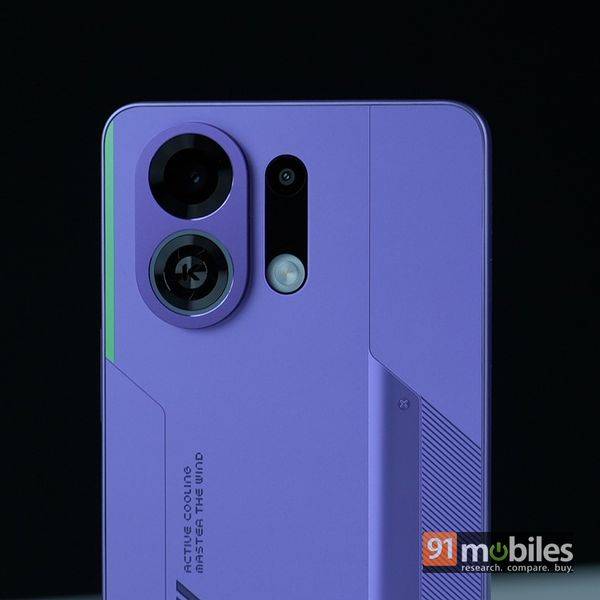
To handle gaming, the OPPO K13 Turbo Pro rocks the Snapdragon 8s Gen 4 chipset, which we have already seen on the likes of POCO F7 within the segment. It is a flagship-grade chipset, second best in the Qualcomm lineup of SoCs, paired with up to 12GB of RAM and 256GB of storage. True to its gaming spirit, the RAM and storage remain the fast LPDDR5X and UFS 4.0 type, respectively. That said, there is no slot for a microSD card to further expand the storage.


To keep performance in check under heavy loads, OPPO has gone all out with both passive and active thermal cooling solutions. The K13 Turbo Pro features a sizeable 7,000mm square vapour chamber, a graphite sheet for heat dissipation, and a first-of-its-kind Active Cooling Fan built directly into the device. The fan itself is waterproof, spins at up to 18,000rpm, and uses ultra-thin 0.1mm blades to deliver precise, targeted airflow. Thanks to this elaborate cooling setup, the smartphone is claimed to run about 2–3 degrees Celsius cooler than conventional devices during intensive tasks such as extended gaming sessions for smooth gameplay with less throttling.
That wasn’t entirely the case when we compared the K13 Turbo Pro with its closest rival, the POCO F7, though OPPO’s handset still came out ahead. We tested both devices by running BGMI at the highest frame-rate settings with Smooth graphics for 30 minutes. At the end of the session, the POCO F7’s temperature rose by 8 degrees Celsius, while the OPPO K13 Turbo Pro registered a slightly lower increase of 7 degrees Celsius. It may seem marginal, but over extended gaming sessions, the OPPO smartphone’s active cooling should make a difference.
Additionally, you can expect smoother gameplay on the K13 Turbo Pro than its rival. During our lab test, the handset delivered 107 fps, which is closer to the claimed 120 fps, whereas the POCO F7’s frame rate hovered around 88.
The synthetic benchmark scores of the smartphone remain on par with the POCO F7, and users have the option to turn off the fan from the settings menu. It may not have a significant impact on the battery, but the handset’s thermal efficiency and frame rates do take a hit. The fans are automatically triggered whenever a game is launched, whether it’s a graphically demanding title like BGMI or something light-hearted like Ludo. When spinning, the fan produces a faint whirring sound, but it’s subtle enough to be drowned out by in-game audio and unlikely to cause distraction.
Strong battery backup
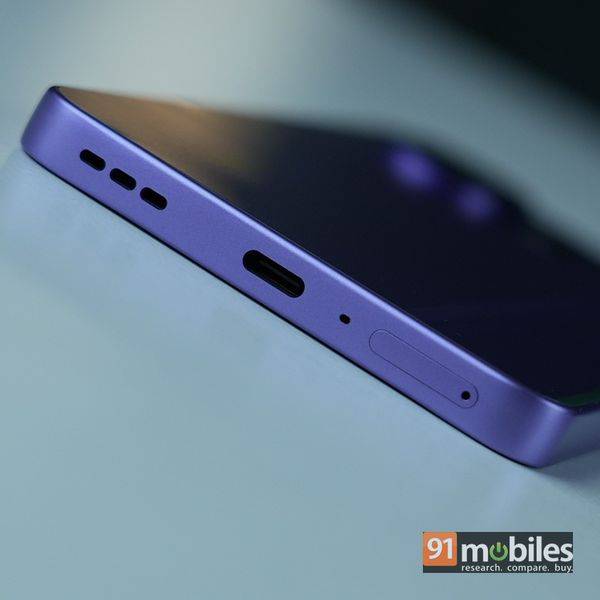
Supporting that extensive gameplay is a 7,000mAh battery, fabricated using the latest silicone-carbon tech. While sizeable, it still trails the POCO F7 in both sheer capacity and measured endurance. In the PCMark battery test, the OPPO K13 Turbo Pro lasted nearly 7 hours less than the POCO handset, which carries a larger 7,550mAh unit.
In real-world testing, the OPPO K13 Turbo Pro’s battery endurance proves comparable to its rival. The phone used up 19 percent of its charge after streaming a 30-minute YouTube video and playing BGMI, Call of Duty: Mobile, and Real Racing 3 for another 30 minutes each. This was just 2 percent higher than the POCO F7’s consumption under similar conditions. Maybe turning that fan off could level things up for the OPPO smartphone.
Be that as it may, the OPPO K13 Turbo Pro can be a reliable companion for all-day endurance even with heavy use. If your usage exceeds and the battery runs out sooner, you can top up the device, at least till 80 percent, in just 30 minutes with the 80W charger provided in the box. However, the handset took a bit longer than expected to complete a full charge from 80 percent to 100 percent, an issue that may well be software-related. We reached out to the brand, but didn’t receive any clarification at the time of writing this review.
Respectable viewing experience
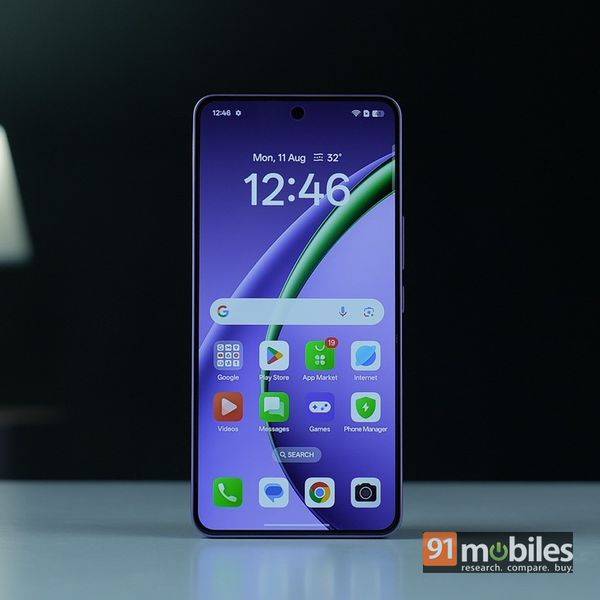
The OPPO K13 Turbo Pro sports a 6.8-inch FHD+ AMOLED display with up to 120Hz adaptive refresh rate and 100 percent DCI P3 colour gamut. That said, the brightness remains modest with a 1,800-nit peak level, which may not be legible in extremely bright environments. Indoors, and even outdoors, I didn’t face any trouble reading the screen. However, I would say the POCO F7, which comes with 3,200 nits peak brightness, was a tad brighter in similar environments and brightness settings. The colours also appeared more natural on the POCO smartphone, thanks to its rich contrast, than on the OPPO K13 Turbo Pro.
By default, the OPPO smartphone opts for a slightly brighter and more striking look with its vivid colour profile. Users, however, can fine-tune the screen’s colours to their preference through the settings menu. The phone is backed by stereo speakers, which can get louder and offer a slightly wider soundstage compared to the POCO F7. That said, the audio lacks depth, with lower frequencies sounding somewhat subdued.
Familiar software, limited support
| Smartphone | Pre-Installed Apps | Software Support |
| OPPO K13 Turbo Pro | 72 | 2 Years OS Updates + 3 Years Security Updates |
| POCO F7 | 66 | 4 Year OS Updates + 6 Year Security Updates |
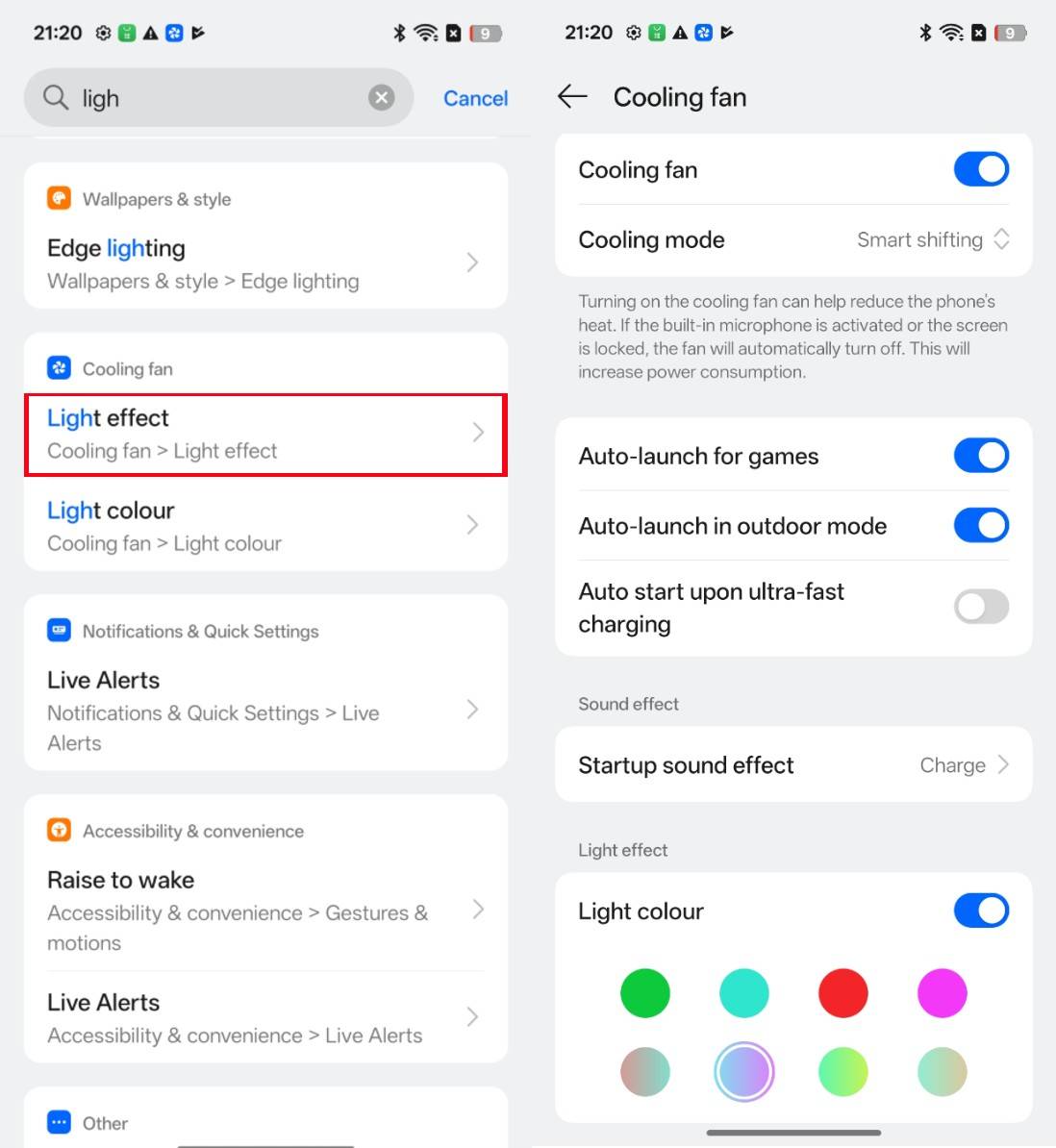
Software-wise, the OPPO K13 Turbo Pro runs Android 15-based ColourOS 15 out of the box. The UI remains identical to the other OPPO smartphones launched this year. There aren’t any gaming-focused features to make this K-series smartphone stand out from the rest of the lineup, except for the ‘Turbo Breathing Light’, which is basically an LED ring around the cooling fan. The ring supports 8 customisable RGB colours and provides visual alerts and feedback during gaming for an immersive experience. The ring can also light up for notifications and charging, and you have the option to turn it off.
Moving on, OPPO is committing to two years of major OS updates and three years of security patches for the smartphone. While serviceable, this falls a bit short, as several competing brands in the same segment are now offering longer software support. The other concern is the sheer number of apps the phone comes pre-loaded with. There are a total of 74 apps, out of which 19 are third-party apps that are popular but can eat up your smartphone’s storage.
Be that as it may, you do get some AI features on the phone, if not all, to recompose images, remove unnecessary objects, get rid of reflections, enhance photos, and summarise phone calls, among other things.
Average cameras
Cameras aren’t the highlight of the OPPO K13 Turbo Pro, and that becomes apparent from the hardware itself. The handset carries a 50MP primary shooter accompanied only by a 2MP monochrome sensor, while selfies are handled by a 16MP front camera. For a phone in the sub-Rs 40,000 segment, this isn’t a very versatile setup. While the omission is understandable given the gaming-centric focus, an 8MP ultrawide lens would have added far more value than a 2MP monochrome sensor that only delivers black-and-white shots. By contrast, the POCO F7, which costs Rs 6,000 less, does include an ultrawide sensor.
Here’s a quick comparison of how the OPPO K13 Turbo Pro camera’s performance against the POCO smartphone:
Daylight


Both smartphones are almost on par with each other with their image quality in daylight. However, the POCO F7 image looks closer to reality, with better contrast ratio and details. Zoom in on the ‘Unitech’ signboard in the left edge, and you will notice the OPPO K13 Turbo Pro image with some grains. That said, the OPPO smartphone delivers superior dynamic range and exposure to details in the shadowy areas. Notice the tree behind the fountain in both images.
Portraits


If you are into snapping portraits, these are not the smartphones to get. The POCO F7 fails to get the facial details due to underexposure, whereas the OPPO K13 Turbo Pro overexposes the images. The portraits do look more likeable on the OPPO smartphone, but the skin tones and colours are not close to reality. Both smartphones struggle with edge detection and a natural bokeh effect.
Selfie


Despite the smaller sensor size, the OPPO K13 Turbo Pro’s front camera delivers superior facial details and clarity. The skin tones are more appealing and accurate on the OPPO smartphone than on the POCO F7.
Low light (night mode)
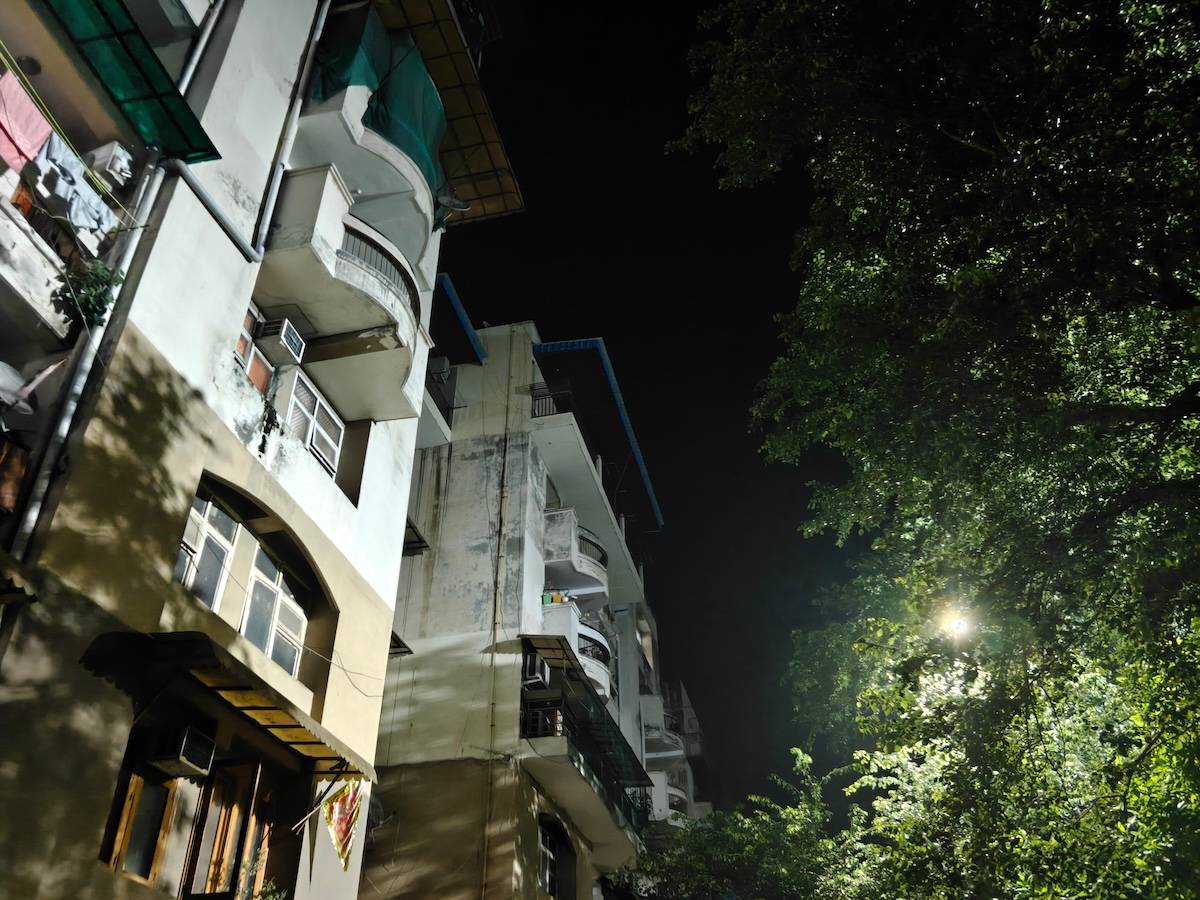
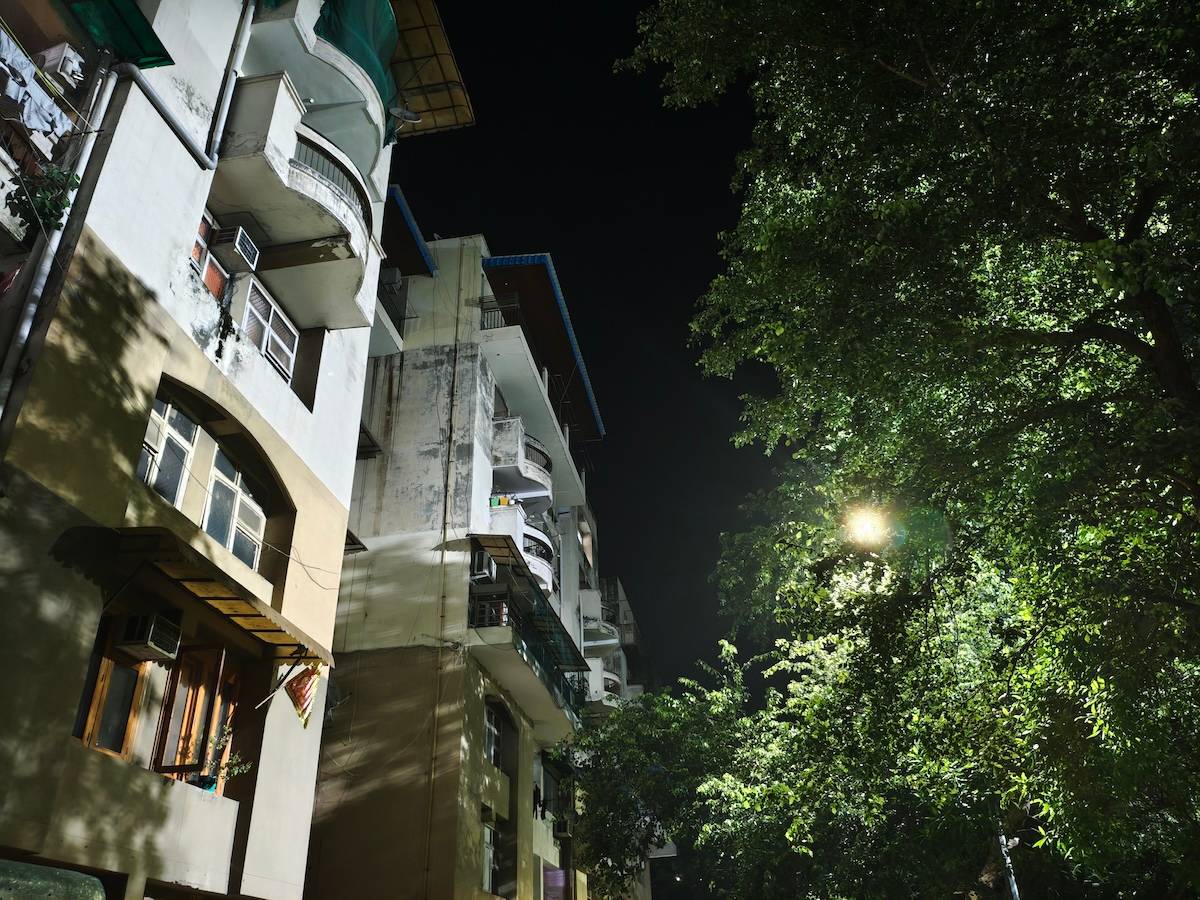
Low-light photography is only worth attempting with Night Mode enabled on both smartphones, and even then, some compromises are unavoidable. The OPPO handset handles detail retention and noise control reasonably well, while also excelling over the POCO F7 by reducing light flares and keeping the overall scene closer to reality. The POCO, on the other hand, produces images that appear slightly washed out but capture noticeably more detail than the OPPO.
Overall, the K13 Turbo Pro’s imaging capabilities are good, but not extraordinary for a device priced in the sub-Rs 40,000 segment.
Final verdict
The OPPO K13 Turbo Pro makes its priorities clear — it’s a gaming-first device. That’s a departure from OPPO’s usual strength in cameras and design. While the K13 Turbo Pro does carry a bold, eye-catching design, it isn’t the slimmest or lightest around, and its cameras leave a bit to be desired. If photography is your focus, there are other options under Rs 40,000, such as the Vivo T4 Ultra (review) and Samsung Galaxy A36 (review).
The smartphone’s software support policy is also behind competitors, and its display, while good, isn’t the brightest in its class. This is where the POCO F7 (review) could shine, which is also a gaming-focused smartphone with the same chipset and comes at a more affordable price.
However, the OPPO K13 Turbo Pro outshines the competitor with a superior cooling system. The active cooling fan is more than just a gimmick. It genuinely helps the Snapdragon 8s Gen 4 chipset sustain performance under long gaming sessions, and the phone delivers consistently high frame rates with fewer thermal slowdowns compared to rivals. Its cyberpunk-inspired design, massive battery, and fast charging make it an appealing package for gamers who want a phone that feels different from the crowd.
If these aspects appeal to you, the OPPO K13 Turbo is worth considering.
Editor’s rating: 8 /10
Reasons to buy
- Distinctive, gaming-inspired design with LED lights.
- Active cooling fan sustains performance during long sessions.
- The Snapdragon 8s Gen 4, paired with LPDDR5X RAM and UFS 4.0 storage, delivers flagship-grade speed.
- 7,000mAh battery with reliable endurance and 80W fast charging.
Reasons not to buy
- Average primary camera and no ultrawide lens.
- Only two years of OS updates and three years of security patches.
- The phone comes with as many as 74 apps pre-installed.