Review Summary
Expert Rating
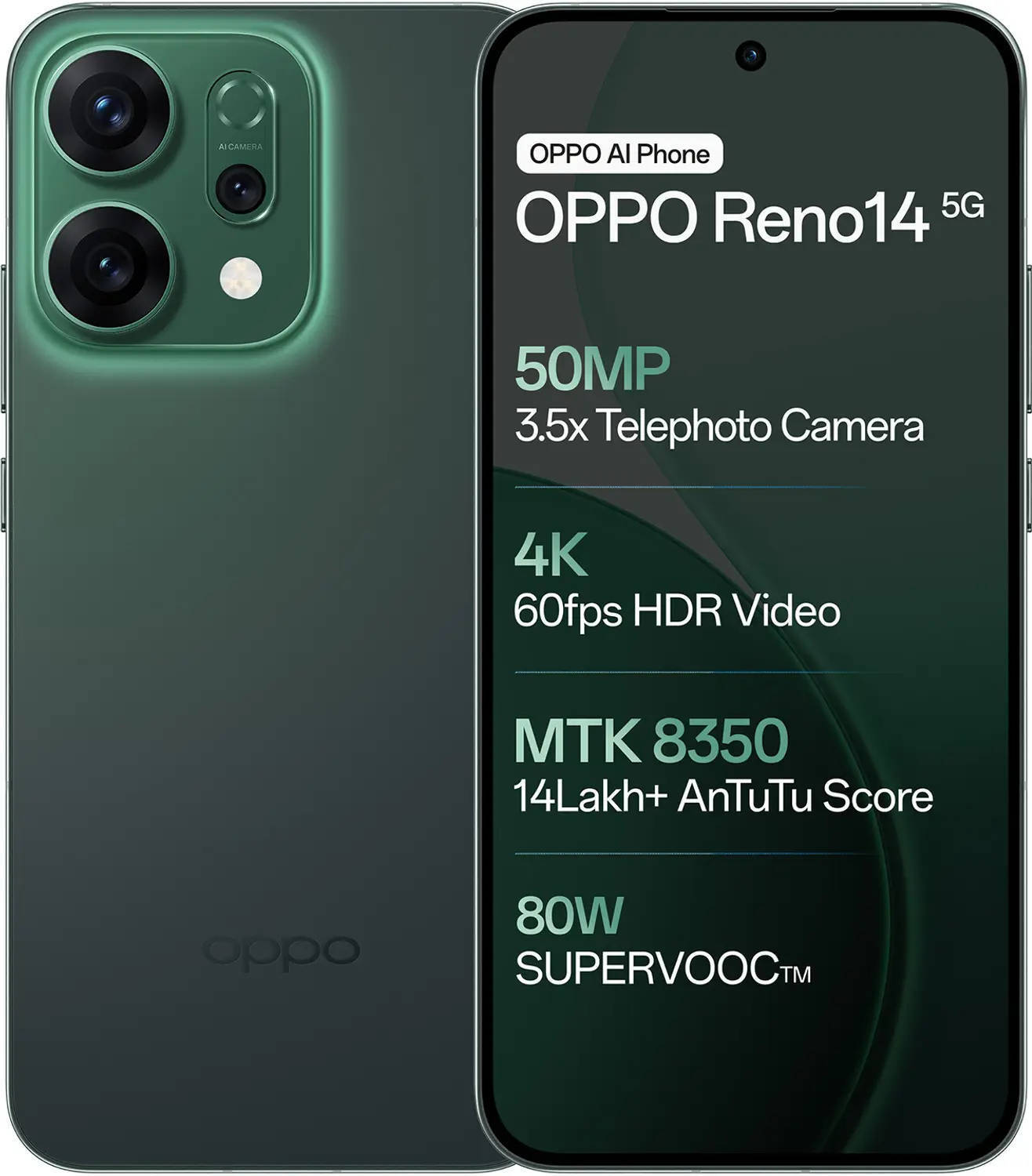
The OPPO Reno14 serves as a more compact alternative to its Pro sibling, trading some high-end specs for a lighter package. The handset swaps the chipset for a toned-down version and uses an 8MP ultrawide camera instead of the Pro’s 50MP unit. The battery is slightly smaller too, at 6,000mAh versus 6,200mAh, but that should be balanced by the reduced power draw of its 6.59-inch display, compared to the Reno14 Pro‘s (review) larger 6.83-inch screen.
But, is the OPPO Reno14 a worthy buy for its asking price, which starts at Rs 37,999? Read on to find out in this review.
Table of Contents
Verdict
The OPPO Reno14 will sway you with its looks, viewing experience, battery life, and more importantly, the cameras. While its ultrawide sensor doesn’t quite match the prowess of the Pro model, it still outperforms most rivals in this segment and helps justify the asking price. That said, the experience isn’t without caveats: the software could use refinement to cut down on bloatware, sunlight legibility leaves room for improvement, and slightly better battery optimisation would make it a stronger choice for demanding users.
Premium aesthetics in a handier form
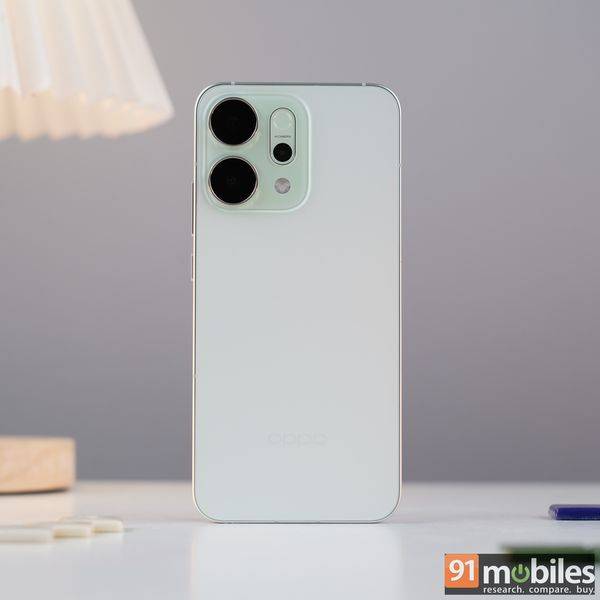
The OPPO Reno14 design mirrors that of the Reno14 Pro, offering the same premium in-hand feel and comfort but at a more accessible price point. The handset features a frosted glass back that feels smooth (velvet-like) to the touch, paired with a squircle-shaped camera module in the top-left corner housing its triple-lens setup. Furthermore, the relatively small form factor makes the device easier to manage than the Pro model. The flat edges, 187 grams in weight, and 7.4mm thickness also contribute to the ergonomics of the device, making it comfortable to wield.
OPPO has thoughtfully made the corners of the Reno14 curved to prevent them from digging into your palm, making the device more comfortable to hold. Unlike the Pro model, the Reno14 is available in a wider range of colourways: Pearl White, Forest Green, and Mint Green. Our review unit came in Mint Green, which feels fresh, calm, and soothing to the eye. The finish also proved resistant to fingerprints and smudges during daily use, thanks to OPPO’s Velvet Glass technology. This same treatment extends to the other variants as well, including the Pearl White option, which stands out for its subtle patterned design beneath the glass.
| Smartphone | Thickness | Weight | IP Rating |
| OPPO Reno14 | 7.4 mm | 187 grams | IP68 +IP66 +IP69 |
| vivo V60 | 7.53 mm | 192 grams | IP68 +IP69 |
The durability and other aspects of the smartphones remain similar to the ‘Pro’ model, with the Corning Gorilla 7i display protection and a robust triple IP66, IP68, and IP69 rating, safeguarding it against dust, splashes, and even high-pressure water jets. The phone sports an IR blaster to control home appliances, a USB Type-C port for charging and data transfer, and an in-display fingerprint scanner for security.
Good display, but lacks brightness
The OPPO Reno14 may be cutting corners in size, but not in viewing quality. The handset sports a 6.57-inch AMOLED panel with a centred punch-hole, ultra-slim bezels, an adaptive 120Hz refresh rate, FHD+ resolution, HDR10+ support, and a peak brightness of 1,200 nits, matching the Pro model. The observation also remains identical, with the display exuding punchy and vibrant colours, but lacking the brightness to make it legible even under harsh sunlight.

That’s not to say outdoor visibility is an issue. During my time with the Reno14 in Delhi’s mostly overcast weather, I had no difficulty reading content on the screen. It even managed sharpness and consistency in colours when viewed from an angle. Moving on, the smartphone sports dual stereo speakers, which enhance the viewing experience with crisp volumes at mid-levels. The speakers can get loud, but at the expense of slight audio distortion.
Downgraded, but still capable cameras
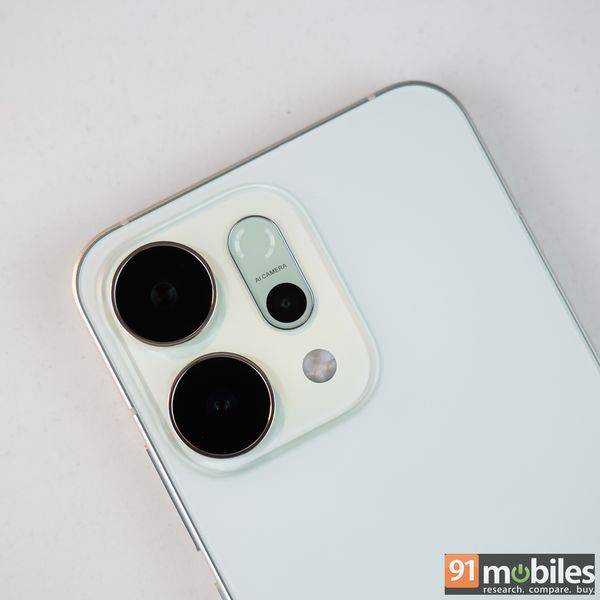
The OPPO Reno14 and Reno14 Pro share a nearly identical camera setup. Both sport a 50MP OIS primary camera, a 50MP telephoto lens with up to 3.5x optical zoom, and a 50MP front-facing shooter. The main difference lies in the ultrawide: the Reno14 makes do with an 8MP sensor, while the Pro boasts a sharper 50MP option. This downgrade means landscape shots on the vanilla model aren’t as detailed or vibrant. That said, when compared with ultrawide offerings in the same price bracket, the Reno14 still manages to hold its ground.
In fact, the OPPO Reno14 manages to edge out the Vivo V60, known for its photography skills in the segment, in most real-world scenarios. While Vivo still shines with its extensive set of modes and filters, the Reno takes the lead in key fundamentals such as detail retention, sharpness, colour accuracy, and the overall ease of using its camera app. Portraits are another highlight, with the phone delivering natural-looking bokeh and precise edge detection. Facial details are well-preserved too, with skin tones appearing impressively close to natural. The selfies captured from its front-facing camera also have substantial details and impressive dynamic range.


That said, the handset falls behind in the competition with its low-light results. The handset gets close to real life, but in an attempt to minimise the noise level, it sacrifices the details and texture that make you want to share the images. Similar to the ‘Pro’ model, the Reno14 includes an ‘Always-on’ flash that provides a soft fill light to draw out more detail in dimly lit conditions. However, even with this aid, the phone struggles with over-smoothening and sometimes shifts colours away from what the eye actually sees.
This colour inconsistency also extends to videography. The Reno14 does offer the advantage of 4K recording at 60fps, something the Vivo V60 lacks, but the footage often carries slightly weaker, pale tones. While you can tweak the colour profile in video mode to achieve a more vibrant look, it requires some trial and error to find a filter that feels close to accurate.
Here’s a comparison of the OPPO Reno14 cameras with the Vivo V60’s in different scenarios for your context:
Daylight

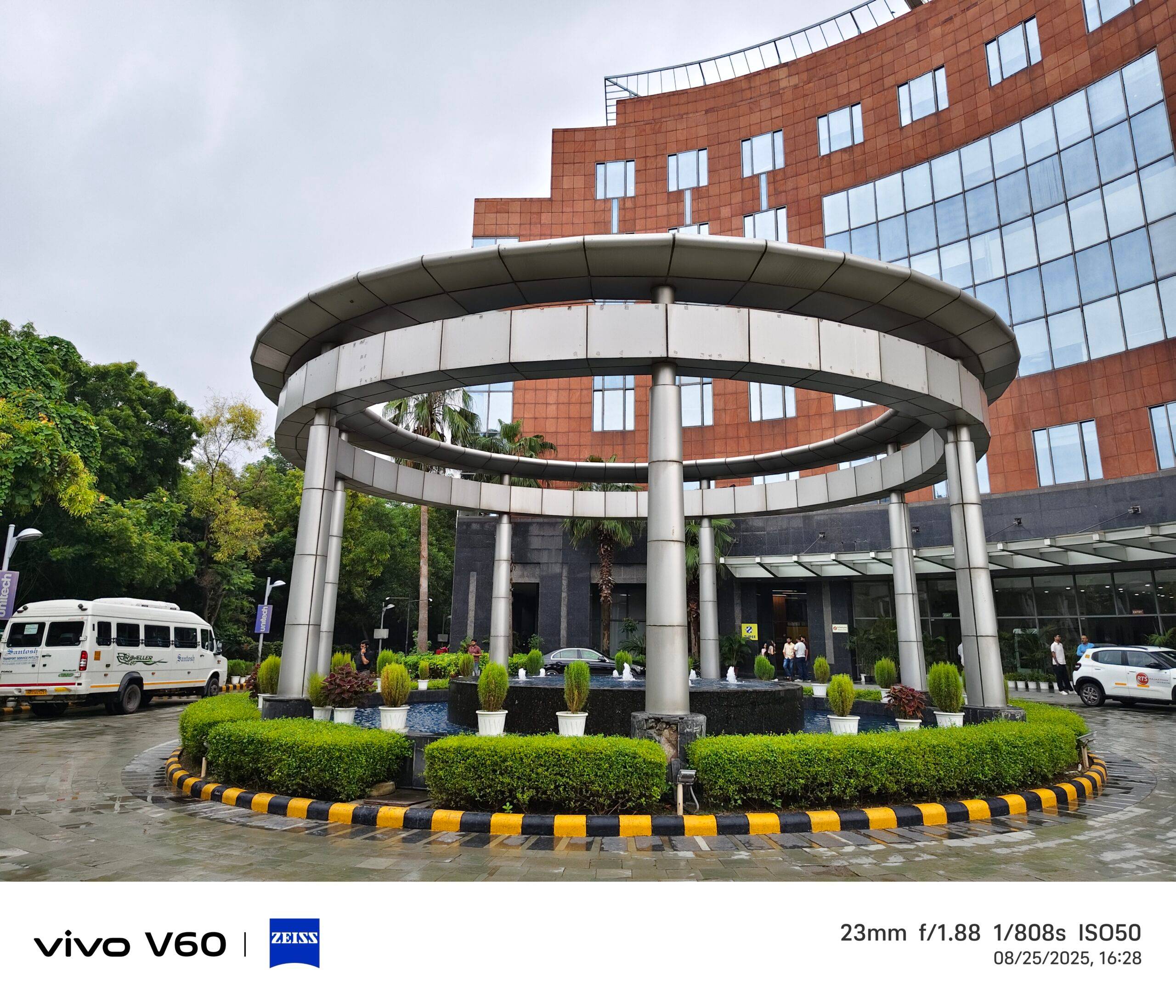
As the images below show, the OPPO Reno14 clearly outperforms the Vivo V60 in terms of detail and overall clarity. The Reno14 also demonstrates superior dynamic range and exposure control, bringing out finer elements even in shadowed areas; for instance, the plants near the gate appear sharper in its shot. While the Reno14 does boost colours slightly, it’s not as aggressive as the Vivo V60, which defaults to a more vivid profile. Vivo does allow you to switch to the Zeiss colour mode for a more natural look, but even then, the detail level remains somewhat underwhelming compared to OPPO’s results.
Ultrawide

Both smartphones show slight shifts in colour science when switching from the primary sensor to their 8MP ultrawide lens. However, the difference is far more pronounced on the Vivo V60, where colours appear inconsistent, details take a noticeable hit, and mild distortion creeps into the frame. The OPPO Reno14’s ultrawide, by contrast, delivers a more faithful representation of the scene with sharper details and minimal distortion, making it the more reliable option for wide-angle shots.
Portrait


While the OPPO Reno14 may not offer the extensive range of bokeh styles available on the Vivo V60, it delivers portrait shots that come impressively close to DSLR quality. In the portraits captured below with the 50MP telephoto lens on both devices, the Reno14 emerges as the clear winner. Despite similar zoom levels, the Vivo V60 struggles with subject separation, producing inconsistent bokeh and softer facial details.
The OPPO Reno14, in contrast, excels in all these areas. It not only delivers sharper facial detail but also retains subtle shadow information that the Vivo tends to miss. A closer look at the cap highlights the difference even more, where the V60 applies a smudged, paintbrush-like effect, the Reno14 captures the finer textures with accuracy.
Selfies

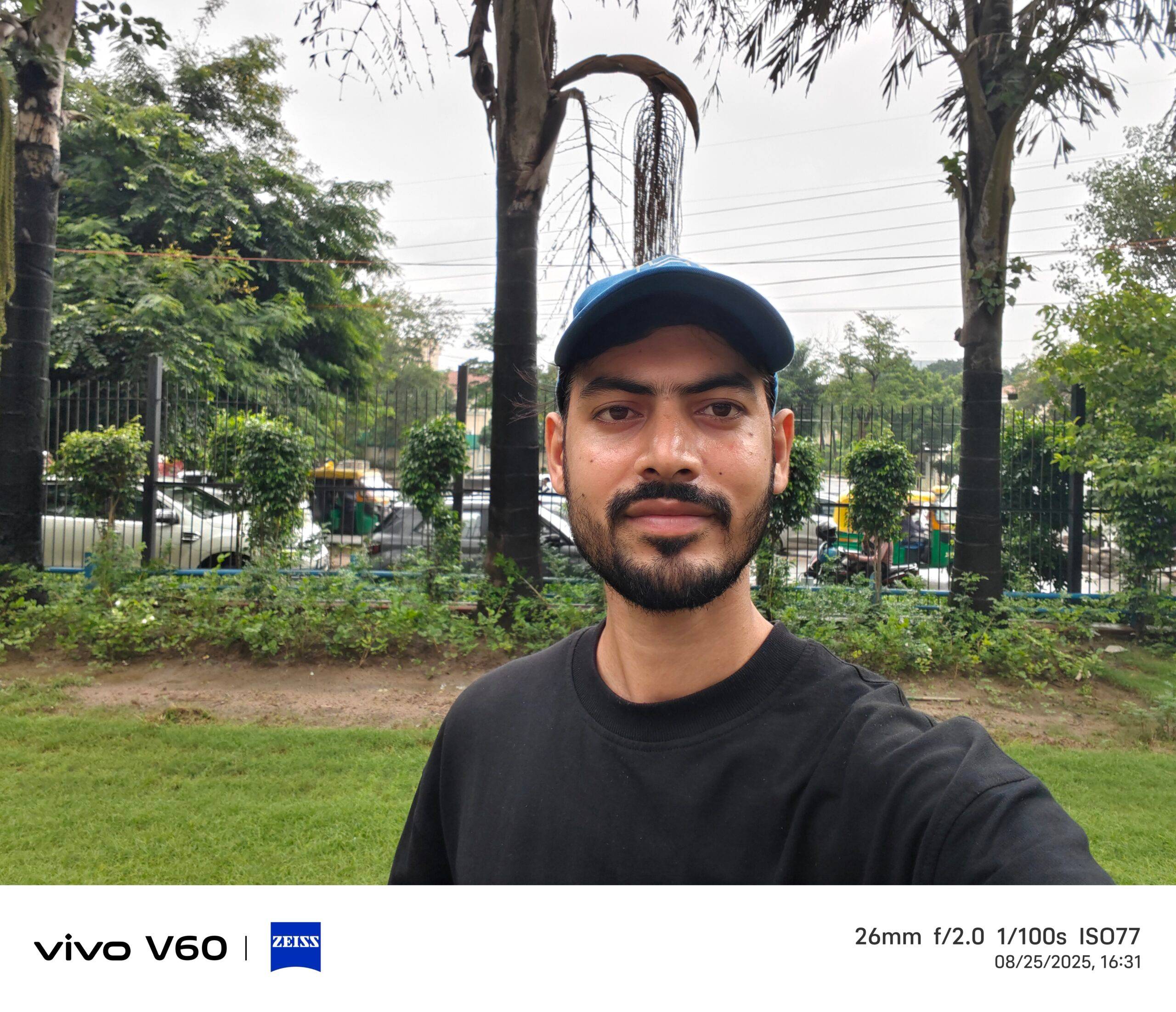
Selfie performance between the two smartphones is broadly similar, but the OPPO Reno14 edges ahead if you value superior facial detail, balanced exposure, wider dynamic range, and a more realistic overall look. The Vivo V60 does offer a ‘Textured’ mode that enhances finer details, but this often comes at the cost of natural skin tones, making the results feel less accurate.
Low-light (night mode)

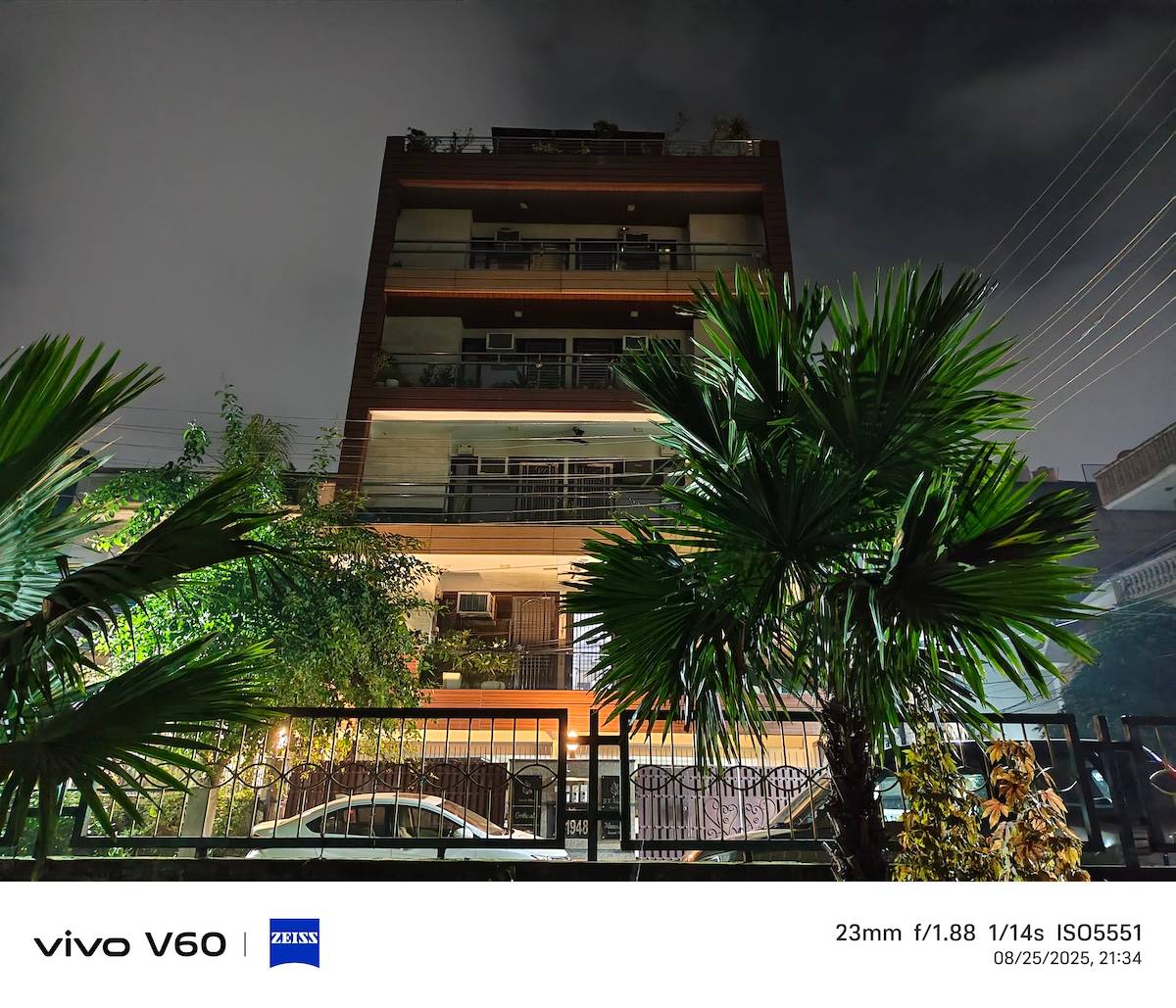
When it comes to low-light performance, the Vivo V60 takes the lead with a more refined night mode. It does a commendable job of controlling light flares, reducing noise, and striking a balance between smoothness and detail retention. The OPPO Reno14, by contrast, tends to oversoften images in an effort to minimise grain, which results in a loss of fine detail. The smartphone also struggles more with light flares, even though it gets closer to representing the overall scene as it appeared to the eye.
Decent performance


The OPPO Reno14 is powered by MediaTek Dimensity 8350 SoC, paired with 8GB/ 12GB of RAM + 256GB/ 512GB storage onboard. This is a decent setup for everyday use, even outperforming the Vivo V60, which is powered by the Snapdragon 7 Gen 4 SoC, in the synthetic benchmark tests. While I didn’t face any issues using the device for browsing, streaming, scrolling, and more, it’s not very thermally efficient. The handset can get warm while performing demanding activities such as multitasking and gaming.
To evaluate performance and thermal efficiency, we tested the OPPO Reno14 with our usual gaming trio, BGMI, Call of Duty, and Real Racing 3, using the same graphics and frame rate settings applied to other smartphones in this segment. The titles were playable throughout, though the experience wasn’t the most fluid or visually impressive. What stood out more was the heat buildup: the Reno14’s surface temperature rose by 12.1 degrees Celsius, noticeably higher than the Vivo V60, which stayed about 3 degrees Celsius cooler under identical conditions and playtime.
The Reno14 also warmed up slightly during extended use of its AI features, though never to an uncomfortable level. These AI tools are identical to those found on the Pro model and run on ColourOS 15, based on Android 15, right out of the box. OPPO promises three years of major OS updates and four years of security patches, which means the Reno14 should continue gaining new features and refinements over time. That said, the software still leaves room for improvement. The device ships with as many as 74 pre-installed apps, the highest in its segment, which makes the app drawer feel cluttered and the overall UI less user-friendly.
Efficient battery, but not for power users
When it comes to battery life, the OPPO Reno14 appears well optimised for everyday use. The handset packs a 6,000mAh unit, slightly smaller than the Pro model’s 6,200mAh cell, yet still manages to outperform its sibling in the PCMark battery test, which simulates real-world workloads, lasting around three hours longer. That said, the Reno14 fails to replicate a similar level of endurance in reality.
In our lab test, the Reno14 dropped 7 percent after an hour of YouTube streaming, a higher drain than both the Reno14 Pro and its rival, the Vivo V60. The Vivo smartphone also remained more power-efficient for demanding activities such as gaming, consuming 15 percent battery in total after 90 minutes of gaming as opposed to 18 percent on the OPPO Reno14. That said, the OPPO smartphone is not intended for power users. If you are a regular user who likes to take a few snaps in between everyday usage, the Reno14 will comfortably last you a day.
And if you find yourself running low during the day, the Reno14 can be quickly charged with its 80W fast charging solution. The included charger in the box can fully charge the battery from 0 to 100 per cent in just 47 minutes.
Final verdict
The OPPO Reno14 is priced in India at Rs 37,999 for its base variant, making it roughly Rs 12,000 more affordable than the Pro variant. That price gap is meaningful, especially since the compromises are limited to the ultrawide camera and chipset, both of which remain perfectly adequate for the segment. In nearly every other respect, the Reno14 mirrors its Pro sibling.
The OPPO Reno14 offers a striking design, with a solid camera setup that shines in daylight photography and portraits. A large battery paired with fast charging support adds to its everyday appeal. However, it’s not without trade-offs, mainly concerning low-light photography, the display brightness, and the software experience. Thermal management and battery endurance could also be better, particularly if you’re into gaming or juggling demanding apps.
Still, if you’re after a premium-looking phone that takes reliable photos in most scenarios, feels comfortable to hold, and balances features without hitting Pro-level pricing, the Reno14 is worth shortlisting.
Editor’s rating: 8.1/10
Reasons to buy
- Premium design
- Vibrant AMOLED display
- Strong daylight cameras
- Good backup for moderate use
Reasons not to buy
- Loads of pre-installed apps
- Powers users will be left wanting more