In the highly competitive under-Rs 25,000 segment, raw performance remains one of the most closely watched metrics. To determine which smartphones deliver the highest AnTuTu scores, we tested several newly released devices in-house under identical environmental conditions to ensure fair, consistent matchups. This list includes the Lava Virat Curve, Infinix Hot 70 Pro, Redmi 17, POCO M8x, and OnePlus N6. Each brings its own strengths to the table, such as the Lava Virat Curve stands out with its curved 1080p AMOLED display, the Infinix Hot 70 Pro impresses with a mature and polished UI, the Redmi 17 and POCO M8x pack a huge 7,900mAh battery, while the OnePlus N6 combines an 8,000mAh battery with a 5,300mm² vapour chamber for better thermal management.
Table of Contents
Our picks at a glance
| Phone | AnTuTu score | Current price |
| Lava Virat Curve | 8,76,509 | Rs 23,999 |
| Infinix Hot 70 Pro | 7,56,960 | Rs 24,999 |
| Redmi 17 | 7,34,484 | Rs 23,999 |
| POCO M8x | 6,53,645 | Rs 20,999 |
| OnePlus N6 | 5,88,319 | Rs 24,999 |
*Prices as of October 19th.
Lava Virat Curve
The Lava Virat Curve, outputting an AnTuTu score of 8,76,509, tops the list with the highest AnTuTu score so far in our tests under Rs 25,000. It features the MediaTek Dimensity 7100, paired with UFS 2.2 storage and LPDDR4X RAM, and comes in a single storage option: 6GB RAM (expandable up to 12GB via memory boost) and 128GB storage. In real-world use, as noted in our review, the Virat Curve offers enough performance for daily tasks. However, the refresh rate may occasionally drop randomly, which could be fixed through OTA updates.
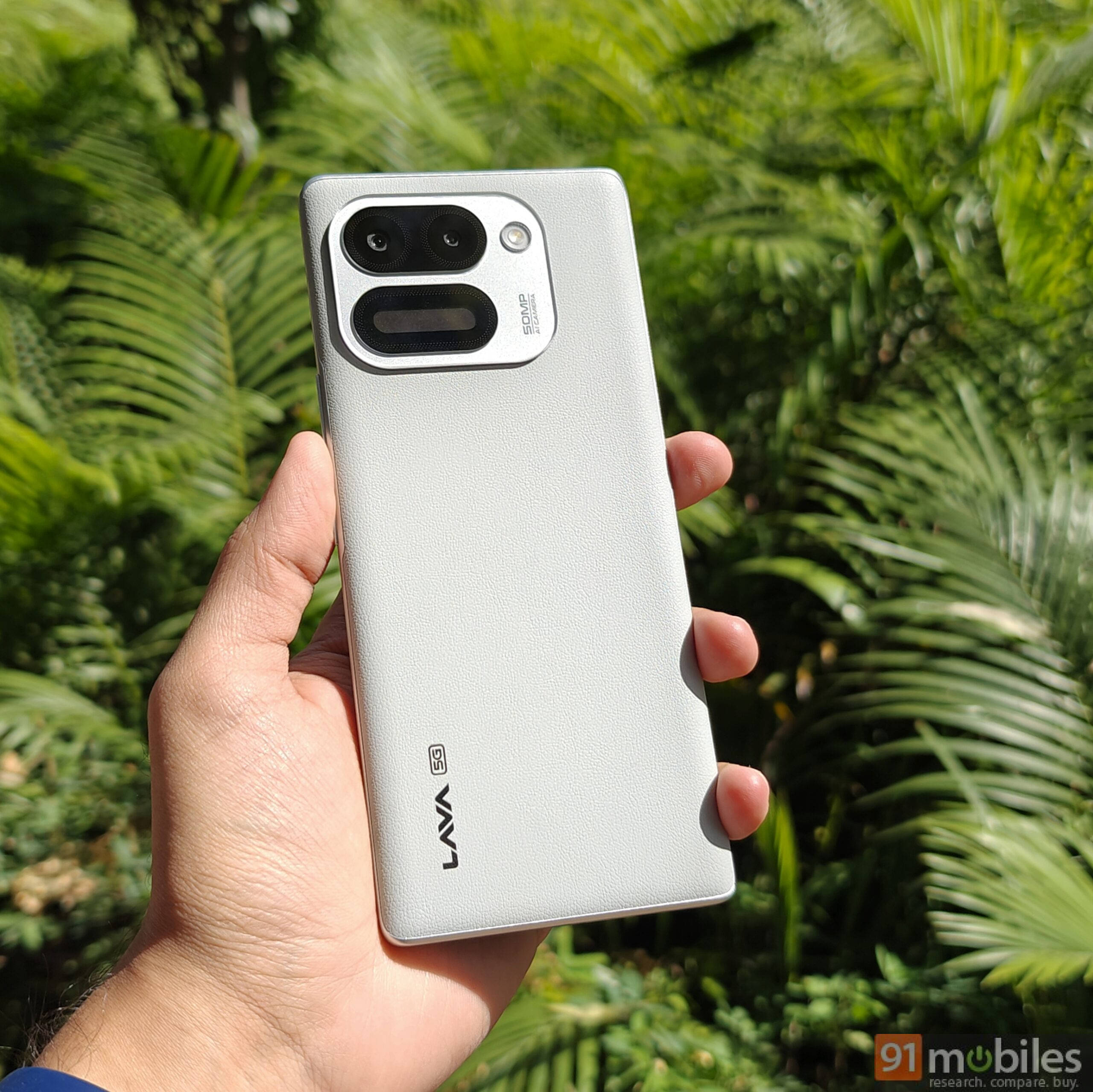
| AnTuTu benchmark | Score |
| Total AnTuTu score | 8,76,509 |
| CPU | 3,57,870 |
| GPU | 79,953 |
| Memory | 2,04,785 |
| UX | 2,33,901 |
Infinix Hot 70 Pro
Like the Lava Virat Curve (review), the Infinix Hot 70 Pro runs on MediaTek’s midrange Dimensity 7100 processor, with up to 2.4GHz clock speeds and a Mali-G610 MC2 GPU. Despite using the same performance hardware, the Hot 70 Pro’s AnTuTu score of 7,56,960 trails the Lava Virat Curve, making it the second-highest AnTuTu phone under Rs 25,000 in our tests. While its both storage options feature 128GB UFS 2.2 storage, it’s available in RAM options of 6GB and 8GB.
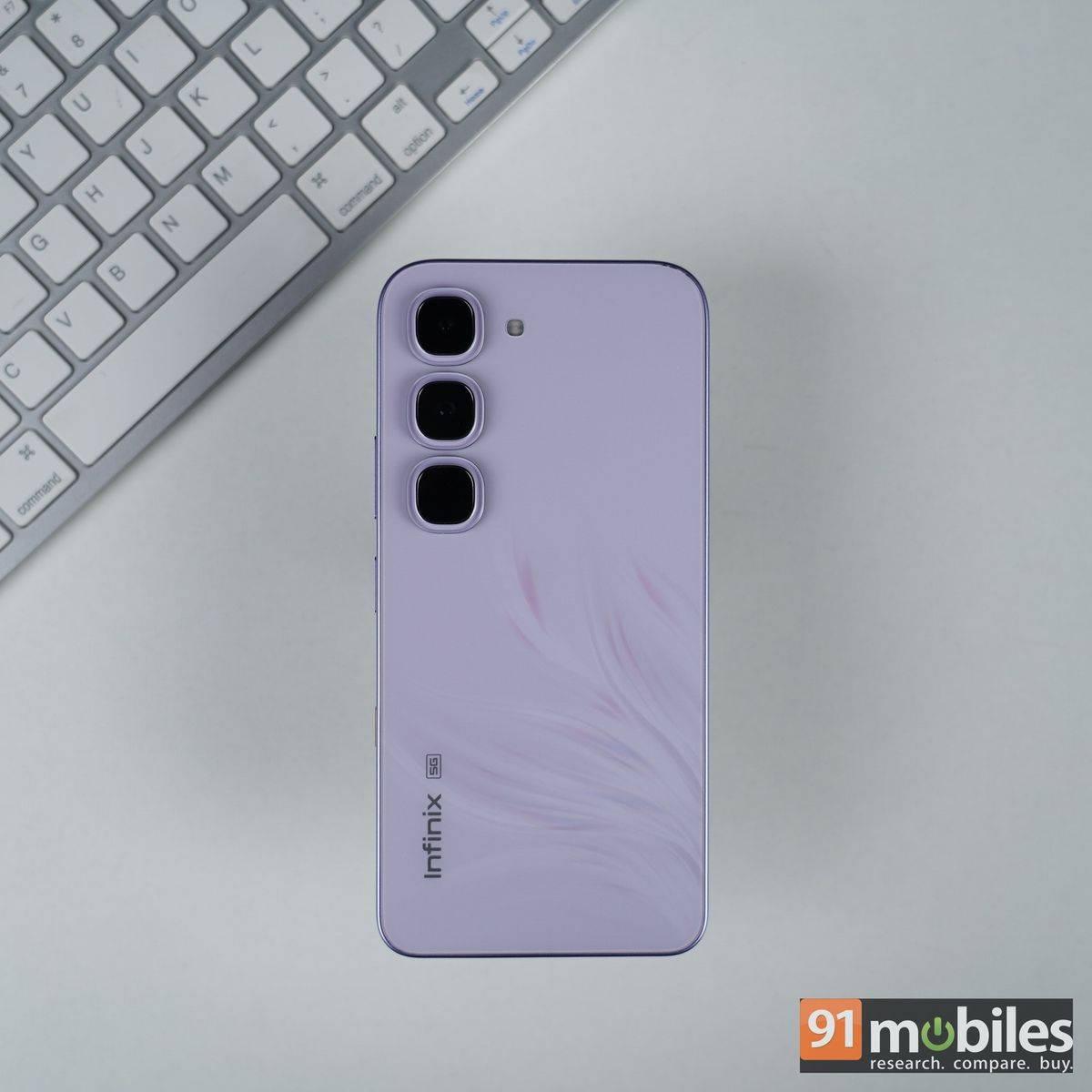
| AnTuTu benchmark | Score |
| Total AnTuTu score | 7,56,960 |
| CPU | 3,19,267 |
| GPU | 79,027 |
| Memory | 1,38,997 |
| UX | 2,19,669 |
Redmi 17
The Redmi 17 gets one of Qualcomm’s latest midrange chipsets, the Snapdragon 4 Gen 5, with clock speeds up to 2.4GHz, an Adreno 613 GPU, and either 6GB or 8GB of LPDDR4X RAM plus 128GB UFS 2.2 storage. With this combination, the phone delivered an AnTuTu score of 7,34,484. Along with offering usable day-to-day performance, the Redmi 17 makes its mark under Rs 25,000 with its massive 7,900mAh battery, which, in our PCMark Battery Drain test, lasted almost 20 hours from 100 to 20 percent.

Compared with other popular chipsets in the segment, the Redmi 17’s Snapdragon 4 Gen 5 AnTuTu score sits between the Dimensity 7100 and the Dimensity 6300/6400. With a light version of HyperOS, the smartphone delivers day-to-day performance well-suited for basic to medium tasks, such as calls, YouTube videos, and casual games like Clash Royale at 120FPS.
| AnTuTu benchmark | Score |
| Total AnTuTu score | 7,34,484 |
| CPU | 2,87,972 |
| GPU | 59,381 |
| Memory | 2,04,095 |
| UX | 1,83,036 |
POCO M8x
The POCO M8x is also powered by Qualcomm’s latest mid-range chipset, the Snapdragon 4 Gen 5, with clock speeds up to 2.4 GHz, an Adreno 613 GPU, and either 6GB or 8GB of LPDDR4X RAM paired with 128GB UFS 2.2 storage. Despite the same hardware, the smartphone scored 6,53,645 in AnTuTu, placing it fourth on our list of top AnTuTu-scoring phones under Rs 25,000.

For real-world use, beyond solid everyday performance, thanks to smooth HyperOS animations, the phone’s jumbo 7,900 mAh battery ensures multi-day battery life on a single charge, as noted in our review. Subsequently, in the PCMark Battery Drain test, the POCO M8x clocked over 22 hours of backup from 100 to 20 percent.
| AnTuTu benchmark | Score |
| Total AnTuTu score | 6,53,645 |
| CPU | 2,58,499 |
| GPU | 59,016 |
| Memory | 1,55,043 |
| UX | 1,81,087 |
OnePlus N6
As a brand that has recently shifted toward a performance-oriented experience, OnePlus N6 (review) makes its mark on this list with an AnTuTu score of 5,88,319. At its core, it runs on the MediaTek Dimensity 6360 Apex and comes with either 4GB or 6GB RAM and 128GB storage. While the N6 may not have the highest AnTuTu score, it packs the largest battery on this list at 8,000mAh.

A decently sized 5,300mm square vapour chamber cooler helps keep temperatures in check during long, intensive gaming sessions. During our use, the phone comfortably ran Clash Royale at 120FPS, while heavier titles like CODM top out at ‘Medium’ graphics settings and ‘Max’ frame rates. Similarly, BGMI ran at ‘HDR’ graphics and ‘Ultra’ frame rates.
| AnTuTu benchmark | Score |
| Total AnTuTu score | 5,88,319 |
| CPU | 2,26,063 |
| GPU | 46,542 |
| Memory | 1,44,306 |
| UX | 1,71,408 |
What is AnTuTu benchmark and what does it signify?
AnTuTu is one of the most widely used synthetic benchmarking tools for smartphones. It evaluates a device’s overall performance by running a series of standardised tests that measure the CPU, GPU, memory (RAM and storage), and user experience (UX) components. The final score combines these factors into a single figure that reflects how well the phone handles them under controlled, intensive conditions.
A higher AnTuTu score generally indicates stronger raw performance. While real-world usage can differ due to software optimisation, thermal management, and specific workloads, AnTuTu provides a useful, consistent baseline for comparing devices on paper.
At 91mobiles, we run the AnTuTu benchmark on every phone that comes in. This gives readers a clear idea of how each device performs in real-world and synthetic environments, enabling straightforward comparisons.
Which top-performing AnTuTu smartphone should you consider?
With the Lava Virat Curve delivering the highest AnTuTu score on our list, it offers the best raw performance for gaming and heavy multitasking. However, the choice isn’t that simple because, as noted in our review, the Virat Curve needs more UI polish and refinement, making the Infinix Hot 70 Pro the best alternative. Despite packing the same Dimensity 7100 chipset, the Hot 70 Pro outputs lower scores than the Virat Curve, but gains in the software department by packing an AI-focused UI and looks neat and is packed with productivity-based features.
If you’re okay with a 720p panel but want the best endurance the sub-Rs 25,000 segment offers, the Redmi 17 and POCO M8x have you covered with their 7,900mAh batteries and reliable day-to-day performance. Similarly, while the OnePlus N6 may not look as impressive as other phones in AnTuTu scores, it packs an 8,000mAh battery and OxygenOS for those who want feature-packed software.