Motorola has introduced a new contender in the sub-₹40K segment that has already created quite a stir in the market: the Motorola Edge 70 Pro. Powered by the MediaTek Dimensity 8500 Extreme chipset, up to 144Hz quad-curved screen extreme AMOLED display, 90W Turbo charging, and a versatile triple 50MP camera system, leading with segment’s most advanced Sony LYTIA 710 main camera, this is a solid offering in this segment.
Given the price-sensitive nature of the Indian market and fierce competition. Smartphone brands continue to push the limits, especially in the sub-₹40K segment. Hence, we have a plethora of options to choose from, ranging from big-battery phones and camera phones to all-rounder devices.
Currently, two of the most popular smartphones in this segment are the OnePlus Nord 6 and the Nothing Phone (4a), known for their overall packages and clean UIs.
In this piece, we will pit the new entrant – the Edge 70 Pro – against these current popular models on the following parameters to see which phone is the ultimate champion:
- Camera performance
- AI features
- Processing Performance
Camera Performance
Before we dive into the camera analysis, here’s a quick look at the three phones’ camera systems.
| Motorola Edge 70 Pro | OnePlus Nord 6 | Nothing Phone (4a) | |
| Primary Camera | 50MP Sony LYTIA 710, f/1.8 with OIS | 50MP Sony LYTIA 600, f/1.8 with OIS | 50MP, f/1.88 with OIS |
| Secondary Camera | 50MP (ultra-wide + macro), f/2.0 122° FOV | 8MP (ultra-wide) Omnivision OV08F, f/2.2 112° FOV | 8MP (ultra-wide), f/2.2 120° FOV |
| Tertiary Camera | NA | NA | 50MP (3.5x periscope), f/2.88 |
| Selfie Camera | 50MP, f/1.9 with auto focus | 32MP, f/2.0 | 32MP, f/2.2 |
Daylight
The daytime shot from the Motorola Edge 70 Pro came out to be the best in this three-way comparison. The green shades were particularly handled well by the phone. Despite the colours being punchy, the saturation was on point and not overdone. The image taken by the Edge 70 Pro was the best depiction of the photo we clicked, showcasing the bright afternoon and a clear sky. The OnePlus Nord 6 also did a decent job, though HDR took a hit, especially in greens. Also, oversharpening was evident around the water fountain. The picture taken with the Nothing Phone (4a) had a blue hue that didn’t match how the scene actually looked.



Portrait
Motorola performed best in this 2x portrait shot as well; the details are rich, the contrast is spot-on, and the blacks are deeper than on the competing phones. The OnePlus Nord 6’s oversharpening issue is evident in portraits as well, and blacks aren’t deep either. Though Nothing 4a’s results have the deepest black, the details aren’t rich.



Ultrawide
The Nothing Phone (4a)’s cool processing is present on the ultrawide lens as well, making the image look dull and lifeless. While results from the OnePlus Nord 6 and Motorola Edge 70 Pro are quite close, the exposure and light leaks are not best controlled by the Nord 6, and slight oversharpening is still present. The Motorola Edge 70 Pro not only has the widest field of view among the three phones but also delivers good contrast and handles light sources well. The 50MP sensor gives an added advantage to cropping in without taking a hit on quality.
Night Mode
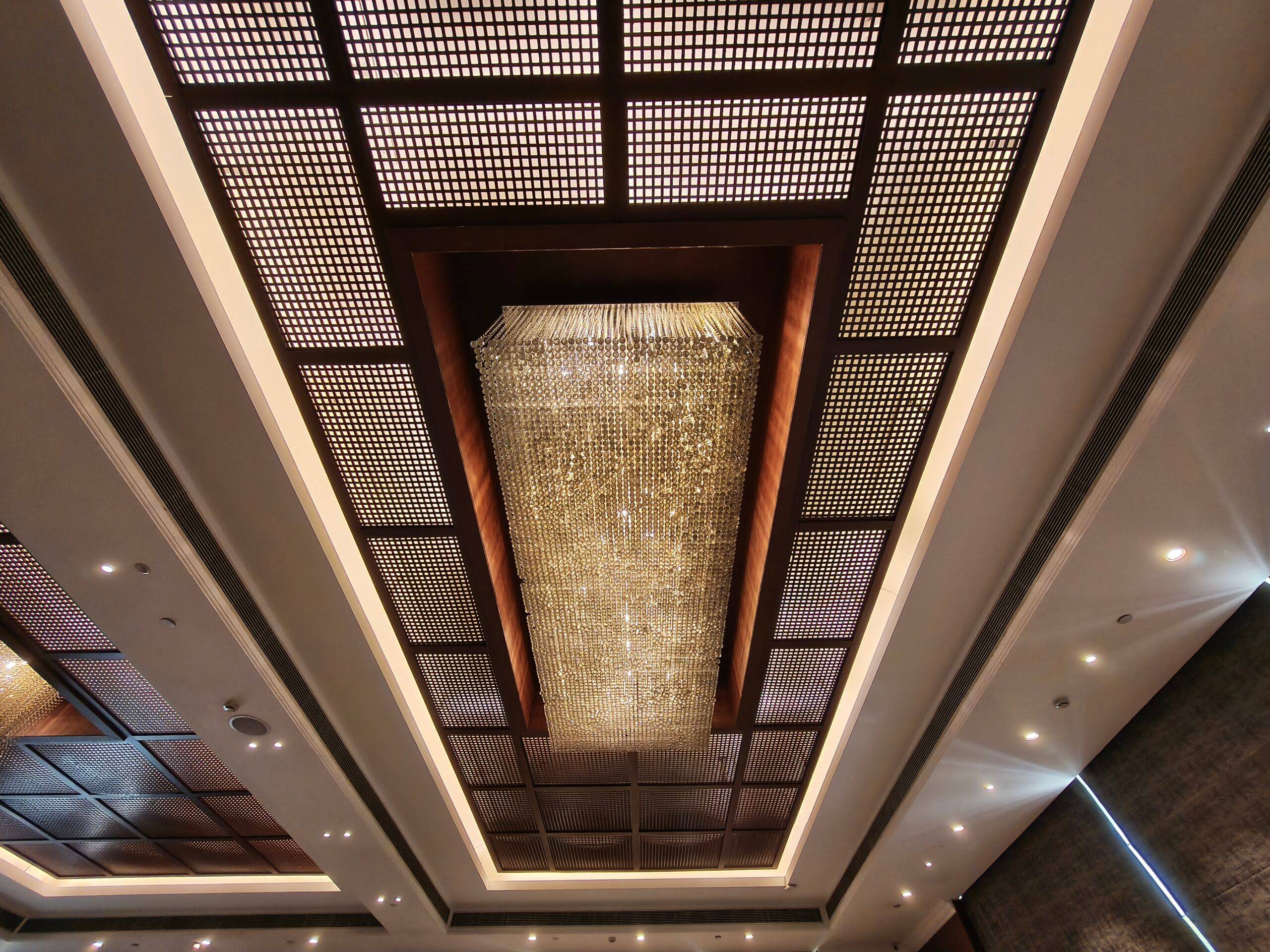
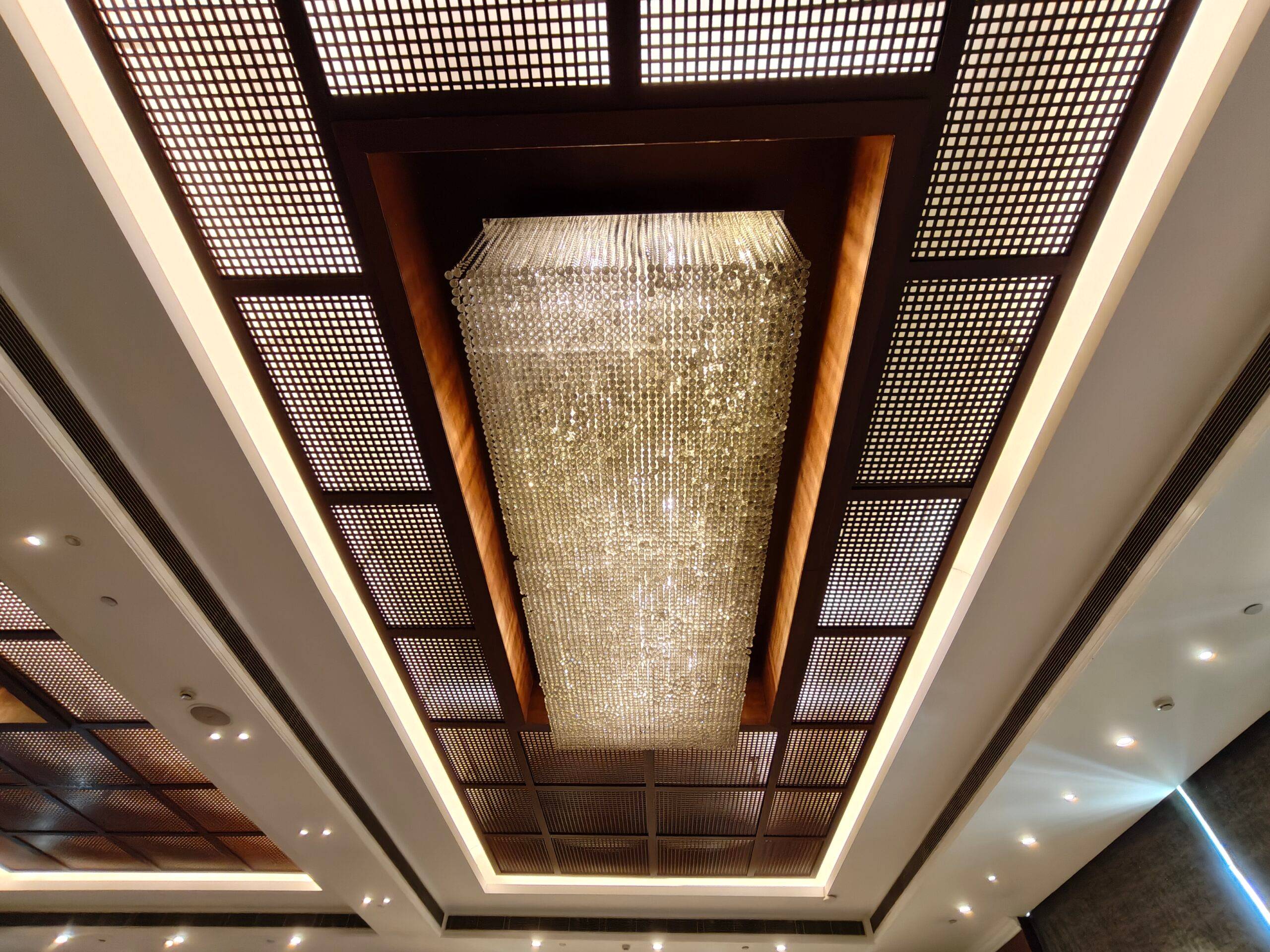
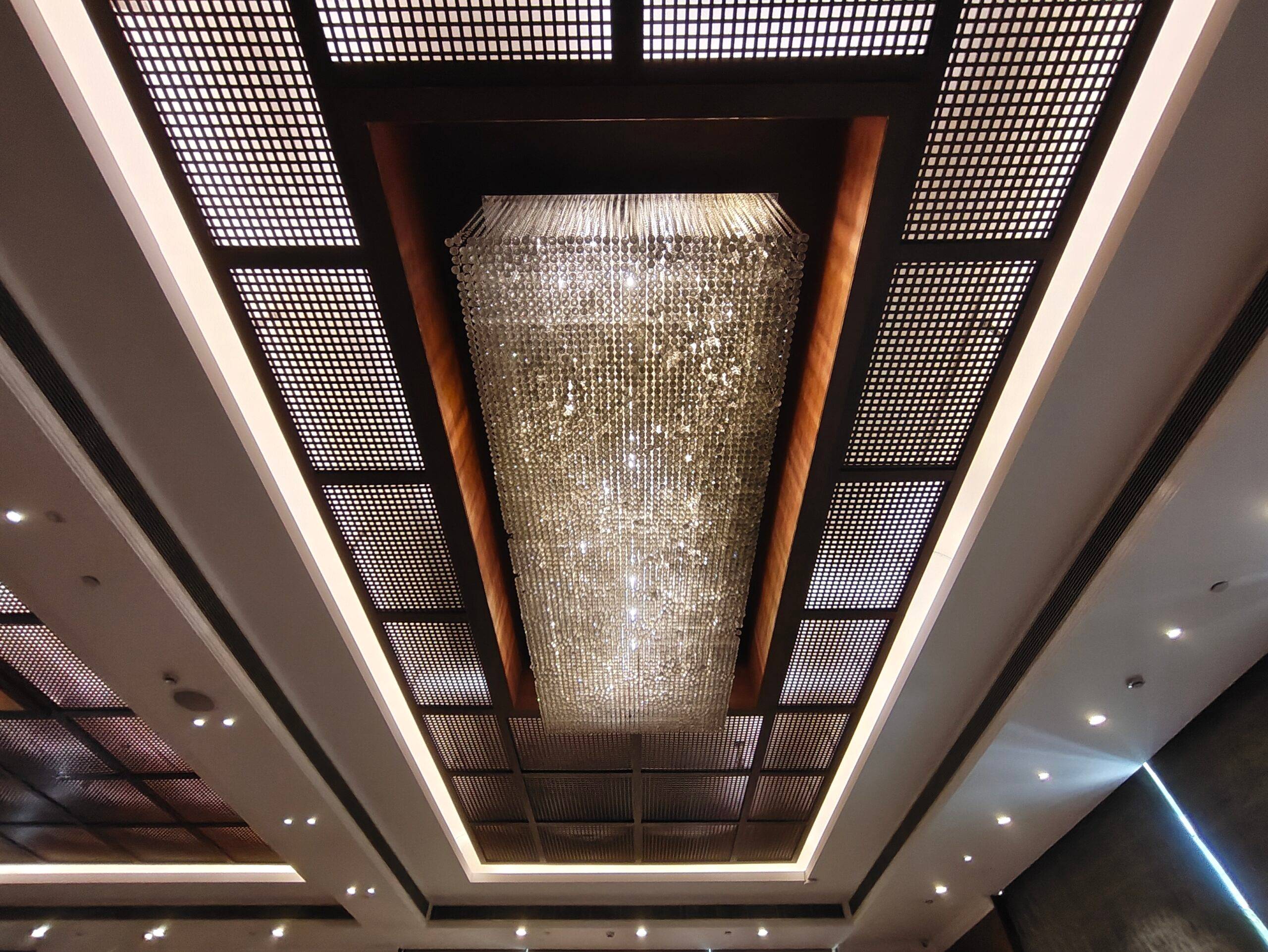
The results from nighttime images were not much different from the shots captured by the OnePlus Nord 6, which showed poor exposure control around light sources. The images also lacked detail and showed inconsistent colours and HDR. The Nothing Phone (4a)’s cool tint takes away from the picture’s vibe.



The Motorola Edge 70 Pro performed best in handling light flare, edge sharpness, exposure control, detail, and colour tones. Thanks to the larger 1/1.56″ Sony LYTIA 710 sensor, the Imagiq 1080 ISP at the core of the MediaTek Dimensity 8500 Extreme, and 2.0µm Ultra Pixel size, the Moto handset can capture more light and more information, opposed to 0.6µm pixel size on the Nord 6.
AI Features: Features that actually matter
It’s 2026, and Artificial Intelligence is no longer limited to nifty software features; it has become a dedicated companion that helps with our everyday tasks. Modern smartphones use a dedicated NPU built onto the SoC to power on-device AI features. Let’s have a look at the NPU capabilities of these devices.
Smartphones in this segment aren’t stuck with basic AI features like summarisation, transcription, etc. While OnePlus has its set of AI features, such as Mindspace and photo editing, Nothing has its essential AI features; most of them require an internet connection.
Whereas the MotoAI suite in the Motorola Edge 70 Pro offers a more personalised AI experience by analysing what’s on-screen for context. Additionally, the phone can perform these complex AI tasks on-device. This means that user data is kept private and processed locally on the phone, adding another layer of security. Another benefit of on-device processing is speed, as results are provided much faster.
Moto AI comes with a host of features, including an AI photo enhancement engine that fine-tunes colours, brightness, texture, and detail, creating photos that feel vivid, balanced, and refined.
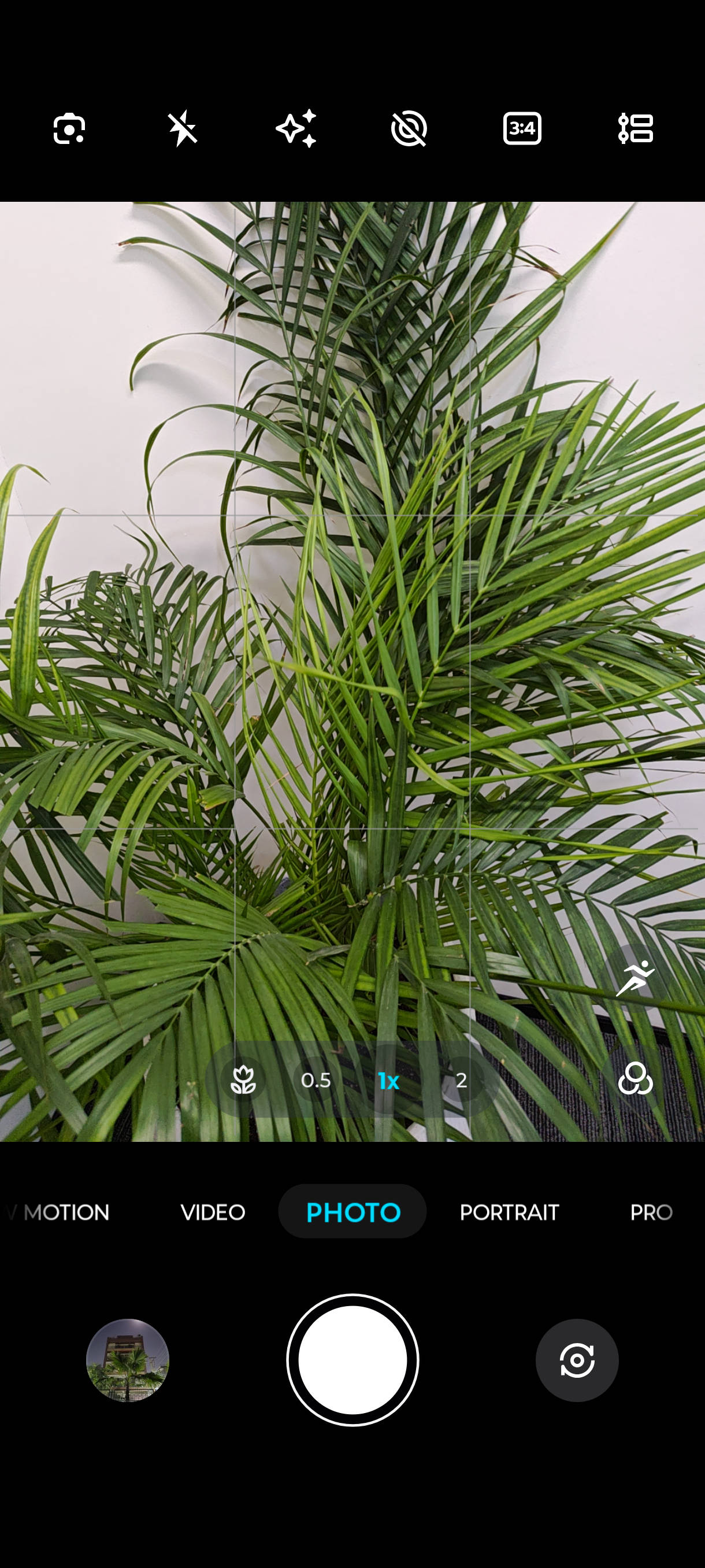
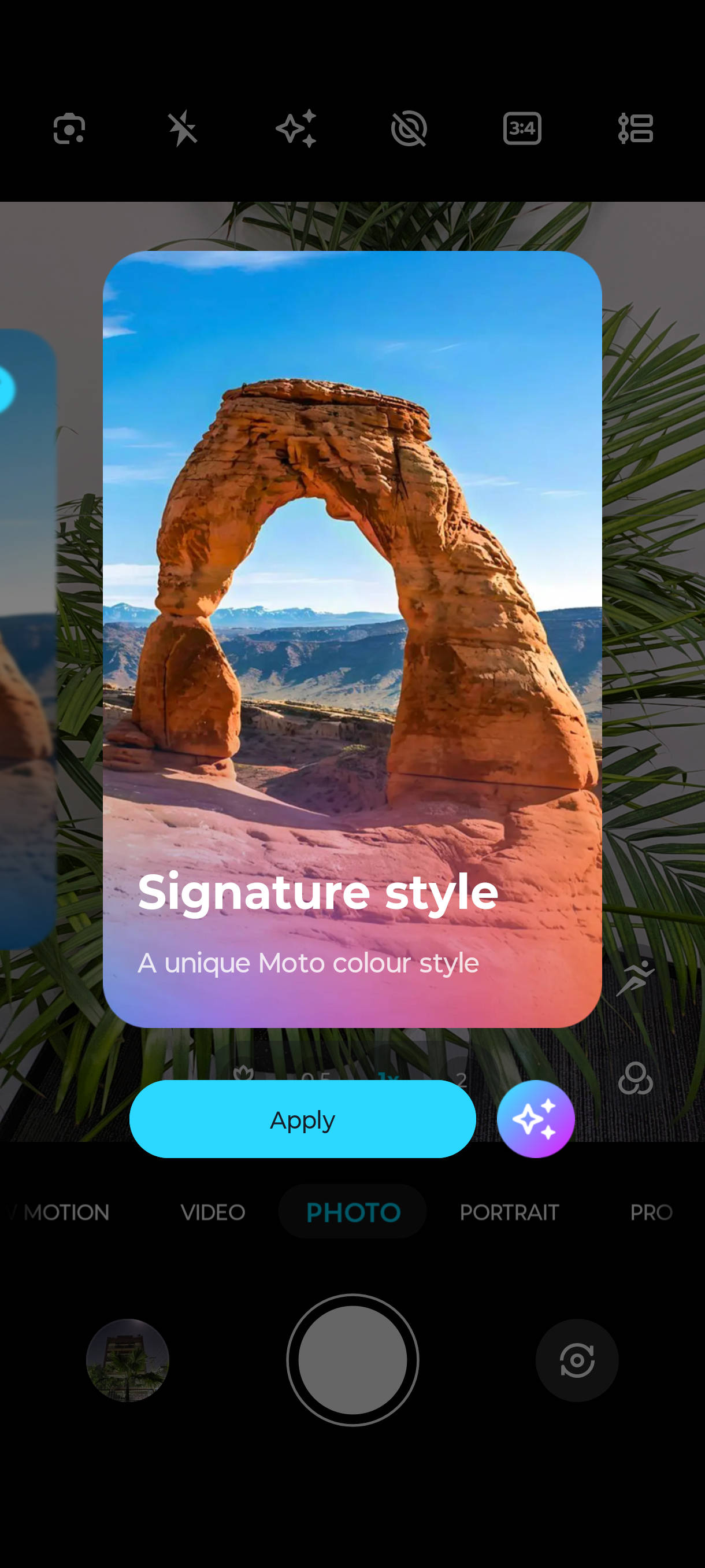
- Moto AI signature – It lets you create a custom colour profile preset in the camera app to match your taste.

- Update Me – This feature ensures you never miss anything important in your schedule or notifications.
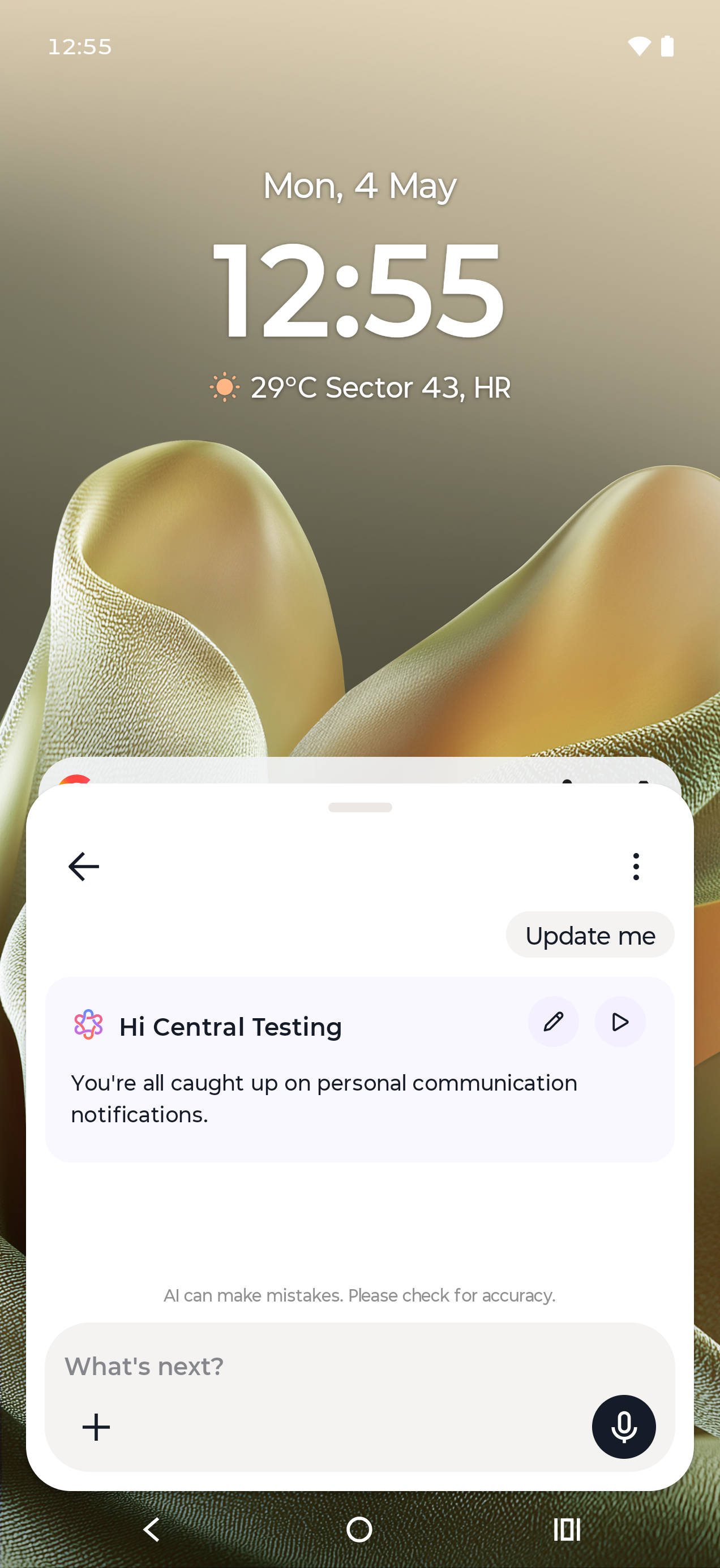
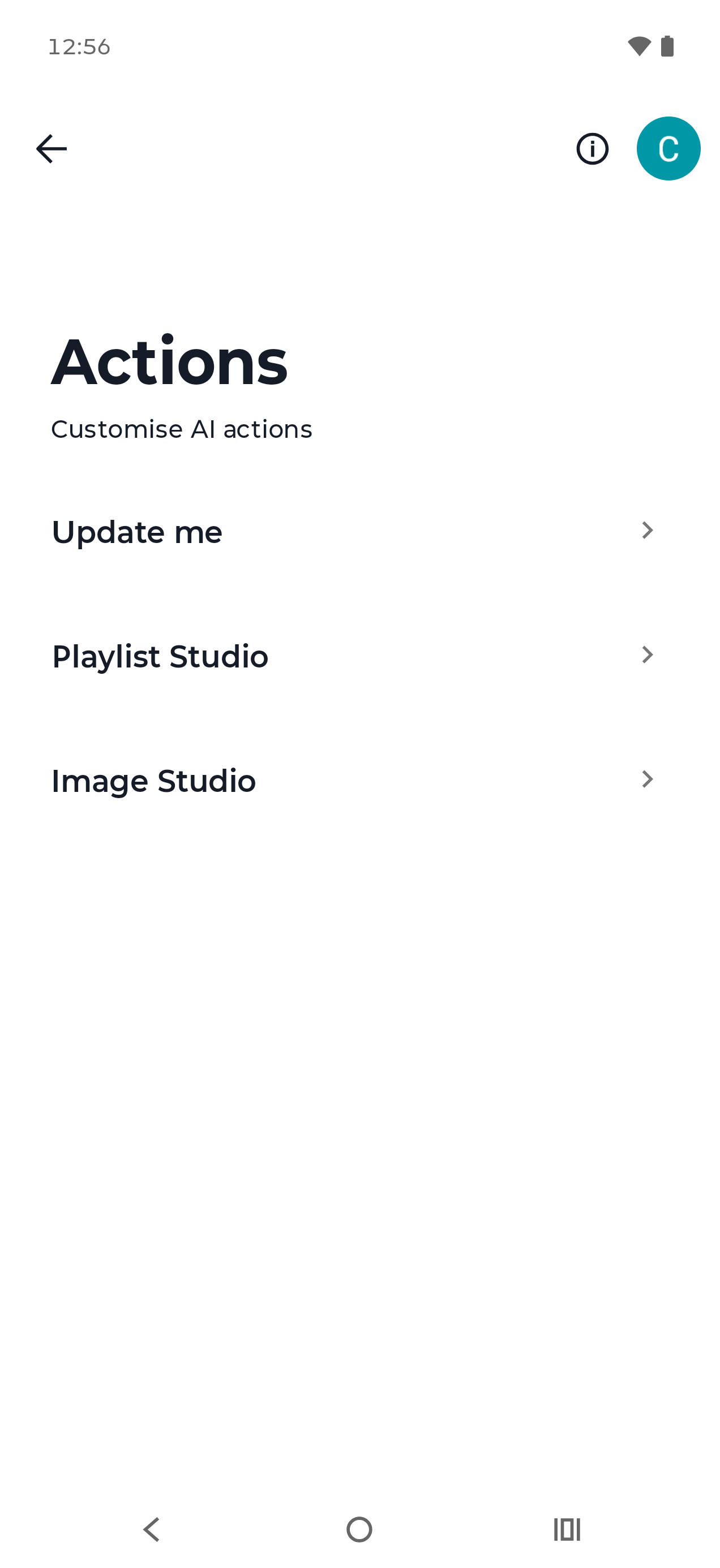

- Pay Attention – It identifies speakers to provide real-time transcriptions and automatic summaries of conversations, meetings, and lectures.
All this is made possible by the chip inside, the MediaTek Dimensity 8500 Extreme. This is an octa-core processor with four Arm Cortex-A725 cores, delivering impressive performance and improved efficiency. But this chipset is more than just pure performance, as it features the MediaTek NPU 880, which can handle the most complex AI tasks without cloud-based processing. This lets users enjoy popular AI features without worrying about their data being sent to cloud servers.
Performance: Handles Everything Without Breaking a Sweat
Moving over to the performance numbers of the competing phones, to ensure a fair comparison, the 12GB LPDDR5X RAM and 256GB of UFS 4.1 storage variants of all phones were used. The Motorola Edge 70 Pro is powered by MediaTek’s Dimensity 8500 Extreme SoC, while the OnePlus Nord 6 and Nothing Phone (4a) are powered by the Snapdragon 8s Gen 4 and Snapdragon 7s Gen 4, respectively. Here’s how they compare:
PCMark Performance
PCMark is a renowned benchmark for testing a smartphone’s overall performance in real-world use. It involves both basic tasks, such as working with spreadsheets and browsing, and intensive tasks, such as video editing and colour grading.
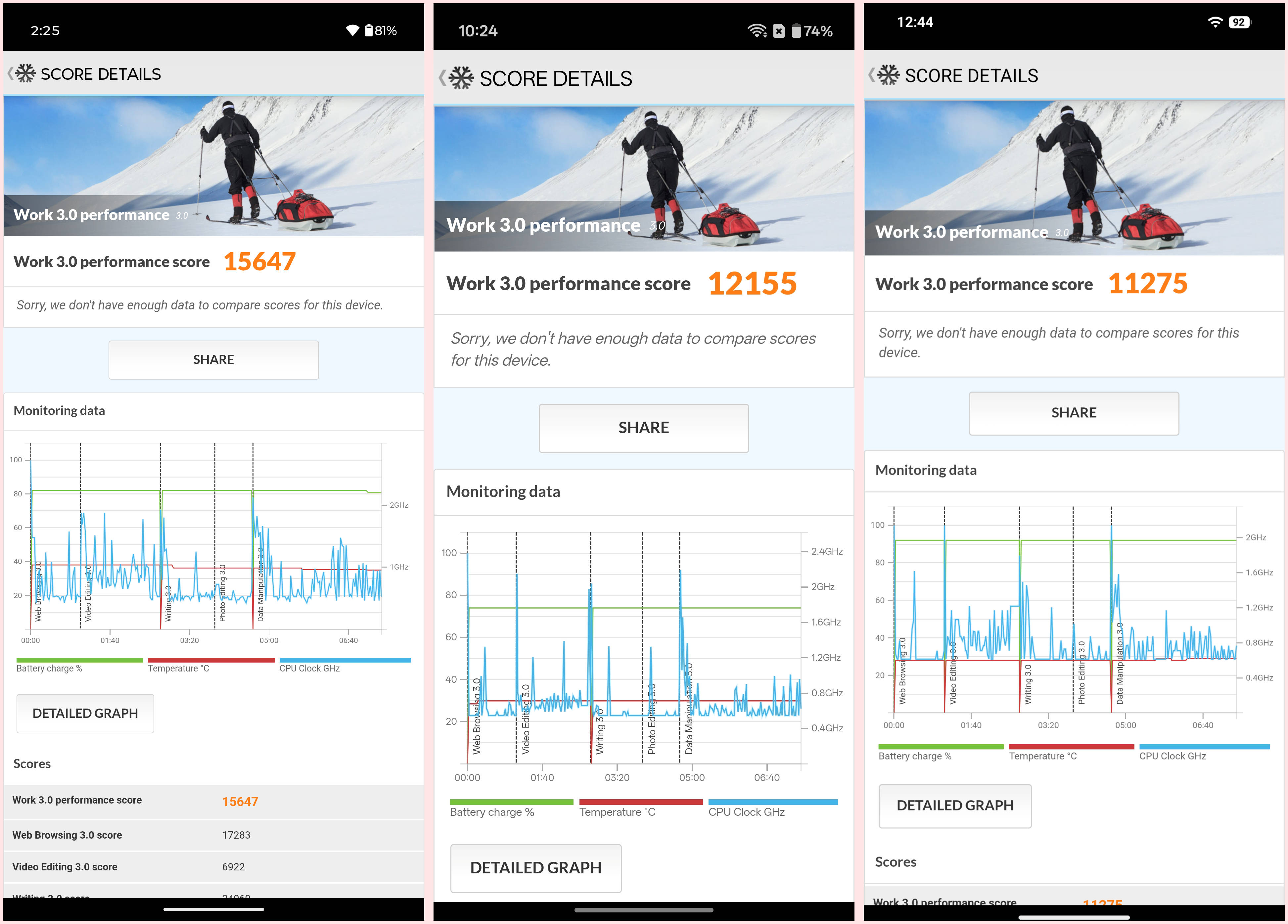
The Motorola Edge 70 Pro leads here with 15,647 points; the OnePlus Nord 6 is second with 12,155 points, followed by the Nothing Phone (4a) with 11,275 points. This demonstrates that the Dimensity 8500 Extreme delivers the best performance for everyday tasks.
Geekbench 6
Geekbench tests the chipset’s raw performance and splits it into two halves: single-core and multi-core scores, representing how well the phone can handle basic and intensive tasks.
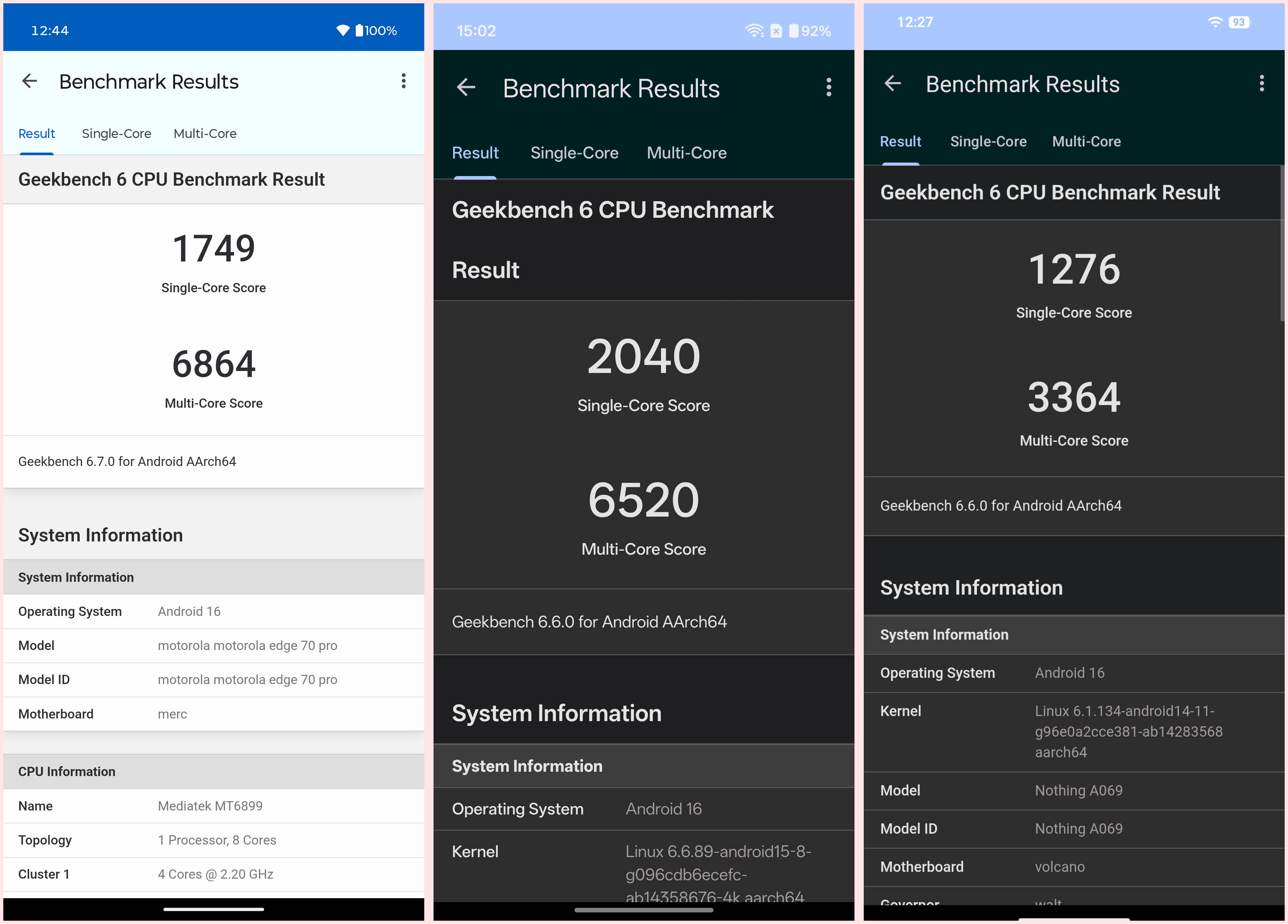
The scores indicate that Motorola’s Edge 70 Pro handles intensive tasks better, with a score of 6,864 points, followed by the OnePlus Nord 6 at 6,520 points. When it comes to basic tasks, the OnePlus 6 leads with a slight edge, scoring 2,040 points; the Edge 70 Pro is not far behind, scoring 1,749 points.
Geekbench AI
Geekbench’s dedicated AI app tests the smartphone’s AI capabilities on both the software and hardware fronts. The results speak for themselves: The Motorola Edge 70 Pro leads the pack with an astonishing ‘Quantised’ score of 9945 points, and the OnePlus Nord 6 and Nothing Phone (4a) are nowhere near it.
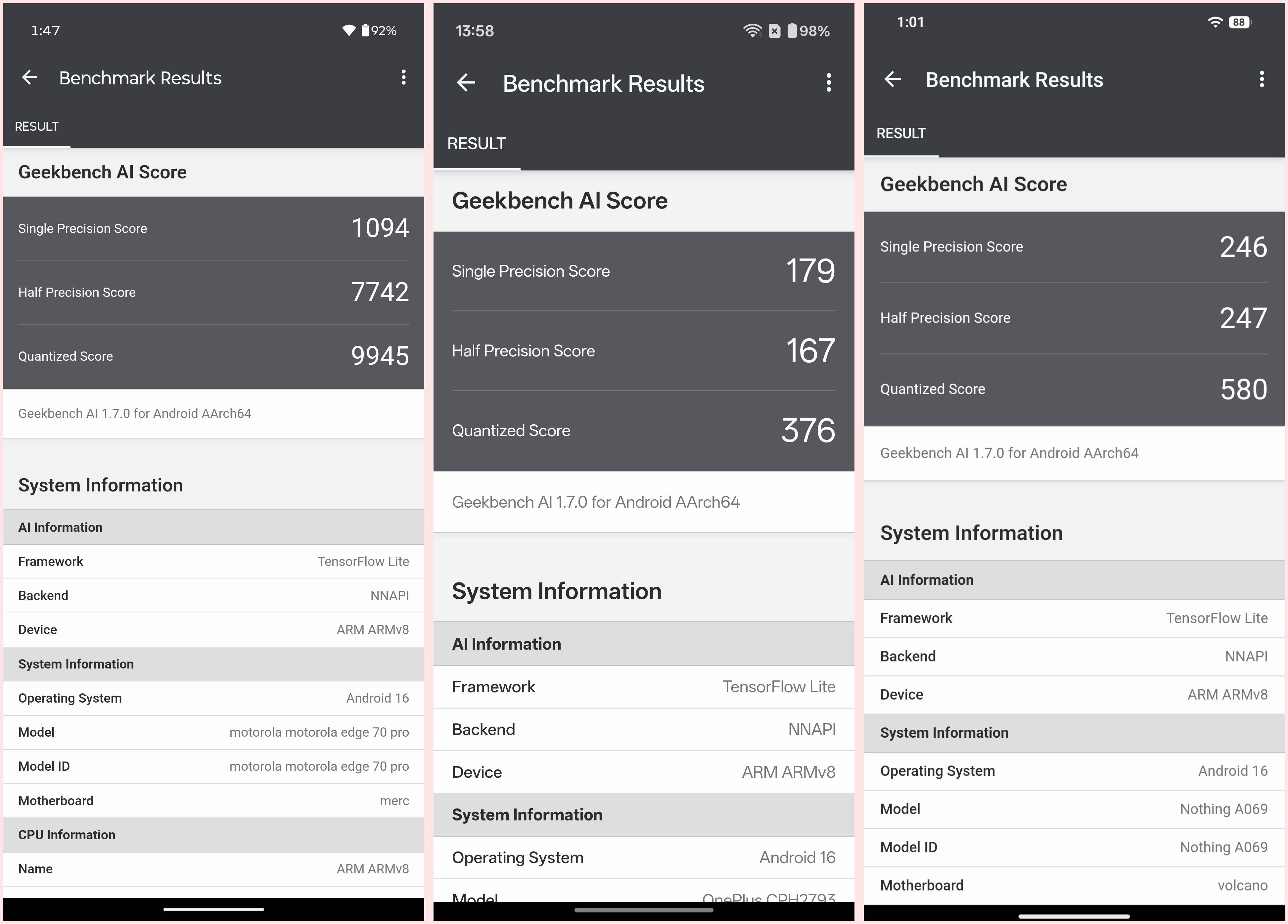
This clearly demonstrates the superior AI prowess of MediaTek Dimensity 8500 Extreme, powered by the powerful MediaTek 880 NPU, which is capable of running most advanced LLMs and LVMs on the device.
Antutu v11
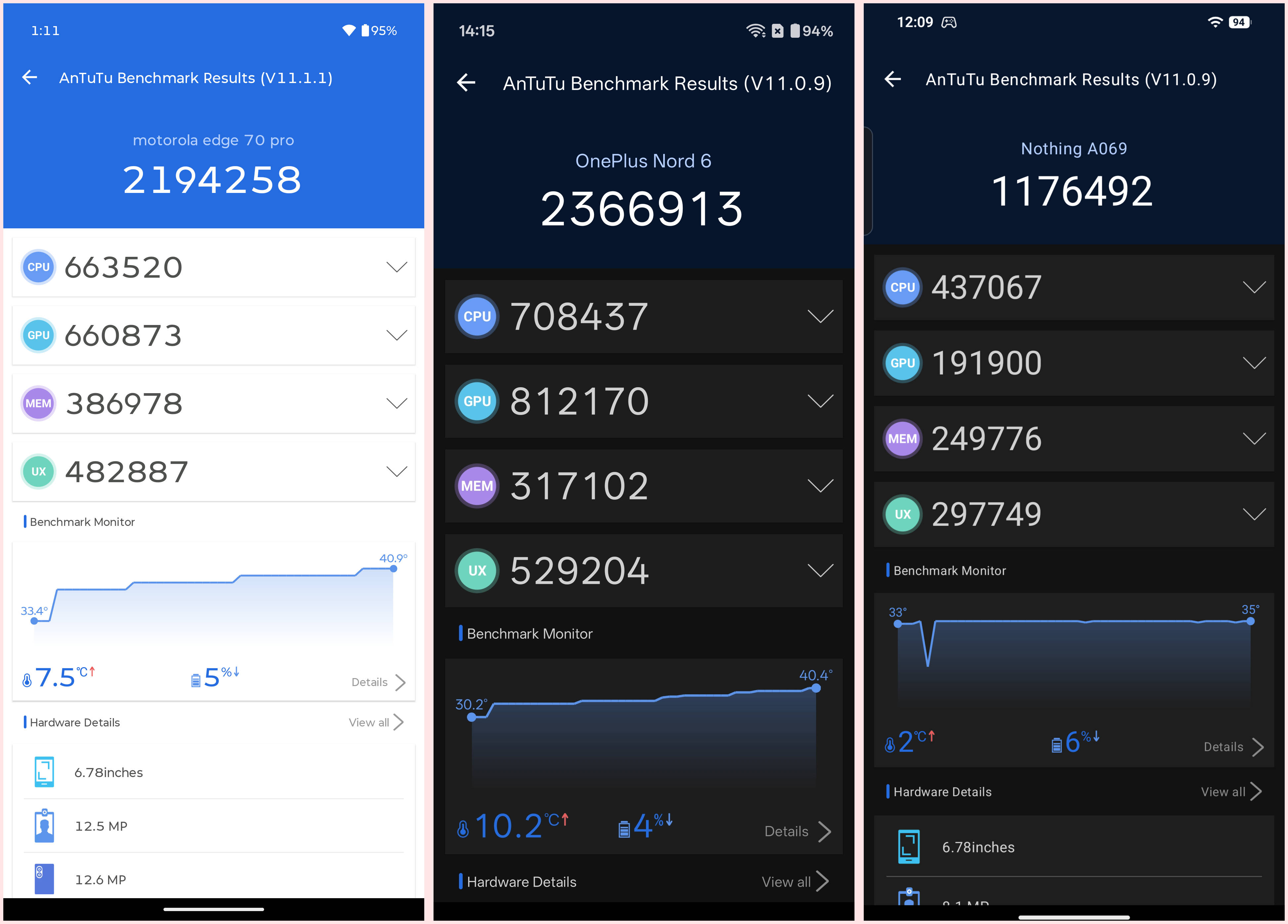
The AnTuTu benchmark remains one of the most popular tools for assessing overall smartphone performance. In this test, the OnePlus Nord 6 and Motorola Edge 70 Pro delivered nearly identical results. The Nord 6 holds a lead of roughly 7%, although repeated test runs can often cause this score to fluctuate.
CPU Throttling
While synthetic numbers show the peak raw performance of a smartphone, it’s the sustained performance that matters. In this test, the Nothing Phone (4a) leads with 76 per cent sustained performance under stress, though its peak performance is not so good. The Motorola Edge 70 Pro is right behind with 70 per cent sustained performance.
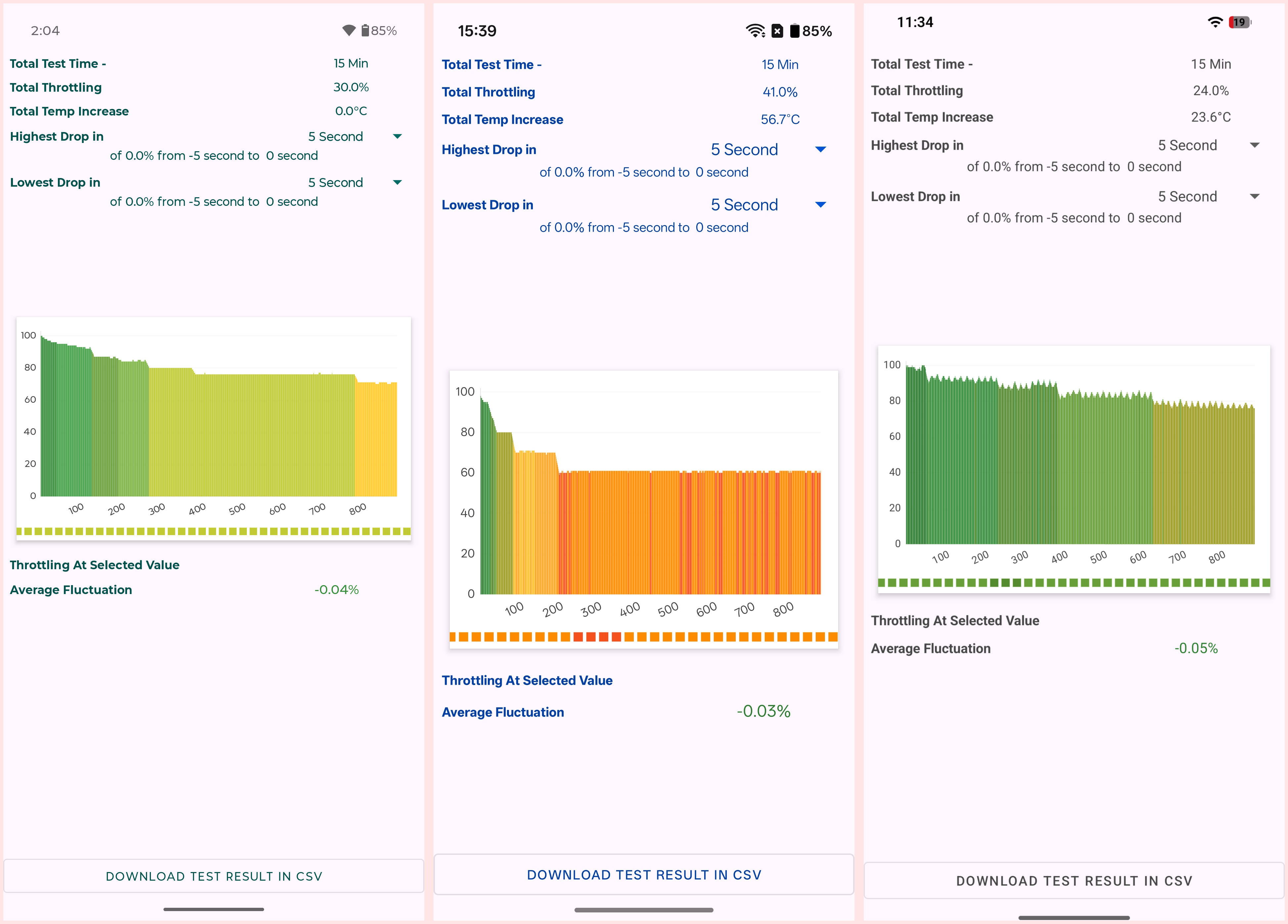
The score indicates that while the OnePlus Nord 6 chases numbers, it doesn’t hold up well in sustained performance. The Motorola Edge 70 Pro, powered by MediaTek Dimensity 8500 Extreme, is the best performer, as it does not chase just numbers but instead delivers great, consistent, sustained performance.
Gaming Performance
To test how these chipsets perform in real-world scenarios, we ran popular titles like Call of Duty: Mobile and BGMI and analysed their thermal performance.
- BGMI
BGMI is all about sustained, smooth gameplay, and here the Dimensity 8500 Extreme shows its prowess. With Ultra HDR graphics, gameplay stays locked at 40fps with minimal dips, averaging 38.6fps, ensuring you stay competitive and never lose an advantage. While the Snapdragon 8s Gen 4 is efficient in terms of power consumption, the Dimensity 8500 Extreme’s ability to manage thermal performance well helps during long gaming sessions.
BGMI Graphics + Frame rate (MAX Graphics) | Ultra HDR + Ultra | Ultra HDR + Ultra | Ultra HDR + Ultra |
| Avg. FPS | 38.6 | 39.5 | 38.7 |
| Temp before gaming | 28.2 celsius | 27.7 | 27.0 |
Temp after 30 min of gaming | 34.0 | 36.1 | 34.4 |
Temperature rise (in degree celsius) | 5.8 | 8.4 | 7.4 |
- Call of Duty
In our Call of Duty gameplay, the results are indifferent; the Motorola Edge 70 Pro and MediaTek Dimensity 8500 Extreme performed the best. At ‘max’ graphics, it delivered stable 60fps performance with the best thermal performance.
Call of Duty Graphics + Frame rate (MAX Graphics) | Max + Max | Max + Max | Max + Max |
| Avg. FPS | 59.8 | 57.7 | 57.5 |
| Temperature before gaming | 27.3 celsius | 27.2 | 26.4 |
Temperature after 30 min of gaming | 32.5 | 37.7 | 32.2 |
Temperature rise (in degrees Celsius) | 5.2 | 10.5 | 5.8 |
Verdict
To summarise, here’s a breakdown of how the three phones performed on different aspects:
Motorola Edge 70 Pro | OnePlus Nord 6 | Nothing Phone (4a) | Winner | |
Sustained Gaming Performance | Stable frame rate and better thermal efficiency | Frame drops | Frame drops and poor battery optimisation | Motorola Edge 70 Pro |
Peak Performance | Slightly lower scores, but better sustained performance | Higher benchmark scores | Poor benchmark scores | Tie between Edge 70 Pro and Nord 6 |
Thermal Efficiency | Better thermal efficiency | Runs Warmer | Runs Warmer | Motorola Edge 70 Pro |
Primary Camera (Daylight) | Rich details, punchy colours, and better HDR performance | HDR aren’t the best; oversharpening can be observed | It lacks details and has blue tint issues | Motorola Edge 70 Pro |
Primary Camera (Portrait) | Best facial details, spot-on contrast, rich details | Slightly better with skin tones; lacks details and has poor contrast | Lacks facial details, and skin tones are not accurate | Motorola Edge 70 Pro |
Primary Camera (Low light) | Retains best details, minimal lens flare, and best HDR | Poor details, oversharpening issues, poor exposure control | Low-light images have a cool hue | Motorola Edge 70 Pro |
Ultrawide | Balanced contrast, balanced HDR, best details across the image | Poor exposure control, poor details around the corners, and a light leakage issue | Lifeless results and have a cool hue issue | Motorola Edge 70 Pro |
AI Features | Not solely dependent on the internet, and offers a wider variety of features | Heavily dependent on the internet | Limited to Essential space | Motorola Edge 70 Pro |
In terms of performance, the Motorola Edge 70 Pro delivers a complete package. It has a premium finish, a slim profile at 6.99mm, and a sturdy build with IP68+IP69 and MIL-STD-810H ratings, yet it weighs just 190g. The display is also brightest at 5200 nits of peak brightness; it’s the only 144Hz extreme AMOLED in the segment. A clean user interface and AI features that actually come in handy, plus a 6500mAh silicon-carbon battery with a 90W fast charger in the box that can juice it up, make for the cherry on top.
At a net price of ₹36,999, the Motorola Edge 70 Pro is the most balanced smartphone, with a quad-curved, bright, 144Hz AMOLED screen; fast charging; AI smartness that’s actually useful; and power-packed yet sustained performance. It’s not trying to be the flashiest phone in the room. It’s trying to be the most useful one. For anyone looking for the best all-rounder under ₹40,000, the Edge 70 Pro powered by MediaTek Dimensity 8500 Extreme isn’t just a smart choice… It’s the obvious one.
This is a promotional post done as part of a brand collaboration.