
Movie |
Rehabilitation | Father-in-law
Disclaimer: All content and media belong to original content streaming platforms/owners like Netflix, Disney+ Hotstar, Amazon Prime Videos, JioCinema, SonyLIV etc. 91mobiles entertainment does not claim any rights to the content and only aggregate the content along with the service providers links.




Best Music Original Song | 1963 | Henry
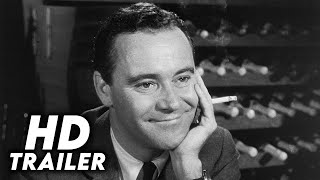
Best Foreign Performer Mejor intrprete de cine extranjero | 1964 | Jack
Top Drama | 1963
Top Male Dramatic Performance | 1963 | Jack
Top Female Dramatic Performance | 1963 | Lee
1963 | Blake
National Film Preservation Board | 2018
Best Performance in a Foreign Film Mejor Interpretacin en Pelcula Extranjera | 1964 | Jack
Best Actor in a Leading Role | 1963 | Jack
Best Actress in a Leading Role | 1963 | Lee
Best Art DirectionSet Decoration BlackandWhite | 1963
Best Costume Design BlackandWhite | 1963 | Donfeld
Best Actor Drama | 1963 | Jack
Best Director | 1963 | Blake
Best Motion Picture Drama | 1963
Best Actress Drama | 1963 | Lee
Best Film from any Source | 1964
Best Foreign Actor | 1964 | Jack
Best Foreign Actress | 1964 | Lee
Bill Wilson co-founder of AA was on set as technical adviser.
Both Jack Lemmon and Lee Remick sought help from Alcoholics Anonymous long after they had completed the film.
Jack Lemmon later revealed on Inside the Actors Studio (1994) that he himself had been an alcoholic.
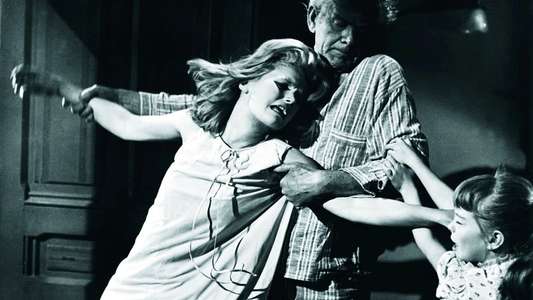
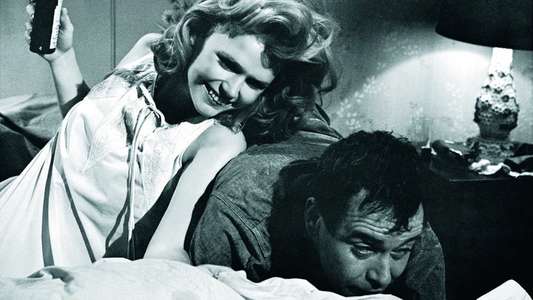
While preparing for their roles, both Jack Lemmon and Lee Remick attended Alcoholics Anonymous meetings numerous times. Lemmon even spent several evenings at the Lincoln Heights jail where he observed inmates in the drunk tank and the dry-out rooms. He later said, "It was frightening, watching those poor souls tortured by delirium tremens. As a result of what I saw we changed several scenes. For instance, we used a dry-out table where you are strapped down, rather than having the guy just wake up in a cell."
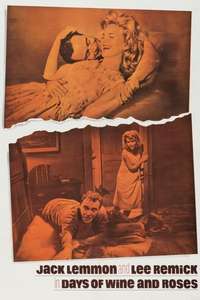
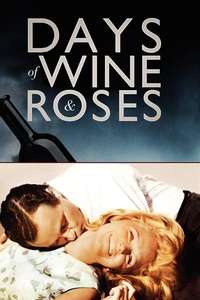
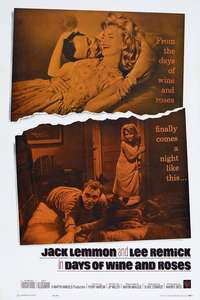
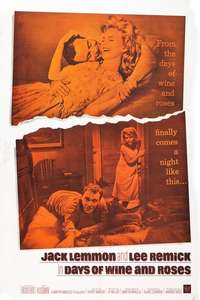
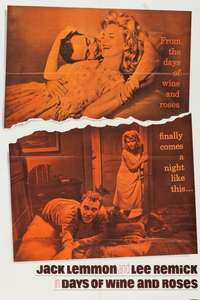
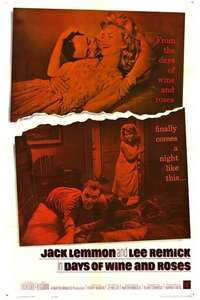
The film's title comes from the poem "Vitae Summa Brevis" by Ernest Dowson: "They are not long, the days of wine and roses: / Out of a misty dream / Our path emerges for a while, then closes / Within a dream." Dowson also wrote the poem from which the title Gone with the Wind (1939) came.
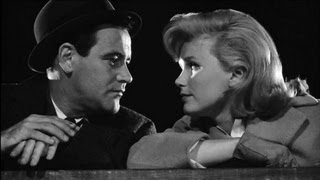
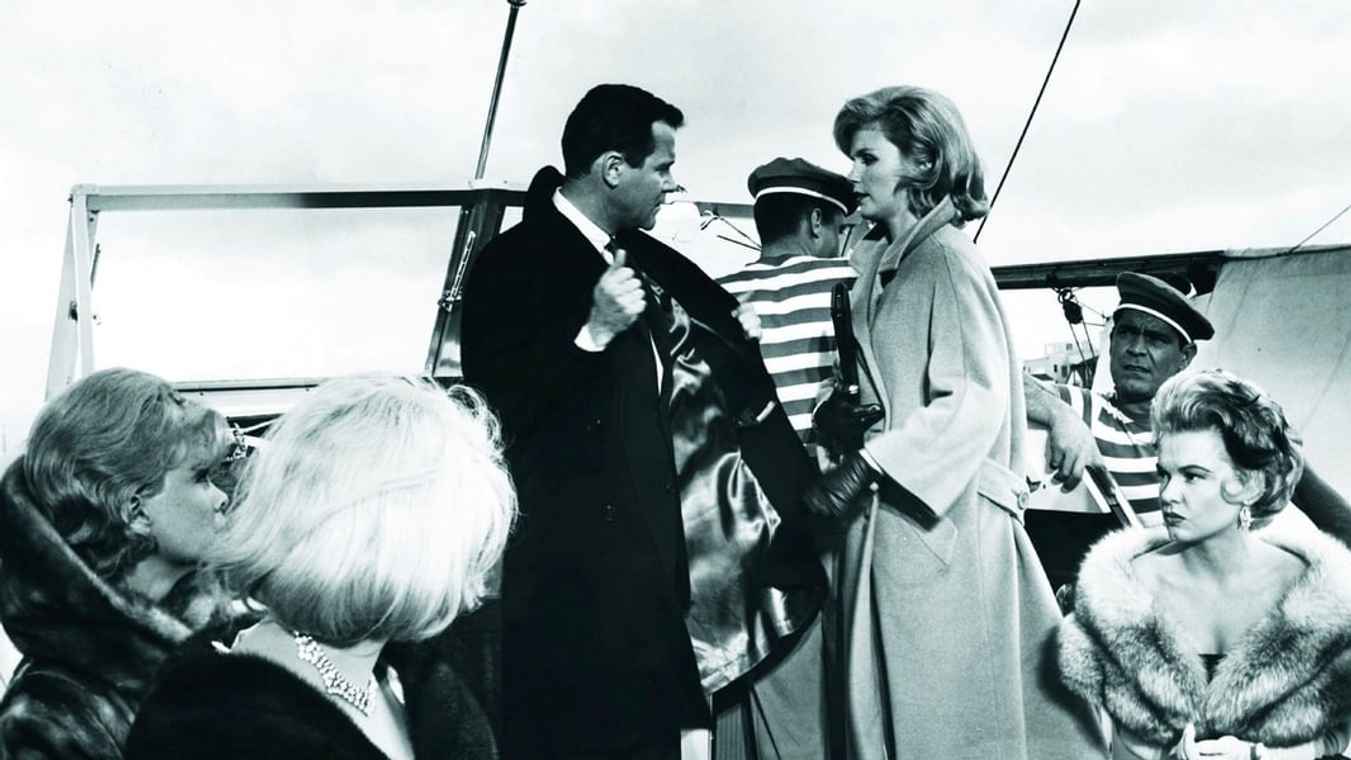
"[Joe offers to reconcile with Kirsten - but only if she quits drinking] Joe Clay: You remember how it really was? You and me and booze - a threesome. You and I were a couple of drunks on the sea of booze, and the boat sank. I got hold of something that kept me from going under, and I'm not going to let go of it. Not for you. Not for anyone. If you want to grab on, grab on. But there's just room for you and me - no threesome."
"Joe Clay: Well, anything worth having is worth suffering for, isn't it?"