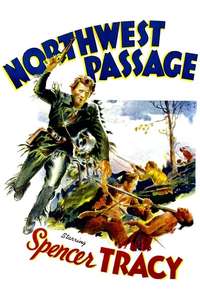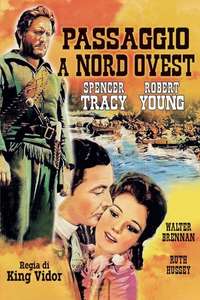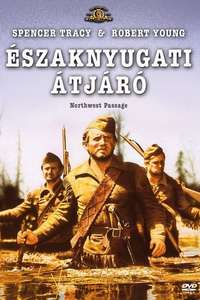

Movie |
Fort | Ranger
Disclaimer: All content and media belong to original content streaming platforms/owners like Netflix, Disney+ Hotstar, Amazon Prime Videos, JioCinema, SonyLIV etc. 91mobiles entertainment does not claim any rights to the content and only aggregate the content along with the service providers links.

Best Cinematography Color | 1941
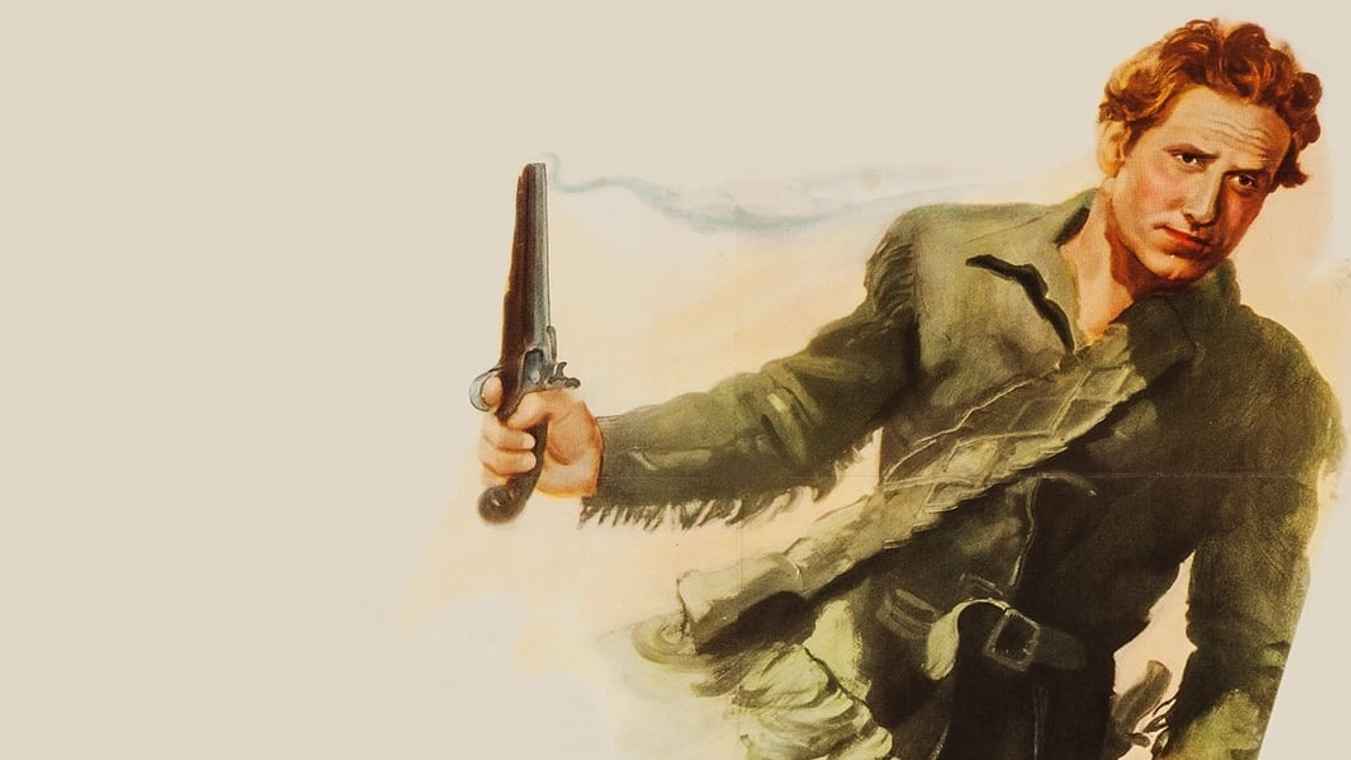
At the beginning of the Revolutionary War, George Washington refused Rogers' request to command troops. Washington suspected that after Rogers' long stay in Britain prior to the outbreak of hostilities that he might be a spy. Washington's fears proved correct, as an infuriated Rogers formed a group called the "Queen's Rangers" (later the "King's Rangers") and fought on the side of the Canadians against the Revolutionary forces. Canada's "Queen York Rangers" claim to be a direct descendant of Rogers' irregular militia.
According to historical accounts, 204 Rogers' Rangers left for St. Francis and 100 survived to return home.
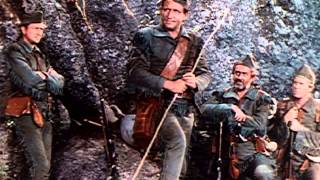
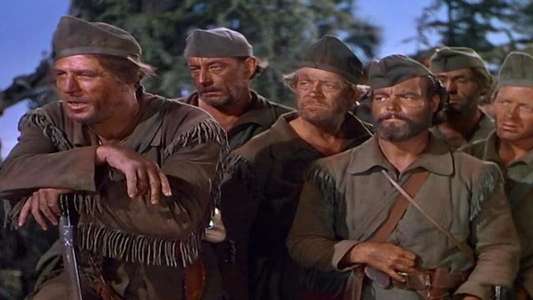
Based on the raid on the Abenaki village of St. Francis by Rogers' Rangers, the film is said to be quite accurate, except for the end. When the Rangers arrived at Fort # 4 they had missed their resupply by only two hours. Lt. Stephens heard them coming and retreated, thinking they were French troops. Rogers and a couple of men built a raft and pursued Stephens downriver. They caught up with him and sent the supplies back to #4 within ten days, as Rogers promised. Stephens was later court-martialed for cowardice and cashiered out of the Rangers.
The most demanding scene for the actors involved the filming of the human chain employed by the Rangers to cross a treacherous river. The actors themselves had to do the shots without the benefit of stunt doubles. The sequence was begun at Payette Lake in Idaho but had to be completed in the studio tank because the lake was far too dangerous. For Spencer Tracy, who once complained that the physical labors required of actors "wouldn't tax an embryo," it was his most difficult shoot to that point, surpassing even the taxing ocean scenes of his Oscar-winning Captains Courageous (1937).
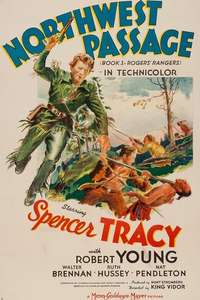
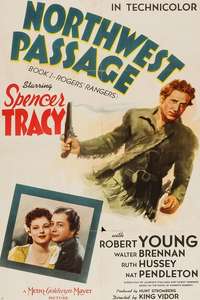
The subtitle "Book One: Rogers' Rangers" shows that MGM and King Vidor intended to complete the story in a second film, which was never made due to the lengthy production obstacles that plagued this film. This explains why the characters never actually make it to the Northwest Passage.
"[repeated line] Maj. Robert Rogers: I'll see you at sundown, Harvard."
"[first lines] Title Card: This is a story of our early America... of the century of conflict with the French and Indians... when necessity made simple men, unknown to history, into giants in daring and endurance. It begins in Portsmouth New Hampshire, in 1759..."