
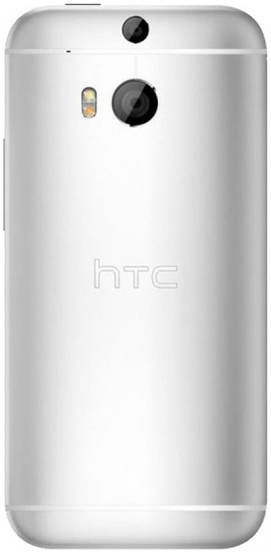
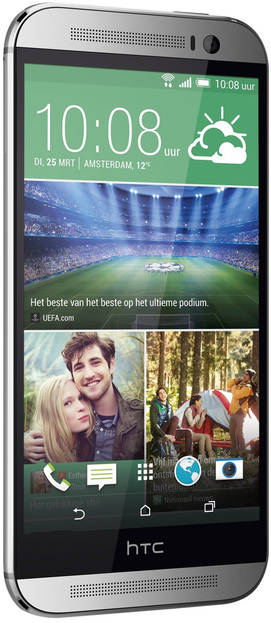
HTC One M8 Eye
+ Compare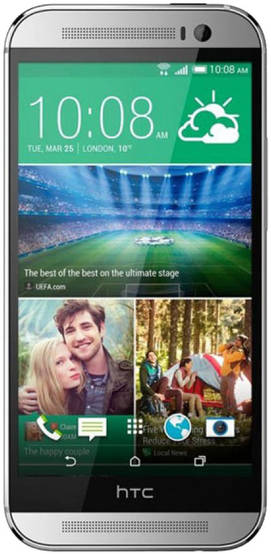


Key Specs
Performance
-
Qualcomm Snapdragon 801 -
Quad Core, 2.3 GHz -
2 GB RAM
Display
-
5.0 inches (12.7 cm); S-LCD 3 -
1080x1920 px (FULL HD)
Rear Camera
-
Single Camera Setup - 13 MP Primary Camera
-
Dual LED Flash -
Full HD @60fps Video Recording
Front Camera
-
5 MP -
Full HD @30 fps Video Recording
Battery
-
2600 mAh
General
-
SIM1: Nano -
5G Not Supported -
16 GB internal storage, Expandable upto 128 GB
HTC One M8 Eye Expert Review Summary
Expert Rating:
![Nitansh Rastogi]()
Verdict
While the One (M8 Eye) features a better rear camera than the One M8, it`s interesting that HTC has priced the former more affordably. At its launch, the One M8 Eye was priced around Rs 38,000 – considerably cheaper than its progenitor, which carried a sticker price of Rs 49,900. However, at this time, the M8 Eye can be bought for approximately Rs 35,000 online, while the One M8 will set you back by Rs 38,000 – so there s a tiny price difference of Rs 3,000 between the tw
Pros
- Great design
- Lovely display
- Lag-free performance
- Better rear camera than the One M8
- Long-lasting battery life
Cons
- The metallic body becomes slippery
- Primary camera not at par with other flagships
- Costly proposition
Specs at a glance
+
Measures 146.36 x 70.6 x 9.35 mm Weighs 160g 5-inch display with full HD resolution (~441ppi) 2.3GHz Qualcomm Snapdragon 801 quad-core processor 2GB RAM 16GB in-built storage, expandable up to 128GB via a microSD card 13-megapixel BSI sensor with LED flash on the back, along with a depth sensor 5-megapixel BSI sensor on the the front 4G support, along with 2G and 3G Wi-Fi, Bluetooth, GPS 2,600mAh Li-Po battery Android 4.4 KitKat with HTC Sense UI
Read More
Experiencing the new HTC Eye Experience camera app
+
Along with the launch of its new camera-centric smartphones – the HTC One (M8 Eye) and Desire Eye, with the latter focussing on selfies as well, the Taiwanese company also unveiled its new camera app christened Eye Experience. The app takes over from the previous camera app available on HTC devices, and brings forth several new features. While it comes preloaded on the M8 Eye, the app will also be made available to other HTC devices.The app interface is fairly loaded, with the right side (when the device is held horizontally) offering the ability to preview clicked images, switch between still images or video recording or choose between different camera modes. The left side gives option to enable or disable the flash, and expand the settings menu. Under the settings menu, you will be able to manipulate ISO, exposure, white balance along with getting more options like the aspect ratio, etc.It’s the modes menu that offers some new options compared to the previous camera app. Two new modes are Split Capture and Photo Booth. Split Capture, as the name indicates, allows you to get one image with captures from both the front and rear cameras simultaneously or getting an image with shots from both cameras one after the other. Photo Booth allows you to take a series of images in different formats like grid, square and filmstrip. The shots taken from the front camera on the device can be improved with the Live Makeup feature, offering options such as the ability to smoothen the skin tone, change the lighting of the image, remove red eye, among others.
Read More
A tale of three cameras
+
Before we take a look at the performance of the camera, let’s talk about its tech specs. The One (M8 Eye) is outfitted with a 13-megapixel BSI sensor featuring f/2.0 aperture. To assist shooting in low-light conditions, the device gets help from an LED flash. Along with the primary camera, the smartphone also offers a depth sensor at the back just like the One (M8), which captures depth information of the scene, allowing users to make use of some interesting post-processing features. The front camera of the handset remains the same as the One (M8) – a 5-megapixel BSI sensor, which is quite good for capturing selfies or making video calls.Now, let’s dive into the performance of the primary camera of the HTC One (M8 Eye). We have taken a number of shots with the device to gauge its capabilities, and here are a few for you to check. The 13-megapixel sensor on the HTC One (M8 Eye) shows off its capabilities well in the long shot, since the image has captured good amount of details. Colours also seem to be good, however when you see the image in its full size, the colour reproduction fails to impress. In close up shots,there’s ample amount of details and the image is quite sharp as well.Sadly, the HDR mode didn’t work as well as we’d hoped, since switching it on changes the entire image – maybe too much for our liking, making it look quite artificial. The low-light shot is where HTC’s concept of ultrapixel camera wins since the larger pixels are able to capture more light and thus produce great shots. Not only is the image captured by the 13-meg sensor on the One (M8 Eye) noisy, it also shows a strange halo effect around light sources.Overall, the 13-megapixel camera on the HTC One (M8 Eye) is definitely better than the ultrapixel camera found on the One (M8) since it captures better details. However, when we compare the camera quality to other options available in its price segment, then it doesn’t seem that impressive. But what makes the smartphone unique is another sensor at the rear which captures the depth info of the scene. What this means is that you don’t need to think about special effects such as bokeh before capturing the shot, as the depth sensor allows you to make use of various effects while post-processing the images.
Read More
What’s different between the One (M8 Eye) and its progenitor?
+
While the One (M8 Eye) is similar to the One (M8), there are some slight differences. Instead of a 2.5GHz quad-core Snapdragon 801 processor on the earlier model, the device comes powered by slightly underclocked 2.3GHz quad-core chip. The difference isn’t much and that reflects in performance as well, since it’s coupled with 2GB of RAM. In our usage, the smartphone performed very smoothly even while playing processor-intensive games,.In the connectivity department, the One (M8 Eye) misses out on NFC capabilities, and there’s no IR emitter as well, which means it can’t be used as a universal remote. Notably, both these options are present on the One (M8).
Read More
Read full Review

Verdict
While the One (M8 Eye) features a better rear camera than the One M8, it`s interesting that HTC has priced the former more affordably. At its launch, the One M8 Eye was priced around Rs 38,000 – considerably cheaper than its progenitor, which carried a sticker price of Rs 49,900. However, at this time, the M8 Eye can be bought for approximately Rs 35,000 online, while the One M8 will set you back by Rs 38,000 – so there s a tiny price difference of Rs 3,000 between the tw
- Great design
- Lovely display
- Lag-free performance
- Better rear camera than the One M8
- Long-lasting battery life
Pros
- The metallic body becomes slippery
- Primary camera not at par with other flagships
- Costly proposition
Cons
Specs at a glance
+Measures 146.36 x 70.6 x 9.35 mm Weighs 160g 5-inch display with full HD resolution (~441ppi) 2.3GHz Qualcomm Snapdragon 801 quad-core processor 2GB RAM 16GB in-built storage, expandable up to 128GB via a microSD card 13-megapixel BSI sensor with LED flash on the back, along with a depth sensor 5-megapixel BSI sensor on the the front 4G support, along with 2G and 3G Wi-Fi, Bluetooth, GPS 2,600mAh Li-Po battery Android 4.4 KitKat with HTC Sense UI
Read MoreExperiencing the new HTC Eye Experience camera app
+Along with the launch of its new camera-centric smartphones – the HTC One (M8 Eye) and Desire Eye, with the latter focussing on selfies as well, the Taiwanese company also unveiled its new camera app christened Eye Experience. The app takes over from the previous camera app available on HTC devices, and brings forth several new features. While it comes preloaded on the M8 Eye, the app will also be made available to other HTC devices.The app interface is fairly loaded, with the right side (when the device is held horizontally) offering the ability to preview clicked images, switch between still images or video recording or choose between different camera modes. The left side gives option to enable or disable the flash, and expand the settings menu. Under the settings menu, you will be able to manipulate ISO, exposure, white balance along with getting more options like the aspect ratio, etc.It’s the modes menu that offers some new options compared to the previous camera app. Two new modes are Split Capture and Photo Booth. Split Capture, as the name indicates, allows you to get one image with captures from both the front and rear cameras simultaneously or getting an image with shots from both cameras one after the other. Photo Booth allows you to take a series of images in different formats like grid, square and filmstrip. The shots taken from the front camera on the device can be improved with the Live Makeup feature, offering options such as the ability to smoothen the skin tone, change the lighting of the image, remove red eye, among others.
Read MoreA tale of three cameras
+Before we take a look at the performance of the camera, let’s talk about its tech specs. The One (M8 Eye) is outfitted with a 13-megapixel BSI sensor featuring f/2.0 aperture. To assist shooting in low-light conditions, the device gets help from an LED flash. Along with the primary camera, the smartphone also offers a depth sensor at the back just like the One (M8), which captures depth information of the scene, allowing users to make use of some interesting post-processing features. The front camera of the handset remains the same as the One (M8) – a 5-megapixel BSI sensor, which is quite good for capturing selfies or making video calls.Now, let’s dive into the performance of the primary camera of the HTC One (M8 Eye). We have taken a number of shots with the device to gauge its capabilities, and here are a few for you to check. The 13-megapixel sensor on the HTC One (M8 Eye) shows off its capabilities well in the long shot, since the image has captured good amount of details. Colours also seem to be good, however when you see the image in its full size, the colour reproduction fails to impress. In close up shots,there’s ample amount of details and the image is quite sharp as well.Sadly, the HDR mode didn’t work as well as we’d hoped, since switching it on changes the entire image – maybe too much for our liking, making it look quite artificial. The low-light shot is where HTC’s concept of ultrapixel camera wins since the larger pixels are able to capture more light and thus produce great shots. Not only is the image captured by the 13-meg sensor on the One (M8 Eye) noisy, it also shows a strange halo effect around light sources.Overall, the 13-megapixel camera on the HTC One (M8 Eye) is definitely better than the ultrapixel camera found on the One (M8) since it captures better details. However, when we compare the camera quality to other options available in its price segment, then it doesn’t seem that impressive. But what makes the smartphone unique is another sensor at the rear which captures the depth info of the scene. What this means is that you don’t need to think about special effects such as bokeh before capturing the shot, as the depth sensor allows you to make use of various effects while post-processing the images.
Read MoreWhat’s different between the One (M8 Eye) and its progenitor?
+While the One (M8 Eye) is similar to the One (M8), there are some slight differences. Instead of a 2.5GHz quad-core Snapdragon 801 processor on the earlier model, the device comes powered by slightly underclocked 2.3GHz quad-core chip. The difference isn’t much and that reflects in performance as well, since it’s coupled with 2GB of RAM. In our usage, the smartphone performed very smoothly even while playing processor-intensive games,.In the connectivity department, the One (M8 Eye) misses out on NFC capabilities, and there’s no IR emitter as well, which means it can’t be used as a universal remote. Notably, both these options are present on the One (M8).
Read MorePopular Comparisons




HTC One M8 Eye Specifications
General |
|
|---|---|
| Operating System | Android v4.4.4 (Kitkat) |
| Custom UI | HTC Sense |
Performance
(Avg)
|
|
|---|---|
| Chipset | Qualcomm Snapdragon 801 MSM8974AB |
| Processor | Quad core, 2.3 GHz, Krait 400 |
| Graphics (GPU) | Adreno 330 |
| RAM | 2 GB |
Display
(Excellent)
|
|
|---|---|
| Display Type | S-LCD 3 |
| Screen Size | 5.0 inches (12.7 cm) |
| Resolution | 1080x1920 px (FULL HD) |
| Pixel Density | 441 ppi |
| Screen to Body Ratio (calculated) | 66.57 % |
Design |
|
|---|---|
| Height | 146.3 mm |
| Width | 70.6 mm |
| Thickness | 9.3 mm |
| Weight | 160 grams |
Rear Camera
(Good)
|
||||||||
|---|---|---|---|---|---|---|---|---|
| Resolution | ||||||||
|
||||||||
| Autofocus | Yes | |||||||
| Flash | Yes, Dual LED Flash | |||||||
| Image Resolution | 4128 x 3096 Pixels | |||||||
| Shooting Modes | High Dynamic Range mode (HDR) | |||||||
| Camera Features |
Digital Zoom Face detection Simultaneous HD video and image recording Smile detection |
|||||||
| Video Recording |
1920x1080 @ 60 fps 1280x720 @ 120 fps |
|||||||
| Video Recording Features |
Video HDR Stereo recording |
Front Camera
(Good)
|
||||
|---|---|---|---|---|
| Resolution | ||||
|
||||
| Video Recording | 1920x1080 @ 30 fps |
Battery
(Very Good)
|
|
|---|---|
| Capacity | 2600 mAh |
| Battery Type | Li-Polymer |
| TalkTime | Up to 24 Hours(3G) |
Storage |
|
|---|---|
| Internal Storage | 16 GB |
| Expandable Storage | Yes, Up to 128 GB |
Network & Connectivity |
|
|---|---|
| SIM Slot(s) | Single SIM |
| SIM Type | SIM1: Nano |
| Network Support | 5G Not Supported, 4G |
| SIM 1 |
4G bands, 4G Speed
Expand
|
| Wi-Fi | Yes, Wi-Fi 4 (802.11 a/b/g/n) 5GHz |
| Wi-Fi Features | Wi-Fi Direct, Mobile Hotspot |
| Bluetooth | Yes, v4.0 |
| GPS | Yes with A-GPS, Glonass |
Multimedia |
|
|---|---|
| Audio Jack | 3.5 mm |
Sensors |
|
|---|---|
| Fingerprint Sensor | No |
| Other Sensors | Light sensor, Proximity sensor, Accelerometer, Compass, Gyroscope |
HTC One M8 Eye User Reviews
HTC One M8 Eye Key Highlights
| Processor | Qualcomm Snapdragon 801 MSM8974AB |
| RAM & Storage | 2 GB + 16 GB |
| Display | 5.0", 1080 x 1920 Resolution |
| Rear Camera | 13 MP |
| Front Camera | 5 MP |
| Battery | 2600 mAh |


























Popular Links
- All Upcoming Phones
- vivo V80 5G
- OPPO K14 Plus 5G
- Xiaomi Redmi Note 17 Pro 5G
- Lava Virat Curve 5G
- OPPO F35 Pro
- Samsung Mobiles
- Motorola Mobiles
- vivo Mobiles
- OPPO Mobiles
- Tecno Mobiles
- realme Mobiles
- Xiaomi Mobiles