All-new Audi Q3 early preview: We check out the tech in an exclusive hands-on for selected media


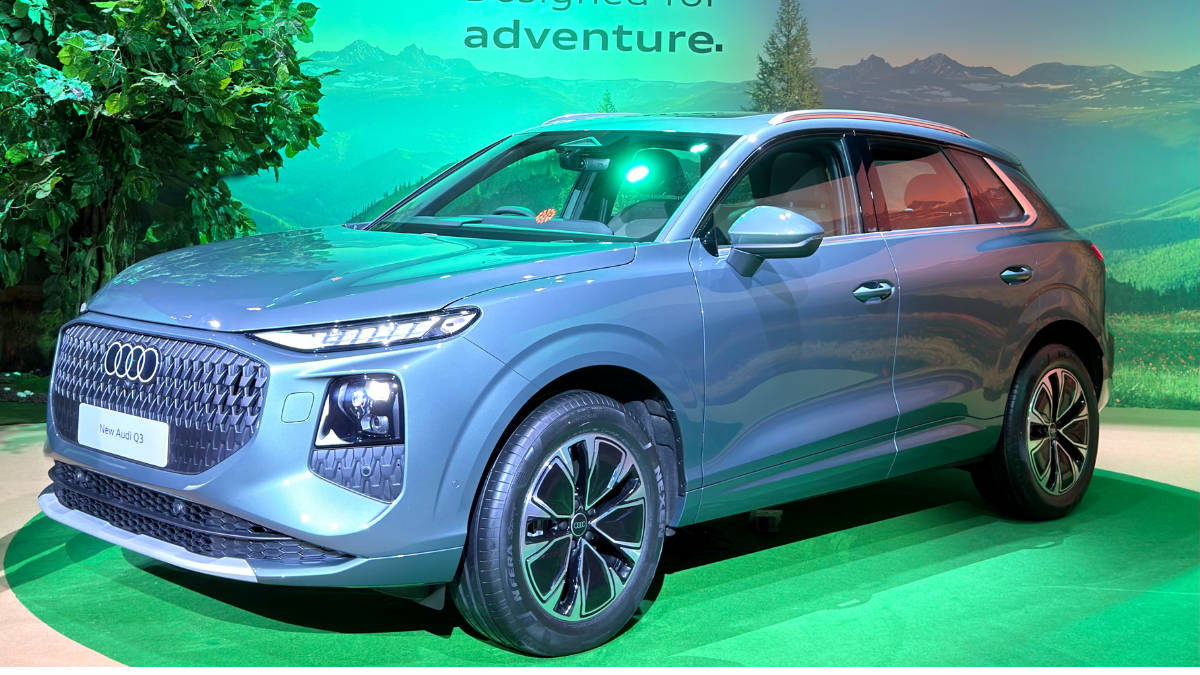
After more than a year of its international debut, the third-gen Audi Q3 has finally arrived in India. Sort of. Audi held an exclusive preview for select media to get hands-on with some of the early Made in India samples of the Q3, and considering its ageing product line-up, the all-new compact SUV couldn’t come any sooner.


Table of Contents
Design: Exterior
Thankfully, Audi has resisted the industry’s slide into design overkill, and the Q3 looks perfectly proportioned all the way from its new 3D mesh grille and sleek LED matrix headlights to the illuminated four-ringed logo on the tailgate. It has also grown in every dimension over its predecessor, and the surfacing shows it. Where rivals have leaned into aggressive, over-articulated surfacing that tries too hard, the Q3 holds a discipline that runs through every panel.

Design: Interior
The all-new cabin layout and dashboard design is a welcome sight after years of dealing with the archaic Audi architecture. The dual-screen dashboard curves toward the driver instead of sitting as a flat slab, a layout that reads as more usable than the triple-screen setups several competitors have adopted as a default. A rotary volume knob survives the transition, a small mercy in a segment eager to bury every control in a touch layer. One bewildering surprise is the decision to retain seat heating from the EU models and not include seat ventilation (cooling) for the India-spec variants.
Cabin tech
The infotainment graphics are new, and the tiled icon layout is intuitive, though the presentation remains largely monochromatic next to rivals that massage the retinas with HDR colour. The 12.8-inch main display is responsive, and while internationally, this generation of the Q3 ships with ChatGPT integrated into its voice assistant, we won’t know whether India-spec cars will get that sort of tech stack. The bigger upgrade is the 12-speaker Sonos premium sound system that replaces the outgoing stock setup. It comes with multiple surround modes and enough user-adjustable parameters to shift the soundstage from an intimate two-channel feel to something closer to a full surround presentation, depending on taste. It’s a genuine step up, and one that buyers cross-shopping the BMW X1 and Mercedes-Benz GLA will notice.

Switchgear carries Audi’s usual quality signature with knurled finishes, tactile clicks, and fit and finish that hold to the brand’s standards, and none of it feels cut to a price. The cabin also feels roomier, helped by moving the drive selector to a steering-column stalk and freeing up console space. Wireless charging, dual USB-C ports, and wireless Apple CarPlay and Android Auto are all finally standard fare, closing a gap the outgoing Q3 had left open for years. A head-up display debuts on the Q3 for the first time, handling navigation and speed readouts.

Drivetrain
Power comes from a 2.0-litre four-cylinder turbo-petrol producing 204hp and 320Nm, paired with a 7-speed dual-clutch automatic and Audi’s quattro all-wheel-drive system, expected to remain standard fit. Audi claims a 0-100kph time of 7.1 seconds and a top speed of 229kph. Pricing is expected to open around Rs 60 lakh (ex-showroom) when the Q3 launches later this year.
On this early look, Audi’s entry-level SUV finally feels like it has the design, cabin tech and powerplant to exceed the segment’s asking price. Final judgement waits on India-spec feature confirmation and a proper road drive.