Apple Pay has officially launched in India, years after the contactless payment service became available in most other major markets. The service starts with a single banking partner, Axis Bank, and supports Visa and Mastercard credit cards, letting users tap to pay in stores, in apps, and on the web without entering a PIN or OTP at checkout.
How Apple Pay works and who’s on board at launch
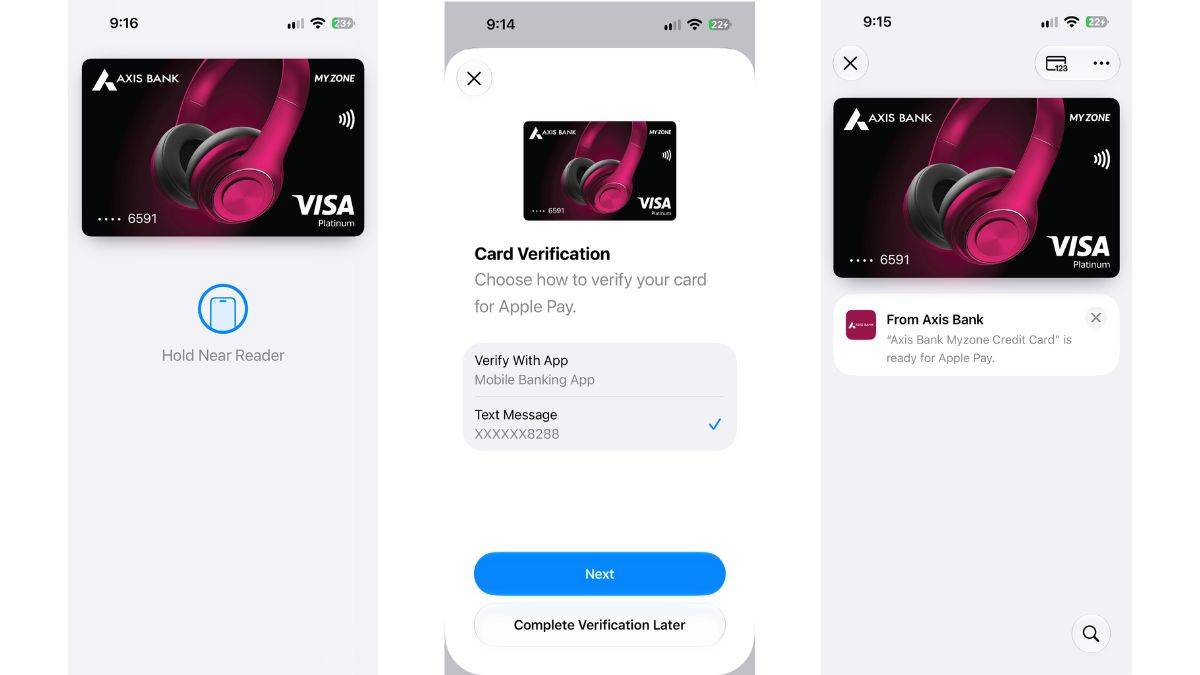
At launch, only Axis Bank-issued Visa and Mastercard credit cards are supported. Customers can add their cards through the latest Axis Bank app or directly in the Wallet app on their iPhone. Once added, in-store payments work the same way they do everywhere else Apple Pay is available: double-click the side or Home button, authenticate with Face ID, Touch ID, or a passcode, and hold the phone or Apple Watch near a contactless reader.
Apple says millions of merchants across India will accept Apple Pay from day one, including Apple’s own retail stores, Blinkit, Chaayos, Croma, Ixigo, Tata 1mg, Zomato, and several Reliance-owned brands. The company has also worked with payment service providers like Razorpay, PayU, Cashfree, Pine Labs, and Juspay to extend support across their merchant networks, with more merchants expected to be added over time.
Mac support is coming later, though Apple hasn’t specified when. The service requires an iPhone XR or later running iOS 18 or newer, or an Apple Watch Series 6 or later paired with a compatible iPhone.
How secure is Apple Pay?
Apple says it doesn’t store actual card numbers on the device or Apple’s servers, and it doesn’t share them with merchants during a transaction. Instead, each card gets a unique, encrypted Device Account Number stored in the device’s Secure Element, with Mastercard and Visa’s own tokenisation layered on top for their respective networks. Apple also says it doesn’t retain transaction details tied back to individual users, and that a lost or stolen device can have its payments suspended through Find My.
“Apple Pay makes everyday payments with a card easy, secure, and private,” said Jennifer Bailey, Apple’s VP of Apple Pay and Apple Wallet. Axis Bank CEO Amitabh Chaudhry called it a step toward “payment experiences that are progressive, trusted and deeply relevant” to customers, while Mastercard’s Gautam Aggarwal and Visa’s Suresh Sethi both framed the launch as a milestone for contactless commerce in India, pointing to their respective tokenisation systems as the security backbone behind it.
Can Apple Pay compete with UPI?
Apple Pay took its sweet time to launch in India, but now that it is here, one wonders if it isn’t too late. Apple Pay will compete in a market that’s overwhelmingly used to UPI, where tap-to-pay convenience was a pain point that QR-code payments solved. While it won’t replace QR-code payments in local kirana stores, it will make life easier for iPhone users making larger purchases at shopping malls, restaurants, etc. Without direct UPI or RuPay compatibility, Apple Pay acts as a companion option for high-end consumers rather than a mass-market competitor to UPI.
A single-bank rollout also means most iPhone users in India won’t be able to use it on day one unless they specifically hold an Axis Bank credit card, so how quickly Apple brings in more banks, and critically, debit cards and UPI-linked options, will likely matter more to adoption than the launch itself.