Inside Qualcomm’s push for mass-market PCs, Googlebooks, and distributed AI


Qualcomm hasn’t shied away from going head-to-head with legacy brands in the compute space, and is now shifting strategy to scale higher. The company is taking aim at broader, more price-conscious markets like India through accessible chipsets, a growing multi-OS ecosystem spanning Windows, Googlebooks, and Linux, and a vision of AI that treats your laptop as just one piece of a larger ambient network.
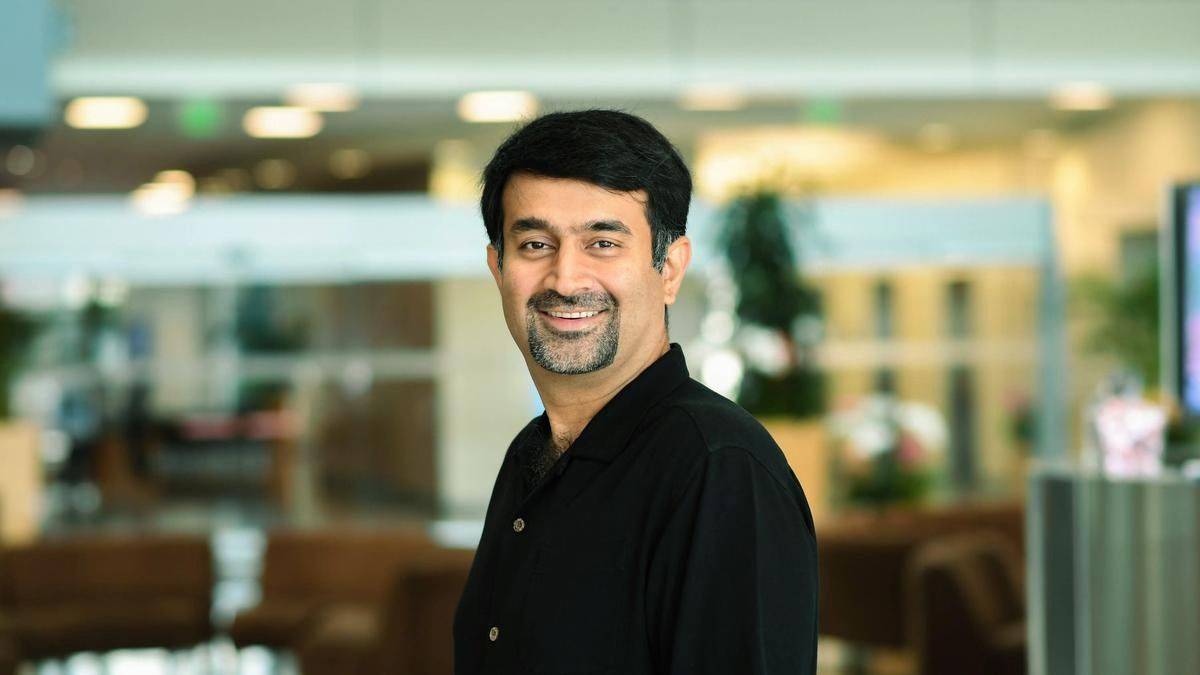
I spoke to Kedar Kondap, Senior Vice President and General Manager of Compute and Gaming, at the Snapdragon Summit 2026 as part of a media roundtable, where he had lots to share on how things will play out for the chipmaker going forward.
Table of Contents
Bridging the price gap
Adoption of Qualcomm’s flagship Snapdragon X-series platforms in growth regions like India could be facing a price-related barrier. Most Indian buyers look for laptops priced around Rs 50,000, yet first-wave Snapdragon laptops landed in premium territory starting above Rs 65,000 to Rs 80,000+.
To address the gap, Qualcomm is introducing lower-tier Snapdragon platforms (such as Snapdragon C) designed to give laptop manufacturers the flexibility to build more affordable machines without sacrificing the core proposition. This expansion arrives during a time which isn’t great for hardware, politely put. Global memory prices have jumped recently, along with storage costs. As OEMs play with display and memory configurations to balance their bill of materials, Qualcomm’s leaner silicon platforms aim to help manufacturers bring prices down to more affordable levels without compromising the user experience.
To help buyers understand what makes these machines different, Qualcomm is setting up dedicated Snapdragon display tables across more than 100 Croma retail locations in India, demonstrating real-time cross-device handoffs between phones, laptops, and wearables.
Googlebooks and the familiarity of Android
One of the pillars of Qualcomm’s expanding ecosystem is its work with Google on Googlebooks, a new category of laptops built around Gemini Intelligence and native Android app integration.


Qualcomm feels that given Android’s deep dominance in regions like India, the familiar Play Store library, native apps, and phone-to-PC sync straight to a desktop environment help remove a massive barrier to entry.
Seamless Continuity: Through Google features like Cast my Apps and Rambler, users can start a task on a phone and pick it up on a Googlebook without breaking their flow.
Intelligent Coordination: Gemini acts as an ambient overlay, surfacing contextual details from emails, calendars, and active screens across connected devices.
Unplugged Endurance: Benchmarks show Snapdragon-powered Googlebooks, (such as offerings from HP and Dell) reaching 16 to 19 hours of real-world battery life, maintaining a big advantage over competing platforms.
Beyond Windows and Googlebooks, Kedar also confirmed official Linux support starting with the Snapdragon X2 platform, opening the door for open-source developer communities.


Enterprise deployment
Qualcomm is applying the same approach to corporate IT. While enterprise managers historically worried about legacy app translation and security on non-x86 hardware, Kedar insists these concerns are a thing of the past.
Snapdragon PCs have already been deployed across more than 70 major global enterprises, with large-scale rollouts actively underway. Kedar stressed that compatibility concerns are no longer a roadblock.
The distributed future of AI
Looking toward the Agentic Age, Qualcomm’s strategy hinges on the belief that artificial intelligence shouldn’t be trapped inside a single gadget. Kedar mapped out a future where smartphones, laptops, smart glasses, and earbuds work as a unified system, delegating AI workloads based on thermal limits, battery status, and computing power. A quick voice prompt might begin on a smartwatch or phone, but if a task demands deep reasoning, it hands off smoothly to a Snapdragon laptop or the cloud.
When asked about autonomous AI agents taking actions on behalf of users, Kedar pointed to explicit, user-defined boundaries. “We already know how to set boundary conditions in our daily lives, like scanning a QR code for payment and confirming the exact amount. Autonomous agents work in a similar way. Users get to set the boundaries for whatever task an agent performs.”
With Agentic AI being the central thread at Snapdragon Summit 2026, one of the takeaways for me is how Qualcomm’s strategy weaves the narrative across different device categories and platforms. Specifically for the compute segment though, if Qualcomm can help move prices south, it might work out to be win-win for both the brand as well as consumers. Personally, I can’t wait to try out the Googlebook.
Disclosure: This writer attended Snapdragon Summit on Qualcomm India’s invitation