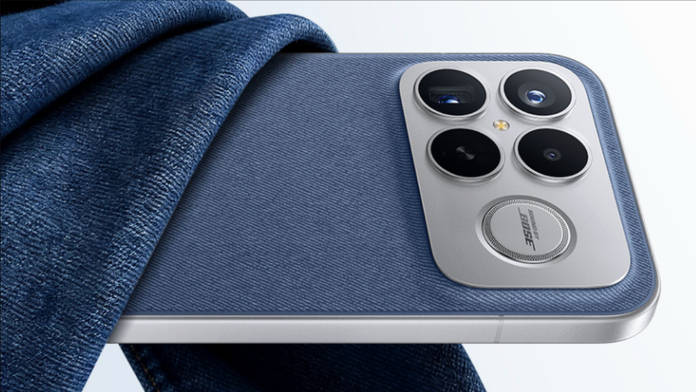
POCO’s upcoming phone in their flagship ‘F’ series lineup, the POCO F8 Pro, has surfaced online, confirming a new audio partnership. A leaked image of the retail packaging of the phone indicates that the F8 Pro will feature ‘Sound by Bose tuning, signalling the first time the company has tied up with the audio brand. The POCO F8 Pro is expected to arrive early in 2026 alongside the POCO F8 and POCO F8 Ultra models.
An image, shared by tipster Abhishek Yadav on X, shows the top portion of the POCO F8 Pro’s black retail box. The signature yellow POCO branding is there, but the highlight is the ‘Sound by Bose’ logo at the top-left corner. Though this leak does not confirm any specifications, it hints at POCO’s attempt to enhance the multimedia experience on its upcoming flagship.
Exclusive ✨
— Abhishek Yadav (@yabhishekhd) November 7, 2025
Poco F8 Pro – Sound by Bose.
No, adapter in the box ❌ pic.twitter.com/vKfX5mXA4p
Reports suggest the POCO F8 Pro will be based on the Redmi K90 Pro Max that launched recently in China, which also carried the Bose branding. The phone is tipped to feature the Snapdragon 8 Elite Gen 5 chipset, a 6.9-inch 2K OLED display with 120Hz refresh rate, and Android 16-based HyperOS 3. The device will likely carry a triple 50MP rear camera setup and a physical woofer unit for an enhanced sound system.
However, there might be some differences with the Redmi model. If earlier leaks are anything to go by, then the POCO F8 Pro could pack a 6,500mAh battery instead of the K90 Pro Max’s 7,560mAh unit, with presumably slower wired charging speeds. The phone could also come without a charger in the box, just like the POCO F7 Pro that launched without one in Europe.
The POCO F7 Pro was announced in March 2025, so its successor, the F8 Pro, should be announced sometime during the same month but in 2026. Other leaks suggest that it will not arrive in India, just like the predecessor, but Indian users might receive the Redmi K90 Pro Max under Xiaomi’s branding.
POCO’s partnership with Bose fits into a growing industry trend where smartphone brands seek premium tie-ups to elevate user experiences. Much like OPPO’s partnership with Hasselblad or iQOO’s deal with BMW M Motorsport, the POCO-Bose partnership could help position the brand as more than just a value player. Bose’s involvement should improve both tuning and acoustic quality of the speakers to make POCO’s flagship lineup more alluring for media enthusiasts.
This collaboration also signals POCO’s gradual shift toward premium positioning within the mid-range flagship segment, gaining a competitive advantage over rivals like iQOO’s Neo series and the Redmi Note Pros by tapping into Bose’s fanbase. While the F-series started off as an affordable flagship alternative, newer models like the F7 Pro have introduced design refinements and better audio-visual experiences to match the rising competition from Realme, iQOO, and Xiaomi’s own sub-brands.
If the tie-up with Bose translates into real-world performance, the POCO F8 Pro could stand out from other mid-range flagships that often prioritise camera branding over audio quality. That would make it more appealing to the user who wants a balanced multimedia experience and not just processing power. At the same time, dropping the charger and reducing battery capacity shows POCO aligning with broader cost-saving and sustainability-driven strategies seen across the industry.