
Moto Z 32GB
+ Compare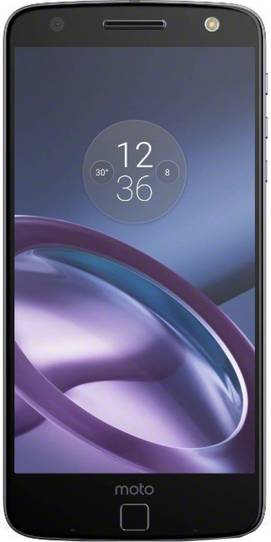

Key Specs
Performance
-
Qualcomm Snapdragon 820 -
Quad core (1.8 GHz, Dual Core + 1.59 GHz, Dual core) -
4 GB RAM
Display
-
5.5 inches (13.97 cm); AMOLED -
1440x2560 px (QHD (2k)) -
Gorilla Glass Protection
Rear Camera
-
Single Camera Setup - 13 MP (upto 8x Digital Zoom) Primary Camera
-
Dual-LED CCT Flash -
4k @30fps Video Recording
Front Camera
-
5 MP -
Full HD @30 fps Video Recording
Battery
-
2600 mAh -
Turbo Power Charging; USB Type-C port
General
-
SIM1: Nano, SIM2: Nano -
5G Not Supported -
32 GB / 64 GB Storage, Expandable upto 2 TB -
Water Resistant
Moto Z 32GB Expert Review Summary
Expert Rating:
![Nitansh Rastogi]()
Verdict
There`s little doubt that the Moto Z is an interesting smartphone. Being a flagship, it ticks off all the right boxes when it comes to its spec sheet, and the intuitive implementation of Moto Mods sets it apart from the competition, along with justifying its premium pricing.However, you must consider the cost of Moto Mods, which would be over and above the sticker price of Rs 39,999 for the smartphone. And, if you remove them from the equation, then the Moto Z finds itself in a tough spot. It isn`t affordable enough to compete with the flagship killers, nor is it a perfect all-rounder to be pl...
Read Full Verdict
Pros
- Distinctive design & seamless modularity
- Beautiful display
- Stock software interface with useful additions
- Top-notch performance
Cons
- Slim frame forgoes ergonomic comfort
- Camera performance doesn't match the competition
- Battery fails to live up the whole day
Specs at a glance
+
Display
Read More
Design: slim. slimmer. slimmest. But at what cost?
+
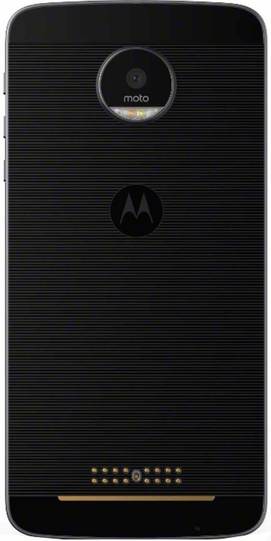
Dimensions: 153.3 x 75.3 x 5.1 mmWeight: 136 gramsThere was a time in the smartphone industry when Chinese brands were fighting it out for the title of the slimmest phone. OPPO’s R5 (review) featured a slim 4.85mm frame, whereas the vivo X5 Max (first impressions) got even thinner with its waistline measuring 4.75mm. Beating them with an edge (pun intended) was the Coolpad Ivvi K1, with its ultra-thin girth of 4.7mm. Thankfully though, better sense prevailed and phone makers realised that slimness comes at the cost of various aspects, which consumers don’t want to sacrifice on. It seems however, that Lenovo-owned Moto didn’t get the memo.The Moto Z is, without a doubt, the slimmest smartphone currently in the market with its 5.15mm waist. Sadly, the feat is only for vanity purposes, as we couldn’t find any practical benefit of the thin frame. In fact, the device fails to offer a good in-hand feel because of its sharp edges. Gone are the curved backs that previous Motos were famous for, and were appreciated for their superior ergonomic quotient. In this respect, its affordable sibling the Moto Z Play seems much better as its thickness makes it handier.The rear of the Moto Z (left) and the Z Play (right)The slimness does help in keeping the Moto Z featherweight, as it tips the scales at 136g. We were able to use the smartphone with a single hand for the most part, which is impressive considering the same is a difficult task on many smartphones of its size. At the fascia, the Moto Z’s proceedings are dominated by a display panel measuring 5.5-inches diagonally. Above it, you’ll find the earpiece, which also doubles up as a speaker, and is centrally placed between the secondary snapper and an LED flash. At the bottom, you’ll find similar setup as Moto’s budget offering, the G4 Plus, i.e., a button which only houses the fingerprint scanner. While we’ve said it earlier as well, we'll say it again - this implementation is less than ideal.The metallic edges have rounder corners which slightly make up for the sharpness, since the Moto Z digs into the palm quite a bit. The right spine sports three discrete keys of the same size – a power toggle along with buttons to increase and decrease the volume.The top of the phone sports a noise-cancelling mic along with an ejectable tray for holding a nano-SIM, plus another nano-SIM or a microSD card. At the bottom, there’s a USB-Type C port allowing for bidirectional plugging in of the cable, with the promise of faster data transfers. Sadly, there’s no 3.5mm audio socket on the Moto Z, something which can be blamed on its slimness. Flip to the rear, and that’s where the Moto Z will generate polarising statements. The glass back features a linear pattern, with two glossy strips on top and bottom. Interestingly, the back isn't shiny, which means even though it attracts fingerprints, it doesn't look too bad. Yet the phone is quite slippery, similar to other phones that sport glass backs. However, the familiar Motorola dimple is missing, as the logo is placed normally, but the camera module has a huge bump. It’s easy to guess this protrusion is because the sensor and other components couldn’t fit inside the thin body of the handset, but the bump makes it extremely wobbly when kept on a flat surface, along with making the lens prone to scratches or any other damage, rather easily.If you look further below, you’ll see two rows of pins – and they’re the reason why the Moto Z is a futuristic smartphone. We’ll talk about it some more in the next section.With its design, the Moto Z certainly looks distinct from the swarm of smartphones out there. It also looks great and attracts attention, but sadly, fails to take care of the ergonomics aspect. While the phone isn't waterproof, it's impervious to splashes thanks the water-repellent nano-coating.
Read More
Moto Mods: modularity done right
+
Remember the pins at the back of the Moto Z? Well, those 16 dots actually act as a connector, and provide the modularity aspect to the phone. The Moto Mods, as the company likes to call the modular accessories, attach to the smartphone via these pins, along with the integrated magnets. Essentially, these mods act as a snap-on for the smartphone, making it extremely easy to add or remove them. Like us, if you hate the camera hump or the bad ergonomics, you can use the Style Mod bundled with the Moto Z. The company provides the wooden shell as part of the introductory offer. It makes the camera sit flush, along with making the phablet easier to hold. We preferred using it as a cover for the sheer comfort it provides while using the phone.The best part is that the Style Mod or any other module can easily be added to the Moto Z duo magnetically. Unlike the tacky implementation of the LG G5, wherein the base needed to be removed, you simply need to place the module at the rear, and voila, the device is instantly connected. You don’t need to reboot the phone as it automatically detects the attached Mod, and doesn’t even disrupt whatever else you might be doing.There are four Mods launched by the company – the JBL SoundBoost Speaker, Hasselblad True Zoom Camera, Instashare projector, and Incipio offGRID Power Pack. All of them need to be purchased separately, though if you buy them along with the Moto Z, then the bundled pricing is slightly lower. We got the JBL SoundBoost speaker and Instashare projector Mods for review, and needless to say that both of them are worthy accessories for entertainment junkies. The JBL SoundBoost lets you carry the party with you, thanks to its loud and crisp sound output. The projector on the other hand, gives you the capability to have your own theatre wherever you go. It offers a projection of up to 70-inches, along with giving you the ability to control the sharpness. The best part about it is that it auto-adjusts the projection, depending upon the angle. Both these mods have in-built batteries, which ensures that they don’t drain the juice from the smartphone itself. We also loved the fact that the pairing is instantaneous and seamless, and you won’t miss even a single beat while playing music from the Moto Z, and then adding the speaker mod. The Hasselblad mod is what’s most exciting for camera nerds as it brings the brand’s know-how of imaging to the masses. It boasts a 12-meg sensor along with an optical zoom of up to 10x, which is really impressive. It also comes with powerful illumination, thanks to the xenon flash. Sadly we didn’t get the module for testing, but be sure that we would be covering it in-depth as and when it we do get a chance to try it out.Last but not the least is the Incipio Power Pack, which is kind of necessary for the teeny battery backing the Moto Z. Like its siblings, it sticks at the back of the handset, and adds an additional 2,220mAh power.The Moto Mods aren’t affordable by any measure. While Style Shells are reasonably priced under Rs 1,500, the power pack is quite expensive at around Rs 5,000, especially when you consider the convenience it offers. The projector and camera mods cost almost the same as the brand’s Moto G4 Plus (review). The JBL SoundBoost speaker is perhaps the most exciting of all, as it’s portable, yet offers a powerful audio experience.If you think about it, an argument can be made against some of these accessories that they don’t add much value. In fact, apart from the projector and camera mod, you can purchase similar accessories separately. Not only will that work to be more affordable, such accessories will also be compatible with all mobile devices. For instance, you can purchase a Bluetooth speaker or a power bank, which will be affordable, and in all probability, more powerful.But Motorola’s implementation of modularity raises our hope about the future of such devices. With everyone else giving up on the concept – including LG, which reportedly has thrown the towel as the upcoming G6 won’t have any modular accessories – Moto Mods suggest that such smartphones are feasible. Lenovo has already started offering Moto Mods development kit to developers, which means that the ecosystem will grow further with more useful and interesting modules.
Read More
Display: delivers a great visual experience
+
Motorola was among the first set of brands that boarded the QHD bandwagon with its flagships back in 2014 (with the Moto Droid Turbo). The Moto Z also opts for the superb 2,560 x 1,440 pixel resolution, which combined with its 5.5-inch display, translates to an eye-popping pixel density of 535ppi. The result is that the text is incredibly crisp and colours pop out as well, thanks to the Super AMOLED display. The viewing angles are great as well. While the brightness levels are adequate, the screen is quite reflective under direct sunlight, which makes it difficult to read.Safeguarding the display against scratches is a layer of Corning Gorilla Glass. Like previous smartphones from the brand, the Moto Z features Moto display, which shows you missed notifications even without unlocking the phone. It works whenever you take the device out of the pocket, or bring your hand near the phone. The handset also comes with Attentive display, which enables the front camera to track your face actively to keep the display awake, and put it to sleep if it doesn’t detect it.
Read More
Software: Moto's stamp on Google's Android
+
If you’re a fan of stock Android, then Motorola smartphones would certainly appeal to you. Its offerings ship with the vanilla version of Android layered with a few useful additions, and the Moto Z is no different. It ships with Android 6.0 Marshmallow. Thanks to the Google Now launcher, the homescreen has only one screen with a right swipe bringing up Google Now. In terms of preloaded apps, the phone just comes with Google’s suite. However, the real attraction in terms of the interface of Moto smartphones are little things that add a lot to the user experience. With the Moto app, you still get the Moto Z to pick up your voice even when it’s locked, enable the talk-to-me mode automatically in certain situations, and use various gestures. Interestingly, the Moto Z takes gestures to the next level. Along with flicking the wrist twice to open the camera app, and double twisting the phone to toggle the flash, you can also put the phone face down to silence incoming calls and pick it up to stop calls from ringing. There’s a super-useful one-handed mode too, which can be enabled instantly by swiping up from the overview button in the virtual navigation bar. Another brownie point for the company comes from its commitment to offer software updates fast. With Android 7.0 Nougat out already, Lenovo has already promised an upgrade for the Moto Z before the end of this year.Talking about the fingerprint scanner on the front, it’s lightning fast. It accurately detected our digits without fail, and its 360-degree functionality make it even more useful. While we lament the fact that it doesn’t double up as a home button, the good thing is that it can be used for locking the phone as well. This is quite useful, and works as a proxy to the popular double-tap the screen to lock and unlock feature. Thanks to its reachability, we used it quite often instead of pressing the power button.
Read More
Camera: impressive but not flagship-grade
+
This year, most smartphone brands have started to opt for lower megapixel counts for their cameras, and Lenovo also follows the same approach. While last year’s flagships, the X Style and X Play (camera review) boasted 21-meg sensors, the Moto Z comes equipped with a 13-megapixel camera at the back. For shooting in dim lighting, the smartphone has a dual-tone LED flash. The primary snapper has all the usual flagship-like features – laser and phase detection autofocus, optical image stabilisation, and more. At the front, the Z has a 5MP shooter for capturing selfies.If you’ve disliked Motorola’s minimal camera interface, then you’d appreciate the camera app on the Moto Z. It still remains clutter-free when launched, but you do get quite a few modes and options. You can choose if you want to capture the image by tapping anywhere on the screen or by pressing the shutter button. You can also toggle the HDR mode, flash, or the self-timer easily. We also liked the fact that you can take panoramas from any direction, and if you like to play with the settings, then there’s Pro mode for you. This lets you tweak ISO levels, exposure, shutter speed, and more. The Moto Z also enables the night mode automatically by detecting the ambient settings, but we found it to be too aggressive, as it turns on this mode even when there’s reasonable ambient light. You can fire up the camera app even in the locked state by simply flicking your wrists twice, which is really useful. Quality-wise, the images captured by the Moto Z offer a good level of detail and reproduce natural colours as well. Sadly though, if you view the images in the original resolution, then there’s visible amount of noise. Close up images are much better though. But the HDR mode isn’t as effective and the camera struggles in low-light situations. Embedded below are some images for your viewing pleasure. The secondary camera on the Moto Z is quite good, and it’s among the very few selfie shooters with the autofocus capabilities. Furthermore, it gets assistance from the front LED flash in poorly-lit conditions.Related read: Moto Z camera reviewWhile the Moto Z has flagship features in the camera department, including the video aspect such as the capability of recording 4k or slow-mo videos, it simply can’t match up to the superb experience offered by the competition. The Samsung Galaxy S7 duo offers an all-round experience when it comes to imaging, while the LG G5 gains an edge because of its dual-camera setup.
Read More
Performance: lethal power
+
For a flagship smartphone in 2016, the hardware ingredients are rather conventional – a Qualcomm Snapdragon 820 mated to 4GB of RAM – and the Moto Z features the same combination. The 64-bit quad-core processor from Qualcomm is based on a custom-made Kryo chip, and features two high-power cores tuned at 2.15GHz, while the low-power cores run at 1.6GHz. Couple that with the beefy RAM capacity, and the fact that the Lenovo-owned company has optimised the software, and you’ve got yourself a powerful smartphone.The Moto Z literally flew through anything thrown at it, and even heavy apps or games worked like a charm. It never stuttered even once, and switched between apps in an instant. In fact, the RAM management is so good that apps remain in memory for long, and we sometimes needed to close them forcefully to use their functionality (case in point: booking cabs via Uber, and the app has your previously set location as the pick-up point).Thanks to the Adreno 506 graphics engine, playing games on the Moto Z is a delight. We lost the track of time while playing titles like Asphalt 8: Airborne and Leo’s Fortune. Sadly, the phone isn’t able to keep its thermal efficiency in check, as it gets warm after just about 15 minutes of gaming. If you have the Style Mod attached though, then the heating is noticeable even after basic usage. Taking care of all your storage requirements is 64GB memory on board, which leaves more than 52GB for end users. As mentioned earlier, one can make use of the hybrid secondary slot to insert a microSD card – up to 2TB is supported.In the connectivity department, the Moto Z offers support for 4G VoLTE on its primary SIM, Wi-Fi, Bluetooth, and NFC. Like always, call quality on the handset is excellent, as both sides could hear each other loud and clear.The Moto Z’s mono speaker offers reasonable output. It might not be loud enough to power a party, but it’s decent for solitary listening. If you like listening to songs via earphones, then you must’ve noticed that the smartphone misses out on the standard 3.5mm audio port. Unlike brands like LeEco, which transitioned to the USB-C standard because digital audio promises a better listening experience, Lenovo had to sacrifice the legacy port because of the crazily-thin frame of the Z (its sibling, the Z Play doesn’t miss out on this socket). The company bundles a USB-Type C to 3.5mm converter, along with the 3.5mm earphones. Unfortunately, the provided earphones don't seem like that they come with a high-end smartphone. The quality feels cheap, and more importantly, they have white eartips and volume controls, while the cable is black. That said, the sound output offered by them is decent, and they fit the ears comfortably.
Read More
Battery: the weak link
+
The cost of the slimness offered by the Moto Z is paid by its battery life. The 2,600mAh embedded battery, combined with power-draining features like the QHD display, finds it difficult to fuel the smartphone for the whole day. The phone can barely last an entire working day, even with moderate use. With GPS, mobile hotspot, or gaming, the battery drains even faster. Additionally, if you're one of those who frequently check the battery levels of the smartphone you’re using, then the Moto Z isn’t for you, as it’ll certainly cause low-battery anxiety. Having said that, the phone does have a very good standby time, as the battery drops just a couple of percentage points during the night. Perhaps that explains the Z’s surprising-but-excellent results during our battery loop test. It was able to play back a 720p video for about 11 hours, which is surprisingly good for a phone with this battery capacity.The Moto Z can also be juiced up quickly, thanks to the support for Turbo charging. With the bundled TurboPower 15 adapter, the battery can be charged fully within 70 to 80 minutes.
Read More
Read full Review

Verdict
There`s little doubt that the Moto Z is an interesting smartphone. Being a flagship, it ticks off all the right boxes when it comes to its spec sheet, and the intuitive implementation of Moto Mods sets it apart from the competition, along with justifying its premium pricing.However, you must consider the cost of Moto Mods, which would be over and above the sticker price of Rs 39,999 for the smartphone. And, if you remove them from the equation, then the Moto Z finds itself in a tough spot. It isn`t affordable enough to compete with the flagship killers, nor is it a perfect all-rounder to be pl... Read Full Verdict
- Distinctive design & seamless modularity
- Beautiful display
- Stock software interface with useful additions
- Top-notch performance
Pros
- Slim frame forgoes ergonomic comfort
- Camera performance doesn't match the competition
- Battery fails to live up the whole day
Cons
Specs at a glance
+Display
Read MoreDesign: slim. slimmer. slimmest. But at what cost?
+Dimensions: 153.3 x 75.3 x 5.1 mmWeight: 136 gramsThere was a time in the smartphone industry when Chinese brands were fighting it out for the title of the slimmest phone. OPPO’s R5 (review) featured a slim 4.85mm frame, whereas the vivo X5 Max (first impressions) got even thinner with its waistline measuring 4.75mm. Beating them with an edge (pun intended) was the Coolpad Ivvi K1, with its ultra-thin girth of 4.7mm. Thankfully though, better sense prevailed and phone makers realised that slimness comes at the cost of various aspects, which consumers don’t want to sacrifice on. It seems however, that Lenovo-owned Moto didn’t get the memo.The Moto Z is, without a doubt, the slimmest smartphone currently in the market with its 5.15mm waist. Sadly, the feat is only for vanity purposes, as we couldn’t find any practical benefit of the thin frame. In fact, the device fails to offer a good in-hand feel because of its sharp edges. Gone are the curved backs that previous Motos were famous for, and were appreciated for their superior ergonomic quotient. In this respect, its affordable sibling the Moto Z Play seems much better as its thickness makes it handier.The rear of the Moto Z (left) and the Z Play (right)The slimness does help in keeping the Moto Z featherweight, as it tips the scales at 136g. We were able to use the smartphone with a single hand for the most part, which is impressive considering the same is a difficult task on many smartphones of its size. At the fascia, the Moto Z’s proceedings are dominated by a display panel measuring 5.5-inches diagonally. Above it, you’ll find the earpiece, which also doubles up as a speaker, and is centrally placed between the secondary snapper and an LED flash. At the bottom, you’ll find similar setup as Moto’s budget offering, the G4 Plus, i.e., a button which only houses the fingerprint scanner. While we’ve said it earlier as well, we'll say it again - this implementation is less than ideal.The metallic edges have rounder corners which slightly make up for the sharpness, since the Moto Z digs into the palm quite a bit. The right spine sports three discrete keys of the same size – a power toggle along with buttons to increase and decrease the volume.The top of the phone sports a noise-cancelling mic along with an ejectable tray for holding a nano-SIM, plus another nano-SIM or a microSD card. At the bottom, there’s a USB-Type C port allowing for bidirectional plugging in of the cable, with the promise of faster data transfers. Sadly, there’s no 3.5mm audio socket on the Moto Z, something which can be blamed on its slimness. Flip to the rear, and that’s where the Moto Z will generate polarising statements. The glass back features a linear pattern, with two glossy strips on top and bottom. Interestingly, the back isn't shiny, which means even though it attracts fingerprints, it doesn't look too bad. Yet the phone is quite slippery, similar to other phones that sport glass backs. However, the familiar Motorola dimple is missing, as the logo is placed normally, but the camera module has a huge bump. It’s easy to guess this protrusion is because the sensor and other components couldn’t fit inside the thin body of the handset, but the bump makes it extremely wobbly when kept on a flat surface, along with making the lens prone to scratches or any other damage, rather easily.If you look further below, you’ll see two rows of pins – and they’re the reason why the Moto Z is a futuristic smartphone. We’ll talk about it some more in the next section.With its design, the Moto Z certainly looks distinct from the swarm of smartphones out there. It also looks great and attracts attention, but sadly, fails to take care of the ergonomics aspect. While the phone isn't waterproof, it's impervious to splashes thanks the water-repellent nano-coating.
Read MoreMoto Mods: modularity done right
+Remember the pins at the back of the Moto Z? Well, those 16 dots actually act as a connector, and provide the modularity aspect to the phone. The Moto Mods, as the company likes to call the modular accessories, attach to the smartphone via these pins, along with the integrated magnets. Essentially, these mods act as a snap-on for the smartphone, making it extremely easy to add or remove them. Like us, if you hate the camera hump or the bad ergonomics, you can use the Style Mod bundled with the Moto Z. The company provides the wooden shell as part of the introductory offer. It makes the camera sit flush, along with making the phablet easier to hold. We preferred using it as a cover for the sheer comfort it provides while using the phone.The best part is that the Style Mod or any other module can easily be added to the Moto Z duo magnetically. Unlike the tacky implementation of the LG G5, wherein the base needed to be removed, you simply need to place the module at the rear, and voila, the device is instantly connected. You don’t need to reboot the phone as it automatically detects the attached Mod, and doesn’t even disrupt whatever else you might be doing.There are four Mods launched by the company – the JBL SoundBoost Speaker, Hasselblad True Zoom Camera, Instashare projector, and Incipio offGRID Power Pack. All of them need to be purchased separately, though if you buy them along with the Moto Z, then the bundled pricing is slightly lower. We got the JBL SoundBoost speaker and Instashare projector Mods for review, and needless to say that both of them are worthy accessories for entertainment junkies. The JBL SoundBoost lets you carry the party with you, thanks to its loud and crisp sound output. The projector on the other hand, gives you the capability to have your own theatre wherever you go. It offers a projection of up to 70-inches, along with giving you the ability to control the sharpness. The best part about it is that it auto-adjusts the projection, depending upon the angle. Both these mods have in-built batteries, which ensures that they don’t drain the juice from the smartphone itself. We also loved the fact that the pairing is instantaneous and seamless, and you won’t miss even a single beat while playing music from the Moto Z, and then adding the speaker mod. The Hasselblad mod is what’s most exciting for camera nerds as it brings the brand’s know-how of imaging to the masses. It boasts a 12-meg sensor along with an optical zoom of up to 10x, which is really impressive. It also comes with powerful illumination, thanks to the xenon flash. Sadly we didn’t get the module for testing, but be sure that we would be covering it in-depth as and when it we do get a chance to try it out.Last but not the least is the Incipio Power Pack, which is kind of necessary for the teeny battery backing the Moto Z. Like its siblings, it sticks at the back of the handset, and adds an additional 2,220mAh power.The Moto Mods aren’t affordable by any measure. While Style Shells are reasonably priced under Rs 1,500, the power pack is quite expensive at around Rs 5,000, especially when you consider the convenience it offers. The projector and camera mods cost almost the same as the brand’s Moto G4 Plus (review). The JBL SoundBoost speaker is perhaps the most exciting of all, as it’s portable, yet offers a powerful audio experience.If you think about it, an argument can be made against some of these accessories that they don’t add much value. In fact, apart from the projector and camera mod, you can purchase similar accessories separately. Not only will that work to be more affordable, such accessories will also be compatible with all mobile devices. For instance, you can purchase a Bluetooth speaker or a power bank, which will be affordable, and in all probability, more powerful.But Motorola’s implementation of modularity raises our hope about the future of such devices. With everyone else giving up on the concept – including LG, which reportedly has thrown the towel as the upcoming G6 won’t have any modular accessories – Moto Mods suggest that such smartphones are feasible. Lenovo has already started offering Moto Mods development kit to developers, which means that the ecosystem will grow further with more useful and interesting modules.
Read MoreDisplay: delivers a great visual experience
+Motorola was among the first set of brands that boarded the QHD bandwagon with its flagships back in 2014 (with the Moto Droid Turbo). The Moto Z also opts for the superb 2,560 x 1,440 pixel resolution, which combined with its 5.5-inch display, translates to an eye-popping pixel density of 535ppi. The result is that the text is incredibly crisp and colours pop out as well, thanks to the Super AMOLED display. The viewing angles are great as well. While the brightness levels are adequate, the screen is quite reflective under direct sunlight, which makes it difficult to read.Safeguarding the display against scratches is a layer of Corning Gorilla Glass. Like previous smartphones from the brand, the Moto Z features Moto display, which shows you missed notifications even without unlocking the phone. It works whenever you take the device out of the pocket, or bring your hand near the phone. The handset also comes with Attentive display, which enables the front camera to track your face actively to keep the display awake, and put it to sleep if it doesn’t detect it.
Read MoreSoftware: Moto's stamp on Google's Android
+If you’re a fan of stock Android, then Motorola smartphones would certainly appeal to you. Its offerings ship with the vanilla version of Android layered with a few useful additions, and the Moto Z is no different. It ships with Android 6.0 Marshmallow. Thanks to the Google Now launcher, the homescreen has only one screen with a right swipe bringing up Google Now. In terms of preloaded apps, the phone just comes with Google’s suite. However, the real attraction in terms of the interface of Moto smartphones are little things that add a lot to the user experience. With the Moto app, you still get the Moto Z to pick up your voice even when it’s locked, enable the talk-to-me mode automatically in certain situations, and use various gestures. Interestingly, the Moto Z takes gestures to the next level. Along with flicking the wrist twice to open the camera app, and double twisting the phone to toggle the flash, you can also put the phone face down to silence incoming calls and pick it up to stop calls from ringing. There’s a super-useful one-handed mode too, which can be enabled instantly by swiping up from the overview button in the virtual navigation bar. Another brownie point for the company comes from its commitment to offer software updates fast. With Android 7.0 Nougat out already, Lenovo has already promised an upgrade for the Moto Z before the end of this year.Talking about the fingerprint scanner on the front, it’s lightning fast. It accurately detected our digits without fail, and its 360-degree functionality make it even more useful. While we lament the fact that it doesn’t double up as a home button, the good thing is that it can be used for locking the phone as well. This is quite useful, and works as a proxy to the popular double-tap the screen to lock and unlock feature. Thanks to its reachability, we used it quite often instead of pressing the power button.
Read MoreCamera: impressive but not flagship-grade
+This year, most smartphone brands have started to opt for lower megapixel counts for their cameras, and Lenovo also follows the same approach. While last year’s flagships, the X Style and X Play (camera review) boasted 21-meg sensors, the Moto Z comes equipped with a 13-megapixel camera at the back. For shooting in dim lighting, the smartphone has a dual-tone LED flash. The primary snapper has all the usual flagship-like features – laser and phase detection autofocus, optical image stabilisation, and more. At the front, the Z has a 5MP shooter for capturing selfies.If you’ve disliked Motorola’s minimal camera interface, then you’d appreciate the camera app on the Moto Z. It still remains clutter-free when launched, but you do get quite a few modes and options. You can choose if you want to capture the image by tapping anywhere on the screen or by pressing the shutter button. You can also toggle the HDR mode, flash, or the self-timer easily. We also liked the fact that you can take panoramas from any direction, and if you like to play with the settings, then there’s Pro mode for you. This lets you tweak ISO levels, exposure, shutter speed, and more. The Moto Z also enables the night mode automatically by detecting the ambient settings, but we found it to be too aggressive, as it turns on this mode even when there’s reasonable ambient light. You can fire up the camera app even in the locked state by simply flicking your wrists twice, which is really useful. Quality-wise, the images captured by the Moto Z offer a good level of detail and reproduce natural colours as well. Sadly though, if you view the images in the original resolution, then there’s visible amount of noise. Close up images are much better though. But the HDR mode isn’t as effective and the camera struggles in low-light situations. Embedded below are some images for your viewing pleasure. The secondary camera on the Moto Z is quite good, and it’s among the very few selfie shooters with the autofocus capabilities. Furthermore, it gets assistance from the front LED flash in poorly-lit conditions.Related read: Moto Z camera reviewWhile the Moto Z has flagship features in the camera department, including the video aspect such as the capability of recording 4k or slow-mo videos, it simply can’t match up to the superb experience offered by the competition. The Samsung Galaxy S7 duo offers an all-round experience when it comes to imaging, while the LG G5 gains an edge because of its dual-camera setup.
Read MorePerformance: lethal power
+For a flagship smartphone in 2016, the hardware ingredients are rather conventional – a Qualcomm Snapdragon 820 mated to 4GB of RAM – and the Moto Z features the same combination. The 64-bit quad-core processor from Qualcomm is based on a custom-made Kryo chip, and features two high-power cores tuned at 2.15GHz, while the low-power cores run at 1.6GHz. Couple that with the beefy RAM capacity, and the fact that the Lenovo-owned company has optimised the software, and you’ve got yourself a powerful smartphone.The Moto Z literally flew through anything thrown at it, and even heavy apps or games worked like a charm. It never stuttered even once, and switched between apps in an instant. In fact, the RAM management is so good that apps remain in memory for long, and we sometimes needed to close them forcefully to use their functionality (case in point: booking cabs via Uber, and the app has your previously set location as the pick-up point).Thanks to the Adreno 506 graphics engine, playing games on the Moto Z is a delight. We lost the track of time while playing titles like Asphalt 8: Airborne and Leo’s Fortune. Sadly, the phone isn’t able to keep its thermal efficiency in check, as it gets warm after just about 15 minutes of gaming. If you have the Style Mod attached though, then the heating is noticeable even after basic usage. Taking care of all your storage requirements is 64GB memory on board, which leaves more than 52GB for end users. As mentioned earlier, one can make use of the hybrid secondary slot to insert a microSD card – up to 2TB is supported.In the connectivity department, the Moto Z offers support for 4G VoLTE on its primary SIM, Wi-Fi, Bluetooth, and NFC. Like always, call quality on the handset is excellent, as both sides could hear each other loud and clear.The Moto Z’s mono speaker offers reasonable output. It might not be loud enough to power a party, but it’s decent for solitary listening. If you like listening to songs via earphones, then you must’ve noticed that the smartphone misses out on the standard 3.5mm audio port. Unlike brands like LeEco, which transitioned to the USB-C standard because digital audio promises a better listening experience, Lenovo had to sacrifice the legacy port because of the crazily-thin frame of the Z (its sibling, the Z Play doesn’t miss out on this socket). The company bundles a USB-Type C to 3.5mm converter, along with the 3.5mm earphones. Unfortunately, the provided earphones don't seem like that they come with a high-end smartphone. The quality feels cheap, and more importantly, they have white eartips and volume controls, while the cable is black. That said, the sound output offered by them is decent, and they fit the ears comfortably.
Read MoreBattery: the weak link
+The cost of the slimness offered by the Moto Z is paid by its battery life. The 2,600mAh embedded battery, combined with power-draining features like the QHD display, finds it difficult to fuel the smartphone for the whole day. The phone can barely last an entire working day, even with moderate use. With GPS, mobile hotspot, or gaming, the battery drains even faster. Additionally, if you're one of those who frequently check the battery levels of the smartphone you’re using, then the Moto Z isn’t for you, as it’ll certainly cause low-battery anxiety. Having said that, the phone does have a very good standby time, as the battery drops just a couple of percentage points during the night. Perhaps that explains the Z’s surprising-but-excellent results during our battery loop test. It was able to play back a 720p video for about 11 hours, which is surprisingly good for a phone with this battery capacity.The Moto Z can also be juiced up quickly, thanks to the support for Turbo charging. With the bundled TurboPower 15 adapter, the battery can be charged fully within 70 to 80 minutes.
Read MorePopular Comparisons
 Moto Z 32GB
 Moto Z Force 32GB
Moto Z 32GB
Moto Z Force 32GB
Moto Z 32GB
 HTC One X9
Moto Z 32GB
HTC One X9
Moto Z 32GB
 LG G5
Moto Z 32GB
LG G5
Moto Z 32GB
 OnePlus 3
Moto Z 32GB
OnePlus 3
Moto Z 32GB
 HTC 10
Moto Z 32GB
HTC 10
Moto Z 32GB
 Samsung Galaxy S7
Moto Z 32GB Specifications
General |
|
|---|---|
| Operating System | Android v6.0.1 (Marshmallow) |
Performance
(Good)
|
|
|---|---|
| Chipset | Qualcomm Snapdragon 820 MSM8996 |
| Processor | Quad core (1.8 GHz, Dual core, Kryo + 1.59 GHz, Dual core, Kryo) |
| Architecture | 64 bit |
| Fabrication | 14 nm |
| Graphics (GPU) | Adreno 530 |
| RAM | 4 GB |
| RAM Type | LPDDR4 |
Display
(Best In Class)
|
|
|---|---|
| Display Type | AMOLED |
| Screen Size | 5.5 inches (13.97 cm) |
| Resolution | 1440x2560 px (QHD (2k)) |
| Pixel Density | 534 ppi |
| Screen to Body Ratio (calculated) | 72.07 % |
| Screen Protection | Corning Gorilla Glass |
Design |
|
|---|---|
| Height | 153.3 mm |
| Width | 75.3 mm |
| Thickness | 5.1 mm |
| Weight | 136 grams |
| Build Material |
Frame: Metal Back: Metal |
| Water Resistance | Yes, Splash proof |
Rear Camera
(Very Good)
|
||||||||||
|---|---|---|---|---|---|---|---|---|---|---|
| Resolution | ||||||||||
|
||||||||||
| Autofocus | Yes, Laser Autofocus | |||||||||
| OIS | Yes | |||||||||
| Flash | Yes, Dual-LED CCT Flash | |||||||||
| Image Resolution | 4128 x 3096 Pixels | |||||||||
| Settings | Exposure compensation, ISO control | |||||||||
| Shooting Modes |
Continuous Shooting High Dynamic Range mode (HDR) Burst mode |
|||||||||
| Camera Features |
8 x Digital Zoom Auto Flash Face detection Touch to focus |
|||||||||
| Video Recording |
3840x2160 @ 30 fps 1920x1080 @ 60 fps |
Front Camera
(Good)
|
||||||
|---|---|---|---|---|---|---|
| Resolution | ||||||
|
||||||
| Video Recording | 1920x1080 @ 30 fps |
Battery
(Very Good)
|
|
|---|---|
| Capacity | 2600 mAh |
| Battery Type | Li-ion |
| Quick Charging | Yes Turbo Power Charging |
Storage |
|
|---|---|
| Internal Storage | 32 GB / 64 GB |
| Expandable Storage | Yes, Up to 2 TB |
Network & Connectivity |
|
|---|---|
| SIM Slot(s) | Dual SIM |
| SIM Type | SIM1: Nano, SIM2: Nano |
| Network Support | 5G Not Supported, 4G |
| VoLTE | Yes |
| SIM 1 |
4G bands
Expand
|
| SIM 2 |
4G bands
Expand
|
| Wi-Fi | Yes, Wi-Fi 5 (802.11 a/b/g/n/ac) 5GHz |
| Wi-Fi Features | Mobile Hotspot |
| Bluetooth | Yes, v4.1 |
| GPS | Yes with A-GPS, Glonass |
| NFC | Yes |
Multimedia |
|
|---|---|
| Audio Jack | USB Type-C |
Sensors |
|
|---|---|
| Fingerprint Sensor | Yes |
| Fingerprint Sensor Position | Front |
| Other Sensors | Light sensor, Proximity sensor, Accelerometer, Compass, Gyroscope |
Moto Z 32GB Key Highlights
| Processor | Qualcomm Snapdragon 820 MSM8996 |
| RAM & Storage | 4 GB RAM + 32 GB 4 GB RAM + 64 GB |
| Display | 5.5", 1440 x 2560 Resolution |
| Rear Camera | 13 MP |
| Front Camera | 5 MP |
| Battery | 2600 mAh |



























Popular Links
- All Upcoming Phones
- Upcoming Moto Phones
- vivo V80 5G
- OPPO K14 Plus 5G
- Xiaomi Redmi Note 17 Pro 5G
- Lava Virat Curve 5G
- OPPO F35 Pro
- Samsung Mobiles
- Motorola Mobiles
- vivo Mobiles
- OPPO Mobiles
- Tecno Mobiles
- realme Mobiles
- Xiaomi Mobiles