
Motorola Moto G (2nd Gen) 16GB
+ Compare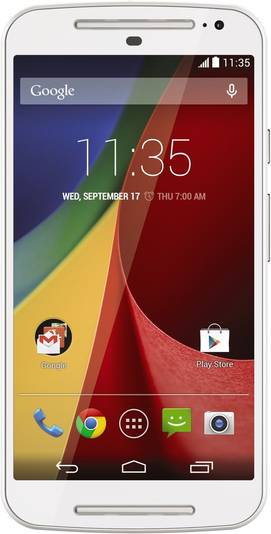


-
Design6

-
Rear Camera9

-
360° View

-
UI Screenshot16
![UI Screenshot]()
-
Benchmarks7
![Benchmarks]()
-
Videos2
![Videos]()


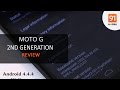
Key Specs
Performance
-
Qualcomm Snapdragon 400 -
Quad Core, 1.2 GHz -
1 GB RAM
Display
-
5.0 inches (12.7 cm); IPS LCD -
720x1280 px (HD) -
Gorilla Glass 3 Protection
Rear Camera
-
Single Camera Setup - 8 MP (upto 4x Digital Zoom) Primary Camera
-
LED Flash -
HD @30fps Video Recording
Front Camera
-
2 MP
Battery
-
2070 mAh
General
-
SIM1: Micro -
5G Not Supported -
16 GB Storage, Expandable upto 32 GB
Motorola Moto G (2nd Gen) 16GB Expert Review Summary
Expert Rating:
![Nitansh Rastogi]()
Verdict
The original Moto G was hailed as a game changer, and was responsible for shaping an entire market around the budget segment with its specs and features. However, we doubt that the new Moto G can carry forward that title, even though it`s being sold at a slightly lower price than the original, at Rs 12,999. That s not to say that Motorola s new offering isn t up to the mark, but there are plenty of rivals which boast far better specs.The Xiaomi Mi 3 can be considered as a new benchmark in
Pros
- Sturdy build and ergonomic handling
- Larger display than before
- Stock Android and promised Android L update
- 3G support on both SIMs
- Good battery life
Cons
- Buggy camera interface
- Specs can't match the competition
Specs at a glance
+
5-inch display with a resolution of 1,280 x 720 pixels, 294ppi 1.2GHz quad-core Snapdragon 400 processor 1GB RAM 16GB storage, expandable up to 32GB via a microSD card 8MP primary camera with LED flash and 2MP front shooter Dual-SIM support Wi-Fi, Bluetooth 4.0 and GPS 2,070 mAh battery Android 4.4.4 KitKatShort on time? Take a look at the new Moto G review in pictures
Read More
Simplicity is the best policy
+
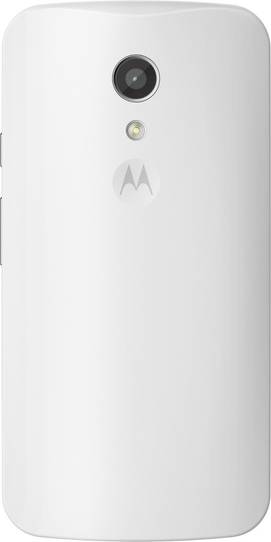
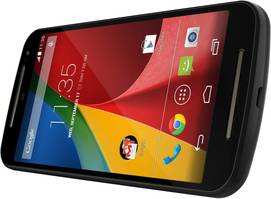
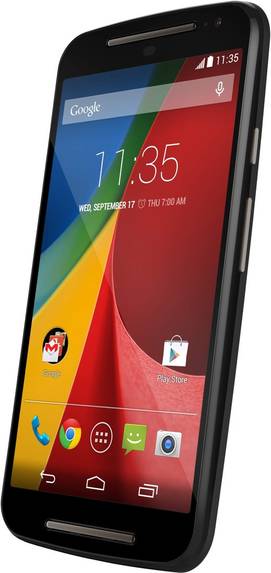
When it comes to looks and design, the original Moto G didn't win any awards, but was applauded for its sturdy build. Its successor also follows the same ethics, which is commendable, considering that the new Moto G houses a bigger display, and yet manages to be 0.6mm thinner. Even in terms of weight, it tips the scale at 148g – just 5 grams heavier than the first-gen Moto G. As noted in our first impressions, we also felt that the weight is uniformly distributed across the whole device, and doesn’t feel bulky, which was a common complaint with its previous iteration.In terms of the handling aspect, the handset comfortably nestles in the hands, all thanks to the thin bezels on the sides of the display, as well as the curved rear. Many smartphones these days are offering curved backs, which are ergonomically more pleasing than the uncomfortable, blocky designs of yore. The new Moto G can also be used comfortably in a single hand, unless your hands are really small.The placement of ports and controls in the new Moto G is exactly same as its previous iteration, with both the metal-finish power key and volume rocker on the right spine, and the left edge completely barren. Up top, you'll find the 3.5mm headphone socket, while the micro-USB port is placed at the bottom. However, the fascia of the smartphone bears some differences as compared to the previous-gen Moto G. Above and below the display, there are speakers – lending a stylish flair and ensuring that the phone provides loud audio output. The speakers are placed symmetrically, with the one on top doubling up as an earpiece. Alongside it, you'll find a white notification LED and a secondary snapper. The rear of the Moto G (2nd gen) sports a rubberised coating, making it less prone to slippage or smudges. You’ll also find a primary shooter supplemented by an LED flash, and Motorola's logo in a circular cavity. The phone is available in black and white, but worry not if you want the new Moto G to reflect your personality. Just like the original Moto G, you can purchase grip shells (back panels) or flip shells (flip covers) available in a riot of colours like red, blue, green, among others.Similar to the original Moto G, the phone has a sealed battery, but removing the rear cover exposes a pair of micro-SIM slots as well as a microSD card – with the latter being a new addition compared to its predecessor.Overall, the new Moto G offers the same robustness as its previous avatar, although it might not be considered stylish. Another useful feature of the smartphone is its nano coating, making it impervious to water to some extent.
Read More
The display gets bigger, but not brighter
+
As mentioned earlier, one of the major changes in the second-gen Moto G is in the display department. The handset sports a 5-inch display, which has pretty much become a standard for most Android smartphones these days. While the size has increased, the display resolution of 1,280 x 720 pixels remains the same, resulting in a lower pixel density as compared to the original Moto G. But in real-life usage, the pixel density of 294ppi is sufficient, with no visible pixelation. The display looks sharp and vibrant in all situations, and viewing angles are also great. However, we felt that brightness levels weren't adequate, especially outdoors where the screen turns extremely reflective.On top of the display panel, the smartphone has a layer of Corning Gorilla Glass 3 which protects it against minor scratches or knocks.
Read More
The allure of pure Android
+
Motorola was one of the first manufacturers which went ahead with stock Android as a differentiating factor, instead of the various customisations being added by other manufacturers. Not only do the offerings from Motorola featured stock Android, but the brand also promises quick updates for future Android releases. In fact, in some cases, the company's smartphones receive Android updates even earlier than Nexus devices.There's not much to discuss in terms of the interface, but we must say that the joy of using unadulterated Android is unparalleled, and the OS feels extremely smooth. Motorola has added quite a few useful apps, viz. Assist, Alert and Migrate. The Assist app automates your tasks whenever you're in a meeting or sleeping, while Alert makes it easier to quickly contact your friends in case of an emergency. Motorola Migrate comes in handy when you're switching from your old phone to the new Moto G, allowing you to sync your contacts and files. Earlier, the app was limited only to Android or iOS smartphones, but now it also supports feature phones. Some default apps like the Gallery have been tweaked, letting you view images by timeline or albums. There’s also a user guide in the form of a Help app, giving first-time users a walkthrough of the Android interface, as well as introducing them to the special features of the device.
Read More
The shooter is better than before, but suffers because of a buggy software
+
The original Moto G was a near-perfect smartphone, but the one thing which went against it was its camera. The new Moto G aims to improve that aspect with its 8-megapixel primary snapper, instead of the 5-meg sensor in the original. However, the camera app's interface remains extremely minimal as before, with the main screen only giving you the option to switch to video, change cameras or flash. If you want to change settings, you have to swipe from left direction to right. This allows you to change to different modes like HDR and panorama. The camera autofocusses on a subject on its own, and you can tap on the screen to shoot. If you want to focus on a different part of the scene, you'll need to drag the focus circle accordingly. To zoom in on the scene, you simply need to drag your finger upwards. To capture images in burst mode, all you need to do is long-tap on the interface or long-press the volume rocker, which doubles up as a shutter button. It should be noted that the camera captures widescreen 16:9 images in 6MP resolution by default. You can change the resolution to 8MP, but the aspect ratio changes to 4:3. As can be seen from the images above (click on the thumbnails to view them in full resolution), the new Moto G marks a definite improvement over its predecessor when it comes to shooting prowess. It captures good colours and fine details in most situations. We really liked the macro shots taken with the Moto G, although in long shots, the subjects aren't sharp enough when zoomed in. We should also say that the simplistic camera interface helps to shoot images quickly. However, the touch focus can be an issue. While dragging the focus circle to the subject, we often inadvertently ended up shooting the image. We also felt that metering wasn't up to the mark.Here’s more detailed analysis of the new Moto G’s camera performance Another problem we ran into a few times while using the shooter was the ‘camera busy’ error message. This is the first time we've seen this error on an Android device, and we had to restart the phone every time to use the camera again. However, this could be a problem specific to our review unit.The main snapper is also capable of recording videos in 1,280 x 720 pixels resolution, which is kind of a downer as most phones in its price band offer full HD video recording capabilities. You can also shoot slo-mo video in 720p resolution.The camera might be better than its previous avatar, but the smartphone still faces stiff competition from the likes of the Micromax Nitro A310 (camera review), ASUS Zenfone 5 (camera review) and Xiaomi Mi 3 (camera review), all of which offer better imaging capabilities. That said, the new Moto G's camera is fine for social sharing or personal use.The front camera has also been bumped up to 2-megapixels from 1.3MP in the original. It's great for capturing selfies as well as video chats.
Read More
Churns out decent performance
+
While the new offering sports a bigger display and better camera, it's exactly same as its predecessor as far as the core hardware is concerned. Performance muscle is provided by a quad-core Qualcomm Snapdragon 400 processor clocked at 1.2GHz. The processor is complemented by an Adreno 305 GPU for handling graphics. The amount of RAM is also the same at 1GB. When the original Moto G was launched, this kind of hardware combo was considered a benchmark, but now things have changed drastically. Xiaomi's Mi 3 offers top-of-the-line specs with a quad-core Snapdragon 800 SoC and 2GB RAM (but isn't available to buy currently), while the ASUS Zenfone 5 offers a dual-core Intel chipset with 2GB of RAM. Several Indian vendors also offer octa-core devices in this price bracket.However, when it comes to pure performance, the smartphone handles everything thrown at it well – be it basic tasks like browsing through the gallery or scrolling through an entire list of items, or multi-tasking with several apps running in the background. Motorola's choice of stock Android interface might have something to do with it. Even while playing games, the device can handle 3D graphics-intensive titles like Riptide GP2 and Real Racing 3. However, we did notice a few jitters in between, especially when using a boost or performing a stunt.While its predecessor was available in two storage flavours of 8GB and 16GB, the Moto G (2nd gen) has only been launched with 16GB flash storage in India (although the variant with 8GB storage is sold internationally). Users will be able to access approximately 12GB of the available storage for installation of apps and storing their personal files. You can also make use of USB On-the-Go support for using your flash drives with the handset. For connectivity, the smartphone comes with the usual options of 3G (in both SIMs, which is a rarity), Wi-Fi, Bluetooth and GPS. We really liked the clever feature of tracking a user’s calling behaviour to automatically use the preferred SIM card for a call. This way, you don’t need to select the SIM every time you’re making a call.Talking about the performance of the front-firing speakers, then they're definitely better than most smartphones, but they can't beat the loud output of HTC's BoomSound speakers.
Read More
Delivers on its promise of an all-day battery life
+
The Moto G (2nd gen) packs in 2,070mAh battery – the same as its predecessor. During day-to-day usage, the smartphone lasted an entire day and then some. Even with the sparing use of navigation, data and playing a few games, it comfortably ran for the whole day. When it comes to a proper battery test, it ran a 720p video continuously with brightness and volume set to 50 percent for seven hours and 45 minutes, which is a tad better than average.The phone also has a battery saver option, which allows you to conserve the battery life by switching off cellular data whenever it drops off below a specific threshold.Any doubts about the smartphone? We might have answered them in the new Moto G FAQs
Read More
Read full Review

Verdict
The original Moto G was hailed as a game changer, and was responsible for shaping an entire market around the budget segment with its specs and features. However, we doubt that the new Moto G can carry forward that title, even though it`s being sold at a slightly lower price than the original, at Rs 12,999. That s not to say that Motorola s new offering isn t up to the mark, but there are plenty of rivals which boast far better specs.The Xiaomi Mi 3 can be considered as a new benchmark in
- Sturdy build and ergonomic handling
- Larger display than before
- Stock Android and promised Android L update
- 3G support on both SIMs
- Good battery life
Pros
- Buggy camera interface
- Specs can't match the competition
Cons
Specs at a glance
+5-inch display with a resolution of 1,280 x 720 pixels, 294ppi 1.2GHz quad-core Snapdragon 400 processor 1GB RAM 16GB storage, expandable up to 32GB via a microSD card 8MP primary camera with LED flash and 2MP front shooter Dual-SIM support Wi-Fi, Bluetooth 4.0 and GPS 2,070 mAh battery Android 4.4.4 KitKatShort on time? Take a look at the new Moto G review in pictures
Read MoreSimplicity is the best policy
+When it comes to looks and design, the original Moto G didn't win any awards, but was applauded for its sturdy build. Its successor also follows the same ethics, which is commendable, considering that the new Moto G houses a bigger display, and yet manages to be 0.6mm thinner. Even in terms of weight, it tips the scale at 148g – just 5 grams heavier than the first-gen Moto G. As noted in our first impressions, we also felt that the weight is uniformly distributed across the whole device, and doesn’t feel bulky, which was a common complaint with its previous iteration.In terms of the handling aspect, the handset comfortably nestles in the hands, all thanks to the thin bezels on the sides of the display, as well as the curved rear. Many smartphones these days are offering curved backs, which are ergonomically more pleasing than the uncomfortable, blocky designs of yore. The new Moto G can also be used comfortably in a single hand, unless your hands are really small.The placement of ports and controls in the new Moto G is exactly same as its previous iteration, with both the metal-finish power key and volume rocker on the right spine, and the left edge completely barren. Up top, you'll find the 3.5mm headphone socket, while the micro-USB port is placed at the bottom. However, the fascia of the smartphone bears some differences as compared to the previous-gen Moto G. Above and below the display, there are speakers – lending a stylish flair and ensuring that the phone provides loud audio output. The speakers are placed symmetrically, with the one on top doubling up as an earpiece. Alongside it, you'll find a white notification LED and a secondary snapper. The rear of the Moto G (2nd gen) sports a rubberised coating, making it less prone to slippage or smudges. You’ll also find a primary shooter supplemented by an LED flash, and Motorola's logo in a circular cavity. The phone is available in black and white, but worry not if you want the new Moto G to reflect your personality. Just like the original Moto G, you can purchase grip shells (back panels) or flip shells (flip covers) available in a riot of colours like red, blue, green, among others.Similar to the original Moto G, the phone has a sealed battery, but removing the rear cover exposes a pair of micro-SIM slots as well as a microSD card – with the latter being a new addition compared to its predecessor.Overall, the new Moto G offers the same robustness as its previous avatar, although it might not be considered stylish. Another useful feature of the smartphone is its nano coating, making it impervious to water to some extent.
Read MoreThe display gets bigger, but not brighter
+As mentioned earlier, one of the major changes in the second-gen Moto G is in the display department. The handset sports a 5-inch display, which has pretty much become a standard for most Android smartphones these days. While the size has increased, the display resolution of 1,280 x 720 pixels remains the same, resulting in a lower pixel density as compared to the original Moto G. But in real-life usage, the pixel density of 294ppi is sufficient, with no visible pixelation. The display looks sharp and vibrant in all situations, and viewing angles are also great. However, we felt that brightness levels weren't adequate, especially outdoors where the screen turns extremely reflective.On top of the display panel, the smartphone has a layer of Corning Gorilla Glass 3 which protects it against minor scratches or knocks.
Read MoreThe allure of pure Android
+Motorola was one of the first manufacturers which went ahead with stock Android as a differentiating factor, instead of the various customisations being added by other manufacturers. Not only do the offerings from Motorola featured stock Android, but the brand also promises quick updates for future Android releases. In fact, in some cases, the company's smartphones receive Android updates even earlier than Nexus devices.There's not much to discuss in terms of the interface, but we must say that the joy of using unadulterated Android is unparalleled, and the OS feels extremely smooth. Motorola has added quite a few useful apps, viz. Assist, Alert and Migrate. The Assist app automates your tasks whenever you're in a meeting or sleeping, while Alert makes it easier to quickly contact your friends in case of an emergency. Motorola Migrate comes in handy when you're switching from your old phone to the new Moto G, allowing you to sync your contacts and files. Earlier, the app was limited only to Android or iOS smartphones, but now it also supports feature phones. Some default apps like the Gallery have been tweaked, letting you view images by timeline or albums. There’s also a user guide in the form of a Help app, giving first-time users a walkthrough of the Android interface, as well as introducing them to the special features of the device.
Read MoreThe shooter is better than before, but suffers because of a buggy software
+The original Moto G was a near-perfect smartphone, but the one thing which went against it was its camera. The new Moto G aims to improve that aspect with its 8-megapixel primary snapper, instead of the 5-meg sensor in the original. However, the camera app's interface remains extremely minimal as before, with the main screen only giving you the option to switch to video, change cameras or flash. If you want to change settings, you have to swipe from left direction to right. This allows you to change to different modes like HDR and panorama. The camera autofocusses on a subject on its own, and you can tap on the screen to shoot. If you want to focus on a different part of the scene, you'll need to drag the focus circle accordingly. To zoom in on the scene, you simply need to drag your finger upwards. To capture images in burst mode, all you need to do is long-tap on the interface or long-press the volume rocker, which doubles up as a shutter button. It should be noted that the camera captures widescreen 16:9 images in 6MP resolution by default. You can change the resolution to 8MP, but the aspect ratio changes to 4:3. As can be seen from the images above (click on the thumbnails to view them in full resolution), the new Moto G marks a definite improvement over its predecessor when it comes to shooting prowess. It captures good colours and fine details in most situations. We really liked the macro shots taken with the Moto G, although in long shots, the subjects aren't sharp enough when zoomed in. We should also say that the simplistic camera interface helps to shoot images quickly. However, the touch focus can be an issue. While dragging the focus circle to the subject, we often inadvertently ended up shooting the image. We also felt that metering wasn't up to the mark.Here’s more detailed analysis of the new Moto G’s camera performance Another problem we ran into a few times while using the shooter was the ‘camera busy’ error message. This is the first time we've seen this error on an Android device, and we had to restart the phone every time to use the camera again. However, this could be a problem specific to our review unit.The main snapper is also capable of recording videos in 1,280 x 720 pixels resolution, which is kind of a downer as most phones in its price band offer full HD video recording capabilities. You can also shoot slo-mo video in 720p resolution.The camera might be better than its previous avatar, but the smartphone still faces stiff competition from the likes of the Micromax Nitro A310 (camera review), ASUS Zenfone 5 (camera review) and Xiaomi Mi 3 (camera review), all of which offer better imaging capabilities. That said, the new Moto G's camera is fine for social sharing or personal use.The front camera has also been bumped up to 2-megapixels from 1.3MP in the original. It's great for capturing selfies as well as video chats.
Read MoreChurns out decent performance
+While the new offering sports a bigger display and better camera, it's exactly same as its predecessor as far as the core hardware is concerned. Performance muscle is provided by a quad-core Qualcomm Snapdragon 400 processor clocked at 1.2GHz. The processor is complemented by an Adreno 305 GPU for handling graphics. The amount of RAM is also the same at 1GB. When the original Moto G was launched, this kind of hardware combo was considered a benchmark, but now things have changed drastically. Xiaomi's Mi 3 offers top-of-the-line specs with a quad-core Snapdragon 800 SoC and 2GB RAM (but isn't available to buy currently), while the ASUS Zenfone 5 offers a dual-core Intel chipset with 2GB of RAM. Several Indian vendors also offer octa-core devices in this price bracket.However, when it comes to pure performance, the smartphone handles everything thrown at it well – be it basic tasks like browsing through the gallery or scrolling through an entire list of items, or multi-tasking with several apps running in the background. Motorola's choice of stock Android interface might have something to do with it. Even while playing games, the device can handle 3D graphics-intensive titles like Riptide GP2 and Real Racing 3. However, we did notice a few jitters in between, especially when using a boost or performing a stunt.While its predecessor was available in two storage flavours of 8GB and 16GB, the Moto G (2nd gen) has only been launched with 16GB flash storage in India (although the variant with 8GB storage is sold internationally). Users will be able to access approximately 12GB of the available storage for installation of apps and storing their personal files. You can also make use of USB On-the-Go support for using your flash drives with the handset. For connectivity, the smartphone comes with the usual options of 3G (in both SIMs, which is a rarity), Wi-Fi, Bluetooth and GPS. We really liked the clever feature of tracking a user’s calling behaviour to automatically use the preferred SIM card for a call. This way, you don’t need to select the SIM every time you’re making a call.Talking about the performance of the front-firing speakers, then they're definitely better than most smartphones, but they can't beat the loud output of HTC's BoomSound speakers.
Read MoreDelivers on its promise of an all-day battery life
+The Moto G (2nd gen) packs in 2,070mAh battery – the same as its predecessor. During day-to-day usage, the smartphone lasted an entire day and then some. Even with the sparing use of navigation, data and playing a few games, it comfortably ran for the whole day. When it comes to a proper battery test, it ran a 720p video continuously with brightness and volume set to 50 percent for seven hours and 45 minutes, which is a tad better than average.The phone also has a battery saver option, which allows you to conserve the battery life by switching off cellular data whenever it drops off below a specific threshold.Any doubts about the smartphone? We might have answered them in the new Moto G FAQs
Read MorePopular Comparisons
 Motorola Moto G (2nd Gen) 16GB
 Sony Xperia Z
Motorola Moto G (2nd Gen) 16GB
 HTC Desire 616
Motorola Moto G (2nd Gen) 16GB
 HTC One X Plus 32GB
Motorola Moto G (2nd Gen) 16GB
 Moto G4 Plus
Motorola Moto G (2nd Gen) 16GB
 Samsung Galaxy J2 Pro
Motorola Moto G (2nd Gen) 16GB
 HTC Desire 650
Motorola Moto G (2nd Gen) 16GB Specifications
General |
|
|---|---|
| Operating System | Android v4.4.4 (Kitkat) |
Performance |
|
|---|---|
| Chipset | Qualcomm Snapdragon 400 MSM8226 |
| Processor | Quad core, 1.2 GHz, Cortex A7 |
| Graphics (GPU) | Adreno 305 |
| RAM | 1 GB |
Benchmark Screenshots
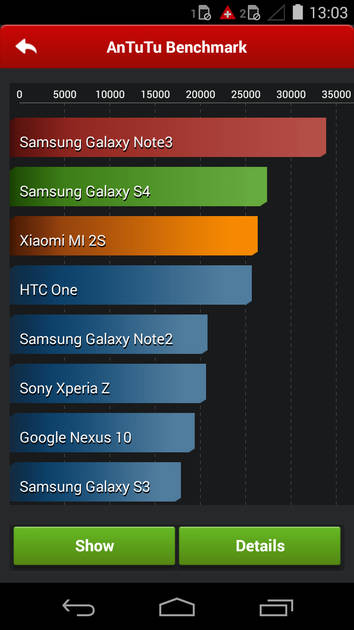
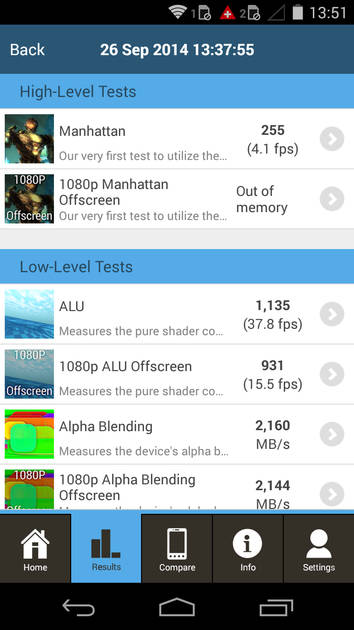
Graphics Benchmark
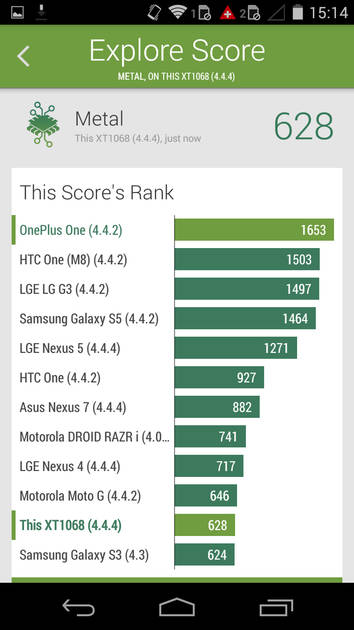
Vellamo Metal Benchmark
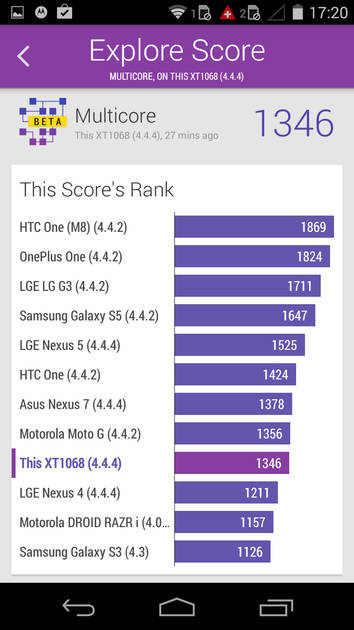
Vellamo Multicore Benchmark
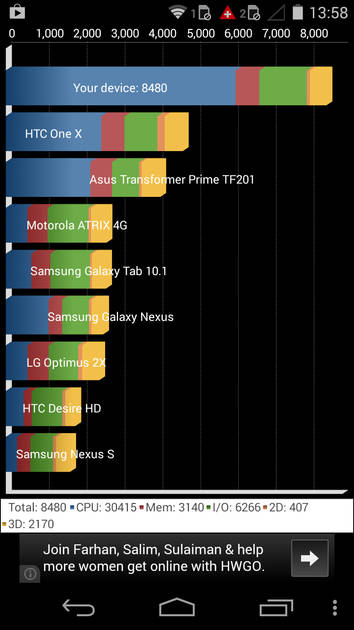
Quadrant Benchmark
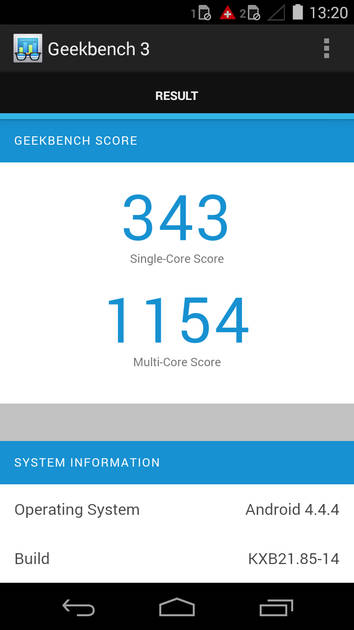
Geekbench3 Benchmark
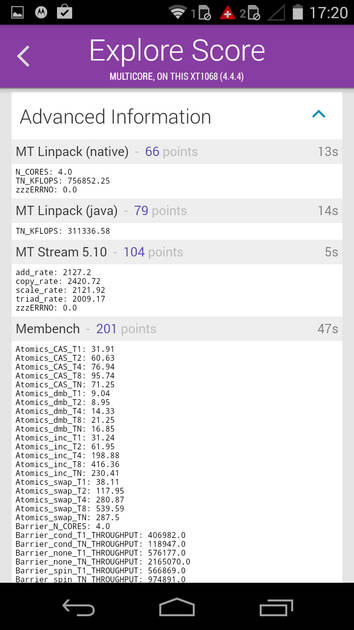
Linpack Benchmark
|
Display |
|
|---|---|
| Display Type | IPS LCD |
| Screen Size | 5.0 inches (12.7 cm) |
| Resolution | 720x1280 px (HD) |
| Pixel Density | 294 ppi |
| Screen to Body Ratio (calculated) | 68.73 % |
| Screen Protection | Corning Gorilla Glass v3 |
UI Screenshots
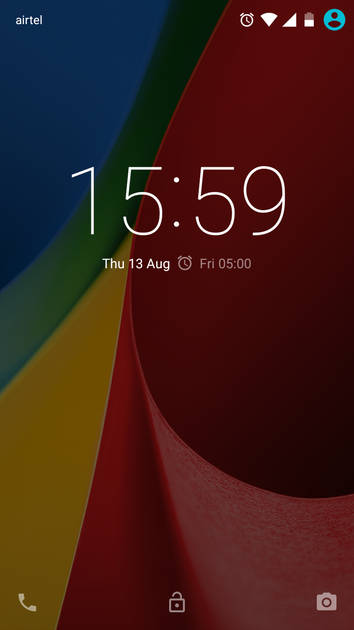
Lock Screen
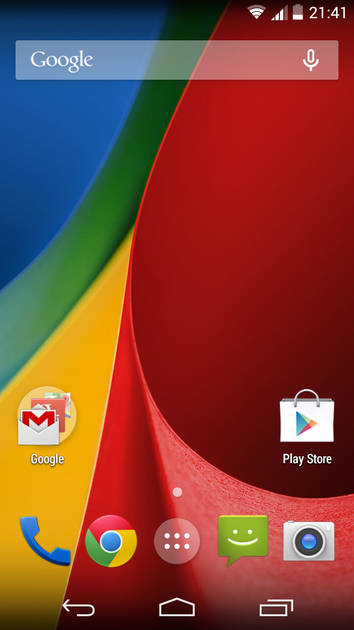
Home Screen
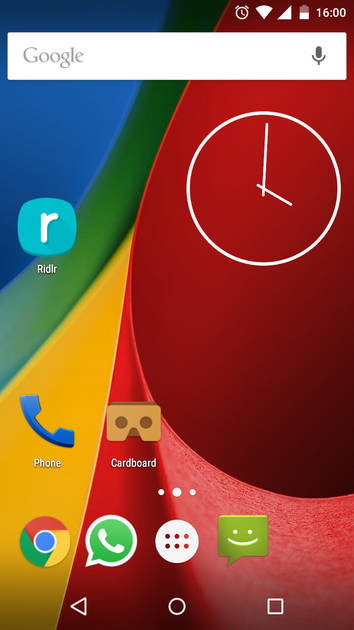
Screen With Widgets
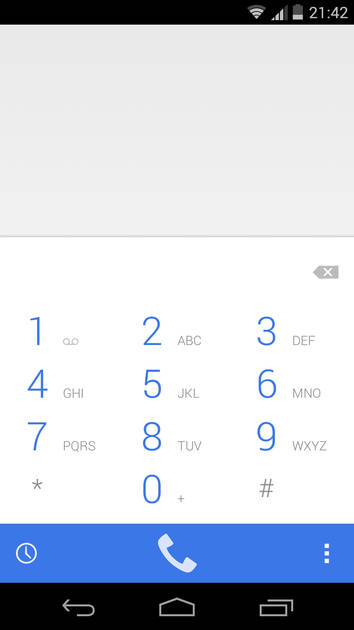
Dialer Screen
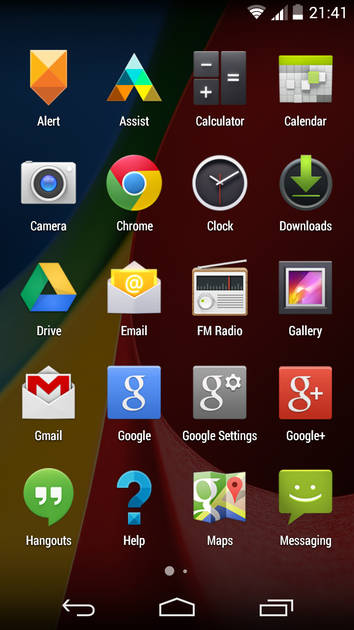
App Drawer
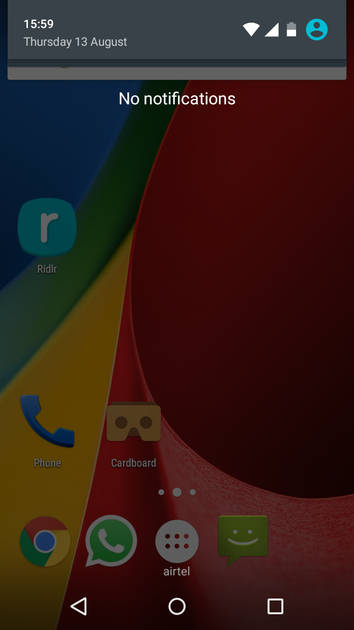
Notification Panel
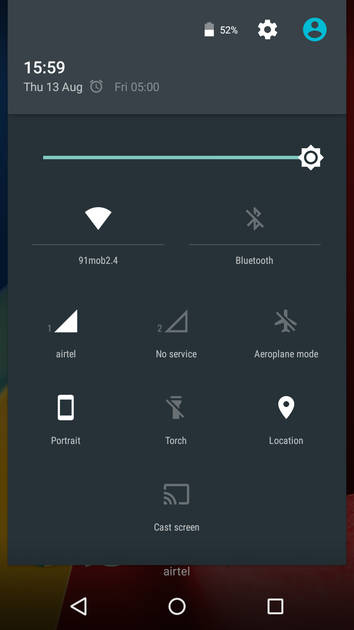
Quick Settings Panel
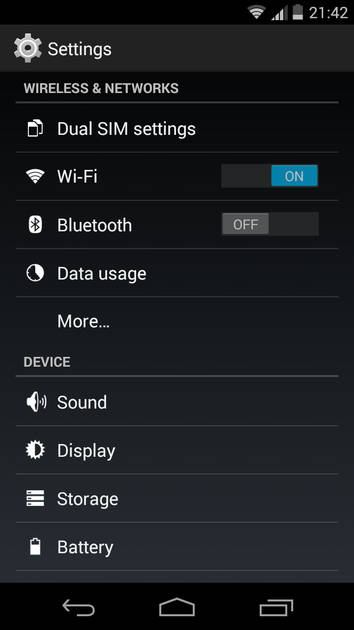
Settings Screen
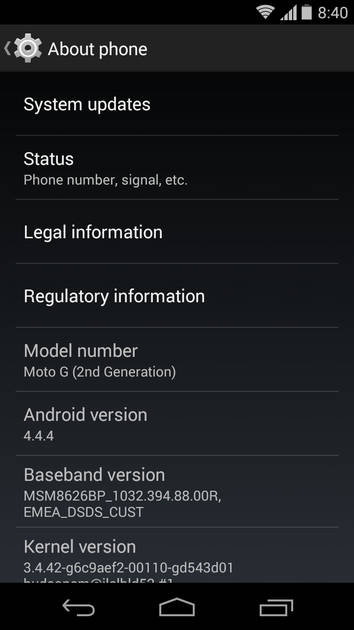
OS Version
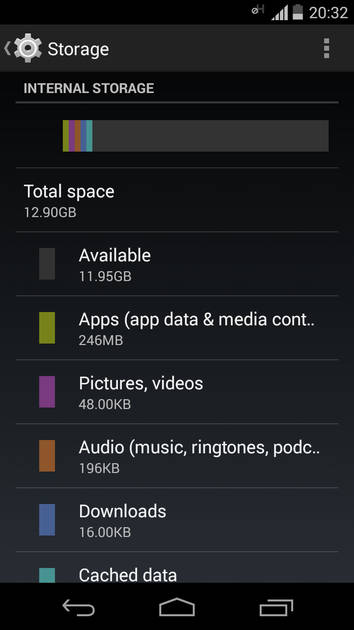
Storage
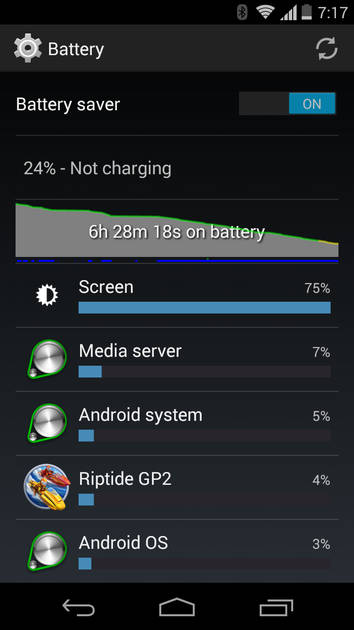
Battery
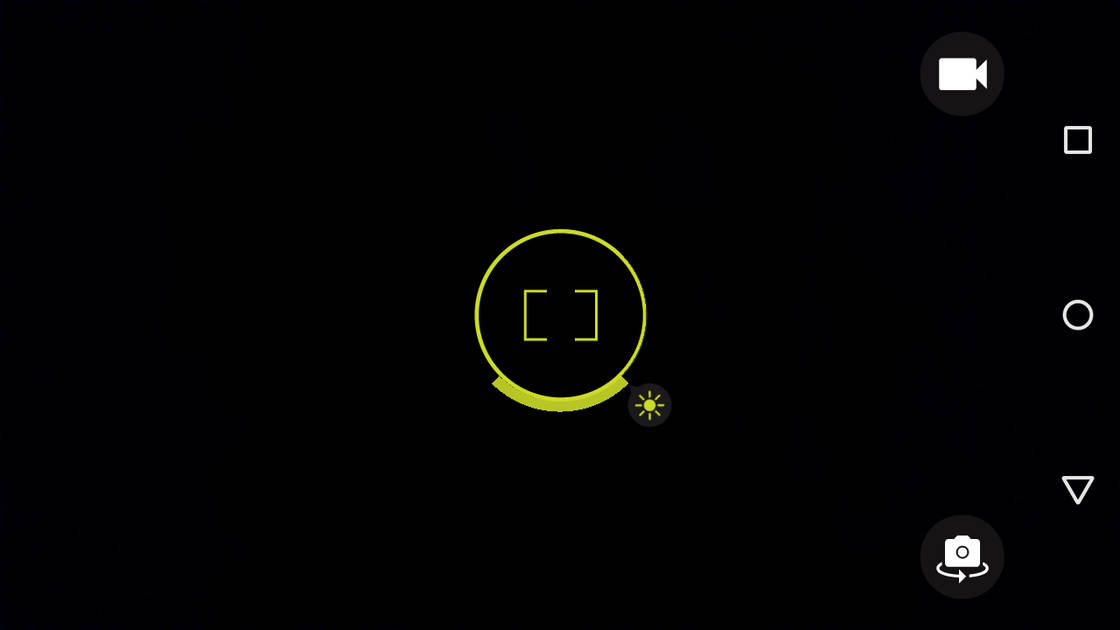
Camera On
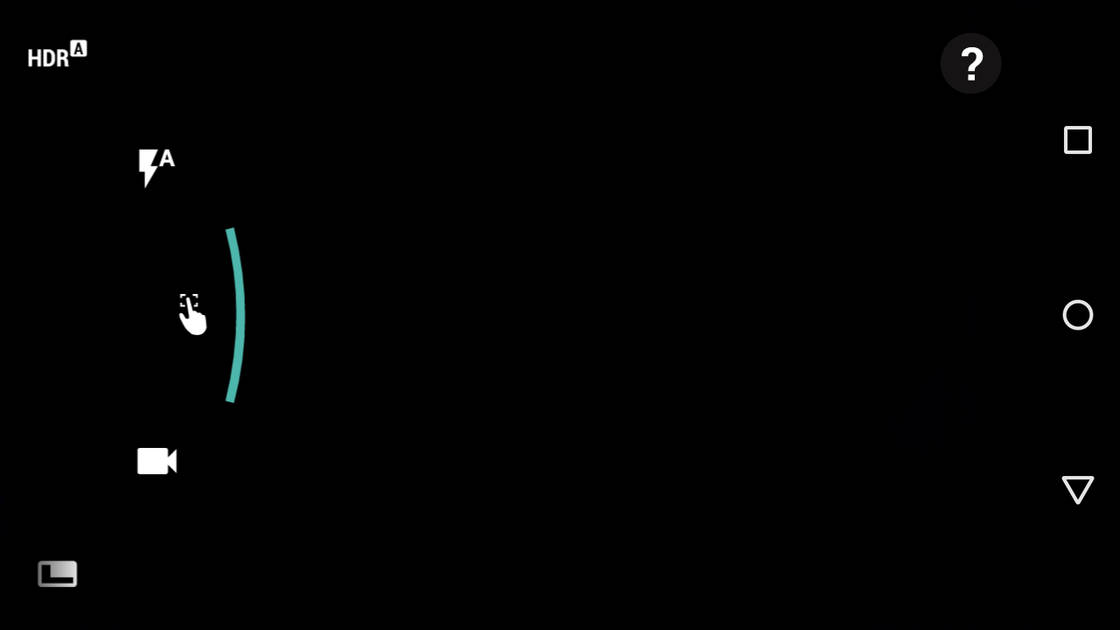
Camera Options
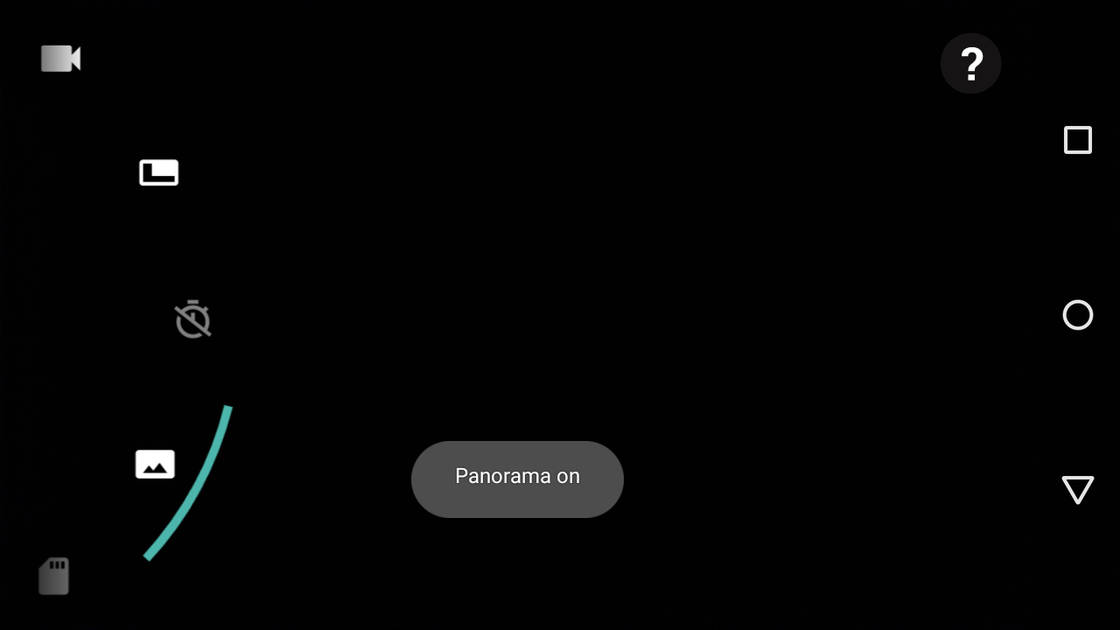
Camera Modes
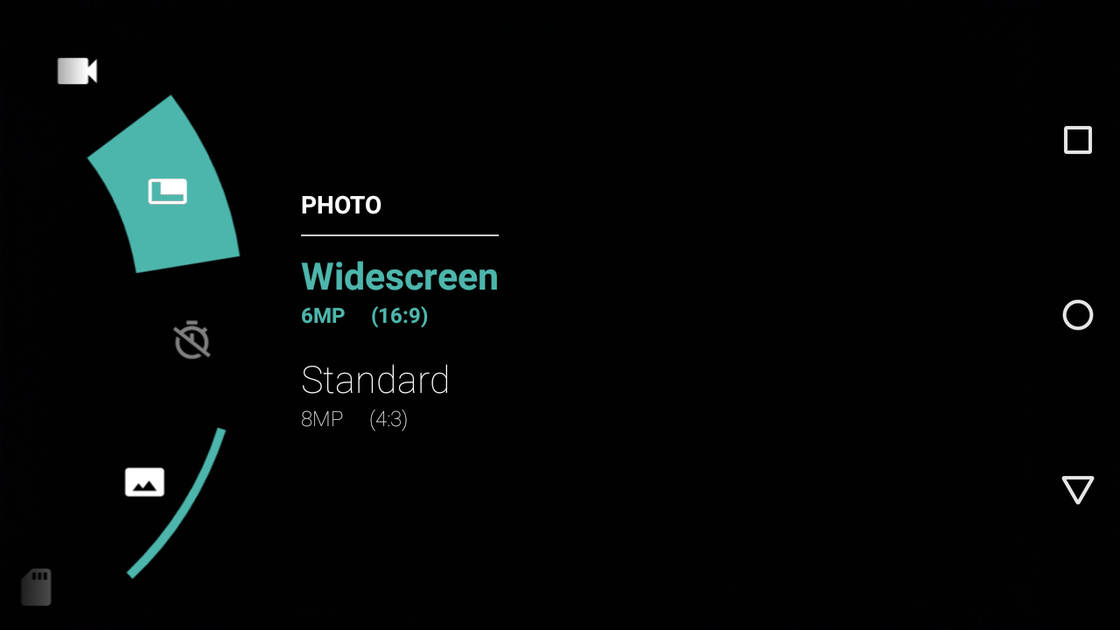
Picture Size Options
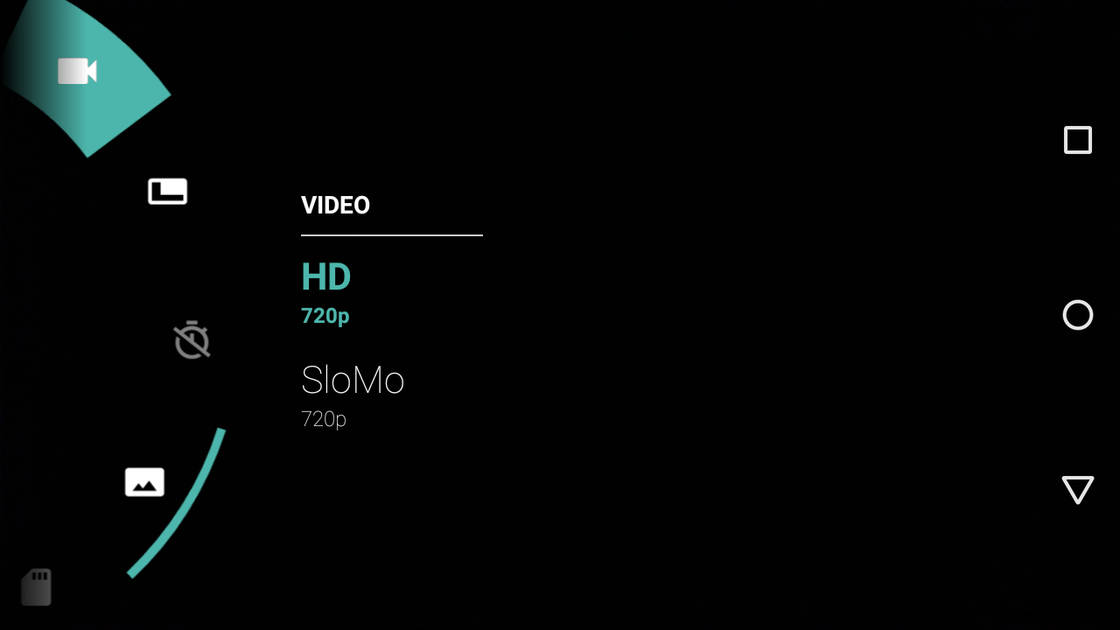
Video Size Options
|
Design |
|
|---|---|
| Height | 141.5 mm |
| Width | 70.7 mm |
| Thickness | 10.9 mm |
| Weight | 149 grams |
|
Click to View

|
Rear Camera |
||||||||
|---|---|---|---|---|---|---|---|---|
| Resolution | ||||||||
|
||||||||
| Autofocus | Yes | |||||||
| Flash | Yes, LED Flash | |||||||
| Image Resolution | 3264 x 2448 Pixels | |||||||
| Shooting Modes | High Dynamic Range mode (HDR) | |||||||
| Camera Features |
4 x Digital Zoom Auto Flash Face detection Touch to focus |
|||||||
| Video Recording | 1280x720 @ 30 fps | |||||||
| Video Recording Features |
Video HDR Stereo recording |
|||||||
Rear Camera Samples
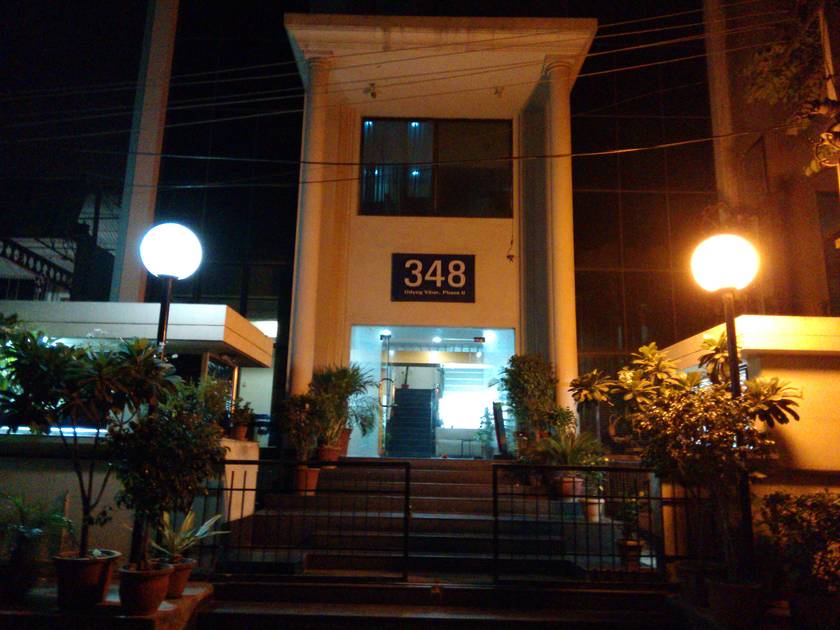
Night Mode OFF

Close Up

Low Light
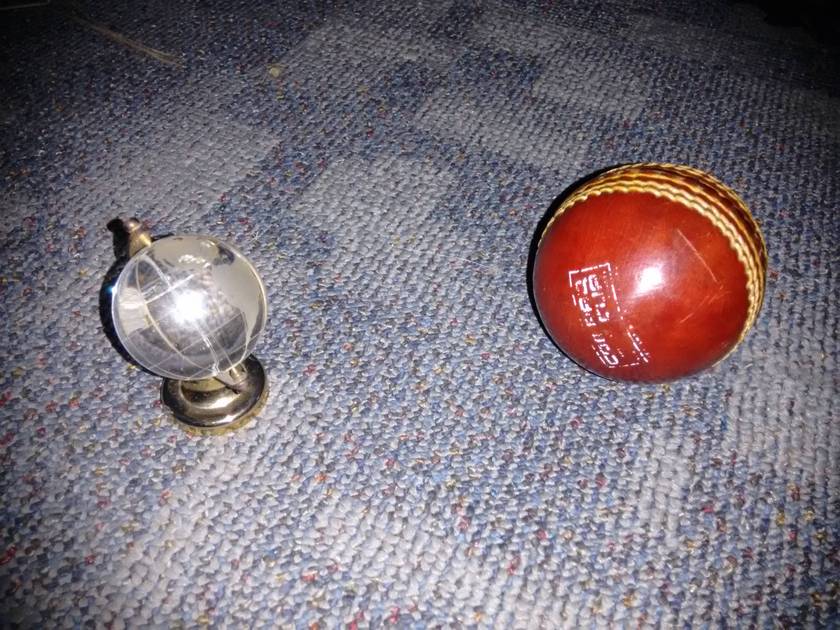
Low Light With Flash
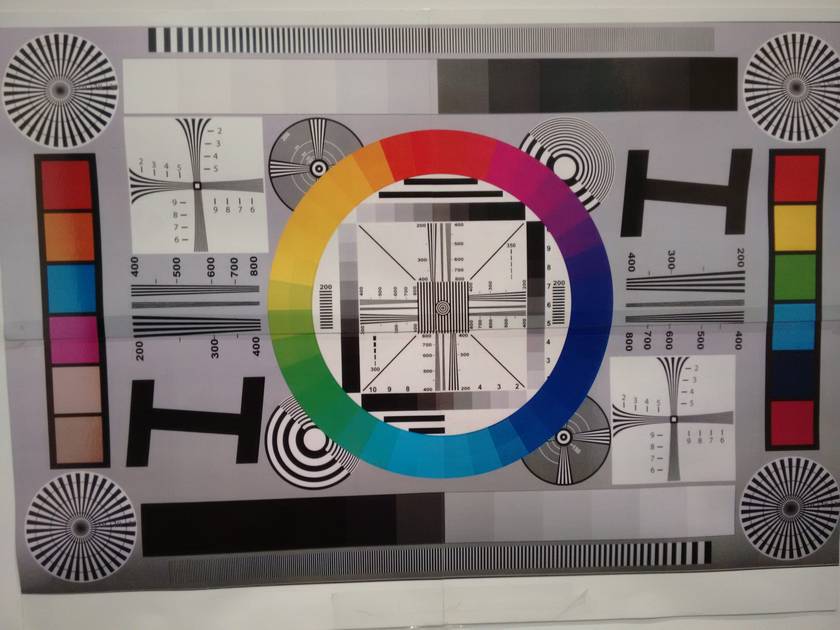
Colour Variance
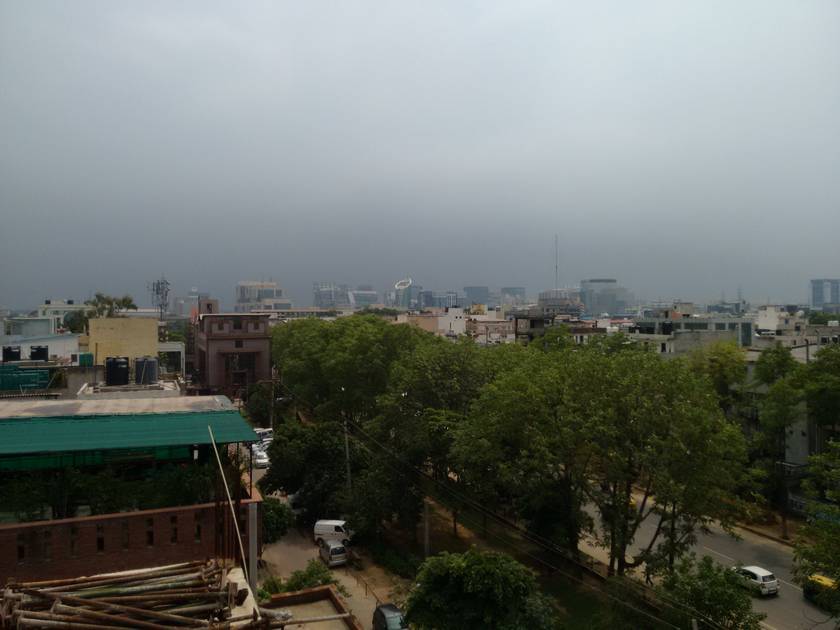
Long Shot
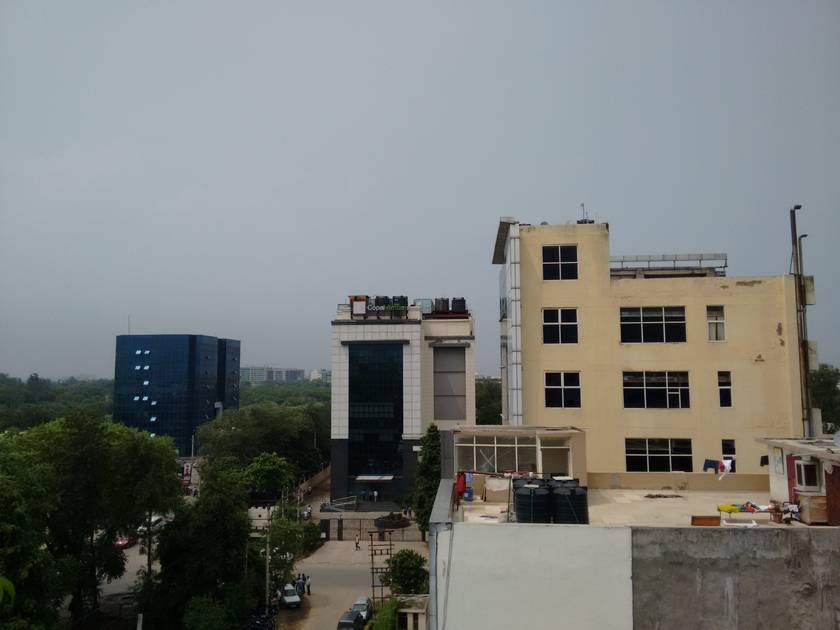
HDR Off
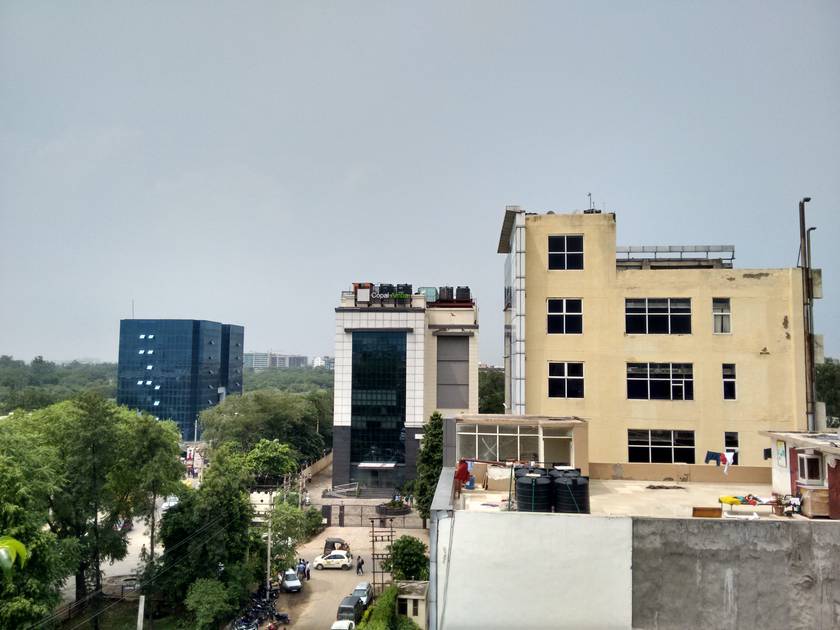
HDR On

Front Shot
|
Front Camera |
||||
|---|---|---|---|---|
| Resolution | ||||
|
Battery |
|
|---|---|
| Capacity | 2070 mAh |
| Battery Type | Li-ion |
Storage |
|
|---|---|
| Internal Storage | 16 GB |
| Expandable Storage | Yes, Up to 32 GB |
Network & Connectivity |
|
|---|---|
| SIM Slot(s) | Dual SIM |
| SIM Type | SIM1: Micro |
| Network Support | 5G Not Supported |
| Wi-Fi | Yes, Wi-Fi 4 (802.11 b/g/n) |
| Wi-Fi Features | Mobile Hotspot |
| Bluetooth | Yes, v4.0 |
| GPS | Yes with A-GPS, Glonass |
Multimedia |
|
|---|---|
| Audio Jack | 3.5 mm |
Sensors |
|
|---|---|
| Other Sensors | Light sensor, Proximity sensor, Accelerometer, Compass, Gyroscope |
Motorola Moto G (2nd Gen) 16GB User Reviews
Motorola Moto G (2nd Gen) 16GB Key Highlights
| Processor | Qualcomm Snapdragon 400 MSM8226 |
| RAM & Storage | 1 GB RAM + 16 GB |
| Display | 5.0", 720 x 1280 Resolution |
| Rear Camera | 8 MP |
| Front Camera | 2 MP |
| Battery | 2070 mAh |
















Popular Links
- All Upcoming Phones
- Motorola phones under 20k
- vivo X500
- vivo X500 Pro Max
- Nothing Phone 4a
- Karbonn Rebel Pro 4G
- Nothing Phone 4b 6GB RAM
- Samsung Mobiles
- Motorola Mobiles
- vivo Mobiles
- OPPO Mobiles
- Tecno Mobiles
- realme Mobiles
- OnePlus Mobiles