A television with an enormous screen (65 inches or more) can be a tricky purchase for obvious reasons. It occupies a considerable amount of space, and you need enough viewing distance to appreciate its clarity. A projector might seem like a smarter alternative here, with flexible screen sizes and minimal physical footprint. But finding one that offers both an impressive picture and genuinely good audio is far from simple, and the models that do manage it often come with eye-watering price tags. Case in point, Formovie Theatre Premium (review) and Optoma Wave 120SK (review), both are priced north of Rs 3 lakhs.
This is where large-screen TVs reclaim their appeal, offering a more balanced and cost-effective way to enjoy a cinematic experience at home. The Haier QD-Mini LED M92 series (75-inch) is one such example. The TV promises 4K HDR picture quality, 50W sound output, Dolby Vision and Dolby Atmos support, up to 144Hz refresh rate, smooth UI with Google TV, and more. But, for its asking price of Rs 1,29,990, does the Haier QD-Mini LED M92 series (72-inch) warrant a purchase? Continue reading to find out.
Table of Contents
A clever, eco-friendly remote
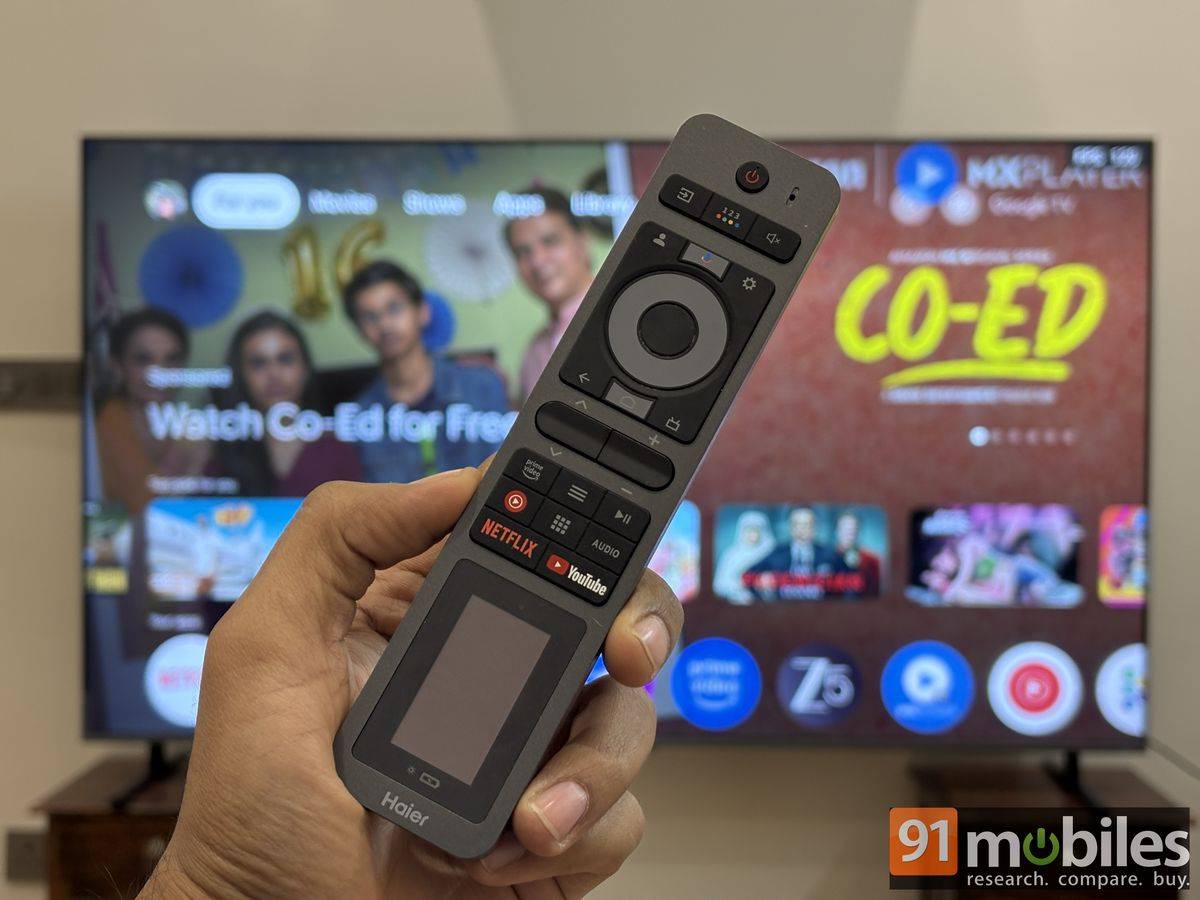
The remote is the first thing you are greeted with when the Haier QD-Mini LED M92 series TV is unboxed, and it is a good start. Haier has clearly put effort into its design, giving it a fresh and more modern look, which not only stands apart from its competitors but also from its own 65S9QT QLED TV (review) that I reviewed last year. The remote is compact, boasts flat edges to make it easier to hold, and comes with a built-in battery that can be juiced up using a Type-C charger or through sunlight.
Yes, you heard that right. The bottom portion of the Haier QD-Mini LED M92 series TV remote incorporates a solar panel to recharge the battery in the most eco-friendly way. This is a thoughtful addition, and a rechargeable battery means users will not have to worry about changing the batteries when drained.
Yet, I don’t find the remote to be the most premium-looking, with intuitive controls, out there. I can’t even tell you how many times I found myself triggering the wrong action when all I wanted was to go back or move through the interface. This is due to the tightly positioned buttons on the remote, especially in that large rectangular section that houses controls for navigation, Google Assistant, User Profile, and Settings. Even the Home button is no bigger than a fingernail and is squeezed between the Back and LiveTV keys, which should give you an idea of how easy it is to hit the wrong one if you’re not paying close attention.
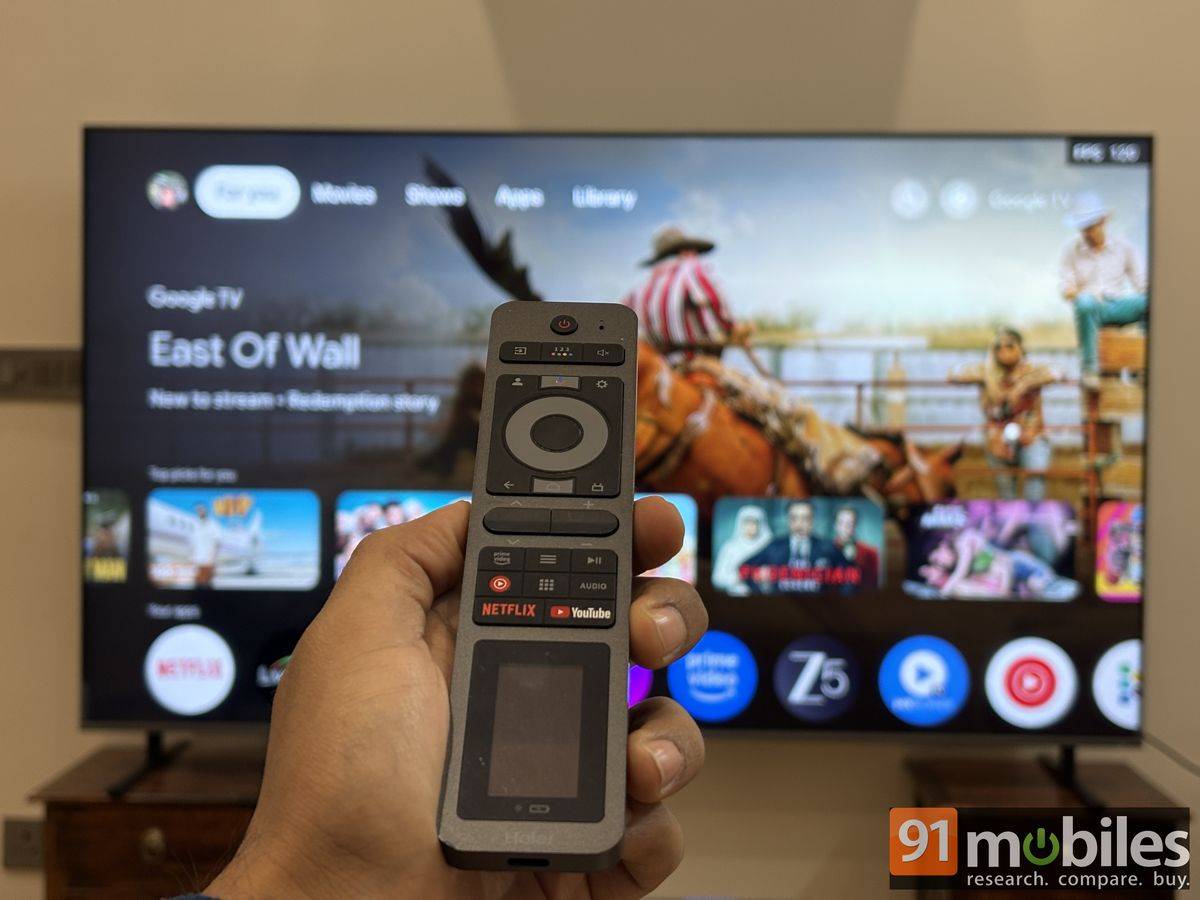
The same goes for the volume and channel controls. Even though they sit in their own dedicated section, they are so slim and low-profile that you often need to press with a fingernail just to register a click. Haier could have made the placement of buttons a bit more spacious and gone with an aluminium body for a more premium look and feel. The remote currently boasts a plastic body, which, although sturdy, did pick up dents during a meter-high accidental fall that happened soon after I unboxed the TV.
That said, I still appreciate Haier’s effort in creating a uniquely designed remote, which pairs with the TV using Bluetooth and works seamlessly even from a distance.
Design that balances elegance & practicality
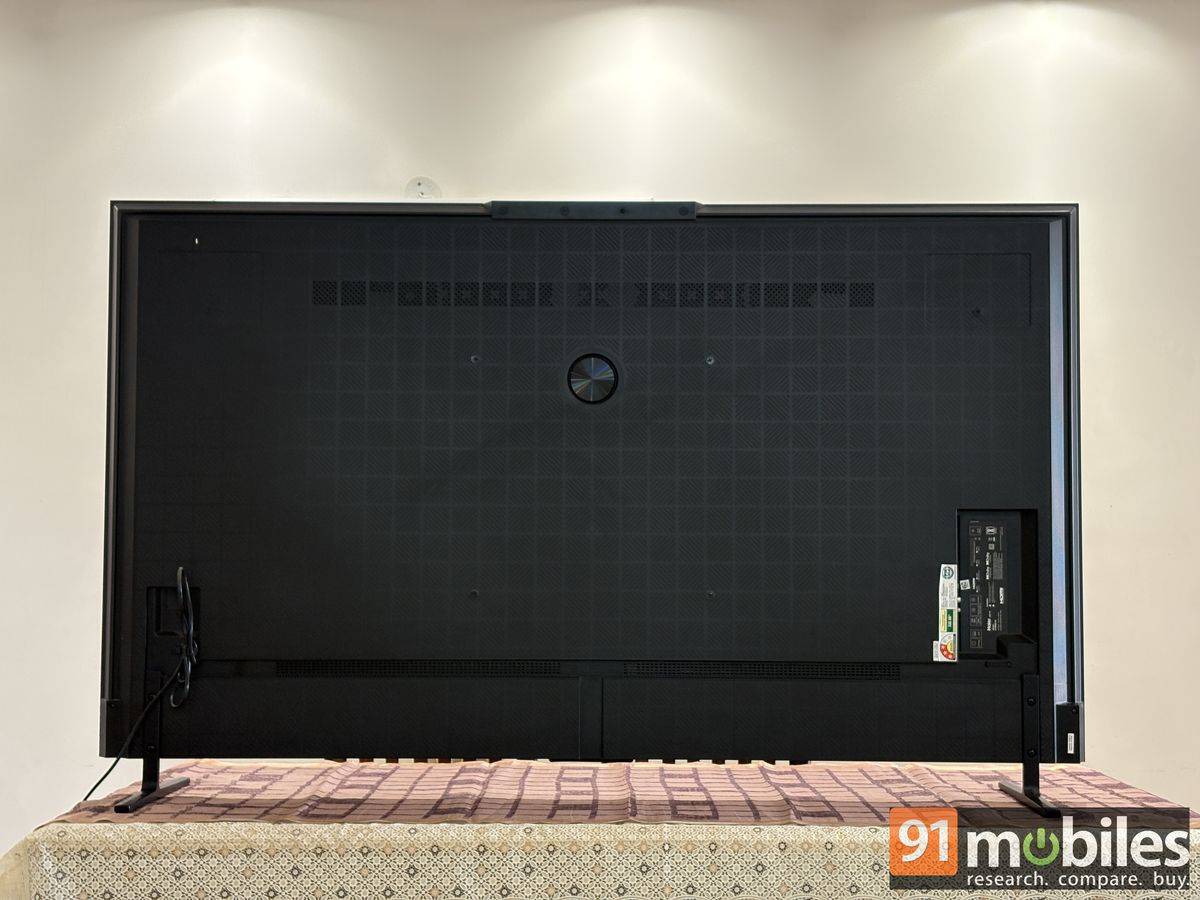
Much like the remote, the Haier QD-Mini LED M92 series has some thoughtful design touches. I haven’t reviewed a large number of smart TVs, but the ones I’ve used or tested rarely have a back panel as clean and uniform as the one on this model. Instead of the usual slim-top, bulky-bottom design where the electronics sit in a large box, this 75-inch TV uses a gentle slope from the edges: top and sides, that blends into the rear panel. The plastic back isn’t plain either. Instead, it features a textured pattern that gives the TV a more refined look even from behind.
From the front, the TV is dominated by its expansive 75-inch display, framed by razor-thin bezels on all sides except the bottom. The lower bezel is slightly thicker, though not enough to distract from the viewing experience. It comes in a silver shade and carries the ‘Haier’ logo at the centre and a subtle ‘Sound by KEF’ badge on the right. Just below the centre, a small protruding section houses the TV’s sensors, which seem to be blending neatly into the overall design.
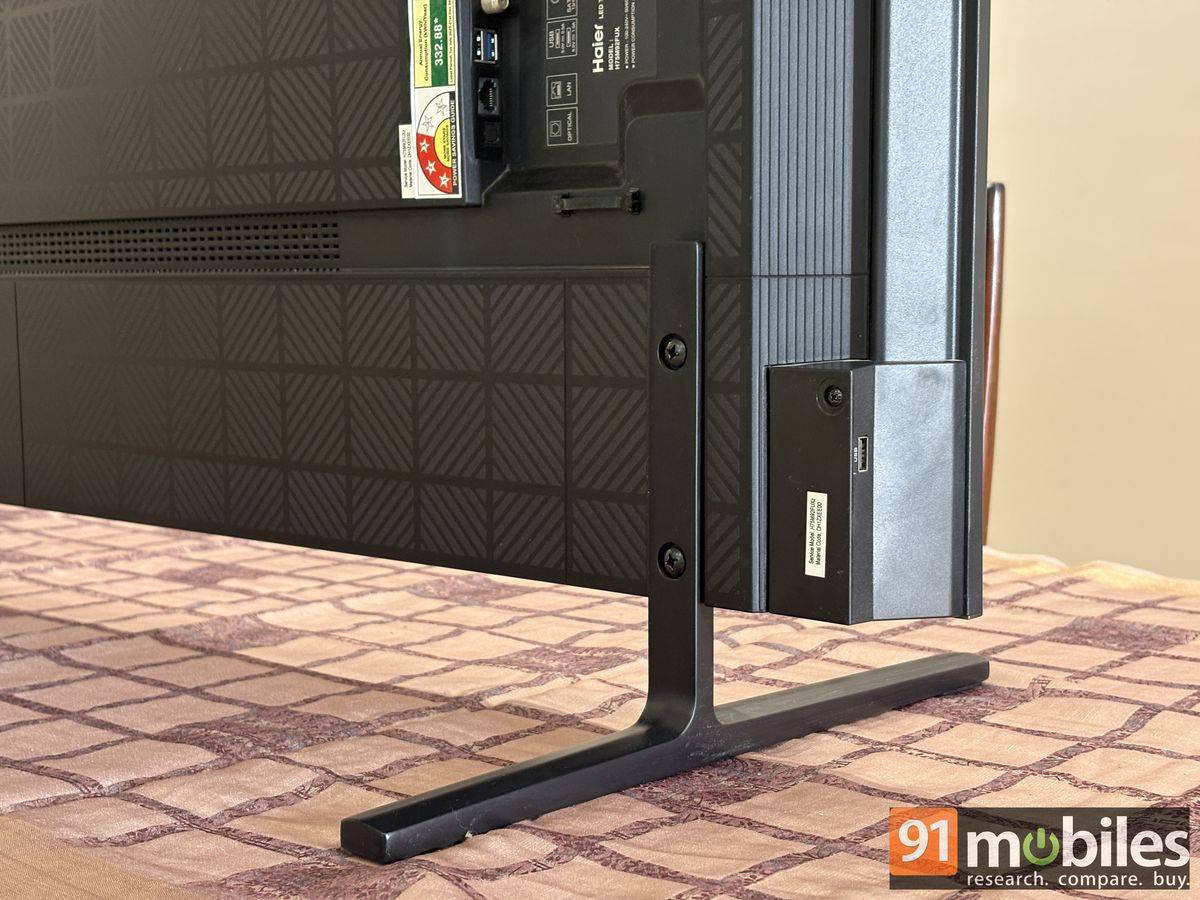
The TV can be wall-mounted or placed on a table. I used the TV with the latter setup, using a pair of stands, with a single height adjustment option provided in the box. They look sleek, feature a metal frame, and offer solid stability for the TV, which weighs a little over 22kg. A wall-mounted kit is also provided in the box, if you don’t want this giant-sized TV to occupy space on your table.
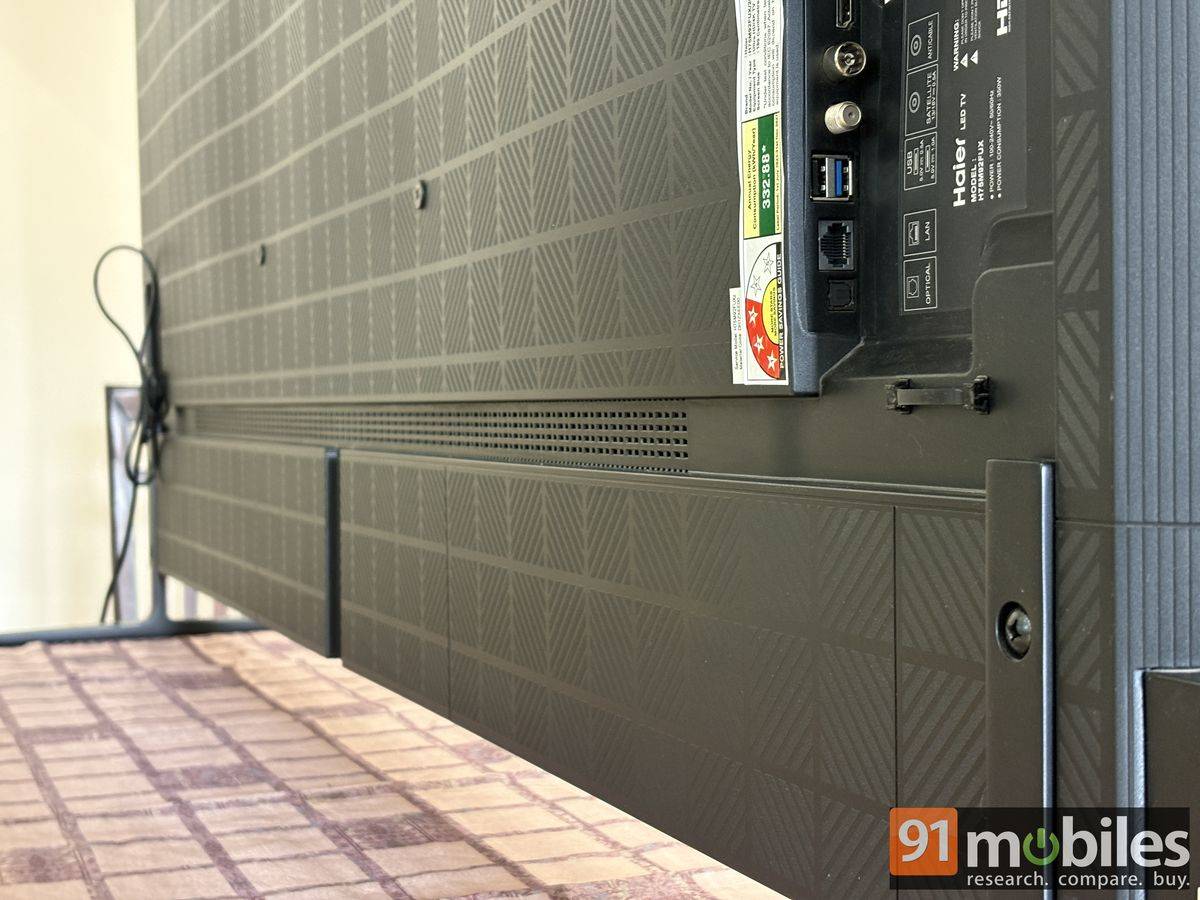
Haier has added a T-shaped cavity at the back of the TV to keep the cables neatly aligned. The horizontal section runs from the USB and HDMI ports on the left to the power input on the right, while a short vertical channel drops down from the centre to route the cables discreetly behind the TV. There’s also a small loop for securing any excess power cable, preventing it from hanging loose and helping the overall setup look tidier and more refined.
Specs at a glance
- Panel Size: 75-inch
- Panel Type: LCD
- Backlighting: QD-mini LED
- Brightness: up to 1,300 nits
- Dimming Zones: Yes (576)
- Panel Resolution: 3840x2160p (4K)
- Panel Refresh Rate: 144Hz
- HDR 10 Support: Yes
- HDR 10+ Support: Yes
- HLG Support: Yes
- Dolby Vision Support: Yes
- Dolby Atmos Support: Yes, with sound by KEF
- HDMI Ports: 4 (HDMI 4 is 4K@144Hz, HDMI 3 is eARC 4K@144Hz, and HDMI 2 and 1 4k@60Hz. All four ports support HDMI 2.1)
- USB 2.0 Ports: 2
- Bluetooth: Yes (v5.2)
- Wi-Fi: Yes
- Ethernet: Yes
- Number of speakers: 2.1ch with subwoofer
- Sound Output: 50W
- OS: Google TV
- RAM + storage: 4GB+64GB
- Price: Rs 1,29,990
Smooth software, with a few odd quirks
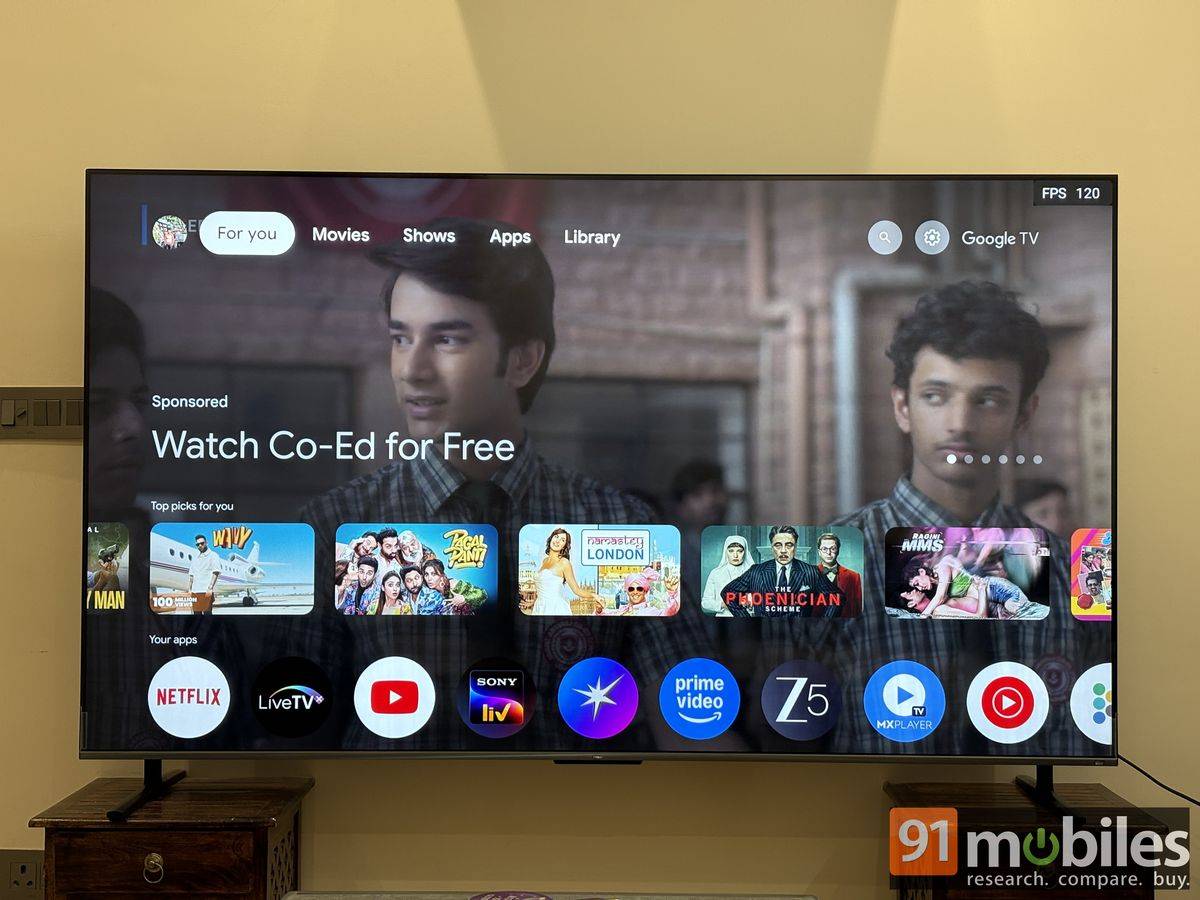
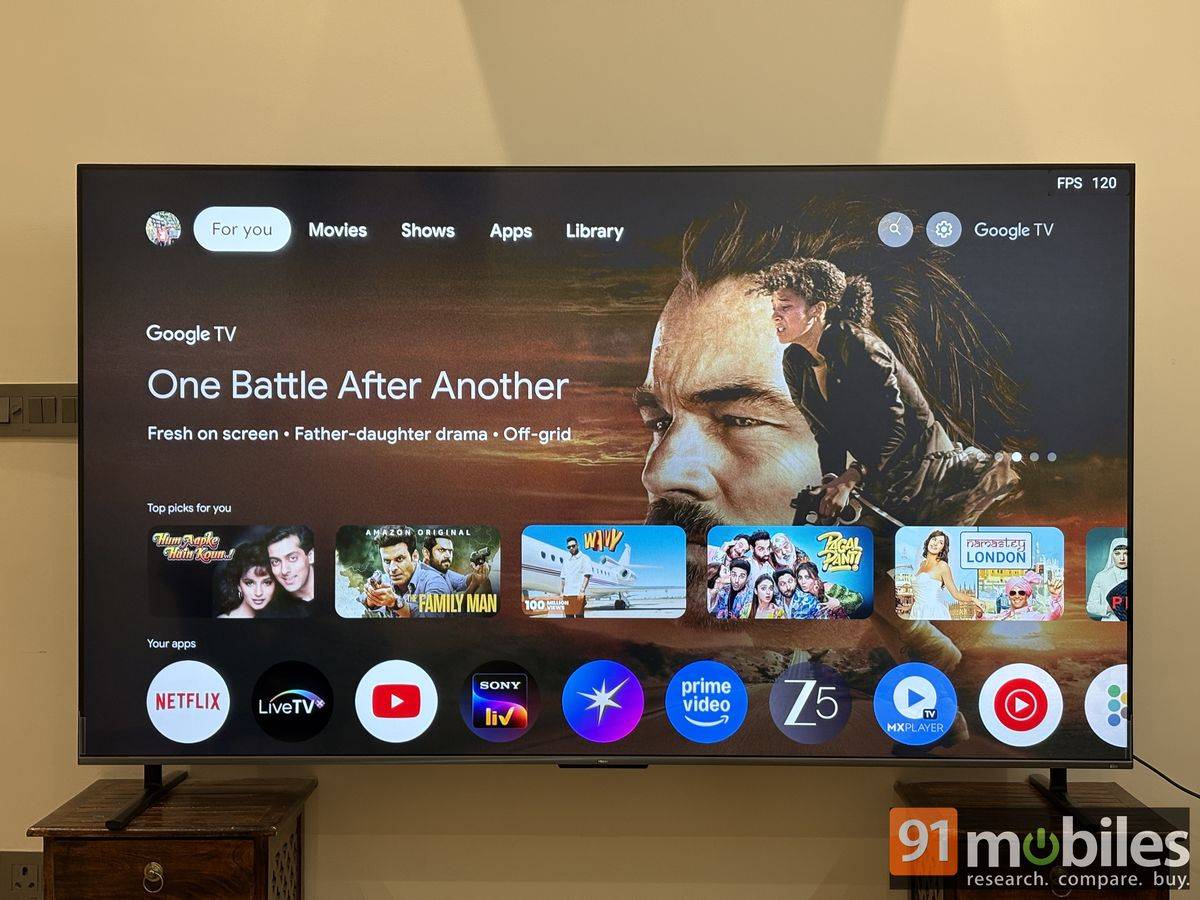
The Haier QD-Mini LED M92 Series (72-inch) runs Google TV on Android 14, delivering an experience that feels mostly stock and in line with other Google TV models. You can create personalised user profiles, and content recommendations are neatly organised in a card-style layout, while apps appear as circular icons. In day-to-day use, the interface ran smoothly as I didn’t encounter any lag, stutter, app freezes, or crashes during my testing.
That said, the overall user experience wasn’t as intuitive as some competing smart TVs running the same platform. For instance, I still haven’t been able to locate the USB input within the interface. Additionally, adjusting settings requires an extra step: you need to press the Select button before navigating, which feels unnecessary.
The menu design, while adjusting sound and display, also has its quirks, with options not looping in a circular manner, and the arrows aren’t highlighted clearly enough to indicate when you’ve reached the end of a list. These small usability issues add friction to an otherwise smooth software experience.
Moving on, since it’s a Google TV, you also get several useful conveniences such as Chromecast for casting content from supported devices, Google Assistant for hands-free voice commands, and full access to the Google Play Store for downloading a wide range of apps. All of these worked seamlessly during my testing. However, I wasn’t able to properly test the brand’s HaiSmart platform, which is meant to allow users to control compatible Haier appliances through a smartphone app.
Capable 50W audio with handy tuning options
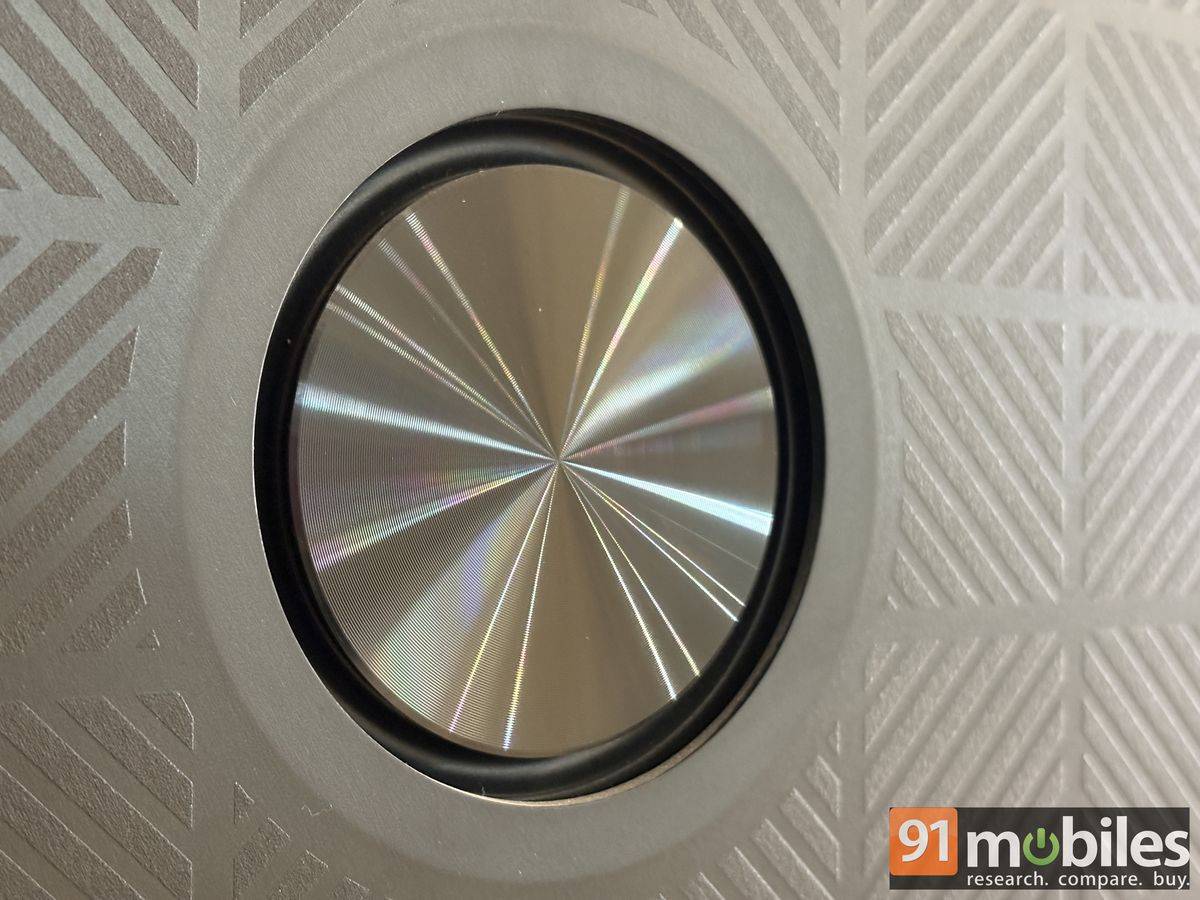
The Haier QD-Mini LED M92 series (75-inch) features a 50W audio system in a 2.1-channel configuration, combining two bottom-firing speakers with a centrally mounted rear subwoofer. The speakers get sound by KEF – a popular British audio company – for clear, crisp, and balanced output. Moreover, they support Dolby Atmos to create an immersive, surround-like listening experience. With the current setup, you don’t fully immerse in the sound, but Atmos definitely adds depth, which makes my music sound better.
However, when watching films or TV shows, you may actually get better dialogue clarity with Dolby Atmos switched off. If you want your vocals and dialogues to sound clearer, I would recommend turning on the dbx-TV Total Sonics from the Settings –> Audio. It suppresses the subwoofer, gently reducing the background music, and enhances vocal definition. While not ideal for musical movies and shows, I found the setting particularly effective while watching The Family Man Season 3 to catch every line without distraction, without the awkward loudness in music.
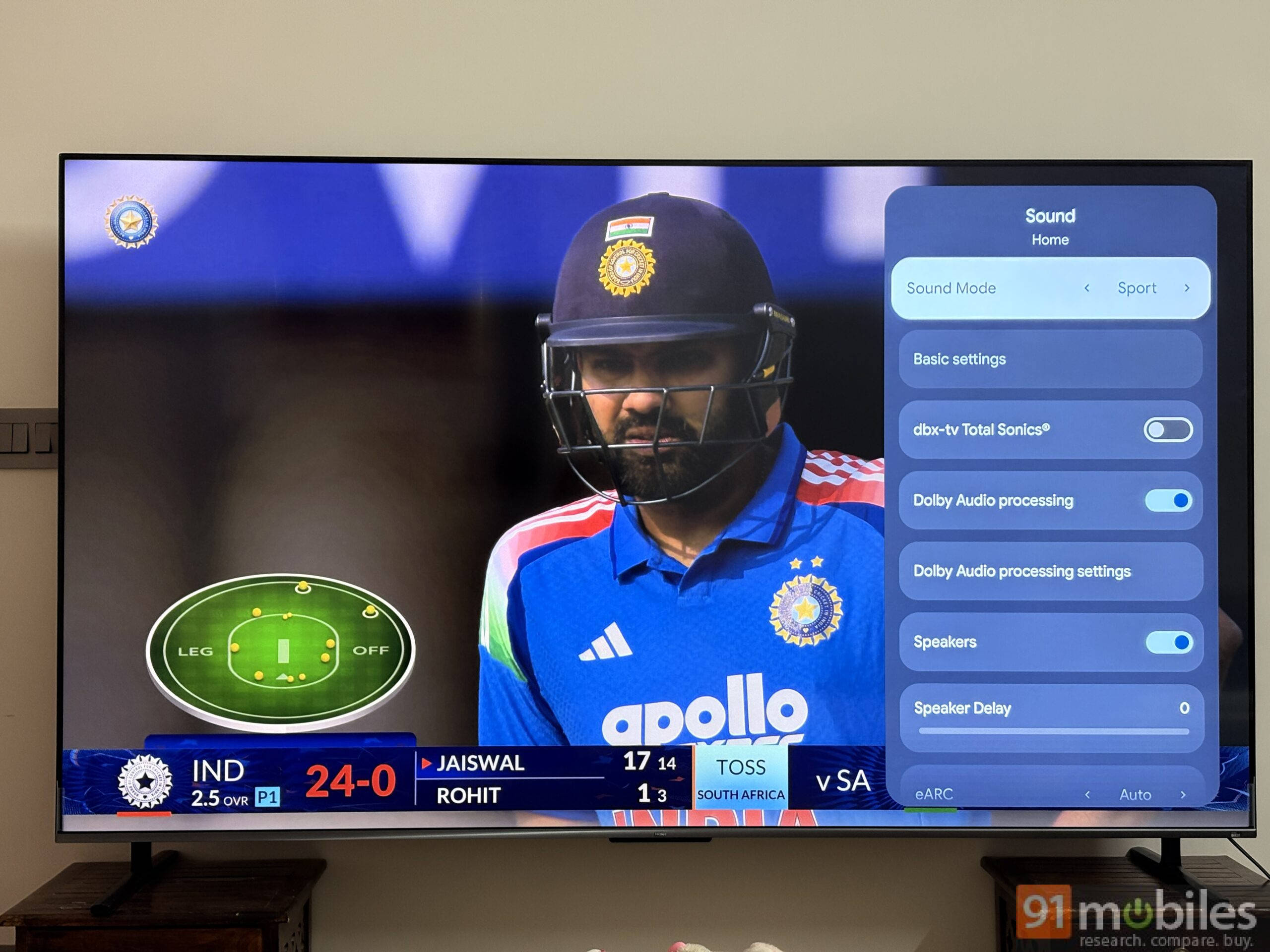
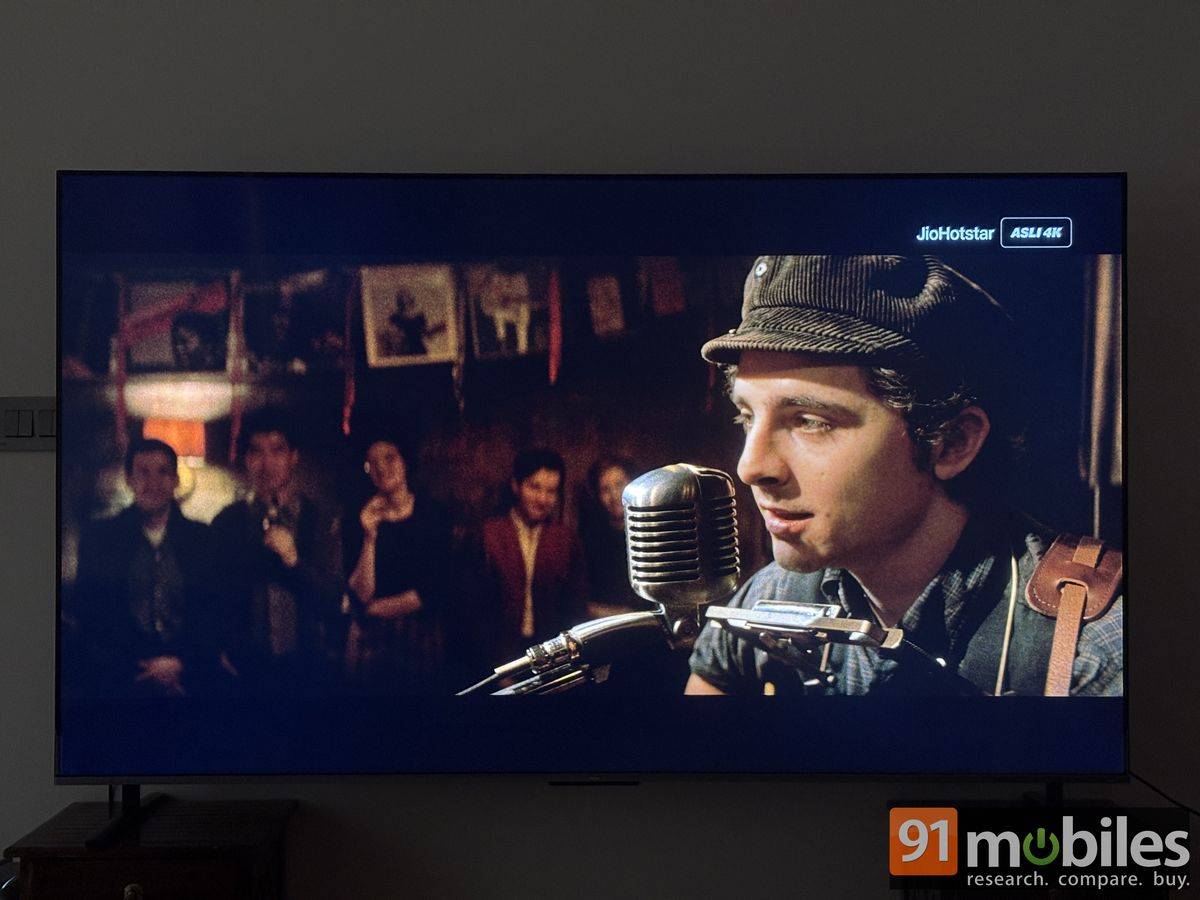
Switching off dbx-TV Total Sonics results in a noticeably flatter audio profile, acceptable for shows like Wednesday, which have strong visuals and don’t need to rely on background scores to add intensity. However, it was far from ideal for titles such as A Complete Unknown, Sinners, or The White Lotus, where the soundtrack plays a crucial role in the overall experience.
Overall, the 50W speaker system is perfectly adequate for a 75-inch TV, and the range of audio features gives users plenty of flexibility to tailor the sound to their preferences.
Display with stellar HDR & gaming chops
Coming to the meat of the matter – Haeir QD-Mini LED M92-series 72-inch display. It has got everything you can expect from a flagship TV. In addition to 4K resolution, the TV supports all popular HDR formats, including HLG, HDR10, and Dolby Vision IQ. Since it is a QD-Mini LED TV, you also get Quantum Dot colour enhancements, which are supposed to be better than standard Mini LED in terms of colour, brightness, contrast, and more.
While it may be an LCD, which isn’t as contrast-rich as OLED, the mini LED backlighting provides over 500 dimming zones on the Haier TV, resulting in a claimed contrast ratio of 10,00,000:1. This contributed to deeper blacks and brighter highlights across a range of content I streamed on this device. However, it is worth noting that the EcoEnergy picture mode tends to mute colours more than ideal. It’s useful if you’re trying to conserve power, but switching it off restores the vibrancy and richness you’d expect from a QD-Mini LED panel.
SDR quality
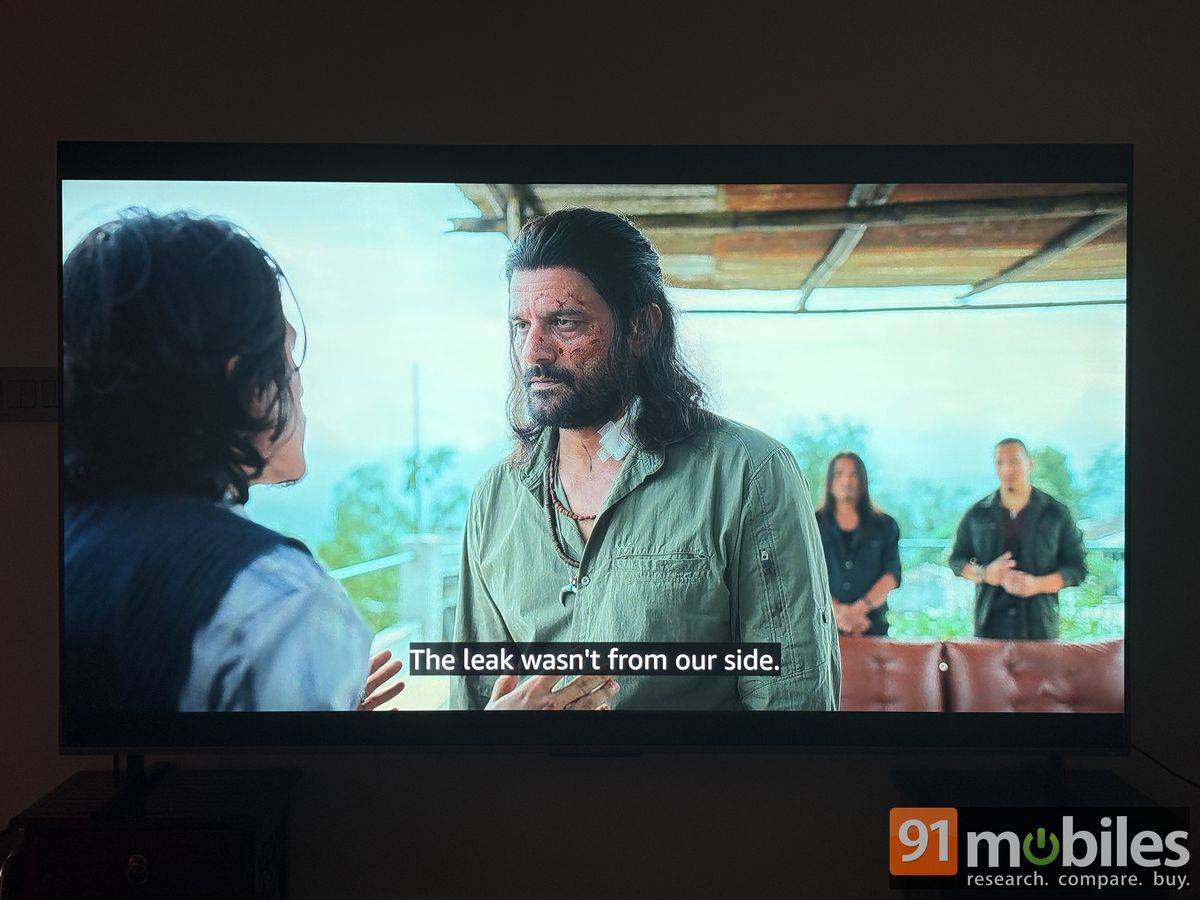
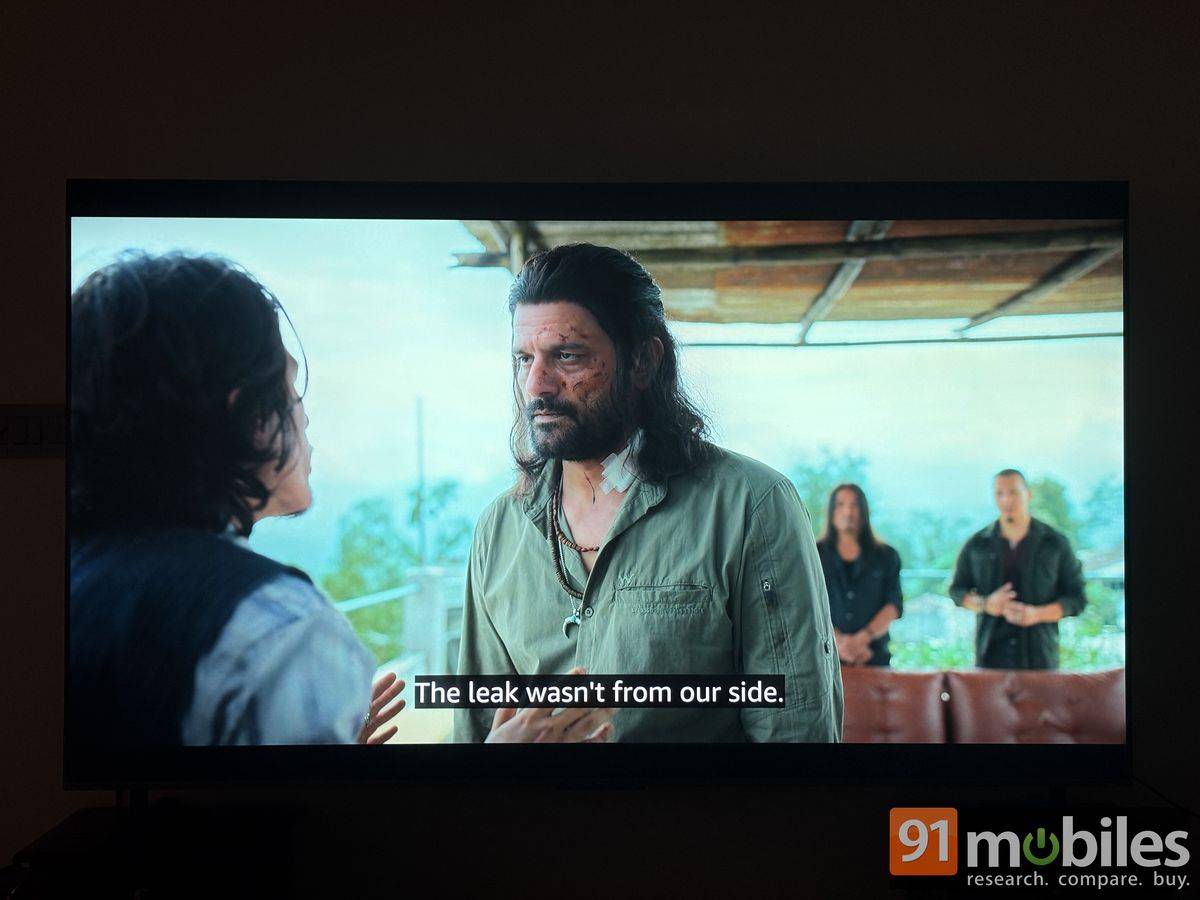
HDR titles looked particularly impressive, but SDR required some adjustments. I had to disable the TV’s AISR setting (Display –> Advanced Settings) to prevent non-HDR movies and shows from appearing unnaturally sharpened. This issue cropped up while watching The Office and The Family Man Season 3 on Prime Video using a Lite membership, which only allows SDR playback.
Switching the picture mode from Standard to Movie reduced the oversharpening slightly, but the content still appeared somewhat artificial and pixelated. This is one of the drawbacks of AI-based upscaling technologies like Artificial Intelligence Super Resolution, which attempt to enhance lower-resolution footage, sometimes at the expense of natural texture.
HDR quality
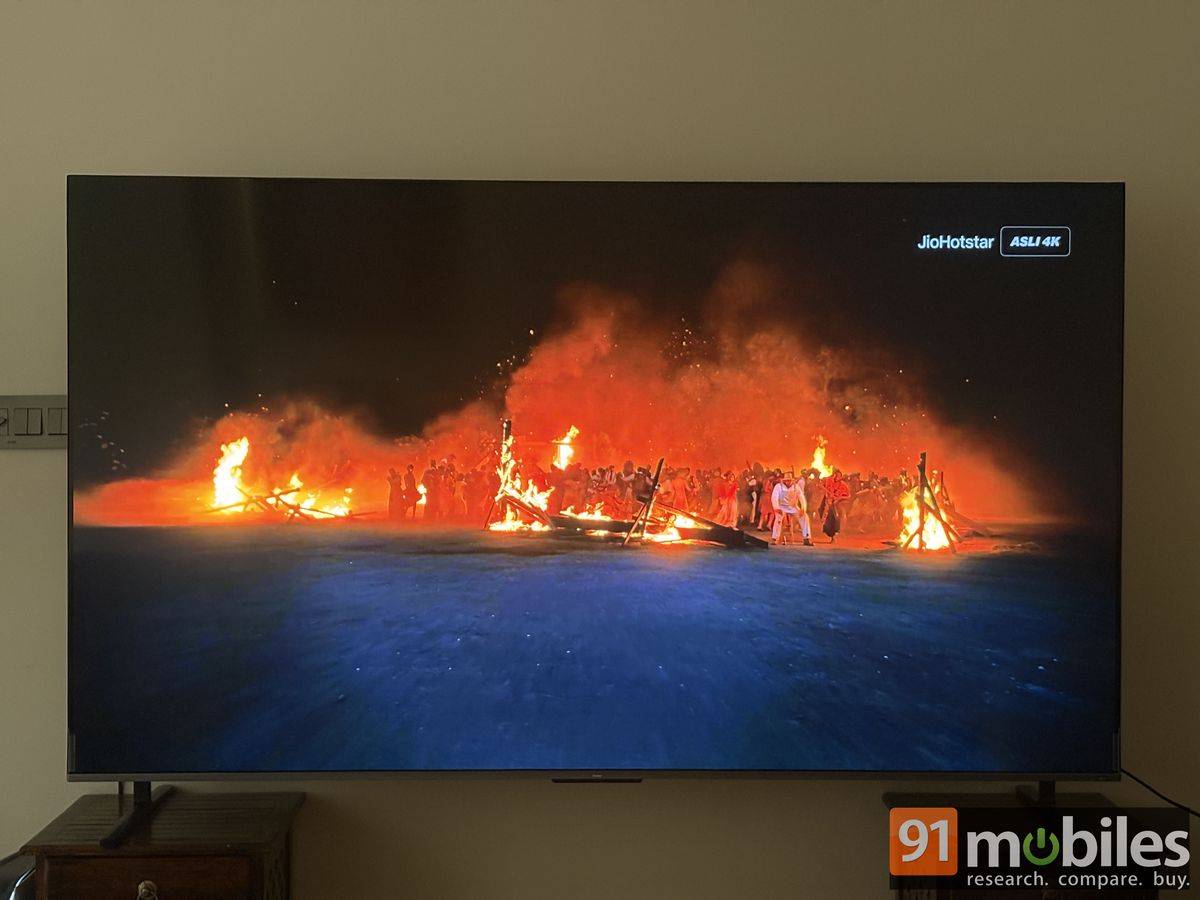
When it came to HDR content, I streamed Wednesday, The White Lotus, Sinners, and A Complete Unknown. I had no trouble viewing any of these titles, with room lights on or off. The TV’s 1,300-nit peak brightness proved more than adequate, bringing out fine details in those dark cottage sequences of Sinners, even in a well-lit room. And in the stage scenes of A Complete Unknown, the TV’s HDR performance proved its worth by keeping the intense stage lights under control and avoiding blown highlights across the frame.
I was quite satisfied watching HDR content using the Standard picture mode, though I kept Dynamic ECO turned off for more accurate colour calibration. The TV offers plenty of additional display controls to fine-tune the image, and if you’re unsure where to start, you can even experiment with the settings my colleague used for the LG QNED8GA6A (review). That model is an excellent option at Rs 1,03,999, but it uses a standard mini LED panel and offers a pretty sub-par audio experience.
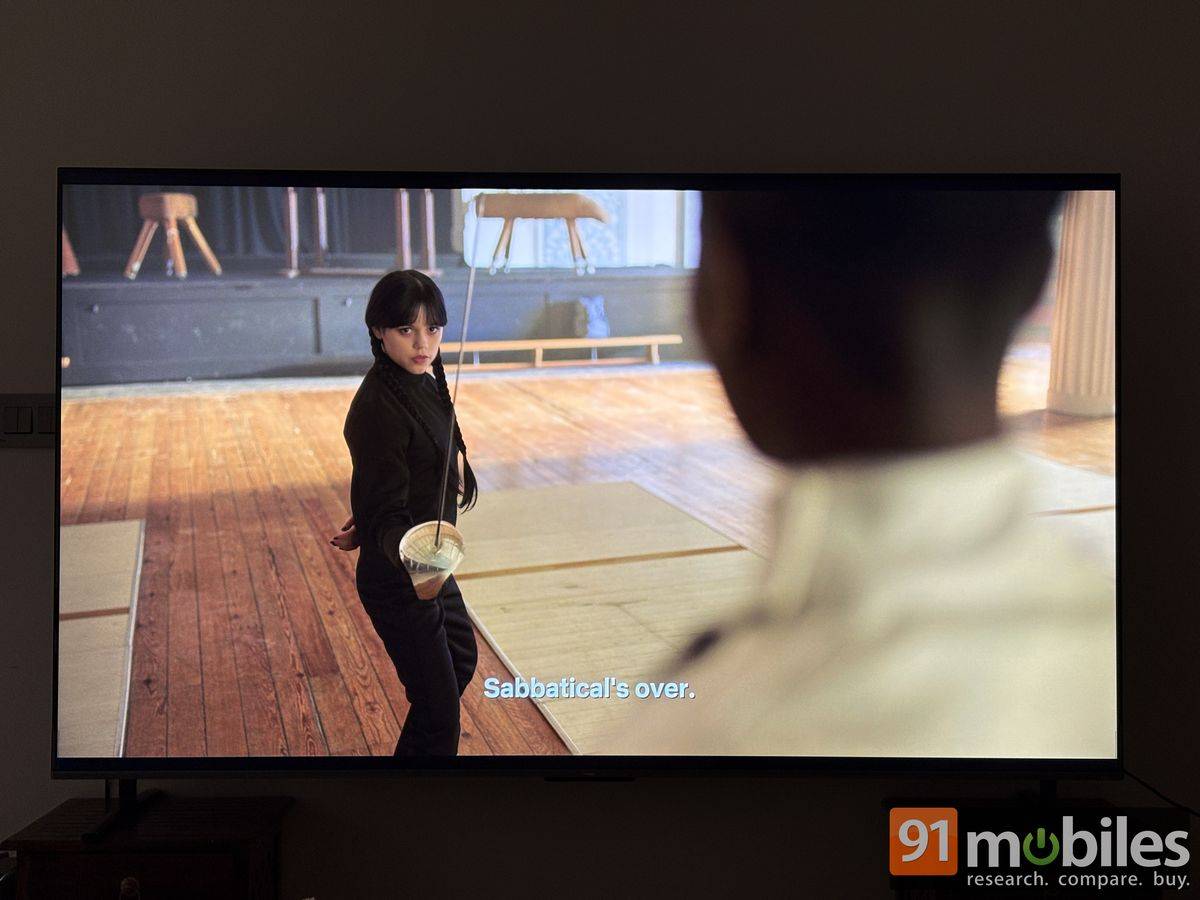
Back on the Haier QD-mini LED M92-series (75-inch), I streamed Wednesday on Netflix to put its Dolby Vision handling to the test. If you have seen the show, you would know there are plenty of bright, saturated colours, especially greens, reds, turquoise, and cyan, and the TV handled everything beautifully with no noticeable colour bleed. There are three Dolby Vision presets, Dark, Vivid, and Game, and there’s also Dolby Vision IQ, which automatically adjusts colour and brightness based on the room’s lighting, if you’re unsure where to start.
My personal pick was Dolby Vision Dark, which, unlike the Vivid mode, avoids oversaturated colours and an overly aggressive dynamic range. It kept the colours natural and well-layered, and the picture quality retained a crisp sharpness without drifting into artificial vibrancy. The effect was evident with the content looking more immersive, and you might even find yourself tempted to add a soundbar or speaker system to make the setup feel truly cinematic.
Gaming
Besides cinema lovers, the Haier QD-mini LED M92 series (72-inch) also appeals to gamers. There is a variable refresh rate that can reach 144Hz for smooth motion during fast-paced play. Then, you get HDMI 2.1 supporting 4K at 144Hz, plus Auto Low Latency Mode (ALLM) and a dedicated Game Mode MEMC to enhance gaming.
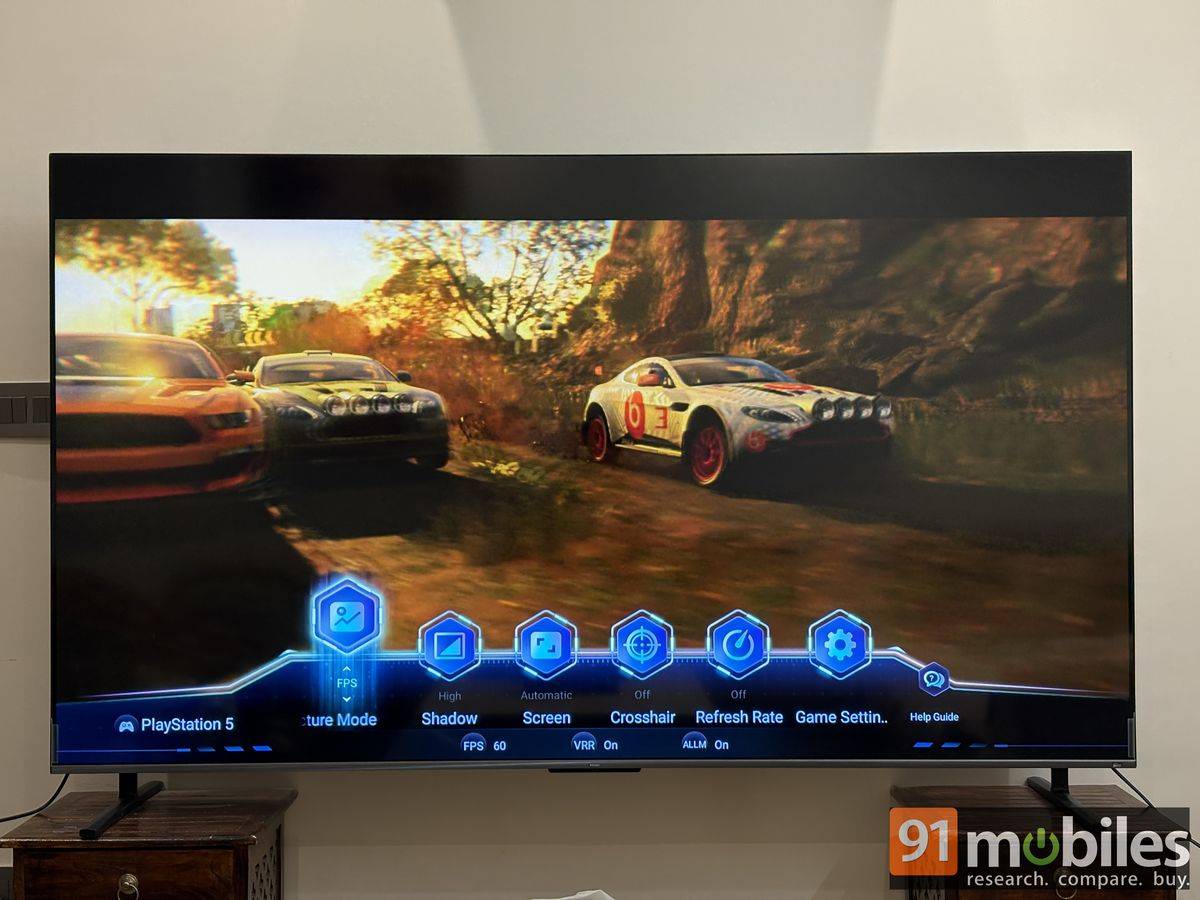
Haier has also introduced a Gaming Bar, a customised UI for quick adjustments to settings, screen sizes, picture mode, shadow, crosshair, and more. There is also a Gaming 240Hz (DLG), which simulates a 240Hz refresh rate, but at the expense of reduced resolution. The only hiccup I ran into was with the Gaming Bar itself: on one occasion, it simply refused to appear until I power-cycled the TV.
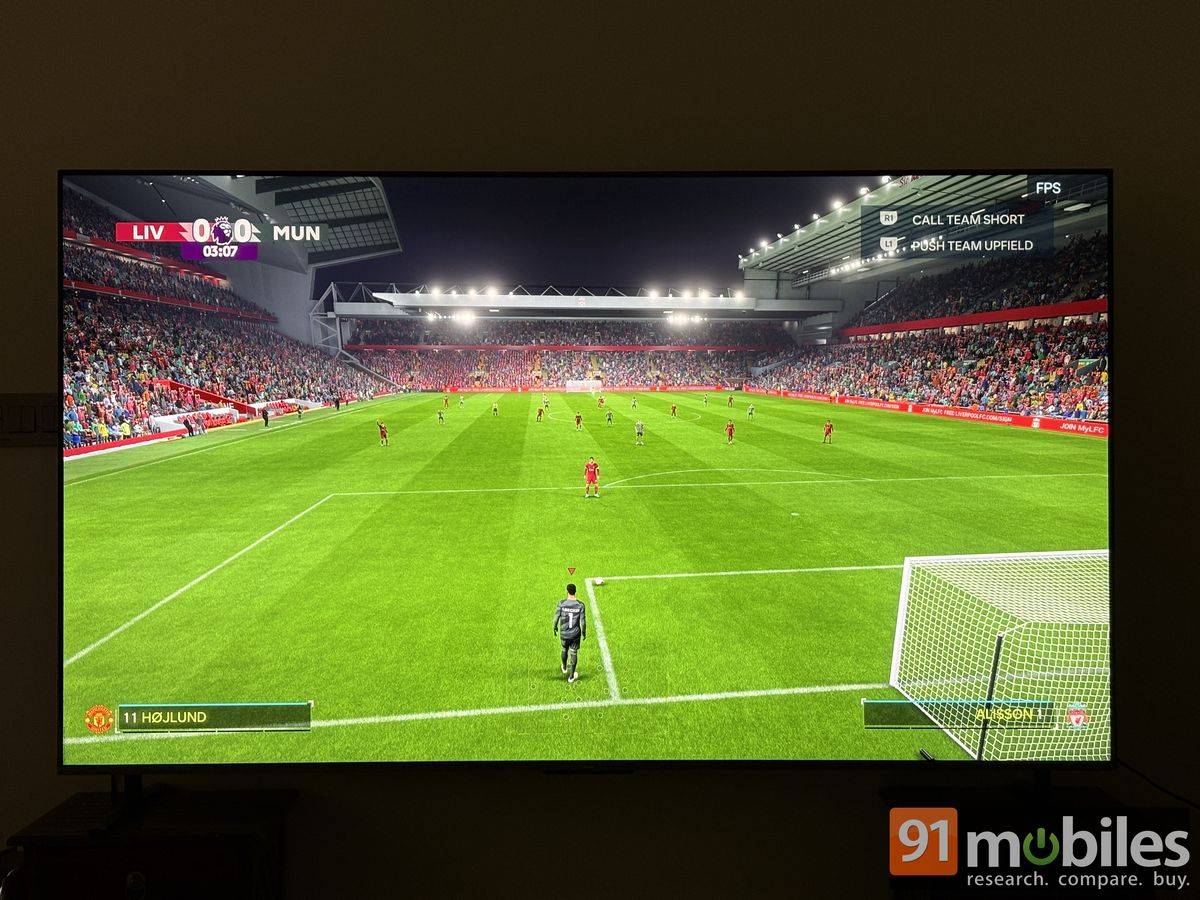
Playing games such as FIFA 25 and Dirt Racing on the PS5 would only get you 120 fps, and it remained consistent throughout my experience. This is because of the console’s limitation and not gaming.
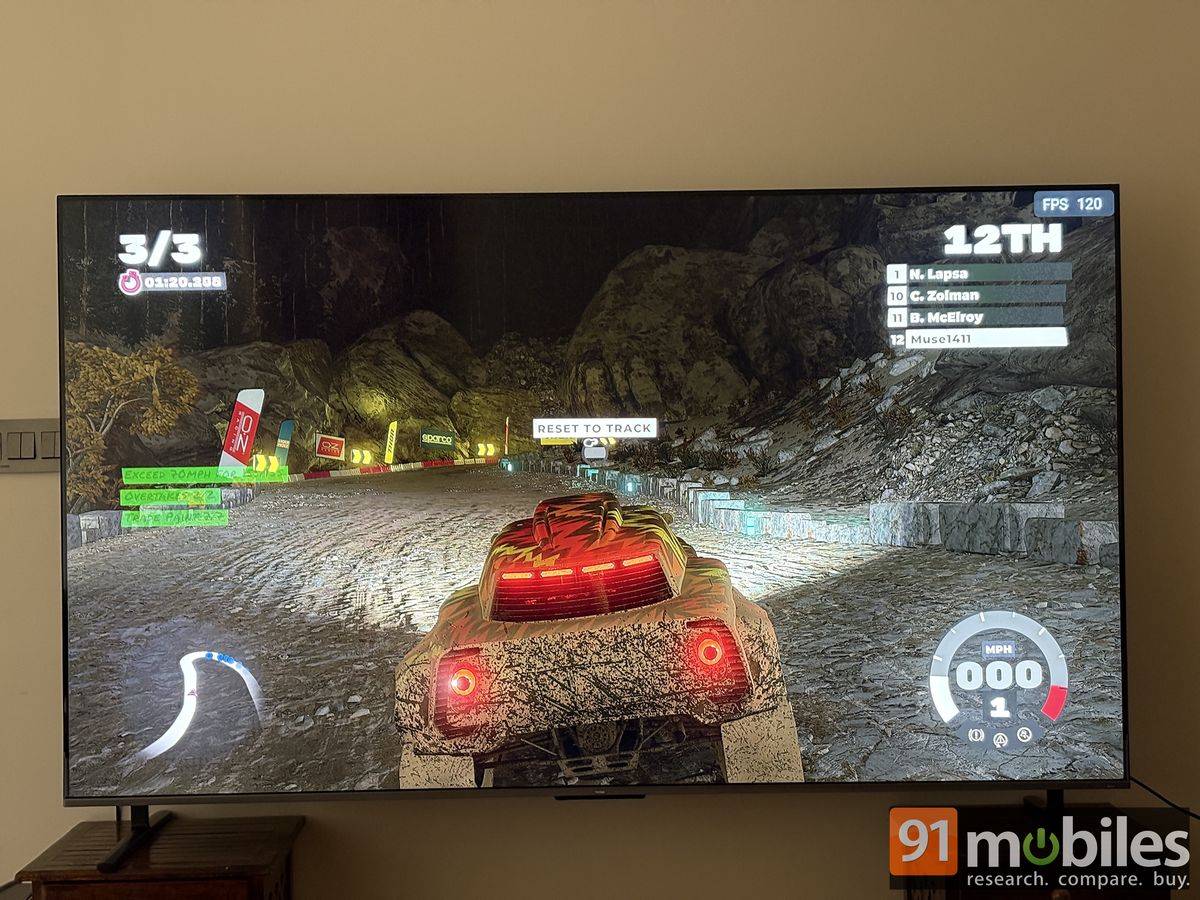
On the TV’s part, it did well to support the game’s high-end graphics, with good detail rendering and balanced colours. The gaming display preset on the TV handled bright racing-game scenes just as well as dark scenes across terrains. The display didn’t wash out highlights where the sun was shining brightly, while preserving shadows inside the jungle from Nepal tracks to Italy. Moreover, the TV showed snowy environments with natural shading instead of flat whiteness.
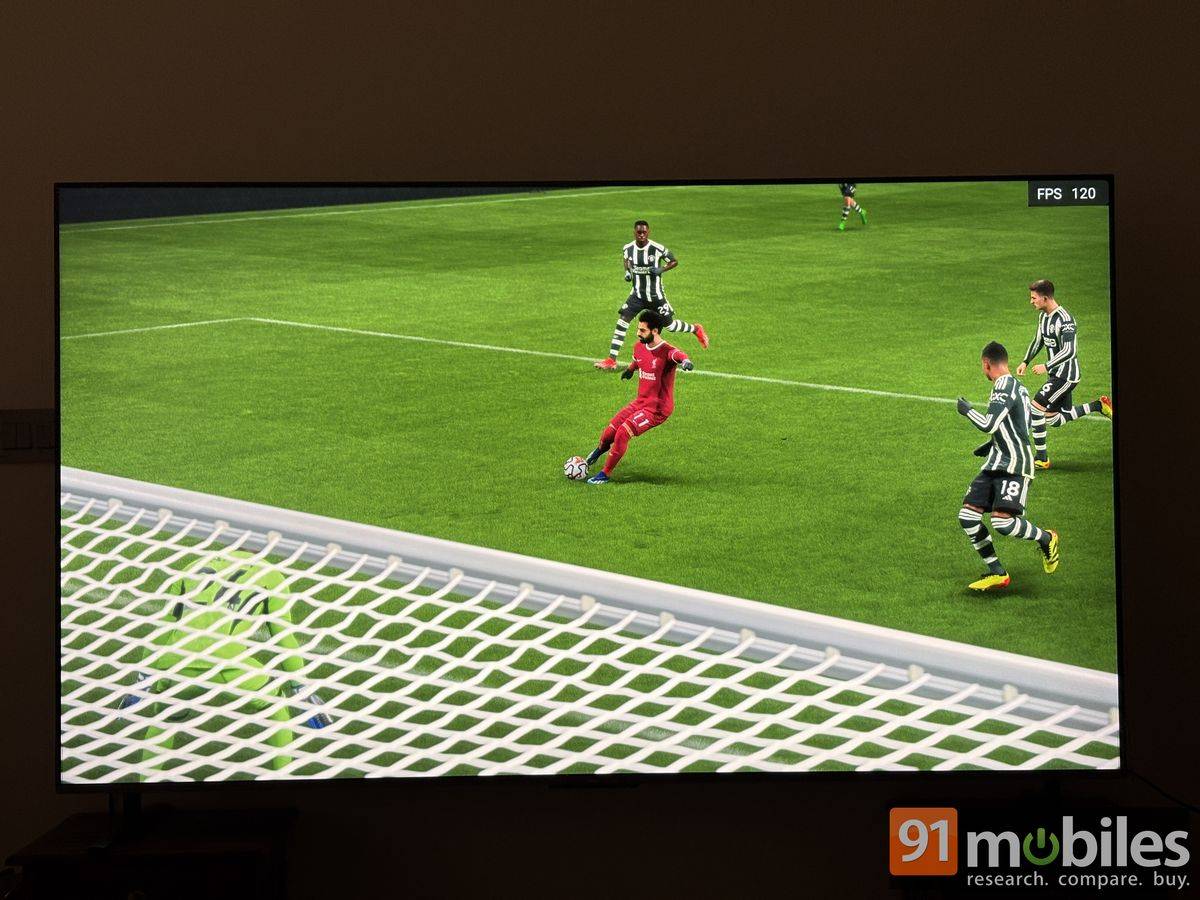
In FIFA, the panel reproduced vibrant jersey colours, including the reds and neon oranges, accurately, and skin tones looked consistently lifelike. HDR performance was strong, with good control over bright highlights and preserved shadow detail. Motion remained smooth thanks to the high refresh rate and VRR, and input lag stayed low with ALLM enabled, making fast inputs feel immediate. Overall, it’s a responsive and visually convincing gaming display with only minor blooming, typical of Mini LED sets.
Verdict
The Haier QD-Mini LED M92 series (75-inch) nails the fundamentals right with its bright, contrast-rich display, backed by impressive HDR performance and solid motion handling for both films and games. Additionally, the capable 50W audio tuned by KEF and smooth day-to-day software performance further enhance its appeal. Haier has also left no stone unturned with the design, adding thoughtful touches like the solar-charging remote, tidy rear cable management, and a versatile gaming setup, ensuring that the TV is not just practical but spectacular as well.
However, there are a few flaws, which may make a rookie, who doesn’t want to tinker with the settings too much, pause for thought. The remote layout could be more intuitive, SDR upscaling needs careful tuning, and the software UI has a few quirks that shouldn’t exist on a flagship model. That said, look past these shortcomings, and you are greeted with an excellent 75-inch QD-Mini LED TV, with Dolby Vision IQ, 144Hz support, and competent built-in audio.
The TV is currently listed on Haier’s official website at Rs 1,29,990. If you’re seeking a large-screen upgrade that handles movies, sports, and gaming with equal confidence, and don’t want the compromises or cost of a premium projector, this is a strong contender well worth shortlisting.
Editor’s rating: 8.5/10
Pros
- Punchy QD-Mini LED panel with impressive HDR
- Strong Dolby Vision IQ performance
- Capable 50W KEF-tuned audio
- Excellent gaming support
Cons
- Remote layout feels cramped
- SDR upscaling can look oversharpened
- Minor UI quirks in settings