


Soundbars have become synonymous with the modern home entertainment experience, and for good reason. As televisions have grown thinner, their built-in speakers have had to compromise. There simply isn’t enough physical space to accommodate speakers that can deliver a truly engaging audio experience. And that’s where soundbars come in.
For the longest time, there was a debate between soundbars and dedicated home theatre systems. Rightfully so. There is a certain magic to having separate left, right, and centre channels, positioned at a reasonable distance from one another. You get better channel separation and, more importantly, dedicated dialogue reproduction from the centre channel.
Soundbars have come a long way since then, with many premium offerings now incorporating dedicated centre channels, subwoofers and even wireless rear speakers. Some also offer the flexibility of adding compatible components later. And yet, I’d argue there’s still a compelling reason to consider a pair of active bookshelf speakers for your home entertainment needs.
Table of Contents
Soundbars have become the norm. But should they be?
For starters, if you’re someone who enjoys listening to music through your television setup, a good pair of bookshelf speakers can offer a more engaging listening experience. You also get genuine left-right channel separation, rather than relying on a soundbar to simulate a wider soundstage. And if you are willing to invest in a traditional passive speaker setup with a dedicated amplifier, you have the flexibility to expand it further with additional channels and even ceiling speakers for Dolby Atmos.
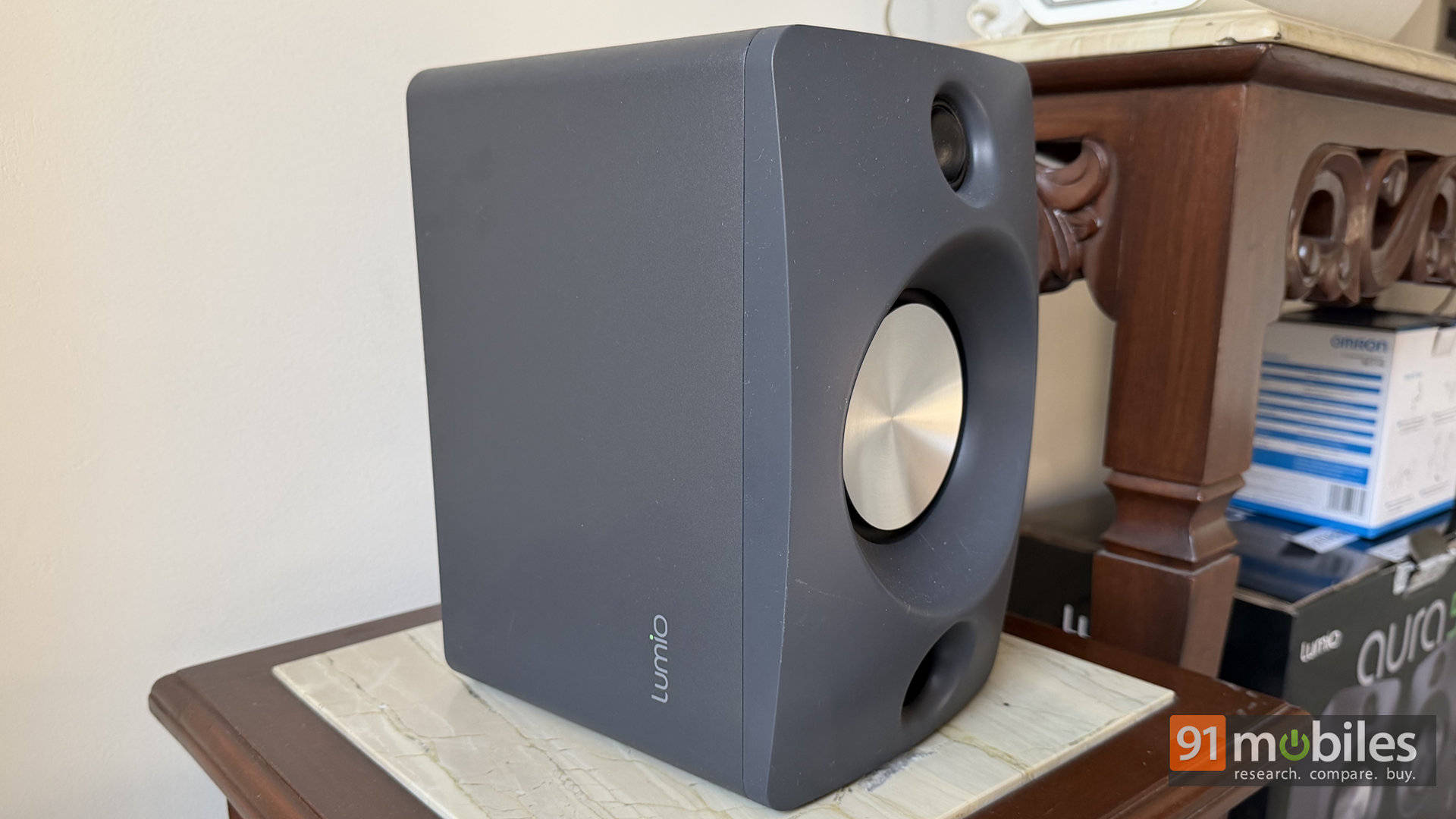
One of the biggest challenges with bookshelf speakers, however, has always been connectivity. Most affordable active bookshelf speakers don’t offer HDMI ARC or eARC, which means you end up relying on optical, RCA, or 3.5mm connections. It’s hardly the most convenient experience when you consider how easily a soundbar connects to a television using a single HDMI cable and lets you control volume and power using the TV remote.
I’ve personally used the original Klipsch ProMedia 2.1 and the Mackie CR5BT speakers with my television. Both were connected using a 3.5mm cable. It worked, and I could control the volume using the TV remote, but it was hardly an elegant solution. Optical was another alternative, but that came with its own compromises in convenience. This is precisely where the Lumio Aura 5 makes a strong first impression.
HDMI ARC makes all the difference
The Aura 5 comes with almost every connectivity option you could ask for. There’s Bluetooth, HDMI ARC, coaxial, optical, USB and good old analogue RCA. But its biggest advantage, particularly at its price point, is HDMI ARC and CEC support.
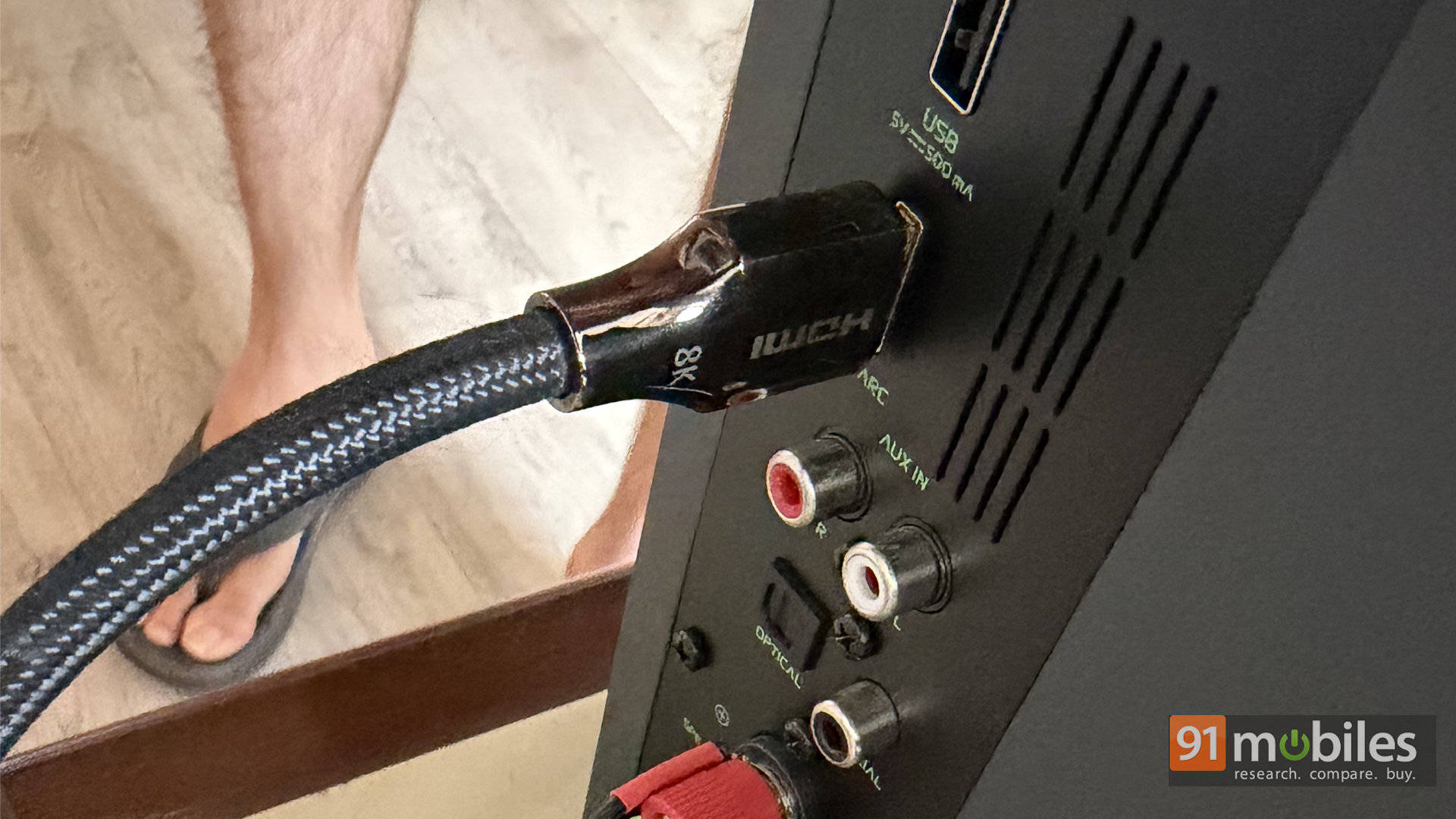
Connect these speakers to your television using an HDMI cable, and you can control the volume using your TV remote. You can also have the speakers power on and off in tandem with the television. It makes the whole experience considerably more convenient.
The HDMI connection is HDMI ARC with CEC, rather than eARC. The USB-A input also supports FLAC playback, with compatible digital sources supporting up to 24-bit/48kHz audio. These are useful additions for anyone who wants to use the Aura 5 as more than just a pair of TV speakers.
A connectivity convenience that comes with a catch
However, there is one rather interesting design decision that I wish Lumio had thought through a little better.
All the connectivity options are located on the right speaker, assuming you’re sitting in front of your television and looking at it. While this might seem like a minor detail, it can become rather inconvenient depending on your television’s layout.
Most televisions tend to have their connectivity ports positioned towards the left side or the rear-left section of the panel. This means that if you have the Aura 5’s right speaker placed on the right side of your television, you could end up having to route the HDMI cable all the way from the left side of the TV to the right speaker.
It’s not particularly elegant, especially when you consider that some bookshelf speaker systems offer a simple toggle switch that allows you to swap the left and right speaker positions. This gives you the flexibility to place the active speaker wherever it is most convenient for cable management.
I spoke to Lumio about this, and the company mentioned that it is working on an app that will allow users to switch the speaker configuration. That’s certainly encouraging, but the app isn’t available yet.
So, as things stand, this is a usability limitation that you have to work around. It’s a small design oversight, but one that could have been avoided with a simple speaker-position toggle from day one. A wider, fuller soundstage than conventional soundbars
So, what makes the Aura 5 better than a conventional soundbar?
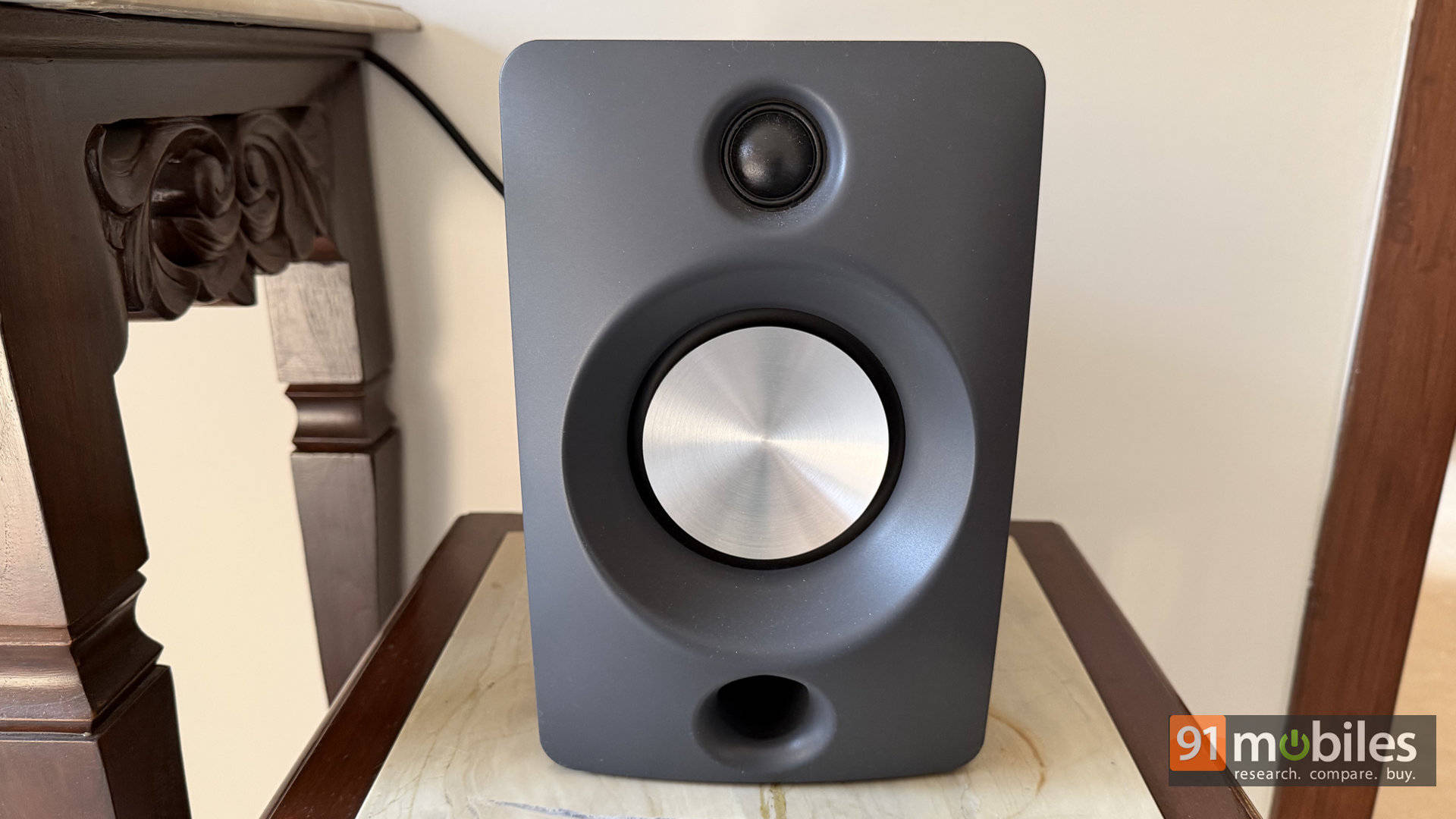
For starters, you get a fuller sound. You’re working with two separate wooden speaker cabinets, each with considerably more physical volume than the slim enclosure of a soundbar. More importantly, you can position the speakers further apart, giving you a much better sense of left-right channel separation.
Take the Battle of Helm’s Deep in The Lord of the Rings, or the final flight sequence in Top Gun: Maverick. You can actually follow the movement of aircraft and missiles across the front soundstage. Dialogue remains convincingly positioned in the centre, while effects are spread across the left and right channels. And all of this was experienced in a relatively modest 10 x 12-foot room.
Another excellent example is Ready Player One. The race sequence, particularly around the 11-minute mark, has plenty of movement and activity across the soundstage. The Aura 5 does a great job of reproducing these effects, giving you a sense of movement and separation that is difficult to achieve with conventional budget soundbars.
What’s particularly interesting is the phantom centre image. Despite not having a dedicated centre speaker, well-mixed dialogue is positioned convincingly between the two speakers when you’re seated in the listening sweet spot. Of course, you cannot defy the laws of physics. A soundbar system with a dedicated subwoofer will have an advantage when it comes to low-frequency impact.
Take something like the Sony HT-S40R. At a similar price point, you’re getting a soundbar, a dedicated subwoofer and rear speakers. It offers a more complete surround sound experience, along with more pronounced bass.
But the Aura 5 has the upper hand when it comes to the clarity and separation of the front soundstage. Music, in particular, sounds considerably more engaging on this pair of bookshelf speakers.
Gaming is where these speakers really shine
Gaming is an activity I thoroughly enjoy, and the Aura 5 has been a very pleasant companion. In fact, they reminded me of the Klipsch ProMedia Lumina 2.1 speakers I recently reviewed, which delivered an excellent audio experience but also cost considerably more, at around Rs 45,000.
For less than Rs 30,000, the Lumio speakers put up a very good fight. Take Doom: The Dark Ages, which has a lot happening in its audio mix, including heavy impacts, weapon sounds and a generous amount of bass. The experience is engaging, with very good separation between the different sound effects.
In Marvel’s Spider-Man, the little clicks and clacks as you swing through the city, the traffic and the surrounding ambience all come through with excellent clarity. The sense of space is particularly enjoyable. Then there’s Ori, where the orchestral score sounds deep and immersive. If you’ve played Mixtape, a game that places considerable emphasis on music, these speakers really do justice to its soundtrack.
Even Gears 5, with its excellent audio design, particularly the dialogue, gunfire, and environmental effects, sounds fantastic. Racing games such as Gran Turismo and DiRT 5 also benefit from the fuller sound, with the grunt of the engines and the accompanying soundtrack creating an immersive experience.
The only real limitation here is the absence of a dedicated subwoofer. Games with heavy explosions and low-frequency effects could certainly benefit from more bass extension and impact.
Nevertheless, if you’re setting up a gaming station on a desk, connecting these to a monitor or using them with a television in a smaller room, the Aura 5 is a very compelling option.
More than just television speakers
One of the things I’ve particularly enjoyed about the Aura 5 is its versatility. I’ve been using these speakers for everyday television consumption, and they’re genuinely very good at it. Whether it’s regular television programming, news channels, or sitcoms such as The Big Bang Theory and Young Sheldon, dialogue sounds clear and natural.
If you have family members who predominantly watch news and regular television programming, these speakers can make a significant difference compared with the rather tinny sound coming from most television speakers.
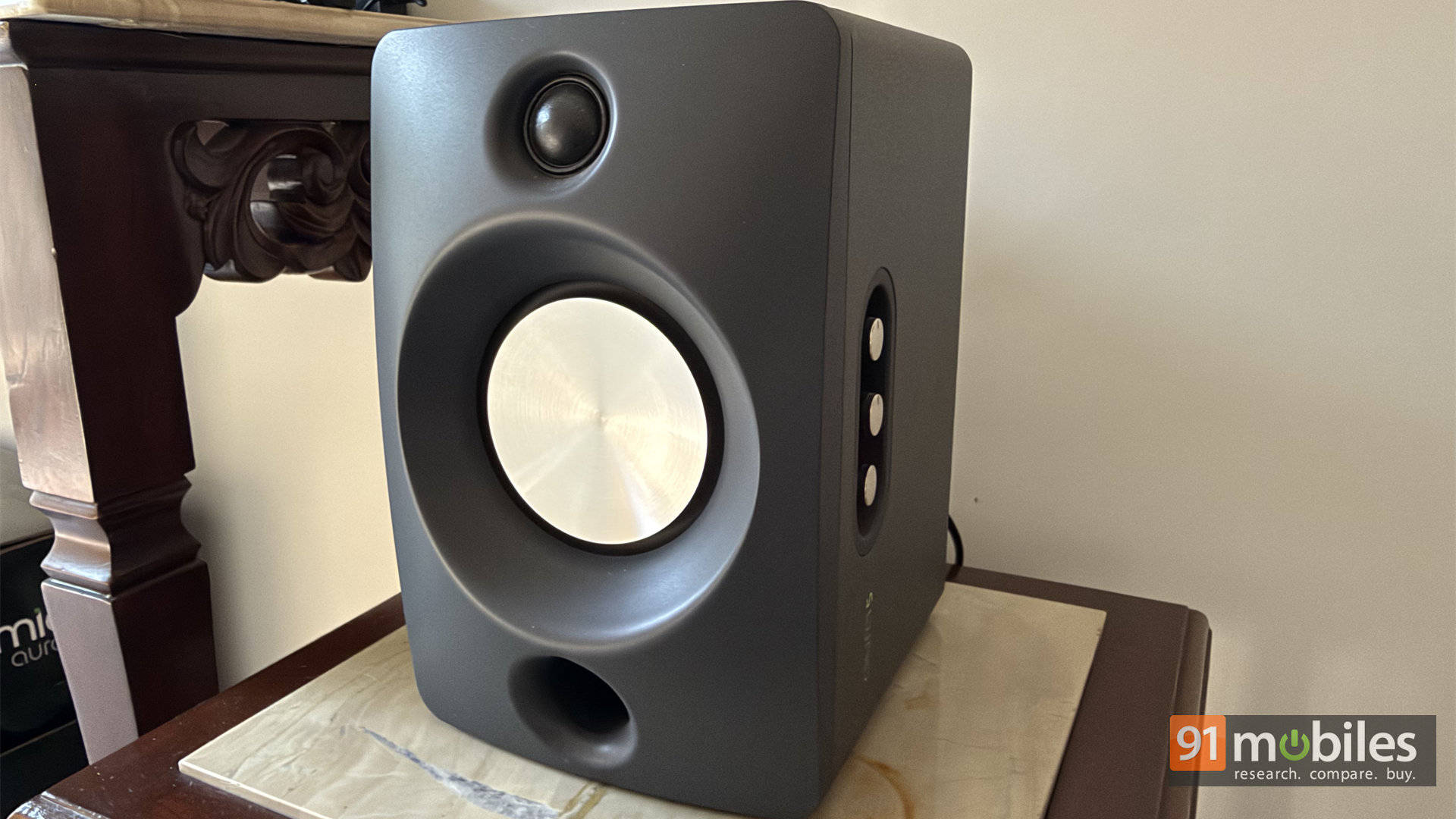
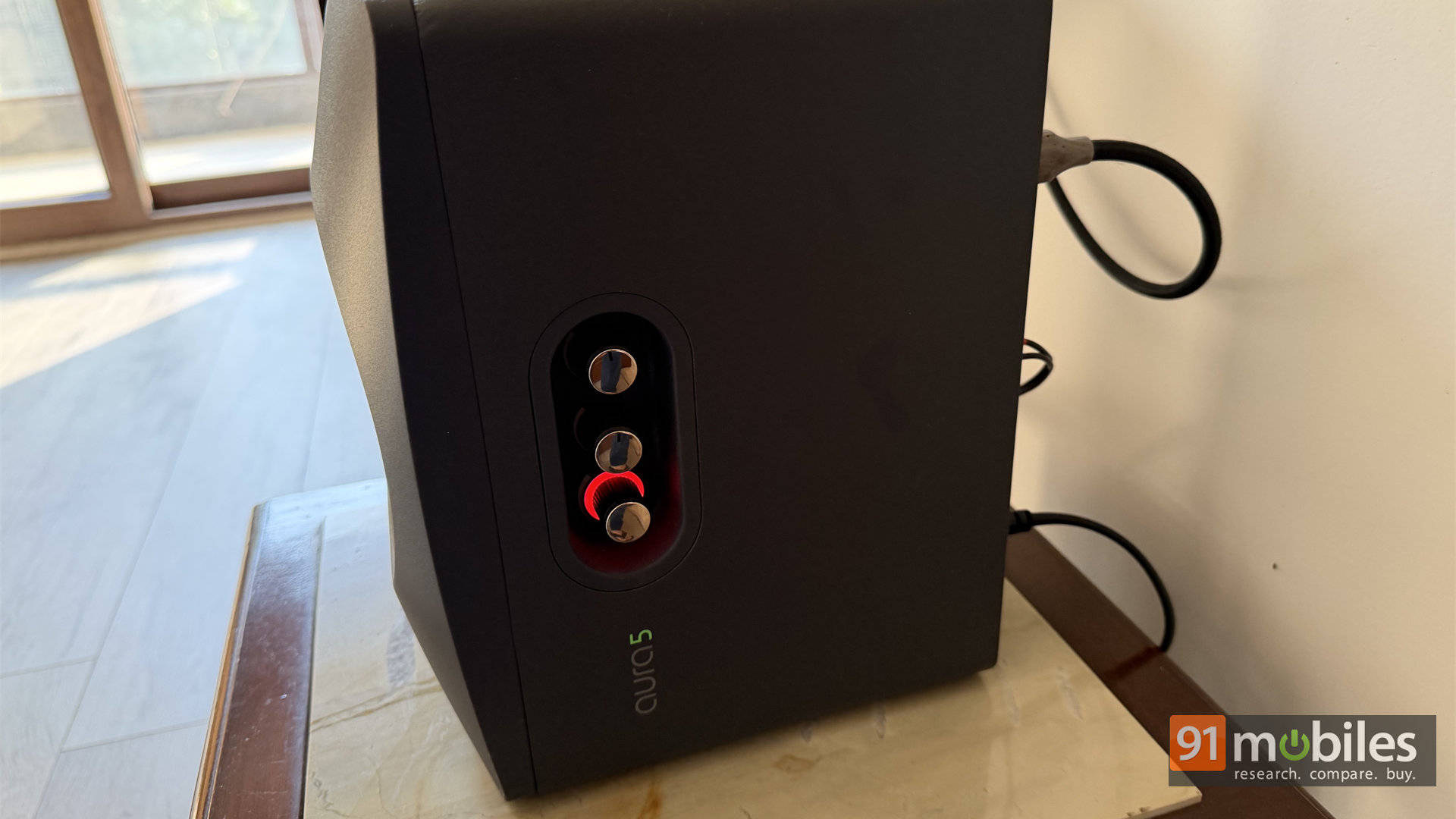
Lumio also provides three sound modes: Studio, Cinema and Groove. Studio is intended to offer a balanced sound, Cinema is tuned for movies and television, while Groove emphasises bass for music. You also get physical bass and treble controls on the active speaker, which let you adjust the sound without navigating menus.
I particularly appreciate that Lumio hasn’t restricted these speakers to a television setup. I recently had a terrace party, and moving the Aura 5 from my regular setup to the terrace was surprisingly easy. I simply connected the speakers, paired my phone over Bluetooth, and started playing music.
They sounded fantastic, and people were genuinely impressed by the kind of sound these relatively compact speakers could produce. That’s an important advantage over a conventional soundbar. These are speakers you can use with your television, gaming setup, PC, or even as a music system for a small gathering.
Not without its compromises
The Aura 5 isn’t perfect, and there are a few things worth considering before making a purchase. The most obvious limitation is the lack of a dedicated subwoofer. While the speakers deliver a respectable amount of bass, they simply cannot replicate the deep, room-filling low frequencies that a dedicated subwoofer can produce.
Space is another consideration. Each Aura 5 speaker is almost as large as an Xbox Series X, and you need enough room on either side of your television to accommodate them. While the front-facing bass ports make placement closer to a wall more practical, they still occupy considerably more space than a slim soundbar.
The placement of the connectivity ports is another inconvenience. Since all the inputs are on the right speaker, you may have to route cables across the front or behind your television to reach it. Lumio says it is working on an app to address the left-right speaker configuration, but until that arrives, this remains a compromise.
There are a few other technical limitations worth mentioning. The Aura 5 is a two-channel system and does not natively decode Dolby Digital soundtracks. Your television or source device needs to decode and downmix multichannel audio to stereo.
The Minion OLED remote is another nice touch. It displays useful information such as volume, input source, and sound mode. However, the remote is not essential when using HDMI ARC, since your television’s remote can handle the everyday volume controls.
The alternatives are worth considering
At its price point, the Lumio Aura 5 faces competition from several soundbars, including offerings from Sony, JBL, Samsung and LG. These products might appeal to buyers who prefer a compact installation, more prominent bass or dedicated surround channels.
However, if your priorities are music reproduction, stereo separation and a fuller soundstage, the Aura 5 makes a very strong argument for itself. I’d also recommend considering the Klipsch ProMedia Lumina 2.1 if you can stretch your budget by around Rs 10,000–15,000. They deliver an excellent listening experience, although you will be giving up HDMI ARC connectivity, which is one of the Aura 5’s biggest advantages.
Verdict: A refreshing alternative to the conventional soundbar
The Lumio Aura 5 is a very good pair of powered bookshelf speakers, and more importantly, a compelling alternative to conventional soundbars. They deliver fuller sound, excellent left-right channel separation, and impressive clarity across movies, games, and music. The HDMI ARC support makes them considerably more convenient than traditional powered bookshelf speakers, while the extensive connectivity options allow you to use them across multiple devices.
Yes, you compromise on bass compared with a system that comes with a dedicated subwoofer. You also don’t get surround sound or the ability to expand the system later. The placement of the connectivity ports is another minor but noticeable design inconvenience.
But those compromises are easier to accept when you consider the kind of sound these speakers deliver for their price.
At Rs 22,999, the Lumio Aura 5 is a great starting point for anyone who wants to move beyond television speakers and conventional soundbars without investing in a complicated home theatre system. If music, gaming, and a genuinely wide stereo experience matter more to you than room-shaking bass and surround sound, the Lumio Aura 5 deserves serious consideration.
Editor’s Rating: 8.5 / 10
Pros:
- Excellent stereo separation and a wide soundstage
- Fuller, clearer sound than conventional soundbars in this segment
- HDMI ARC and CEC support
- Extensive connectivity options, including USB, optical, and coaxial
- Three sound modes and physical bass/treble controls
- Versatile enough for television, desktop, and standalone music playback
Cons:
- All connectivity ports are on the right speaker, potentially complicating cable management.
- Exposed drivers need some care during placement.