We have seen the launch of some truly great budget TVs recently. From the Acer V Pro offering gamers a 120Hz display on a budget, to the Thomson Masterclass QD-MiniLED TV offering flagship tech at an affordable price, and the Lumio Vision 7 and 9 disrupting the TV space, there has never been a better time to build a home entertainment setup.
But a TV is only half the story. Most offer a simple 2-speaker setup that gets the job done initially, but if you want a truly immersive experience, you should definitely consider investing in a soundbar.
The Rs 15,000 price point currently has an interesting set of offerings. You have a range of 2.1 and 3.1 options from budget brands like Zebronics and Govo, alongside entry-level offerings from Sony, LG, Samsung, and JBL. In my opinion, the Sony HT-S20R has long been one of the better value-for-money options in this range. However, today we have a new contender for your ears: the Mivi Nex 900.
We reviewed the Mivi Fort S880 some time back (you can check out that review as well). However, the Nex 900, while similar in price to its sibling, forgoes wireless rear speakers for a more conventional wired setup. Is this a step back, or does this compromise help the system shine in other aspects?
Mivi Nex 900: Key Specs
- Total Maximum Power: 900W
- Audio Inputs: HDMI ARC, Optical, Coaxial, AUX, USB, and Bluetooth
- HDMI Input: 0
- HDMI Output (ARC): 1
- Subwoofers: 2 (8-inch drivers each)
- Surround Speakers: 2 (2.25-inch drivers each)
- Front Bar Drivers: 3 (2.25-inch drivers each)
Table of Contents
Design and build – gloss, grills, and cable management
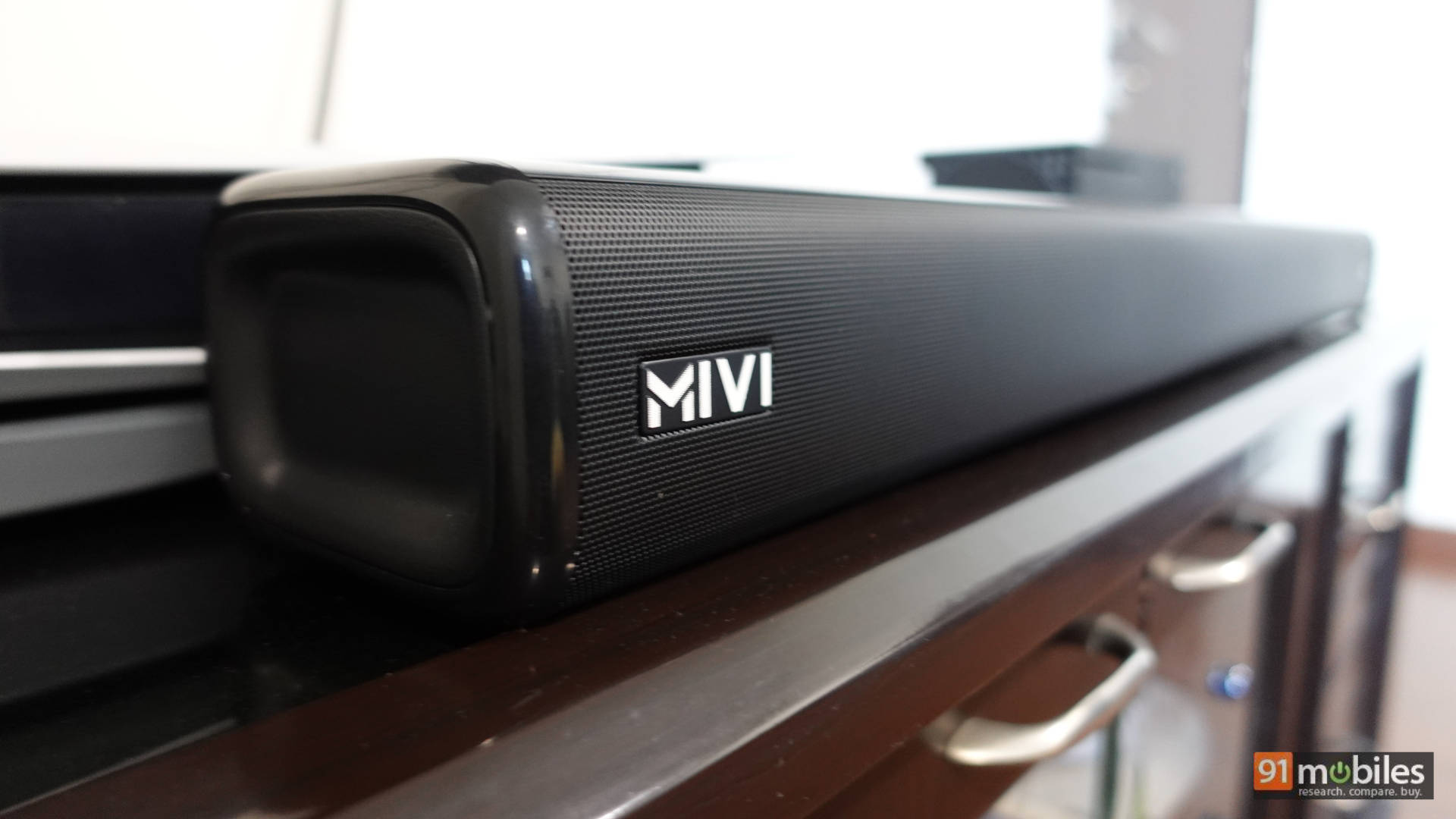
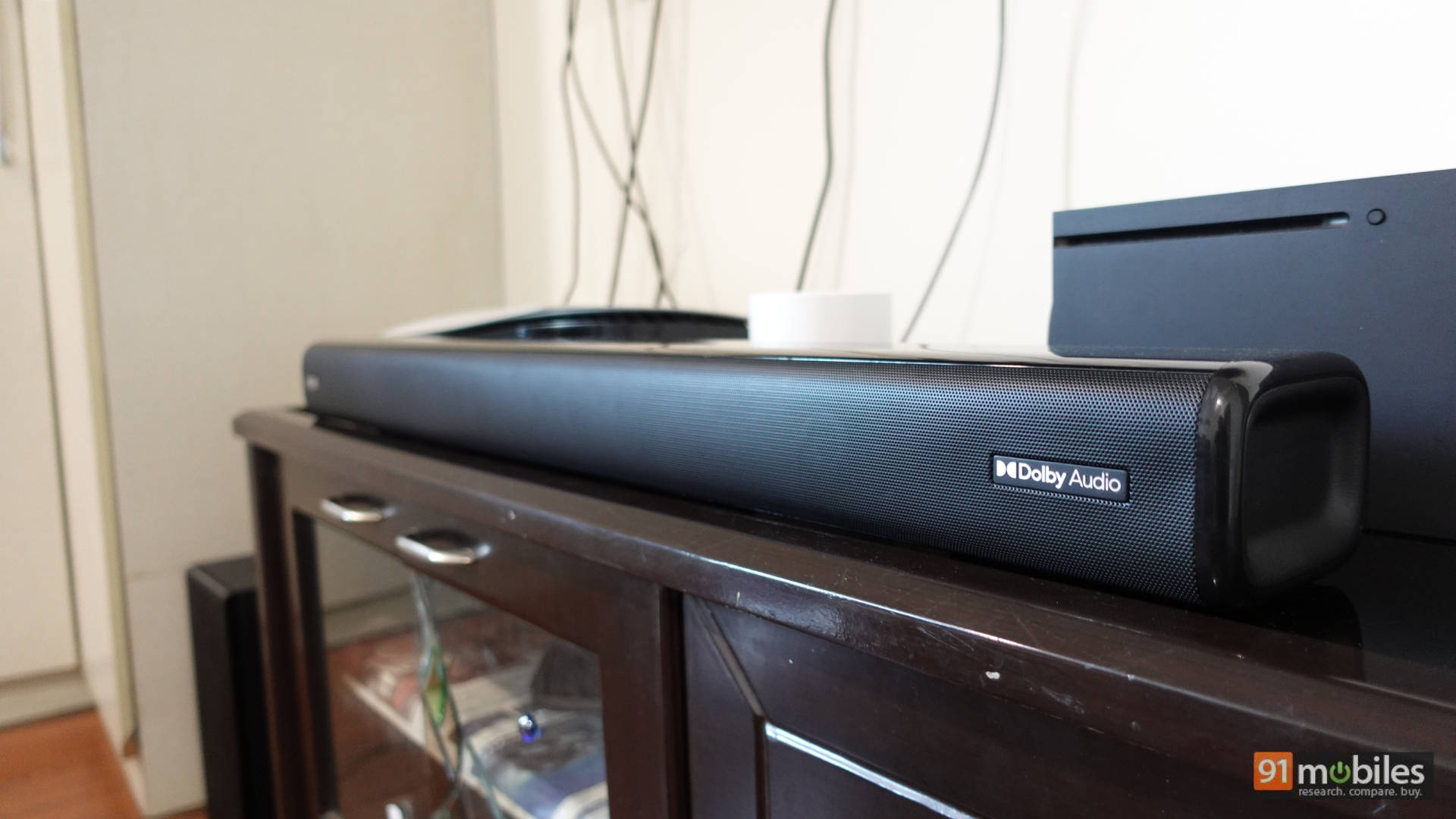
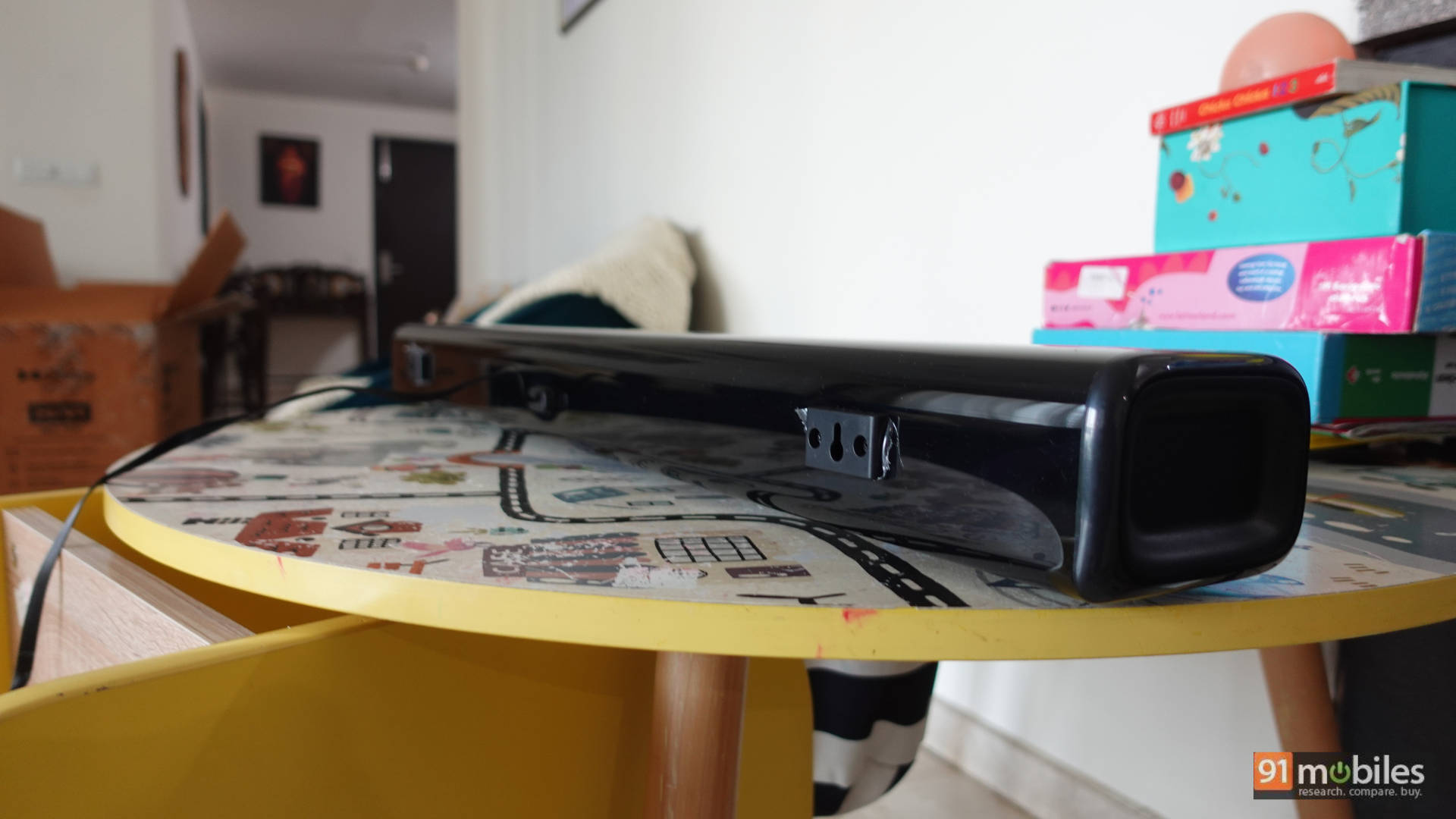
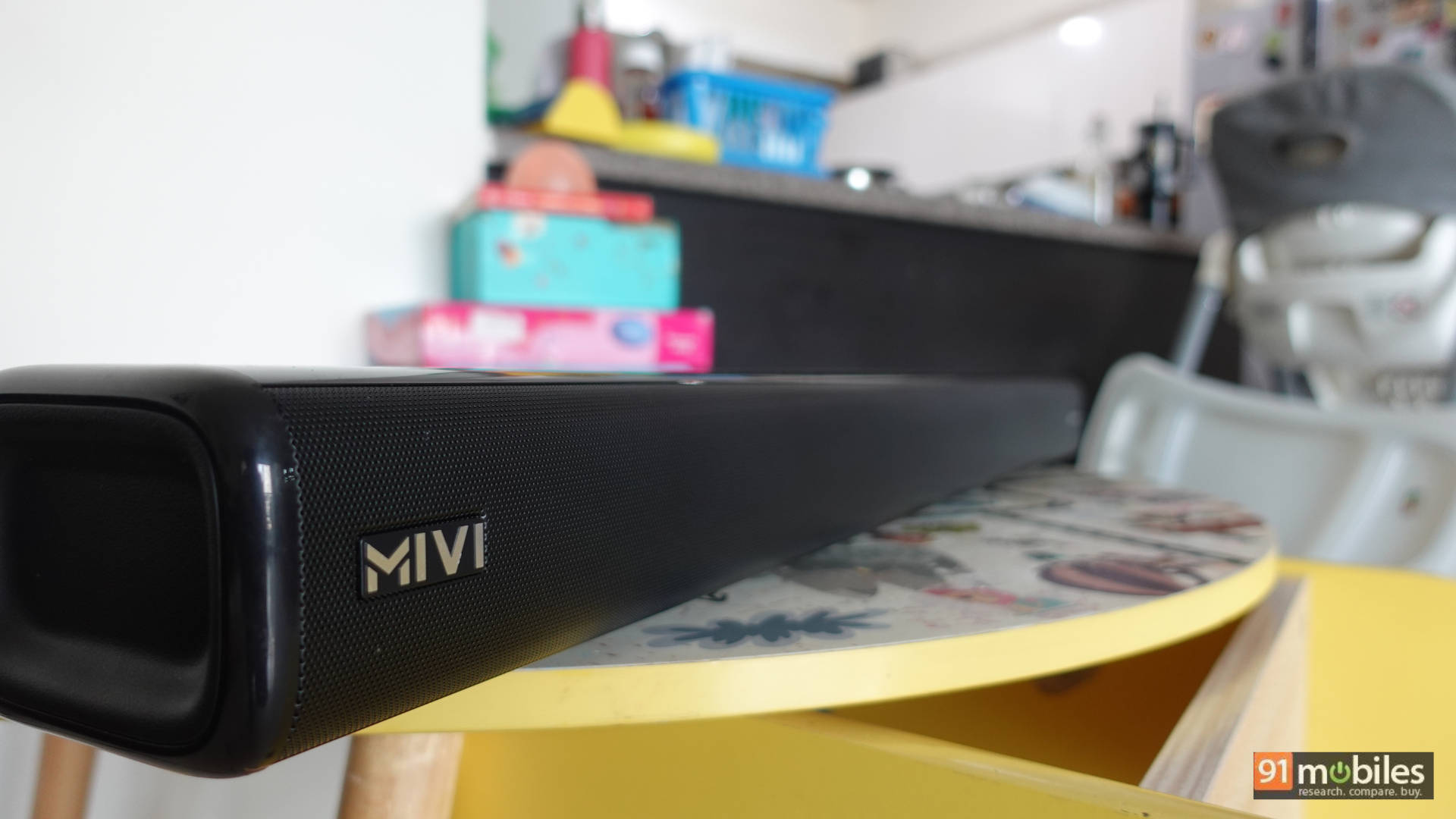
The design of the Mivi Nex 900 is a lot like the Fort S880 we saw earlier. It is a little thicker than I’d like, but it fits comfortably below my 55-inch TV and should pair well with TVs ranging from 50 to 65 inches. The top features a glossy finish, which can unfortunately be a dust and fingerprint magnet. The front sports a grill with the Mivi logo and “Dolby Audio” branding on either side.
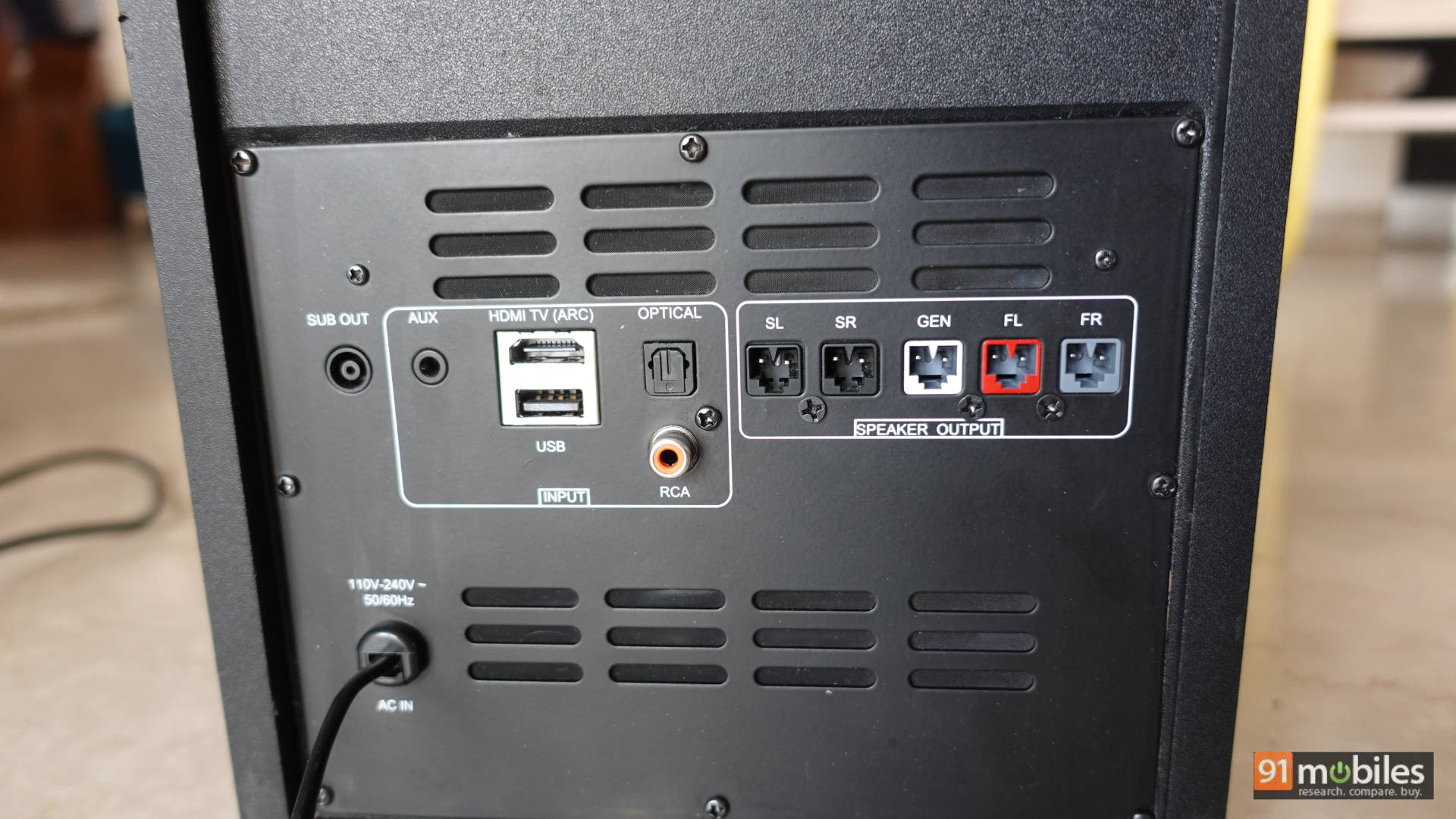
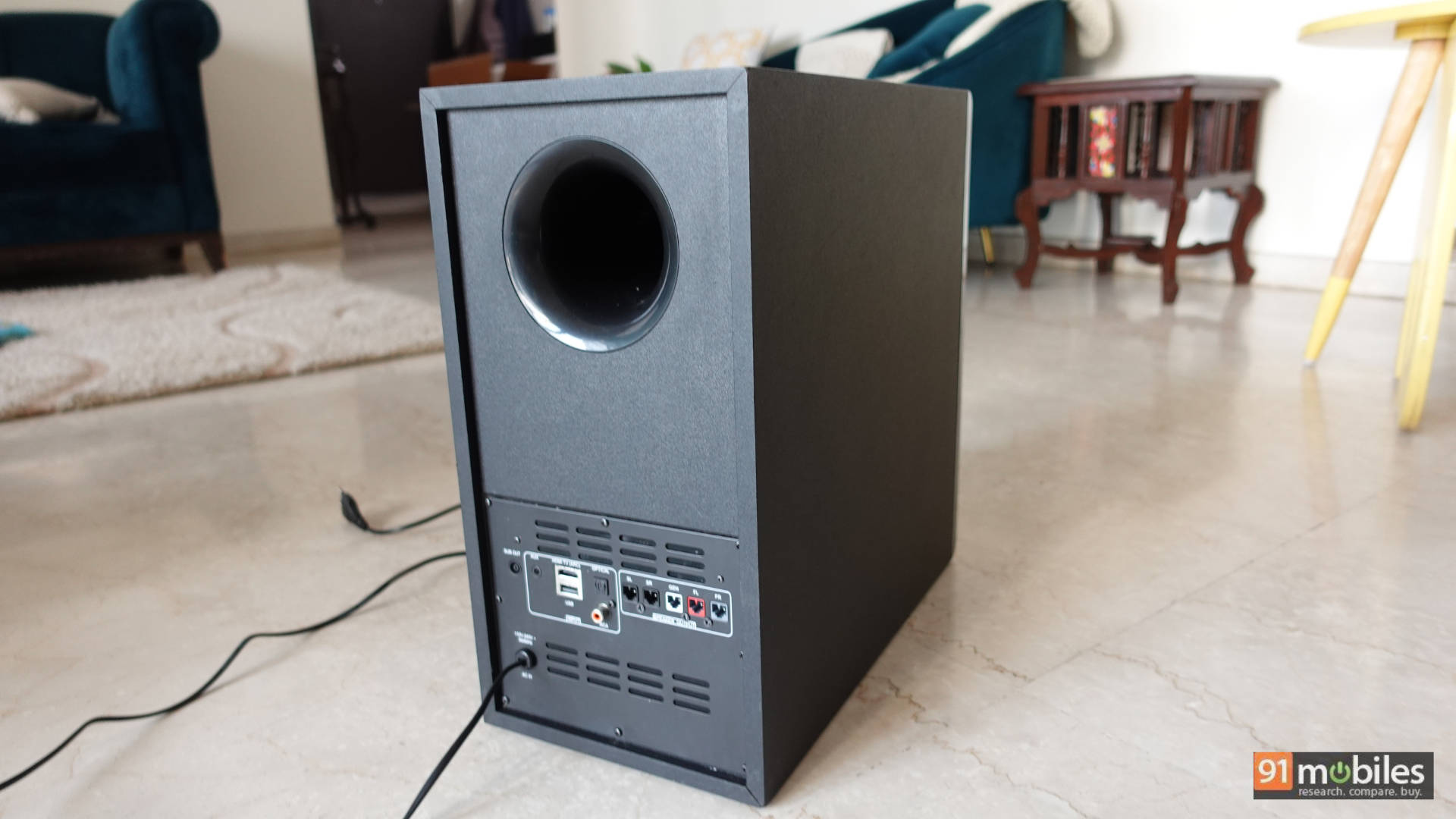
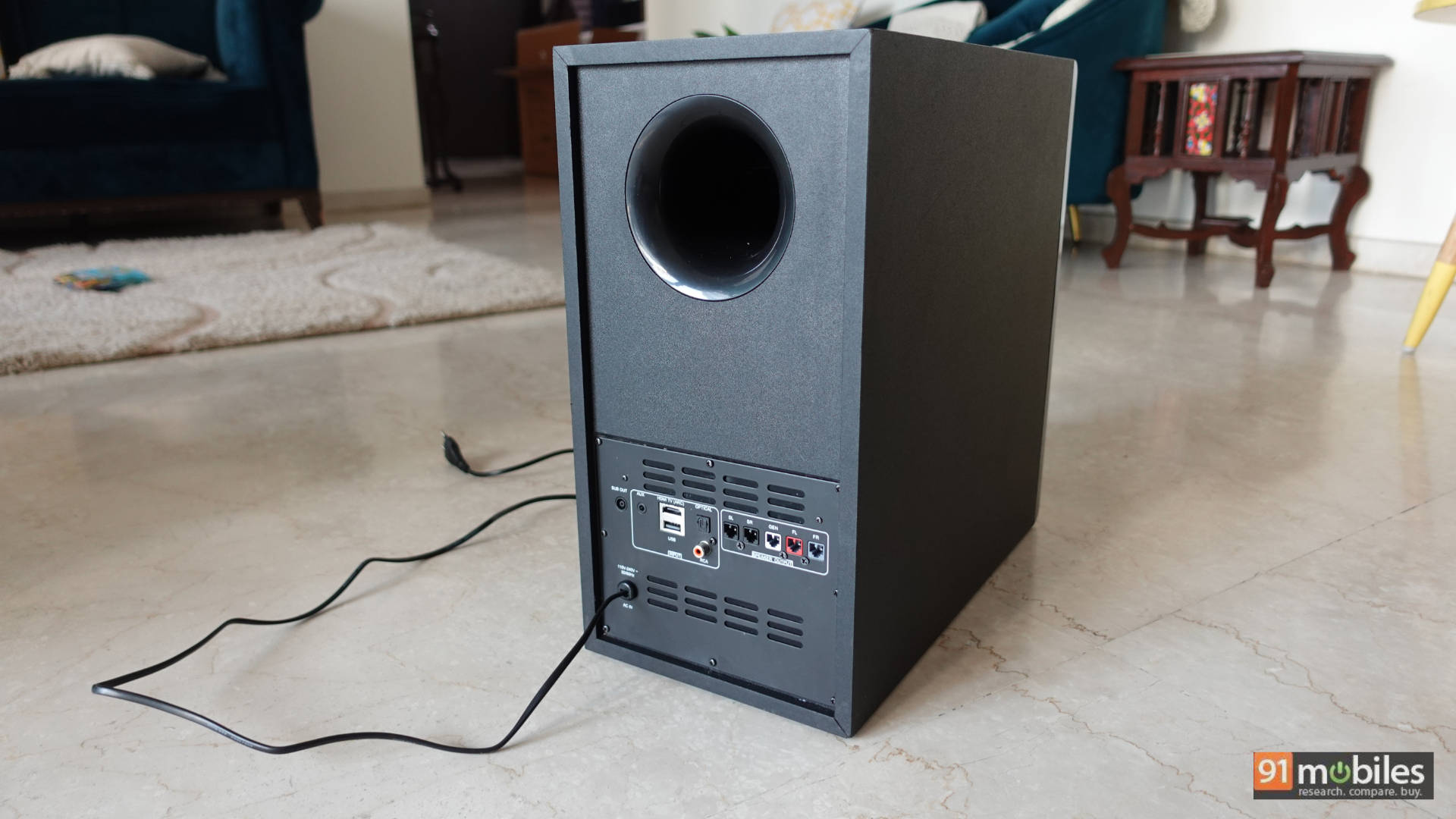
Unlike the S880, the connectivity options are located on the back of one of the subwoofers, much like the Sony HT-S20R. This placement may be a hit or miss depending on your cable management setup. Speaking of connectivity, you get a robust selection: HDMI ARC, Optical, Coaxial, 3.5mm Aux, USB, and a power port. All speaker connections – the main bar (Left, Right, and Centre channels), the second subwoofer, and the two surround speakers, also route through this primary subwoofer. It supports Bluetooth as well.
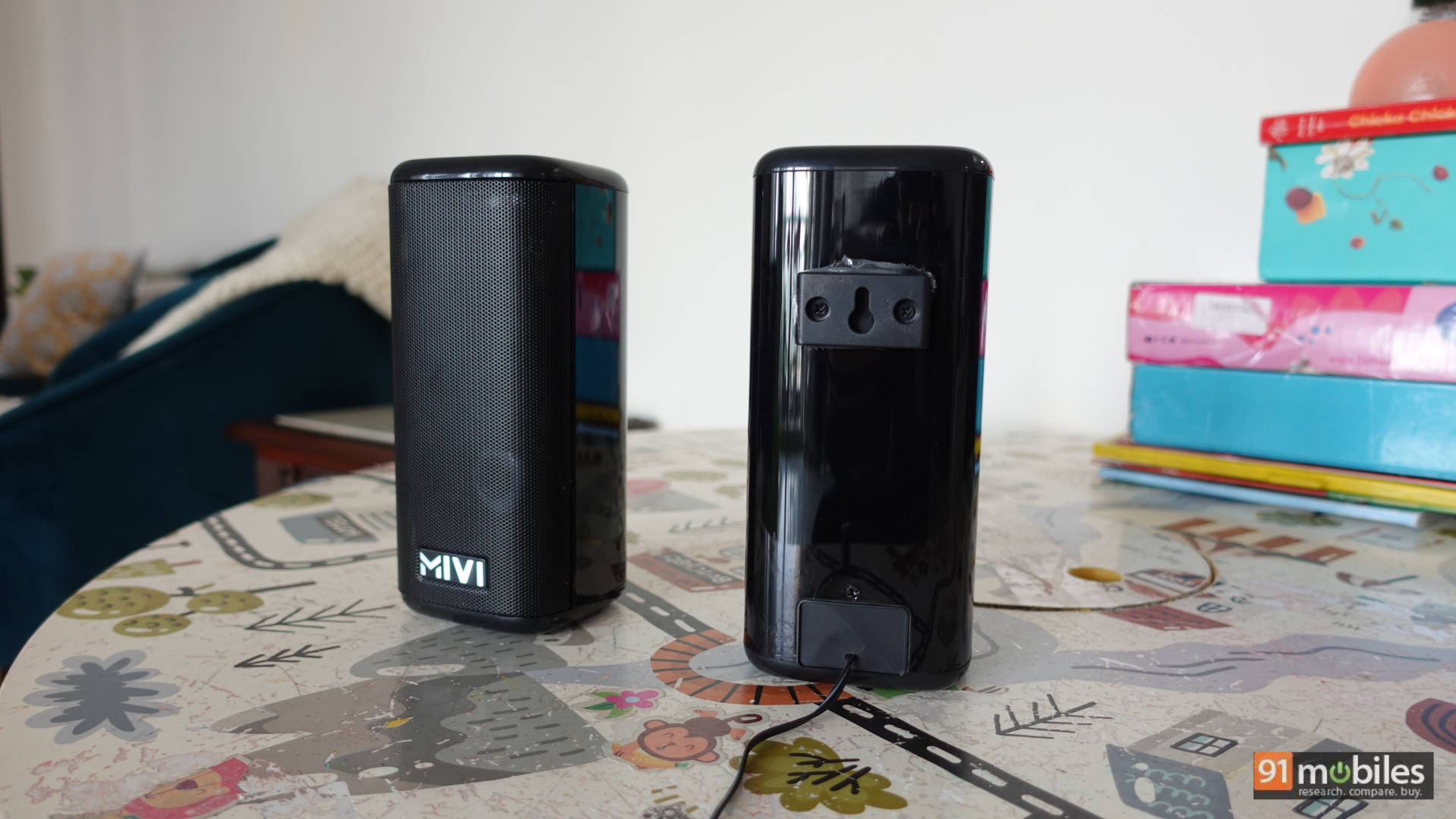
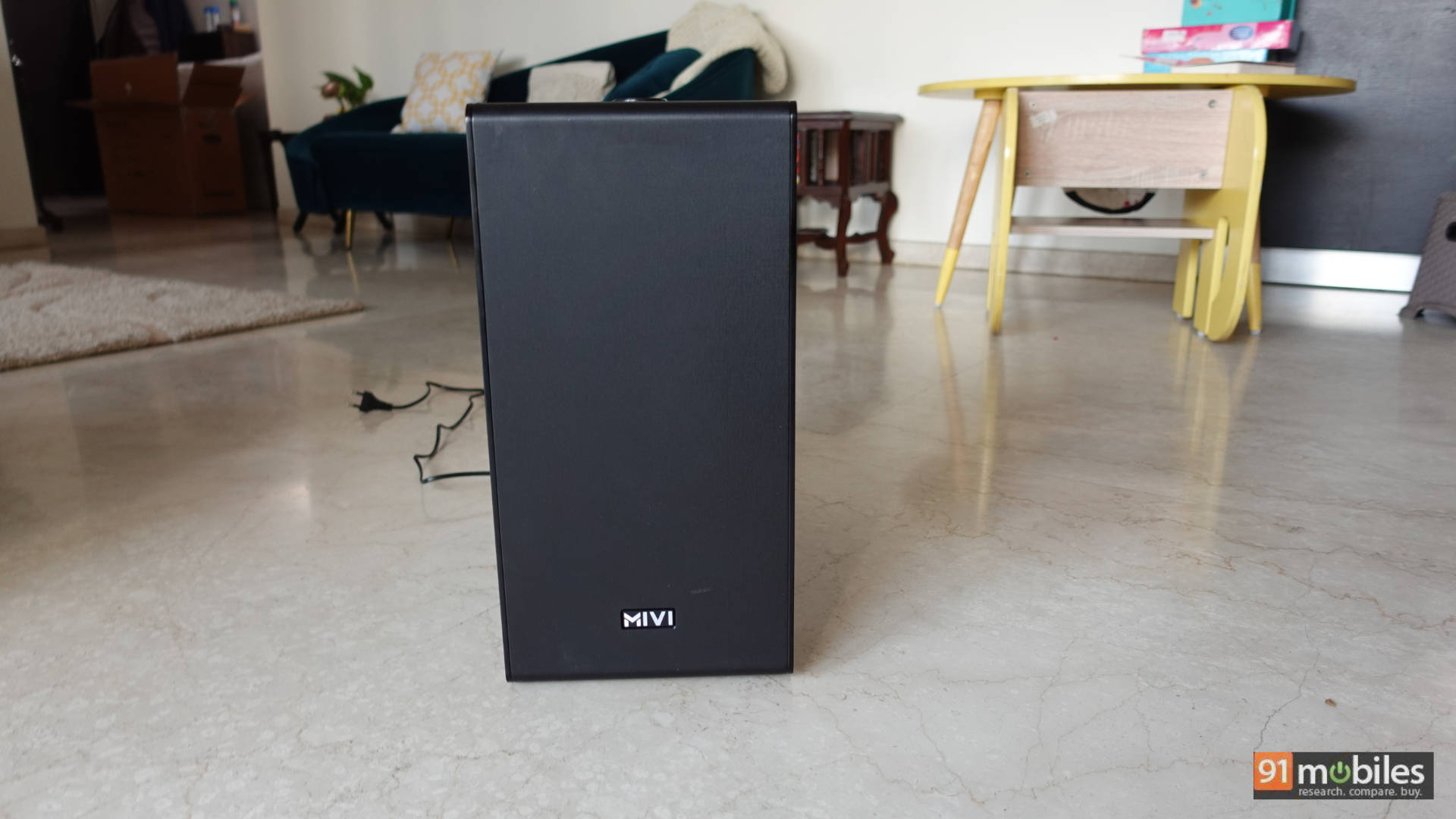
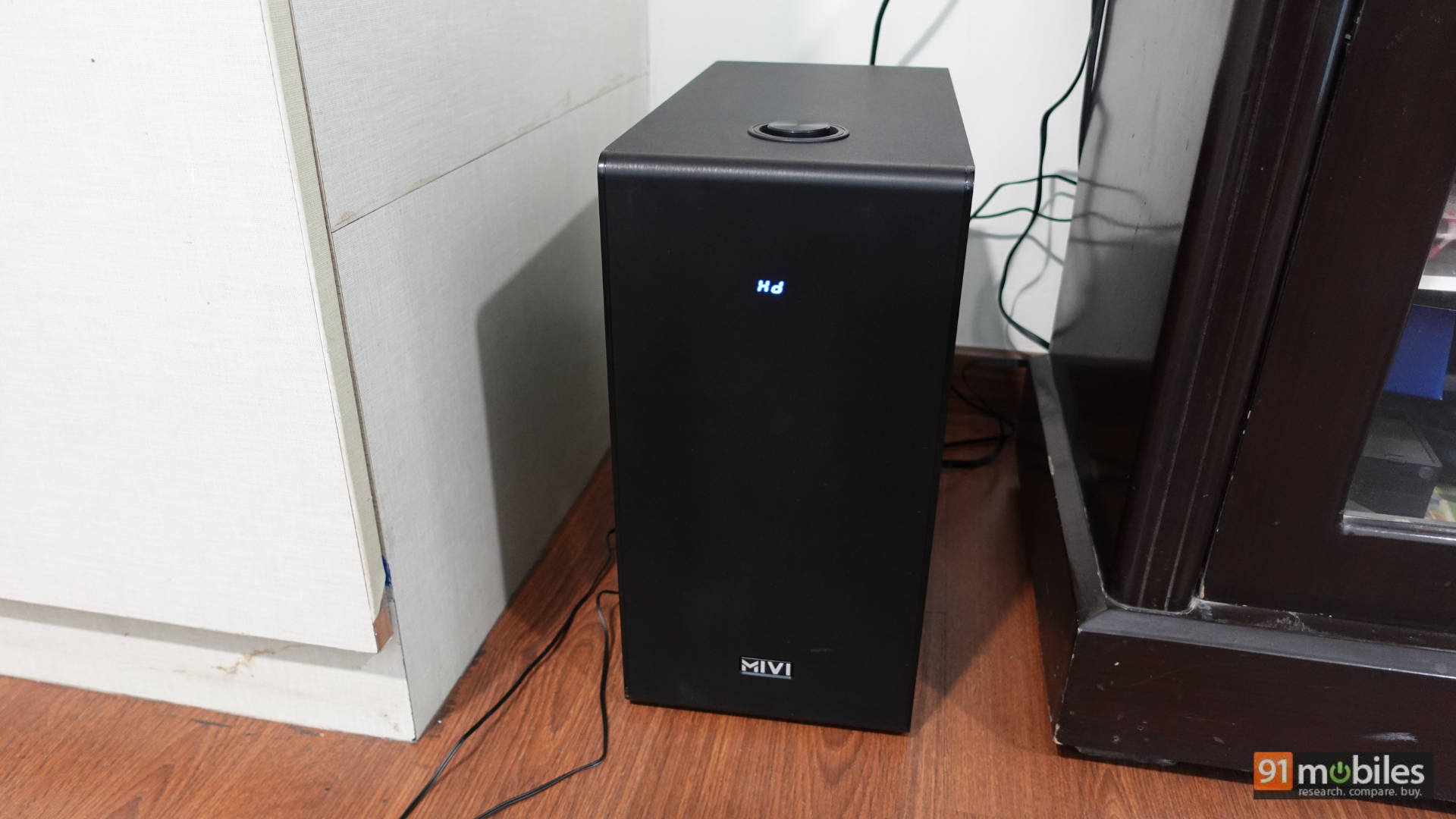
The two subwoofers are minimal, wooden-encased units with side-firing drivers. The surround speakers have a plastic build with a grill covering the driver. The surrounds connect to the main subwoofer via a super-long cable, making cable management fairly easy.
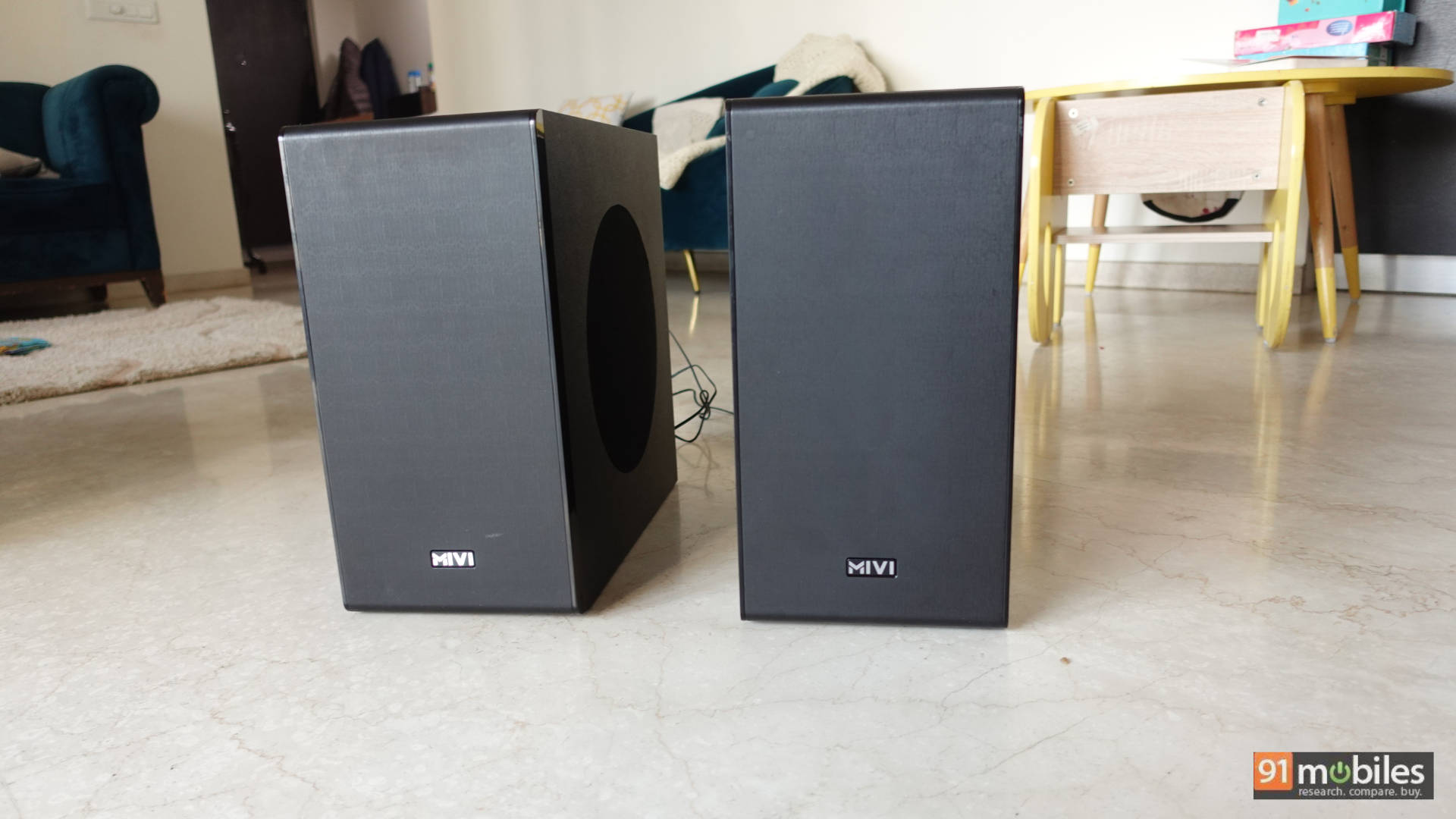
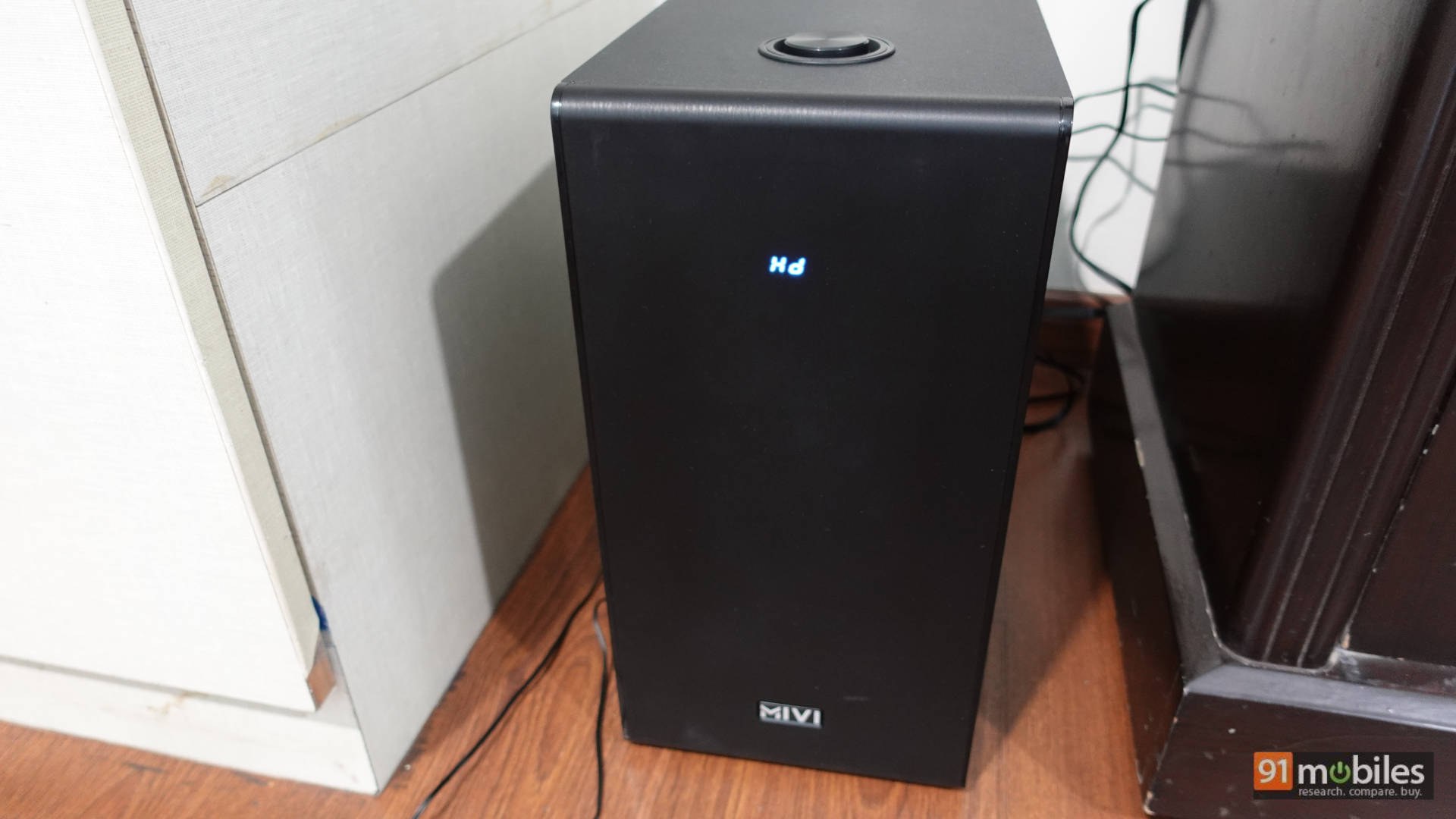
There are no physical controls on the soundbar itself. Instead, there is a cool dial on the primary subwoofer that you press to change sources and turn to adjust volume. It is unique and something I haven’t seen before.
Overall, for the price, you get a well-built soundbar with plenty of inputs. Sadly, there is no HDMI cable in the box, only an Aux cable.
Setup – plug, positioning and play
Setting up the soundbar is as simple as connecting all components to their correct ports and powering the device on. There is no AI calibration or app support, and at this price, I don’t expect any. I faced no issues setting up the bar on my own. My only recommendation is that, for the best experience, place the surround speakers at ear height, facing you, at approximately 2 feet.
Remote control: the command centre
The remote control is identical to the Mivi Fort S880. It has the standard controls: input selection, volume, a dedicated mute button, and treble/bass adjustments. You also get granular control over the levels of the centre and surround channels.
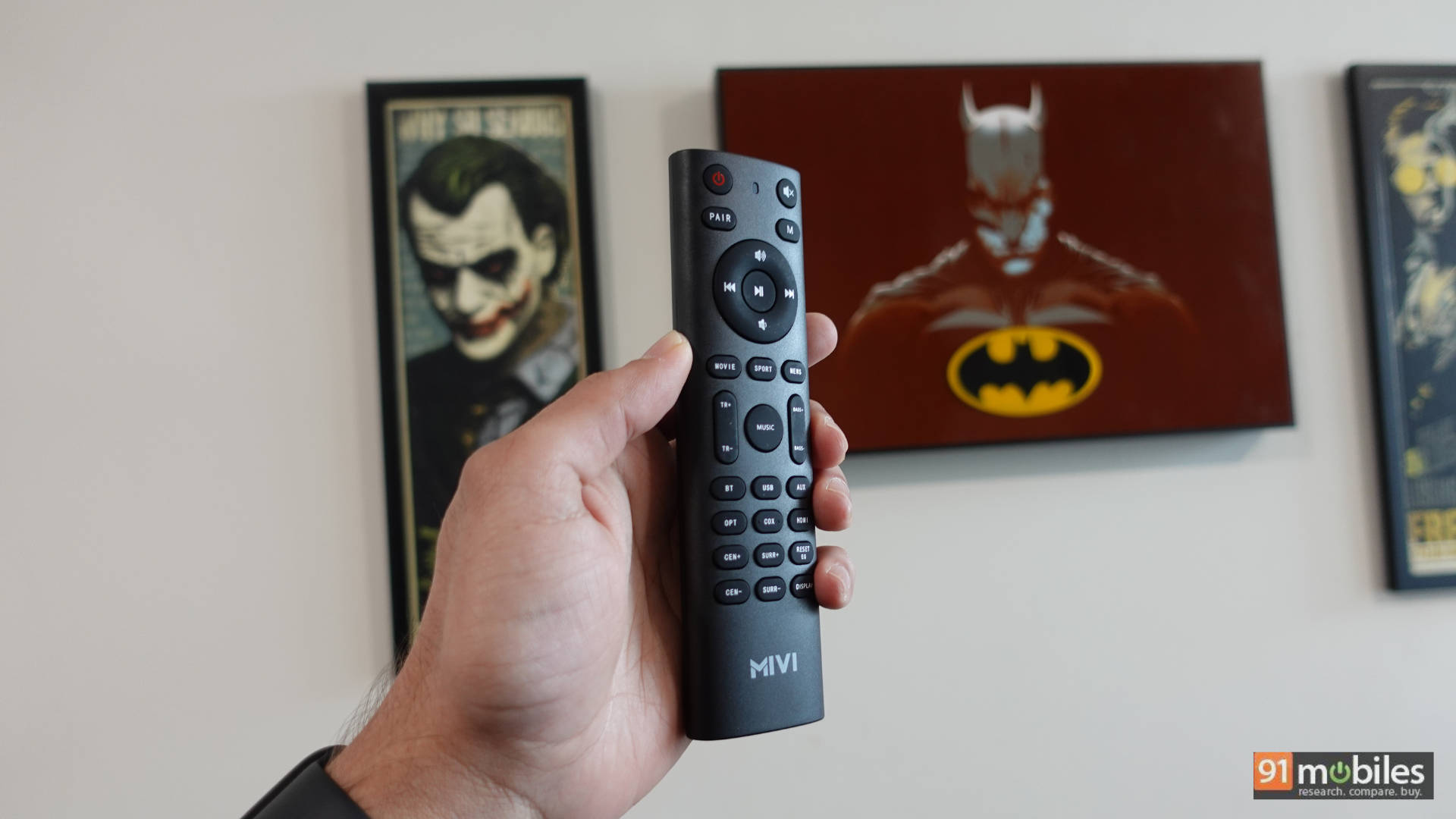
There is a handy button to reduce the brightness of the display (located on the primary subwoofer), which is great for immersive movie nights. Overall, the remote is detailed and gives you access to every function you need. While it may look cluttered because there is a dedicated button for each source and preset, I personally like the granular control it offers.
Sound performance: loud, proud, and… a little too chatty?
Let’s get the worst part out of the way first. Every time you turn on the soundbar, the speaker emits a “Power On” tone and announces the connected source. You also get a very loud “Power Off” announcement, and it announces every source switch as well. It is one of the most annoying on/off experiences I have ever had. As far as I can tell, there is no way to switch this feature off – I pressed every button on the remote trying to disable it.
As for the rest of the bar’s performance, considering the Rs 15,000 price, it is actually quite good.
The bar offers 4 EQ presets: Movie, Sports, Music, and News. I found leaving it on “Movie” gave the best overall output, but you can switch based on your needs. Since you can control the centre channel, bass, treble, and surrounds independently, I recommend the following settings for the best experience:
- Preset: Movie
- Centre Channel: +2 (Helps with dialogue clarity and centres the sound below your TV).
- Surrounds: +2 (If they are at arm’s length facing you). If they are further away, increase to +3 or +4. You should be able to hear them, but they shouldn’t be overpowering.
- Bass: +1
- Treble: Default
If you don’t like the changes, you can always press the “Reset EQ” button to return to defaults. Let’s break the performance down into three sections.
Cinema at home: the immersion test
“Clear and immersive” is the best way to describe this soundbar. Watch a movie like Top Gun: Maverick, specifically the dogfight at the end, and you will hear sound all around you. When the fighter planes rotate 180 degrees and manoeuvre, the surround speakers immediately switch up the sound to offer the perspective shift of left and right that the pilots face. It’s a subtle detail, but it adds to the immersion. When missiles are flying in all directions, you can distinctly hear the sound separation between the surround and front speakers.
The same is true for the race at the 13-minute mark in Ready Player One. With all the action on screen, you can feel the cars moving past you and coins flying in every direction. While you may feel the Left/Right channel separation is absent in quieter moments, that isn’t the case; as soon as sound moves across the film, you hear each channel kick in to represent it.
For movies, the soundbar is excellent for the price. To find “performance cons,” I’d have to compare it to soundbars twice as expensive. I did notice moments when the audio and lip movements were out of sync, but a quick restart of the bar fixed it. Even in shows like Young Sheldon or Fallout on Amazon Prime Video, the dialogue was clear and easily audible.
Music: passing the vibe check
For music, there were times when I bumped up the bass a bit to get that extra “kick.” Songs from the film Dhurandhar, like “Mwaki” by Zerb, and Diljit Dosanjh’s “Hass Hass”, all sounded great, with adequate bass and clean vocals. In fact, if you bump the volume up to 45%, details like the crackling fire at the beginning of the Mwaki music video remain quite clear.
Gaming: hearing the enemy before you see them
Gaming is the one space where I feel rear surround speakers add tremendous value, and that shines true here. In a game like Dirt 5, the corresponding rear channel kicks in if a car is about to overtake you from the left or right.
If you want to test the depth of the surround speakers, play Gran Turismo 7 and change the camera angle. When the view is inside the cockpit, you hear the engine from all speakers. Shift to the view from behind the car, and the engine noise isolates to the bar alone. A subtle detail, but one that works really well.
In horror games like Cronos: The New Dawn or the Silent Hill 2 remake, when a monster is behind you, the corresponding speaker kicks in just in time to add to the jump scare, a truly immersive experience. Even in action games like DOOM: The Dark Ages, where the background score is vital, the separation between the thuds of the guns and the grunt of the electric guitar is easily discernible.
A note on the dual subwoofers: Overall, considering the price, the soundbar sounds great. Sure, there is a bit of crackling at high volumes and random glitches, but nothing a quick restart didn’t solve. However, I have one thought: Why offer two subwoofers? I tried disconnecting the second sub and consuming content, and it sounded fine. I had to bump up the bass setting a bit to get the desired effect, but are two subs really better than one in this budget range? If you are building a high-end home theatre with two SVS subs or investing in the Nakamichi Dragon, then sure. But on a budget? It’s debatable.
The final word
Priced at Rs 14,999, the Mivi Nex 900 is a solid budget soundbar for those looking to enhance audio from a budget TV. It doesn’t sound neutral, nor is it perfect, but it offers “damn good” price-to-performance value.
You get a host of connectivity options, a remote that gives you granular control over settings, a minimalist design, and impressive sound output for movies and gaming. The channel separation and rear speaker performance shine, provided you position them correctly.
The primary downsides are the placement of inputs (all behind the primary subwoofer) and the incredibly annoying “Power On/Off” announcements that cannot be disabled.
Editor’s Rating: 8/10
Pros:
- Ample connectivity options
- Granular control over settings
- 2 Subwoofers for added bass presence
- Good overall sound output for the price
- Long cables included for rear speakers
Cons:
- “Power On” and “Power Off” announcements are loud and annoying
- No night mode