


Review Summary
Expert Rating
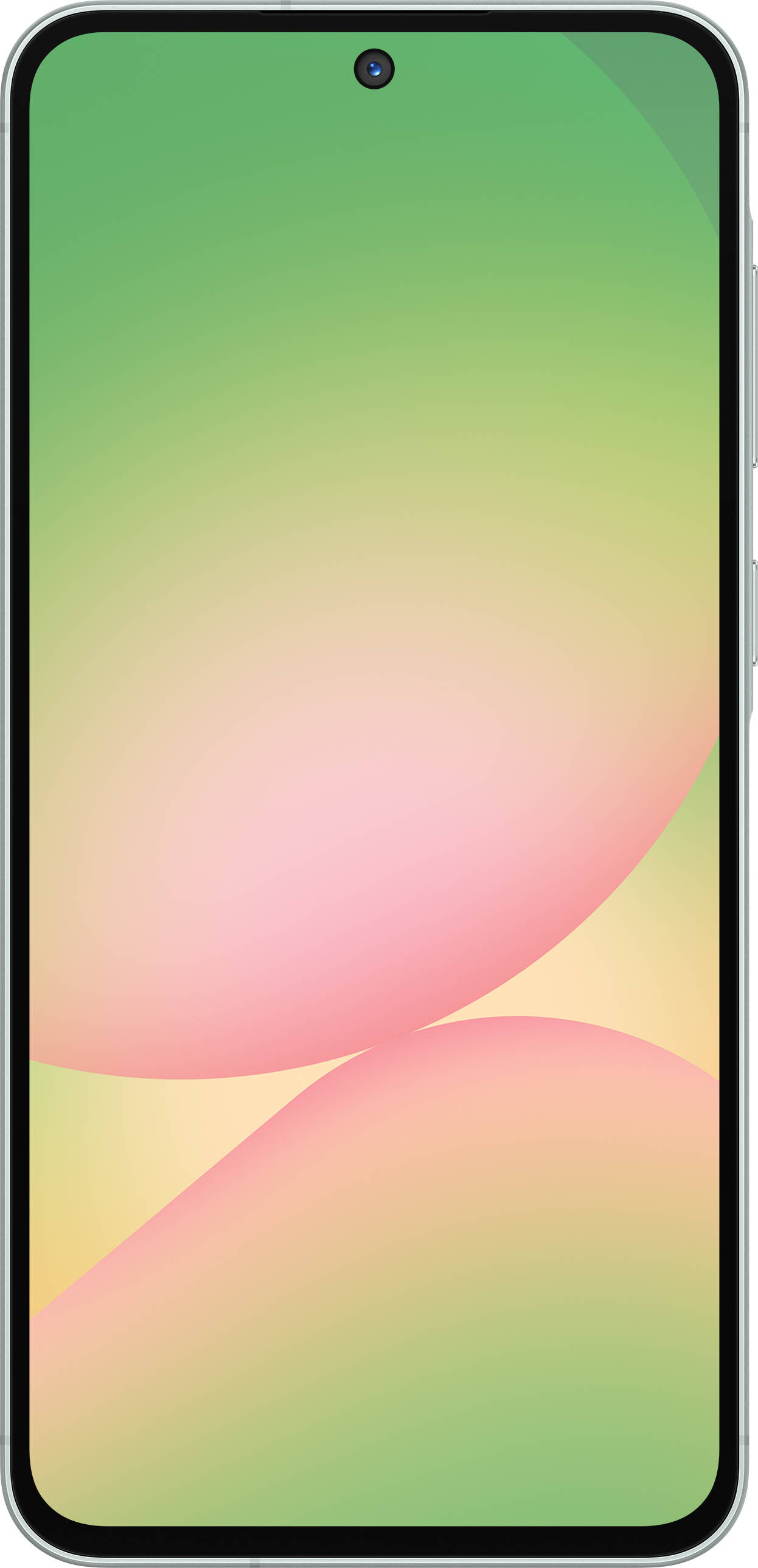
The Samsung Galaxy A56 is the latest addition to the company’s A-series lineup, designed to bring AI—marketed as Awesome Intelligence—to a more affordable price point than flagship models. While it doesn’t carry the premium branding of the Galaxy S-series, the A56 offers a solid balance of durability, display quality, camera performance, and software support, making it a strong contender in its segment. With an improved design, a six-year update promise, and some flagship-level features, does the Galaxy A56 justify its price? Let’s find out.
Table of Contents
Verdict
The Samsung Galaxy A56 successfully brings premium features to a more affordable price bracket, offering a stylish design, a capable camera system, and long-term software support. While it may not be the best choice for gaming enthusiasts, it excels in everyday use, content consumption, and photography.
Design and display
The Samsung Galaxy A56 design is almost identical to its predecessor Galaxy A55. The only differentiating aspects are the colour options and the new ‘Grouped Linear floating camera island’, which replaces the individual camera rings with a sleek, black pill-shaped module housing three sensors. This module protrudes slightly from the frame by a few millimetres and features a chrome-finished edge that doesn’t connect to the glass back panel, creating a distinctive floating effect. The protruding camera module will make the device wobble when it’s lying on a flat surface, and you will need a case to balance it to some extent.
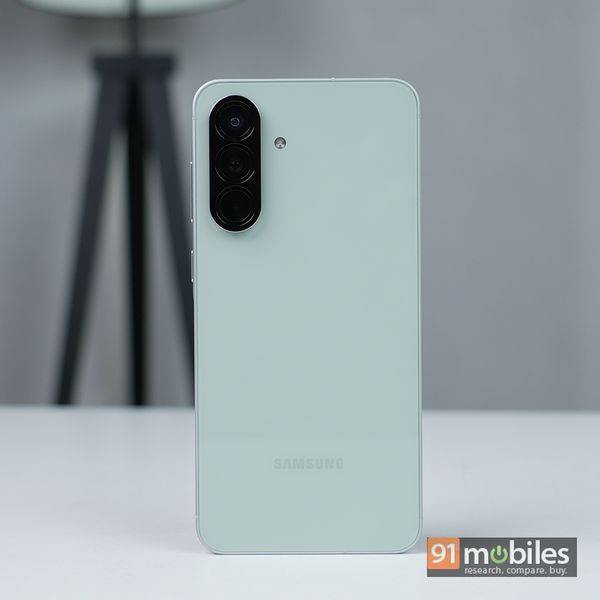
The Samsung Galaxy A56 is available in three colour options: Awesome Olive, Awesome Graphite, and Awesome Light Gray. We received the Awesome Olive variant for review, which has a subtle, refined look and does a great job of concealing fingerprints and smudges on its glossy glass panel. For durability, the handset features Corning Gorilla Glass Victus+ on both the front and back, offering enhanced resistance against scratches and drops. The handset is even IP67 water and dust resistance certified, making it more durable than the OnePlus 13R.
| Smartphone | Thickness | Weight | IP rating |
| Samsung Galaxy A56 | 7.4mm | 198 grams | IP67 |
| OnePlus 13R | 8mm | 206 grams | IP65 |
| Samsung Galaxy A36 | 7.4mm | 195 grams | IP67 |
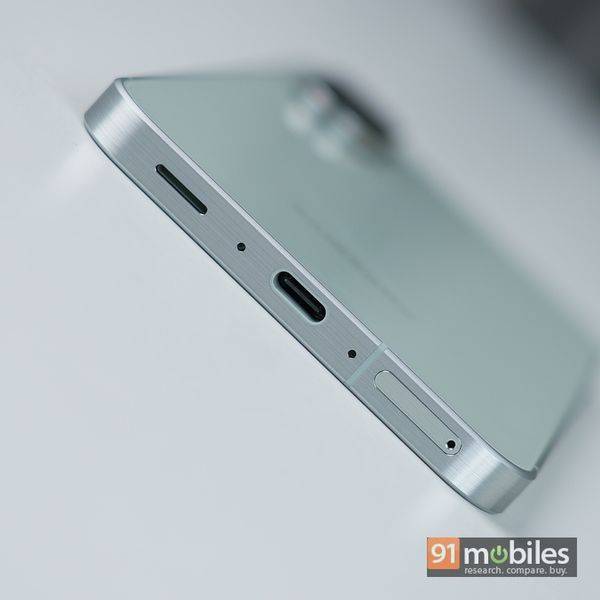
The smartphone is also lightweight and slimmer than its counterpart; however, it is not quite compact. The Galaxy A56 measures 162.2mm and 77.5mm in length and breadth respectively, making it relatively broad. Be that as it may, its flat edges make the device comfortable to hold. The phone also sports a Key Island for the volume and power buttons, making them easy to identify. As for I/O, the A56 sports a USB Type-C port for charging and data transfer on the bottom edge, along with a speaker grille. The Samsung smartphone provides stereo speaker output, and the speakers get decently loud with minimum distortion at high volume levels.
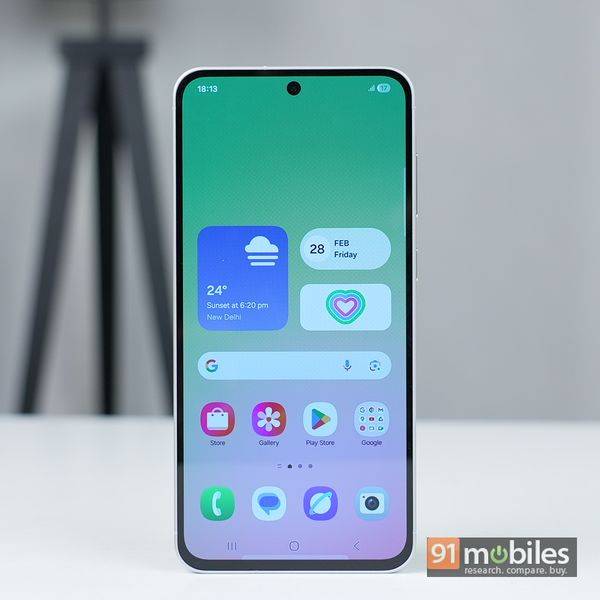
Display-wise, the Samsung Galaxy A56 sports a 6.7-inch Super AMOLED panel with FHD+ resolution, up to 120Hz refresh rate, and a centre punch-hole for the selfie camera. The display supports 1,900 nits of peak brightness, ensuring decent visibility outdoors under direct sunlight while reading text and navigating between screens. However, its viewing experience is not as immersive as say, the OnePlus 13R, which offers relatively thin bezels and superior peak brightness.
| Smartphone | Display size | Peak brightness |
| Samsung Galaxy A56 | 6.7-inch sAMOLED | 1,900 nits |
| OnePlus 13R | 6.77-inch AMOLED | 4,500 nits |
| Samsung Galaxy A36 | 6.7-inch sAMOLED | 1,200 nits |
Nevertheless, the Samsung Galaxy A56 delivers punchy, vibrant colours that can be customised to individual preferences via the settings menu. The smartphone also offers impressive viewing angles and a strong contrast ratio, ensuring deep blacks. While the smartphone lacks HDR playback for enhanced contrast, brightness, and colour accuracy, it’s Widevine L1 certified to stream content in FHD resolution, allowing Full HD streaming on platforms like Netflix.
Cameras
In terms of optics, the Samsung Galaxy A56 sports triple rear cameras with a 50MP primary sensor, a 12MP ultrawide lens and a 5MP macro unit. Up front, it sports an upgraded 12MP snapper for selfies and video calling. The handset is capable of shooting videos at UHD (4k) at 30 frames per second, with sufficient stabilisation, good auto-focus speed, and near-accurate colour rendering.









In still photography, the Galaxy A56 excels in detail preservation, natural colour accuracy, and well-balanced exposure with its primary camera. While there is room for improvement in colour accuracy, especially with ultra wides, low-light detail retention and portrait processing, the handset is a strong contender in its segment. Samsung has also incorporated a few AI features to further enhance the photography experience on the Galaxy A56. The list includes:
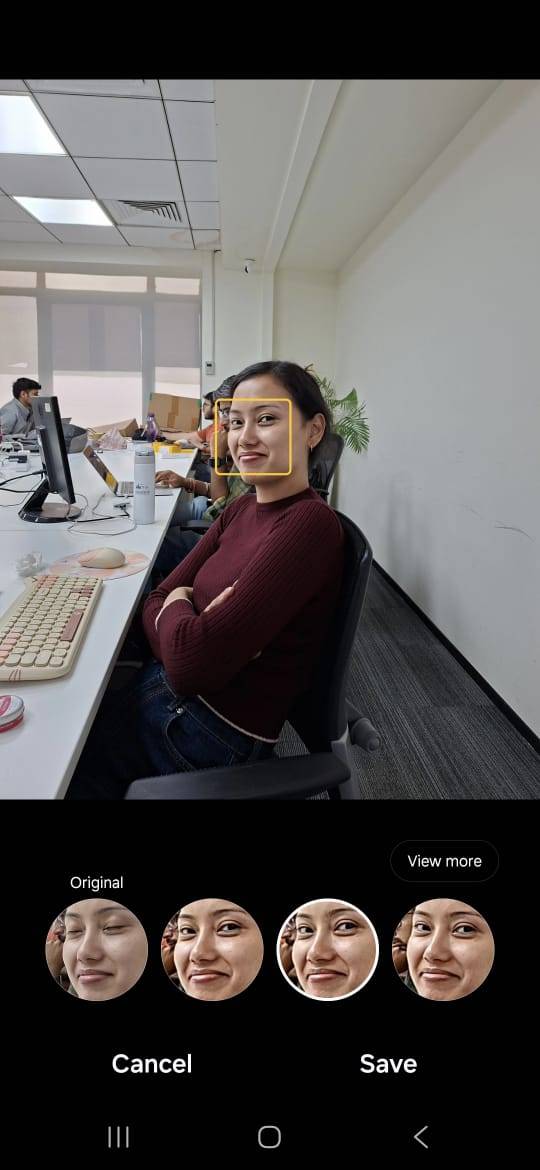
- Best Face- This feature enables users to modify the subject’s expression or open their eyes after capturing the photo. However, it is important to note that Motion Photo must be enabled in the camera app for this functionality to work. The feature works seamlessly as long as it is not a portrait.
- Object Eraser- This feature, now common on most smartphones, removes unwanted objects from images. It works as advertised; however, the results are not as polished as the Galaxy S25 series’ object eraser tool.
- Remaster- The tool performs a hygiene check on an image, refining it with improved balance and enhanced exposure. It provides subtle changes without altering the actual representation of the scene.


These are some of the standout AI-powered camera features of the Galaxy A56. While most of these tools are on-device, they do require a Samsung account for access. Additionally, the device allows users to customise an image’s background by adjusting the focal length for a bokeh effect. It also includes Auto Trim, which enables quick and easy video edits in both vertical and horizontal formats, and Instant Slow-Mo, allowing users to slow down any video with a simple long press. The end result is nothing short of impressive.
Here’s a rundown of the Samsung Galaxy A56’s camera performance against the OnePlus 13R and Galaxy A36:
Daylight


The Samsung Galaxy A56 excels in dynamic range and controlled exposure. While its colours appear slightly more vivid with a subtle bluish tint, it preserves finer details better than the OnePlus 13R. The latter crushes the shadows, but outputs vibrant images with brighter tones, enhancing exposure and revealing impressive detail even in shadowy areas.


Meanwhile, the Samsung Galaxy A36 exhibits a stronger blue cast than the Galaxy A56, making the images more contrasty. However, the Galaxy A56 outshines its younger sibling with superior detail, a more accurate representation of the scene, and good exposure for subjects in shadowy areas such as the bushes in the background on the right.
Ultrawide
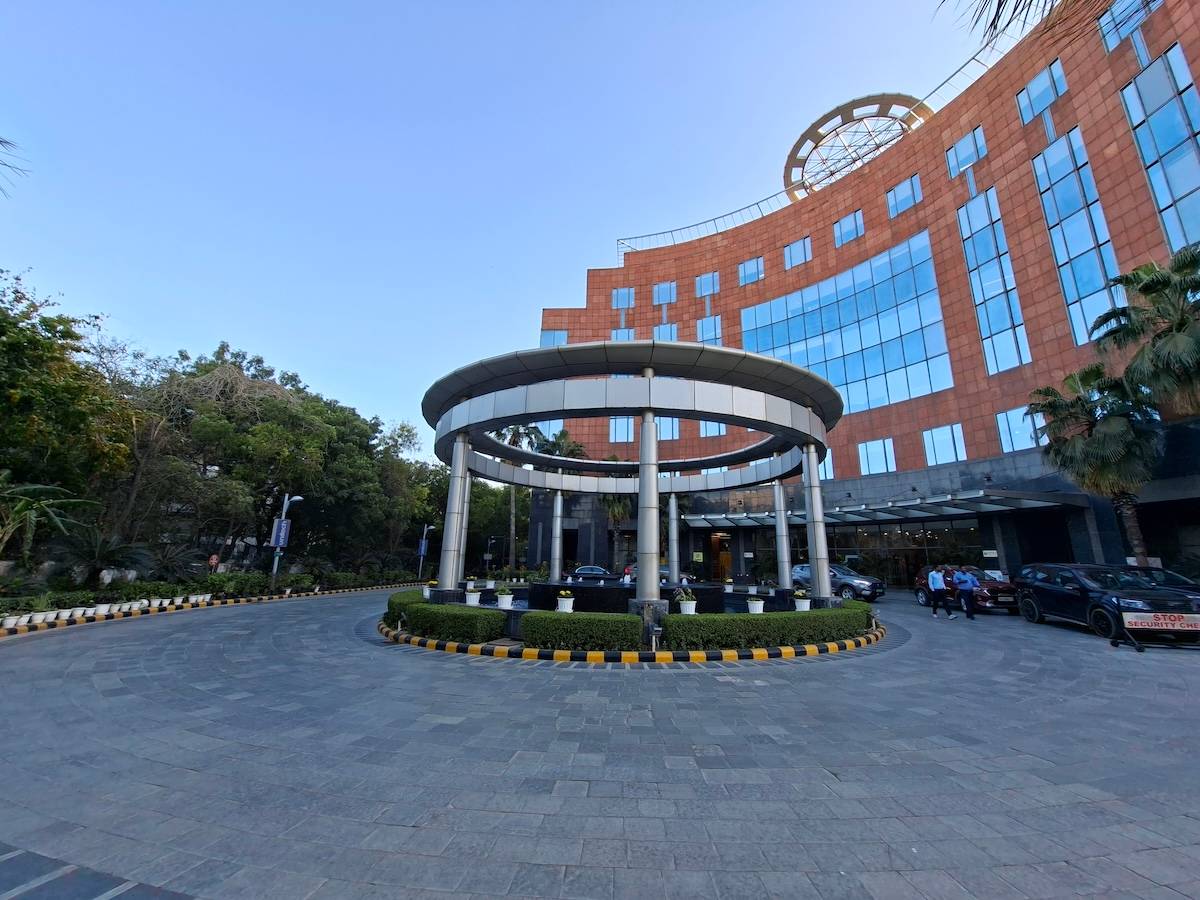

The Samsung Galaxy A56 boasts a superior 12MP ultrawide sensor, which captures more details than the 8MP ultrawide on the OnePlus 13R. The Samsung smartphone also offers vivid colours and a wider field of view. Conversely, the OnePlus smartphone follows the same colour science as its primary sensor, ensuring consistent image quality.
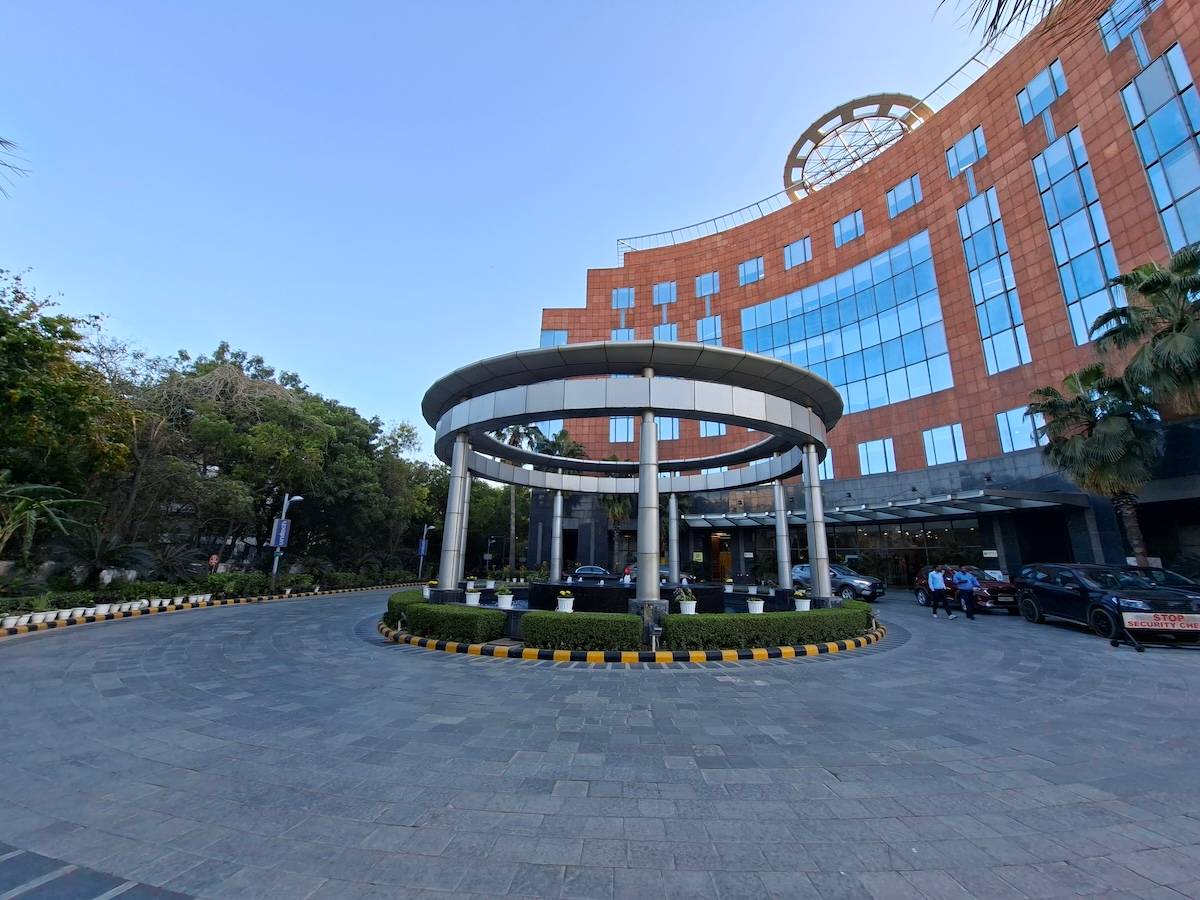
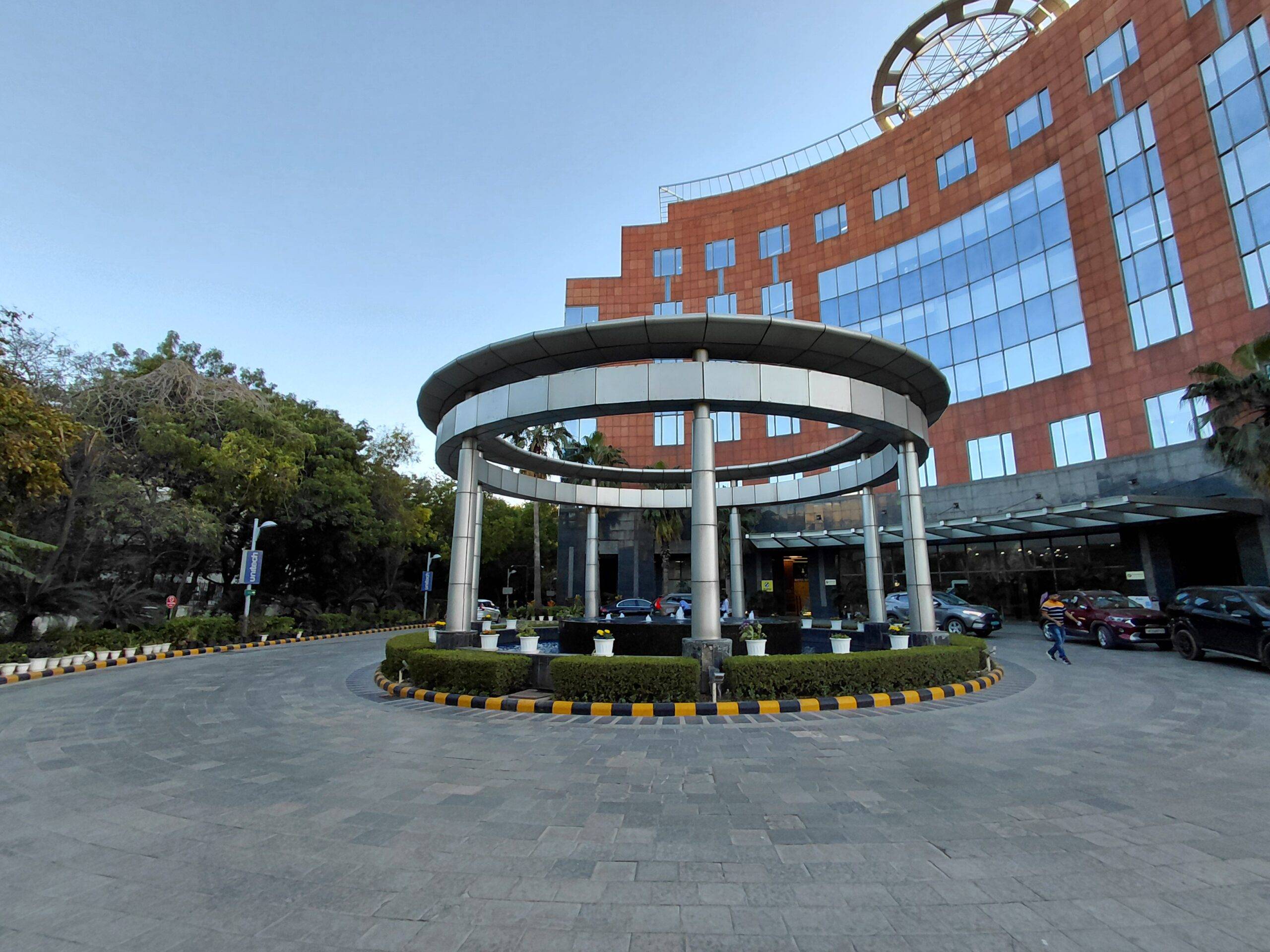
The Galaxy A56’s ultrawide camera captures more detail and offers a wider field of view compared to the Galaxy A36 as well. That said, neither smartphone achieves completely accurate colours. The more affordable A-series offering produces brighter images, whereas the A56 delivers shots with higher contrast.
Portrait


The OnePlus 13R’s dedicated telephoto lens for portraits captures more facial details than the Galaxy A56’s in-sensor zoom, which defaults to 2x magnification in portrait mode. Additionally, the OnePlus 13R excels in edge detection, reducing distortion around the subject for a cleaner separation. However, the Samsung smartphone excels with a more natural-looking bokeh effect.


The Samsung Galaxy A56 outperforms the Galaxy A36 with superior edge detection, more natural skin tones, and a refined bokeh effect. In contrast, the Galaxy A36’s portraits exhibit noticeable edge warping, washed-out colours, an overly artificial bokeh effect, and a lack of fine detail.
Selfie


The Samsung Galaxy A56 captures selfies with balanced exposure, whereas the OnePlus 13R tends to brighten images, making them more vibrant but slightly overexposed. If you prefer a more natural look with well-preserved shadows and accurate skin tones, the Galaxy A56 is the better choice. When it comes to facial detail, both phones deliver similar performance.


Against the Samsung Galaxy A36, the Galaxy A56 offers more accurate skin tones and well-balanced exposure, making it a more appealing choice. The A36 selfies, in comparison, offer inferior details and noisier background.
Low light (with night mode)


In low light, both the OnePlus 13R and Samsung Galaxy A56 activate Night Mode to improve image quality, minimising graininess compared to standard shots. However, neither smartphone does a perfect job. The OnePlus 13R excels in detail retention, while the Samsung Galaxy A56 delivers more accurate colours.


The Galaxy A56 produces more natural-looking images compared to the Galaxy A36, which boosts greens for extra vibrancy. However, the A36 falls short of capturing the finer details that the higher-end A56 manages with ease. Additionally, the A56 offers superior noise reduction and maintains consistent focus across the frame, resulting in sharper, more balanced shots.
Performance and software



Under the hood, the Samsung Galaxy A56 rocks in-house Exynos 1580 SoC paired with 8GB/ 12GB of RAM and 128GB/ 256GB storage. We received the top 12GB RAM + 256GB storage variant for review. The performance remains modest both in synthetic benchmarks and real-world tests. The handset might not entice power-hungry users but has plenty to offer to casual everyday users.
The handset handled social media scrolling, web browsing, video streaming, and casual gaming smoothly. There were no awkward app crashes or freeze issues even during multitasking. That said, the device could have been better for anything demanding like playing games such as BGMI, Call of Duty Mobile, and Real Racing 3. The A56 support inferior graphics compared to some of the other smartphones within the segment. Furthermore, its thermal efficiency remains underwhelming. After playing the three games for 30 minutes each, the Samsung smartphone heated up by almost 30 degrees Celsius.
| Smartphone | Pre-installed apps | OS updates |
| Samsung Galaxy A56 | 55 | 6 years major + 6 years security |
| OnePlus 13R | 47 | 4 years major + 6 years security |
| Samsung Galaxy A36 | 52 | 6 years major + 6 years security |
When it comes to software, the Samsung Galaxy A56 boots One UI 7 layered atop Android 15 out of the box to offer the same experience as the flagship S-series lineup. The handset also boasts some of the Galaxy AI tools to further enhance usability with Circle to Search findings for easy findings of what’s on the screen and AI Select which offers different options depending on the screen. For example, if you are watching a video, you can pull the AI Select from the sidebar and use it to create a GIF. Similarly, if text or a QR code appears, the tool can instantly search for relevant information online.
The smartphone also offers Samsung’s Pay feature and Knox security, among other things. The phone has its fair share of apps pre-installed, but most of them can be uninstalled for a relatively cleaner UI. Besides that, the A56 sets a new benchmark in the industry by offering six years of major OS and security updates in the mid-range segment. This will keep your investment relevant at least until 2031.
Battery and charging
Keeping the lights on is a standard 5,000mAh battery, which offers decent endurance. In the PCMark battery test, the Samsung Galaxy A56 achieves a commendable score of 10 hours and 4 minutes. Furthermore, during our lab tests, the handset reported a 4 percent battery drop after streaming a YouTube video for 30 minutes. Meanwhile, an intensive 90-minute gaming session—including BGMI, Call of Duty, and Real Racing 3—resulted in a 26 percent battery drop.
The battery holds up well for everyday tasks like streaming, browsing, and social media scrolling, but not for heavy usage. Regular users can expect all-day battery life, and in my experience, the device still had 20-25 percent charge remaining by bedtime after a full day of use.
| Smartphone | Battery and charging speed | Charging time (20-100 percent) |
| Samsung Galaxy A56 | 5,000mAh (45W) | 68 minutes |
| OnePlus 13R | 6,000mAh (80W) | 40 minutes |
| Samsung Galaxy A36 | 5,000mAh (45W) | 63 minutes |
The Samsung Galaxy A56 may not offer the quickest charging speeds, but it can replenish an almost-dead battery to 100 percent in approximately an hour. The device supports 45W fast charging; however, like other Samsung models, a compatible charger must be purchased separately.
Final verdict
The Samsung Galaxy A56 is priced in India at Rs 41,999, which seems a bit high for its specifications. The OnePlus 13R, which costs Rs 42,999 for its base variant, seems more feature-packed. However, the real strength of the Samsung smartphone lies in its software. The six years of major OS and security updates ensure longevity, a rare offering in the mid-range segment. Furthermore, the Galaxy A56’s advanced processing capabilities, combined with AI-powered camera tools, give it an edge, even against the more versatile camera setup of the OnePlus 13R (review).
The Samsung offering also stands out for its more durable design, with an IP67 rating and Corning Gorilla Glass Victus+ protection, and the new floating camera island, which adds a unique touch. While power users might not appreciate it, the Galaxy A56 delivers reliable performance and solid battery life for everyday use. Additionally, its display and audio setup make it an excellent choice for content consumption.
Hence, for those seeking a future-proof mid-range smartphone with long-term software support, a durable build, and AI-driven enhancements, the Galaxy A56 is a compelling option.
Editor’s rating: 7.9 / 10
Reasons to buy
- The new floating camera island adds a unique touch, and the IP67 rating makes it more resilient than some competitors.
- The 50MP main sensor performs well in daylight and low-light conditions.
- AI features to further enhance the photography experience.
- Samsung’s promise of six years of major OS and security updates ensures longevity – a rare offering in the mid-range segment.
Reasons not to buy
- Thermal efficiency could have been better.
- The Exynos 1580 chipset performs well for everyday tasks but struggles with intensive gaming and tasks.
 | vs |  |