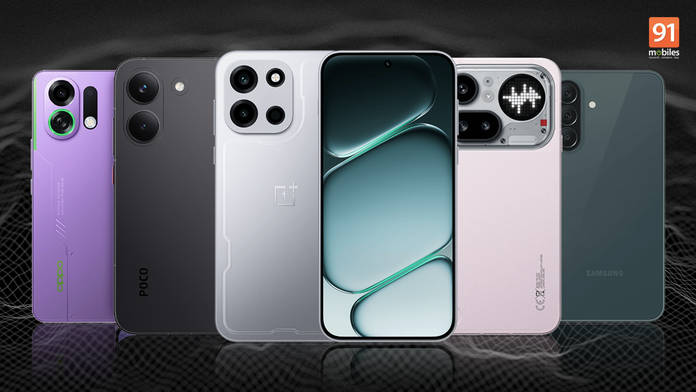
While we saw tons of new-gen top-end flagship launches late last year, brands have now started catering to the Rs 40,000 price segment with smartphones that target different use cases and niches. From releasing phones with batteries equivalent to heavy-duty power banks, to featuring feature-packed software, to gaining camera sensors found on flagships, the segment is delivering premium experiences at more accessible prices. On that note, here are our top smartphone picks under Rs 40,000 you can go for this month.
Also, if you’re aiming for a phone in the Rs 30,000 price segment this month, we’ve detailed our top recommendations in a separate article.
Note: This list is based on our in-house reviews and benchmark tests conducted under a controlled environment. You can read all about our testing methodology here.
Table of Contents
Best in day-to-day usage – OnePlus Nord 6
Launch price: Rs 38,999 (8+256GB)
OnePlus recently debuted its first smartphone in 2026, the Nord 6. Having reviewed the phone extensively, we feel the smartphone offers the most-rounded experience for daily use under Rs 40,000. Even though it utilises the Qualcomm Snapdragon 8s Gen 4, the same chipset we’ve already seen on a couple of phones last year at lower price points, OnePlus’ mature tuning at both the chipset and software levels ensures extremely smooth performance for daily use.

| Pros | Cons |
| Excellent day-to-day and gaming performance | Polycarbonate frame and back make it less premium |
| Two-day battery life | Runs slightly warm during gaming |
| Improved durability with IP69K and MIL-STD-810H | |
| Strong camera performance |
Best in gaming – POCO X8 Pro Max
Launch price: Rs 42,999 (12+256GB)
Featuring the flagship-grade MediaTek Dimensity 9500s, the POCO X8 Pro Max (review) is the direct answer to the higher-priced iQOO 15R and OnePlus 15R, both of which are powered by the Qualcomm Snapdragon 8 Gen 5. In benchmarks, such as AnTuTu, all the phones achieve similar scores of around 30,00,000, an impressive feat, particularly for the X8 Pro Max, since it’s the most affordable of the bunch. With a large 5,800 mm2 vapour chamber and an 11,000 mm2 graphite layer on board, it can reduce the temperature by up to 3 degrees Celsius.



| Smartphone | FPS | Temp increase | Battery drop |
| POCO X8 Pro Max | 39.7 fps | 1.9° C | 4 percent |
| iQOO 15R | 39.7 fps | 7.1° C | 3 percent |
But how well does it fare in gaming? We specifically tested that in our dedicated POCO X8 Pro Max gaming review by pitting it against the iQOO 15R. When playing BGMI at Ultra HDR graphics and HDR frame rate settings, both phones offered an average frame rate of 39.7, but the POCO X8 Pro Max clearly took the lead in thermal efficiency by recording a temperature increase of just 1.9 degrees Celsius compared to 15R’s 7.1 degrees Celsius rise during 30 minutes of gameplay. Although the POCO phone loses one percent more battery, its superior thermal management and ability to stay cool during extended gaming sessions make it the better choice overall.
| Smartphone | FPS | Temp increase | Battery drop |
| POCO X8 Pro Max | 56.5 | 2.7° C | 5 percent |
| iQOO 15R | 58 | 7° C | 4 percent |
A similar trend is seen in COD: Mobile, where the POCO X8 Pro Max maintains an average frame rate of 56.5 FPS at maximum graphics settings. This is only marginally lower than the iQOO 15R’s 58 FPS. However, the POCO delivers significantly better thermal performance, with its temperature rising by just 2.7 degrees Celsius after 30 minutes of gameplay, compared to nearly 7 degrees Celsius on the iQOO 15R.
Even though the Android 16-based HyperOS 3 on the POCO X8 Pro Max may not be as fulfilling or complete as OriginOS 6 or OxygenOS 16, the phone stands out as a reliable pick for those who’re into mobile gaming, especially since it packs a huge 9,000mAh battery for hours of uninterrupted gameplay.
| Pros | Cons |
| Bright AMOLED display | Cameras need improvement |
| Excellent performance | Software feels cluttered |
| Effective cooling system | |
| Stupendous battery |
Alternate option
OPPO K13 Turbo Pro – Featuring a built-in active cooling fan, the OPPO K13 Turbo Pro is a dedicated gaming smartphone that goes all-in on gaming features and aesthetics. It pairs the powerful Snapdragon 8s Gen 4 chipset with LPDDR5X RAM, UFS 4.0 storage, and a large 7,000 mm² vapour chamber, delivering smooth, efficient performance even at the highest graphics settings.
Best in software – Samsung Galaxy A37
Launch price: Rs 41,999 (8+128GB)
The Samsung Galaxy A37 (review) may not be chasing big numbers with regard to battery capacity, benchmarks, or cameras, but we feel it stands out for its intuitive, mature, and distinctly designed software. Running on the latest One UI iteration Samsung has to offer, One UI 8.5 on the Galaxy A37 is a one-stop solution for anyone looking to bag a feature-rich interface.
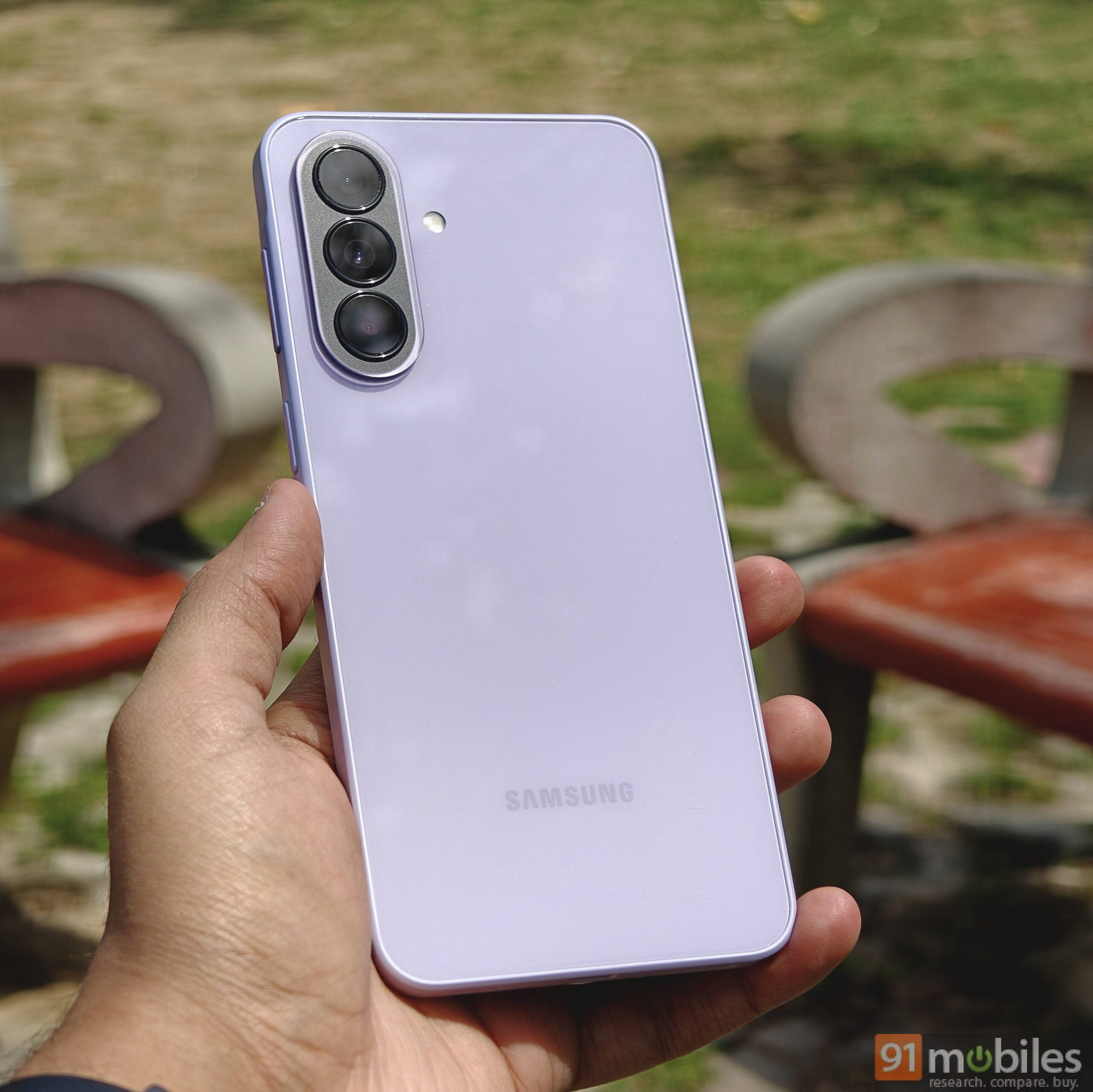
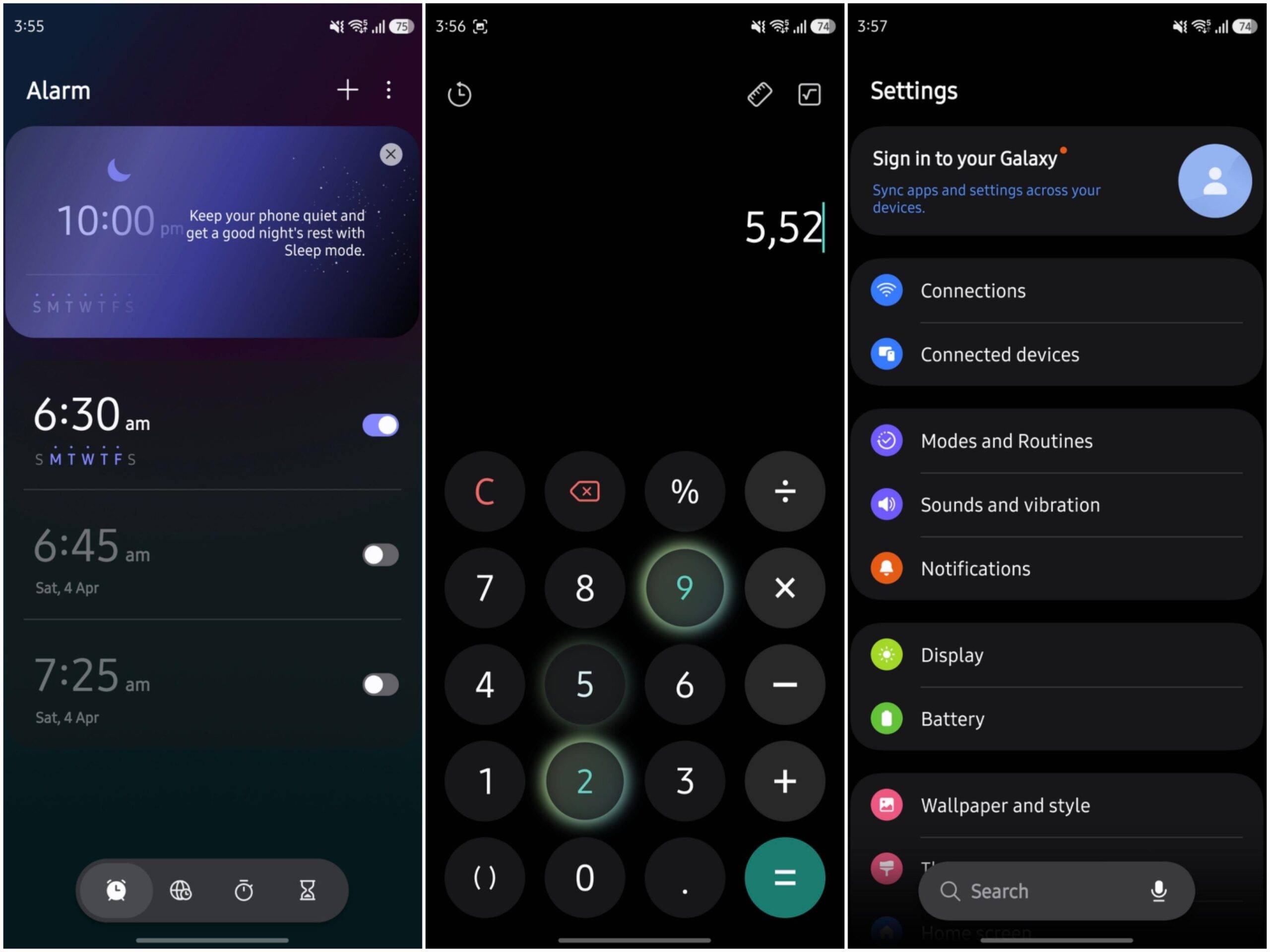
Even though the phone misses out on several Galaxy AI features, the entire customisation and feature suite from the Galaxy S26 series is available on the Galaxy A37. From changing the lockscreen clock’s design and position to revamping the entire quick settings panel’s layout to even customising the alarm screen, One UI 8.5 doesn’t hold back when it comes to offering versatility. On top of that, One UI 8.5 once again emphasises one-handed use by moving the search bars and menus in first-party apps to the bottom for easy reach.
Then comes GoodLock, which further unlocks a myriad of features and customisation options, such as creating your own lockscreen and AOD clock from scratch, adding background images to quick settings toggles, switching the look of the recents page, and much more. On top of that, the Galaxy A37 is promised to get six OS upgrades, the highest in its price class.
| Pros | Cons |
| Vibrant display | Performance isn’t the best |
| Strong scratch resistance | Ultrawide needs improvement |
| Mature, long-supported software | |
| Reliable primary camera |
Best in cameras – Nothing Phone (4a) Pro
Launch price: Rs 39,999 (8+128GB)
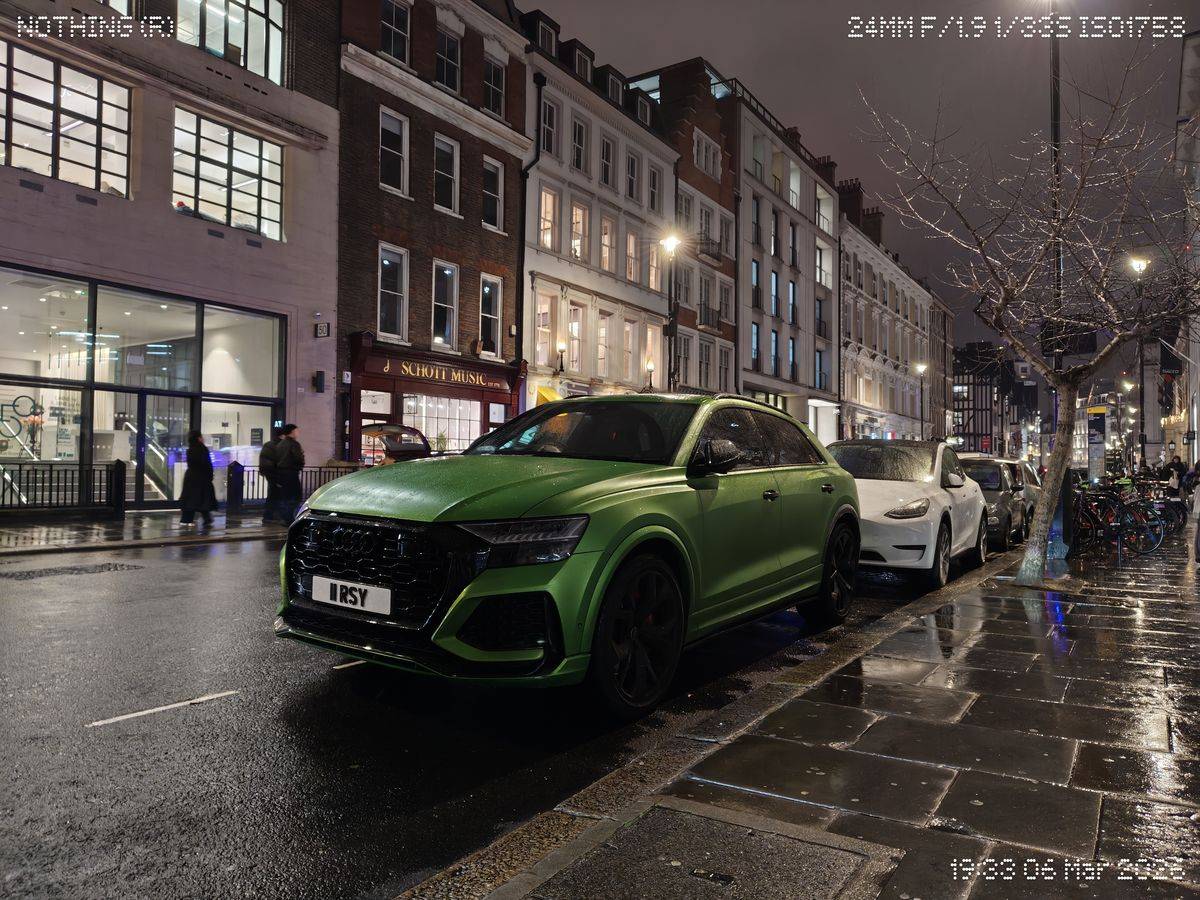
The Nothing Phone (4a) Pro (review) is among the few phones to launch with a telephoto lens under Rs 40,000 this year, other than the Nothing Phone (4a) and Realme 16 Pro+ (which now sits at Rs 43,999 after price hikes). While a strong processing system is crucial for a smartphone camera, a telephoto lens adds to the photography experience by allowing users to capture detailed images from afar, specifically emphasising the subject within the frame.
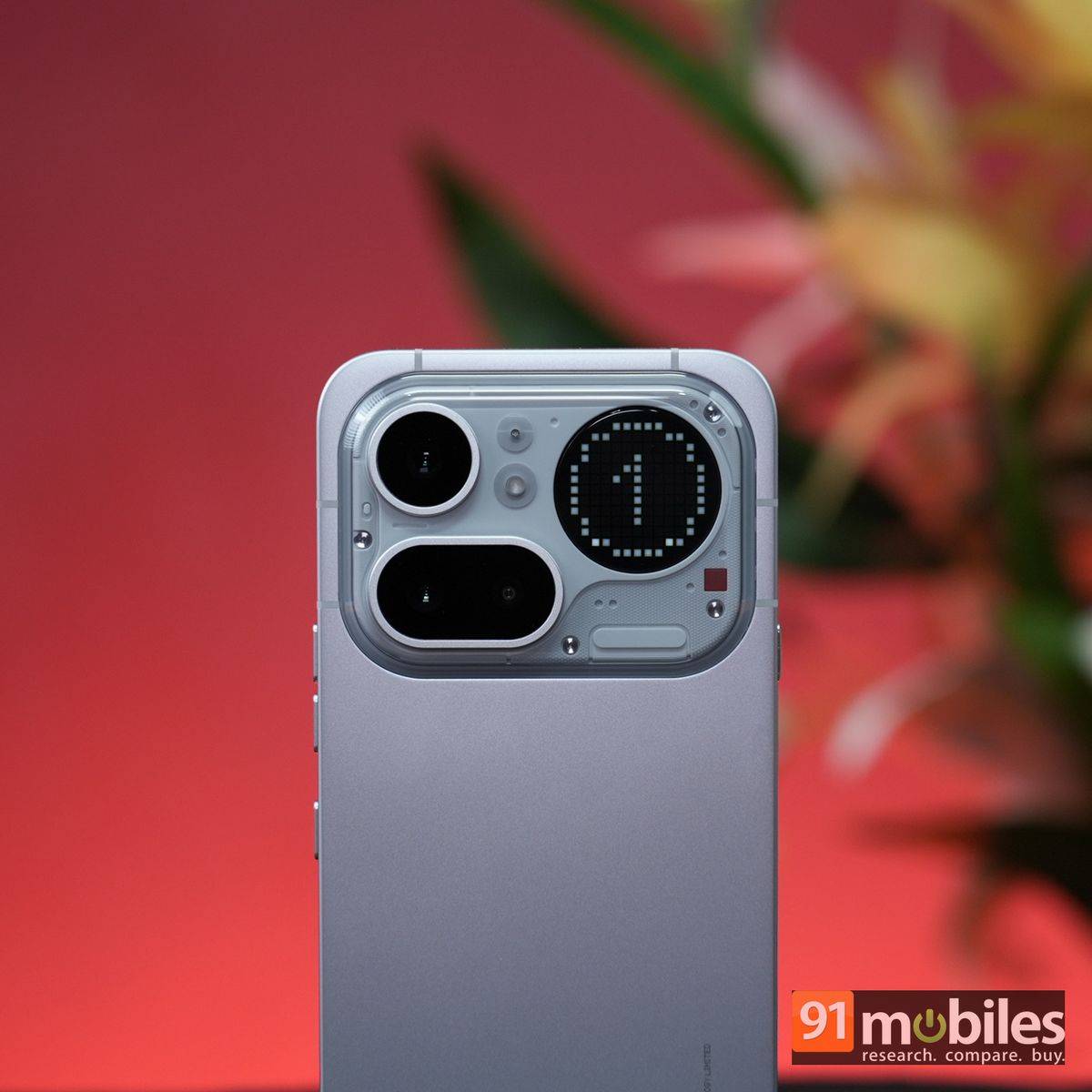
The 50MP 1/1.56-inch Sony LYT700C main camera and 8MP ultrawide with a 120-degree field of view, delivering sharp results, even though the colour tones may lean towards the cooler side. In low light, the Phone (4a) Pro can capture realistic images while offering better control over exposure and noise than its rivals, such as the Realme 16 Pro+.




































| Pros | Cons |
| Premium, distinctive design | Average ultrawide lens |
| Bright, vibrant AMOLED display | No charger in the box |
| Solid primary & telephoto cameras | |
| Dependable performance |
Best in battery – POCO X8 Pro Max and OnePlus Nord 6
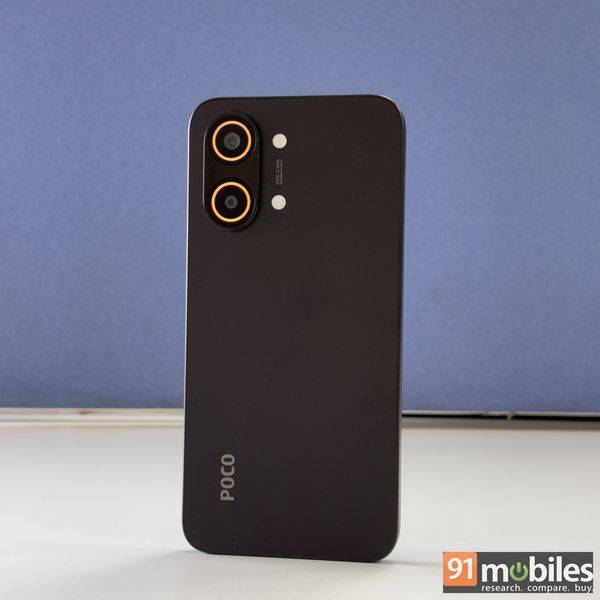

To give a real-world perspective of how the battery of the OnePlus Nord 6 performs, we began the day with a 100 percent charge and still had 55 percent left by bedtime. The day’s usage included replying to messages and emails, streaming music on YouTube, clicking pictures for 15 to 20 minutes, scrolling social media, watching videos, and even playing games for around half an hour, as detailed in our dedicated battery test article. For casual to moderate users, the Nord 6 won’t let you down when it comes to battery life.
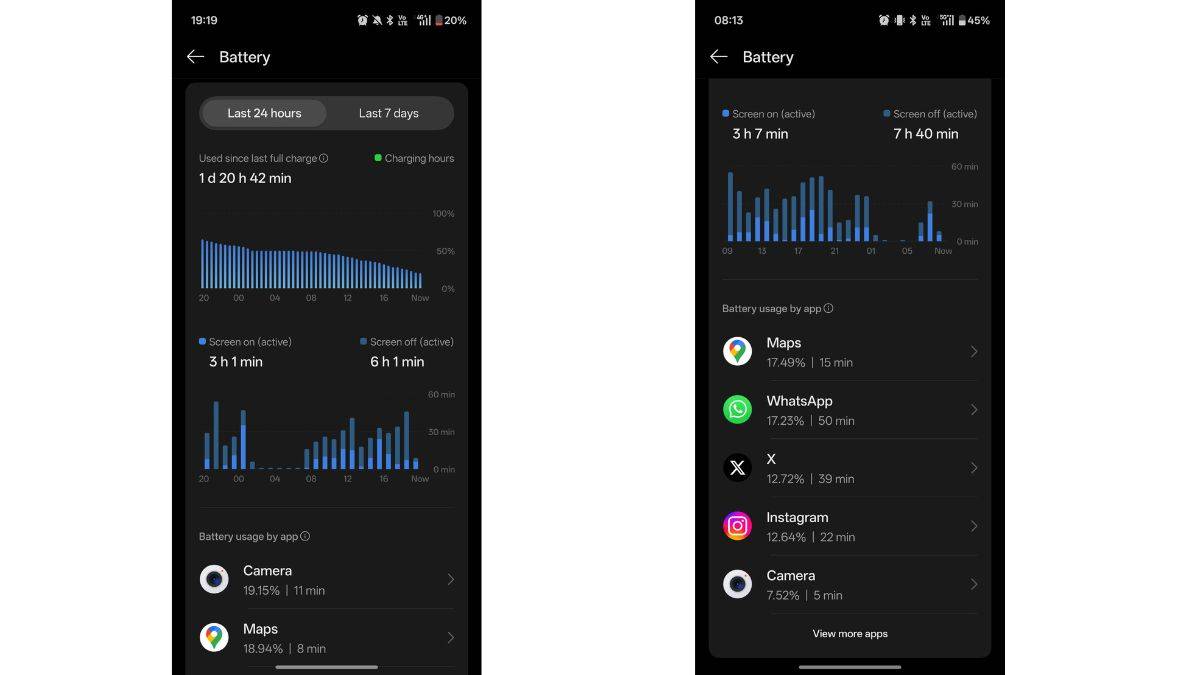
As for the POCO X8 Pro Max, it comfortably delivered around 7 hours of screen time on a single charge under heavy usage, including extended gaming sessions, video streaming, web browsing, and social media scrolling. The brand claims the device can stretch up to three days on a single charge.