Creating a distinct identity in the streaming speaker space isn’t an easy or cheap affair. From factors ranging from tooling to design to manufacturing to component sourcing, making anything that doesn’t conform to the standard mould, quite literally, in this case, adds to the overall cost. So when Sonodyne decided to reinvent their line of Bluetooth speakers, they have to be commended for their boldness even before we get into the tech or sonic attributes. The two all-new models are a complete departure from the previous generation, sharing nothing except the naming convention.
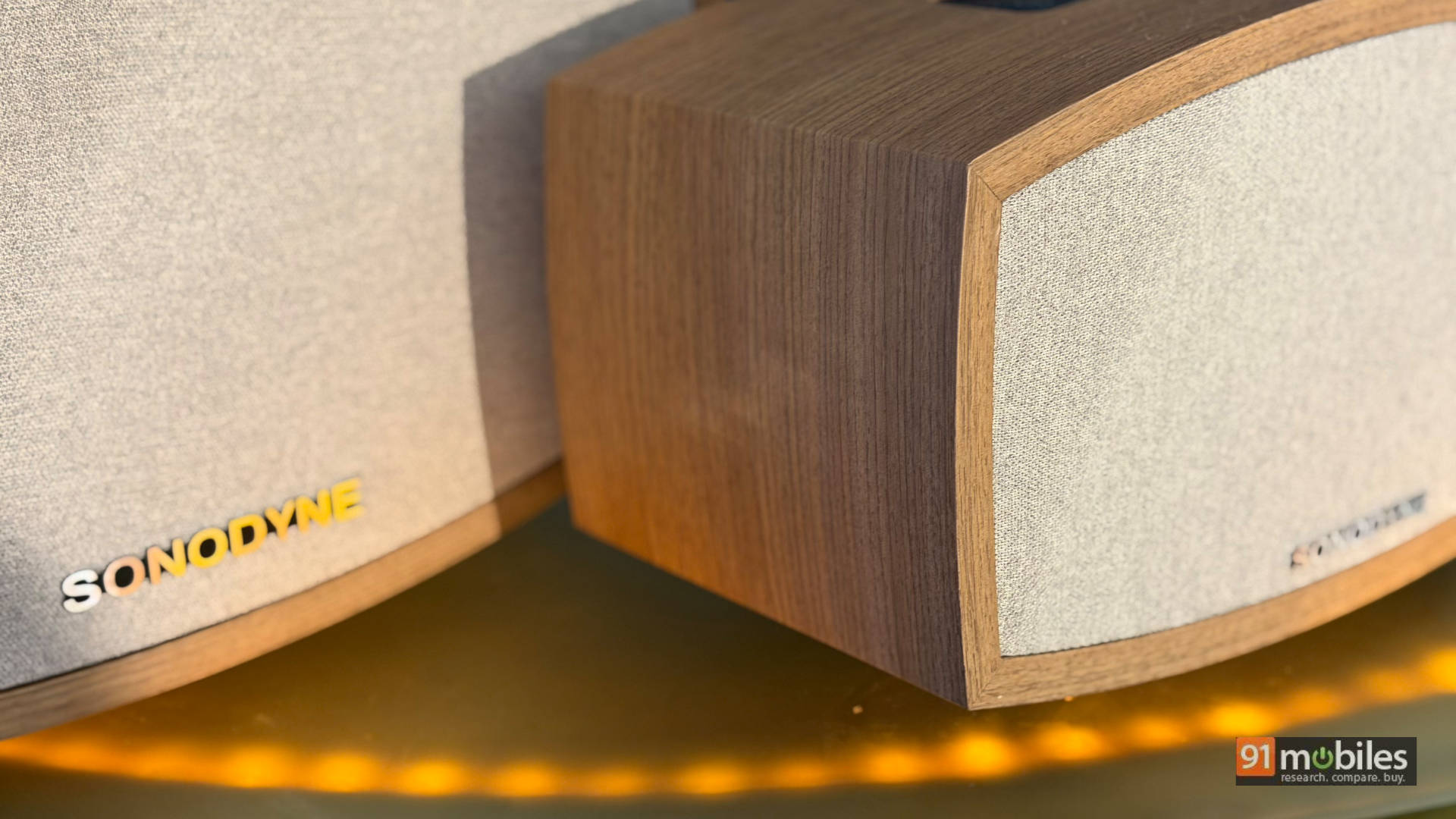
Table of Contents
Design (9 / 10)
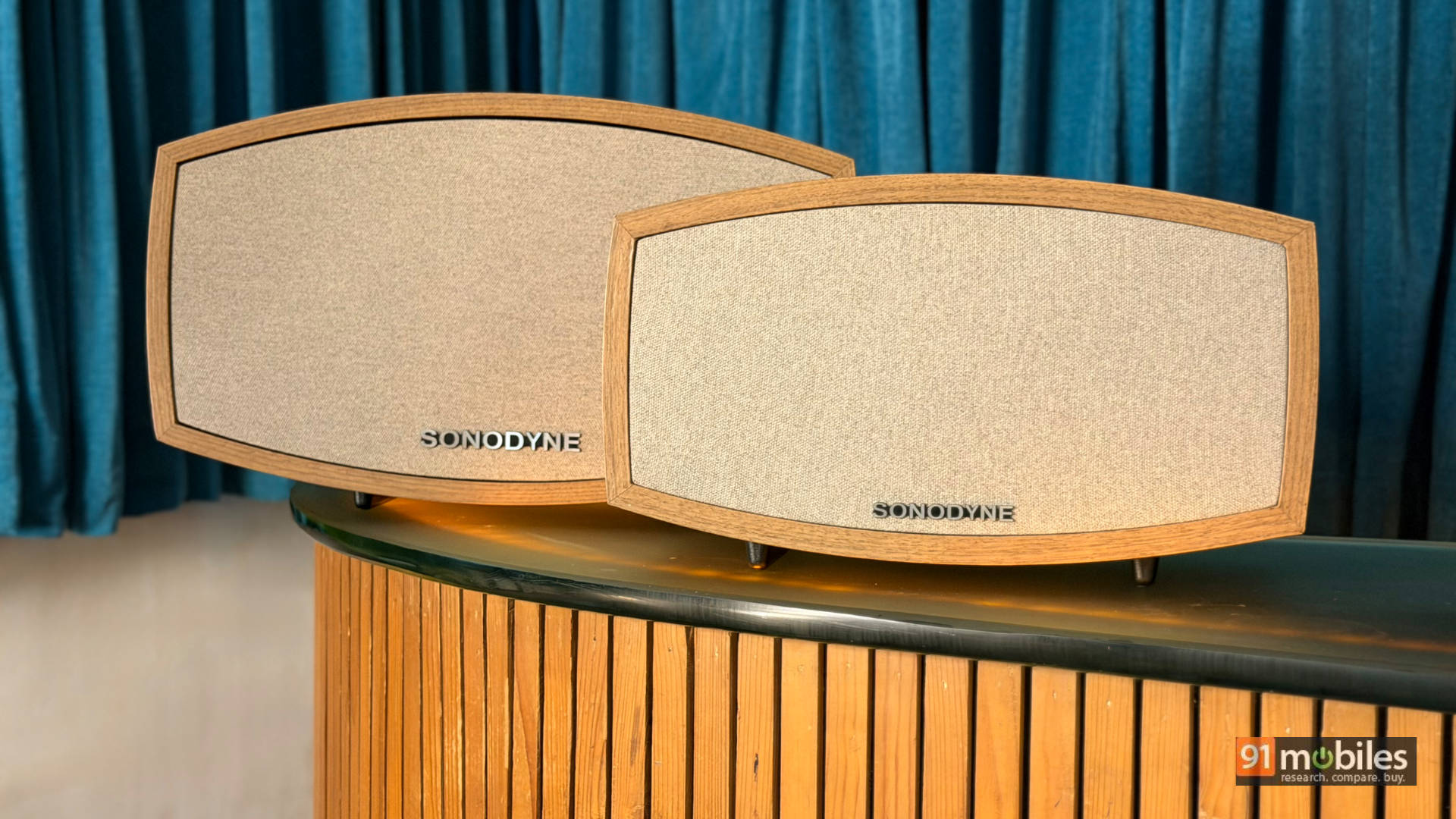
There is something refreshingly unfussy about the Sonodyne Bandish G2 and Malhar G2. At a time when wireless speakers increasingly look like black plastic monoliths designed to disappear into a room, the Sonodyne duo are designed to be shown off. The Bandish G2 (Rs 40,000) and Malhar G2 (Rs 55,000) are a different proposition. Both wear a proprietary curved wooden enclosure in natural wood, and the sculpting serves a larger acoustic purpose too, beyond the mid-century styling.
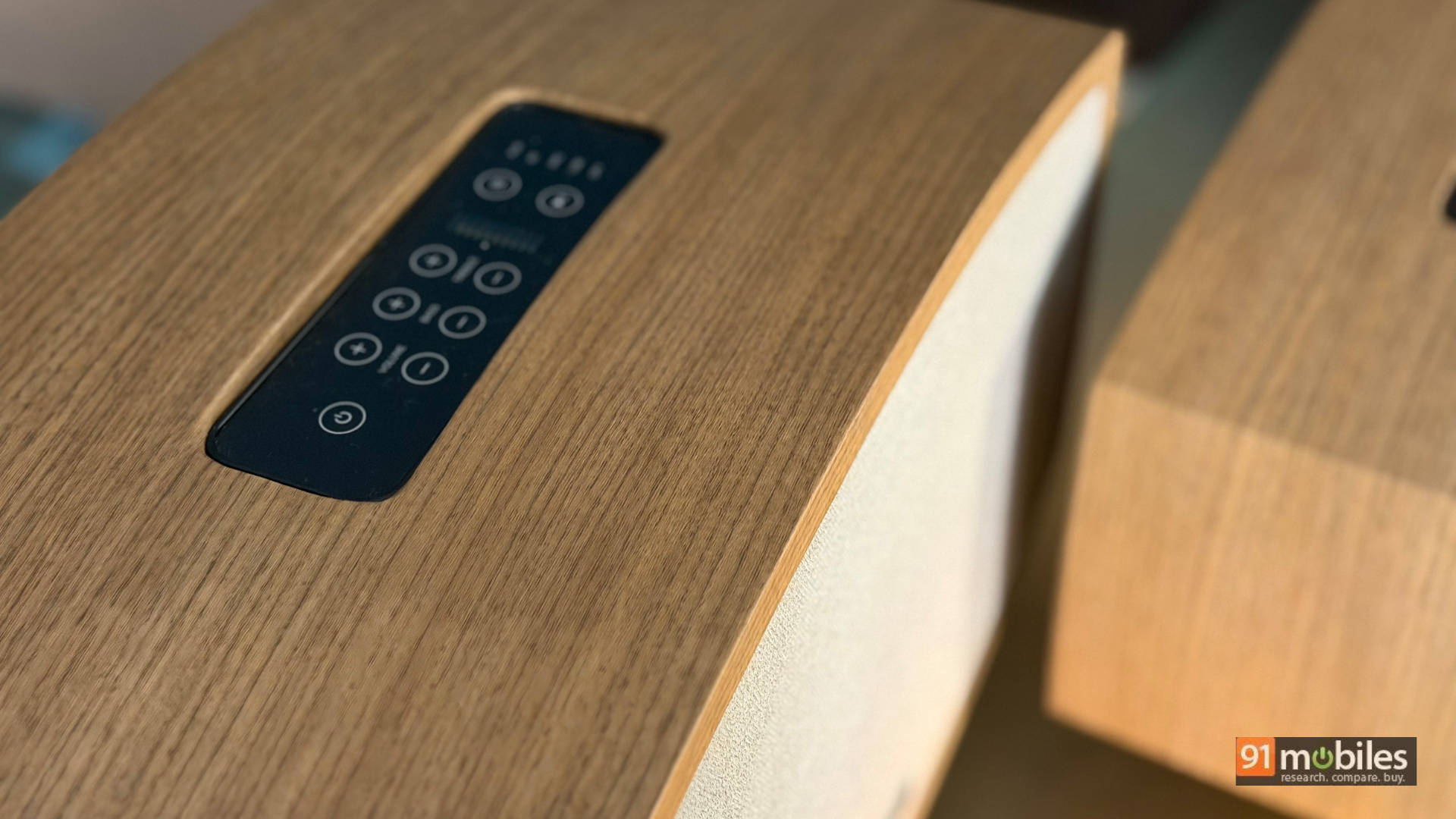
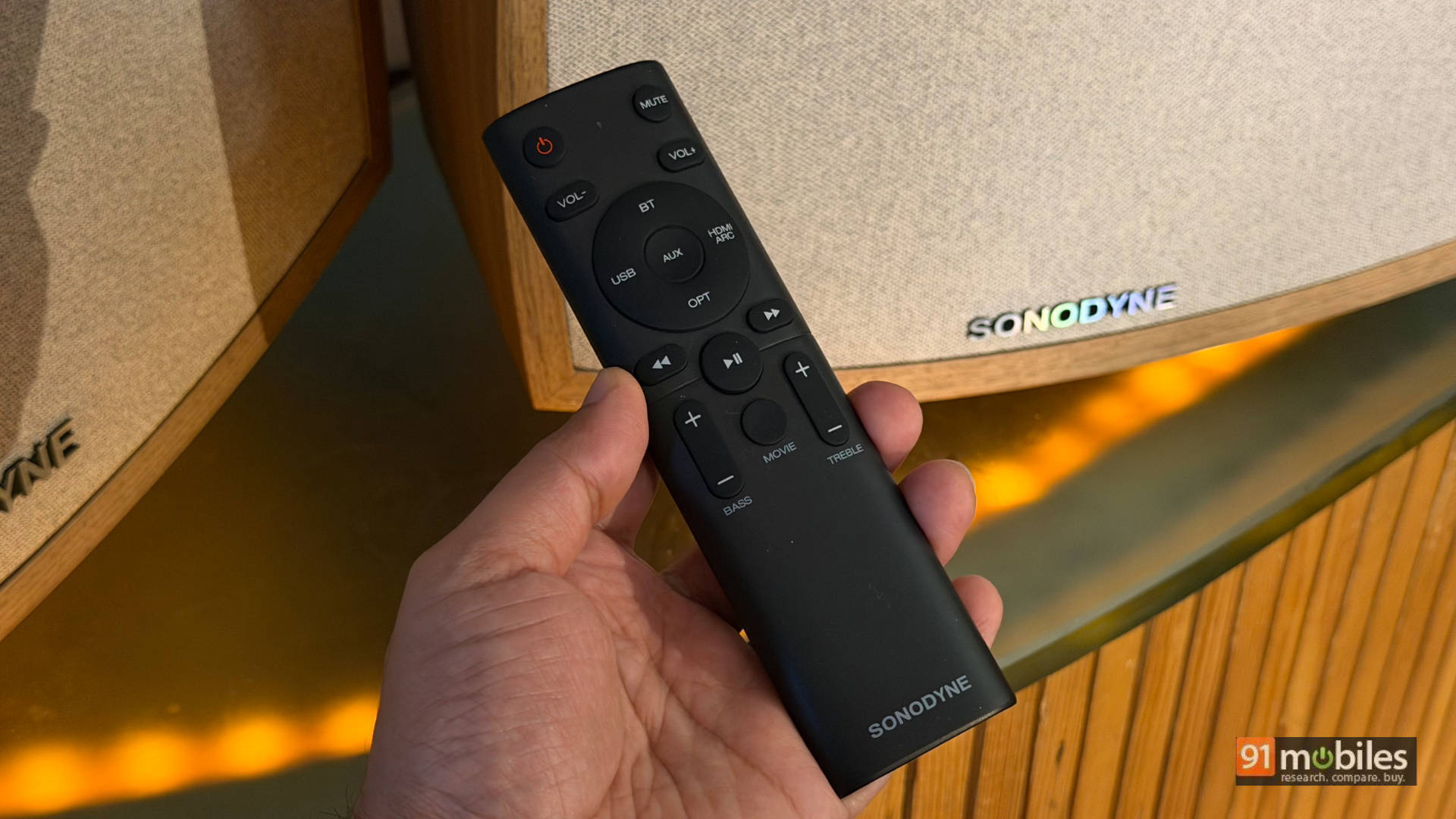
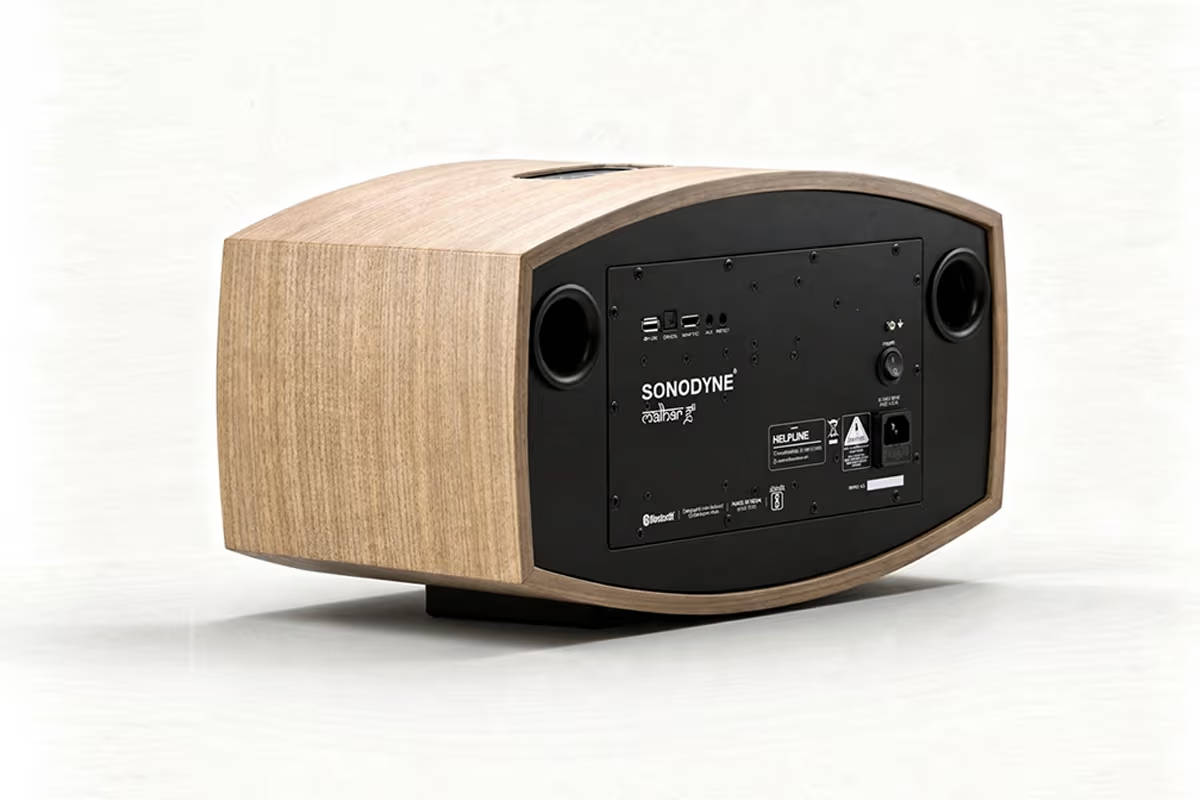
The curved cabinet suppresses internal resonance by means of non-parallel sides and breaking up standing waves caused inside the cabinet by the transducers. Another positive side effect of this shape is better structural rigidity, and Sonodyne has really upped their game here compared to the previous gen models. Barring the naming convention, they share nothing in common! The Bandish is the compact one at 191 x 350 x 181mm and 4.5kg, while the Malhar is bigger and heavier at 250 x 440 x 220mm and 7.5kg. Controls for volume, bass, treble, input selection, and power sit on top of the cabinet, backed by a full-function IR remote, but we can’t help but want a detachable remote control that could’ve sat in the same spot as the control panel since they’re roughly the same size. Both models ship with a snug-fitting fabric grille, but I think they look more purposeful and prouder without it, with the drivers on show.
Tech (7 / 10)
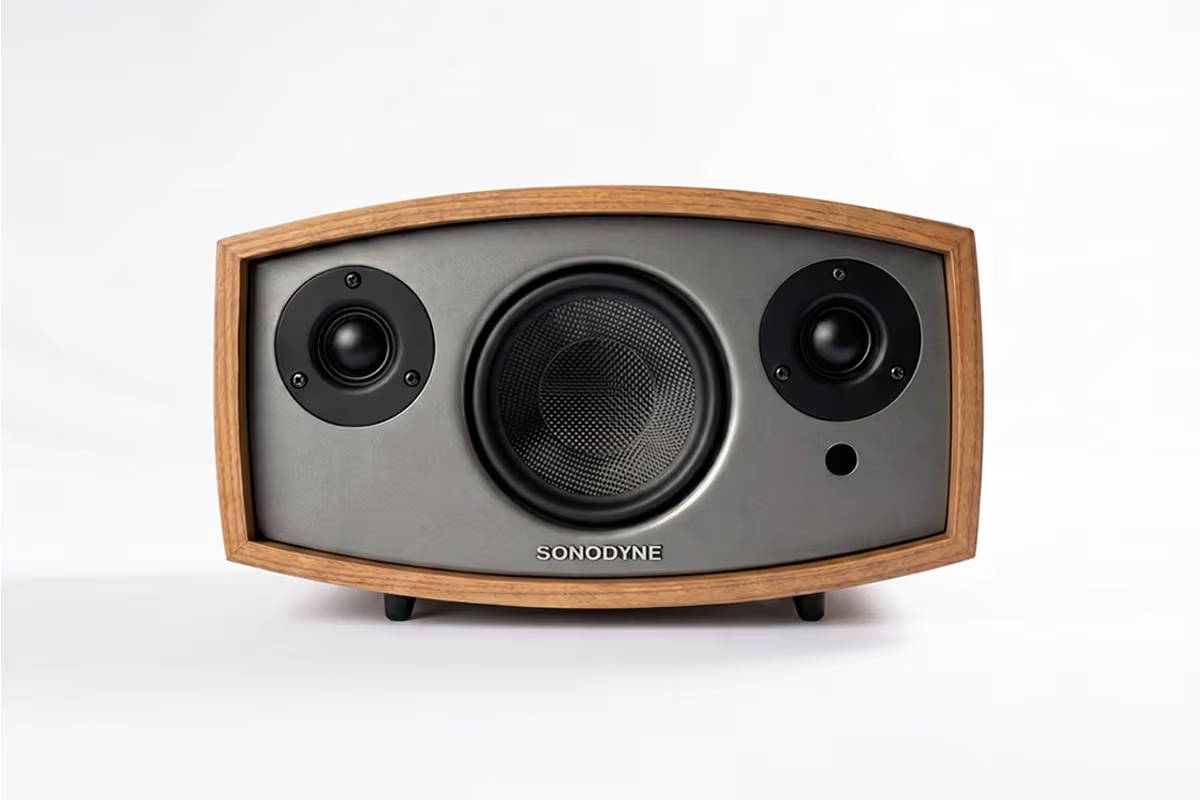
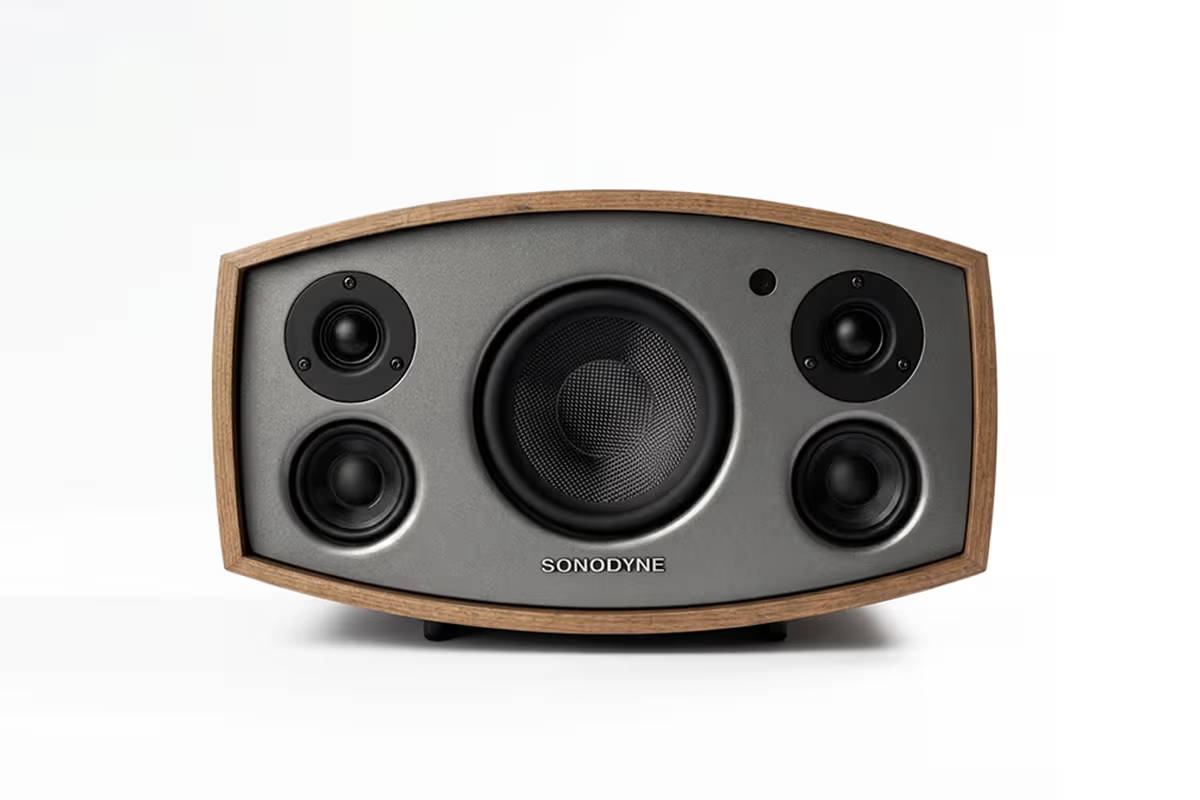
Both are true stereo designs, the Bandish G2 being the smaller model with a 5″ glass-fibre woofer and two 1″ silk-dome tweeters with neodymium magnets, driven by 120W of Class D power. The Malhar G2 bumps it up to a 3-way design with a 6.5″ woofer, two 3″ glass-fibre midrange drivers and the same tweeters, fed by 200W. Both are bass-reflex designs with dual rear ports so you may need a deep-ish shelf to accommodate them comfortably, so as to not block off any breathing room for the rear-firing ports. There is a Duet mode that allows you to connect a second unit of the same model for a wider stereo presentation and potentially a real soundstage too. Due to the lack of any wireless chops or an app at the moment, the pairing and syncing process is a ballet of manual button pushing for now. Connectivity covers Bluetooth 5.4, HDMI ARC, optical, USB and aux and comes with a dedicated Movie Mode and physical bass and treble controls for quick changes to the tonal balance.
Performance (7.5 / 10)
The upgraded transducers are tuned for neutrality and accuracy in the midband, and it is obvious from the very first track I streamed from my phone, which happened to be a beautiful acoustic cover of Bohemian Rhapsody by John Adams. There was a real presence and immediacy to the voice, without being shrill or strident. Moving on to another rousing cover of Clapton’s unforgettable Layla by Marcin showed off the ability to handle transients, and the Malhar could dig deep into the lower octaves to give this track the propulsion it demanded. The larger model, with its added midrange drivers, offers extra headroom and keeps things composed as the volume climbs. For classic rock and 80s pop, it turned out to be a real banger of a speaker with no distortion or unruly vibrations from the cabinet to taint the experience.
Neither is shy on power output or peak volume, and being able to tune the speaker to your room with physical bass and treble controls is a real advantage. But the one attribute I kept wanting from both the models was more “air” and “sparkle” at the top end, and I don’t mean the kind of sizzle you introduce by turning up the treble control. While there was a genuine sense of stereo-ness from a single chassis, especially palpable in the Malhar, neither speaker managed to project the sound out-of-the-box, and that final degree of openness is what I am referring to.
On paper, the Malhar’s dedicated midrange drivers, larger woofer and deeper extension point to a fuller, more expansive sound better suited to bigger rooms, while the Bandish is the easier fit for smaller spaces. That’s exactly what they deliver, with the convenience of adding a Movie Mode that accentuates the mids for a perceptibly more forward dialogue, making it easier to watch Guy Ritchie content without subtitles.
Conclusion
Sonodyne’s second-generation wireless speakers are proper hi-fi in a wooden box rather than a plastic plaything. Sonodyne has taken a decidedly hi-fi approach to the wireless speaker category and its acoustic tuning reflects that philosophy too. There is no showboating here, with an evolved sonic presentation that is well suited to every genre. All it needs is a stable Wi-Fi platform to bring it up to 2027 standards and a little bit of energy in the highs for it to break free from the confines of the very pretty box. They both set the foundation for a serious stereo pair, with handsome cabinets, tone controls and a balanced sonic signature being key reasons to buy.
Editor’s Rating: 7 / 10
Pros:
- Handsome natural wood cabinets
- Physical bass and treble controls
- Balanced sonic signature
Cons:
- Lacks AirPlay support
- Needs more top-end shine
- Stereo pairing not app-based