Vivo V70 FE first impressions: the first ‘fashion edition’ phone


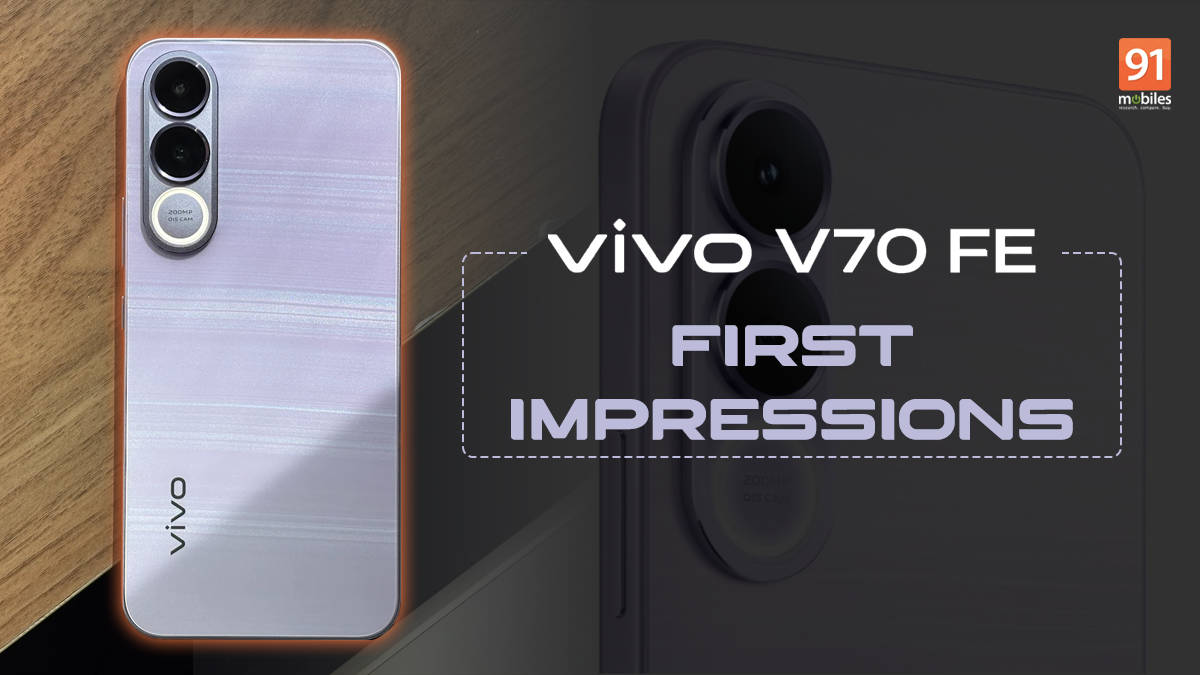
The Vivo V70 FE, the first fan fashion edition of the Vivo V-series, is now official in India. The handset is priced at Rs 37,999, making it more affordable than the Vivo V70, which costs over Rs 40,000. Looking at things on paper, the smartphone doesn’t seem to reimagine the segment with power-packed performance. Instead, it keeps things balanced with a tried and tested chipset, cameras, display, a large battery, and refined software.
While a detailed analysis will follow soon, here’s my early impression of the smartphone after a brief usage.
Table of Contents
Design: different from its siblings


It seems Vivo touts this smartphone as “Fashion Edition” for its Northern Light Purple colour option. It’s the first from the OEM with Darkness Glow Energy, which basically alters the appearance of the smartphone with a shift in colour in the dark. This is attributed to a photoluminescent substance embedded in layers of sheets, which glows in low light. We will be testing that in our full review and check if that adds a personality to the smartphone.
If you want something less fancy, the Vivo V70 FE is available in a Monsoon Blue colour variant as well.

Moving on, the Vivo V70 FE comes with a design unique from the other V70 smartphones. The handset isn’t as compact as its elder sibling and ditches the square camera module for a pill-shaped one, which houses a dual camera setup with an Aura ring. The module, along with the sensors juts out of the frame, causing the device to wobble but not as significantly as the S26 series.
While the handset is IP68 and IP69 durable, corners have been cut to make it more affordable. The V70 FE boasts a plastic unibody design, which is solid but lacks the premium in-hand feel.
Comfort, in-hand feel, and key specs
In my limited time with the device, I admire the flat edges with nicely curved corners of the V70 FE, making it easy to hold. Furthermore, the matte finish ensures that the device remains clean from fingerprints and smudges. The handset measures just 7.6mm in thickness and weighs 200 grams, which is impressive considering the large 7,000mAh battery inside.
The Vivo V70 FE’s battery capacity is bigger than that of the V70 and V70 Elite. It will be interesting to see how much difference the extra 500mAh makes in endurance over its siblings, which have been praised for their backup. The FE is backed by 90W FlashCharge for quick top-ups. The handset features a USB Type-C port for that, and it supports USB 3.1 data transfer speeds.

Under the hood, the Vivo V70 FE is powered by the MediaTek Dimensity 7360 Turbo SoC, paired with a VC cooling system, up to 12GB of LPDDR5X RAM, and standard 512GB UFS 3.1 storage. Based on prior experience with this chip on the Vivo V60e (review), performance is reliable for everyday tasks but falls short of being class-leading in this segment. For users who prioritise raw power, whether for heavy gaming or sustained multitasking, the OPPO K13 Turbo Pro and the OnePlus Nord 5 are likely to offer a noticeable edge, making them more suitable choices for performance-focused buyers.
The Vivo V70 FE’s cameras might give it an edge over its counterparts. The handset sports a 200MP primary camera, which isn’t common in the price range, accompanied by an 8MP ultrawide lens. The sensor is the same one that was introduced on the Vivo V60e smartphone last year, and it did a decent job at capturing detailed images for its price. Up front, the handset sports a 50MP shooter for selfies and video calling. The video quality is capped at 4K at 30 fps from the front and main cameras. The cameras will be analysed across different scenarios in our full review, so stay tuned for that.

Furthermore, the Vivo V70 FE runs OriginOS 6 layered atop Android 16 out of the box and sports a 6.83-inch AMOLED display with 120Hz refresh rate, 1.5k resolution, up to 1,900 nits peak brightness, and P3 wide colour gamut. The peak brightness appears slightly underwhelming, especially when put against the Phone (3a) Pro, which offers up to 5,000 nits of brightness.
Early thoughts…
The Vivo V70 FE serves as a solid entry point into the latest V-series, but it offers little incentive for V60e users to upgrade. Both devices share similar core hardware, including the chipset, cameras, and display, making the overall experience feel largely unchanged.