It’s been an excellent year for foldable phones. Almost every OEM is working on a foldable now, with Apple expected to finally join the club next year, if rumours are true. India got its fair share of foldable, although there are more options outside. Still, foldables like the Samsung Galaxy Z Fold7, Vivo X Fold5, Google Pixel Fold, and Tecno Phantom V Fold 2 are solid options that won’t make you miss the ones that aren’t available here, such as the Huawei Mate X6 or the Honor Magic V5. The interesting thing is that each foldable offers something unique, making it difficult to choose the right one. Now that we’ve reviewed each of the four foldables and are pretty certain no other foldable is making its way to India before the end of the year, let me help decide which 2025 foldable is right for you, based on what each device offers.
Note: This list includes only notebook-style foldables, not flip phones.
Table of Contents
Why you should buy the Samsung Galaxy Z Fold7
The Samsung Galaxy Z Fold7 (review) offers the most complete foldable phone experience among all the other foldables released in India this year. This is because it doesn’t just work on a hardware level, but also in the design, software, and camera departments. It is the slimmest and lightest phone in the lineup, measuring 8.9mm in thickness when folded and weighing just 215 grams, making it lighter than some regular smartphones as well. The foldable feels extremely sleek in the hand and is comfortable to hold. While there’s much to love about the Fold7’s sleek design language and in-hand feel, it wobbles a lot on a flat surface because of how the camera lenses protrude from the back.
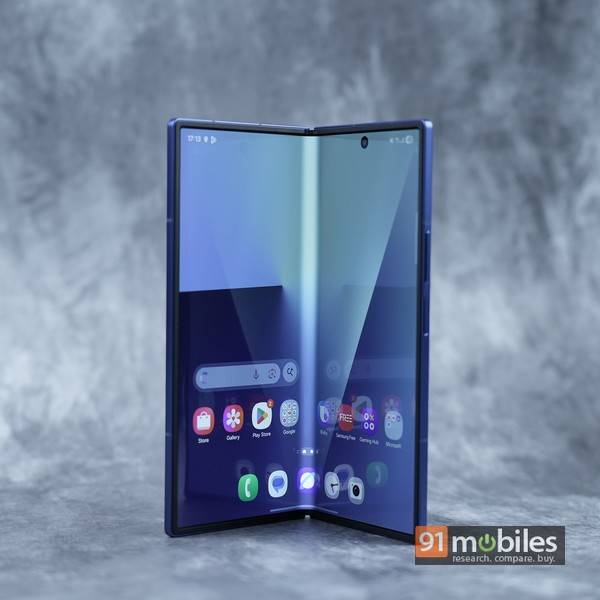
The other big reason to consider the Galaxy Z Fold7 over the X Fold5 is the software. Samsung’s foldable runs the latest Android 16 OS and promises 7 years of software upgrades, which is exactly the kind of long-lasting support you want if you’re spending close to Rs 2 lakh on a foldable phone. In addition to this, One UI 8 delivers a familiar, user-friendly software experience, though with its fair share of preloaded apps. You also have decent multitasking support, such as the ability to have multiple windows on the screen, something the Pixel 10 Pro Fold lacks. Lastly, Samsung offers a suite of AI features to keep you happy, such as live translation, text summarisation, transcribing audio to text, and more.
The Z Fold7 is also the most powerful foldable, thanks to the Snapdragon 8 Elite chipset powering it. So, you have the peace of mind that the foldable will stay fast and smooth over the years, along with long software support. But the one area where the Galaxy Z Fold7 is wanting is the battery and charging, which are a mere 4,400mAh and 25W, respectively. Here, the Vivo X Fold5 gets the upper edge.
Buy the Galaxy Z Fold7 if you want:
- A sleek and light foldable phone
- Flagship processor with extended software support
- A healthy suite of AI features
- Decent cameras
Skip the Galaxy Z Fold7 if you want:
- Better durability
- Better battery life and charging speed
- Doesn’t wobble on a surface
Why you should buy the Vivo X Fold5
The Vivo X Fold5 (review) is another sleek and stylish foldable that boasts improved durability over its predecessor, the X Fold3 Pro. It’s only slightly thicker and heavier than the Galaxy Z Fold7, measuring 9.2mm in thickness when folded and weighing 217 grams, so the difference is marginal. It is also rated to withstand 6,00,000 folds and unfolds, ensuring you can keep doing this for over a decade. However, you might have to upgrade the phone in half the time due to a slightly dated chipset and shorter software support than the Galaxy Z Fold7 and Pixel 10 Pro Fold offer. Still, for the few years you plan to use the X Fold5, rest assured that you will get not only a sleek and comfortable foldable, but one that offers solid battery life, better than what Samsung and Google offer on their foldables — and an excellent Zeiss-backed camera system. You’ll be able to capture stunning and vibrant photos with saturated colours that look social media-ready.
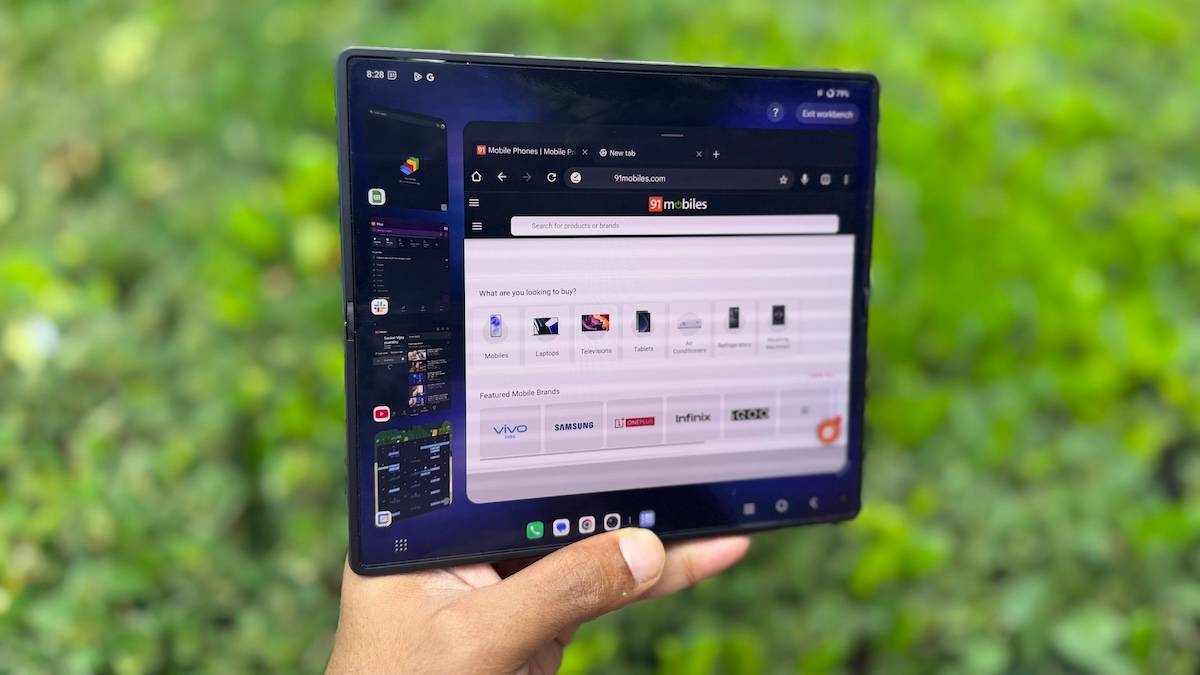
But where the X Fold5 lacks in software support, it makes up for in multitasking experience. The X Fold5 has one major standout feature that other foldables should definitely copy at some point: Origin Workbench. I’ve written about Origin Workbench in great depth in a separate article. Still, the short version is that it is a terrific multitasking feature that can run up to five active windows simultaneously on the main screen, where the app you’re using is front and centre. At the same time, the remaining four are tucked away as thumbnails on the left side, allowing you to seamlessly and efficiently switch between them.
Buy the Vivo X Fold5 if you want:
- A slim and lightweight foldable
- Good and reliable cameras
- Solid multitasking features like Origin Workbench
Skip the Vivo X Fold5 if you want:
- Best-in-class processor
- Long software support
Why you should buy the Google Pixel 10 Pro Fold
Google’s latest foldable is the most divisive of all the foldables to come out this year. On the one hand, you get a clean Android software experience with the promise of 7 years of OS and security updates, much like the Galaxy Z Fold7. But on the other hand, it brings a dated design language that makes Samsung, Vivo, and even Tecno’s foldables look futuristic. The Pixel 10 Pro Fold (review) is significantly thicker and heavier than its rivals, and the cover display has noticeable bezels on one side. So, it’s not the foldable to buy if style is your main reason to pick one up.

Buy the Google Pixel 10 Pro Fold if you want:
- IP68 rating for dust and water resistance
- Full-day battery life
- Durable, gearless hinge design
- Long software support
Skip the Google Pixel 10 Pro Fold if you want:
- A lighter and sleeker foldable
- Flagship-level cameras
- More multitasking features
Why you should buy the Tecno Phantom V Fold 2
The Tecno Phantom V Fold 2 (review) is the most affordable notebook-style foldable you can buy right now, and that alone makes it a very interesting option. Launched at Rs 79,999 (available currently for Rs 59,999 on Amazon), it doesn’t try to go toe-to-toe with ultra-premium foldables from Samsung, Vivo, or Google; instead, it focuses on delivering the core big-screen foldable experience at almost half the price. Crucially, Tecno has fixed most of the issues we had with the first-gen Phantom V Fold – the design looks more refined, the crease is far less visible in day-to-day use, and the overall package feels a lot more polished.

Where Tecno is clearly saving costs is under the hood and in long-term software support. The Phantom V Fold 2 uses the older Dimensity 9000+ chipset, which is perfectly fine for everyday use and multitasking but doesn’t match newer flagship chips in benchmarks or sustained performance. HiOS 14.5, based on dated Android 14, is intuitive on a big screen, with easy multi-window gestures and helpful tips, but you only get two major Android updates and 3 years of security patches, plus a fair bit of bloatware. This means the foldable will only support the latest Android 16 update, not any later versions.
Buy the Tecno Phantom V Fold 2 if you want:
- The most affordable notebook-style foldable
- Premium-feeling design
- Large 120Hz LTPO inner and outer AMOLED displays
- Good all-day battery life with fast 70W wired charging
Skip the Tecno Phantom V Fold 2 if you want:
- The latest flagship-grade processor
- Long-term software support
- Strong low-light camera performance
- A clean software experience with fewer pre-installed apps
Price: Rs 59,999
So, which foldable should you buy in 2025? The answer depends entirely on what you value most. Samsung’s Galaxy Z Fold7 is the all-rounder, the foldable that balances sleek hardware, long-term software support, and reliable performance better than anything else. Vivo’s X Fold5 pushes ahead with meaningful multitasking tools and strong cameras, while Google’s Pixel 10 Pro Fold prioritises durability and clean software above design flair. And then there’s Tecno’s Phantom V Fold 2, the entry point for anyone who wants the foldable experience without spending flagship money.
The good news is that no matter which direction you lean, the foldable era is no longer defined by compromises. We’ve reached a point where folding phones aren’t just futuristic concepts. They’re practical, powerful, and in many ways more versatile than traditional slab smartphones. Whether you’re chasing productivity, entertainment, longevity, or sheer value, there’s now a foldable designed for exactly what you need.