
Movie |
Musical | Broadway
Disclaimer: All content and media belong to original content streaming platforms/owners like Netflix, Disney+ Hotstar, Amazon Prime Videos, JioCinema, SonyLIV etc. 91mobiles entertainment does not claim any rights to the content and only aggregate the content along with the service providers links.










Best Dance Direction | 1936
Film debut of Buddy Ebsen.
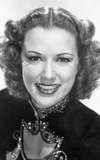
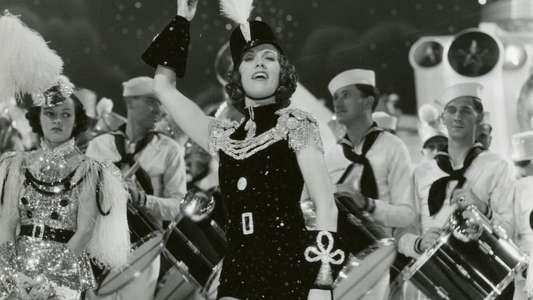
Eleanor Powell was spotted in a Fox screen test by MGM studio chief Louis B. Mayer, who, due to the grainy quality of the test, initially thought she was African-American. Once Fox cast her in George White's Scandals (1934), MGM made its move. Reportedly, Powell did not want to participate in Broadway Melody of 1936 (1935), as she was slated for the non-dancing role eventually played by Una Merkel. Too much of a neophyte to confront the studio executives, she engineered her dismissal by politely demanding the lead role and an exorbitant salary, and she was shocked when the studio met her terms, paving the way for her meteoric film career.
The radio announcer who introduces Jack Benny is Don Wilson, the announcer on Benny's real-life radio program.
The singing voice of Eleanor Powell was dubbed by Marjorie Lane.
Audiences never suspected that Eleanor Powell did not perform her own singing vocals because Metro-Goldwyn-Mayer linked her with ghost singer Marjorie Lane from the outset of her career. Lane had only one other film credit to her name, appearing on camera in a 1930 short subject. As such, her voice was unknown to movie audiences and, when matched with Powell's visual interpretation, it cemented the notion that Powell could sing as well as she danced, beginning with her very first film, Broadway Melody of 1936 (1935). M-G-M kept Lane under contract solely to serve as Powell's voice double for Born to Dance (1936), Broadway Melody of 1938 (1937) and Rosalie (1937). Further completing the illusion is the fact that Eleanor Powell provided her own singing voice for several numbers during the course of her career that did not require finessed singing (principally Broadway Melody of 1940 [1940]), and some of her films required no vocals at all, such as Honolulu (1939), Ship Ahoy (1942) and I Dood It (1943). Decades later, with all of the studio's history at his disposal, not even Jack Haley, Jr. suspected Powell's dubbing history and the narration he wrote for That's Entertainment! (1974) professed that Powell was singing "Easy to Love" with James Stewart in Born to Dance (1936).
"Bert Keeler: Well of all the dumb guys... Snoop: Don't worry about Corbett, she won't tip the gag, she said so. Bert Keeler: Just the same I gotta find out who this Arlette dame is that Gordon's got signed up. Snoop: Well whadda ya want me to do? Bert Keeler: Go down to the ocean and pull a wave over your head!"
"Sally Burke: Why don't you go back and see Gordon? Irene Foster: I will not! Sally Burke: You *came* here to see him, didn't you? Irene Foster: Yes, but I still have a little pride left. Ted Burke: So's Gandhi, but he's getting awful thin."