
Movie |
Wrestling | Sports
Disclaimer: All content and media belong to original content streaming platforms/owners like Netflix, Disney+ Hotstar, Amazon Prime Videos, JioCinema, SonyLIV etc. 91mobiles entertainment does not claim any rights to the content and only aggregate the content along with the service providers links.
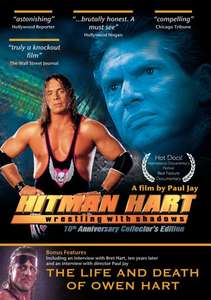
Best HistoryBiography Documentary Program | 1999
Best Picture Editing in a Documentary Program or Series | 1999 | Manfred
Best Sports Program | 1999
Entertainment | 1999
The Humanities | 1999
Best Cinematography in Documentary | 1999 | Joan
Best Documentary Long Form | 1999 | Paul
Best Direction in a Documentary Program or Series | 1999 | Paul
According to'Paul Jay', after the incident in which Bret Hart punched Vince McMahon, McMahon refused to allow any footage or other wrestlers from WWF to appear in the film. WCW, the rival wrestling company, offered Jay a deal to show the film on pay-per-view. Jay was then offered a deal from WWF which would allow the footage and the wrestlers to appear as long as he turned the deal with WCW down. Jay believes that someone in WCW was an informant for McMahon.
During the film's extras Bret Hart mentions that filming had actually concluded prior to the Montreal Screwjob and Bret had suggested to Paul Jay that he may wish to bring the crew to document his final match with the WWF, the footage turned out to be the most dramatic of the entire shoot.
When Bret Hart went to meet with Vince McMahon for their private conversation prior to the Montreal Screwjob, Paul Jay wanted it to be secretly recorded, to validate later on if McMahon were to lie to him, but Hart and Jay were worried the secret recording would be illegal. Hart's lawyer, who was present, told Jay that, according to Canadian law, a secret recording of a conversation can be legally done, as long as one of the parties who was part of the conversation was aware of the recording being made, which Hart was. As a result, a microphone was hidden on Hart, and the private conversation with McMahon was recorded for the film.
The documentary was repopularised in 2018 when psychologist Jordan B. Peterson spoke about it in a lecture that was posted online.
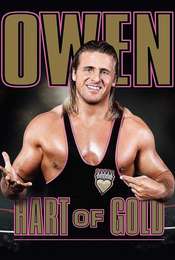
Unused footage of Owen Hart filmed for this documentary was later utilized for Owen's documentary, Biography: The Life and Death of Owen Hart (1999).