Apple iPhone 16 Pro Max review: the power to create
The iPhone 16 Pro Max can prove to be a handy tool for video content creators
I’ve been covering tech for a hot minute now and each year, the level of excitement around the iPhone launch never ceases to amaze me. Come September, and iPhone fever just seems to grip everyone, with palpable excitement evident among friends and fellow tech buffs. It just goes on to show how iconic and aspirational these devices still are, despite the availability of a smorgasbord of options on the Android side of the fence. This year, the Apple iPhone 16 series continues on the same path charted by its predecessors. The latest models don’t stray much from the design language seen before but amp up the firepower, the photography prowess and the AI goodies. The iPhone has been the preferred tool of choice for creators, and the iPhone 16 series brings even more to the table, with the Pro models coming out especially strong. Below is a gist of my experience with the iPhone 16 Pro Max, though I should mention that most of it should also apply to its smaller sibling, the iPhone 16 Pro.
Verdict
The iPhone 16 Pro Max stands out as the torchbearer of Apple’s latest smartphone lineup, bringing an innovative way to control the camera, useful Photographic styles, powerful performance and excellent shooters, among other things. The smartphone might not make for a worthy upgrade for anyone looking to move from the iPhone 15 series, but is well worth a look for those seeking a top-end premium flagship that scores high in each and every aspect of smartphone usage, and delivers an all-round hardware and software experience that’s tough to beat.
Design and display
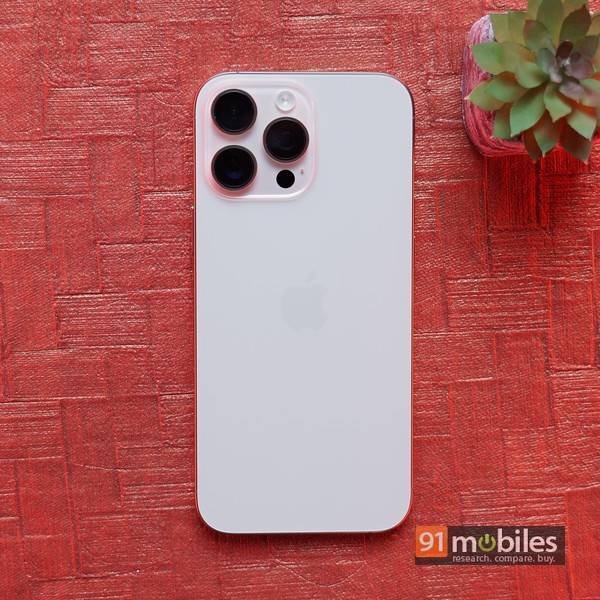
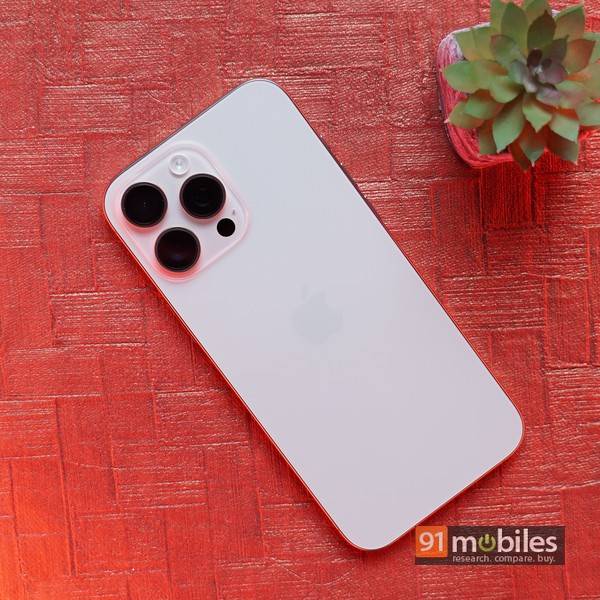
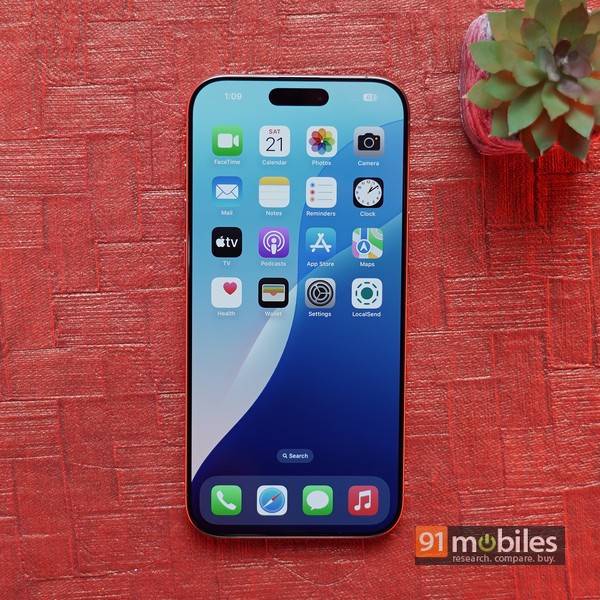
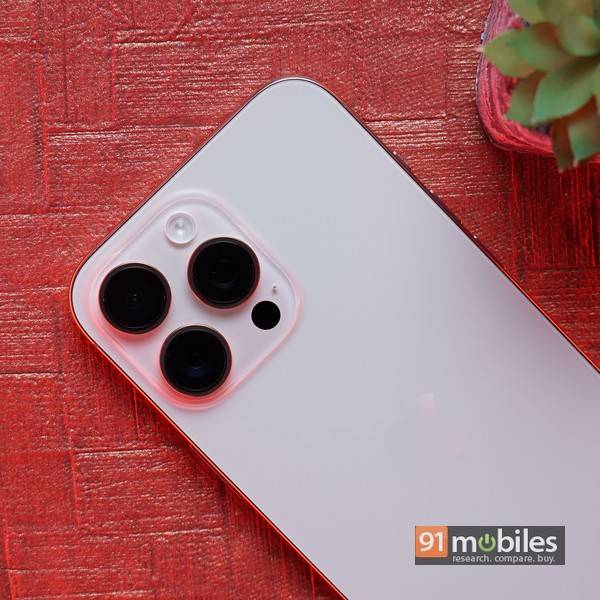
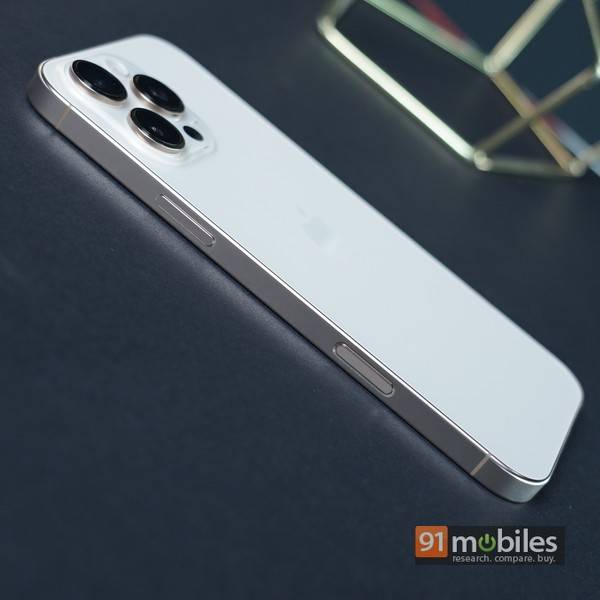
As I mentioned before, the design language remains largely unchanged this time, so much so that the iPhone 16 Pro Max looks pretty much the same as its predecessor, which, by the way, looked the same as its predecessor. You get the drift. However, there’s something to be said for the iconic design that scores high both on style as well as build — the flat, blocky shape with rounded corners, the titanium frame, the Ceramic Shield glass and the new microblasted texture, all add up to form a smartphone that looks good and is built to last too. There’s a new Desert Titanium shade this time that looks quite classy, while the bezels have been shrunk further, enabling Apple to fit a 6.9-inch on the 16 Pro Max without increasing the overall size of the device and making it the largest ever display on an iPhone. The previous Pro Max models came with 6.7-inch screens, and when it comes to bezel width and display size, every millimetre counts.
| Smartphone | Google Pixel 9 Pro XL | Samsung Galaxy S24 Ultra | Apple iPhone 15 Pro Max | Apple iPhone 16 Pro Max |
| Thickness | 8.5mm | 8.25mm | 8.3mm | 8.3mm |
| Weight | 221 grams | 232 grams | 221 grams | 227 grams |
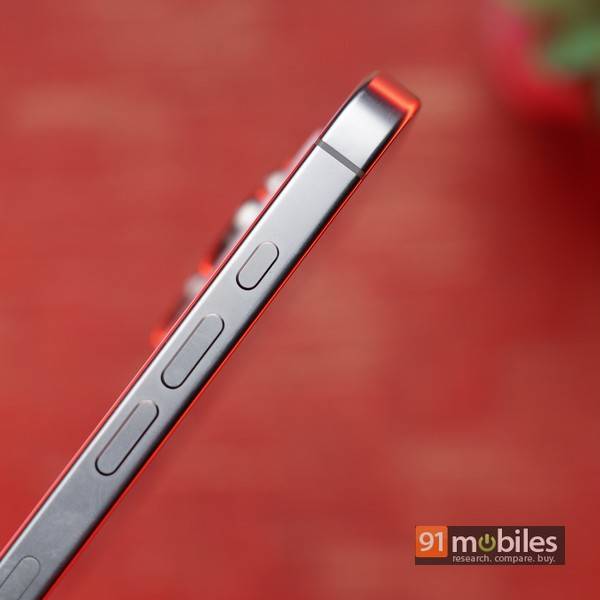
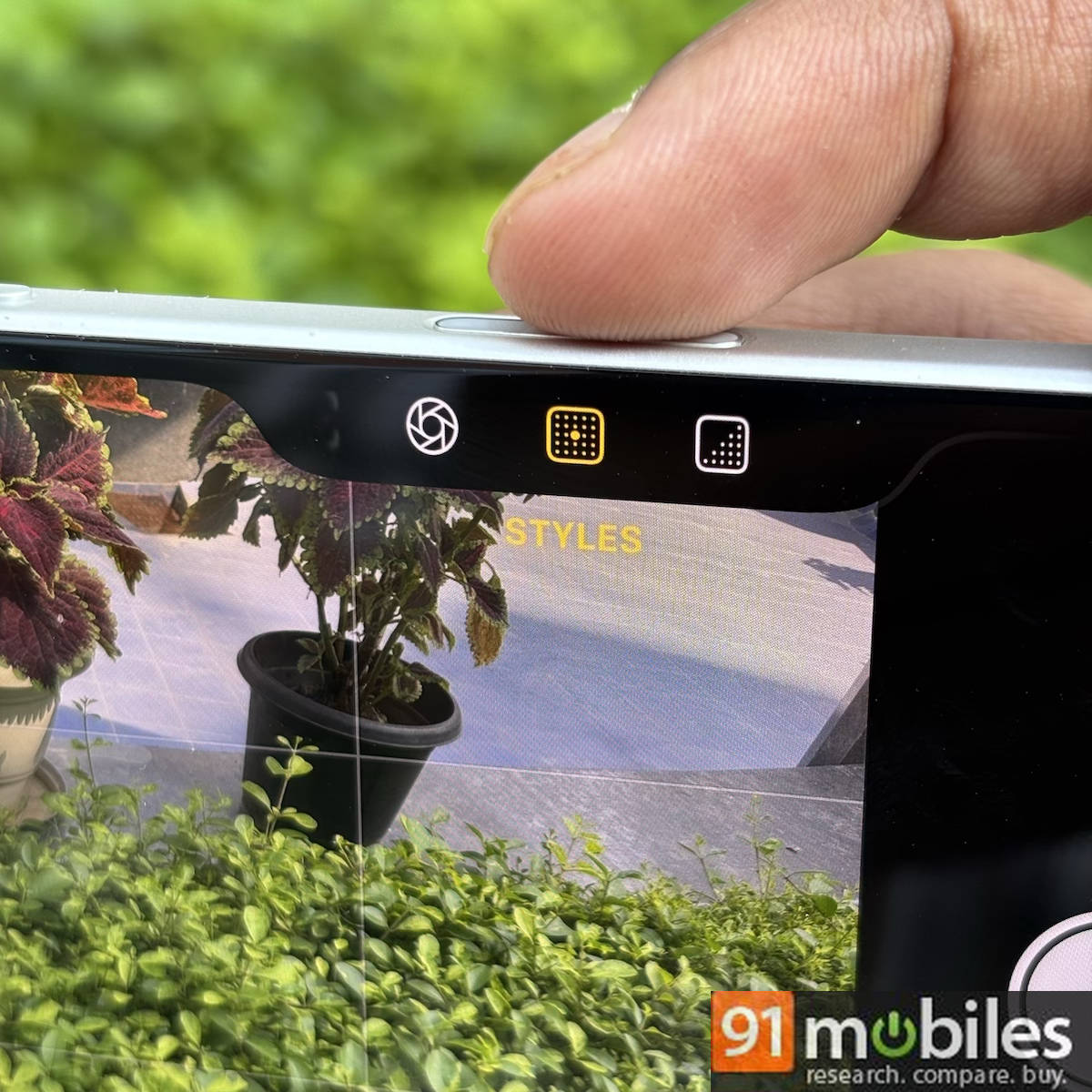
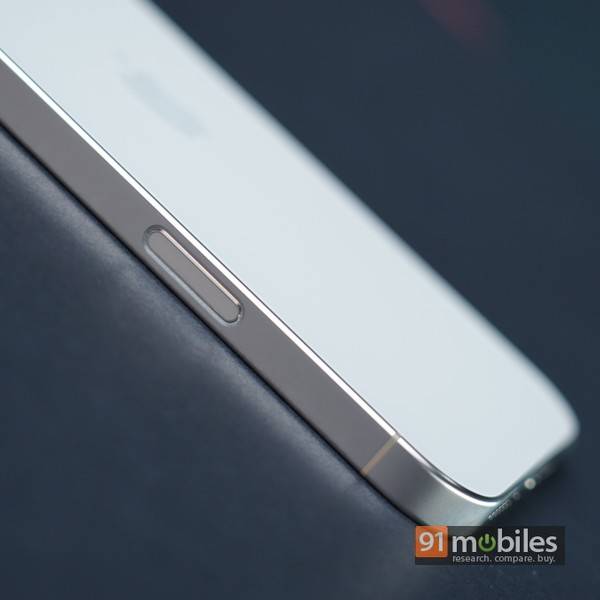
The other new thing of note from a design perspective is the Camera Control, a button-like control that sits flush with the frame on the right side of the device, about where your index finger would fall when holding the phone up to click a photo. More on it later, but you should know that phone cases specifically designed for the iPhone 16 series all have cutouts or a provision to access the camera control, and while a 15 Pro Max case should fit on the 16 Pro Max, you won’t be able to access the Camera Control on the latter.
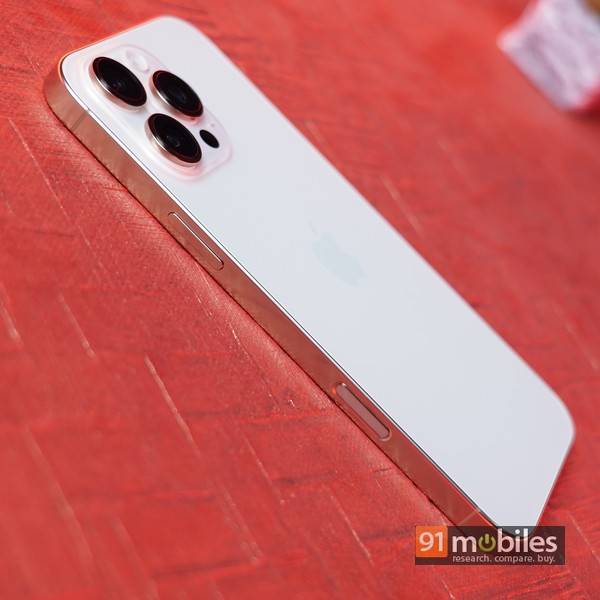
This apart, the design and port placement remain unchanged — with a Type-C port placed on the bottom along with the speaker, a multifunction key on the right, discrete volume up/down keys on the left, plus an action button which mutes the ringer with a long press by default (unless you go and change its function in settings). I do wish Apple had added more functionality to the action button this time, such as providing the ability to customise other actions like double press and assign that to desired apps or tasks.
The new Desert Titanium shade of the phone looks elegant if you ask me, and overall, the fit and finish is excellent. The IP68 rating adds peace of mind, and a case is recommended as well if you want to save your precious new iPhone from drops and other signs of wear and tear resulting from daily usage. I checked out the new Beats case designed for the iPhone 16 Pro Max, and I must say it looks quite nice. I have the one in a shade called Summit Stone, and other available hues include Midnight Black, Riptide Blue and Sunset Purple. Priced at Rs 4,900, the Beats case doesn’t come cheap, but comes with MagSafe support and also features a sapphire crystal coupled to a conductive layer that enables one to use the Camera Control seamlessly. There’s a microfibre lining inside, while the exterior has a glossy finish that looks premium. I was worried about scratches, but I’m glad to report that the case came out unscathed and scratch-free after daily usage (which also included an international trip).
| Smartphone | Google Pixel 9 Pro XL | Samsung Galaxy S24 Ultra | Apple iPhone 15 Pro Max | Apple iPhone 16 Pro Max |
| Display size | 6.8-inch OLED | 6.7-inch AMOLED | 6.7-inch OLED | 6.9-inch OLED |
| Peak brightness | 3,000 nits | 2,600 nits | 2,000 nits | 2,000 nits |
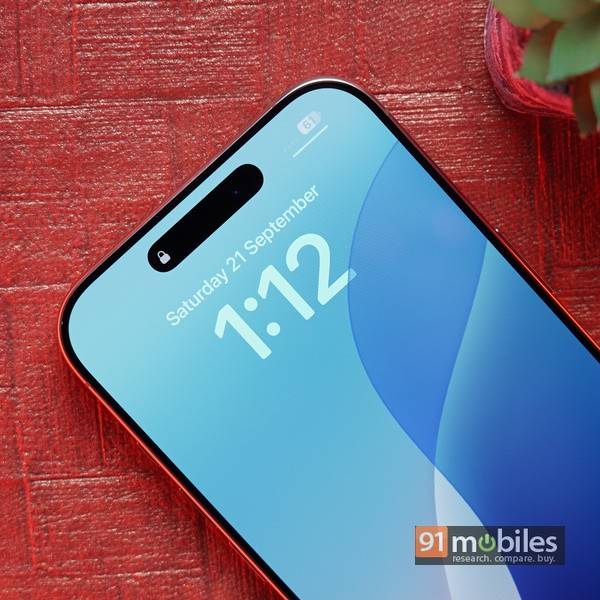
As far as the display is concerned, the 6.9-inch Super Retina XDR panel delivers superb visuals, vividness and clarity, with the refresh rate going up to 120Hz. Like before, the screen features HDR support, True Tone, Always On, and comes with the signature Dynamic Island up top (the pill-shaped notch that hides the front shooter, the Face ID hardware and can show overlays and controls for apps that support it).
Cameras and Camera Control
Unsurprisingly, a big part of the iPhone 16 Pro Max story revolves around the cameras. iPhones are known for their photo and video-capturing prowess, and the 16 Pro Max attempts to take things to the next level with its upgraded hardware and software. The key new highlights include 4K 120 fps recording in Dolby Vision and a new 48MP ultra-wide camera (up from 12MP on the previous model), among other things. This year, both the Pro and the Pro Max models flaunt 5x telephoto camera, versus last year, when this feature was only available on the 15 Pro Max, with the 15 Pro featuring a 3x telephoto shooter.
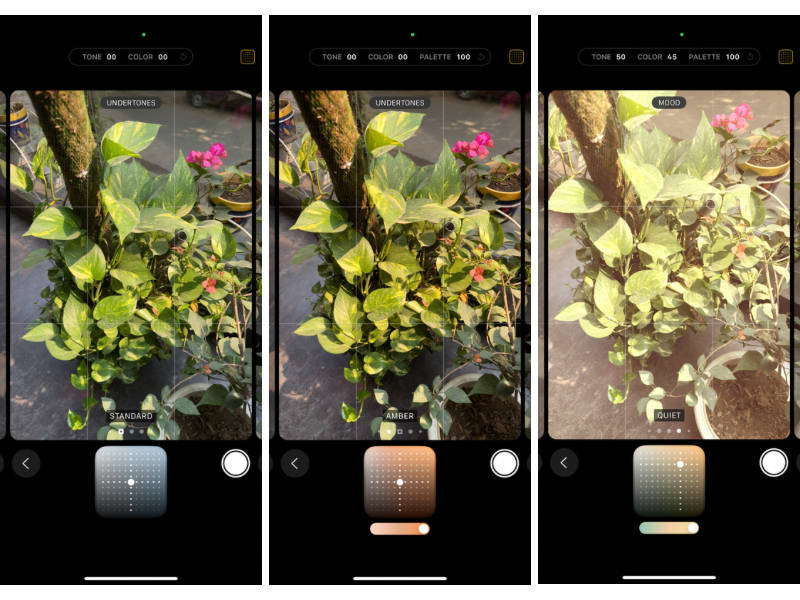
Also worth mentioning are the new photographic styles, which provide almost endless possibilities for customising the results. A new Style control button available on the camera viewfinder lets one adjust skin undertones and choose one from nine different mood-based styles which can alter the look of the entire image. The adjustments can be done while shooting, and even later, after capturing. The control pad is quite easy to use too. Pro videographers would appreciate the ability to shoot 4K 120 fps in Dolby Vision, make use of playback speed controls that let one adjust video playback speed after capture, and choose to shoot in ProRes with Log encoding (directly on external storage if needed). Audio capture capabilities have been boosted too, with spatial audio capture and wind noise reduction on offer. Post shooting, you can edit your video to access the new Audio Mix feature which allows you to choose options like In-Frame, Studio and Cinematic. This tweaks the sound of the video clip in different ways, depending upon the option chosen, as per preferences or requirements. It’s a bit tough to describe in words, but the difference in the audio is quite noticeable.
Moving on to the image quality, the iPhone is easily among the best camera phones out there, though this hardly comes as a surprise. Over the years, the iPhone has built up a reputation of being a capable shooter and the iPhone 16 Pro takes that to the next level. In general, the photo quality is excellent, regardless of shooting conditions. Lens flare in low light conditions is still a bit of an issue, and I’ve seen rivals fare much better in that regard. Other than that, however, the iPhone 16 Pro Max can hold its own when it comes to photography. Let’s take a slightly more granular look at how it fares against rivals in specific scenarios.
Daylight
iPhone 16 Pro Max
Galaxy S24 Ultra
Comparing the primary cameras of the iPhone 16 Pro Max with its arch rival the Samsung Galaxy S24 Ultra in daylight conditions, the iPhone’s shot looks quite vibrant and pleasing to the eye. However, peeping a bit closer by magnifying the shots, it becomes apparent that the S24 Ultra is able to capture a greater level of detail. That said, the difference is tiny and hardly visible unless one looks really closely.
Selfies
iPhone 16 Pro Max
Pixel 9 Pro XL
When it comes to selfies, the iPhone 16 Pro Max doesn’t impress as much. In this comparison with the Google Pixel 9 Pro XL, the shot captured using the latter shows better skin tones and a higher level of detail.
Night mode
iPhone 16 Pro Max
Galaxy S24 Ultra
Low-light photography is the ultimate test for cameras and that’s where the iPhone proves its mettle — more specifically, in the dedicated night mode scenario. Comparing the results with those shot using the Galaxy S24 Ultra, the iPhone’s results appear richer and loaded with more detail.
Camera Control
The 16 series iPhones are the first to come with what Apple calls Camera Control — a dedicated hardware control designed to aid shooting. This isn’t the first time a phone has offered a dedicated camera key — various brands, including the likes of Nokia and Sony, had handsets that came with physical shutter keys. The Camera Control on the iPhone 16 series is more than just a shutter key though. As the name suggests, it allows for almost full control of the camera system, not only allowing you to shoot pictures and videos but also control various settings, switch between different cameras and use zoom.
The control key is placed on the right spine of the phone, just where your right index finger would fall when holding the phone horizontally for clicking pictures. By default, pressing the Camera Control launches the camera, and pressing it again shoots a picture. However, a light double press of the same button brings up an overlay that shows various options, (including exposure, depth, zoom, cameras, styles, and tone), and you can slide your finger across the camera control to scroll across these. A light press on the highlighted one selects that option, and then you can slide your finger again to adjust that one. Selecting the zoom option allows you to control zoom levels by sliding your finger, for instance. When a particular option (like zoom for instance) is selected, a light double press moves back to the previous overlay with all the settings. It sounds more complicated than it actually is, but I must say that using and mastering the Camera Control on the iPhone does require a learning curve. I can’t say if it’s a game-changer, but once you get the hang of it, it can be quite useful.
Software and AI
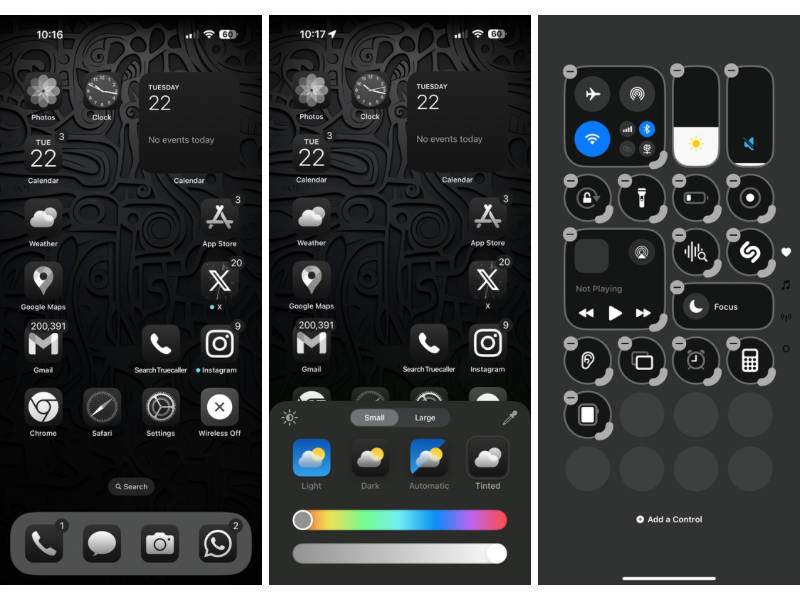
iOS 18, the latest iteration of Apple’s mobile OS, brings extensive customisation options and new features, and there are AI features in the offing as well. New platform features include the ability to customise the placement and colour tone of the app icons on the home screen, customising the controls on the Control Center, a redesigned Photos app, intelligent categorisation in the Mail app, and more. There’s a new Passwords app that allows you to store all your passwords in one place, with Apple’s assurance of security of course.
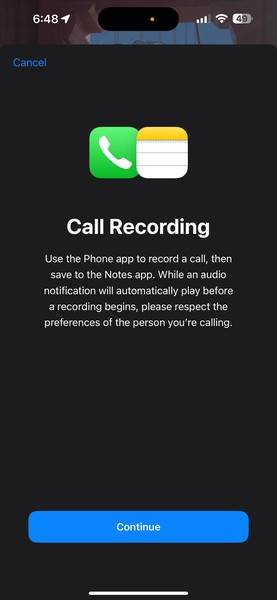
One of the most noteworthy new features is call recording, which is now finally available on the iPhone. Android users have been able to record calls for a long time now while iPhone-toting folks had to resort to workarounds, which were either pricey and/or didn’t work well. With iOS 18, more specifically iOS 18.1, iPhone users finally get a native call recording option. What’s more, on iPhones that support Apple Intelligence (15 Pro, 15 Pro Max and above), users can get transcriptions of their calls as well.
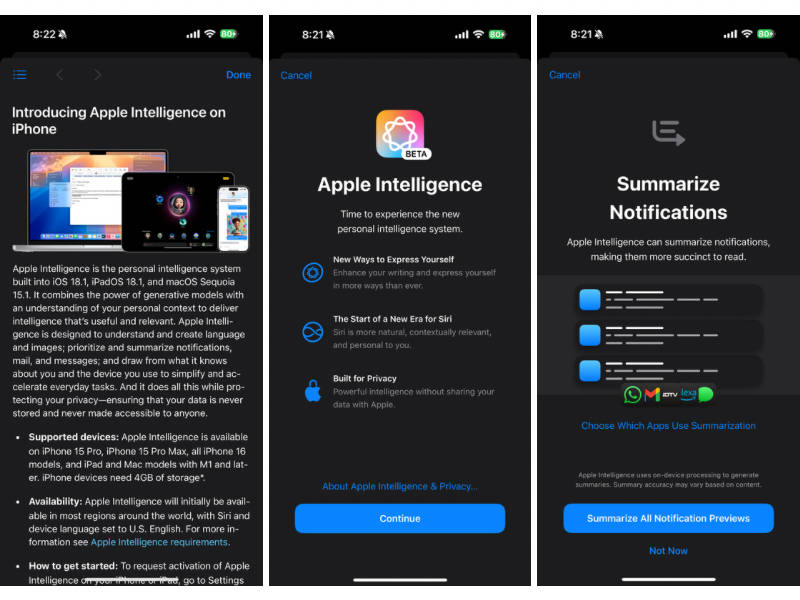
Then there’s the AI. Apple has given its own twist to the acronym and labelled it Apple Intelligence, promising quite a few goodies. There’s the ability to summarise, rewrite and proofread text on any app, available as part of the new Writing Tools bouquet. In the Photos app, one can use natural language to search for specific images or videos and create Memories videos based on typed descriptions. Another new AI tool is Clean Up, which, as the name suggests, allows one to remove undesired objects from photos. Siri has become even more intelligent, with its powers getting a boost thanks to Apple Intelligence… making it more natural and flexible than ever before.
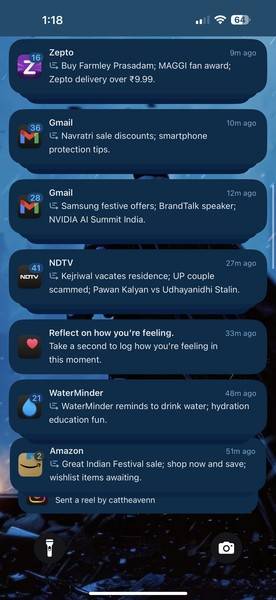
Notifications Summary has to be my favourite of the lot, considering I have hundreds of apps installed and receive countless notifications throughout the day. The feature presents a concise, meaningful summary derived from multiple notifications received from a single app (like Gmail or WhatsApp), helping save time since I don’t need to sift through a whole bunch to see if there’s something that needs my attention.
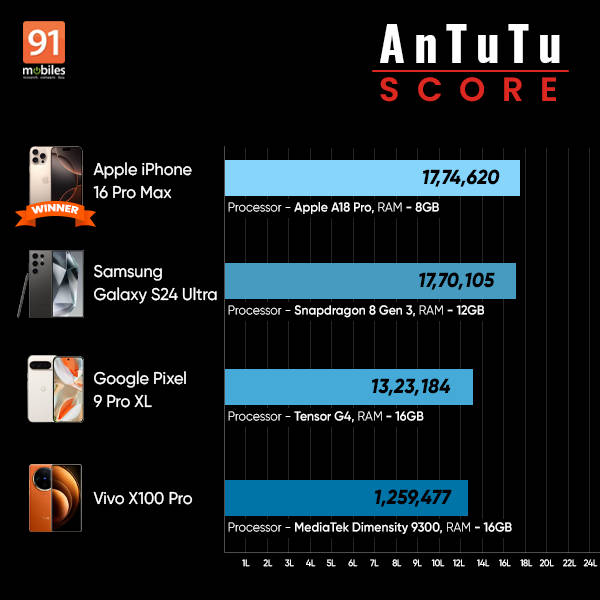
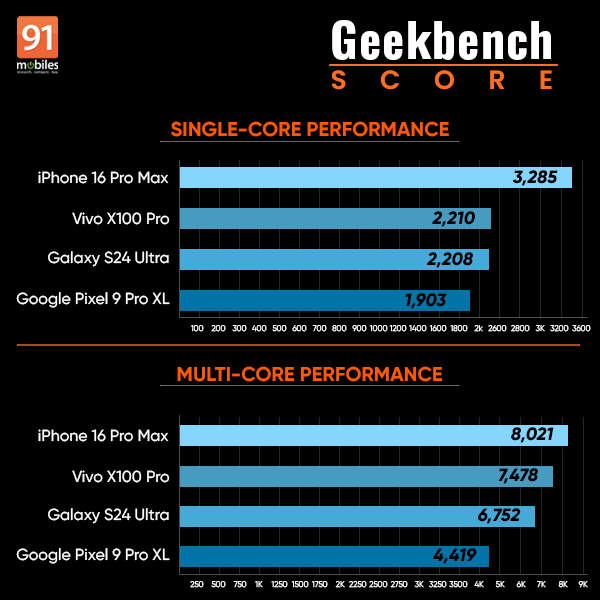
Apple’s newest Pro-grade silicon, the 3nm A18 Pro powers all of the iPhone 16 Pro Max’s number-crunching and AI chops. Promising all-round performance bumps and big upgrades to AA gaming and camera features, the new chip comes with a 16-core neural engine, a 6-core CPU and a 6-core GPU. These components are said to be significantly faster as compared to the A17 Pro, with improvements ranging from 15 to 20 percent. With improved efficiency, the new silicon promises better battery life as well. Synthetic benchmarks like Antutu and Geekbench provide a good indication of how powerful this new SoC is, and real-life usage reflects the same — with buttery-smooth animations, fast app launch times and fluid usage across different types of apps and tasks, without any lag or jitter whatsoever. As it turns out, the iPhone 16 Pro Max scores the highest in benchmarks like Antutu and Geekbench, when compared to nearest rivals that include the Samsung Galaxy S24 Ultra, the Google Pixel 9 Pro XL and the Vivo X100 Pro.
The Pro Max model is one of the two larger models of the lineup, and as such, benefits from a larger capacity battery as compared to the regular iPhone 16 and the 16 Pro. While Apple doesn’t really reveal exact battery capacity, teardowns have pegged it at 4,685mAh, which is close to the 5,000mAh battery packs found inside most Android phones these days. Thanks to the efficiency Apple is able to bake in due to its complete control over hardware and software, the iPhone 16 Pro Max delivers good battery life and is easily able to last a full working day with medium usage. I’m averaging about 6 hours of screen-on time, and usually get back home with some juice still left in the tank. On days with heavier usage though, battery anxiety gets the better of me and I generally tend to give it a top-up charge sometime during the day, just so I’m able to catch a show or part of a movie on my commute back home without worry. The new iPhone charges faster as compared to its predecessor, but not significantly, at least as far as wired charging speeds are concerned. If you can get hold of the upgraded MagSafe charger, you can make use of 25W wireless charging, which is much faster than the 15W available on the previous one. Using a wired PD charger, my review unit of the iPhone 16 Pro Max took a little over an hour and a half to juice up fully from 20 percent.
Final verdict
The iPhone 16 Pro Max is priced starting Rs 1,44,900 for the base model that offers 256 gigs of storage, while the top-end model that comes with 1TB storage costs Rs 1,84,900. I don’t need to tell you that this is a lot of money to pay for a phone, but then, this is an iPhone we’re talking about and the price tag hardly comes as a surprise. And if you’re considering buying one, the price tag is something you’ve already made your peace with. The real question is, is it worth buying? The short answer is yes. The long answer is a tad bit more complicated since choosing an iPhone over an Android flagship depends on quite a few things, such as how badly you want to own an iPhone and how deep you’re entrenched into Apple’s ecosystem, among other things. On the Android side, the strongest competition comes from the Samsung Galaxy S24 Ultra, which offers excellent cameras that in some aspects, are better than the iPhone’s. The S24 Ultra’s S Pen capabilities are unmatched, and being part of Samsung’s ecosystem has its own benefits. If you’re already an iPhone user, the decision is simpler. Owners of the iPhone 15 Pro / Pro Max, for instance, can safely skip the 16 Pro Max, since the upgrades they’d get from the newer model won’t be that massive. Users of older iPhones however, will immediately notice the performance and camera advantages the iPhone 16 Pro Max can offer.
Looking at it in isolation, the iPhone 16 Pro Max might not be as big an upgrade as one would hope, but brings several standout features that help it mark its own territory. The Camera Control comes to mind first, though admittedly, it does need a bit of a learning curve. The new Photographic Styles could be a game-changer for photo buffs. Apple has slowly and steadily positioned the iPhone Pro models as professional videography tools, with features like Cinematic video, ProRes recording, the option to record directly to external storage, and others aiding in that respect. The provision of 4K 120 fps Dolby Vision recording and the Audio Mix features add to that in a meaningful way. Suffice it to say, if you’re a video content creator or otherwise are serious about videography, the iPhone 16 Pro Max can be a worthwhile companion.
Editor’s rating: 8 / 10
Pros:
- Good performance & battery life
- Excellent cameras & useful Photo Styles
- Video capabilities & Audio Mix
- Apple Intelligence
Cons:
- Camera control needs a learning curve
- Apple Intelligence needs more work
- Slow charging
- Pricey