Future OnePlus flagship could feature 240Hz dynamic refresh rate, claims report


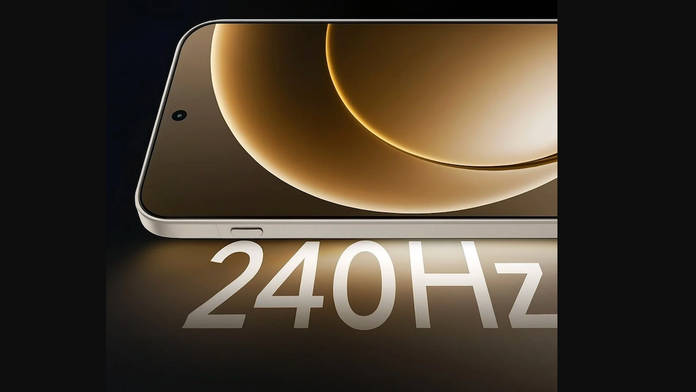
OnePlus could be working on one of its most aggressive display upgrades yet, with early reports indicating a jump to a 240Hz dynamic refresh rate on an upcoming flagship. That’s what a new leak claims, and the timing couldn’t be more interesting. The OnePlus 15 has recently been unveiled, just yesterday in India, at a starting price of Rs 72,999. Early reviews have praised its value, but some also question its display choices.


This year’s OnePlus 15 comes packing a 165Hz refresh rate and a 1.5K resolution, down from the 2K, 120Hz panel used on last year’s OnePlus 13. While the higher refresh rate is technically an upgrade, to some users, the reduced resolution makes the shift feel less meaningful.
Show Full Article
Against that backdrop, talk of an even faster 240Hz screen from X account OnePlus Club, which has a decently reliable track record of OnePlus-related leaks, has sparked divided opinion. Comments on X range from “Do we really need 240Hz?” to “Nobody needs 240Hz on a phone,” with some saying OnePlus should “spend that money on cameras instead.” A smaller group of enthusiasts did welcome the possibility, particularly mobile gamers who prefer ultra-smooth response times.
Why 240Hz lol. Just put 144Hz at QHD resolution and be done with it. Focusing on unnecessary things.
— darth_4k0n1u5 (@4k0n1u5) November 8, 2025
The wasted Money on 244 should go to the cameras
— Obito Uchiha (@obitouchiha90) November 8, 2025
To put it in context, OnePlus is not the sole OEM chasing display superiority. Though mainstream flagships from Samsung, Apple, and Google currently top out at 120Hz, brands like the ASUS ROG Phone, RedMagic, and iQOO have pushed higher refresh rates in the gaming segment. The ASUS ROG Phone 9 Pro has an adaptive refresh rate of 185Hz with FHD+ resolution, while the OnePlus 15 offers a rare 1.5K and 165Hz combo. However, we saw a 240Hz display in a non-mainstream phone, the Sharp Aquos Zero 2, in 2020. The technology was unheard of after that. This gives OnePlus an opportunity to position itself as the “smoothest” Android flagship, if it decides to commercialise 240Hz.
A refresh rate of 240Hz would definitely make animations and swipes, or any in-game motion, super slick. But this comes with other costs as higher refresh rates consume more battery, produce more heat, and raise the processing burden. Not all apps or games are optimised for refresh rates above 120Hz, so real-world benefits will vary greatly for casual users. Speaking from a buying-guidance perspective, this makes the feature sound fancy on paper but may not substantially translate to real-world use in the current scenario.

There’s still no confirmation on which model would get the new screen, but there are expectations that it will be a future flagship, presumably the OnePlus 16 or OnePlus 17. If true, the move would fall in line with OnePlus’ ongoing strategy of leveraging display tech as a differentiator in the premium Android market.
But does this align with user priorities? Fans on forums and social media seem to push for stronger camera upgrades, better thermals, and more durable battery life. A high refresh-rate screen could help OnePlus market smoothness as its signature experience, but to non-gamers, it could feel like a spec-sheet flex rather than a user-centric improvement.