Google Pixel 10 Pro Fold launched with better durability, faster chipset, bigger battery, & more: price, full specifications


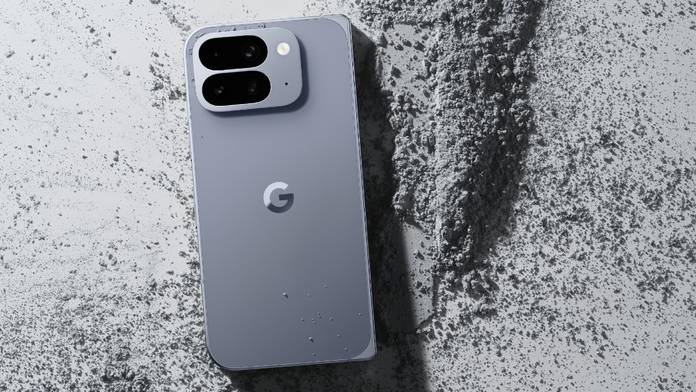
The Google Pixel 10 Pro Fold has just been launched, and comes across as a device that addresses many of the shortcomings of its predecessor. At its core is the new Google Tensor G5 chipset, delivering noticeable performance gains over the Tensor G4. Powering the device is a large 5,000mAh battery, up from 4,650mAh on the Pixel 9 Pro Fold, paired with faster 30W wired charging and support for the Qi2 wireless charging standard, called Pixelsnap, a first for any foldable. The Pixel 10 Pro Fold is also the world’s first foldable with an IP68 rating for dust and water resistance, making it as resilient as most premium slab-style smartphones.
While the camera hardware remains unchanged, Google has introduced several software-level improvements to enhance photography and overall imaging performance. Despite these upgrades, the Pixel 10 Pro Fold carries the same price tag as its predecessor, Rs 1,72,999, for the sole 16GB RAM and 256GB storage variant. Moreover, there is no other colour variant of the smartphone other than grey. Pre-orders begin today on Flipkart.
Show Full Article


Table of Contents
Most durable foldable phone
The Pixel 10 Pro Fold retains the same design as the Pixel 9 Pro Fold (review), featuring a book-style folding form factor and a rectangular camera housing. However, Google has improved its durability this time with Corning Gorilla Glass Victus 2 and an IP68 rating, offering resistance against dust and water immersion up to 1.5 metres for 30 minutes. The frame is made of aluminium. Additionally, the hinge is rated to withstand over a decade of daily folding and unfolding.
Google intends to keep the Pixel 10 Pro Fold relevant for the long haul, promising seven years of OS upgrades and monthly security updates. Out of the box, the handset runs Android 16, the latest iteration of Google’s operating system. The software introduces several new features, including iOS-like Live Activities for ridesharing, delivery, and navigation apps; improved support for multiple screen sizes and aspect ratios; night mode compatibility with third-party camera apps such as Instagram, among other refinements.
The Pixel 10 Pro Fold also features an Instant View mode, which takes advantage of its foldable display to let users preview captured images instantly, while keeping the camera app active in split-screen. Additionally, the smartphone comes with a plethora of AI tools – some carried forward from previous iterations with slight enhancements, while others are entirely new. A highlight is Magic Cue, which proactively analyses your screen and suggests relevant actions, such as surfacing flight details when you’re calling an airline or fetching a hotel address when a friend asks for it.
Additionally, Gemini can now pull information from across Google apps with a simple voice command, and even engage in conversations using images or your screen for richer, more contextual responses.
Google’s most advanced chipset yet
The Pixel 10 Pro Fold manages all its AI processing and more with the Tensor G5 chipset at its core. Co-designed with DeepMind, this is said to be Google’s most advanced chip yet, capable of running over 20 on-device AI experiences efficiently. Built on a 3nm TSMC node, the SoC offers improved thermals, faster CPU performance, and up to 60 percent more TPU power than last year’s Tensor G4. It also debuts Gemini Nano, unlocking smarter and faster features such as Magic Queue and Personal Journal.
The SoC is paired with 16GB of RAM, which should be more than enough to handle multitasking and an extensive workload. However, the 256GB storage feels limited for a premium foldable, which is likely to store a large number of files for its users.
In terms of optics, the Pixel 10 Pro Fold retains the same camera setup as its predecessor, comprising a 48MP primary sensor, a 10.8MP ultrawide lens, and a 10.5MP telephoto unit with 5x optical zoom. This triple rear camera setup is also paired with multi-zone LDAF, which enhances autofocus performance, particularly in low-light and fast-action situations. Google has added two new modes to the cameras: Camera Coach and Auto Best Take. The former guides you to optimise your angle and get the best photo, while the Auto Best Take fixes your group photo by automatically finding and combining similar photos where everyone looks the best.


Similar to other foldables, the Pixel 10 Pro Fold also features 10MP dual selfie cameras. One is mounted on the 6.4-inch ‘Actua’ cover screen in the punch-hole setup, while the other is on the 8-inch ‘Super Actua’ main display. Both displays support HDR, up to 3,000 nits peak brightness, and up to 120Hz refresh rate. That said, the cover display comes with an adaptive refresh rate, whereas the main display supports a dynamic refresh rate going as low as 1Hz for battery efficiency.
Big battery & Pixelsnap


The Pixel 10 Pro Fold is powered by an upgraded 5,000mAh battery with 30W fast wired charging, capable of juicing up from 0 to 50 percent in just 30 minutes. It is also the world’s first foldable to support Qi2 wireless charging, adopting an iPhone-like MagSafe magnetic system, marketed by Google as Pixelsnap. However, wireless charging is capped at 15W, making it naturally slower than the wired option. Besides charging, Pixelsnap can be used to attach accessories like a kickstand.
We’ll be getting our hands on the Pixel 10 Pro Fold soon, so stay tuned for the full review. Based on the specifications, the device appears to be more of an iterative upgrade. Its larger battery and improved durability give it an edge over its closest rival, the Samsung Galaxy Z Fold7. However, the real test will be whether it can outpace Samsung in performance and AI features. As for the cameras, while the previous model showed promise, it remains to be seen if the new foldable can truly hold its own against the latest flagships.