Motorola Razr 2026 teaser reveals April 29th as prospective launch date, familiar design and new colours revealed


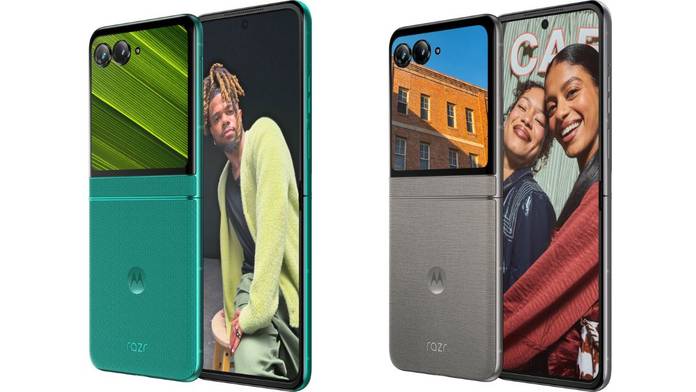
Motorola has started teasing the Razr 2026 (Razr 70 globally) in the US, and this time it comes with a clear date attached. The teaser at the end mentions April 29th and that is expected to be the global launch, although there’s still a possibility the company uses it to kick off a staggered reveal, spacing out key details in the days that follow.
The Razr 2026, expected to launch globally as the Razr 70, looks very close to last year’s model, the Razr 60. The large cover display still wraps around the dual rear cameras, and that remains the defining element of Motorola’s flip phone approach. The device appears in brown, green, and purple, with what looks like a textured lower half, continuing Motorola’s focus on materials and colours to stand out in a category that tends to look uniform when shut.
Show Full Article
Motorola Razr 70 expected launch timeline
With April 29th now possible as a prospective launch day, Motorola seems to be following a familiar schedule. The Razr 60 series also arrived around late April last year, so this lines up neatly. Availability is expected to follow shortly after. Current reports point to a North American release in May, with other markets, including India, likely to follow in late Q2. Motorola has typically staggered its rollouts, and there’s little to suggest that changes this year.
Motorola Razr 70 key leaked details
On paper, the Razr 2026 looks like a measured update instead of making huge changes. Here’s what to expect:
- A 6.9-inch AMOLED foldable inner display with up to a 120Hz refresh rate.
- MediaTek Dimensity 7450X chipset, which keeps it in the upper mid-range rather than flagship territory.
- Dual 50MP rear cameras, likely tuned for primary and ultrawide use.
- A 32MP internal camera for selfies and video calls.
- Around a 4,800mAh battery, which remains standard for clamshell foldables.
The teaser also points to a metal frame and a textured back panel on the lower half. Button placement remains conventional, with power and volume keys on the right side. None of this is a major departure from the Razr 60. Instead, Motorola seems to be refining the same template, focusing on consistency rather than pushing new hardware.

Pricing is tipped to start at USD 799.99 (around Rs 75,000) for the 8GB + 256GB variant. The Razr 60 launched in India at Rs 49,999 last May, so it’s unlikely the new price will be a direct conversion of the tipped US price. That keeps it positioned as a more accessible foldable, undercutting flagship flip models without dropping too far down the spec ladder. Within the broader lineup, the Razr 70 will sit below the Razr 70 Ultra. That model is expected to move closer to flagship territory with a faster chipset, higher refresh rate, and quicker storage, giving buyers a clearer step-up option.
While Samsung’s Galaxy Z Flip series continues to lead in terms of scale and ecosystem in the foldable segment, Motorola has carved out space by focusing on day-to-day usability. The larger, more functional cover display is a big part of that. It allows more interactions without opening the phone, which changes how the device is used in small, practical ways. The Razr 2026 doesn’t chase top-end chipsets, but also avoids obvious compromises in areas that matter for regular use. Performance should be adequate for most users, even if it doesn’t match flagship phones on paper.
If the appeal of a foldable lies in its form factor, compactness, and a usable outer screen, the Razr 2026 fits that brief without pushing into ultra-premium pricing. If the priority is raw performance, long-term headroom, or more advanced camera systems, then the Ultra variant or competing models might be a better fit.