OPPO’s latest Reno series has been officially launched in China. The lineup includes two phones: the Reno 17 and Reno 17 Pro. Both phones feature the same design and colours, but differ when it comes to specifications. The Reno 17 Pro is the more expensive model of the two and a better choice if you consider the hardware. But how different are the two phones? And which Reno 17 model is better suited for your needs? Let’s find out in this comparison.
Table of Contents
OPPO Reno 17 Pro vs Reno 17: specifications
| Specification | OPPO Reno 17 Pro | OPPO Reno 17 |
| Display | 6.32-inch FHD+ AMOLED, 120Hz refresh rate, 1800 nits peak brightness | 6.56-inch FHD+ AMOLED, 120Hz refresh rate, 1800 nits |
| Processor | MediaTek Dimensity 8550 SUPER | Qualcomm Snapdragon 7 Gen 4 |
| Cameras | 200MP primary, 50MP ultra-wide, 50MP telephoto; 50MP front | 50MP primary, 50MP ultra-wide, 50MP telephoto; 50MP front |
| Battery, charging | 7250mAh, 80W SuperVOOC Flash Charge | 8000mAh, 80W SuperVOOC Flash Charge |
| Software | ColorOS 17.0 | ColorOS 17.0 |
OPPO Reno 17 Pro vs Reno 17: price
The OPPO Reno 17 starts at CNY 3,599 (Rs 50,406 approx.) in China for the base model with 8GB RAM and 256GB storage. The Reno 17 Pro is priced at CNY 4,199 for the 8GB RAM + 256GB base variant. The Reno 17 is available in four memory configurations with up to 12GB RAM and 1TB storage, while the Pro model comes in three with 12GB + 512GB as the top-end variant.
If we’re considering just the price, then the Reno 17 is the more budget-friendly choice here.
OPPO Reno 17 Pro vs Reno 17: design, display
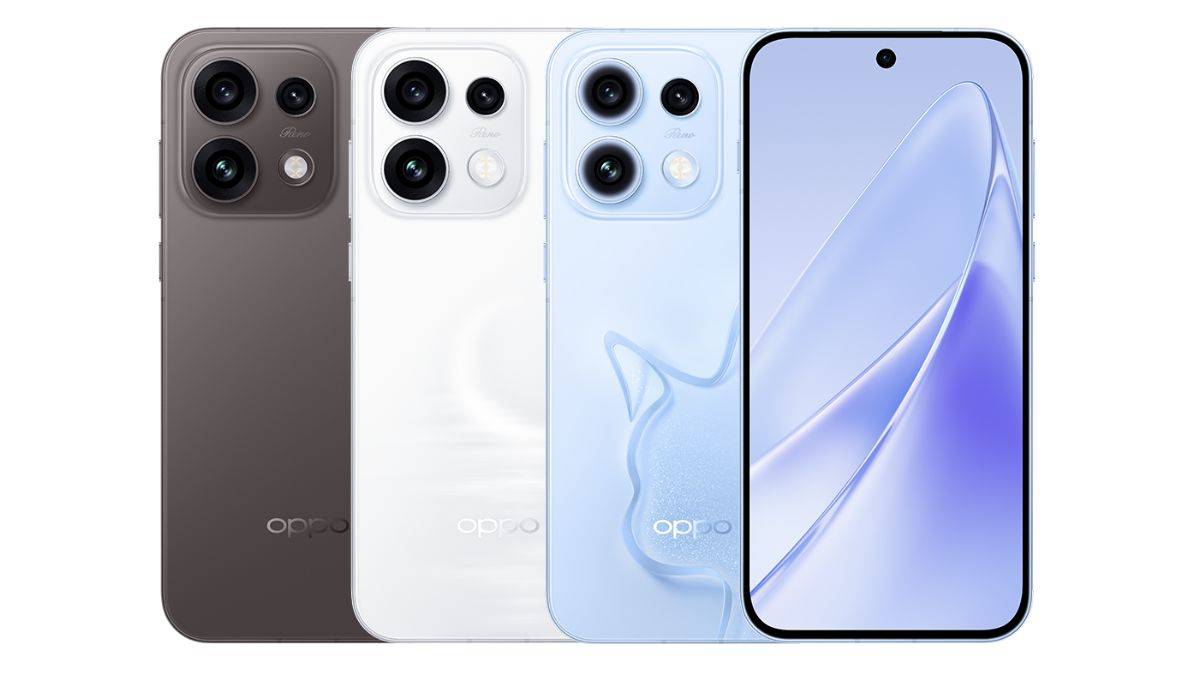
The Reno 17 Pro and Reno 17 are largely the same in terms of design, with the size being the main differentiator between the two phones. The Reno 17 Pro is more compact with a 6.32-inch screen, while the Reno 17 has a 6.56-inch display. There are slight differences in terms of weight and thickness today. Interestingly, the Reno 17 Pro is slightly thicker but lighter than the Reno 17. This shouldn’t result in any difference, but the overall form factor depends on whether you like a small phone or a relatively compact one.
Source: OPPO
Both phones feature a new 3D cat design on a glass back, which sparkles too with a gradient finish. This is the Encounter Cat (translated) version. The Reno 17 series comes in two more colours: Cocoa Brown and First Snow White. Both phones also have an IP69K rating for dust and water resistance and OPPO Crystal Shield Glass for durability.

Source: OPPO
Other than the display size, the specs are largely the same on both phones. These include an FHD+ resolution (2640×1216 pixels for the Pro and 2624×1208 pixels for the Reno 17), an LTPS panel, 1800 nits of peak brightness, a 120Hz refresh rate, and a 240Hz touch sampling rate.
So you’re essentially getting the same design and display on both phones, and the choice comes down to the form factor you prefer.
OPPO Reno 17 Pro vs Reno 17: cameras
Cameras are also quite similar on the Reno 17, except for the primary sensor. On the Reno 17 Pro, you get a 200MP primary camera, a 50MP ultra-wide lens, and a 50MP
telephoto lens with 3.5× optical zoom. For selfies, you get a 50MP front camera. On the Reno 17, it’s a 50MP camera setup throughout, including the main camera. So the main difference is in the primary camera, meaning the Reno 17 Pro would produce better details and colours. But the 50MP sensor on the Reno 17 should still deliver good results and can be considered if photography isn’t a major priority.
Otherwise, both phones come with features such as 0.6–7× focal lengths for video recording, and 0.6× wide-angle video recording on the front camera. OPPO has also introduced a Live Collage feature where you can add stickers and cutouts to live images, along with personalised drink stickers and real-time coffee and milk tea stickers. There are several other fun and creative features for further editing on the Reno 17 series.

Source: OPPO
OPPO Reno 17 Pro vs Reno 17: chipset, battery
Chipset and battery are two key areas that could make an impact on one’s buying decision. The Reno 17 Pro is powered by the MediaTek Dimensity 8550 SUPER chipset, which is significantly faster than the Snapdragon 7 Gen 4 on the Reno 17. This means that you can expect stronger performance on the Pro model for everyday tasks, gaming, and more. The Reno 17 should still be reliable for regular usage, but if you’re a power user, the Reno 17 Pro might be a better choice here.
Interestingly, the Reno 17 has a larger 8,000mAh battery, compared to the 7250mAh on the Reno 17 Pro. While both phones support 80W fast charging, the Reno 17 would be more reliable when it comes to battery life. An 8,000mAh battery is in itself one of the largest capacities you can find in this segment.
OPPO Reno 17 Pro vs Reno 17: software
Both the Reno 17 Pro and Reno 17 run ColorOS 17 based on Android 17 out of the box, which is the latest software version available. ColorOS 17 brings several upgrades and changes compared to ColorOS 16. Visually, there are more intricate changes, like transitions and luminous light effects when moving from one page or section to another. Animation performance has been improved with the Luminous Rendering Engine, which uses less RAM.
ColorOS 17 also adds new lockscreen clock styles, an ‘Esports mode’, and AI Mind Pilot that brings ChatGPT, Gemini, and Perplexity to one platform.
It’s not known how many software updates the Reno 17 series will get, but the Reno 16 series is promised 5 years of OS updates and 6 years of security updates. It should be the same software update policy for the Reno 17 series.
Summing up
Considering just the specifications, the Reno 17 Pro makes sense for those who want a small phone, a faster chipset, and a strong primary camera. But for those who prefer a relatively compact design, a bigger battery, and are okay with the 50MP primary camera, which is also good enough, the Reno 17 is still a reliable pick. Buyers who want to explore further may want to check out alternatives like the Vivo S60 series in China.