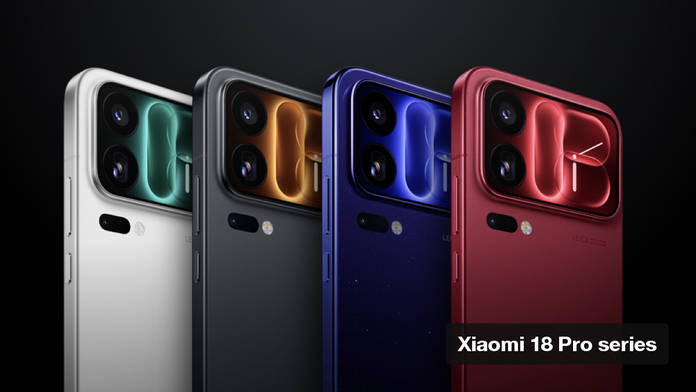
Xiaomi seems to be making it up to fans outside China who missed out on the Xiaomi 17 Pro series with their distinctive rear displays. At an event in Paris, the company launched the Xiaomi 18 Pro and Xiaomi 18 Pro Max in global markets, bringing its secondary screen design to international buyers for the first time. The new flagships combine a second screen on the back with dual 200MP Leica cameras, the latest Snapdragon 8 Elite Gen 6-series processors and a built-in Privacy Display.
While the hardware is impressive on paper, the rear screens and the built-in Privacy Display give the flagships an edge in the premium segment. The latter comes after Samsung introduced the world’s first built-in mobile Privacy Display on the Galaxy S26 Ultra earlier this year. Xiaomi has now brought its own implementation to both Pro models, besides expanding what users can do with the screen on the back.
Table of Contents
Price and India availability
The Xiaomi 18 Pro starts at EUR 1,399 (around Rs 1.44 lakh) for the 12GB + 256GB variant. Its 12GB + 512GB version costs EUR 1,599 (around Rs 1.64 lakh). The Xiaomi 18 Pro Max starts at EUR 1,599 (around Rs 1.64 lakh) for 12GB + 256GB, while the 12GB + 512GB variant costs EUR 1,799 (around Rs 1.85 lakh).
Both phones will be available in Black, White, Cosmic Blue and Velvet Red finishes. Xiaomi is also offering introductory benefits in eligible markets, including three months of Google AI Pro, three months of YouTube Premium, four months of Spotify Premium and a seven- or 14-day iQIYI Standard VIP trial, depending on the market.
For India, Xiaomi has confirmed the Xiaomi 18 Pro, but hasn’t announced an India launch for the Pro Max. The company hasn’t shared a launch date for the standard Pro either. The previous Xiaomi 17 Pro and 17 Pro Max remained China-exclusive, so this release is a notable change in Xiaomi’s global strategy, especially since there’s no vanilla variant in China or anywhere else either.
Specifications and features
The Xiaomi 18 Pro has a 6.4-inch display, while the Pro Max gets a larger 6.9-inch panel. Both use Xiaomi’s M11 LTPO AMOLED technology with HyperRGB 2.0, a 1-120Hz adaptive refresh rate and up to 4,000 nits of multi-scenario peak brightness. The built-in Privacy Display is a notable addition, though Samsung got there first with the Galaxy S26 Ultra (review). Samsung’s implementation lets users apply privacy protection to selected apps, password entry and notification pop-ups. Xiaomi also offers controls for individual apps, notifications and split-screen views, but adds a feature called Privacy Notice. It can detect when someone nearby is looking at the screen and alert the owner through vibrations or HyperIsland. A customisable AI Button provides another way to activate Privacy Mode. We’ll wait for more hands-on experience with the devices to find out who did it better, and update you.
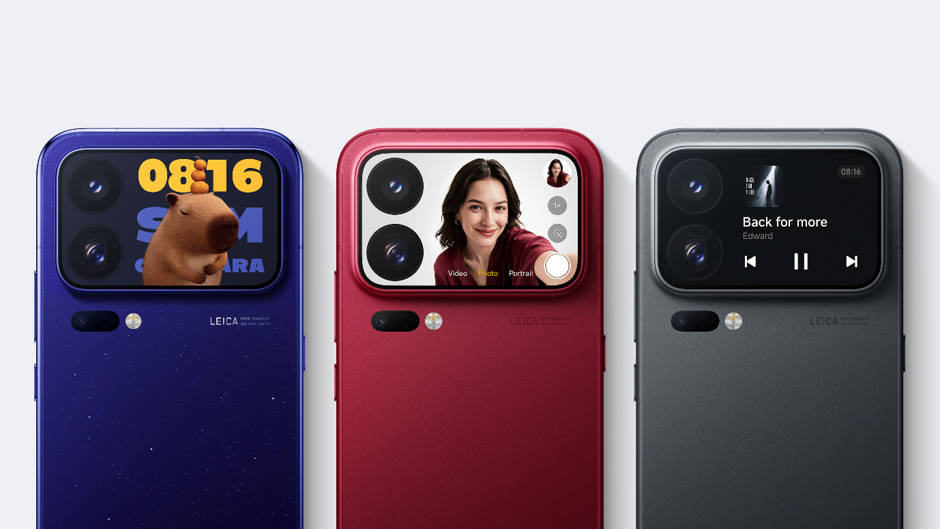
The rear display is where Xiaomi has expanded on the idea from the previous generation. It measures 2.7 inches on the Xiaomi 18 Pro and 2.9 inches on the Pro Max, and uses the same M11 panel technology as the main screen. Its regular role as a viewfinder remains consistent – users can frame selfies, group photos and vlogs using the rear cameras. It also supports real-time previews while recording 8K video. But there’s more to it now. The screen can show calls, navigation instructions, ride-hailing and food delivery updates. Users can pin boarding passes, QR codes, text and images for quick access. Xiaomi has also added AI Interpreter, which uses both displays to show each speaker’s language during face-to-face conversations in 29 languages. Then there’s GenAI Apps. Users can describe a simple tool or game in natural language and create a mini app for the rear screen.
While the Privacy Display and rear screens are interesting add-ons, users mainly flock to Xiaomi flagships for their Leica cameras. Both phones have a Leica dual-200MP system, combining a 200MP main sensor with a 200MP periscope telephoto camera and a 50MP ultrawide camera. Under the hood, the Xiaomi 18 Pro runs on the Snapdragon 8 Elite Gen 6, while the Pro Max gets the Snapdragon 8 Elite Extreme Gen 6. Both are built on TSMC’s 2nm process. The Pro Max also gets an upgraded cooling system with a direct copper thermal path and a next-generation 3D IceLoop design.
Battery capacity is one area where global buyers get less than their Chinese counterparts. The Xiaomi 18 Pro has a 6,000mAh battery globally, compared with 7,000mAh in China. The Pro Max gets 7,050mAh instead of 8,500mAh. Charging is rated at 90W on the Pro and 100W on the Pro Max, with 50W wireless charging on both. The phones run HyperOS 4 and support Google Gemini and Circle to Search. The Pro Max additionally gets triple speakers, an upgraded haptic motor and a Privacy Call feature that makes conversations less audible to people nearby.
Xiaomi will be using the rear display and camera system to give its Pro phones a stronger identity in the premium segment. Samsung, meanwhile, has the first-mover advantage in built-in screen privacy and, based on early testing, a more effective implementation. The Xiaomi 18 Pro could appeal to those who want a relatively compact flagship with a versatile camera setup, while the Pro Max adds a larger screen and an upgraded main camera. But the smaller batteries in the global models are hard to overlook. It remains to be seen which models does India finally get.