The new Redmi Pad Pro 5G is positioned as a more affordable alternative to Xiaomi’s Pad 6 and packs a variety of intriguing features to make it a worthwhile proposition as a mid-range tablet. The new tablet comes with a Qualcomm Snapdragon 7s Gen 2 chipset, a large 10,000mAh battery, 5G connectivity and a bigger screen size compared to the Xiaomi Pad Pro. Let’s find out in this review if the tablet is worth its asking price.
Table of Contents
Design
| Redmi Pad Pro 5G | Lenovo Tab Plus | Xiaomi Pad 6 | |
| Thickness | 7.52mm | 7.77mm (top) / 13.58mm (bottom) | 6.51mm |
| Weight | 568g | 650g | 490g |
The Redmi Pad Pro 5G comes in what the brand calls a “metal unibody” design with a polycarbonate rectangular band covering roughly 1/5th of the rear panel towards the camera side. The rest of the rear panel is made out of metal, and the tablet feels quite sturdy in hand.
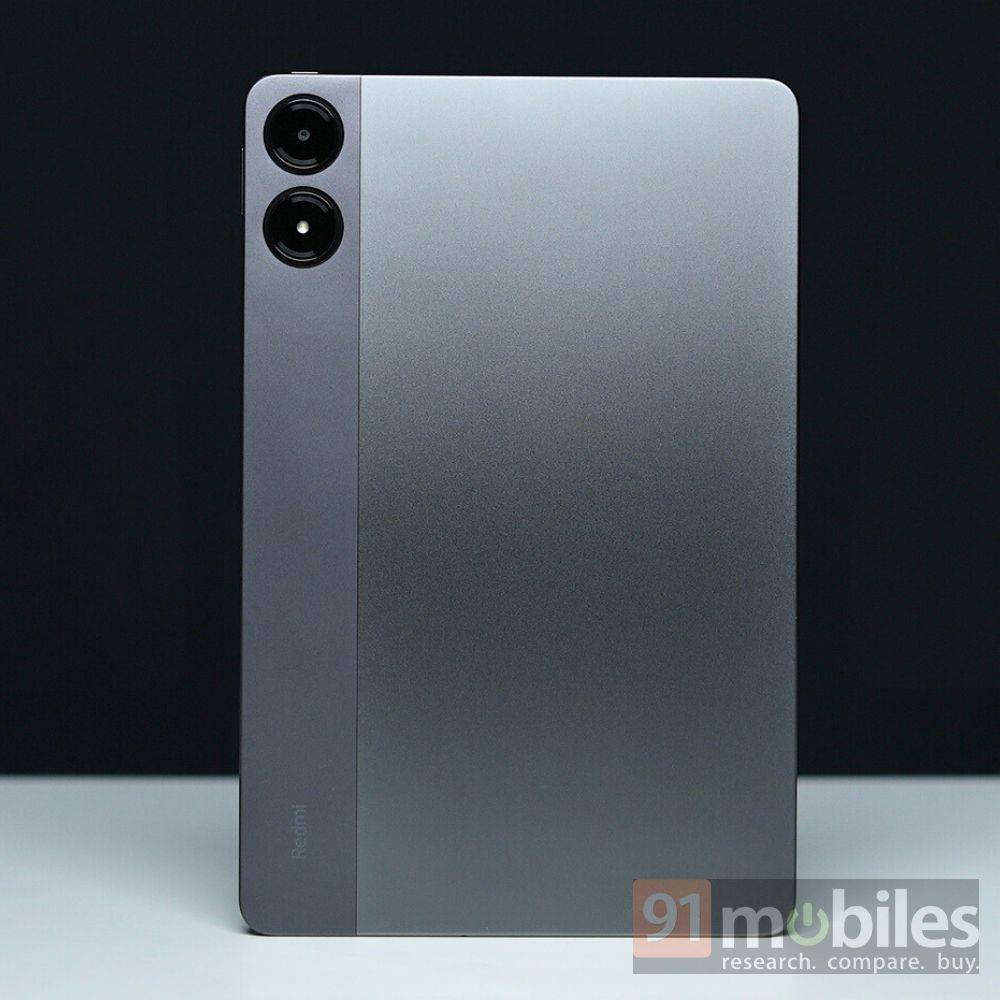
The tablet is sleek and measures about 7.52mm in thickness with a weight of 568 grams. I received the Graphite Grey colour variant, and the tab appears quite classy, so no qualms about the design here. There’s also a 3.5mm headphone jack placed along with the Type-C charging port towards the bottom edge. The rear panel tends to accumulate smudges, though it can be easily avoided with a case.
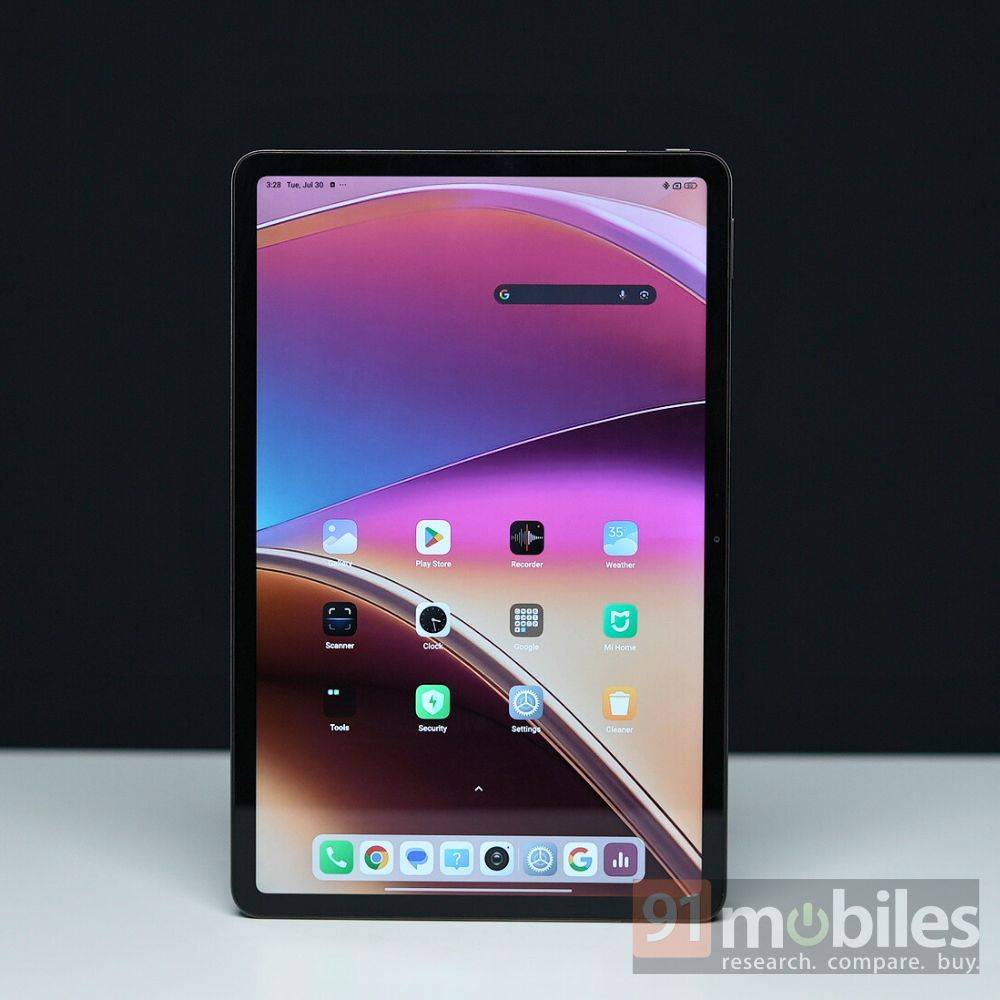
The weight does make it a bit uncomfortable to hold for long periods, which can be remedied with a cover or the paired keyboard, which incorporates a stand. The tab comes with a stereo speaker setup that includes four speakers placed evenly across, with two towards the left and two towards the right.
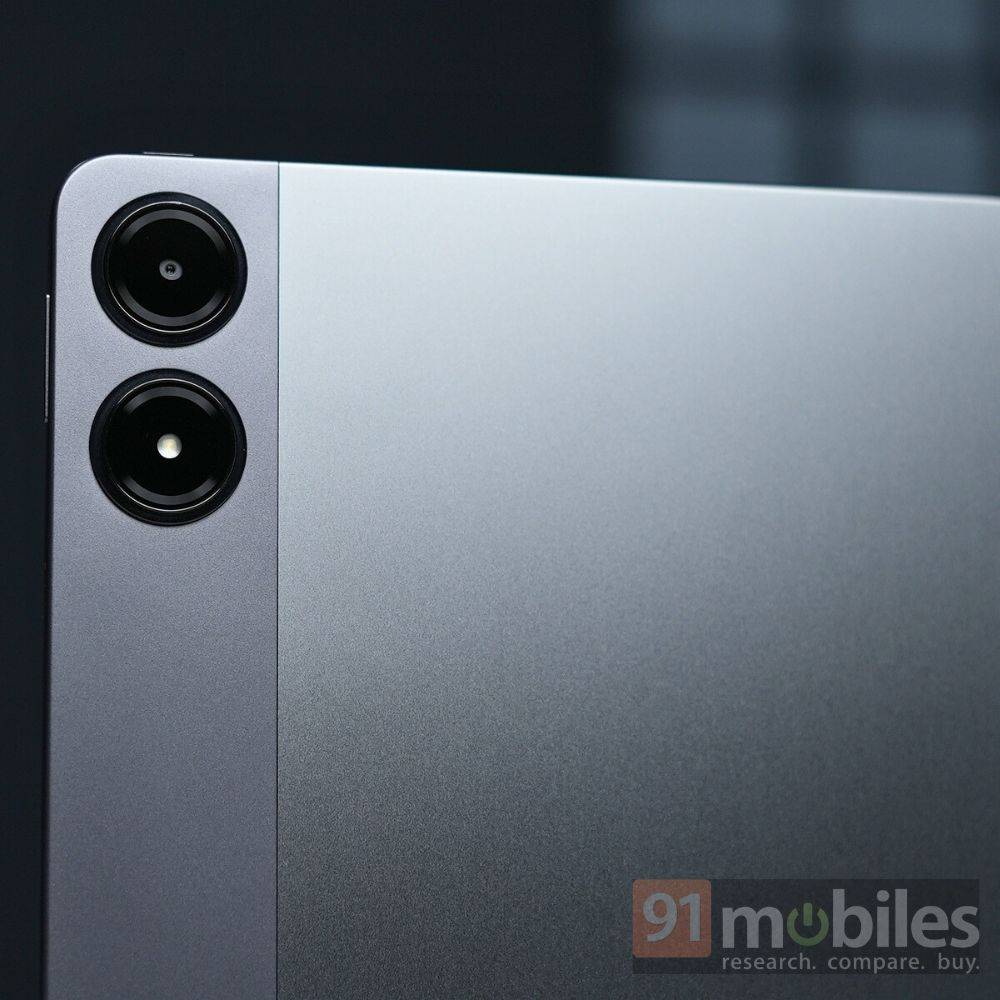
There are two large camera rings on the rear panel, which incorporate the 8MP rear camera and flash unit. One point of improvement would have been the inclusion of a side-mounted fingerprint sensor, which is quicker and more secure compared to the standard pin, pattern, or face unlock.
Display
| Redmi Pad Pro 5G | Lenovo Tab Plus | Xiaomi Pad 6 | |
| Display | 12.1-inch LCD panel | 11.5-inch LCD panel | 11-inch LCD panel |
| Peak brightness | 600nits | 400nits | 550nits |
The Redmi Pad Pro features a 12.1-inch LCD display with a resolution of 2,560 x 1,600p, 120Hz refresh rate, and a peak brightness of 600nits. The panel is a 12-bit display with Dolby Vision support, and the viewing experience is quite exceptional. For protection against scratches and damage, the panel comes with Gorilla Glass 3. The paired Dolby Atmos speakers get reasonably loud and add to the multimedia experience.
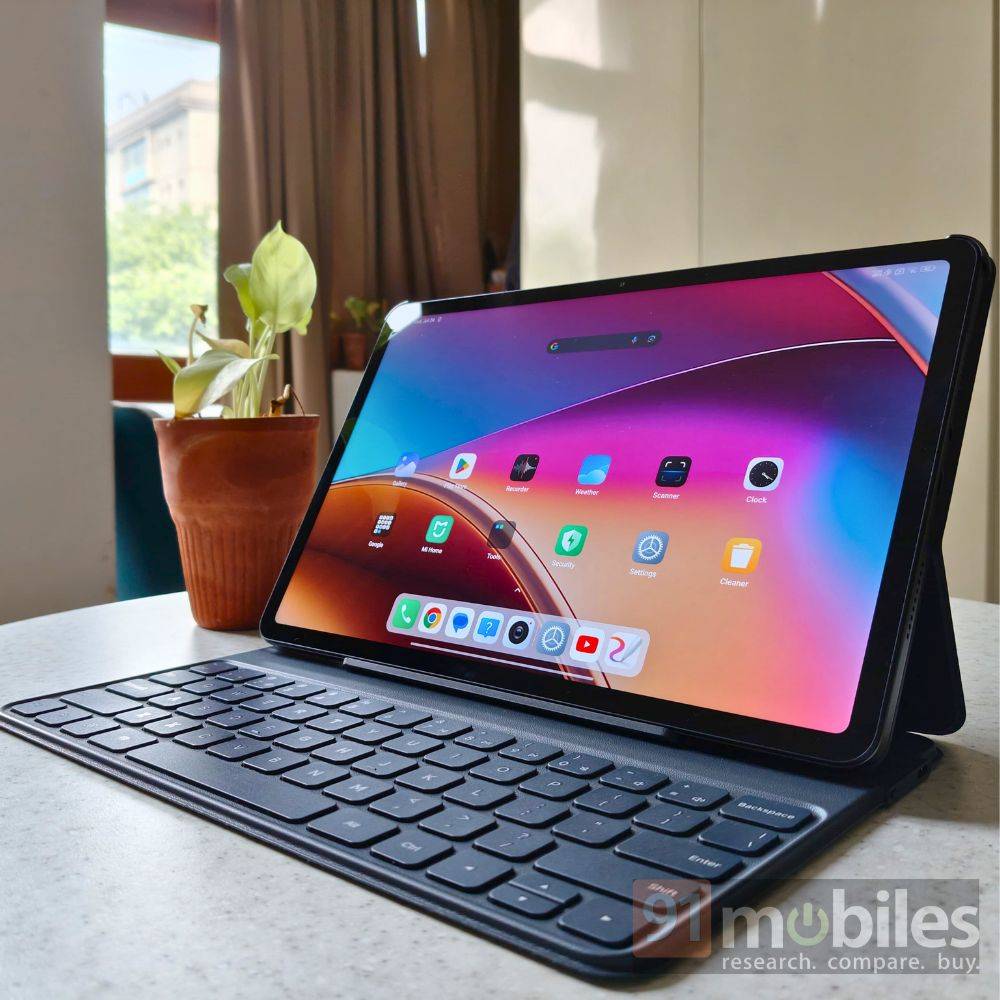
The colours are quite punchy, and the display offers good viewing angles. The wide 16:10 aspect ratio adds a lot of screen real estate, which became immediately apparent once I compared it with the Lenovo Tab Plus (review), which I reviewed recently. The latter flaunts an 11.5-inch LCD display, yet it appears much smaller due to a narrower aspect ratio.
However, the Redmi Pad Pro doesn’t measure up in terms of audio, which is a given considering the Lenovo Tab Plus comes with eight JBL-powered speakers. The Pad Pro’s sound is not as rich as the latter when compared side by side, but in isolation, the tablet offers a satisfactory sound output.
Performance and software
For a mid-range tablet, the Redmi Pad Pro packs capable hardware. At its core lies the Qualcomm Snapdragon 7s Gen 2 chipset, paired with up to 8GB of LPDDR4X RAM and 256GB of UFS 2.2 storage. You can further expand the storage up to 1.5TB with the help of a microSD card. The tablet breezes through day-to-day tasks, and I had no issues with writing this very review on the device itself.
| AnTuTu benchmark | Geekbench 6 benchmark | Burnout (CPU throttling) | |
| Redmi Pad Pro 5G (8GB+256GB) | 5,47,792 | Single core – 1032 / Multi-core – 2982 | 74.9% (higher is better) |
The tablet can also double as a casual gaming machine. Naturally, you can’t expect to run BGMI at high resolution and frame rates, but you can comfortably play it on medium settings with an average frame rate of 40FPS. I have, in fact, been playing GTA: San Andreas on the tablet with the resolution cranked all the way up and had a satisfactory gaming session. There was some occasional lag with an average frame rate of around 40FPS, but you won’t be disappointed if you tame your expectations.
The new Pad Pro comes with HyperOS based on Android 14 out of the box. The OS builds upon its predecessor in many ways, with the new features being very intuitive for a first-time user. Xiaomi also offers new options for interconnectivity, but they’re limited to Xiaomi devices. Xiaomi promises that the Pad Pro will receive two major Android upgrades and up to 3 years of security updates.
Keyboard and smart pen
The Redmi Pad Pro also has its own set of optional accessories, similar to the Xiaomi Pad 6. The keyboard case constitutes the keypad itself and a stand. The keypad has 64 keys in total with a key travel of 1.3mm and offers a pleasant typing experience once you get used to the layout. The tactile feedback is impressive and the keys don’t feel particularly mushy. The stand also makes the tablet stand at a comfortable angle and the setup feels quite similar to working on a notebook — just pair a Bluetooth mouse and you’re all set.
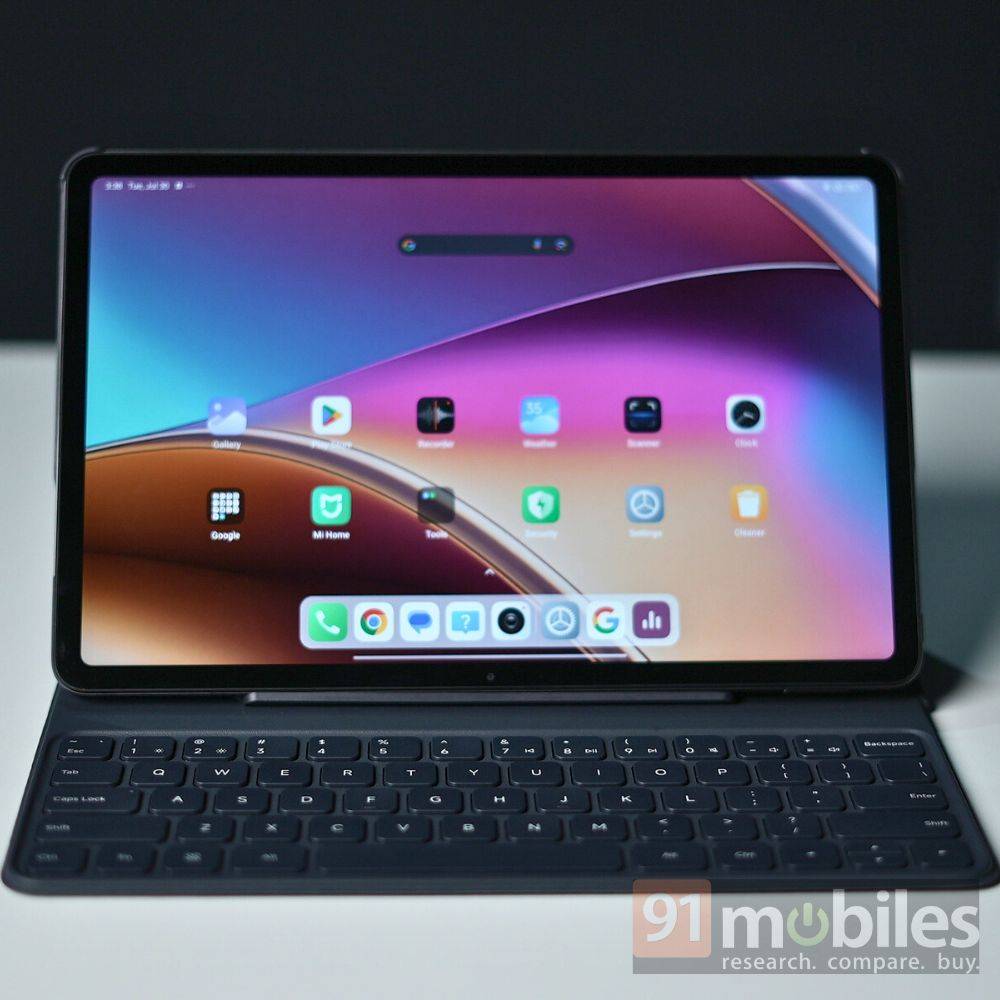
Though the keyboard’s functionality is a bit limited with some native apps, like YouTube, for example, where the space bar shortcut for pause/play works just fine and so does the Esc key, yet it fails to register inputs like ‘F key’ for full screen, ‘M key’ for mute, etc. I’m hoping this will be fixed with an upcoming update, but overall, this does not detract from the experience too much. The keyboard also comes with a built-in battery and needs to be topped up through the Type-C port, which can be an annoyance to some but didn’t bother me too much. The battery also lasts decently long, and I only needed to recharge it after 4 days of use.
In addition to the keyboard case, the Pad Pro also features support for the Redmi Smart Pen. The pen has two buttons: a writing button and a screenshot button. The first one has a couple of functions; you can quickly get into the Mi Notes app by holding it and tapping the screen with the pen. You can also switch to other brushes by tapping the writing button.
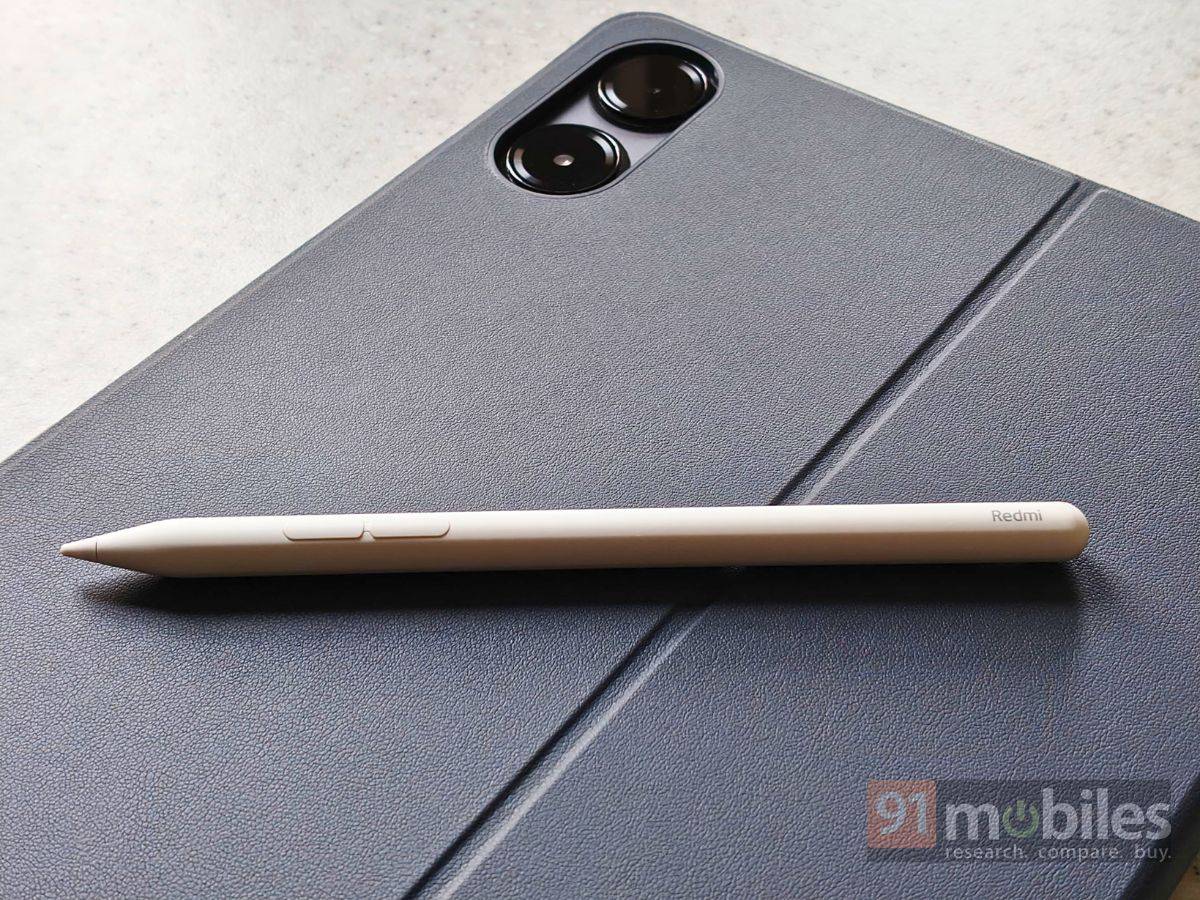
The screenshot button works as per the namesake, allowing you to take quick screenshots and adjust the frame accordingly. In the Mi canvas app, tapping the button changes colours, though you can also click on the colour palette to change it. Much like the keyboard, the stylus also charges through Type-C charging. I wish the charging could have been magnetic instead, and it could be attached to the tablet magnetically. For a stylus that costs Rs 4,000, this does not make a lot of sense.
Cameras
Cameras are not usually the primary attraction for a tablet and this holds true for the Redmi Pad Pro as well. It only features an 8MP rear camera with a flash and a similar 8MP front camera to assist with video calls and selfies. Despite the humble hardware, the rear camera is surprisingly capable and takes decent daylight shots with good dynamic range and colour reproduction. The images are a bit soft and lack sharpness, but the cameras on this device are quite satisfactory.






5G connectivity
The Redmi Pad Pro is one of the few mid-range tablets that offers 5G network support. It features one dedicated SIM slot and a hybrid slot, which can also be used to increase the total storage space with a microSD card. The 5G capability allows the tablet to double as your primary device. Using my Airtel SIM card, I achieved an average download speed of around 135Mbps and an upload speed of 20Mbps in Gurgaon, India. These speeds are on par with what I usually get on my smartphone, so there are no issues with connectivity.
The calling experience is also quite satisfactory, and while it might not be very practical, it’s possible to use the tablet as your primary device provided you can manage the additional bulk. The presence of 5G connectivity adds immensely to the versatility of the tablet, something its competitors will find hard to measure up to. Both the Lenovo Tab Plus and Xiaomi Pad 6 are not 5G capable, and this remains the case for a lot of mid-range tablets available at this price point. The only 5G-capable tablets available in the segment are the Samsung Galaxy Tab A9+ and the Lenovo Tab M10, both of which aren’t as powerful as the Redmi Pad Pro.
Battery and charging
The Redmi Pad Pro is equipped witj a massive 10,000mAh battery and comes with 33W fast charging support. The battery registered 7 hours and 26 minutes on the PCMark battery benchmark test, running at 80 percent screen brightness level. The result is a bit low for a battery that size, and in real-world usage, the tablet lent me about 10 hours of screen time with pretty heavy usage.
Verdict
The tablet offers a splendid multimedia experience and lasts long enough to comfortably fuel your binge-watching sessions. It effortlessly handles day-to-day tasks, can be used as a workstation in a pinch, and is capable of playing most 3D Android games. The addition of 5G elevates the tablet from just a multimedia machine to one that can comfortably serve as a primary device, a rare feature in tablets. The paired accessories are also quite impressive, though the added price might deter some potential buyers.
Its chief competitors include the recently launched Lenovo Tab Plus (review) and the Xiaomi Pad 6 (review). The former offers a slightly better multimedia experience thanks to its amazing audio system, but is not nearly as versatile as the Redmi Pad Pro 5G. The Xiaomi Pad 6 is pricier and starts at Rs 26,999. It exceeds the Redmi Pad Pro 5G when it comes to performance but has a smaller display and shorter battery life and does not offer 5G support. If you’re looking for a capable mid-range Android tablet, the Redmi Pad Pro is an option that’s worth exploring.
Editor’s Rating: 8 / 10
Pros:
- Impressive 12-inch display
- Good audio quality
- Great battery life
- Reliable performance output
Cons:
- Pricey accessories
- No fingerprint sensor