Remember 2018? The notch had just taken over every phone launch, 4GB RAM with 64GB storage was a perfectly respectable mid-range spec, eMMC was still doing duty in a lot of budget phones, and a 5MP selfie camera wouldn’t have raised an eyebrow. Somehow, in 2026, all of that is normal again, and no, it’s not nostalgia.
For years, the smartphone industry sold a simple promise: every new generation would be better than the last. More RAM, better cameras, faster charging, higher refresh rates. Even budget phones steadily inherited features that were called “flagship killers”. Lately, though, that trend seems to have hit reverse. Look closely at many phones launched over the past few months, and you’ll notice something. Features that brands themselves had spent years calling “entry-level” or quietly removing from spec sheets are suddenly returning.
Nobody at any phone brand forgot how to design a good camera or ran out of ideas for a display panel. This is a memory problem. DRAM and NAND flash, the RAM and storage sitting inside every phone, have gone through a price run for which we’re struggling to find a clean historical comparison.
TrendForce’s Q3 2026 forecast confirms DRAM contract prices will grow 13 to 18 percent quarter on quarter, while NAND will be up another 10 to 15 percent. Those, by the way, are calmer number after quarters where hikes touched 60 percent. Data from Omdia and TrendForce, cited by Igor’s Lab, puts mobile DRAM up more than 70 percent since the start of last year, with NAND roughly doubling. Counterpoint expects the average smartphone’s bill of materials to rise around 25 percent in 2026 from memory costs alone.
Read: Smartphone price hike roundup
Why now? Blame it on the AI data centres. Every chip of high-bandwidth memory that Samsung, SK Hynix and Micron are producing is being pulled towards server farms, leaving consumer electronics to scrap over what’s left. Nothing’s Carl Pei put it out there in a post on X well before most buyers noticed anything – brands now face a straight choice between raising prices 30 percent or downgrading specs. Unsurprisingly though, they’re doing both. The result is a market that, in some ways, feels similar to the one we left behind nearly a decade ago.
Table of Contents
The Rs 20,000 phone with a 5MP selfie camera is back
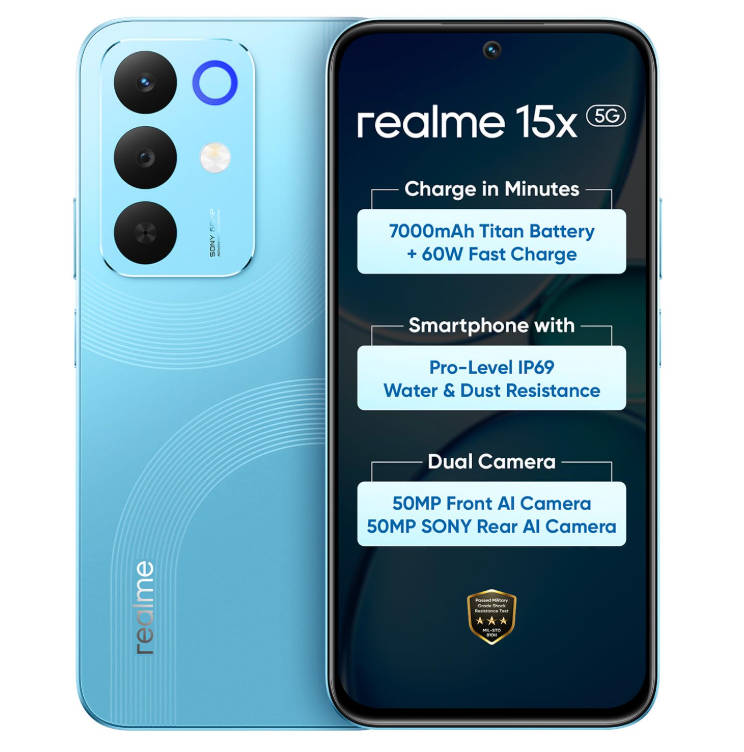
Imagine a brand selling a phone with a 5MP front camera two years ago, and you would have laughed out of the room as phones like the Motorola Edge 60 Fusion, Realme 15x and more were offering 32MP and 50MP under Rs 25,000. Selfie resolution had turned into an actual battleground, with even sub-Rs 15,000 phones routinely packing 16MP sensors. Brands competed on front camera quality because video calls and social media had become key selling points.
Now, we’re seeing phones priced around Rs 20,000 arrive with just a 5MP front camera. That’s not because camera technology has stopped improving. It’s because something else inside the phone has become more expensive, and the selfie camera is an easy place to save money without changing the headline specifications. Most buyers still look first at the primary rear camera, processor and battery capacity, and a smaller selfie sensor rarely makes it onto the marketing poster.
HD+ LCD panels at Rs 20,000, where FHD+ AMOLED had become the norm
Display quality has steadily improved over the last five years. Full HD+ became the default, while AMOLED panels gradually reached lower price segments. Yet some recent launches around the Rs 20,000 mark have gone back to HD+ LCD panels. On paper, a 120Hz refresh rate remains, but lower resolution means text isn’t as sharp and videos lose some clarity.
The OPPO K14x, for instance, launched in the budget tier, prioritising a 6,500mAh battery and a 120Hz refresh rate, but paired it with a 6.75-inch HD+ LCD display instead of a sharper FHD+ screen, which we pointed out in our review. The Vivo Y11 was another example, trading pixel density for smoother scrolling.
4GB RAM and 64GB storage are making a comeback
There was a brief period when it seemed 6GB RAM and 128GB storage had become the new baseline. Apps were growing larger, Android itself demanded more memory, and brands proudly advertised bigger configurations. Today, 4GB + 64GB variants are back. OnePlus launched the OnePlus N6 in India at Rs 22,999 with 4GB of RAM. Note that price, because the Motorola Edge 60 Fusion sold at that number with 8GB of RAM back in 2025.

TrendForce says that budget base models are heading back to 4GB, a standard the industry had comfortably left behind for 6GB and 8GB. OEMs’ own internal numbers are reportedly accounting for an over 25 percent jump in DRAM cost per phone this year, and one of the fixes on the table is shipping a lower memory configuration as the new base variant.
Notch displays are back
Punch-hole cameras had largely replaced waterdrop notches in affordable smartphones because they looked more modern and made a phone feel newer. Waterdrop notches seem to be returning in phones like the Redmi A7 Pro, and it isn’t necessarily about cutting costs on the camera itself. Instead, punch-hole displays are more complex to manufacture and require greater precision during assembly. For budget phones, brands often prefer to save that cost and use the money on features buyers notice more, such as RAM or storage.

16GB + 512GB combination is close to extinct on new launches
The opposite trend is happening at the higher end. Not long ago, 16GB RAM with 512GB storage had become almost expected on flagship killers and premium phones. Today, many newly launched devices stop at 12GB RAM or reduce storage options altogether. The configuration hasn’t disappeared because users need less memory, but because it’s becoming increasingly expensive for brands to offer. A report from Korea suggests 16GB RAM could turn into a near luxury item through 2026, with 12GB variants taking a roughly 40 percent hit as 6GB and 8GB configurations move up to fill the gap. Barely two years ago, 16GB + 512GB was a mainstream mid-range combination before memory costs made it commercially unworkable outside true flagships.
However, OnePlus flipped the norm as an exception and, a couple of months after launch, added a 16GB + 512GB RAM variant for its sub-flagship, the OnePlus 15R, but at a whopping price of Rs 61,999. In May 2025, the iQOO Neo 10 launched the same 16GB + 512GB variant at Rs 40,999. So, while we might still see 16GB + 512GB variants, be ready to pay a premium for it.
The Rs 15,000 4G phone is coming back
For most of the last five years, 5G was the one spec no brand dared to skip. Analysts tracking India’s phone market describe 4G regaining relevance, not because demand for 5G has dropped but because a 5G modem, plus the higher memory tier it usually drags along, adds cost that slim-margin phones simply cannot carry anymore. Currently, even the cheapest 4G phones now sit around Rs 10,000, when in fact, two years ago, that was a buzzing sub-Rs 8,000 segment.
Mid-range chips are becoming premium-priced
Processors like the Dimensity 7400 and Snapdragon 6 Gen 4 would have comfortably anchored budget phones below Rs 20,000 just a couple of years ago. Today, while you can still find them in entry-level configurations, these mid-tier chips are now being packed into devices priced above Rs 25,000, and in some cases, stretching all the way up to Rs 35,000 to Rs 38,000. For instance, the Realme P3 launched in March 2025 with the Snapdragon 6 Gen 4 at Rs 16,999. Cut to July 2026, the Nothing Phone 4b launched with the same chipset at Rs 34,999 and comparable other specs. This has almost nothing to do with the chip or the brand itself but everything with the RAM, the storage, and the display getting pricier.
Rs 50,000 phones with a 50MP + 8MP camera system
Once a phone crossed Rs 30,000, a triple or quad camera setup used to be a given, even when the third and fourth lenses were mostly there for show. That’s changed. A chunk of new launches – OnePlus 15R for instance – in the Rs 45,000 to Rs 50,000 range are now shipping with just a 50MP primary sensor and a single 8MP ultrawide or macro unit. Rather than adding additional hardware, brands are relying more on computational photography and software processing to bridge the gap.

MicroSD card slots are staging a comeback
Expandable storage had nearly vanished outside budget models, mostly because internal storage kept getting cheaper and a single storage tray looked cleaner on a spec sheet. That equation has flipped. With NAND now the pricier half of the memory bill, selling a cheaper 64GB or 128GB base variant and letting buyers expand later via microSD has gone from an afterthought to an actual cost-saving strategy. The Realme C100x, launched just last week, has this exact strategy. This way, brands put the onus of additional storage on users themselves.
Is this the new normal?
None of this means smartphone innovation has stopped. Foldables are improving, AI features are expanding, batteries are getting larger, and charging continues to get faster. However, as memory prices remain elevated and AI infrastructure continues competing for the same DRAM and NAND supply, manufacturers are making choices about where to spend every dollar inside a phone. Sometimes that means adding a bigger battery. Other times, it means quietly bringing back a feature the industry had already left behind.
Prices aren’t coming down this year, and every analyst watching this is saying the same thing – the RAM and NAND supply crunch likely runs into 2027, going by the long-term supply agreements memory makers have already locked in. If you’re due to upgrade your phone, the best time was yesterday and the second best is now.