
LG G7 Plus ThinQ
+ Compare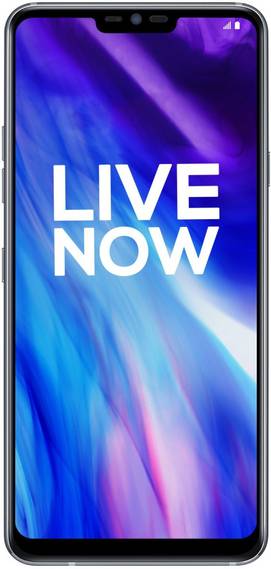


-
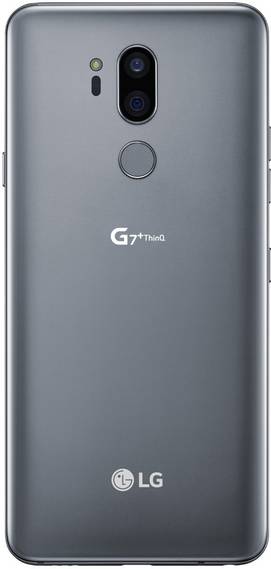
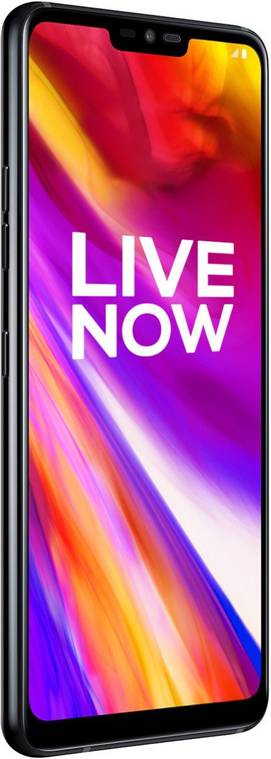
Design6

-
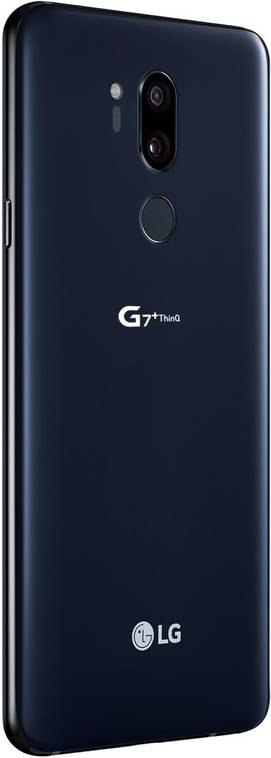
Rear Camera8

-
360° View

-
UI Screenshot17
![UI Screenshot]()
-
Benchmarks10
![Benchmarks]()


Key Specs
Performance
-
Qualcomm Snapdragon 845 -
Octa core (2.8 GHz, Quad Core + 1.8 GHz, Quad core) -
6 GB RAM, LPDDR4X
Display
-
6.1 inches (15.49 cm); IPS LCD -
1440x3120 px (QHD+) -
Gorilla Glass 5 Protection -
Bezel-less with notch
Rear Camera
-
Dual Camera Setup - 16 MP (upto 8x Digital Zoom) Wide Angle Primary Camera
- 16 MP Ultra-Wide Angle Camera
-
LED Flash -
UHD @30 fps Video Recording
Front Camera
-
8 MP Wide Angle Lens
Battery
-
3000 mAh, Li-ion -
Quick Charging v3.0; USB Type-C port
General
-
SIM1: Nano, SIM2: Nano (Hybrid) -
5G Not Supported -
128 GB internal storage, Expandable upto 2 TB -
Dust Resistant, Water Resistant
LG G7 Plus ThinQ Prices in India
 Flipkart
LG G7 Plus ThinQ Compare Camera Samples







LG G7 Plus ThinQ Expert Review Summary
Expert Rating:
![Prateek Pandey]()
Verdict
Priced at Rs 39,990, the LG G7+ ThinQ is an absolute steal. Not only does it undercut the current crop of Samsung and Apple flagships, but it does so without compromising on any features whatsoever.Now, if you compare the smartphone to the fan-favourite OnePlus 6, then you should know that the G7+ ThinQ ships with a far superior display, outputs much better audio from both the speaker as well as the 3.5mm headphone jack, has a more rugged design thanks to its IP 68 and MIL-STD 810G certification and is a lot more convenient to use with just one hand. Moreover, the smartphone offers exactly the...
Read Full Verdict
Pros
- Class-leading display
- Excellent audio output
- Solid performer
- Rugged design
Cons
- Below-average battery life
- Selfie camera could've been better
Specs at a glance
+
Display
Read More
Design and Display
+
Let me cut straight to the chase here – the LG G7+ ThinQ is a gorgeous flagship, but one that won't draw much attention to it. Much like the competition, the smartphone ships with glass on both the front and the back which gives it a premium, yet customary look. Now, the G7+ does come in a vibrant red colourway, though the company has launched the phone in a relatively duller black hue in India. Although I haven't tried the other colours of the smartphone, I'm willing to bet that they hide fingerprints and smudges a lot better than my black review unit. I'd also like to point out that if you're coming from the LG G6 or the V30+ like me, then the smartphone will feel particularly familiar in the hand.Now, for all its similarities, I feel that the G7+ ThinQ is the best designed smartphone of 2018, the reason being that the company has managed to cram a large display inside a footprint which I genuinely feel comfortable with, and confident of using with just one hand. The G7+' waist is smaller than what you'd get with most other flagships – not by a mile, but the difference is significant enough to better a user's experience with the phone. That's not to say that you won't ever drop the phone – it is a glass back design after all which tends to slip from the hand. But, there's a very good reason why I slapped a case on my OnePlus 6 and used the G7+ ThinQ without one.If you go to a lot of pool parties or like swimming in general, then you will have one more reason to pick up the G7+ ThinQ over similarly priced competitors – the inclusion of IP68 certification, allowing you to submerge the device under water for 30 minutes. Moreover, despite its glass chassis, the smartphone is quite rugged too as it is MIL-STD-810G compliant. I obviously didn't test the claim by dropping the phone on concrete or plonking it into a freezer. But knowing that did give me peace of mind.With that said, I would recommend you use a screen protector with the smartphone, as my unit picked up quite a few dings within the first week, despite the care I handled the device with. It's quite surprising when you take into consideration that the back as well as the front of the smartphone utilise a protective layer of Corning's Gorilla Glass v5.Moving on, one of the biggest design change you'll notice with the G7+ ThinQ is that the power button has been repositioned from the back to the right-hand side of the unit. That said, the fingerprint sensor is still rear-mounted, and it works like a charm. The sensor unlocks the phone in a jiffy and is extremely accurate too, easily making it one of the most reliable fingerprint sensors I've tested. Moreover, following into the footsteps of its Korean rival, the G7+ ThinQ also ships with a dedicated ‘AI' button on the left spine, which invokes the Google Assistant on a single click and the Google Lens functionality on a double-tap. Unsurprisingly, the button isn't remappable and you can't disable it either. But hey, Google Assistant has come a long way and is quite useful at times, so if you make yourself habitual to using it, it just might save you a lot of time and effort by using the button. You can sugarcoat it all you want by calling it a ‘new second screen' LG, but the fact is that the G7+ ThinQ ships with a notch on top of the display. Although I'm not a big fan of the notch on the smartphone, LG makes up for it by equipping the device with what might just be the best IPS LCD display on any smartphone to date. The panel measures 6.1-inch diagonally, comes with an aspect ratio of 19.5:9 and boasts QHD+ resolution (3,120 x 1,440) which puts the pixel density at 564ppi.It's not AMOLED, but the display still exhibits vibrant colours and has excellent viewing angles. Moreover, LG lets you tweak the screen colour and temperature by choosing from a bunch of pre-defined presets such as Cinema, Sports and Game too. You also get the option to hide the notch or colour it, if you please. To do so, head over to the settings and under the Display sub-head, look for ‘New Second Screen'. Bear in mind that you will be able to see parts of the blacked-out LCD when it's pitch dark, as the display isn't AMOLED. But, it doesn't take very long to get used to it.LG has two more tricks up its sleeves which make the display on the G7+ ThinQ stand out. First and foremost, the G7+' display is HDR compatible and therefore, you can enjoy HDR content from services like Netflix to the fullest on the smartphone. Secondly, the display gets exceptionally bright – up to 1,000 nits, so you might just need to put on a pair of sunglasses to view the screen at maximum brightness.
Read More
Cameras
+
The LG G7 ThinQ relies on a pair of 16MP shooters positioned at the back to take photos. The primary shooter at the back makes use of a standard 16MP lens with f/1.6 aperture and a combination of OIS and EIS, whereas the assisting shooter utilises a 16MP wide-angle lens with f/1.9 aperture. For selfies, LG has finally upgraded the front camera on the G7+, which now offers an 8MP shooter. Since, the better part of my day goes into perfecting my hair to take a self-portrait, let's talk about the quality of the selfie shooter first.Thanks to the improved resolution of the front-facing camera, selfies taken in broad daylight with the G7+ have a lot more detail and are noticeably sharper too. The company also gives you the option to click selfies in portrait mode, which blurs the background while keeping your face in focus. The mode works well, but I did notice the ‘blur effect' to creep into the sides of my face every now and then. Selfies taken in lowlight look fine, but you wouldn't want to put them up as your display picture on any social media platform.That being said, even though LG has worked on the smartphone's front camera, it still falls short of the competition, noticeably when compared to the OnePlus 6 and the ASUS Zenfone 5Z, both of which click way better selfies than the G7+ ThinQ.As for the quality of images from the smartphone's rear cameras, I was immensely pleased with the results. During daytime, the smartphone managed to click outstanding photos, with excellent details and sharpness. The colours appeared punchy, the shots were evenly exposed and the dynamic range of the pictures taken with the HDR mode enabled was acceptable too, with the phone retaining satisfactory details from both, the shadows as well as the highlights. The portrait mode for the rear camera did a much better job at differentiating the subject from the background and everything considered, you should be able to get away with a good-looking shot nine times out of ten with the G7+ under ideal lighting.I've always found LG's implementation of dual cameras better than what you might get with other OEMs. Instead of slapping a telephoto or monochrome lens (which quite honestly rarely ever gets used), the company has furnished the G7+ with a wide-angle shooter, which opens up a ton of creative avenues for photography. The lens has been trimmed to offer a 107-degree field-of-view as compared to the 125-degrees offered by the G6. However, there's considerably less distortion around the edges of the pictures now and the mode is just as fun to use.The cameras on the LG G7+ ThinQ make use of ‘AI' smarts too, and depending upon the scene and the objects in the frame, the smartphone can automatically detect from 19 different scenes and changes the camera settings accordingly. That said, I wasn't sold on the spurious colour reproduction of the shots and therefore, didn't use the mode much.Much like the Xiaomi Mi A2 (review) and the Huawei P20 Pro (review), the LG G7+ ThinQ also makes use of pixel binning to enhance the quality of lowlight shots. The smartphone combines the colour information from four adjacent pixels into one, thereby making the shots look brighter. On the flip side, since the resolution of the images is cropped to 4MP (16MP / 4), there are noticeably lesser details in the shot. Aspiring YouTubers and cinematographers will find the LG G7+ ThinQ's manual video mode to be a godsend. Not only do you get the option to play with the white balance and the ISO levels, but the smartphone also lets you manually focus on subjects with the help of focus peaking, which highlights subjects in green on the viewfinder. Moreover, you can also record excellent slow-mo videos capped at HD resolution and 240 fps on the smartphone. I recorded a few snippets of myself playing football in my backyard and here's how it looks:
Read More
Sofware and Performance
+
For software, the LG G7+ ThinQ ships with Android Oreo v8.0 with a skin of the company's LG UX on top. Although I would've preferred if the smartphone booted a near-stock version of Android, I don't have any major issues with the custom skin, primarily because it doesn't bog the smartphone down by eating up all the system's resources. The UI feels fluid and the launcher's animations are swift enough to keep you from slapping a third-party launcher the minute you unbox the device. You also get a bunch of different features with the custom skin, such as the ability to theme the smartphone, add a floating bar which lets you get in and out of apps quicker and program the phone to become contextually aware of your surroundings through which, the device can automatically change the settings for Wi-Fi and Bluetooth. LG launched the G6 smartphone last year with a generation-old Snapdragon 821 processor when the competition was offering devices with a Snapdragon 835 chip. I made the mistake of purchasing the G6 myself and returned it within two weeks as the smartphone felt noticeably slower than my friend's OnePlus 5. Well, LG isn't making the same mistake this year. This time around, the smartphone is driven by the latest Qualcomm Snapdragon 845 chip, which has been paired with 6GB of RAM and 128GB of built-in, user-expandable storage. Now, to give you some context, my daily driver is the OnePlus 6, which we all know to be an excellent performer. However, I can comfortably say that the G7+ ThinQ is right up there with the competition in terms of raw horsepower. You could have a dozen apps running in the background and still get excellent frame rates when you're playing intensive titles like PUBG on the highest possible graphics settings. Suffice it to say, LG finally has a flagship which can compete with the very best in the Android realm.
Read More
Battery life and more
+
There's no two ways about it – the LG G7+ ThinQ has an abysmal battery life which will not see you through the end of a day on heavy use, especially if you've set the display resolution at Quad HD. Now, this could be a deal breaker if you travel a lot, but since I spend the better part of my day glued to my office chair, I never faced any problems, so to speak. Spec-wise, you'll get a 3,000mAh battery with the phone which drains really quickly. On the flip side, the bundled fast charger tops up the smartphone in a little over 1.5 hours, so at least you won't have to stay tethered to a wall charger for long.In an era of smartphones that lack headset sockets, the LG G7+ ThinQ comes as a breath of fresh air. Moreover, the smartphone comes with a built-in, 32bit Hi-FI Quad-DAC, which drastically improves the quality of music, provided you're using the right set of earphones / headphones. In addition, the smartphone also supports the DTS:X Surround Sound audio codec, which adds spatial awareness to the songs or audios you listen to. Now, you will need compatible media to leverage this feature to the fullest, but it's a handy addition which might be useful in the future.Lastly, I must give credit to LG for making what is quite possibly, the loudest mono-firing speaker I've ever heard on a smartphone. To do so, LG used the G7+' chassis as a resonance chamber which vibrates and amplifies the sound coming from the speaker when placed on a flat surface. In a nutshell, the entire smartphone acts like a speaker and the handset's vibration is picked up by the flat surface which amplifies the volume tenfolds. On the flip side, I felt uncomfortable when I was gaming on the smartphone with the volume levels set to max, owing to the handset's vibrating chassis which made it difficult to aim in the action-packed ‘War' mode of PUBG.
Read More
Read full Review

Verdict
Priced at Rs 39,990, the LG G7+ ThinQ is an absolute steal. Not only does it undercut the current crop of Samsung and Apple flagships, but it does so without compromising on any features whatsoever.Now, if you compare the smartphone to the fan-favourite OnePlus 6, then you should know that the G7+ ThinQ ships with a far superior display, outputs much better audio from both the speaker as well as the 3.5mm headphone jack, has a more rugged design thanks to its IP 68 and MIL-STD 810G certification and is a lot more convenient to use with just one hand. Moreover, the smartphone offers exactly the... Read Full Verdict
- Class-leading display
- Excellent audio output
- Solid performer
- Rugged design
Pros
- Below-average battery life
- Selfie camera could've been better
Cons
Specs at a glance
+Display
Read MoreDesign and Display
+Let me cut straight to the chase here – the LG G7+ ThinQ is a gorgeous flagship, but one that won't draw much attention to it. Much like the competition, the smartphone ships with glass on both the front and the back which gives it a premium, yet customary look. Now, the G7+ does come in a vibrant red colourway, though the company has launched the phone in a relatively duller black hue in India. Although I haven't tried the other colours of the smartphone, I'm willing to bet that they hide fingerprints and smudges a lot better than my black review unit. I'd also like to point out that if you're coming from the LG G6 or the V30+ like me, then the smartphone will feel particularly familiar in the hand.Now, for all its similarities, I feel that the G7+ ThinQ is the best designed smartphone of 2018, the reason being that the company has managed to cram a large display inside a footprint which I genuinely feel comfortable with, and confident of using with just one hand. The G7+' waist is smaller than what you'd get with most other flagships – not by a mile, but the difference is significant enough to better a user's experience with the phone. That's not to say that you won't ever drop the phone – it is a glass back design after all which tends to slip from the hand. But, there's a very good reason why I slapped a case on my OnePlus 6 and used the G7+ ThinQ without one.If you go to a lot of pool parties or like swimming in general, then you will have one more reason to pick up the G7+ ThinQ over similarly priced competitors – the inclusion of IP68 certification, allowing you to submerge the device under water for 30 minutes. Moreover, despite its glass chassis, the smartphone is quite rugged too as it is MIL-STD-810G compliant. I obviously didn't test the claim by dropping the phone on concrete or plonking it into a freezer. But knowing that did give me peace of mind.With that said, I would recommend you use a screen protector with the smartphone, as my unit picked up quite a few dings within the first week, despite the care I handled the device with. It's quite surprising when you take into consideration that the back as well as the front of the smartphone utilise a protective layer of Corning's Gorilla Glass v5.Moving on, one of the biggest design change you'll notice with the G7+ ThinQ is that the power button has been repositioned from the back to the right-hand side of the unit. That said, the fingerprint sensor is still rear-mounted, and it works like a charm. The sensor unlocks the phone in a jiffy and is extremely accurate too, easily making it one of the most reliable fingerprint sensors I've tested. Moreover, following into the footsteps of its Korean rival, the G7+ ThinQ also ships with a dedicated ‘AI' button on the left spine, which invokes the Google Assistant on a single click and the Google Lens functionality on a double-tap. Unsurprisingly, the button isn't remappable and you can't disable it either. But hey, Google Assistant has come a long way and is quite useful at times, so if you make yourself habitual to using it, it just might save you a lot of time and effort by using the button. You can sugarcoat it all you want by calling it a ‘new second screen' LG, but the fact is that the G7+ ThinQ ships with a notch on top of the display. Although I'm not a big fan of the notch on the smartphone, LG makes up for it by equipping the device with what might just be the best IPS LCD display on any smartphone to date. The panel measures 6.1-inch diagonally, comes with an aspect ratio of 19.5:9 and boasts QHD+ resolution (3,120 x 1,440) which puts the pixel density at 564ppi.It's not AMOLED, but the display still exhibits vibrant colours and has excellent viewing angles. Moreover, LG lets you tweak the screen colour and temperature by choosing from a bunch of pre-defined presets such as Cinema, Sports and Game too. You also get the option to hide the notch or colour it, if you please. To do so, head over to the settings and under the Display sub-head, look for ‘New Second Screen'. Bear in mind that you will be able to see parts of the blacked-out LCD when it's pitch dark, as the display isn't AMOLED. But, it doesn't take very long to get used to it.LG has two more tricks up its sleeves which make the display on the G7+ ThinQ stand out. First and foremost, the G7+' display is HDR compatible and therefore, you can enjoy HDR content from services like Netflix to the fullest on the smartphone. Secondly, the display gets exceptionally bright – up to 1,000 nits, so you might just need to put on a pair of sunglasses to view the screen at maximum brightness.
Read MoreCameras
+The LG G7 ThinQ relies on a pair of 16MP shooters positioned at the back to take photos. The primary shooter at the back makes use of a standard 16MP lens with f/1.6 aperture and a combination of OIS and EIS, whereas the assisting shooter utilises a 16MP wide-angle lens with f/1.9 aperture. For selfies, LG has finally upgraded the front camera on the G7+, which now offers an 8MP shooter. Since, the better part of my day goes into perfecting my hair to take a self-portrait, let's talk about the quality of the selfie shooter first.Thanks to the improved resolution of the front-facing camera, selfies taken in broad daylight with the G7+ have a lot more detail and are noticeably sharper too. The company also gives you the option to click selfies in portrait mode, which blurs the background while keeping your face in focus. The mode works well, but I did notice the ‘blur effect' to creep into the sides of my face every now and then. Selfies taken in lowlight look fine, but you wouldn't want to put them up as your display picture on any social media platform.That being said, even though LG has worked on the smartphone's front camera, it still falls short of the competition, noticeably when compared to the OnePlus 6 and the ASUS Zenfone 5Z, both of which click way better selfies than the G7+ ThinQ.As for the quality of images from the smartphone's rear cameras, I was immensely pleased with the results. During daytime, the smartphone managed to click outstanding photos, with excellent details and sharpness. The colours appeared punchy, the shots were evenly exposed and the dynamic range of the pictures taken with the HDR mode enabled was acceptable too, with the phone retaining satisfactory details from both, the shadows as well as the highlights. The portrait mode for the rear camera did a much better job at differentiating the subject from the background and everything considered, you should be able to get away with a good-looking shot nine times out of ten with the G7+ under ideal lighting.I've always found LG's implementation of dual cameras better than what you might get with other OEMs. Instead of slapping a telephoto or monochrome lens (which quite honestly rarely ever gets used), the company has furnished the G7+ with a wide-angle shooter, which opens up a ton of creative avenues for photography. The lens has been trimmed to offer a 107-degree field-of-view as compared to the 125-degrees offered by the G6. However, there's considerably less distortion around the edges of the pictures now and the mode is just as fun to use.The cameras on the LG G7+ ThinQ make use of ‘AI' smarts too, and depending upon the scene and the objects in the frame, the smartphone can automatically detect from 19 different scenes and changes the camera settings accordingly. That said, I wasn't sold on the spurious colour reproduction of the shots and therefore, didn't use the mode much.Much like the Xiaomi Mi A2 (review) and the Huawei P20 Pro (review), the LG G7+ ThinQ also makes use of pixel binning to enhance the quality of lowlight shots. The smartphone combines the colour information from four adjacent pixels into one, thereby making the shots look brighter. On the flip side, since the resolution of the images is cropped to 4MP (16MP / 4), there are noticeably lesser details in the shot. Aspiring YouTubers and cinematographers will find the LG G7+ ThinQ's manual video mode to be a godsend. Not only do you get the option to play with the white balance and the ISO levels, but the smartphone also lets you manually focus on subjects with the help of focus peaking, which highlights subjects in green on the viewfinder. Moreover, you can also record excellent slow-mo videos capped at HD resolution and 240 fps on the smartphone. I recorded a few snippets of myself playing football in my backyard and here's how it looks:
Read MoreSofware and Performance
+For software, the LG G7+ ThinQ ships with Android Oreo v8.0 with a skin of the company's LG UX on top. Although I would've preferred if the smartphone booted a near-stock version of Android, I don't have any major issues with the custom skin, primarily because it doesn't bog the smartphone down by eating up all the system's resources. The UI feels fluid and the launcher's animations are swift enough to keep you from slapping a third-party launcher the minute you unbox the device. You also get a bunch of different features with the custom skin, such as the ability to theme the smartphone, add a floating bar which lets you get in and out of apps quicker and program the phone to become contextually aware of your surroundings through which, the device can automatically change the settings for Wi-Fi and Bluetooth. LG launched the G6 smartphone last year with a generation-old Snapdragon 821 processor when the competition was offering devices with a Snapdragon 835 chip. I made the mistake of purchasing the G6 myself and returned it within two weeks as the smartphone felt noticeably slower than my friend's OnePlus 5. Well, LG isn't making the same mistake this year. This time around, the smartphone is driven by the latest Qualcomm Snapdragon 845 chip, which has been paired with 6GB of RAM and 128GB of built-in, user-expandable storage. Now, to give you some context, my daily driver is the OnePlus 6, which we all know to be an excellent performer. However, I can comfortably say that the G7+ ThinQ is right up there with the competition in terms of raw horsepower. You could have a dozen apps running in the background and still get excellent frame rates when you're playing intensive titles like PUBG on the highest possible graphics settings. Suffice it to say, LG finally has a flagship which can compete with the very best in the Android realm.
Read MoreBattery life and more
+There's no two ways about it – the LG G7+ ThinQ has an abysmal battery life which will not see you through the end of a day on heavy use, especially if you've set the display resolution at Quad HD. Now, this could be a deal breaker if you travel a lot, but since I spend the better part of my day glued to my office chair, I never faced any problems, so to speak. Spec-wise, you'll get a 3,000mAh battery with the phone which drains really quickly. On the flip side, the bundled fast charger tops up the smartphone in a little over 1.5 hours, so at least you won't have to stay tethered to a wall charger for long.In an era of smartphones that lack headset sockets, the LG G7+ ThinQ comes as a breath of fresh air. Moreover, the smartphone comes with a built-in, 32bit Hi-FI Quad-DAC, which drastically improves the quality of music, provided you're using the right set of earphones / headphones. In addition, the smartphone also supports the DTS:X Surround Sound audio codec, which adds spatial awareness to the songs or audios you listen to. Now, you will need compatible media to leverage this feature to the fullest, but it's a handy addition which might be useful in the future.Lastly, I must give credit to LG for making what is quite possibly, the loudest mono-firing speaker I've ever heard on a smartphone. To do so, LG used the G7+' chassis as a resonance chamber which vibrates and amplifies the sound coming from the speaker when placed on a flat surface. In a nutshell, the entire smartphone acts like a speaker and the handset's vibration is picked up by the flat surface which amplifies the volume tenfolds. On the flip side, I felt uncomfortable when I was gaming on the smartphone with the volume levels set to max, owing to the handset's vibrating chassis which made it difficult to aim in the action-packed ‘War' mode of PUBG.
Read MoreCompetitors For LG G7 Plus ThinQ
View Alternatives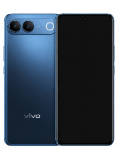






Popular Comparisons
 LG G7 Plus ThinQ
 OnePlus 6
LG G7 Plus ThinQ
 LG G7 ThinQ
LG G7 Plus ThinQ
 LG V30 Plus
LG G7 Plus ThinQ
 Asus Zenfone 5Z
LG G7 Plus ThinQ
 vivo NEX
LG G7 Plus ThinQ
 Samsung Galaxy S9 Plus


LG G7 Plus ThinQ Specifications
General |
|
|---|---|
| Launch Date | August 10, 2018 (Official) |
| Operating System | Android v8.0 (Oreo) |
Performance
(Good)
|
|
|---|---|
| Chipset | Qualcomm Snapdragon 845 |
| Processor | Octa core (2.8 GHz, Quad core, Kryo 385 + 1.8 GHz, Quad core, Kryo 385) |
| Architecture | 64 bit |
| Fabrication | 10 nm |
| Graphics (GPU) | Adreno 630 |
| RAM | 6 GB |
| RAM Type | LPDDR4X |
Benchmark Screenshots
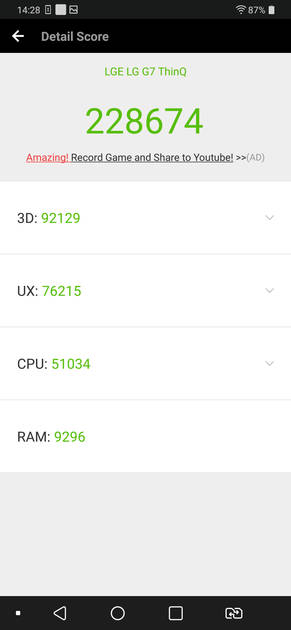
AnTuTu Benchmark
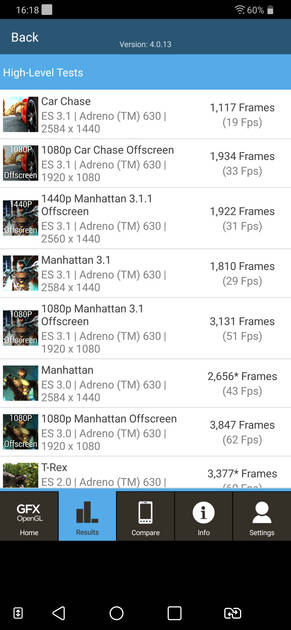
Graphics Benchmark
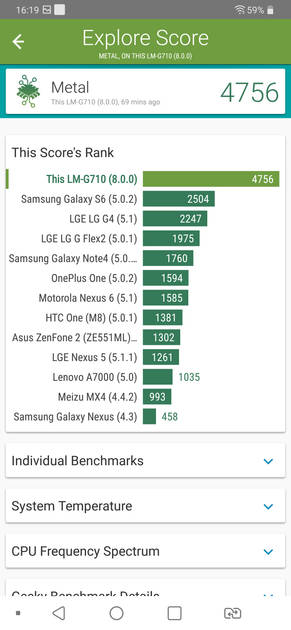
Vellamo Metal Benchmark
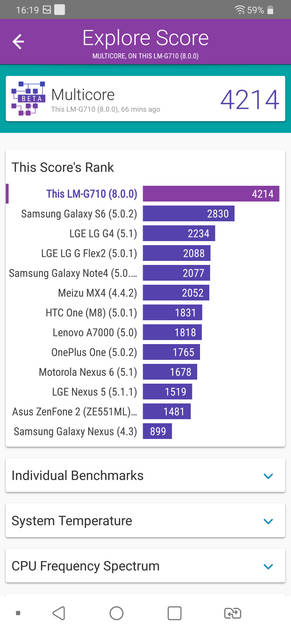
Vellamo Multicore Benchmark
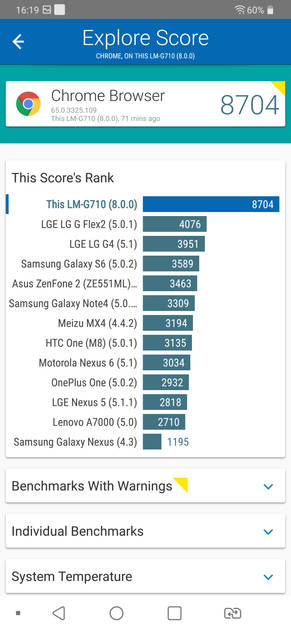
Vellamo Browser Benchmark
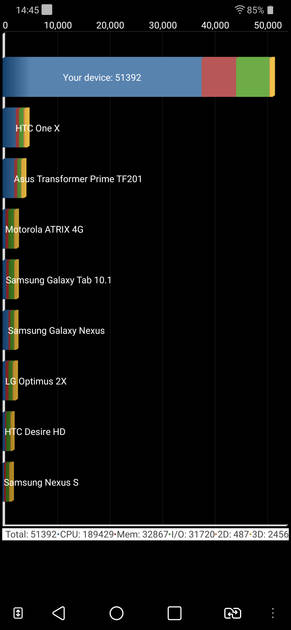
Quadrant Benchmark
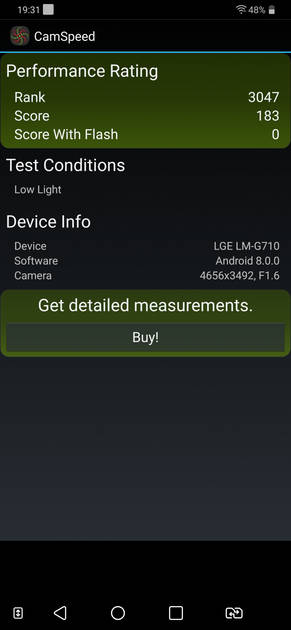
Camera Speed Benchmark
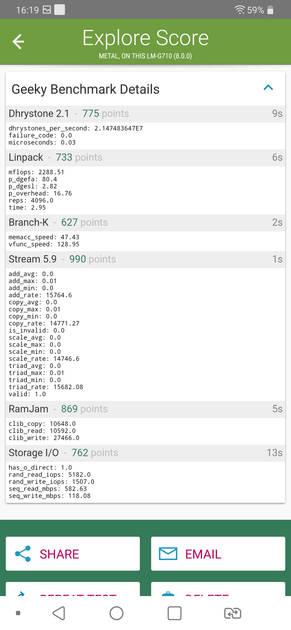
Linpack Benchmark
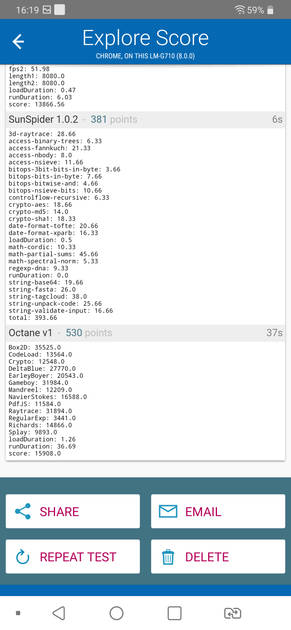
Sunspider Benchmark
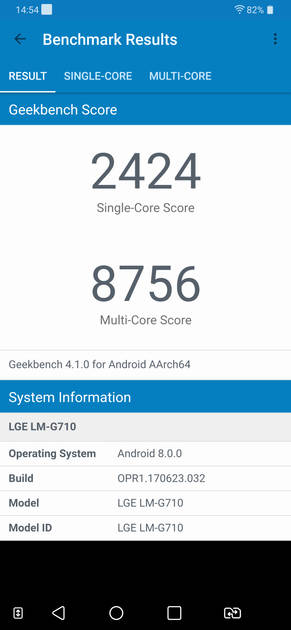
Geekbench4 Benchmark
|

Display
(Best In Class)
|
|
|---|---|
| Display Type | IPS LCD |
| Screen Size | 6.1 inches (15.49 cm) |
| Resolution | 1440x3120 px (QHD+) |
| Aspect Ratio | 19.5:9 |
| Pixel Density | 563 ppi |
| Screen to Body Ratio (calculated) | 82.74 % |
| Screen Protection | Corning Gorilla |
| Bezel-less Display | Yes with notch |
UI Screenshots
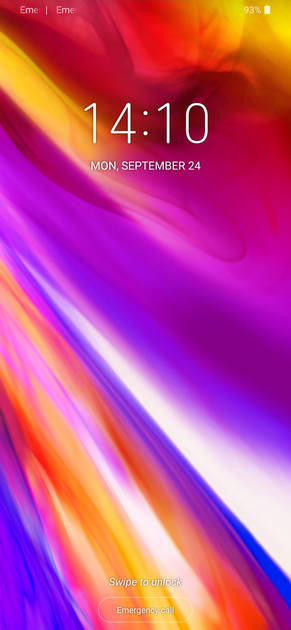
Lock Screen
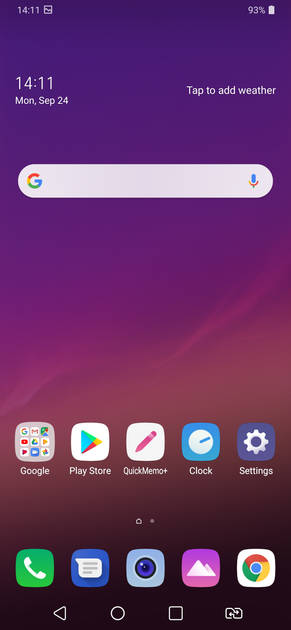
Home Screen
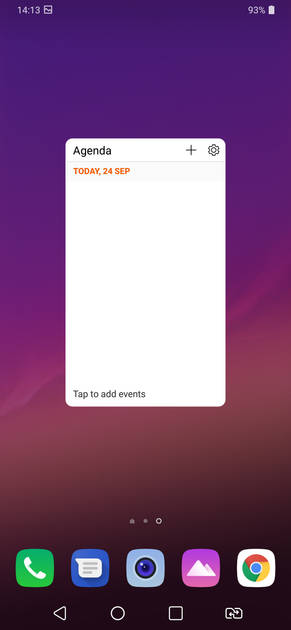
Screen With Widgets
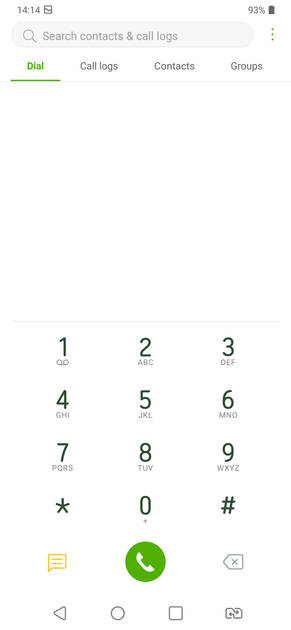
Dialer Screen
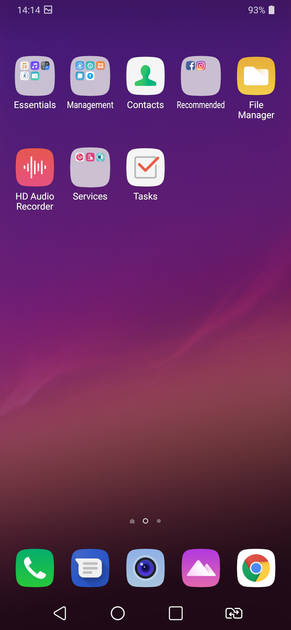
App Drawer
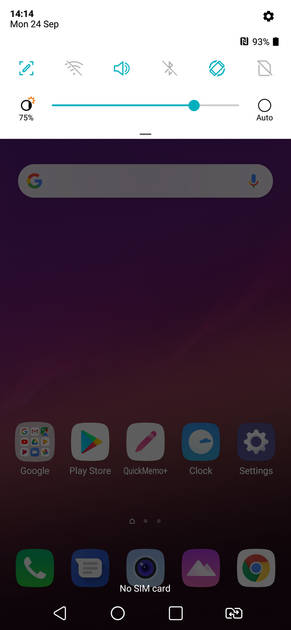
Notification Panel
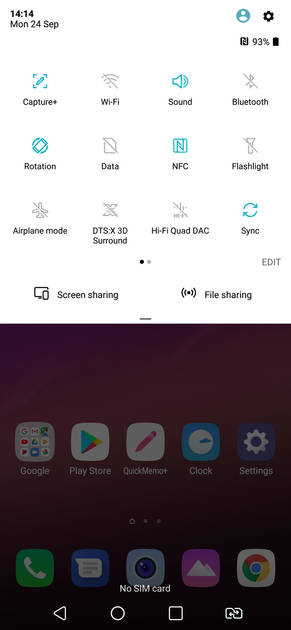
Quick Settings Panel
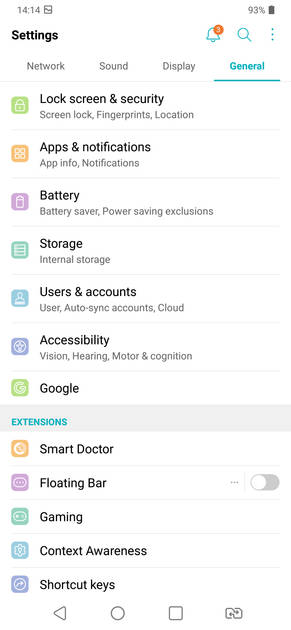
Settings Screen
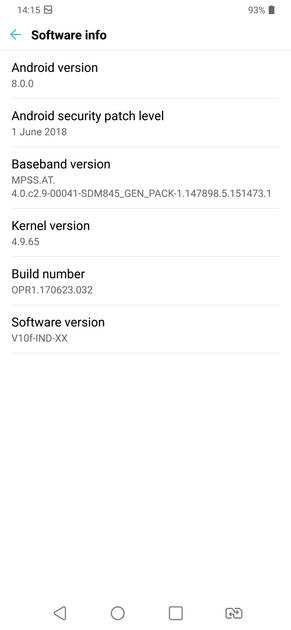
OS Version

Storage
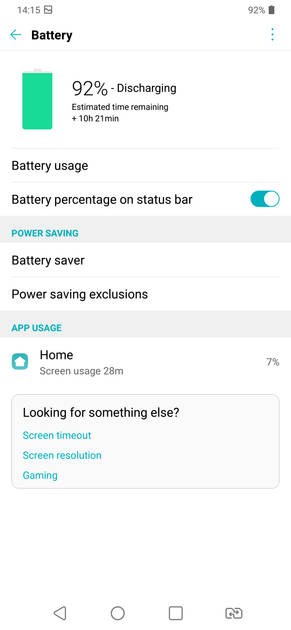
Battery
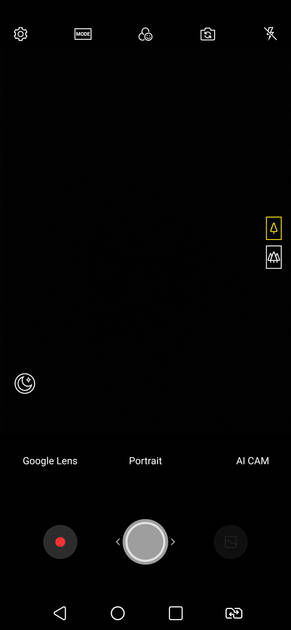
Camera On
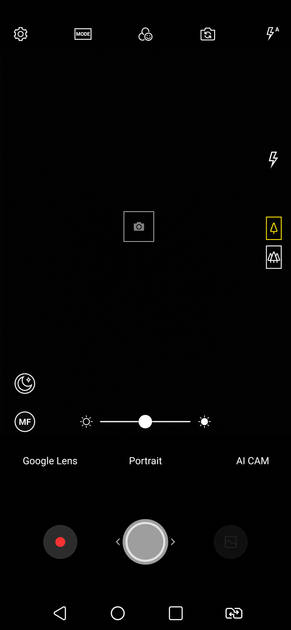
Camera Options
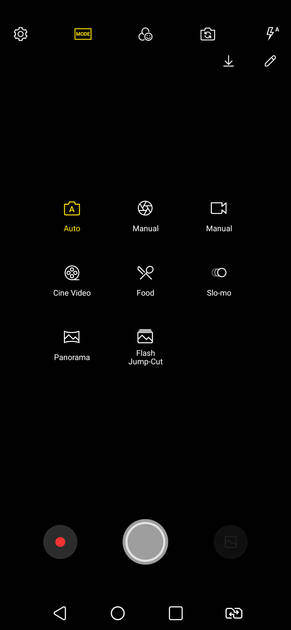
Camera Modes
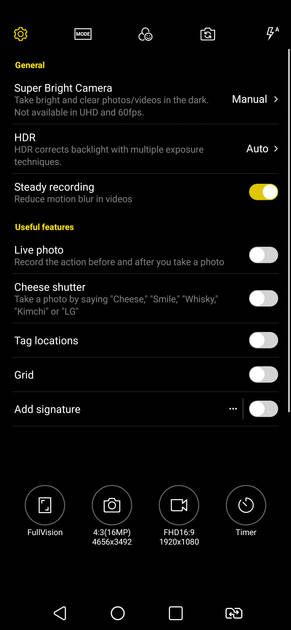
Camera Settings
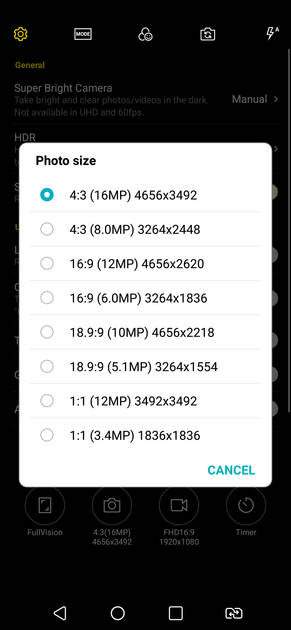
Picture Size Options
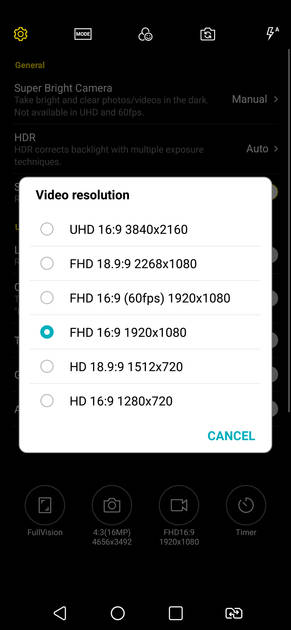
Video Size Options
|
Design |
|
|---|---|
| Height | 153.2 mm |
| Width | 71.9 mm |
| Thickness | 7.9 mm |
| Weight | 162 grams |
| Build Material | Back: Gorilla Glass |
| Water Resistance | Yes, Water resistant, IP68 |
| Ruggedness | Dust proof |
|
Click to View

|
Rear Camera
(Very Good)
|
||||||||||||||||||||||||
|---|---|---|---|---|---|---|---|---|---|---|---|---|---|---|---|---|---|---|---|---|---|---|---|---|
| Resolution | ||||||||||||||||||||||||
|
||||||||||||||||||||||||
| Autofocus | Yes, Laser Autofocus | |||||||||||||||||||||||
| OIS | Yes | |||||||||||||||||||||||
| Flash | Yes, LED Flash | |||||||||||||||||||||||
| Image Resolution | 4616 x 3464 Pixels | |||||||||||||||||||||||
| Settings | Exposure compensation, ISO control | |||||||||||||||||||||||
| Shooting Modes |
Continuous Shooting High Dynamic Range mode (HDR) |
|||||||||||||||||||||||
| Camera Features |
8 x Digital Zoom Auto Flash Face detection Touch to focus |
|||||||||||||||||||||||
| Video Recording | UHD @30 fps | |||||||||||||||||||||||
Rear Camera Samples

Close Up

Low Light

Low Light With Flash

Colour Variance
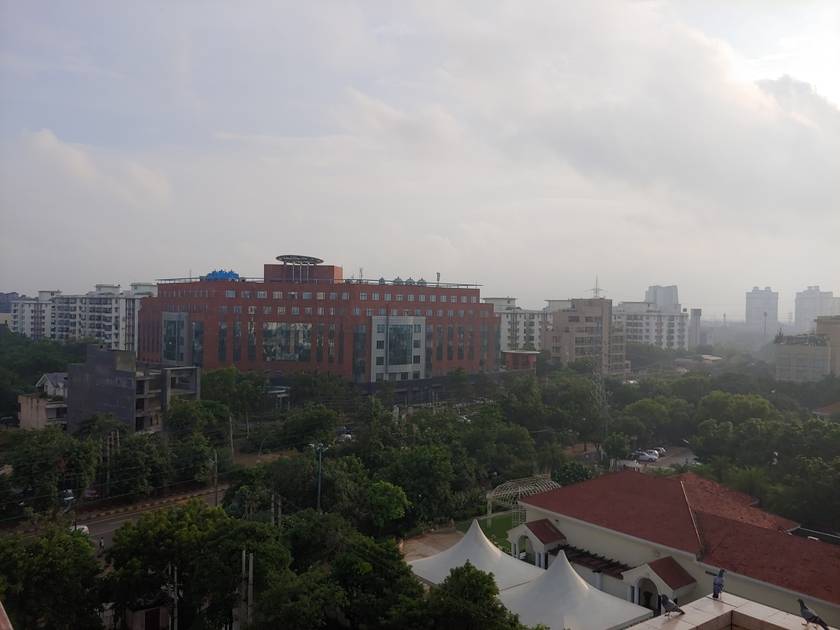
Long Shot

HDR Off

HDR On

Front Shot
|
Front Camera
(Very Good)
|
||||||||||
|---|---|---|---|---|---|---|---|---|---|---|
| Resolution | ||||||||||
|
Battery
(Very Good)
|
|
|---|---|
| Capacity | 3000 mAh |
| Battery Type | Li-ion |
| Quick Charging | Yes Quick Charging v3.0 |
| Wireless Charging | Yes |
Storage |
|
|---|---|
| Internal Storage | 128 GB |
| Storage Type | UFS 2.1 |
| Expandable Storage | Yes, Up to 2 TB |
Network & Connectivity |
|
|---|---|
| SIM Slot(s) | Dual SIM |
| SIM Type | SIM1: Nano, SIM2: Nano (Hybrid) |
| Network Support | 5G Not Supported, 4G |
| VoLTE | Yes |
| SIM 1 |
4G bands
Expand
|
| SIM 2 |
4G bands
Expand
|
| Wi-Fi | Yes, Wi-Fi 5 (802.11 a/b/g/n/ac) |
| Wi-Fi Features | Wi-Fi Direct, Mobile Hotspot |
| Bluetooth | Yes, v5.0 |
| GPS | Yes with A-GPS, Glonass |
| NFC | Yes |
Multimedia |
|
|---|---|
| Audio Jack | 3.5 mm |
Sensors |
|
|---|---|
| Fingerprint Sensor | Yes |
| Fingerprint Sensor Position | Rear |
| Other Sensors | Light sensor, Proximity sensor, Accelerometer, Compass, Gyroscope |
LG G7 Plus ThinQ User Reviews
LG G7 Plus ThinQ Key Highlights
| Processor | Qualcomm Snapdragon 845 |
| RAM & Storage | 6 GB + 128 GB |
| Display | 6.1", 1440 x 3120 Resolution |
| Rear Camera | 16 MP + 16 MP |
| Front Camera | 8 MP |
| Battery | 3000 mAh |

















LG G7 Plus ThinQ Price In India
| Product Name | Store | Price |
|---|---|---|
| LG G7 Plus ThinQ (6 GB + 128 GB) | Flipkart | ₹55,000 |
Popular Links
- All Upcoming Phones
- vivo X500
- OPPO Find X10 Pro Max
- OPPO Find X10
- vivo X500 Pro Max
- Infinix GT 50 Pro
- Samsung Mobiles
- Motorola Mobiles
- vivo Mobiles
- OPPO Mobiles
- Tecno Mobiles
- realme Mobiles
- OnePlus Mobiles