
Motorola Edge 60 Pro
+ Compare


-
Design24

-
Rear Camera15

-
Front Camera4

-
360° View
![360° View]()
-
UI Screenshot17
![UI Screenshot]()
-
Videos3
![Videos]()


Key Specs
Performance
-
MediaTek Dimensity 8350 Extreme Edition -
Octa core (3.35 GHz, Single Core + 3.2 GHz, Tri core + 2.2 GHz, Quad core) -
8 GB / 12 GB / 16 GB RAM, LPDDR5X
Display
-
6.7 inches (17.02 cm); P-OLED (Curved Display) -
1220x2712 px (FHD+) -
120 Hz Refresh Rate -
Gorilla Glass Protection -
Bezel-less with punch-hole display
Rear Camera
-
Triple Camera Setup - 50 MP (upto 20x Digital Zoom) Wide Angle Primary Camera
- 50 MP Ultra-Wide Angle Camera
- 10 MP Telephoto (upto 50x Digital Zoom, upto 3x Optical Zoom) Camera
-
LED Flash -
4k @30 fps Video Recording
Front Camera
-
50 MP Wide Angle Lens -
4k @30 fps Video Recording
Battery
-
6000 mAh, Silicon Carbon -
90W Turbo Power Charging; USB Type-C port
General
-
SIM1: Nano, SIM2: Nano -
5G Supported -
256 GB / 512 GB internal storage, Non Expandable -
Dust Resistant, Water Resistant

Motorola Edge 60 Pro Prices in India
 Amazon
Motorola Edge 60 Pro Compare Camera Samples



































Motorola Edge 60 Pro Expert Review Summary

Expert Rating:
![Dhruv Joshi]()
Verdict
The Motorola Edge 60 Pro is an impressive upgrade over its predecessor, with better performance, a sleek design, and good cameras. Its impressive battery life and IP69 rating make it a reliable option, especially under 30K. While the lack of expandable storage and a few pre-installed apps are minor drawbacks, it is still one of the best choices in this price range.
Pros
- Impressive design with IP69 rating
- Great performance
- Capable cameras
- Good battery life
Cons
- No expandable storage
- USB 2.0
Design and display
+
The Motorola Edge 60 Pro's design has remained largely unchanged compared to its predecessor, the Edge 50 Pro. You still get a curved screen design with a nylon-like material at the back, at least in my Pantone Dazzling Blue variant. The added fragrance makes a return as well, something Motorola seems to be leaning into with their Edge series phones. Personally, I'm not a big fan of the fragrance, but surely the brand deserves credit for its thoughtful unboxing approach. Apart from the nylon-like rear panel, the Edge 60 Pro features a plastic frame, unlike the aluminium sides from last year, to keep the weight in check. While it may affect durability, it is still MIL-STD-810H certified and has even better elemental protection with the IP68 and IP69. Moto continues to skip the additional protection case with its latest Edge 60 series.As I mentioned, the design is largely unchanged, though the back now includes four circles for the triple camera setup and the flash unit. The rest remains unchanged with the power and volume rockers at the right, the USB-C port, speaker grille and SIM tray at the bottom. A new addition is the AI key, a button for quick access to the new AI tools. It is handy, but the placement is more suitable for left-handers.Up front, the Motorola Edge 60 Pro sports a 10-bit, 6.7-inch pOLED 3D curved display with a resolution of 2712 x 1220p (1.5K), a 120Hz refresh rate, full DCI-P3 coverage, and a peak brightness claim of 4,500 nits. Like most curved panels, you'll occasionally run into accidental touches, but overall, the display is a joy to use. You'll need to switch the display profile to Natural from the default Vivid in the settings to see the colour accuracy of the Pantone-certified display.The colours look really punchy and bright, with deep blacks, both indoors and outdoors. HDR10+ support and the high brightness mode help when viewing content in direct sunlight, though it's worth noting that HDR isn't available on Netflix yet, which was a bit of a letdown. In our lab tests, the screen peaked at 652 nits, noticeably lower than the segment average of 892 nits, but I had no trouble using it outdoors in real-world conditions.Speaker output is decent, reaching about 83 decibels in our test, slightly above the average of 82. The in-display fingerprint scanner works reliably as well, though I do wish it were positioned a bit higher for easier access.
Read More
Cameras
+
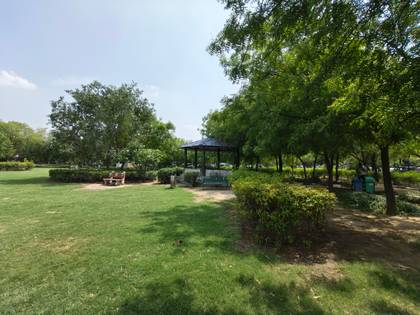
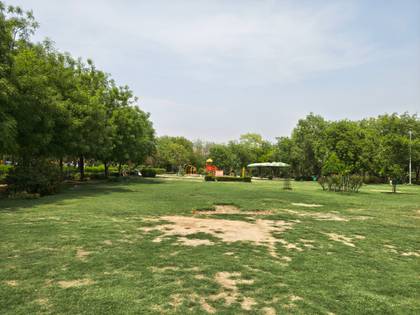
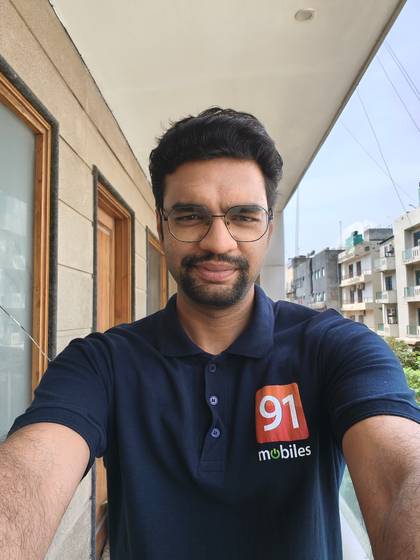
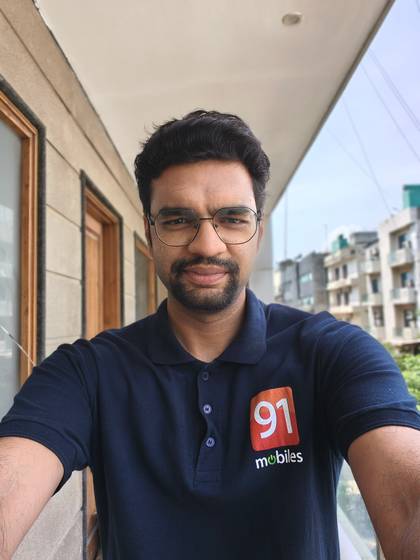
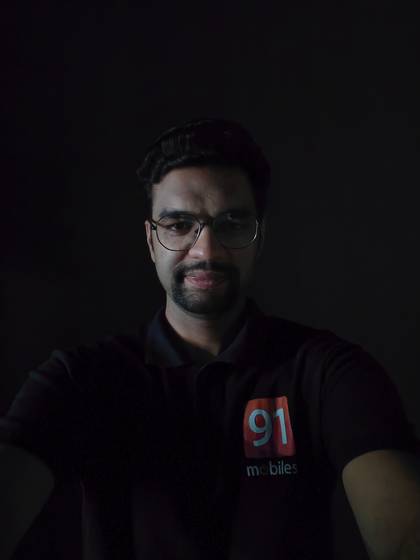
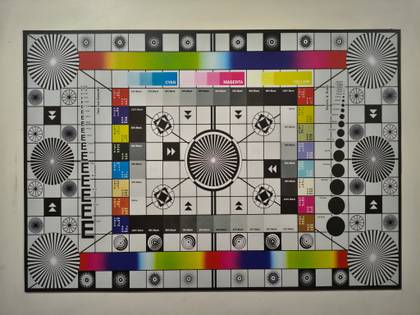
In terms of camera hardware, there's a noticeable upgrade this year. The ultra-wide camera now uses a 50MP sensor, up from the 13MP unit on the previous model. It supports autofocus and continues to double up as a macro shooter. The main camera is the same 50MP Sony LYTIA 700C sensor with OIS, but the aperture size is down to f/1.8 from f/1.4. There's also a 10MP 3x telephoto lens, which now supports up to 50x digital zoom. Motorola has also added a 3-in-1 light sensor for better exposure control, white balance adjustment, and flicker reduction. The 50MP selfie camera carries over from the previous generation.As for image quality, shots from the Edge 60 Pro come out crisp and detailed. The Pantone colour validation is helpful, colours are less saturated compared to last year's model. Although I wouldn't call them entirely true to life, the main camera handles colour more accurately than the other two lenses. Low-light performance is also pretty impressive, with good colours, detail level and little to no noise. The ultra-wide lens handles HDR scenes well, and the higher resolution really comes into play when it comes to preserving finer details, something you'll notice in the comparison below. The 3x telephoto lens also delivers sharp results with more consistent colour tones than the ultrawide. The selfie camera captures realistic skin tones for the most part, although it does oversharpen at times.There's 4K 30fps video support on both the front and rear cameras, and they turn out mostly fine. I sometimes had a colour shift when changing from the primary lens to the ultrawide, and due toa lack of OIS, the stabilisation does suffer. I compared the phone's cameras against the Nothing Phone (3a) Pro (review) and the Realme 14 Pro+ (review), check it out below: DaylightIn regular daylight shots, the Nothing Phone (3a) Pro's colours turn out warm, and so does the Motorola Edge 60 Pro. The latter tunes up the contrast a bit more, which makes the shot appear punchier and have better highlights. In terms of detail level, both phones are on par with each other, although the Motorola Edge 60 Pro has slightly better sharpness. When it comes to dynamic range, the Nothing Phone (3a) Pro does a slightly better job. The Realme 14 Pro+'s daylight shot has very punchy colours, with rich reds, greens and yellows throughout the frame. In comparison, the Motorola Edge 60 Pro enhances shadows and has higher contrast, which makes the image pop. When it comes to detail level, the Realme 14 Pro+ does a much better job, especially when it comes to the sky, where you can clearly perceive it, while the Motorola Edge 60 Pro isn't able to distinguish between clouds as much. Ultra-wideFor ultra-wide shots, the Motorola Edge 60 Pro delivers great results compared to the Nothing Phone (3a) Pro, primarily due to its high-resolution 50MP lens. The former's detail level is substantially better, and the image is a lot sharper, although the image does appear a little underexposed. The Motorola Edge 60 Pro also takes better ultra-wide images compared to the Realme 14 Pro+. The latter takes saturation a step too far, and the objects appear fuzzy when looked at closely, which gives the Edge 60 Pro a clear advantage. PortraitIn our portrait tests, we used the 3x zoom mode so each phone's telephoto lens would kick in. The Nothing Phone (3a) Pro stood out for its colour reproduction, which looked the most true to life. However, when it came to facial detail, hair texture, and edge detection, the Motorola Edge 60 Pro is ahead with more refined results.The Realme 14 Pro+ managed the best edge detection of the three, but it fell short on detail. Facial features appeared soft, hair texture lacked clarity, and skin tones were brightened. Overall, the Edge 60 Pro struck the best balance across all areas, making it the most reliable portrait shooter in this comparison.SelfieThe Nothing Phone (3a) Pro edges out the Motorola Edge 60 Pro in selfies for a few key reasons. It offers the best detail among the three, and it captures skin tones accurately. Although its HDR performance trails slightly behind the Edge 60 Pro, it's still very good overall.The Realme 14 Pro+, on the other hand, struggles in a few areas. While it has the best colour balance of the trio, it falls short on facial detail, which appears overly smooth. Its HDR optimisation also doesn't match up to the other two, making it the weakest of the lot for selfie performance.Low-light When it comes to low-light shots, we tested the performance of all three phones with their respective night modes enabled. The contest between the Nothing Phone (3a) Pro and the Motorola Edge 60 Pro was a close one. The Nothing Phone (3a) Pro delivers impressive detail, but its colours appear slightly off and it struggles to manage ambient light effectively. The Motorola Edge 60 Pro, while not as strong in fine detail, offers better colour balance and handles ambient lighting much more capably, resulting in a sharper and more visually appealing shot overall.As for the Realme 14 Pro+, the night shots come out highly vibrant, but that comes at the cost of detail. It delivers the softest image of the three and suffers from noticeable noise when viewed up close. That said, it handles ambient lighting the best. Even so, the Motorola Edge 60 Pro edges it out with its better balance of detail, colour accuracy, and lighting control.
Read More
Performance
+
The Motorola Edge 50 Pro featured a modest yet reliable Snapdragon 7 Gen 3 SoC, though it wasn't a powerhouse, especially against the Snapdragon 8s Gen 3-powered POCO F6.With the Edge 60 Pro, Motorola has stepped things up by switching to the new MediaTek Dimensity 8350 Extreme. It also gets upgraded hardware across the board, including up to 12GB of LPDDR5X RAM and UFS 4.0 storage, a big leap from the UFS 2.2 we saw last year. You can't expand the storage, however, so keep that in mind. The USB port is also 2.0 now, down from USB 3.1 on its predecessors, and it makes transfer rates much slower.
Read More
Software and AI
+
The Motorola Edge 60 Pro runs Hello UI, based on Android 15, straight out of the box. Motorola's software is typically close to stock Android, meaning there are no unnecessary pre-installed apps. However, it was somewhat surprising to find a couple of third-party games included this time. While they weren't intrusive and could be easily uninstalled, their presence was a little jarring.Apart from that, the interface feels clean and snappy. There are tonnes of customisation options on top, thanks to Android 15. However, I did face some issues. The camera app occasionally felt a bit laggy, and there were times when the volume bar didn't disappear until I put the phone to sleep and woke it again. Nothing major or deal-breaking, but a few minor quirks worth pointing out.Motorola has also introduced a handful of AI-powered features on the Edge 60 Pro, and what's refreshing is that most of them are genuinely useful. If you want a detailed look, I've covered these in more detail in my Motorola Edge 60 Fusion review. But here's a quick rundown of what they offer:
Read More
Battery and charging
+
One notable upgrade this year is the 6,000mAh silicon carbide battery, up from the 4,500mAh cell in the previous model. Battery life was a clear shortcoming on the earlier version, but that's been addressed here. While the benchmark score isn't particularly high, I consistently managed an average screen-on time of around 7 hours, even with 5G enabled throughout the day.With Wi-Fi, you can easily expect more than a full day's battery. The total battery drop for 2 hours of heavy use in our lab tests was just 19 percent, better than the segment average of 23 percent. The charging speed is now 90W, down from the 125W support from last year (only on the top variant), but charging time does not suffer too significantly. The battery still tops up in roughly 35 minutes, which is quite excellent. You also get 15W wireless charging support, which is a handy addition.
Read More
Read full Review

Verdict
The Motorola Edge 60 Pro is an impressive upgrade over its predecessor, with better performance, a sleek design, and good cameras. Its impressive battery life and IP69 rating make it a reliable option, especially under 30K. While the lack of expandable storage and a few pre-installed apps are minor drawbacks, it is still one of the best choices in this price range.
- Impressive design with IP69 rating
- Great performance
- Capable cameras
- Good battery life
Pros
- No expandable storage
- USB 2.0
Cons
Design and display
+The Motorola Edge 60 Pro's design has remained largely unchanged compared to its predecessor, the Edge 50 Pro. You still get a curved screen design with a nylon-like material at the back, at least in my Pantone Dazzling Blue variant. The added fragrance makes a return as well, something Motorola seems to be leaning into with their Edge series phones. Personally, I'm not a big fan of the fragrance, but surely the brand deserves credit for its thoughtful unboxing approach. Apart from the nylon-like rear panel, the Edge 60 Pro features a plastic frame, unlike the aluminium sides from last year, to keep the weight in check. While it may affect durability, it is still MIL-STD-810H certified and has even better elemental protection with the IP68 and IP69. Moto continues to skip the additional protection case with its latest Edge 60 series.As I mentioned, the design is largely unchanged, though the back now includes four circles for the triple camera setup and the flash unit. The rest remains unchanged with the power and volume rockers at the right, the USB-C port, speaker grille and SIM tray at the bottom. A new addition is the AI key, a button for quick access to the new AI tools. It is handy, but the placement is more suitable for left-handers.Up front, the Motorola Edge 60 Pro sports a 10-bit, 6.7-inch pOLED 3D curved display with a resolution of 2712 x 1220p (1.5K), a 120Hz refresh rate, full DCI-P3 coverage, and a peak brightness claim of 4,500 nits. Like most curved panels, you'll occasionally run into accidental touches, but overall, the display is a joy to use. You'll need to switch the display profile to Natural from the default Vivid in the settings to see the colour accuracy of the Pantone-certified display.The colours look really punchy and bright, with deep blacks, both indoors and outdoors. HDR10+ support and the high brightness mode help when viewing content in direct sunlight, though it's worth noting that HDR isn't available on Netflix yet, which was a bit of a letdown. In our lab tests, the screen peaked at 652 nits, noticeably lower than the segment average of 892 nits, but I had no trouble using it outdoors in real-world conditions.Speaker output is decent, reaching about 83 decibels in our test, slightly above the average of 82. The in-display fingerprint scanner works reliably as well, though I do wish it were positioned a bit higher for easier access.
Read MoreCameras
+In terms of camera hardware, there's a noticeable upgrade this year. The ultra-wide camera now uses a 50MP sensor, up from the 13MP unit on the previous model. It supports autofocus and continues to double up as a macro shooter. The main camera is the same 50MP Sony LYTIA 700C sensor with OIS, but the aperture size is down to f/1.8 from f/1.4. There's also a 10MP 3x telephoto lens, which now supports up to 50x digital zoom. Motorola has also added a 3-in-1 light sensor for better exposure control, white balance adjustment, and flicker reduction. The 50MP selfie camera carries over from the previous generation.As for image quality, shots from the Edge 60 Pro come out crisp and detailed. The Pantone colour validation is helpful, colours are less saturated compared to last year's model. Although I wouldn't call them entirely true to life, the main camera handles colour more accurately than the other two lenses. Low-light performance is also pretty impressive, with good colours, detail level and little to no noise. The ultra-wide lens handles HDR scenes well, and the higher resolution really comes into play when it comes to preserving finer details, something you'll notice in the comparison below. The 3x telephoto lens also delivers sharp results with more consistent colour tones than the ultrawide. The selfie camera captures realistic skin tones for the most part, although it does oversharpen at times.There's 4K 30fps video support on both the front and rear cameras, and they turn out mostly fine. I sometimes had a colour shift when changing from the primary lens to the ultrawide, and due toa lack of OIS, the stabilisation does suffer. I compared the phone's cameras against the Nothing Phone (3a) Pro (review) and the Realme 14 Pro+ (review), check it out below: DaylightIn regular daylight shots, the Nothing Phone (3a) Pro's colours turn out warm, and so does the Motorola Edge 60 Pro. The latter tunes up the contrast a bit more, which makes the shot appear punchier and have better highlights. In terms of detail level, both phones are on par with each other, although the Motorola Edge 60 Pro has slightly better sharpness. When it comes to dynamic range, the Nothing Phone (3a) Pro does a slightly better job. The Realme 14 Pro+'s daylight shot has very punchy colours, with rich reds, greens and yellows throughout the frame. In comparison, the Motorola Edge 60 Pro enhances shadows and has higher contrast, which makes the image pop. When it comes to detail level, the Realme 14 Pro+ does a much better job, especially when it comes to the sky, where you can clearly perceive it, while the Motorola Edge 60 Pro isn't able to distinguish between clouds as much. Ultra-wideFor ultra-wide shots, the Motorola Edge 60 Pro delivers great results compared to the Nothing Phone (3a) Pro, primarily due to its high-resolution 50MP lens. The former's detail level is substantially better, and the image is a lot sharper, although the image does appear a little underexposed. The Motorola Edge 60 Pro also takes better ultra-wide images compared to the Realme 14 Pro+. The latter takes saturation a step too far, and the objects appear fuzzy when looked at closely, which gives the Edge 60 Pro a clear advantage. PortraitIn our portrait tests, we used the 3x zoom mode so each phone's telephoto lens would kick in. The Nothing Phone (3a) Pro stood out for its colour reproduction, which looked the most true to life. However, when it came to facial detail, hair texture, and edge detection, the Motorola Edge 60 Pro is ahead with more refined results.The Realme 14 Pro+ managed the best edge detection of the three, but it fell short on detail. Facial features appeared soft, hair texture lacked clarity, and skin tones were brightened. Overall, the Edge 60 Pro struck the best balance across all areas, making it the most reliable portrait shooter in this comparison.SelfieThe Nothing Phone (3a) Pro edges out the Motorola Edge 60 Pro in selfies for a few key reasons. It offers the best detail among the three, and it captures skin tones accurately. Although its HDR performance trails slightly behind the Edge 60 Pro, it's still very good overall.The Realme 14 Pro+, on the other hand, struggles in a few areas. While it has the best colour balance of the trio, it falls short on facial detail, which appears overly smooth. Its HDR optimisation also doesn't match up to the other two, making it the weakest of the lot for selfie performance.Low-light When it comes to low-light shots, we tested the performance of all three phones with their respective night modes enabled. The contest between the Nothing Phone (3a) Pro and the Motorola Edge 60 Pro was a close one. The Nothing Phone (3a) Pro delivers impressive detail, but its colours appear slightly off and it struggles to manage ambient light effectively. The Motorola Edge 60 Pro, while not as strong in fine detail, offers better colour balance and handles ambient lighting much more capably, resulting in a sharper and more visually appealing shot overall.As for the Realme 14 Pro+, the night shots come out highly vibrant, but that comes at the cost of detail. It delivers the softest image of the three and suffers from noticeable noise when viewed up close. That said, it handles ambient lighting the best. Even so, the Motorola Edge 60 Pro edges it out with its better balance of detail, colour accuracy, and lighting control.
Read MorePerformance
+The Motorola Edge 50 Pro featured a modest yet reliable Snapdragon 7 Gen 3 SoC, though it wasn't a powerhouse, especially against the Snapdragon 8s Gen 3-powered POCO F6.With the Edge 60 Pro, Motorola has stepped things up by switching to the new MediaTek Dimensity 8350 Extreme. It also gets upgraded hardware across the board, including up to 12GB of LPDDR5X RAM and UFS 4.0 storage, a big leap from the UFS 2.2 we saw last year. You can't expand the storage, however, so keep that in mind. The USB port is also 2.0 now, down from USB 3.1 on its predecessors, and it makes transfer rates much slower.
Read MoreSoftware and AI
+The Motorola Edge 60 Pro runs Hello UI, based on Android 15, straight out of the box. Motorola's software is typically close to stock Android, meaning there are no unnecessary pre-installed apps. However, it was somewhat surprising to find a couple of third-party games included this time. While they weren't intrusive and could be easily uninstalled, their presence was a little jarring.Apart from that, the interface feels clean and snappy. There are tonnes of customisation options on top, thanks to Android 15. However, I did face some issues. The camera app occasionally felt a bit laggy, and there were times when the volume bar didn't disappear until I put the phone to sleep and woke it again. Nothing major or deal-breaking, but a few minor quirks worth pointing out.Motorola has also introduced a handful of AI-powered features on the Edge 60 Pro, and what's refreshing is that most of them are genuinely useful. If you want a detailed look, I've covered these in more detail in my Motorola Edge 60 Fusion review. But here's a quick rundown of what they offer:
Read MoreBattery and charging
+One notable upgrade this year is the 6,000mAh silicon carbide battery, up from the 4,500mAh cell in the previous model. Battery life was a clear shortcoming on the earlier version, but that's been addressed here. While the benchmark score isn't particularly high, I consistently managed an average screen-on time of around 7 hours, even with 5G enabled throughout the day.With Wi-Fi, you can easily expect more than a full day's battery. The total battery drop for 2 hours of heavy use in our lab tests was just 19 percent, better than the segment average of 23 percent. The charging speed is now 90W, down from the 125W support from last year (only on the top variant), but charging time does not suffer too significantly. The battery still tops up in roughly 35 minutes, which is quite excellent. You also get 15W wireless charging support, which is a handy addition.
Read MoreCompetitors For Motorola Edge 60 Pro
View Alternatives



Popular Comparisons
 Motorola Edge 60 Pro
 Motorola Edge 70 Fusion
Motorola Edge 60 Pro
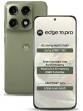 Motorola Edge 70 Pro 5G
Motorola Edge 60 Pro
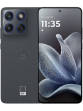 Motorola Edge 70
Motorola Edge 60 Pro
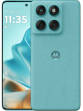 Motorola Edge 60 Fusion
Motorola Edge 60 Pro
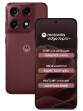 Motorola Edge 70 Pro + 5G
Motorola Edge 60 Pro
 vivo T4 Pro

Motorola Edge 60 Pro Specifications
General |
|
|---|---|
| Launch Date | April 30, 2025 (Official) |
| Operating System | Android v15 |
| OS Updates | 3 Years |
| Security Updates | 4 Years |
Performance
(Very Good)
|
||||
|---|---|---|---|---|
| Chipset | MediaTek Dimensity 8350 Extreme Edition View Details | |||
| Processor | Octa core (3.35 GHz, Single core, Cortex A715 + 3.2 GHz, Tri core, Cortex A715 + 2.2 GHz, Quad core, Cortex A510) | |||
| Architecture | 64 bit | |||
| Fabrication | 4 nm | |||
| Graphics (GPU) | Mali-G615 MC6 | |||
| RAM | 8 GB / 12 GB / 16 GB | |||
| RAM Type | LPDDR5X | |||
| Cooling Technology | Vapor Chamber | |||
|
Gaming Test Results

* after 30 mins of gaming
|
||||
Benchmark Screenshots

GeekBench AI

PC Mark Battery Life

PC Mark Performance

AnTuTu Benchmark

Graphics Benchmark

Geekbench6 Benchmark
|

Display
(Excellent)
|
|
|---|---|
| Display Type | P-OLED (Curved Display) |
| Screen Size | 6.7 inches (17.02 cm) |
| Resolution | 1220x2712 px (FHD+) |
| Peak Brightness | 4500 nits |
| HBM Brightness | 1400 nits |
| PWM Dimming | 720 Hz |
| Refresh Rate | 120 Hz |
| Aspect Ratio | 20:9 |
| Pixel Density | 444 ppi |
| Screen to Body Ratio (calculated) | 92.32 % |
| Screen Protection | Corning Gorilla Glass 7i |
| Bezel-less Display | Yes with punch-hole display |
| HDR 10 / HDR+ Support | Yes, HDR 10+ |
| Screen to Body Ratio (claimed by the brand) | 96.47 % |
UI Screenshots

Lock Screen

Home Screen

Screen With Widgets

Dialer Screen

App Drawer

Notification Panel

Quick Settings Panel

Settings Screen

OS Version

Storage

Battery

Camera On

Camera Options

Camera Modes

Camera Settings

Picture Size Options

Video Size Options
|
Design |
|
|---|---|
| Height | 160.69 mm |
| Width | 73.06 mm |
| Thickness | 8.24 mm |
| Weight | 186 grams |
| Water Resistance | Yes, Water resistant, IP68, IP69, (up to 30 minutes in a depth of 1.5 meter) |
| Ruggedness | Dust proof |
|
Click to View

|
Rear Camera
(Very Good)
|
||||||||||||||||||||||||||||||||||||
|---|---|---|---|---|---|---|---|---|---|---|---|---|---|---|---|---|---|---|---|---|---|---|---|---|---|---|---|---|---|---|---|---|---|---|---|---|
| Resolution | ||||||||||||||||||||||||||||||||||||
|
||||||||||||||||||||||||||||||||||||
| Autofocus | Yes, Omni-directional Phase Detection Autofocus | |||||||||||||||||||||||||||||||||||
| OIS | Yes | |||||||||||||||||||||||||||||||||||
| Flash | Yes, LED Flash | |||||||||||||||||||||||||||||||||||
| Image Resolution | 8150 x 6150 Pixels | |||||||||||||||||||||||||||||||||||
| Settings | Exposure compensation, ISO control | |||||||||||||||||||||||||||||||||||
| Shooting Modes |
Continuous Shooting High Dynamic Range mode (HDR) Burst mode Macro Mode |
|||||||||||||||||||||||||||||||||||
| Camera Features |
20 x Digital Zoom Auto Flash Custom Watermark Face detection Filters Touch to focus |
|||||||||||||||||||||||||||||||||||
| Video Recording |
4k @30 fps Full HD @240 fps |
|||||||||||||||||||||||||||||||||||
| Video Recording Features |
Dual Video Recording Slow Motion Audio Zoom |
|||||||||||||||||||||||||||||||||||
Rear Camera Samples

Daylight / HDR Auto

Wide Angle

Max Zoom Supported 50x

Long Shot 10X

Long Shot 5X

Long Shot 3X

Long Shot 1X

High Res

Portrait Shot

Night Mode OFF

Night Mode ON

Close Up

Low Light

Low Light With Flash

Colour Variance
|
Front Camera
(Excellent)
|
||||||||||
|---|---|---|---|---|---|---|---|---|---|---|
| Resolution | ||||||||||
|
||||||||||
| Autofocus | No | |||||||||
| Video Recording |
4k @30 fps Full HD @120 fps |
|||||||||
Front Camera Samples

Selfie

Selfie Portrait

Selfie Low Light

Selfie Low Light With Flash
|
Battery
(Very Good)
|
||||
|---|---|---|---|---|
| Capacity | 6000 mAh | |||
| Battery Type | Silicon Carbon | |||
| Quick Charging | Yes, 90W Turbo Power Charging | |||
| Wireless Charging | Yes, 15W Wireless Charging | |||
| Reverse Charging | Yes, 5W Reverse Charging | |||
|
Battery Test Results
|
Storage |
|
|---|---|
| Internal Storage | 256 GB / 512 GB |
| Storage Type | UFS 4.0 |
| Expandable Storage | No |
Network & Connectivity |
|
|---|---|
| SIM Slot(s) | Dual SIM |
| SIM Type | SIM1: Nano, SIM2: Nano |
| Network Support | 5G, 4G |
| VoLTE | Yes |
| SIM 1 |
5G bands, 4G bands
Expand
|
| SIM 2 |
5G bands, 4G bands
Expand
|
| Wi-Fi | Yes, Wi-Fi 6E (802.11 a/b/g/n/ac/ax) 5GHz 6GHz |
| Wi-Fi Features | Mobile Hotspot |
| Bluetooth | Yes, v5.4 |
| GPS | Yes with A-GPS, Glonass |
| NFC | Yes |
Multimedia |
|
|---|---|
| Stereo Speakers | Yes |
| Audio Jack | USB Type-C |
| Audio Features | Dolby Atmos |
Sensors |
|
|---|---|
| Fingerprint Sensor | Yes |
| Fingerprint Sensor Position | On-screen |
| Fingerprint Sensor Type | Optical |
| Other Sensors | Light sensor, Proximity sensor, Accelerometer, Compass, Gyroscope |
Recent Stories


Motorola Edge 60 Pro User Reviews
Motorola Edge 60 Pro Key Highlights
| Processor | MediaTek Dimensity 8350 Extreme Edition |
| RAM & Storage | 8 GB RAM + 256 GB 12 GB RAM + 256 GB 16 GB RAM + 512 GB |
| Display | 6.7", 1220 x 2712 Resolution |
| Rear Camera | 50 MP + 50 MP + 10 MP |
| Front Camera | 50 MP |
| Battery | 6000 mAh |



Motorola Edge 60 Pro Price In India
| Product Name | Store | Price |
|---|---|---|
| Motorola Edge 60 Pro (8 GB + 256 GB) | Flipkart | ₹29,999 |
| Motorola Edge 60 Pro (8 GB + 256 GB) | Amazon | ₹30,190 |
| Motorola Edge 60 Pro (12 GB + 256 GB) | Amazon | ₹33,596 |
| Motorola Edge 60 Pro (12 GB + 256 GB) | Flipkart | ₹33,999 |
| Motorola Edge 60 Pro (16 GB + 512 GB) | Flipkart | ₹37,999 |
| Motorola Edge 60 Pro (16 GB + 512 GB) | Amazon | ₹42,999 |
Popular Links
- All Upcoming Phones
- Motorola phones under 20k
- vivo V80 5G
- OPPO F35 Pro
- vivo S2 FE 5G
- Xiaomi Redmi Note 17 Pro Max 5G
- OPPO F35
- Samsung Mobiles
- Motorola Mobiles
- vivo Mobiles
- OPPO Mobiles
- Tecno Mobiles
- realme Mobiles
- Xiaomi Mobiles