
POCO X7 Pro
+ Compare


-
Design33

-
Rear Camera15

-
Front Camera4

-
360° View
![360° View]()
-
UI Screenshot17
![UI Screenshot]()
-
Videos2
![Videos]()


Key Specs
Performance
-
MediaTek Dimensity 8400 Ultra -
Octa core (3.25 GHz, Single Core + 3 GHz, Tri core + 2.1 GHz, Quad core) -
8 GB / 12 GB RAM, LPDDR5X
Display
-
6.67 inches (16.94 cm); AMOLED -
1220x2712 px (FHD+) -
120 Hz Refresh Rate -
Gorilla Glass Protection -
Bezel-less with punch-hole display
Rear Camera
-
Dual Camera Setup - 50 MP (upto 10x Digital Zoom) Wide Angle Primary Camera
- 8 MP Ultra-Wide Angle Camera
-
LED Flash -
4k @60 fps Video Recording
Front Camera
-
20 MP Wide Angle Lens -
Full HD @30 fps Video Recording
Battery
-
6550 mAh, Silicon Carbon -
90W Turbo Charging; USB Type-C port
General
-
SIM1: Nano, SIM2: Nano -
5G Supported -
256 GB internal storage, Non Expandable -
Dust Resistant, Water Resistant

POCO X7 Pro Prices in India
 Flipkart
POCO X7 Pro Compare Camera Samples



POCO X7 Pro Expert Review Summary
Expert Rating:
![Ashish Kumar]()
Verdict
The POCO X7 Pro is a worthy contender for power-hungry users. The smartphone excels in gaming, display quality, and battery performance while offering a distinctive design. That said, it is not the perfect all-rounder for the price, leaving room for improvement in cameras and software experience.
Pros
- Attractive design (POCO Yellow variant)
- Powerful performance
- Long battery life
- Vibrant display
Cons
- Inconsistent cameras
- Loads of pre-installed of app
Design and display
+
POCO has moved away from its sizeable rectangular camera island to a sleeker, more modern design. The handset now features a vertical pill-shaped camera module that houses dual sensors. While the module protrudes slightly from the frame, it's enough to cause the device to wobble when placed flat on a surface. We received the variant featuring POCO's trademark yellow colour, which looks striking with its dual-tone finish on the back panel. The back is also crafted from vegan leather with distinct patterns on the black and yellow sections, enhancing both aesthetics and the in-hand feel.SmartphonesThicknessWeightIP ratingPOCO X7 Pro8.45 mm203.5 gramsIP69Motorola Edge 507.79 mm180 gramsIP68OnePlus Nord 48 mm199.5 gramsIP65
Read More
Cameras
+
The POCO X7 Pro sports dual rear cameras with a 50MP OIS Sony IMX882 primary sensor and an 8MP ultra-wide lens. The front camera has a 20MP shooter for selfies and video calling.This camera configuration is standard for smartphones in the sub-Rs 30,000 price range but remains impressive for a device primarily aimed at gamers. As for the camera performance, it is admirable in edge detection for portraits and HDR retention but struggles with colour accuracy, natural complexion, and bokeh quality. In low light and daylight, the handset offers a competitive edge.Here's a comparison of the POCO X7 Pro images with that of its arch-rivals OnePlus Nord 4 (review) and Motorola Edge 50 (review):DaylightThe POCO X7 Pro is evenly matched with the Motorola Edge 50 in terms of dynamic range. It also excels in capturing finer details, surpassing its counterpart. However, it struggles with colour accuracy, as natural shades—such as the sky—appear white in images taken with the POCO X7 Pro.The OnePlus Nord 4 leads against POCO and Motorola smartphones in capturing the finer details. This is evident from the clarity of the hedge and floor in the foreground. The handset outshines its competitors with dynamic range. It is worth mentioning that all three smartphones struggle with accurately reproducing the red building's shade. That said, in terms of appeal, the Motorola Edge 50 outshines them all.Ultra-wideNone of the smartphones deliver the same colour science as their primary cameras. Each shows a subtle shift, with the OnePlus Nord 4 displaying the most noticeable difference. When switching to its ultrawide lens, the device shifts from warm to noticeably cooler tones. While there is a drop in detail, it is less pronounced compared to the POCO X7 Pro.The Motorola Edge 50 offers the most pleasing results, with a wider field of view than the OnePlus Nord 4 and POCO X7 Pro. The handset handles the colour and detailing better than its counterpart. The Motorola smartphone also offers exposure to details around the shadowy areas.PortraitWith human subjects, the POCO X7 Pro delivers subpar performance. It prioritises a slightly warm tone, which appears pleasing but suffers from inconsistencies in colour mapping. Additionally, it smoothens facial details, which may appeal to some users but detracts from naturalness.The Motorola Edge 50 produces the sharpest portraits, followed by OnePlus. Be that as it may, POCO's strength lies in edge detection, where it outperforms both Motorola and OnePlus. Motorola's edge detection is decent, while OnePlus continues to struggle with this feature in its affordable Nord series. The Edge 50 also delivers the most natural and pleasing bokeh effect.SelfiePOCO persistently smoothens the facial details, resulting in an artificial appearance. The Motorola Edge 50 continues to offer the most accurate complexion in selfies, followed by the OnePlus Nord 4.As for background exposure, the POCO X7 Pro strikes a good balance but boosts colours excessively, while Motorola introduces a bit of both with some depth. OnePlus falls somewhere between POCO and Motorola.Low-light (night mode)Low-light shots were evaluated with night mode enabled, as OnePlus automatically triggers this mode by default. As for the results, each phone has its strengths and weaknesses. For instance, the Motorola Edge 50 produces the most balanced images, with well-managed colours and exposure. OnePlus handles light flares better than its rivals, while the POCO X7 Pro excels in HDR retention and provides slightly more prominent details without over-smoothing surfaces.
Read More
Performance and software
+
Coming to the meat of the matter – the POCO X7 Pro performance, the handset is powered by the MediaTek Dimensity 8400 Ultra chipset. It is a new mid-range chipset, with an octa-core ARM Cortex-A725 CPU clocked at up to 3.25GHz and an ARM Mali-G720 GPU for robust graphical performance.Additionally, it is built to handle AI capabilities on par with MediaTek's flagship Dimensity 9400 SoC. The chipset ensured solid smartphone performance in both synthetic benchmarks and our gaming tests.The X7 Pro scored over 1.5 million points on AnTuTu, which, while slightly lower than the claimed 1.7 million, still surpasses its competitors within the same price range and even some in higher price brackets. The same is applicable to the smartphone's single-core and multi-core Geekbench scores, ensuring swift performance while loading the apps, jumping between them, and more. While impressive overall, its throttling performance leaves room for improvement. In our Burnout CPU Throttle Test, the handset's peak performance dropped to 66.9 percent, indicating a noticeable decline under sustained heavy loads.As I mentioned, the POCO X7 Pro stands out for its gaming performance, and we ran popular graphically-demanding titles such as BGMI, Call of Duty, and Real Racing 3. The phone's large 5,000mm square stainless steel VC chamber cooling system ensured decent thermal management, heating up by 25.7 degrees Celsius on aggregate. Competitors might have an edge in thermal efficiency, but the device showed no noticeable frame drops or stuttering during gameplay.While we couldn't get the average frame per second (fps) data on the device, the internal data revealed that the X7 Pro peaked at 71 fps on BGMI with Ultra HDR graphics, Ultra frame rate, and Wild Boost feature enabled. This ensured smooth gameplay even when things got intense during the gameplay. The phone comes with Wild Boost 3.0 optimisation 3.0 which uses AI to boost performance by faster image rendering, responsiveness, and more.The POCO X7 Pro also boasts LPDDR5X RAM and UFS 4.0 storage, which ensures that your data transfer speeds and multitasking remain right up the alley. Our review unit, with 12GB of RAM and 256GB of storage, efficiently handled multiple apps running in the background. However, the device struggles to capture multiple shots in rapid succession, falling short of speed in this area.SmartphonesPre-installed appsOS upgradesPOCO X7 Pro643 years major + 4 years securityMotorola Edge 50422 years major + 3 years securityOnePlus Nord 4484 years major + 6 years security
Read More
Battery and charging
+
The POCO X7 Pro features a massive 6,550mAh battery, setting a new benchmark for mid-range devices. Impressively, POCO has achieved this without adding bulk to the phone. This could be attributed to the new Silicon-carbon batteries, which offer a higher energy density compared to the traditional lithium-ion batteries, allowing more charge to be stored in a similarly compact form factor.It may not be apparent on the PCMark battery test where its 14 hours and 53 minutes run-time appears modest for the battery capacity, but its efficiency in real-world tasks such as video streaming and gaming is pretty impressive.The handset demonstrated impressive battery efficiency during testing. Streaming a 30-minute high-resolution YouTube video consumed just 3 percent of the battery, while a rigorous gaming session—consisting of 30 minutes each on BGMI, Call of Duty, and Real Racing 3—resulted in a 17 percent battery drop. These results outperform most competitors in the market, including the POCO X7 Pro's closest rivals, the OnePlus Nord 4 and Motorola Edge 50.SmartphonesBatteryCharging time (20-100 percent)POCO X7 Pro (90W)6,550mAh34 minutesMotorola Edge 50 (68W)5,00mAh40 minutesOnePlus Nord 4 (100W)5,500mAh24 minutes
Read More
Read full Review

Verdict
The POCO X7 Pro is a worthy contender for power-hungry users. The smartphone excels in gaming, display quality, and battery performance while offering a distinctive design. That said, it is not the perfect all-rounder for the price, leaving room for improvement in cameras and software experience.
- Attractive design (POCO Yellow variant)
- Powerful performance
- Long battery life
- Vibrant display
Pros
- Inconsistent cameras
- Loads of pre-installed of app
Cons
Design and display
+POCO has moved away from its sizeable rectangular camera island to a sleeker, more modern design. The handset now features a vertical pill-shaped camera module that houses dual sensors. While the module protrudes slightly from the frame, it's enough to cause the device to wobble when placed flat on a surface. We received the variant featuring POCO's trademark yellow colour, which looks striking with its dual-tone finish on the back panel. The back is also crafted from vegan leather with distinct patterns on the black and yellow sections, enhancing both aesthetics and the in-hand feel.SmartphonesThicknessWeightIP ratingPOCO X7 Pro8.45 mm203.5 gramsIP69Motorola Edge 507.79 mm180 gramsIP68OnePlus Nord 48 mm199.5 gramsIP65
Read MoreCameras
+The POCO X7 Pro sports dual rear cameras with a 50MP OIS Sony IMX882 primary sensor and an 8MP ultra-wide lens. The front camera has a 20MP shooter for selfies and video calling.This camera configuration is standard for smartphones in the sub-Rs 30,000 price range but remains impressive for a device primarily aimed at gamers. As for the camera performance, it is admirable in edge detection for portraits and HDR retention but struggles with colour accuracy, natural complexion, and bokeh quality. In low light and daylight, the handset offers a competitive edge.Here's a comparison of the POCO X7 Pro images with that of its arch-rivals OnePlus Nord 4 (review) and Motorola Edge 50 (review):DaylightThe POCO X7 Pro is evenly matched with the Motorola Edge 50 in terms of dynamic range. It also excels in capturing finer details, surpassing its counterpart. However, it struggles with colour accuracy, as natural shades—such as the sky—appear white in images taken with the POCO X7 Pro.The OnePlus Nord 4 leads against POCO and Motorola smartphones in capturing the finer details. This is evident from the clarity of the hedge and floor in the foreground. The handset outshines its competitors with dynamic range. It is worth mentioning that all three smartphones struggle with accurately reproducing the red building's shade. That said, in terms of appeal, the Motorola Edge 50 outshines them all.Ultra-wideNone of the smartphones deliver the same colour science as their primary cameras. Each shows a subtle shift, with the OnePlus Nord 4 displaying the most noticeable difference. When switching to its ultrawide lens, the device shifts from warm to noticeably cooler tones. While there is a drop in detail, it is less pronounced compared to the POCO X7 Pro.The Motorola Edge 50 offers the most pleasing results, with a wider field of view than the OnePlus Nord 4 and POCO X7 Pro. The handset handles the colour and detailing better than its counterpart. The Motorola smartphone also offers exposure to details around the shadowy areas.PortraitWith human subjects, the POCO X7 Pro delivers subpar performance. It prioritises a slightly warm tone, which appears pleasing but suffers from inconsistencies in colour mapping. Additionally, it smoothens facial details, which may appeal to some users but detracts from naturalness.The Motorola Edge 50 produces the sharpest portraits, followed by OnePlus. Be that as it may, POCO's strength lies in edge detection, where it outperforms both Motorola and OnePlus. Motorola's edge detection is decent, while OnePlus continues to struggle with this feature in its affordable Nord series. The Edge 50 also delivers the most natural and pleasing bokeh effect.SelfiePOCO persistently smoothens the facial details, resulting in an artificial appearance. The Motorola Edge 50 continues to offer the most accurate complexion in selfies, followed by the OnePlus Nord 4.As for background exposure, the POCO X7 Pro strikes a good balance but boosts colours excessively, while Motorola introduces a bit of both with some depth. OnePlus falls somewhere between POCO and Motorola.Low-light (night mode)Low-light shots were evaluated with night mode enabled, as OnePlus automatically triggers this mode by default. As for the results, each phone has its strengths and weaknesses. For instance, the Motorola Edge 50 produces the most balanced images, with well-managed colours and exposure. OnePlus handles light flares better than its rivals, while the POCO X7 Pro excels in HDR retention and provides slightly more prominent details without over-smoothing surfaces.
Read MorePerformance and software
+Coming to the meat of the matter – the POCO X7 Pro performance, the handset is powered by the MediaTek Dimensity 8400 Ultra chipset. It is a new mid-range chipset, with an octa-core ARM Cortex-A725 CPU clocked at up to 3.25GHz and an ARM Mali-G720 GPU for robust graphical performance.Additionally, it is built to handle AI capabilities on par with MediaTek's flagship Dimensity 9400 SoC. The chipset ensured solid smartphone performance in both synthetic benchmarks and our gaming tests.The X7 Pro scored over 1.5 million points on AnTuTu, which, while slightly lower than the claimed 1.7 million, still surpasses its competitors within the same price range and even some in higher price brackets. The same is applicable to the smartphone's single-core and multi-core Geekbench scores, ensuring swift performance while loading the apps, jumping between them, and more. While impressive overall, its throttling performance leaves room for improvement. In our Burnout CPU Throttle Test, the handset's peak performance dropped to 66.9 percent, indicating a noticeable decline under sustained heavy loads.As I mentioned, the POCO X7 Pro stands out for its gaming performance, and we ran popular graphically-demanding titles such as BGMI, Call of Duty, and Real Racing 3. The phone's large 5,000mm square stainless steel VC chamber cooling system ensured decent thermal management, heating up by 25.7 degrees Celsius on aggregate. Competitors might have an edge in thermal efficiency, but the device showed no noticeable frame drops or stuttering during gameplay.While we couldn't get the average frame per second (fps) data on the device, the internal data revealed that the X7 Pro peaked at 71 fps on BGMI with Ultra HDR graphics, Ultra frame rate, and Wild Boost feature enabled. This ensured smooth gameplay even when things got intense during the gameplay. The phone comes with Wild Boost 3.0 optimisation 3.0 which uses AI to boost performance by faster image rendering, responsiveness, and more.The POCO X7 Pro also boasts LPDDR5X RAM and UFS 4.0 storage, which ensures that your data transfer speeds and multitasking remain right up the alley. Our review unit, with 12GB of RAM and 256GB of storage, efficiently handled multiple apps running in the background. However, the device struggles to capture multiple shots in rapid succession, falling short of speed in this area.SmartphonesPre-installed appsOS upgradesPOCO X7 Pro643 years major + 4 years securityMotorola Edge 50422 years major + 3 years securityOnePlus Nord 4484 years major + 6 years security
Read MoreBattery and charging
+The POCO X7 Pro features a massive 6,550mAh battery, setting a new benchmark for mid-range devices. Impressively, POCO has achieved this without adding bulk to the phone. This could be attributed to the new Silicon-carbon batteries, which offer a higher energy density compared to the traditional lithium-ion batteries, allowing more charge to be stored in a similarly compact form factor.It may not be apparent on the PCMark battery test where its 14 hours and 53 minutes run-time appears modest for the battery capacity, but its efficiency in real-world tasks such as video streaming and gaming is pretty impressive.The handset demonstrated impressive battery efficiency during testing. Streaming a 30-minute high-resolution YouTube video consumed just 3 percent of the battery, while a rigorous gaming session—consisting of 30 minutes each on BGMI, Call of Duty, and Real Racing 3—resulted in a 17 percent battery drop. These results outperform most competitors in the market, including the POCO X7 Pro's closest rivals, the OnePlus Nord 4 and Motorola Edge 50.SmartphonesBatteryCharging time (20-100 percent)POCO X7 Pro (90W)6,550mAh34 minutesMotorola Edge 50 (68W)5,00mAh40 minutesOnePlus Nord 4 (100W)5,500mAh24 minutes
Read MoreCompetitors For POCO X7 Pro
View Alternatives

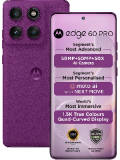







Popular Comparisons
 POCO X7 Pro
 Samsung Galaxy F70 5G
POCO X7 Pro
 iQOO Neo 10R
POCO X7 Pro
 POCO X8 Pro
POCO X7 Pro
 POCO X8 5G
POCO X7 Pro
 Motorola Edge 60 Fusion
POCO X7 Pro
 POCO F7

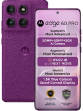
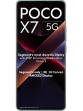

POCO X7 Pro Specifications
General |
|
|---|---|
| Launch Date | January 14, 2025 (Official) |
| Operating System | Android v15 |
| OS Updates | 3 Years |
| Security Updates | 4 Years |
| Custom UI | HyperOS |
Performance
(Very Good)
|
||||
|---|---|---|---|---|
| Chipset | MediaTek Dimensity 8400 Ultra MT6899 View Details | |||
| Processor | Octa core (3.25 GHz, Single core, Cortex A725 + 3 GHz, Tri core, Cortex A725 + 2.1 GHz, Quad core, Cortex A725) | |||
| Architecture | 64 bit | |||
| Fabrication | 4 nm | |||
| Graphics (GPU) | Mali-G720 MC7 | |||
| RAM | 8 GB / 12 GB | |||
| RAM Type | LPDDR5X | |||
| Cooling Technology | Hybrid Cooling System | |||
|
Gaming Test Results

* after 30 mins of gaming
|
||||
Benchmark Screenshots

AnTuTu Benchmark

Graphics Benchmark

Geekbench6 Benchmark
|


Display
(Excellent)
|
|
|---|---|
| Display Type | AMOLED |
| Screen Size | 6.67 inches (16.94 cm) |
| Resolution | 1220x2712 px (FHD+) |
| Peak Brightness | 3200 nits |
| HBM Brightness | 1400 nits |
| PWM Dimming | 1920 Hz |
| Refresh Rate | 120 Hz |
| Touch Sampling Rate | 240 Hz |
| Aspect Ratio | 20:9 |
| Pixel Density | 446 ppi |
| Screen to Body Ratio (calculated) | 88.7 % |
| Screen Protection | Corning Gorilla Glass 7i |
| Bezel-less Display | Yes with punch-hole display |
| HDR 10 / HDR+ Support | Yes, HDR 10+ |
| Screen to Body Ratio (claimed by the brand) | 93.70 % |
UI Screenshots

Lock Screen

Home Screen

Screen With Widgets

Dialer Screen

App Drawer

Notification Panel

Quick Settings Panel

Settings Screen

OS Version

Storage

Battery

Camera On

Camera Options

Camera Modes

Camera Settings

Picture Size Options

Video Size Options
|
Design |
|
|---|---|
| Height | 160.95 mm |
| Width | 75.24 mm |
| Thickness | 8.31 mm |
| Weight | 195 grams |
| Build Material | Back: Eco Leather, Plastic |
| Water Resistance | Yes, Water resistant, IP68, IP66, IP69 |
| Ruggedness | Dust proof |
|
Click to View

|
Rear Camera
(Very Good)
|
|||||||||||||||||||||||||||
|---|---|---|---|---|---|---|---|---|---|---|---|---|---|---|---|---|---|---|---|---|---|---|---|---|---|---|---|
| Resolution | |||||||||||||||||||||||||||
|
|||||||||||||||||||||||||||
| Autofocus | Yes | ||||||||||||||||||||||||||
| OIS | Yes | ||||||||||||||||||||||||||
| Flash | Yes, LED Flash | ||||||||||||||||||||||||||
| Image Resolution | 8150 x 6150 Pixels | ||||||||||||||||||||||||||
| Settings | Exposure compensation, ISO control | ||||||||||||||||||||||||||
| Shooting Modes |
Continuous Shooting High Dynamic Range mode (HDR) Burst mode Macro Mode |
||||||||||||||||||||||||||
| Camera Features |
10 x Digital Zoom Auto Flash Custom Watermark Face detection Filters Touch to focus Voice Shutter |
||||||||||||||||||||||||||
| Video Recording | 4k @60 fps | ||||||||||||||||||||||||||
| Video Recording Features |
Dual Video Recording Vlog Mode |
||||||||||||||||||||||||||
Rear Camera Samples

Daylight / HDR Auto

Wide Angle

Max Zoom Supported 10x

Long Shot 10X

Long Shot 5X

Long Shot 3X

Long Shot 1X

High Res

Portrait Shot

Night Mode OFF

Night Mode ON

Close Up

Low Light

Low Light With Flash

Colour Variance
|
Front Camera
(Very Good)
|
||||||||||||||||
|---|---|---|---|---|---|---|---|---|---|---|---|---|---|---|---|---|
| Resolution | ||||||||||||||||
|
||||||||||||||||
| Video Recording | Full HD @30 fps | |||||||||||||||
Front Camera Samples

Selfie

Selfie Portrait

Selfie Low Light

Selfie Low Light With Flash
|
Battery
(Very Good)
|
||||
|---|---|---|---|---|
| Capacity | 6550 mAh | |||
| Battery Type | Silicon Carbon | |||
| Quick Charging | Yes, 90W Turbo Charging | |||
| Reverse Charging | Yes | |||
|
Battery Test Results
|
Storage |
|
|---|---|
| Internal Storage | 256 GB |
| Storage Type | UFS 4.0 |
| Expandable Storage | No |
Network & Connectivity |
|
|---|---|
| SIM Slot(s) | Dual SIM |
| SIM Type | SIM1: Nano, SIM2: Nano |
| Network Support | 5G, 4G |
| VoLTE | Yes |
| SIM 1 |
5G bands, 4G bands
Expand
|
| SIM 2 |
5G bands, 4G bands
Expand
|
| SAR Value | Head: 0.876 W/kg, Body: 0.773 W/kg |
| Wi-Fi | Yes, Wi-Fi 6E (802.11 a/b/g/n/ac/ax) 5GHz 6GHz |
| Wi-Fi Features | Mobile Hotspot |
| Bluetooth | Yes, v5.4 |
| GPS | Yes with A-GPS, Glonass |
| NFC | Yes |
| IR Blaster | Yes |
Multimedia |
|
|---|---|
| Stereo Speakers | Yes |
| Audio Jack | USB Type-C |
| Audio Features | Dolby Atmos |
Sensors |
|
|---|---|
| Fingerprint Sensor | Yes |
| Fingerprint Sensor Position | On-screen |
| Fingerprint Sensor Type | Optical |
| Heart Rate Monitor | Yes |
| Other Sensors | Light sensor, Proximity sensor, Accelerometer, Barometer, Compass, Gyroscope |
POCO X7 Pro User Reviews
POCO X7 Pro Key Highlights
| Processor | MediaTek Dimensity 8400 Ultra MT6899 |
| RAM & Storage | 8 GB RAM + 256 GB 12 GB RAM + 256 GB |
| Display | 6.67", 1220 x 2712 Resolution |
| Rear Camera | 50 MP + 8 MP |
| Front Camera | 20 MP |
| Battery | 6550 mAh |





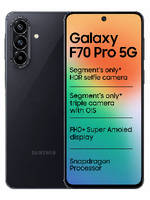






















POCO X7 Pro Price In India
| Product Name | Store | Price |
|---|---|---|
| POCO X7 Pro (8 GB + 256 GB) | Flipkart | ₹23,999 |
| POCO X7 Pro (12 GB + 256 GB) | Flipkart | ₹25,999 |
Popular Links
- All Upcoming Phones
- Upcoming POCO Phones
- vivo V80 5G
- OPPO F35 Pro
- vivo S2 FE 5G
- OPPO Find X10
- OPPO F35
- Samsung Mobiles
- Motorola Mobiles
- vivo Mobiles
- OPPO Mobiles
- Tecno Mobiles
- realme Mobiles
- Xiaomi Mobiles