


Review Summary
Expert Rating
Dual-screen laptops used to feel like a tech demo that escaped the lab. Then ASUS made the ZenBook Duo, and suddenly the idea felt real. Two OLED screens, a detachable keyboard, and the promise of desktop-style multitasking in a backpack. However, as we noted in our review of the older variant, there was definitely room for improvement.
Well, it’s 2026, and now comes the ZenBook Duo UX8407, and this time, ASUS didn’t just tweak the formula. Instead, it has refined almost every part of the experience. A redesigned hinge, a much larger battery, faster displays, a new Intel Panther Lake Core Ultra X9 chip, and smarter ergonomics all aim to make the Duo feel less experimental and more… everyday usable.
But the big question remains: Is the laptop worth it? Is it finally complete? Let’s find out.
Table of Contents
Design & build: Same idea, smarter execution
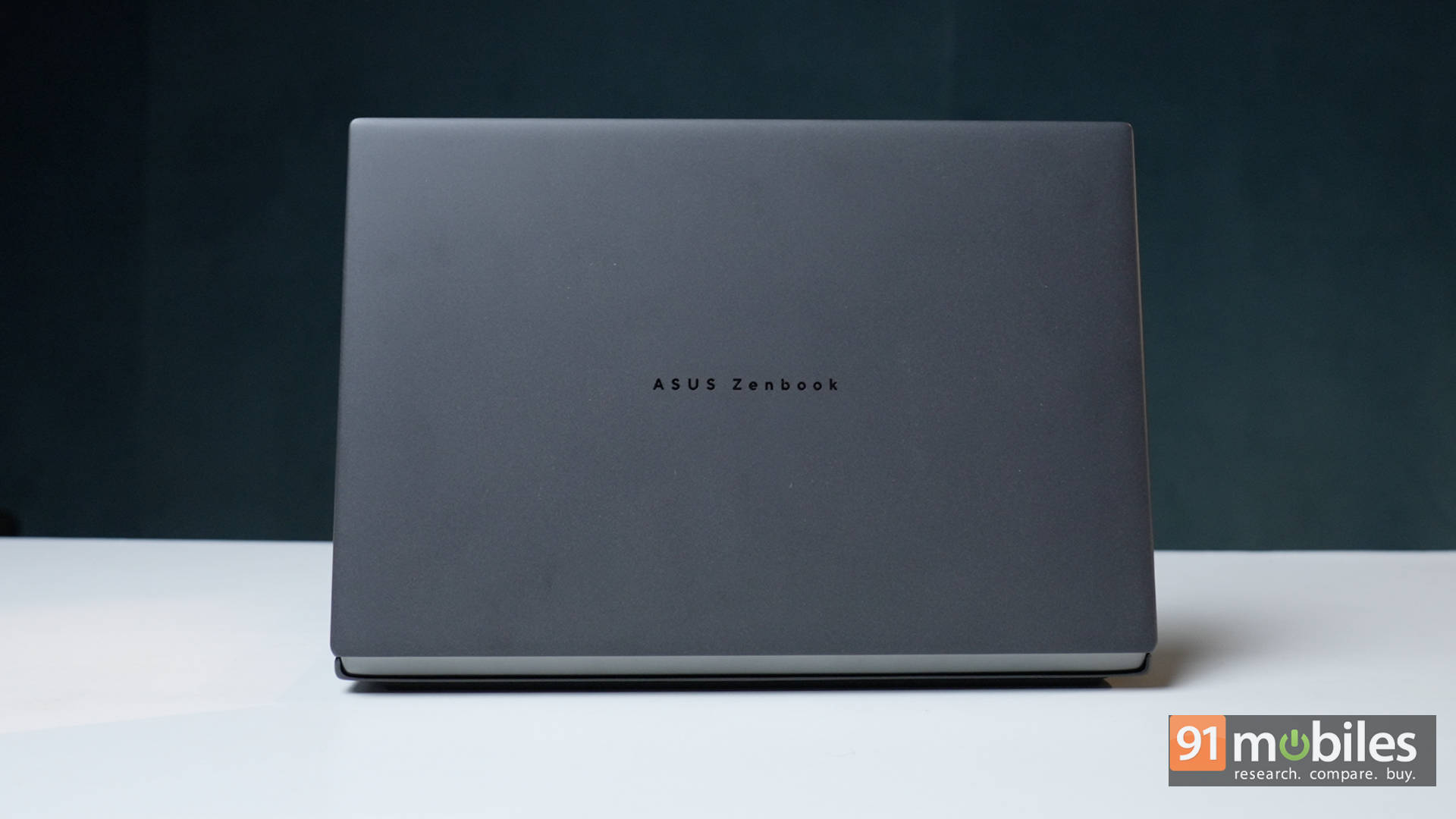
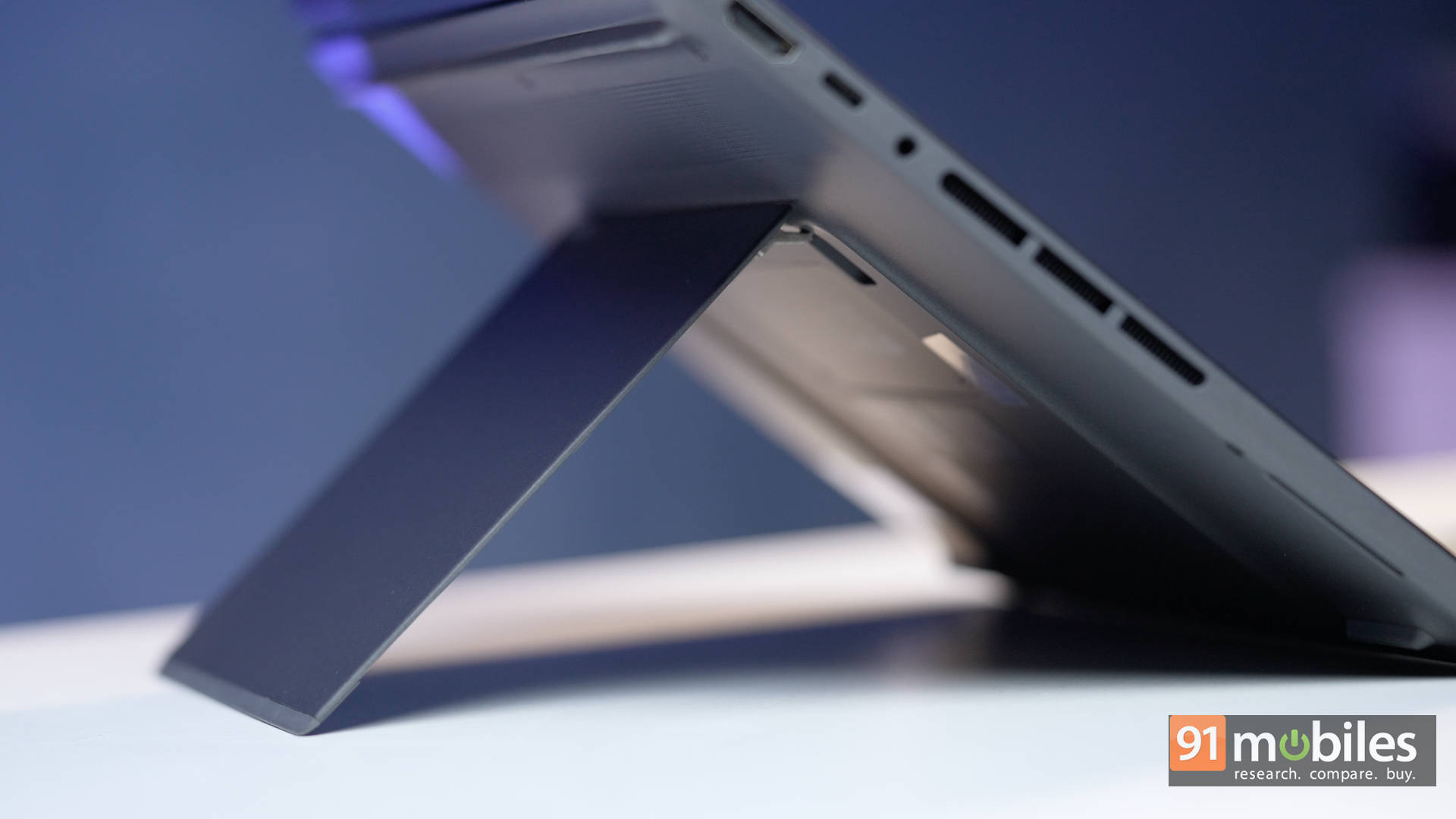
At first glance, the UX8407 looks very similar to the UX8406. Same stacked-screen silhouette. Same detachable keyboard. Same built-in kickstand. But spend five minutes with it and the differences become obvious.
The biggest upgrade is the new hinge. On the previous model, the gap between the two screens was noticeable. Not huge, but enough to break the illusion of a continuous workspace. ASUS has now dramatically reduced that gap, making the two displays feel far more seamless when stacked vertically.
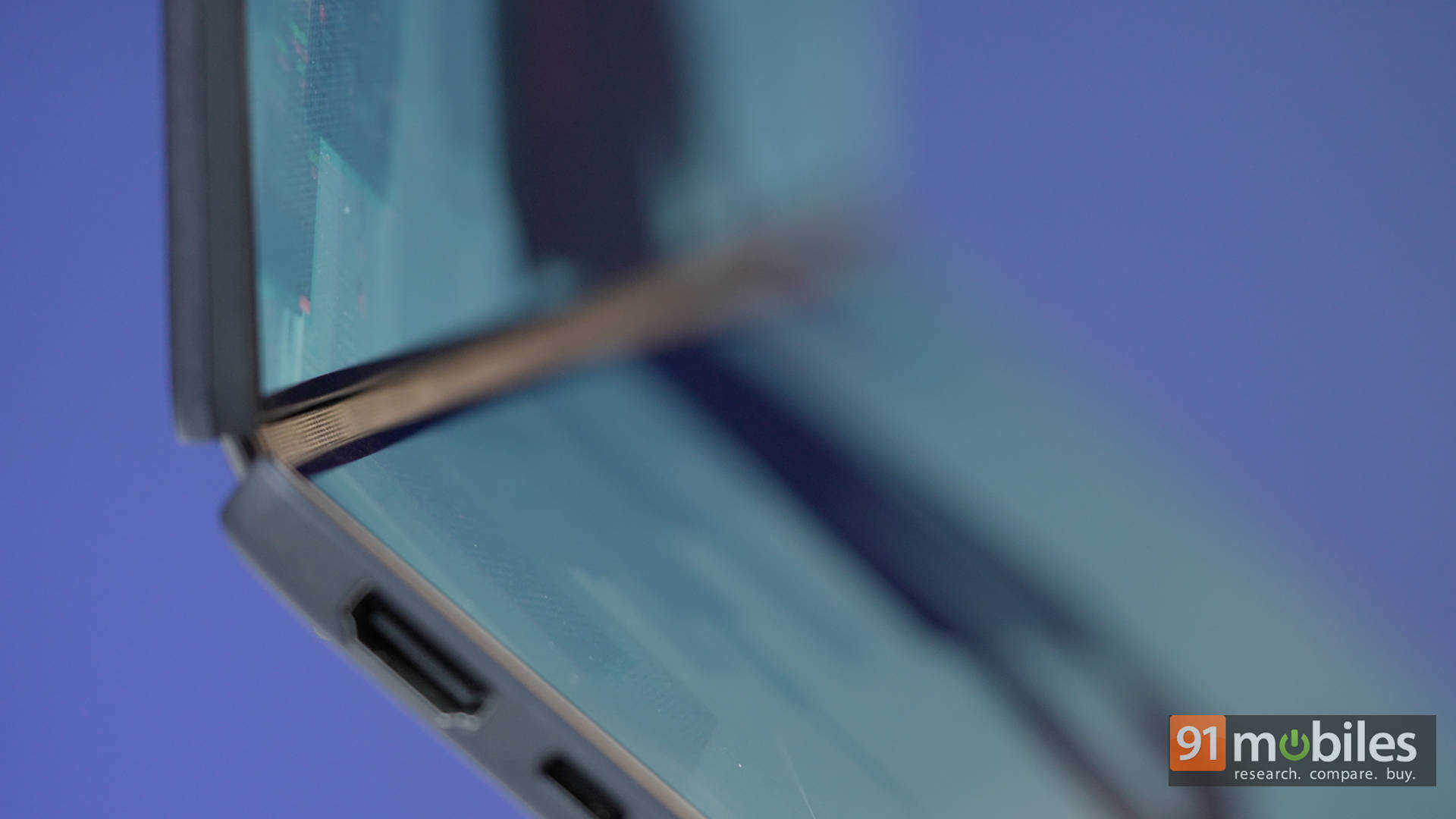
It sounds like a small change, but it completely transforms the experience. Spreadsheets, timelines, and long documents finally feel like they belong on one giant canvas instead of two separate screens awkwardly glued together.
Add to that, the chassis also gets a new Ceraluminum finish, which feels more textured and durable than the previous generation’s magnesium alloy. It’s similar to the ASUS Zenbook S 16 we recently reviewed. Essentially, it looks premium, resists fingerprints better, and makes the laptop feel more “flagship”.
Dual-screen experience: Now genuinely seamless
The ZenBook Duo lives and dies by its displays, so ASUS clearly spent a lot of time here. Both screens are still 14-inch OLED panels, but now they’ve been upgraded to a higher 3K resolution (2880×1800) with a smooth 144Hz refresh rate. For context, the previous Duo topped out at 120Hz. That bump to 144Hz might sound like a gamer upgrade, but in daily use, it makes scrolling, animations, and pen input noticeably smoother.
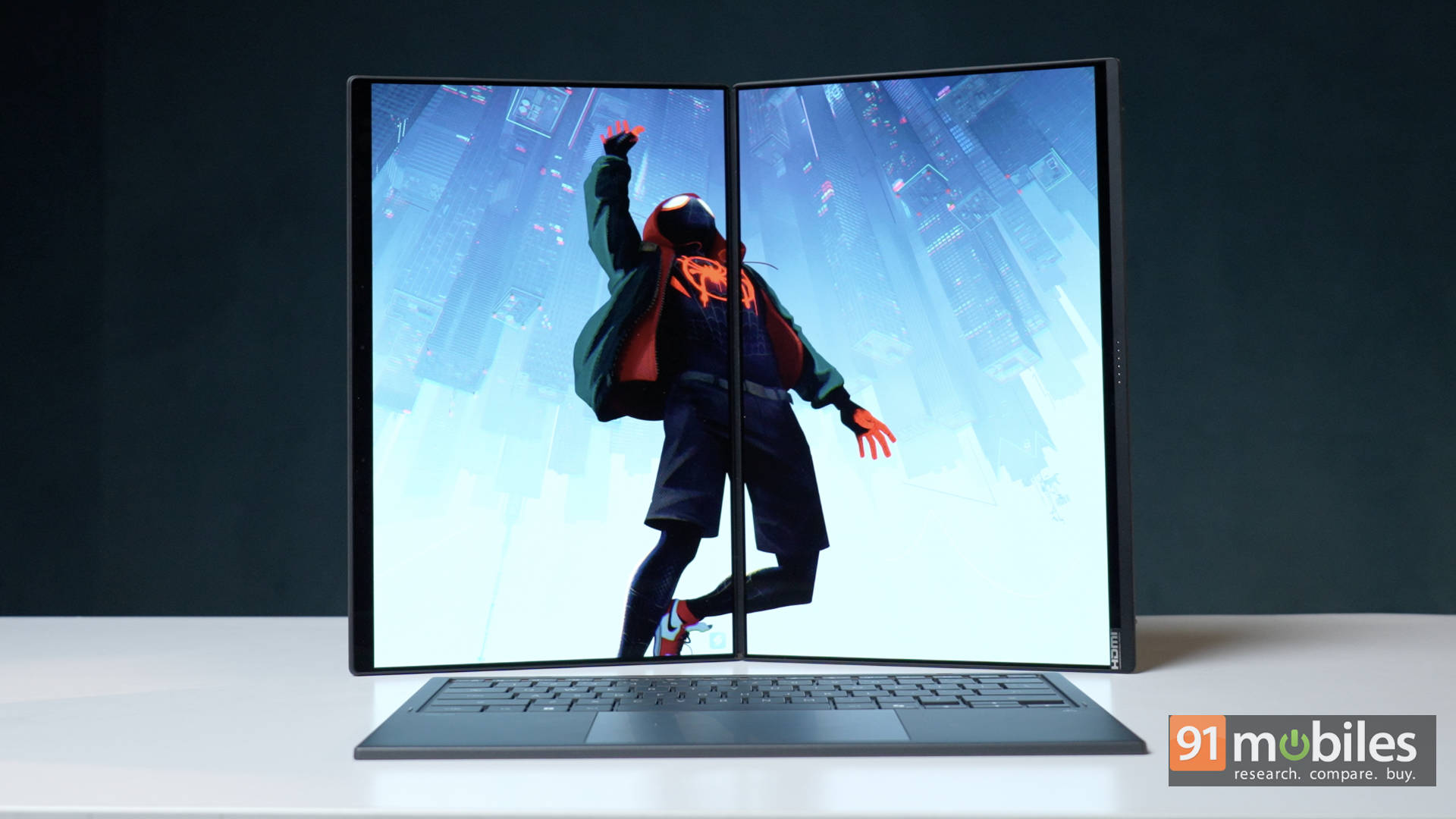
What feels the most important upgrade, though, is the hinge gap. Because the hinge gap is smaller, the vertical stacked mode finally feels natural. Editing a long article? Timeline above, preview below. Coding? Editor up top, output below. Research? Browser on one screen, notes on the other.

As for content consumption, the display also comes with added Dolby Vision & HDR support. And of course, you get excellent brightness, contrast, and colours, which is what you’d expect from a premium OLED panel. These are still among the best laptop displays you can get, just now faster and more immersive.
Performance: Panther Lake enters the chat
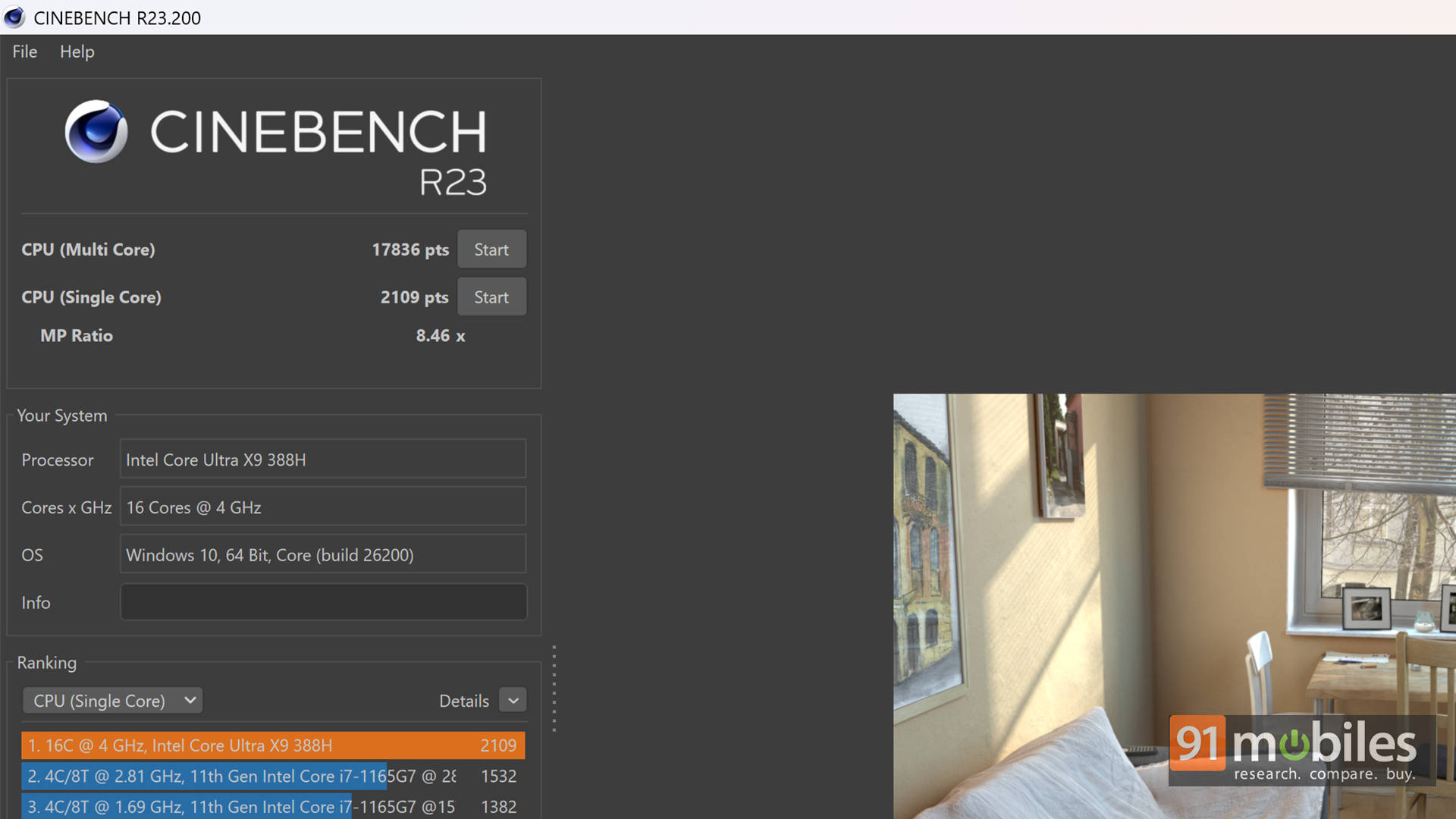
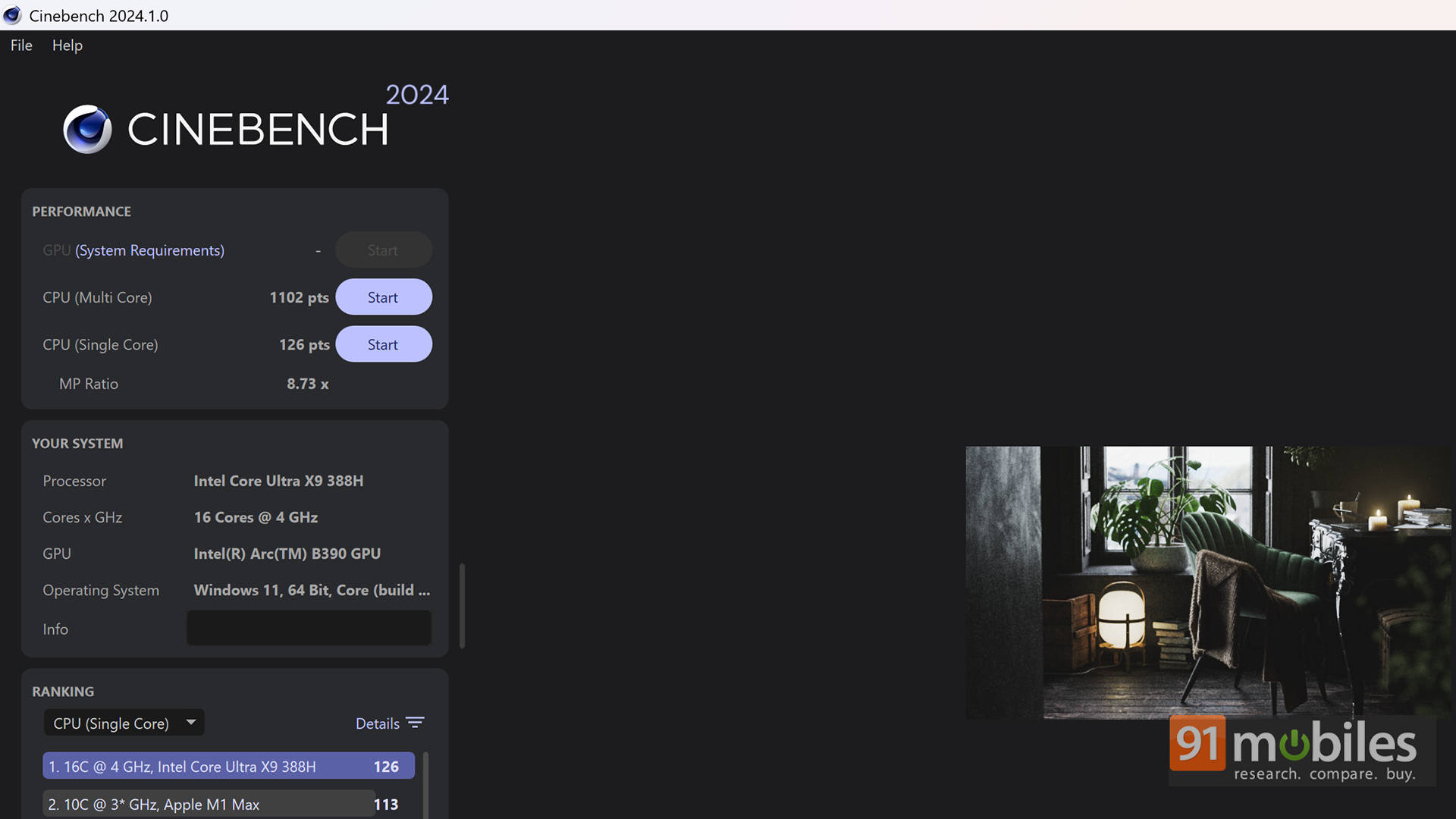
Now we get to the real glow-up. The UX8407 ditches the Meteor Lake Core Ultra chip from the UX8406 and steps up to the Intel Core Ultra X9 388H (Panther Lake). On paper, both processors feature 16 cores. In reality? This is not a minor refresh, but a proper leap forward in both performance and efficiency.
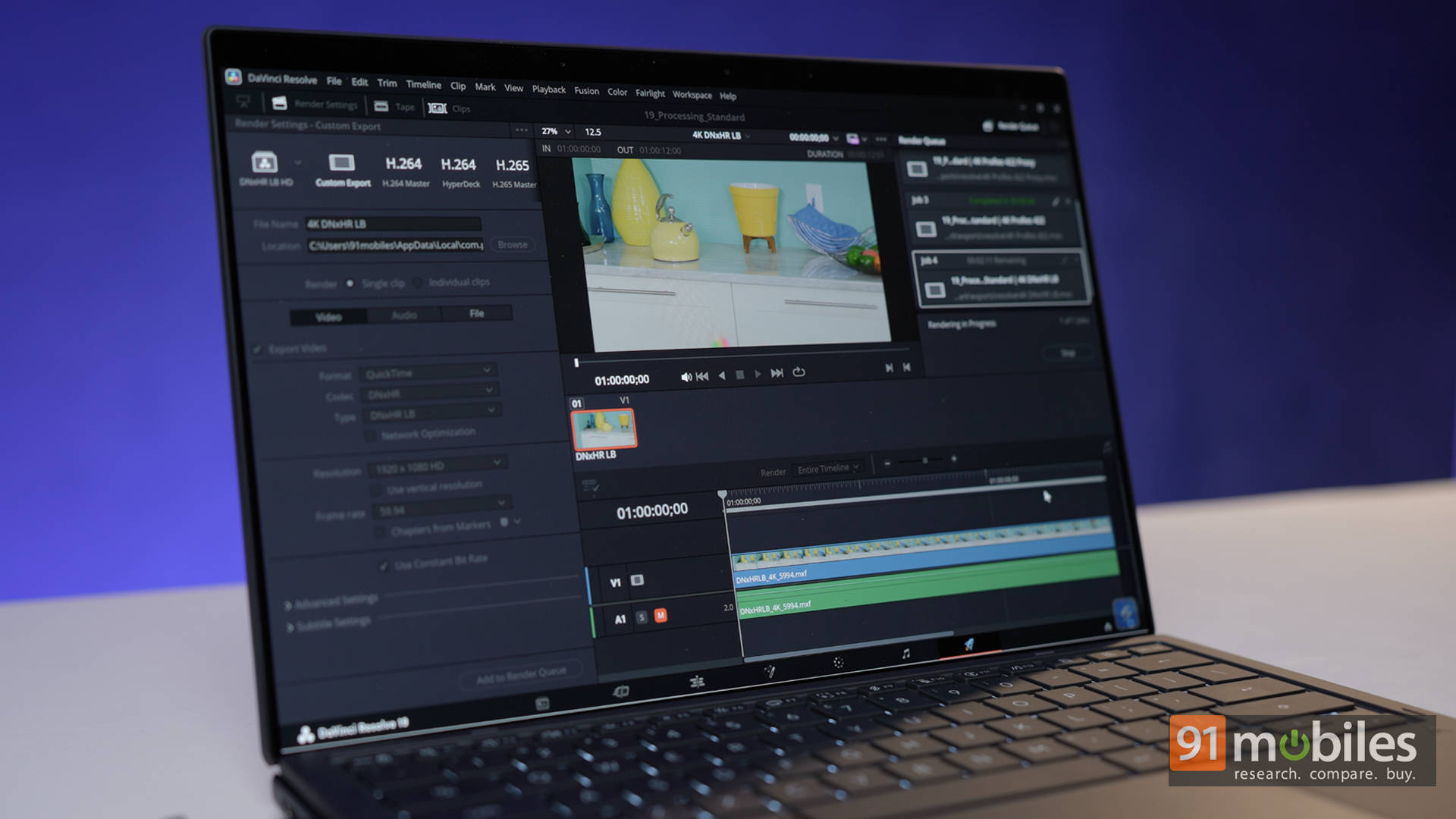
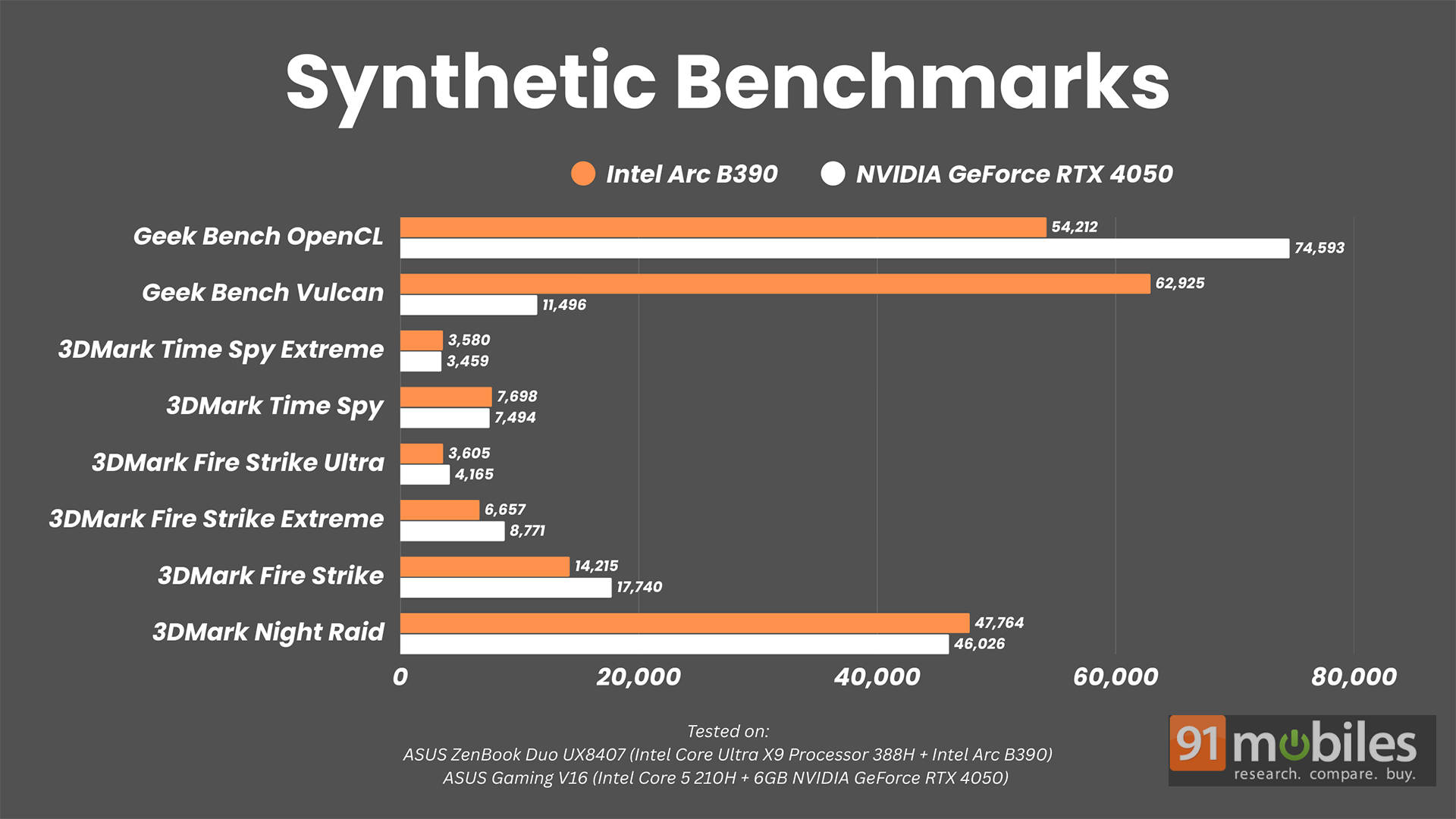
As the benchmarks clearly demonstrate, the UX8407 comfortably outperforms its predecessor, particularly in multi-core workloads. Heavy rendering, exports, and multitasking runs feel noticeably quicker. It even got an overall score of 88 pts in the CrossMark benchmark, highlighting how good the device is for just about everyone.
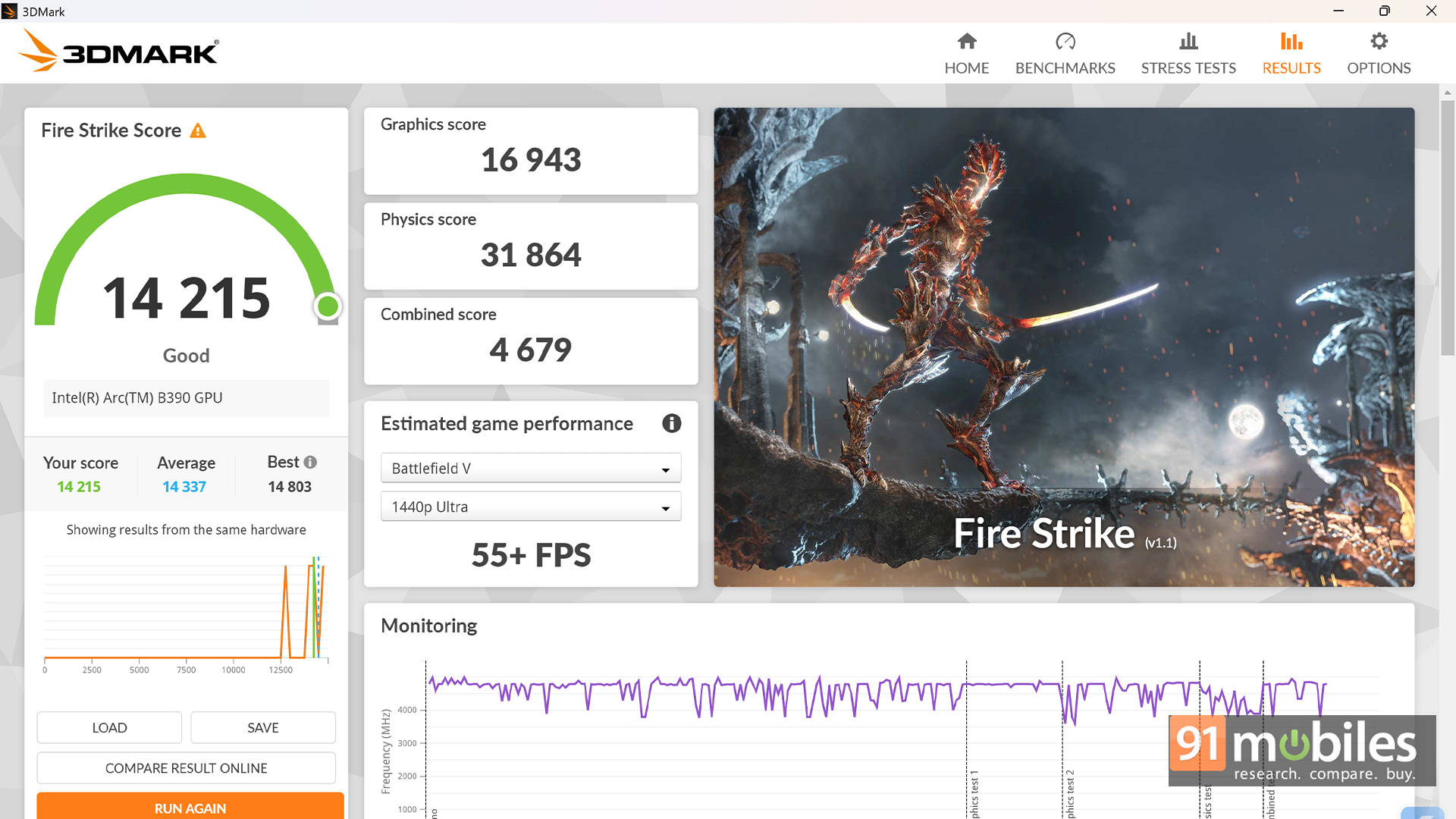
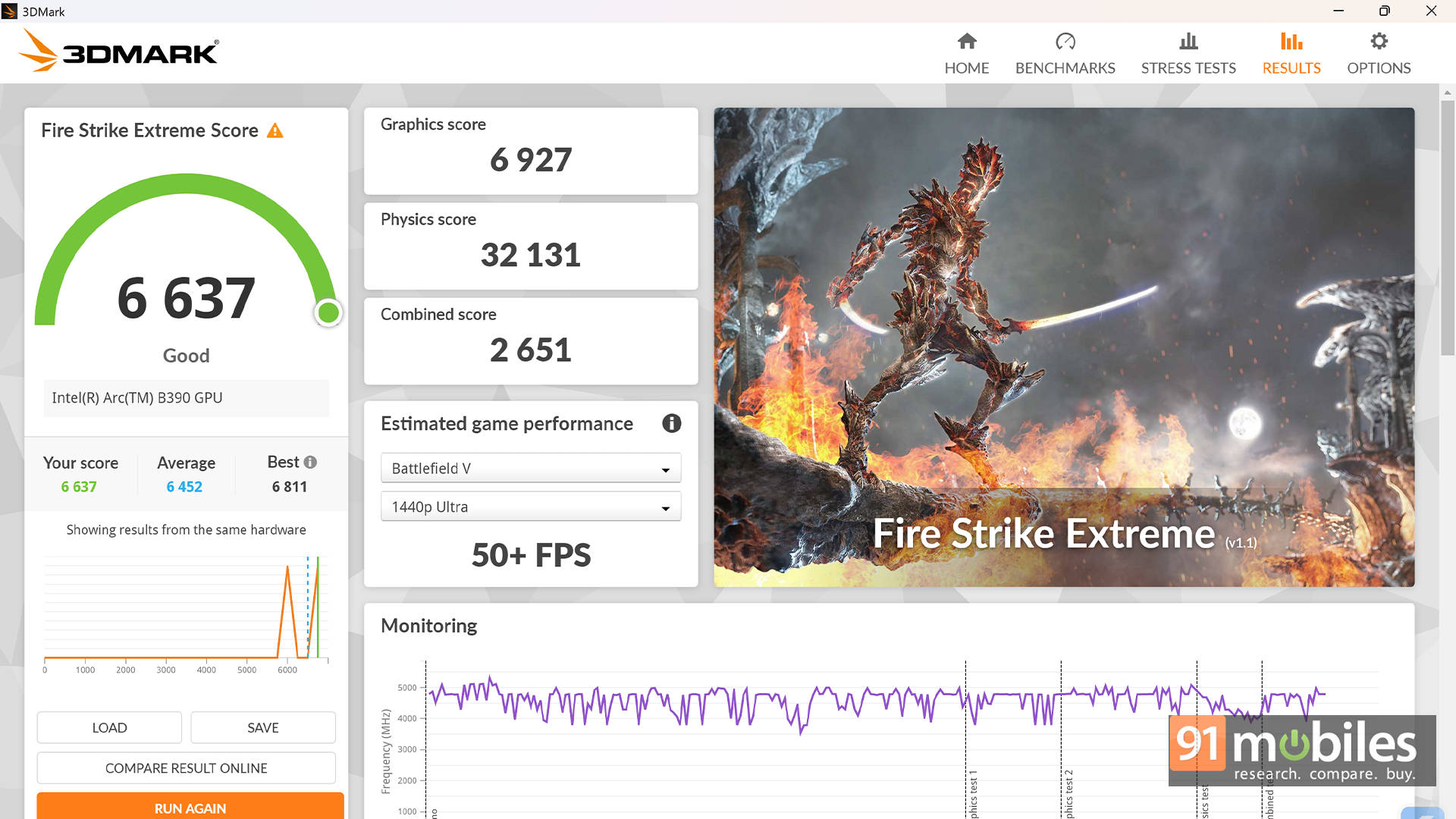
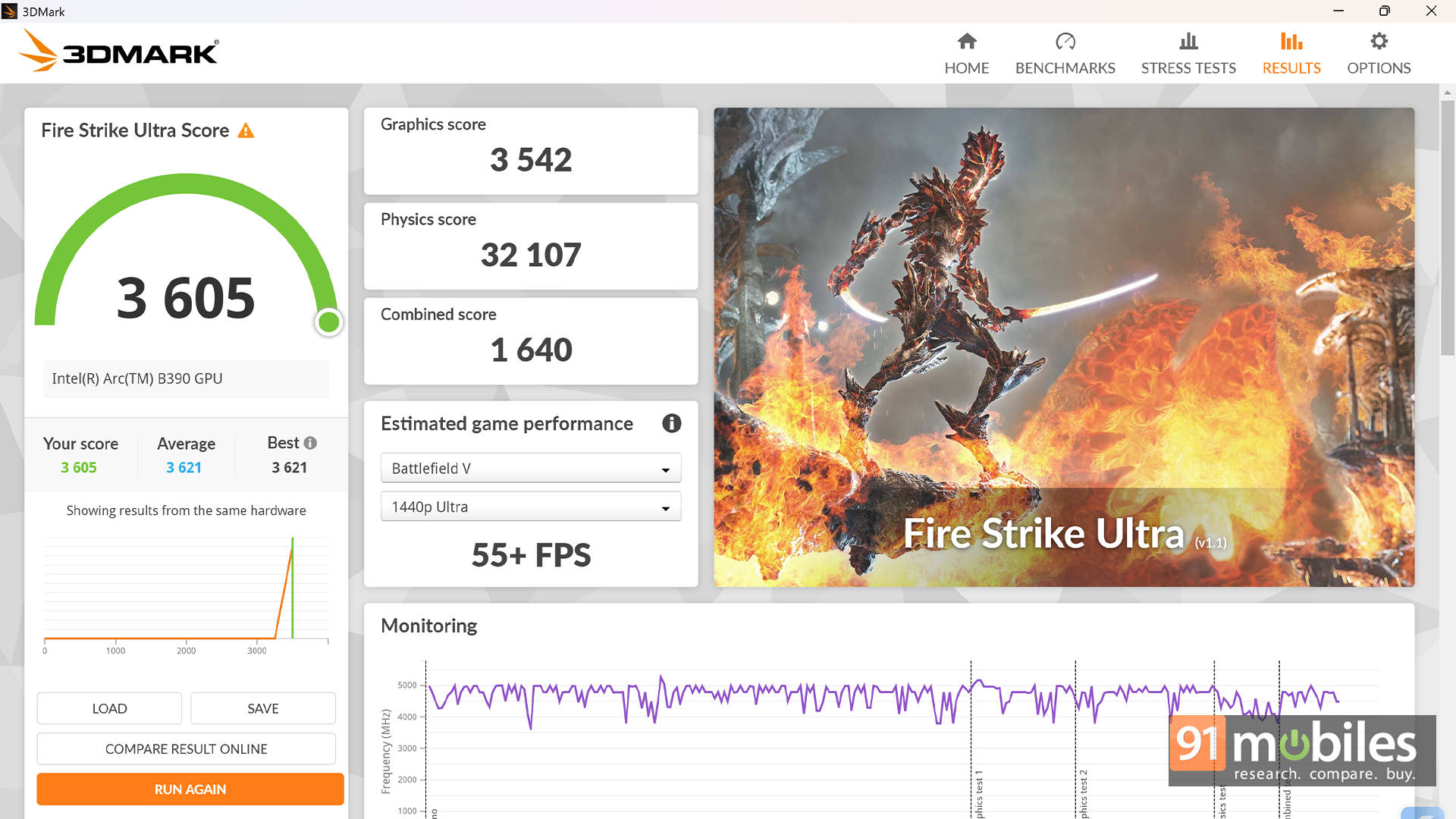
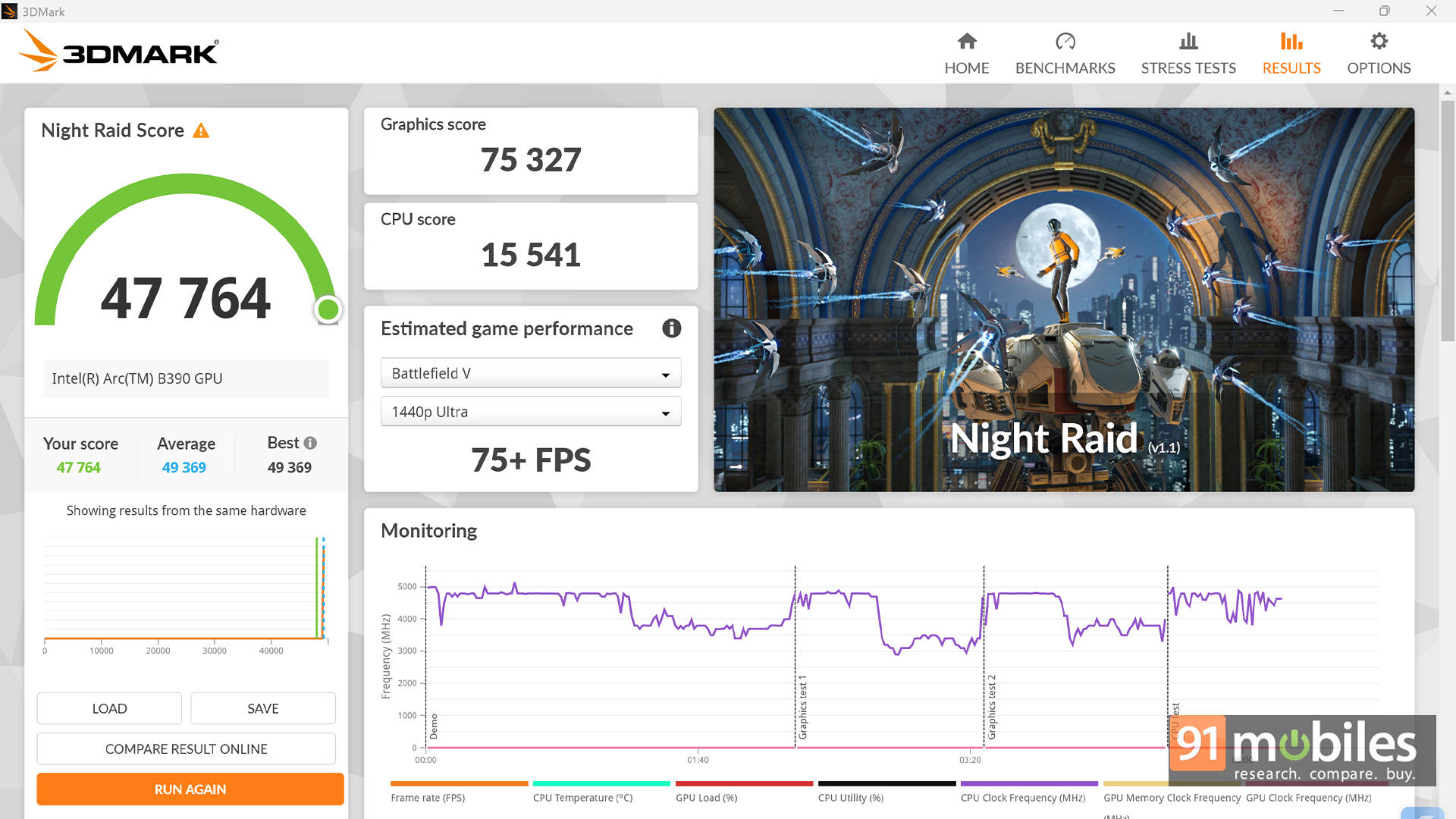
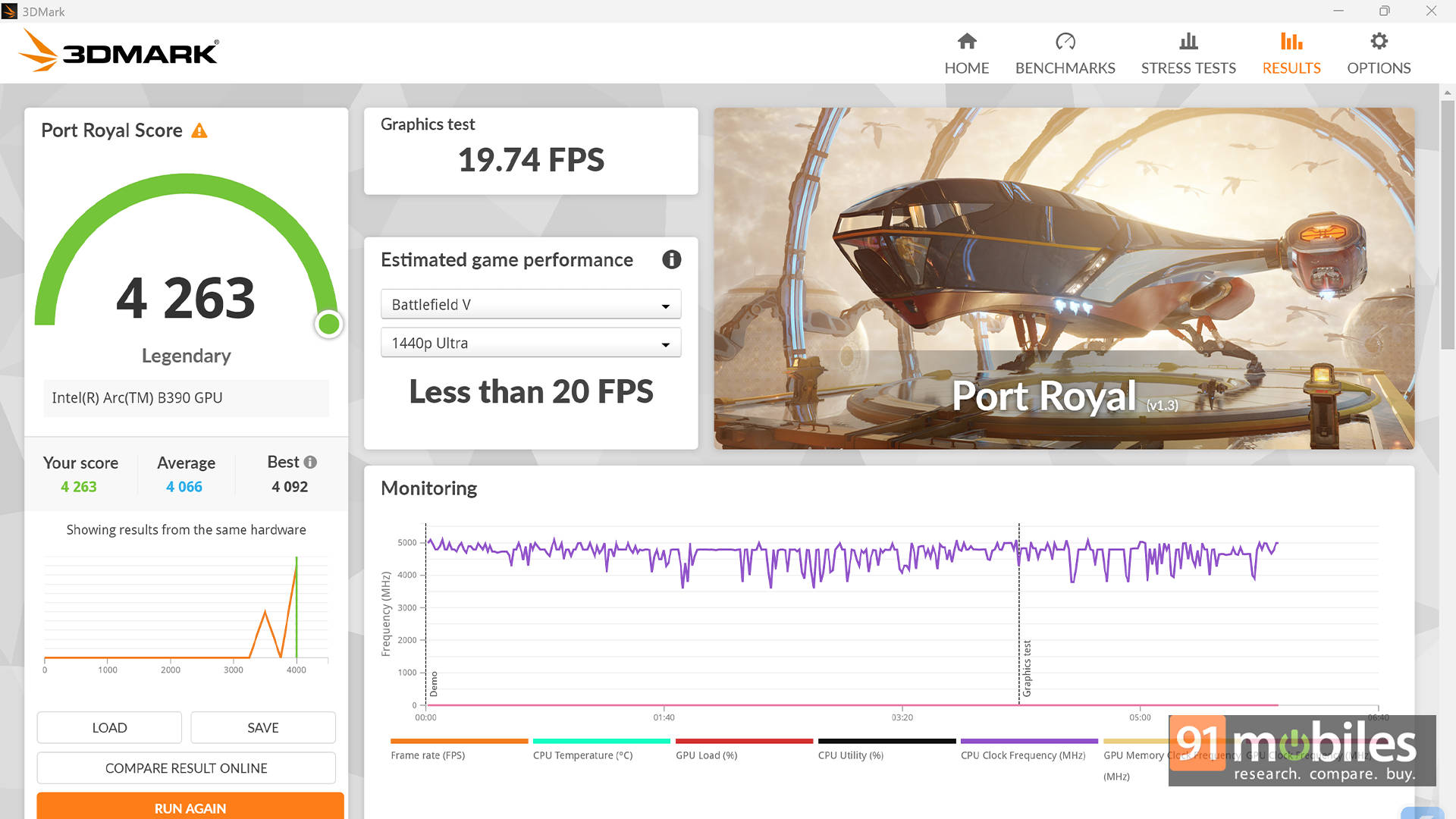
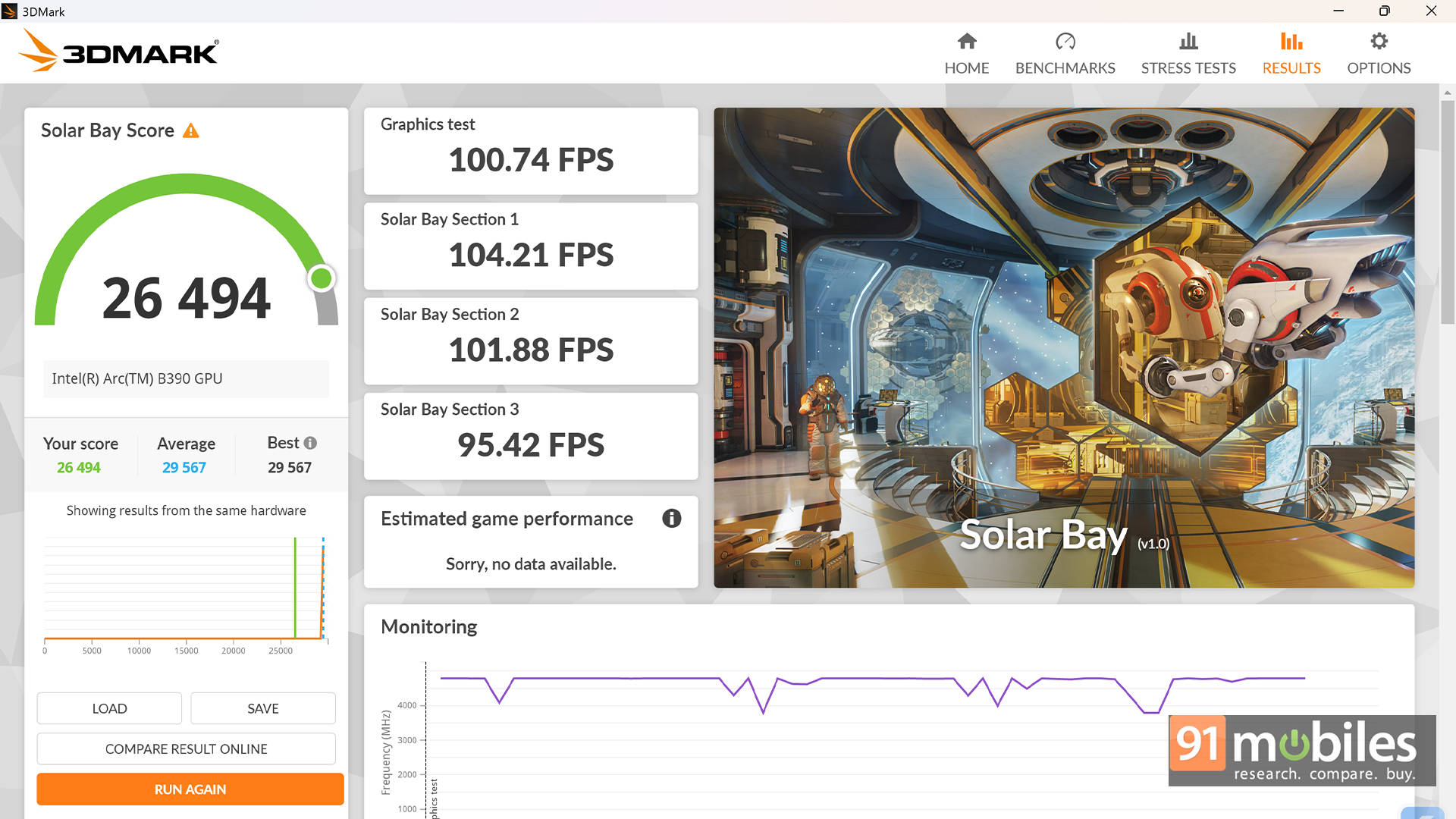
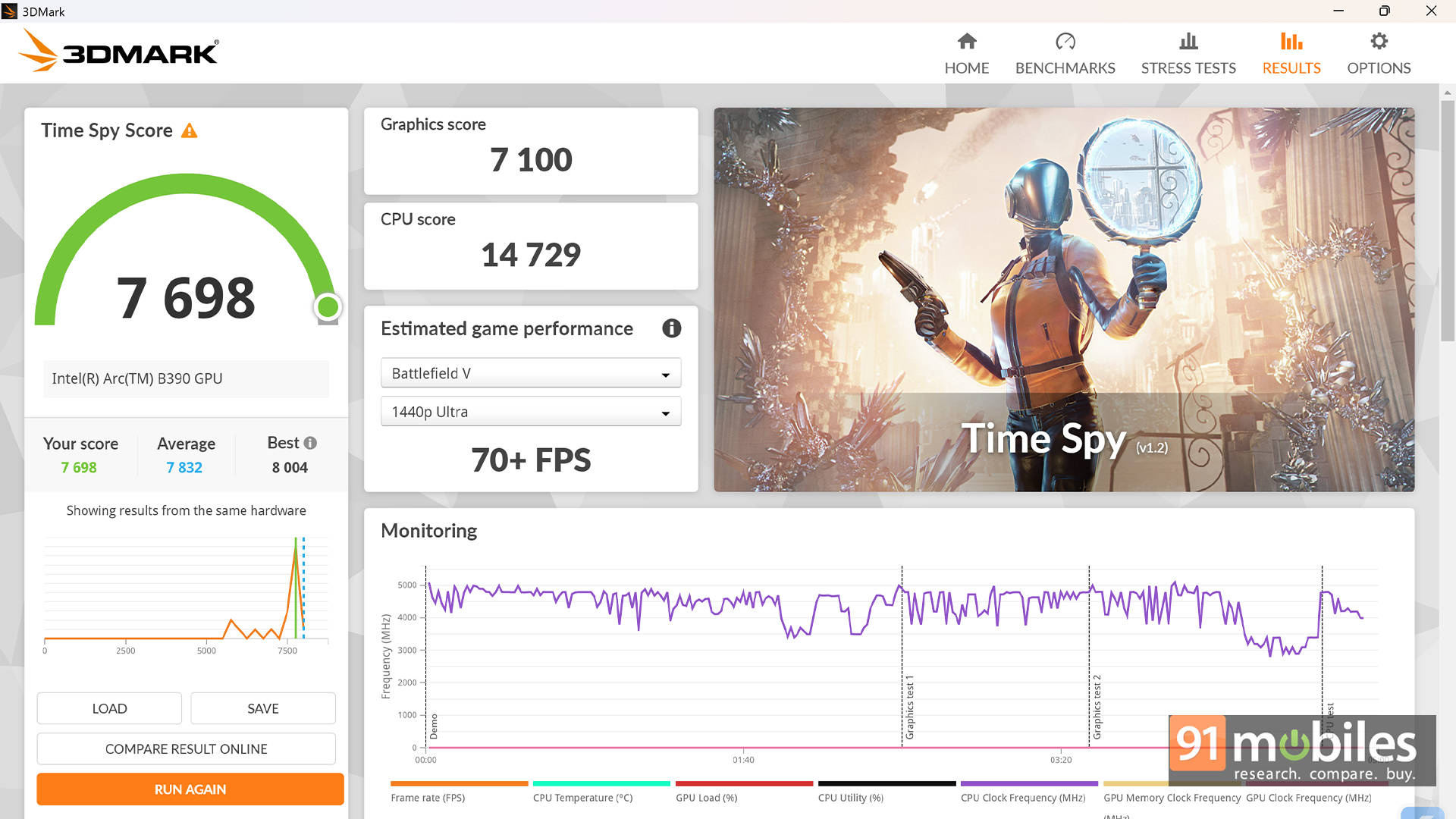
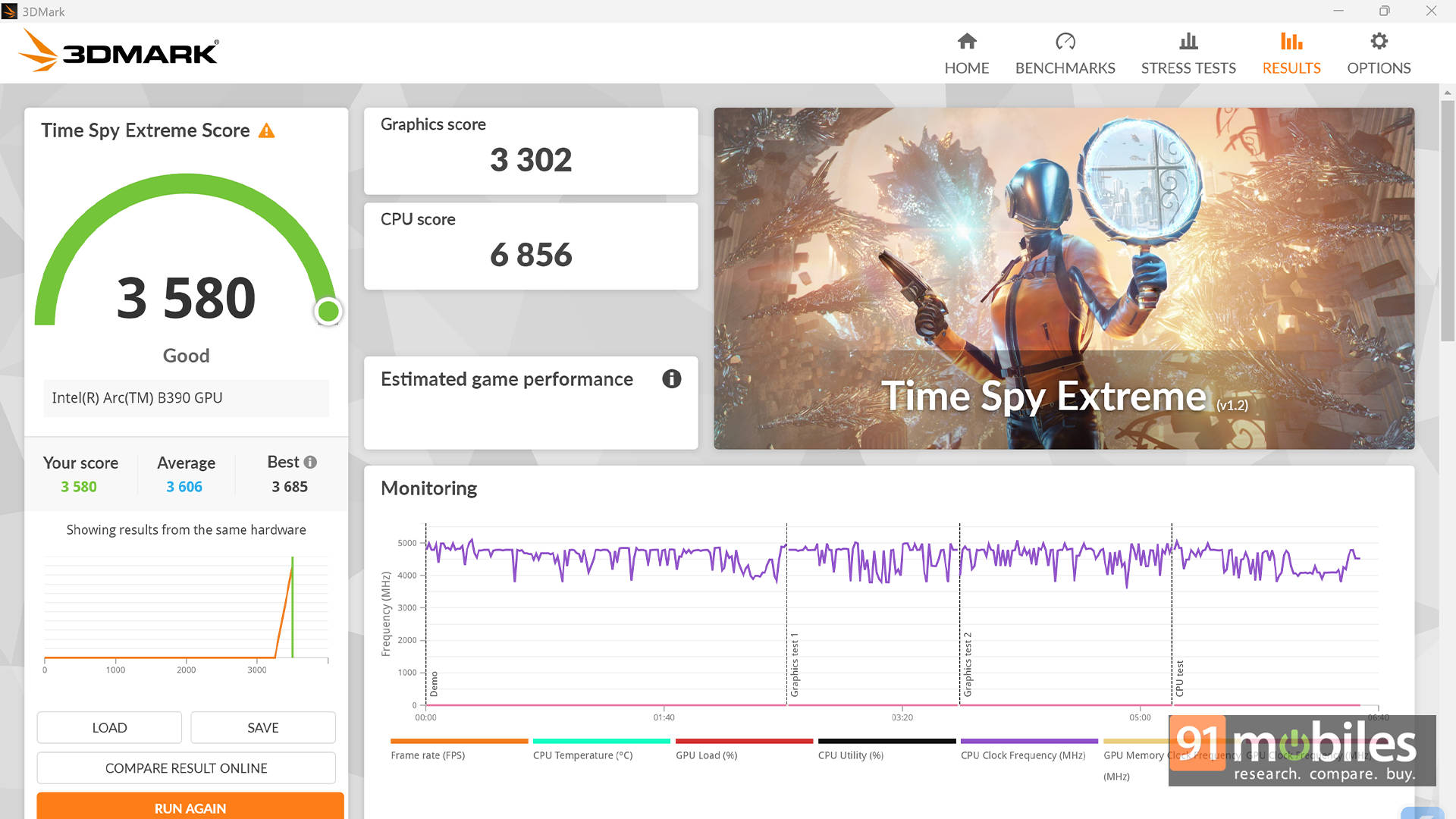
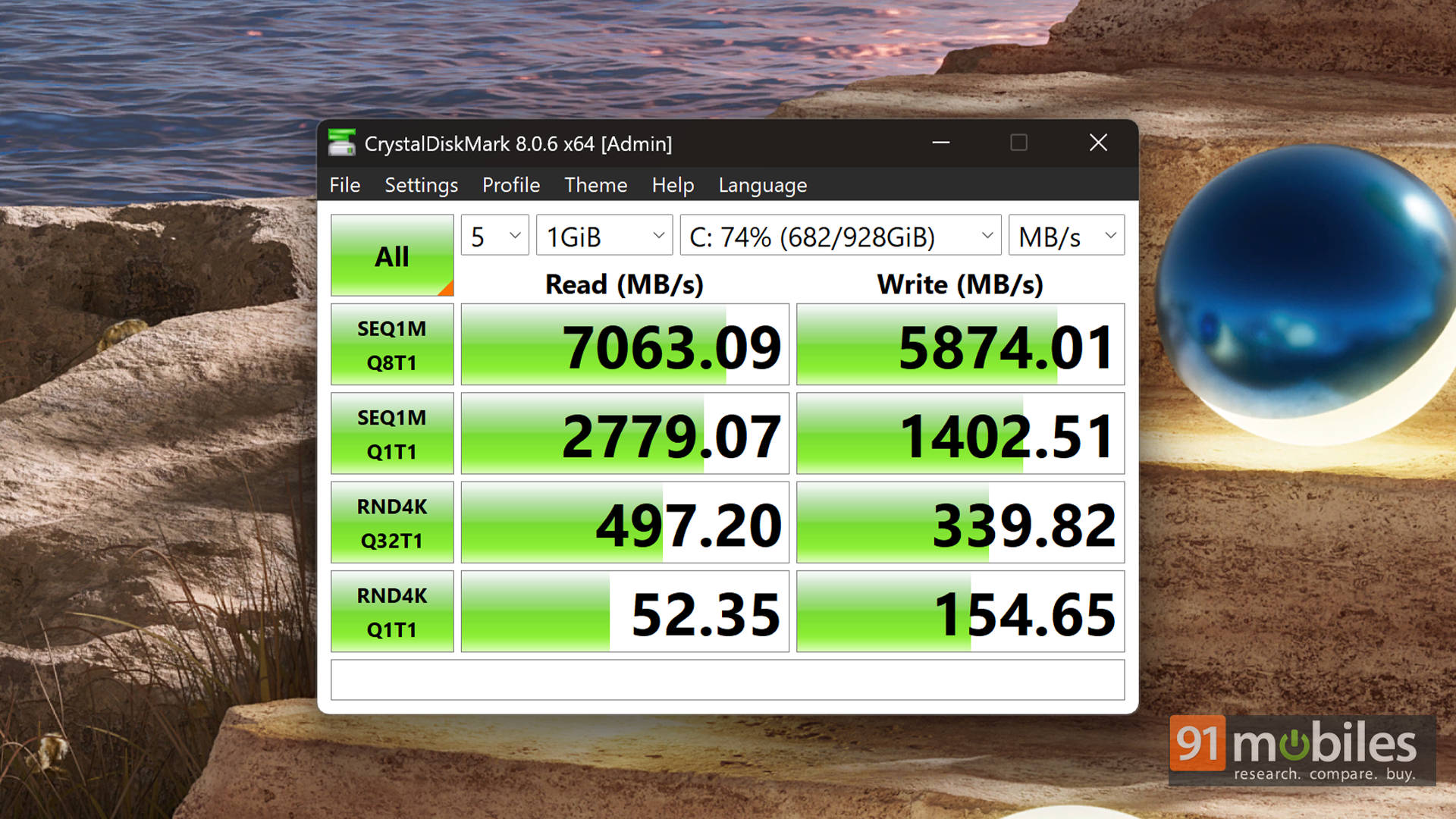
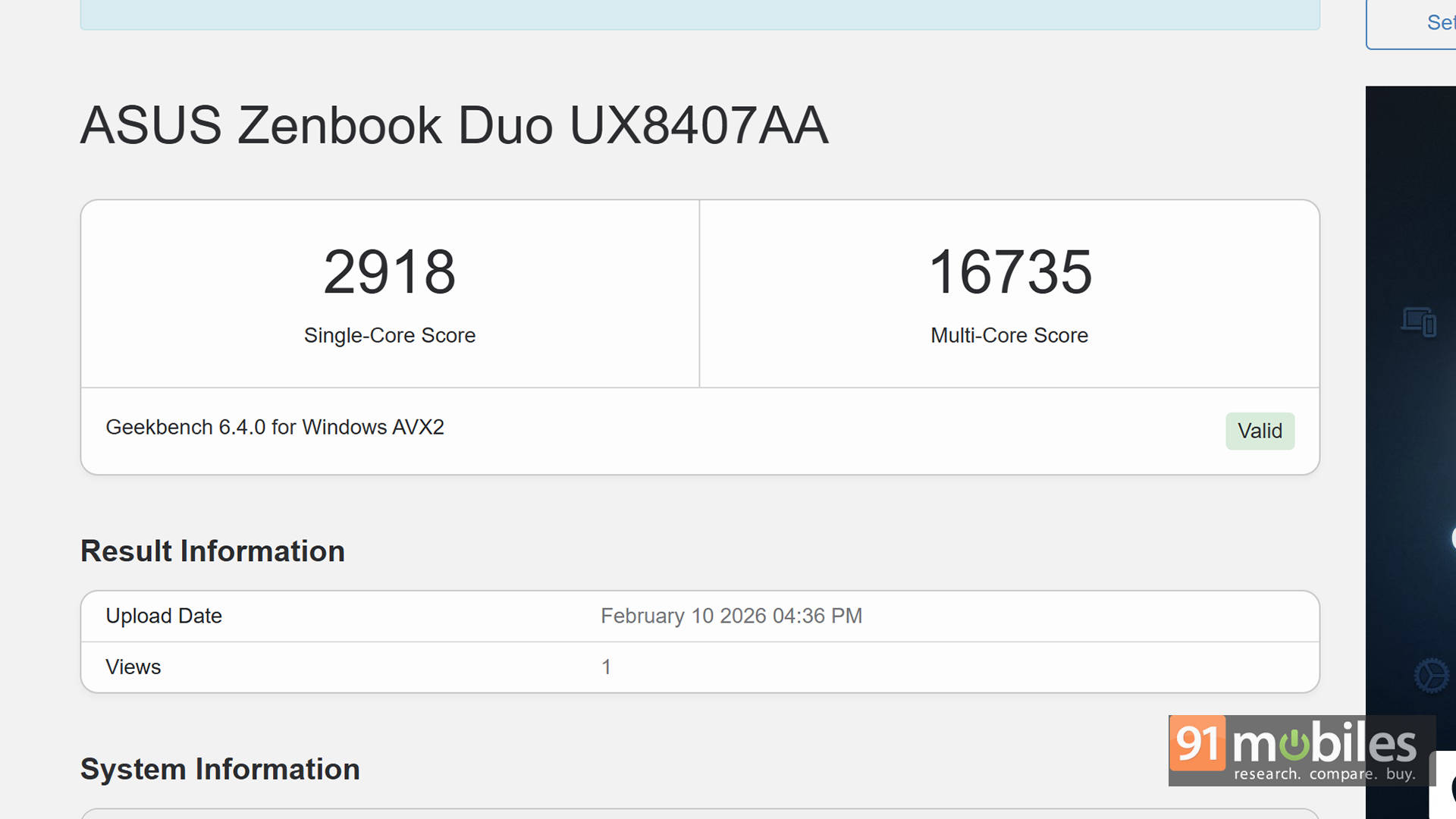
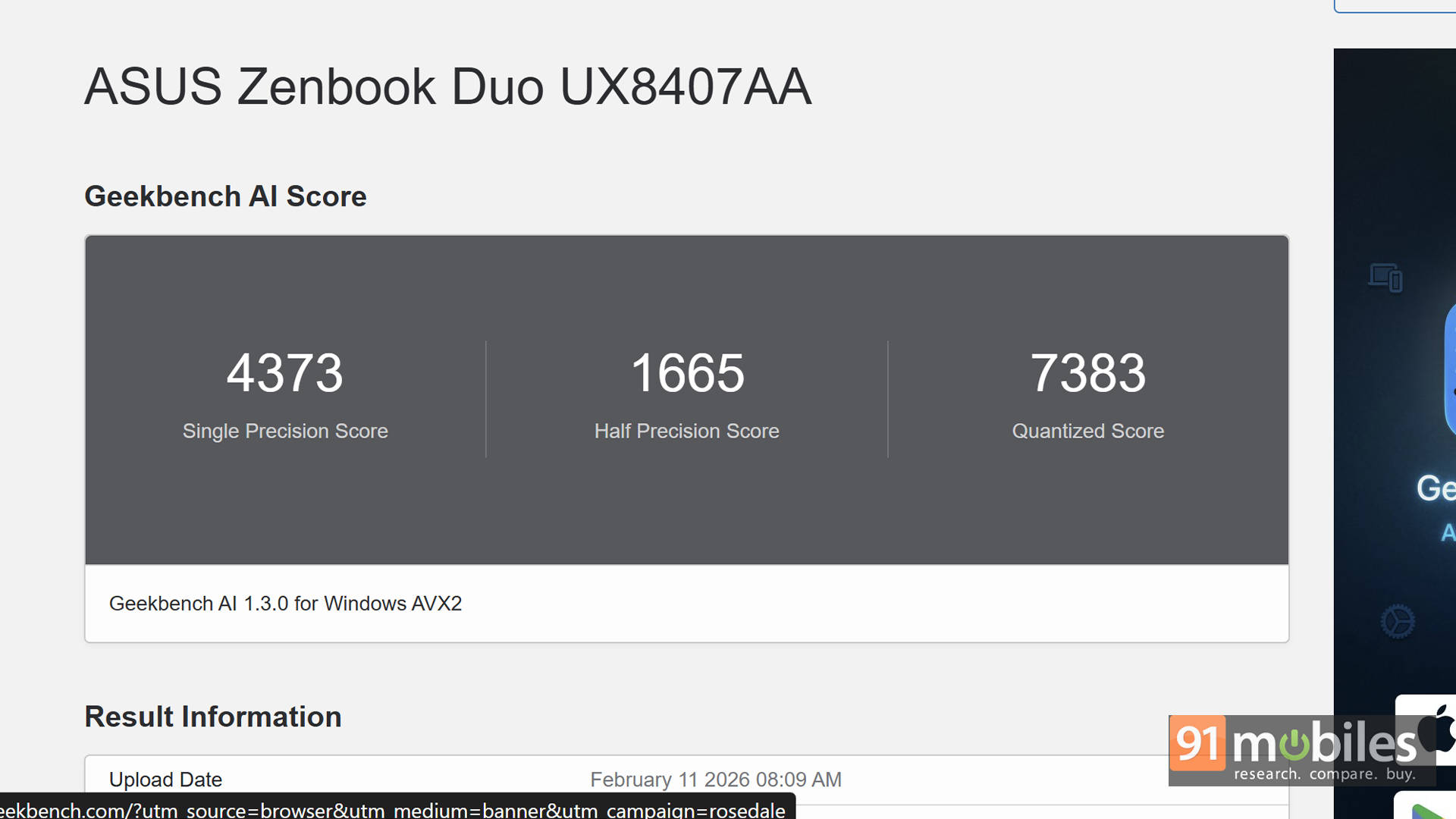
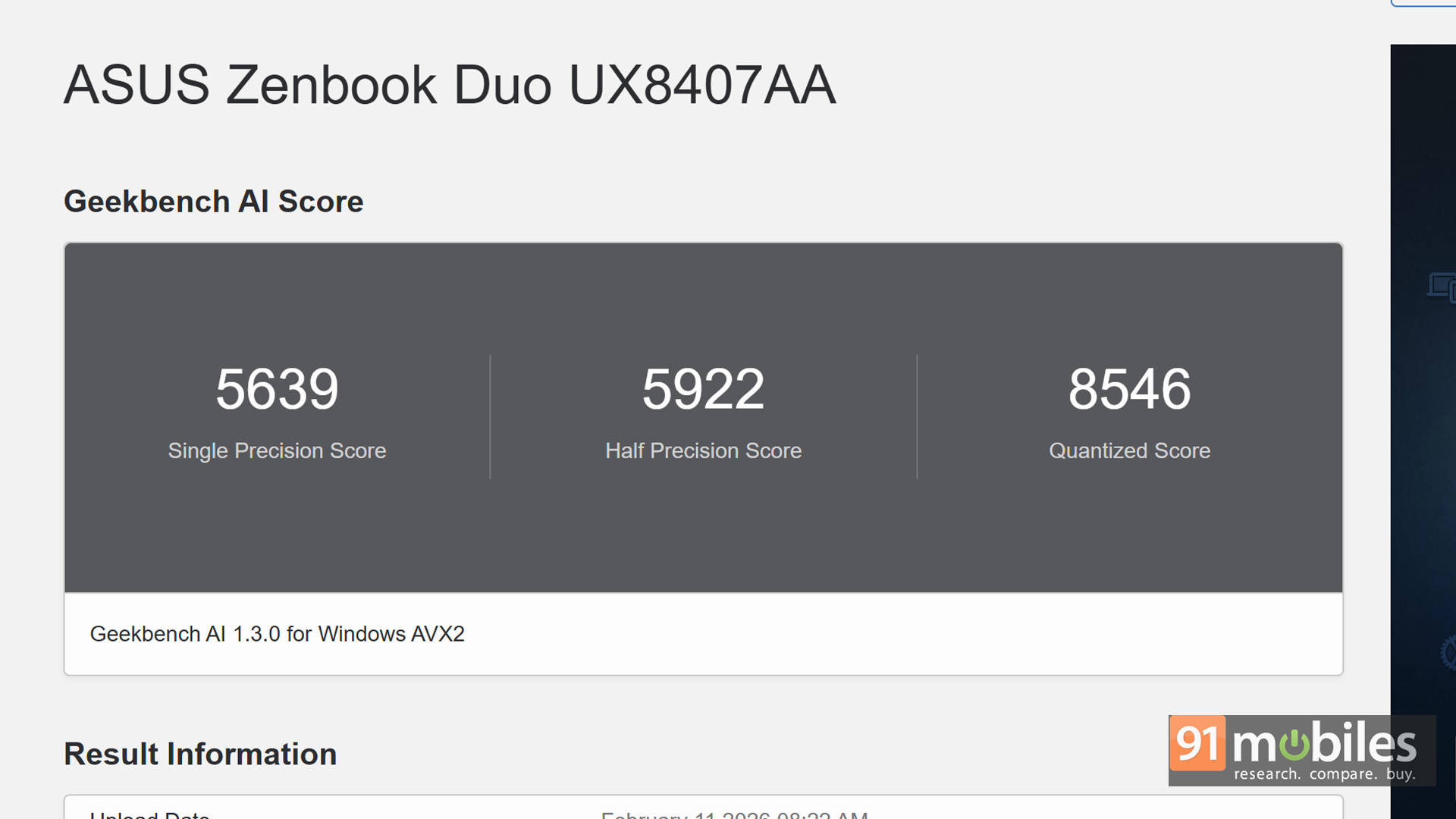
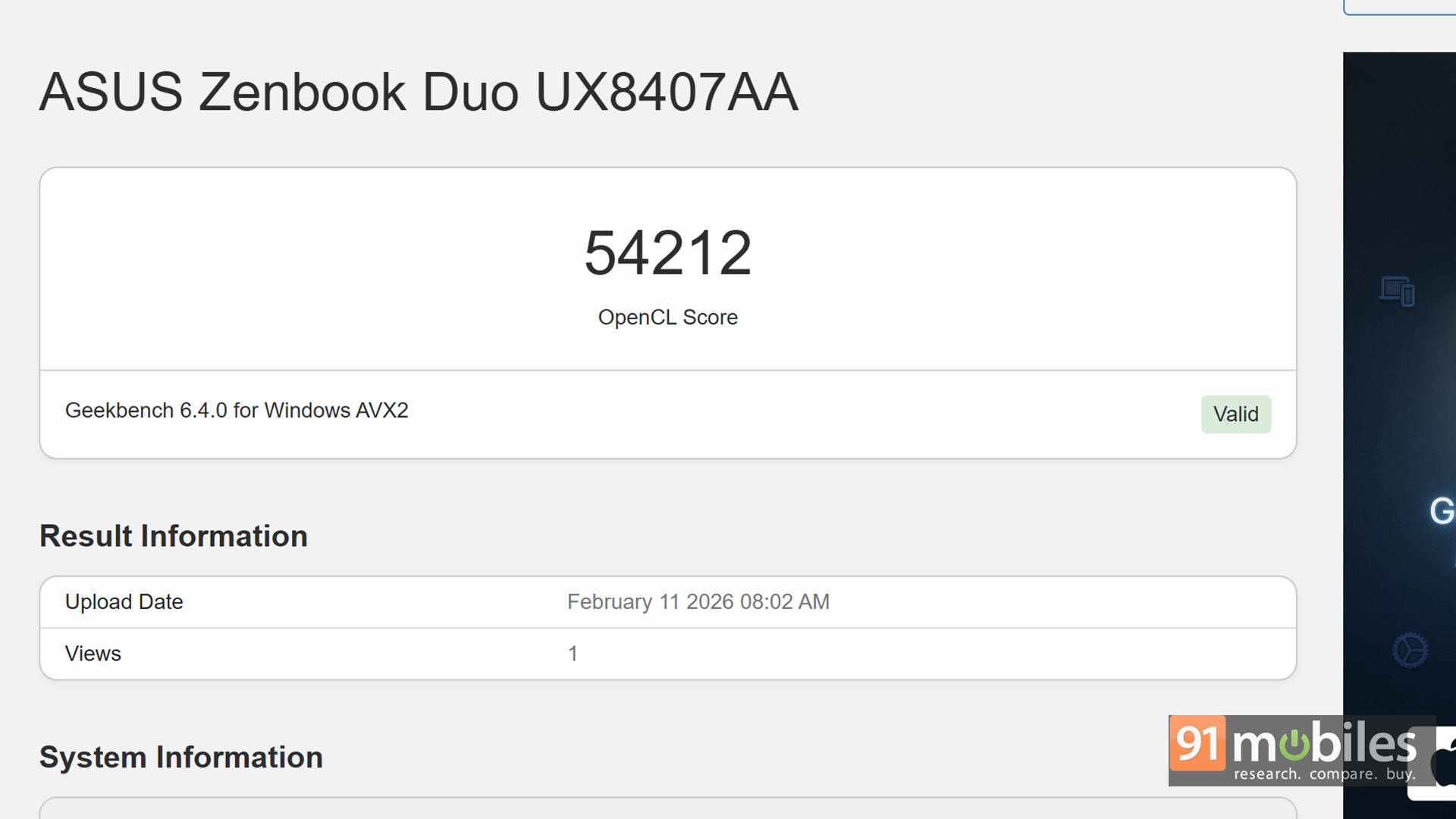
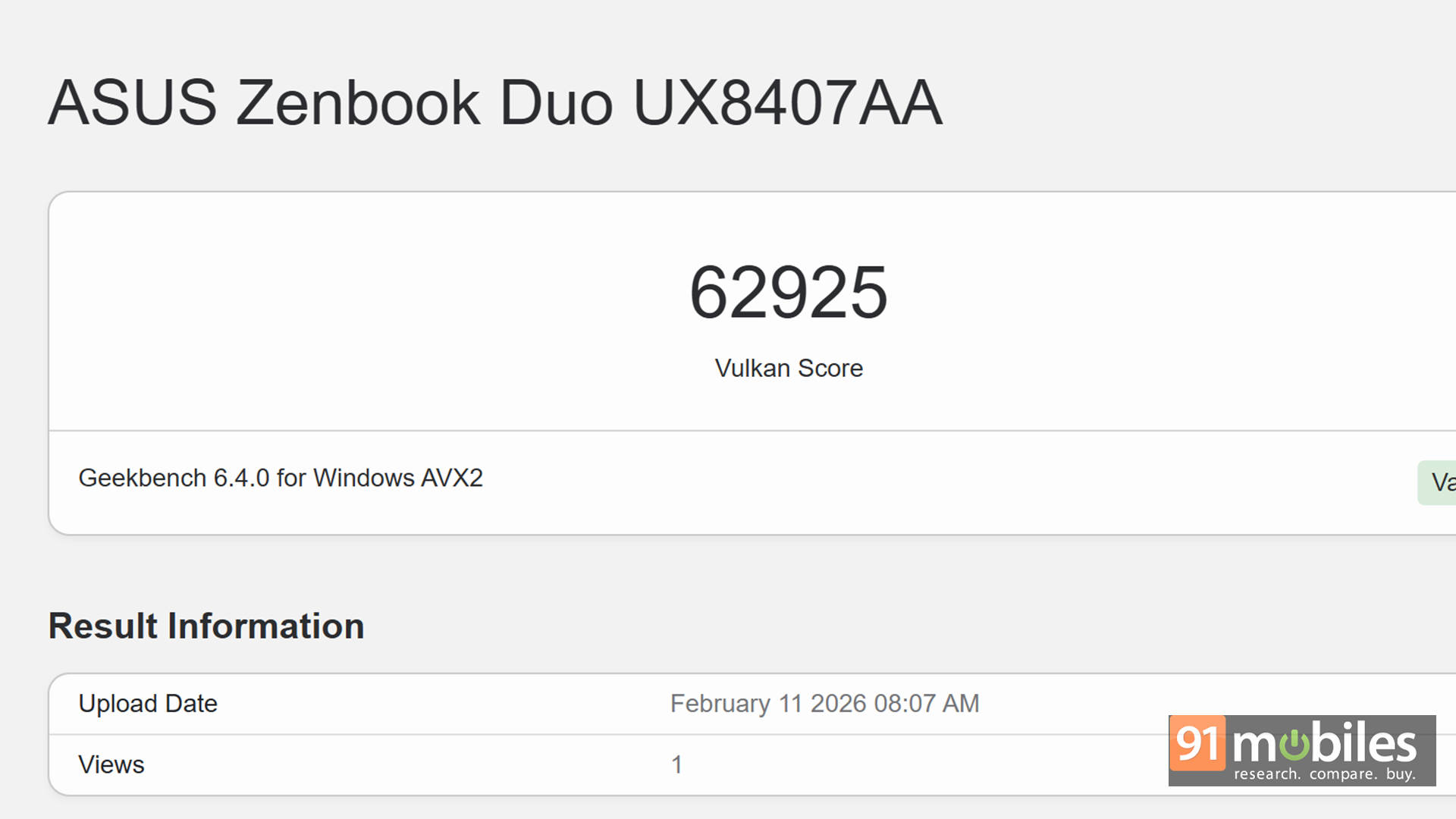
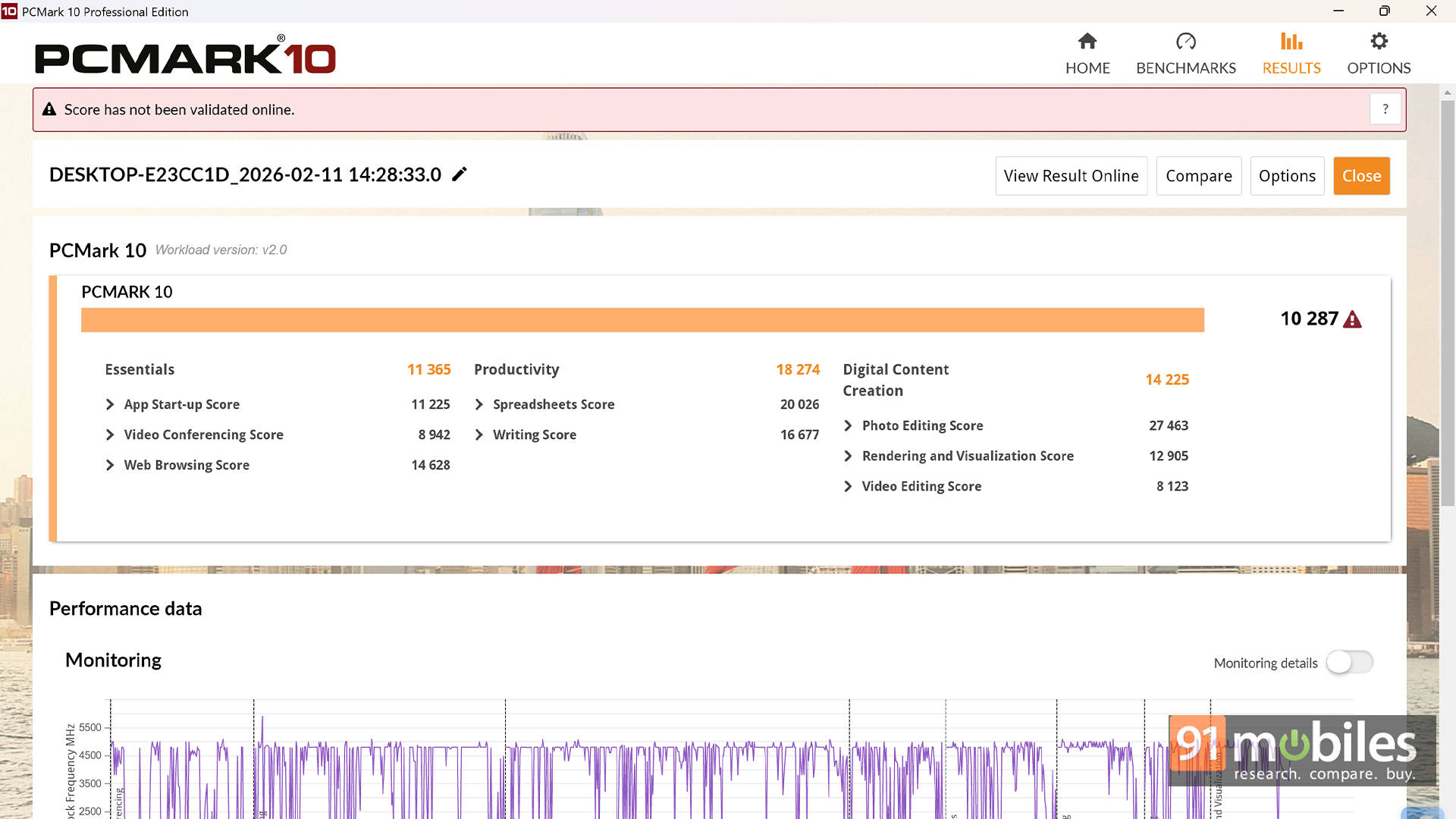
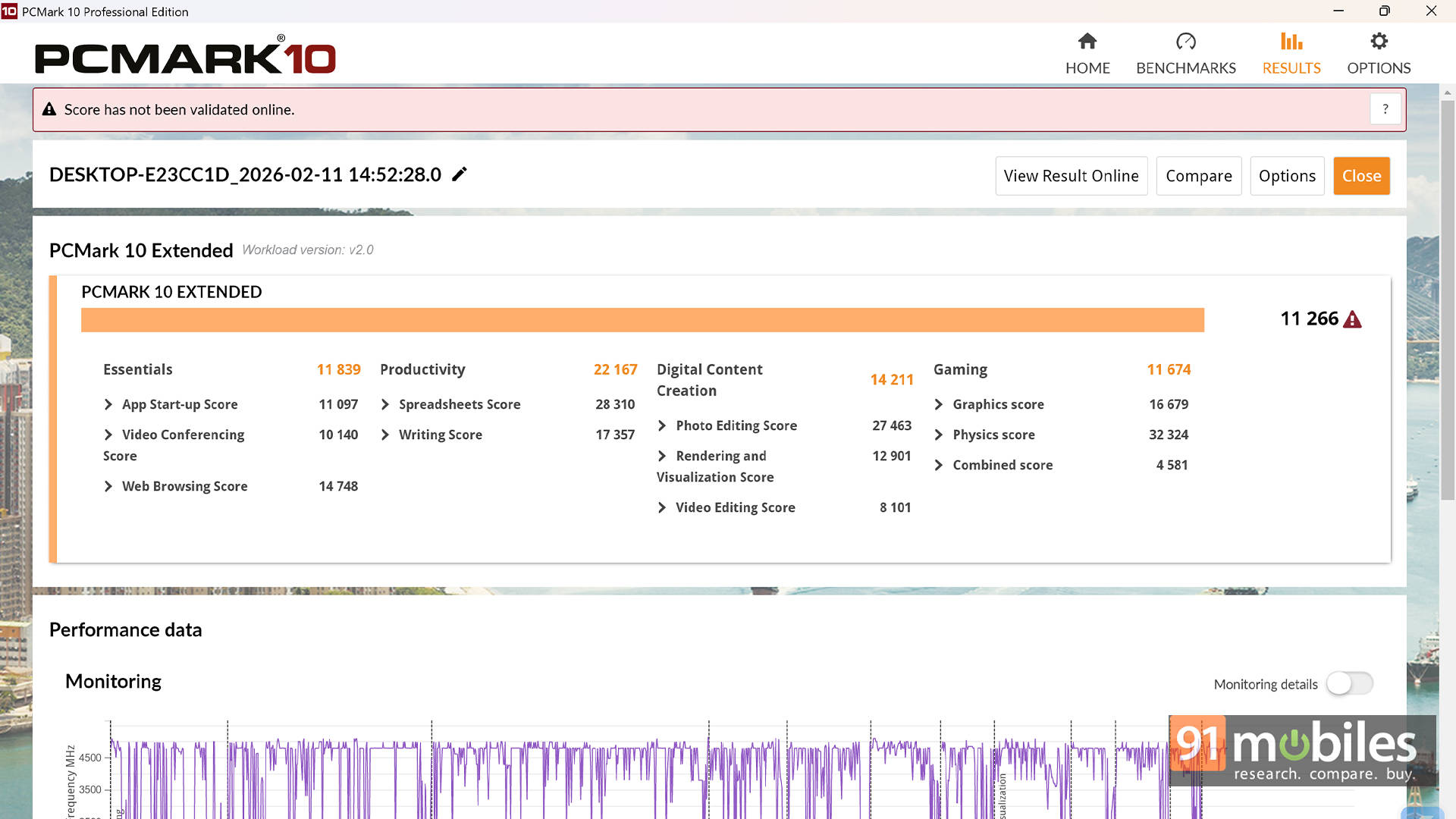


But the real mic-drop moment comes from the graphics side. The new Intel Arc B390 iGPU not only improves over the older Arc generation but also posts scores that rival those of the NVIDIA GeForce RTX 4050, as seen in the ASUS Gaming V16 we tested last year. That’s genuinely impressive for an integrated solution.
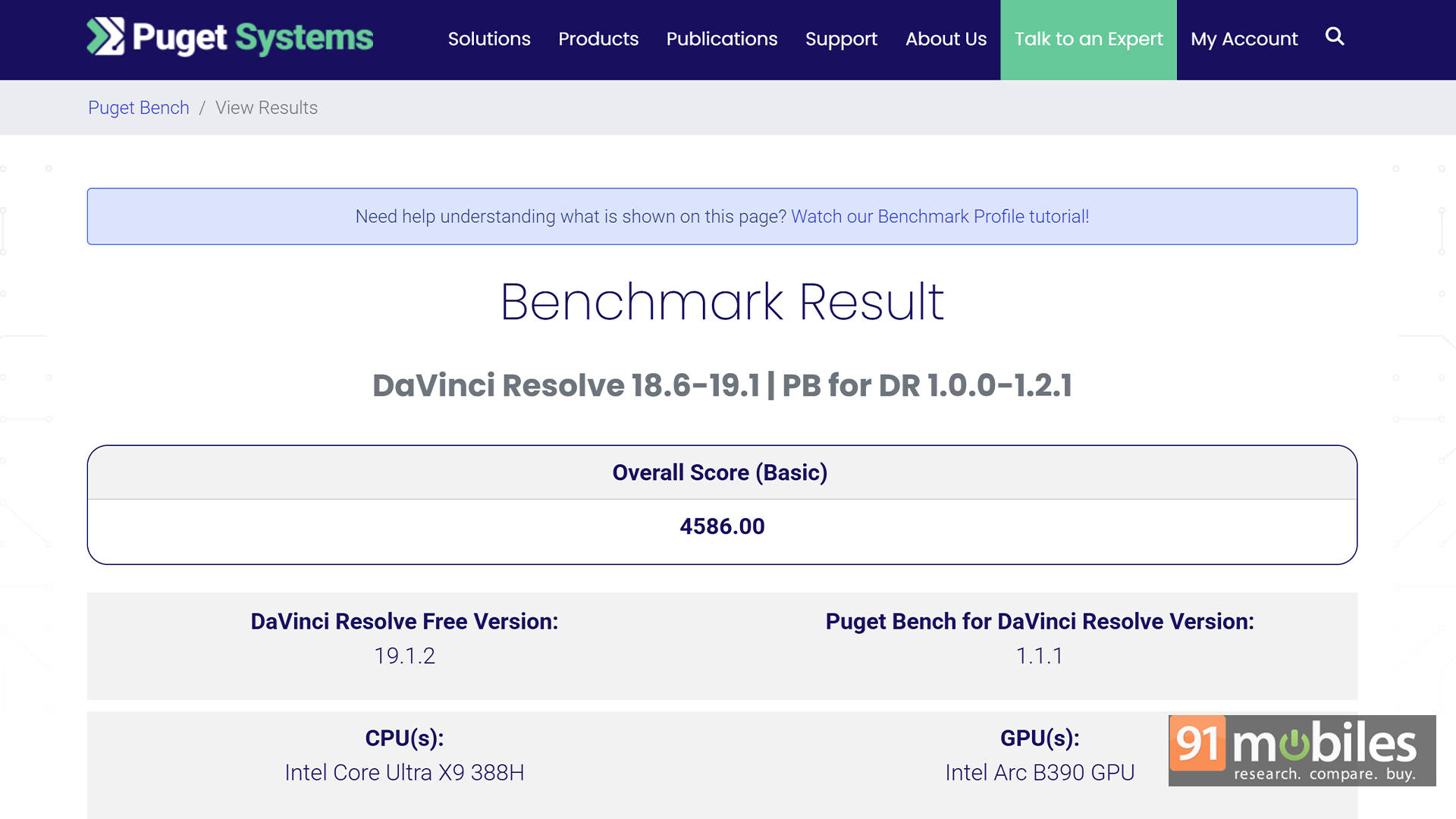
For creators, this matters. The PugetBench score for DaVinci Resolve reflects strong gains, meaning the dual-screen form factor is now backed by serious muscle. You’re not just getting more screen real estate, but you’re also getting performance that behaves like a lightweight dedicated GPU, and that too with better efficiency. Even more impressive, the benchmark numbers remain virtually identical when running on battery. No dramatic drop-offs, no performance anxiety.
Long story short: gaming, editing, and multitasking all feel comfortably within reach on the go, thanks to the efficiency and power of the Core Ultra X9 388H. Of course, when pushed hard, the fans do make their presence known, and stress testing can push internal temperatures up to 97°C. Thankfully, though, the chassis never feels uncomfortably hot, and there’s no noticeable throttling during sustained workloads.
Battery life: Bigger tank, same road trip
We’ve talked a lot about efficiency, but let’s talk about stamina. The ZenBook Duo UX8407 now packs a 99Wh battery, a massive jump from the 75Wh unit in the UX8406. On paper, that sounds like a dramatic leap forward, and honestly, it kind of is. Interestingly, though, the PCMark 10 video loop test tells a slightly cheeky story. Both laptops land at roughly the same ~13-hour mark, with the older UX8406 sneaking ahead by just a few minutes. Yes, the previous model technically “wins” this one… but only by the tiniest margin imaginable.
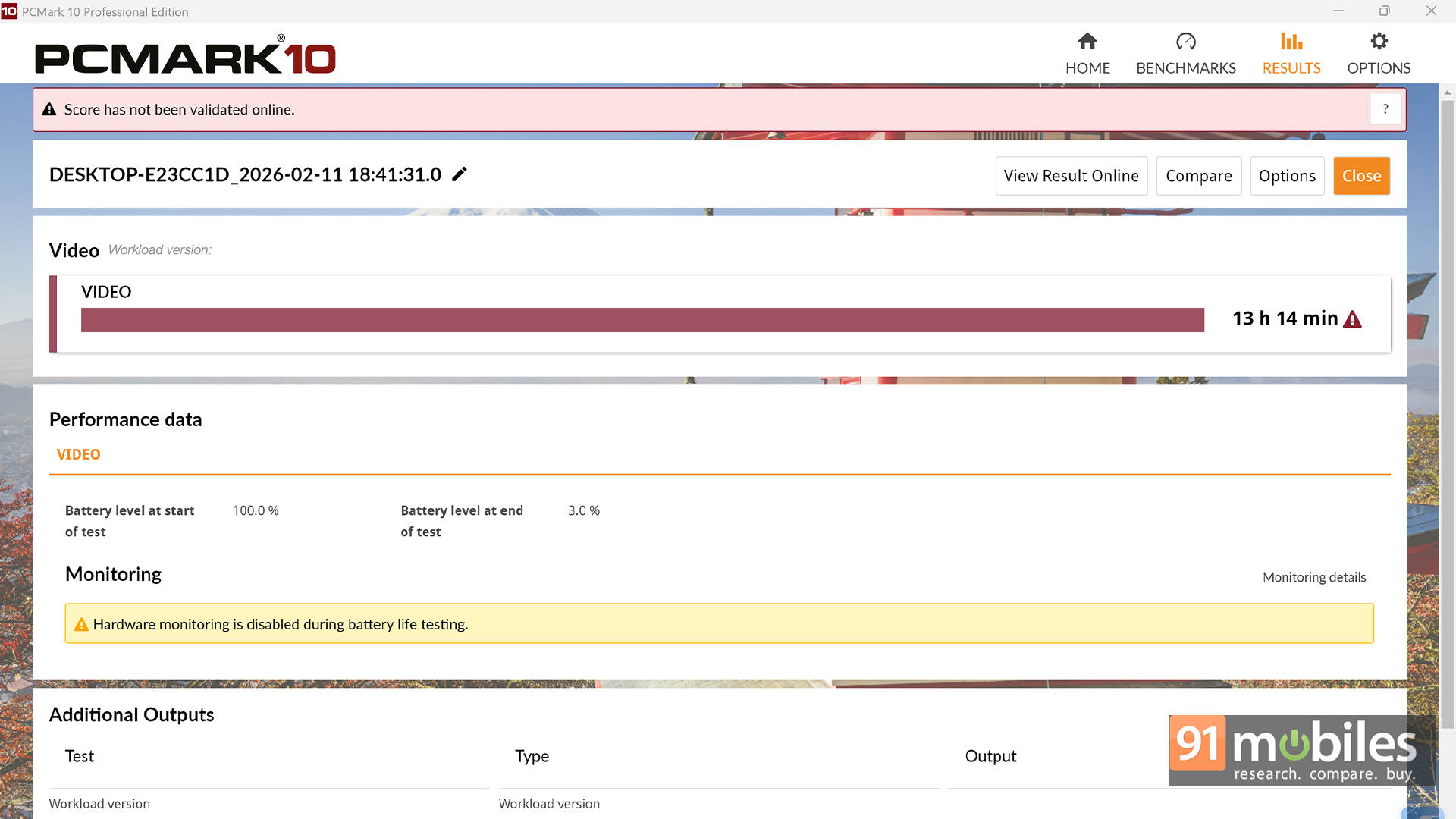
Here’s the twist, though. Our battery test runs at 80% brightness and balanced power mode, and the UX8407’s upgraded OLED panels are brighter and faster than before. At the same brightness level, they simply draw more power. Add in Windows doing its usual Windows things, and it’s easy to see why early results don’t fully reflect the new battery’s potential.
Thankfully, real-world usage paints a clearer picture. The UX8407 still delivers dependable all-day battery life, but this time it does so while running a noticeably faster chip and higher-refresh dual OLED screens. In simple terms, the endurance stays the same, but the performance dial is turned way up.
Verdict: The ZenBook Duo finally feels mature
The ZenBook Duo UX8407 is the clearest sign yet that ASUS has fully figured out the dual-screen formula. With the new Intel Core Ultra X9 388H, the laptop finally delivers the kind of performance this futuristic design always deserved. Multitaskers, creators, developers, and power users who live with multiple windows open will absolutely love what this machine offers.
That said, the Duo still sits in a premium price bracket, and at this level, competition is fierce. Buyers considering traditional clamshell laptops will find strong alternatives like the latest Dell XPS 14 or MacBook Pro-class machines that offer longer battery life, simpler ergonomics, and more universal appeal for the same money. But for anyone who truly wants a portable multi-screen workstation and will actually use that second display daily, the ZenBook Duo UX8407 stands in a category of its own.
Editor’s Rating: 8.5 / 10
Pros:
- Intel Core Ultra X9 delivers big gains
- Gorgeous dual 144Hz OLED displays
- Much larger 99Wh battery
- Refined hinge and ergonomics
Cons:
- Expensive for mainstream buyers
- Heavier than regular ultrabooks