Google Pixel 11 vs iPhone 17 camera comparison: Mr. Versatile takes on Mr. Dependable


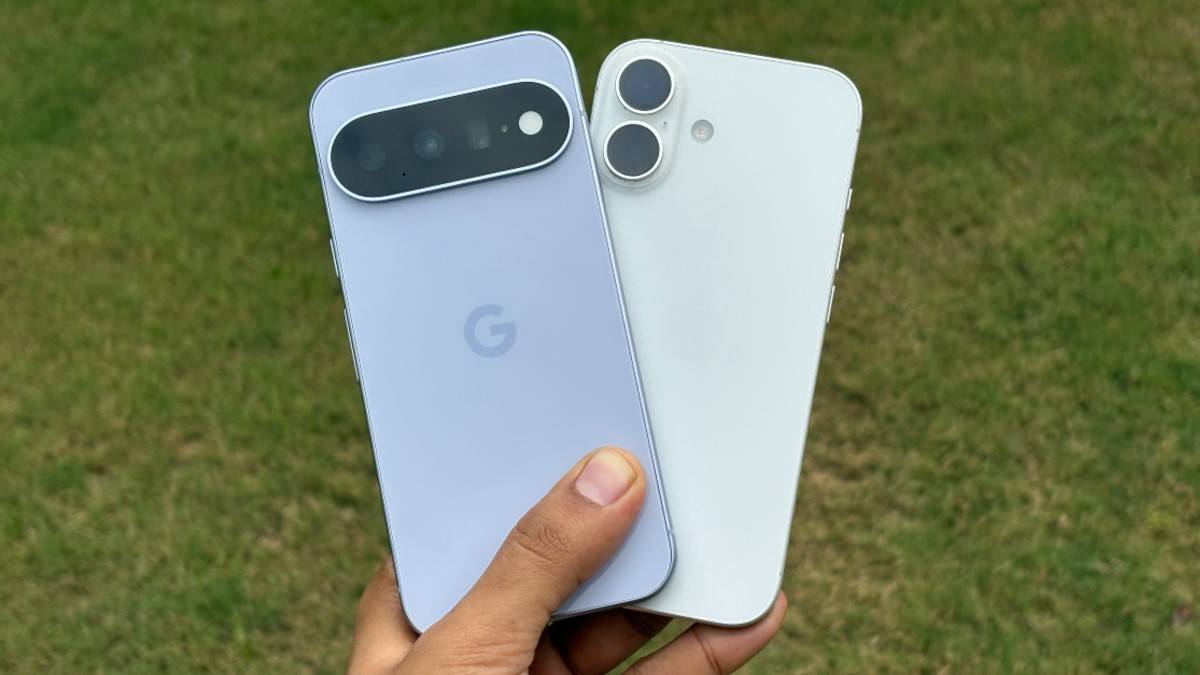
With the iPhone 18 not expected to launch in 2026, last year’s iPhone 17 (review) will have to compete with the latest rivals, including the all-new Google Pixel 11. The handset is an incremental upgrade over its predecessor, the Pixel 10 (review), bringing a more powerful chipset, faster charging, and twice the storage. The camera hardware, however, remains largely unchanged, with a 48MP main sensor, a 13MP ultrawide lens, and a 10.8MP telephoto sensor at the back.
Has Google made behind-the-scenes improvements to enhance image quality through the software wizardry it is known for? The only way to find out is to see whether the Google Pixel 11 can convincingly beat last year’s iPhone 17 across different scenarios in this camera comparison.
Table of Contents
Google Pixel 11 vs iPhone 17 camera hardware
| Google Pixel 11 | iPhone 17 | |
| Main camera | 48MP f/1.7 OIS | 48MP f/1.6 OIS |
| Ultrawide camera | 13MP f/2.2 120-degree FOV | 48MP f/2.2 120-degree FOV |
| Telephoto camera | 10.8MP f/3.1 OIS, 5x optical zoom | NA |
| Front camera | 10.5MP f/2.2 | 18MP f/1.9 |
Hardware-wise, the Google Pixel 11 definitely has an edge in camera versatility. But the iPhone 17 excels with superior camera resolution for the ultrawide and the selfie camera. Moreover, the main camera uses Apple’s fusion technology to deliver optical-quality zoom at 2x, and the selfie camera comes with Centre Stage to automatically zoom and rotate the frame to conveniently capture portrait and landscape shots – both in natural vertical orientation.
I wish Pixel 11 had also implemented a similar feature on its selfie camera. Hardware aspects aside, how do the two smartphones perform in their point-and-shoot capabilities in various modes/ scenarios? Let’s find out.
Daylight
Pixel 11
iPhone 17
The main cameras on both smartphones deliver near-accurate colours in daylight. However, the Pixel 11 produces slightly more contrasty images, making them more appealing to the eye. It also handles exposure in shadowy areas and colour gradients better. That said, the iPhone 17 captures sharper images with more detail, particularly towards the centre of the frame.
Ultrawide
Pixel 11
iPhone 17
The Pixel 11 delivers near-identical colour science when switching from its primary to the ultrawide camera, whereas the iPhone 17 produces more contrasty and slightly duller images. However, the iPhone 17 captures more detailed shots, thanks to its higher-resolution ultrawide camera when zoomed in. In terms of dynamic range and distortion control, though, the Pixel 11 remains marginally ahead.
Portrait
Pixel 11
iPhone 17
We used the Pixel 11’s 10MP telephoto camera to capture portraits, but there is a noticeable drop in colour accuracy and detail. The lens tends to oversaturate tones and even makes the subject appear bulkier, as evident in the comparison sample above. Furthermore, despite the higher focal length, the lens fails to neatly separate the subject from the background.
The iPhone 17, on the other hand, does a better job with its in-sensor 2x zoom for capturing portraits. The results appear more natural, with accurate edge detection that even accounts for individual strands of hair.
Selfie
Pixel 11
iPhone 17
The iPhone 17 is ahead of the Pixel smartphone for obvious reasons (superior lens) when it comes to details. The iPhone also excels in background exposure and dynamic range. But when it comes to the scene’s accuracy, the Pixel 11 is a tad better in terms of skin tones and colours.
Low light
Pixel 11
iPhone 17
In low light, the iPhone 17’s main camera captures the scene accurately but struggles to control light flares and exposure as effectively as the Pixel 11. The latter also outshines its rival by preserving finer details and keeping noise under control.
Low light (night mode)
Pixel 11
iPhone 17
With Night mode enabled in low-light conditions, the Pixel 11 continues to offer better exposure and more controlled light flare, but falls behind the iPhone 17 in terms of detail. The iPhone 17 produces sharper images while preserving a more natural look, whereas the Pixel 11 slightly enhances the scene with a mild pinkish tone.
Verdict
| Scenario | Winner |
| Daylight | iPhone 17 |
| Ultrawide | Pixel 11 |
| Portrait | iPhone 17 |
| Selfie | iPhone 17 |
| Low light | Pixel 11 |
| Night mode | Tie |
This concludes our Pixel 11 and iPhone 17 camera comparison. Both smartphones perform nearly identically across scenarios, with a minor difference in how they handle colours, details, dynamic range, and exposure. The Pixel 11 generally delivers better exposure, dynamic range and colour consistency across its cameras. It also performs particularly well in low-light conditions, where it handles highlights and noise better than the iPhone 17.
However, the iPhone 17 has the edge in overall detail, thanks to its higher-resolution ultrawide and selfie cameras. Its 2x in-sensor zoom also proves more effective for portraits, while Night mode produces sharper and more natural-looking results.
Ultimately, opting for one over the other depends on your priorities. The Pixel 11 is the more versatile camera phone and a strong choice for low-light photography, but the iPhone 17 remains the more consistent option if detail and natural-looking portraits top your list.
At the time of writing, the iPhone 17 remains the more affordable option at Rs 82,990 for the base variant, while the Pixel 11 starts at Rs 89,999.