Spending time with the Klipsch Miami made me realise that party speakers can be tuned to sound balanced too. That’s quite different from my earlier experience with more mainstream options in India, like the Sony ULT Tower 10 and LG XBoom XL7S (review), both of which clearly prioritise bass. The Miami, on the other hand, comes with a flatter, more controlled sound profile straight out of the box. And if you prefer a different flavour, the app’s EQ lets you fine-tune the output, making it flexible enough for everything from music to podcasts and casual listening.
After using the Klipsch Miami for nearly a week, here’s my take on how it performs, and where the renowned American audio brand could have pushed things a bit further.
Table of Contents
Design
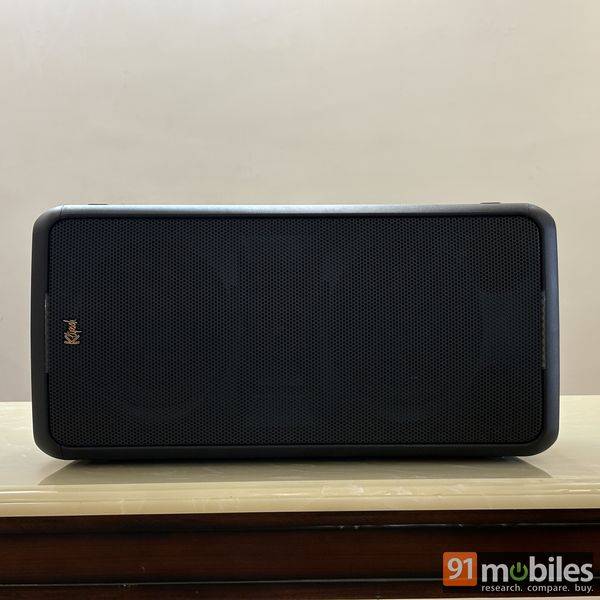
The Klipsch Miami sports the typical hefty, boxy design you’d expect from a party speaker. That said, there are thoughtful touches that make it feel relatively premium, practical, and portable. The speaker features a solid plastic build with a matte finish that resists fingerprints and smudges.
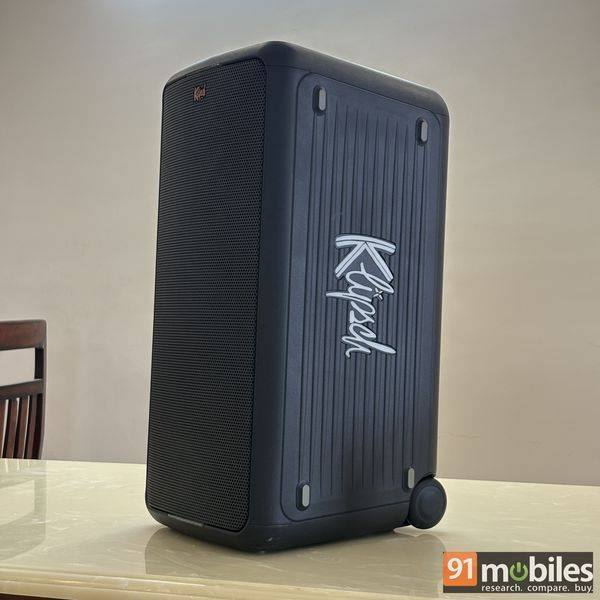
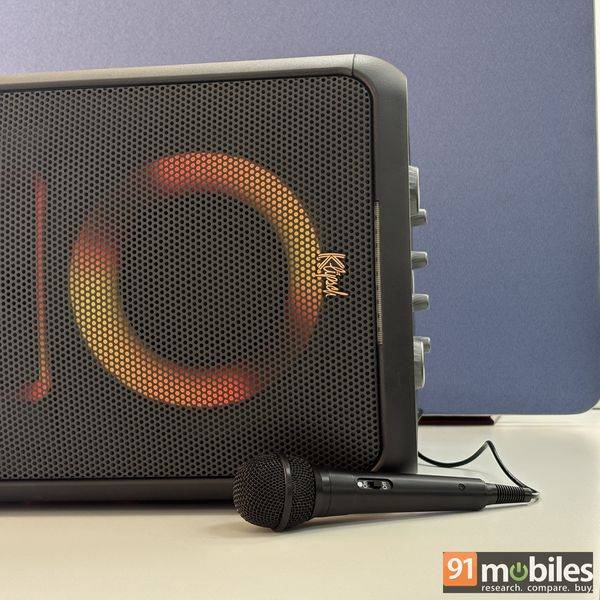
Up front, there’s a metal grille with Klipsch branding at the top. That’s not the only place you’ll spot it. The logo is also etched onto both sides of the speaker and is backlit, making it easy to recognise in the dark. Thankfully, the lighting can be switched off if it feels a bit too flashy. The sides also have anti-slip paddings, in addition to the bottom, giving you the flexibility to position the speaker vertically or horizontally.
At the bottom, the Klipsch Miami includes a slot for mounting the speaker on a stand, which is sold separately. The top is where things get busier, housing the controls (covered in the next section) along with a long slit that can hold a phone or tablet. Around the back, there’s a handle with a soft rubber finish, making it easier to carry around.
While the speaker is relatively compact for its category, it is certainly not lightweight. Weighing roughly 18kg, the Klipsch Miami isn’t something you’d want to lift and carry over long distances. To manage that, the Klipsch Miami, like most large-party speakers, features a pair of wheels along the lower edge of the rear panel and a retractable telescopic handle. This makes it much easier to move the speaker around.
The handle works much like a suitcase-style telescopic mechanism; however, I wish it extended and retracted more smoothly than it currently does. While a minor nitpick, it’s one that could have enhanced the overall experience. The back panel is largely clean, except for a small and a large flap hiding the charging and connectivity ports, respectively.
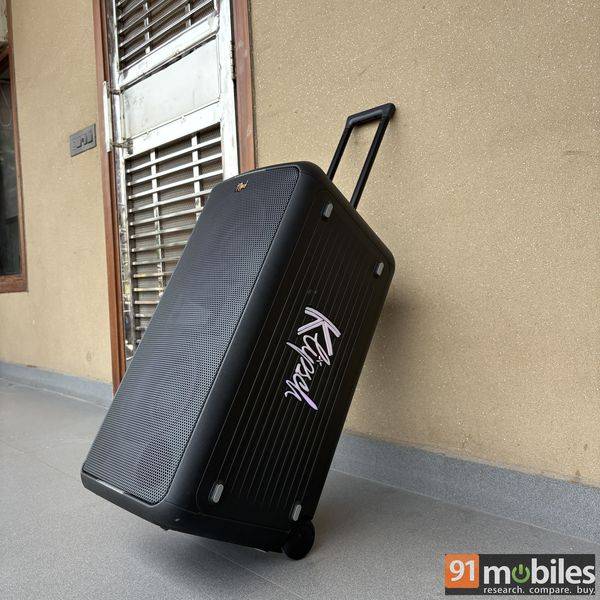
You would want to keep those flaps closed when not in use, considering that the party speaker is not dustproof. The Klipsch Miami is only IPX4-certified, which means it’s protected only against minor splashes of water. This is a bit of a letdown for people who like to take their parties to the beach or swimming pools.
Controls & connectivity
Starting with the connectivity options, the Klipsch Miami supports Bluetooth v5.2, which might not be the latest but offers a decent range (up to 240m) and support for popular SBC, AAC, and LDAC codecs. Like most party speakers, this one also lacks dual pairing mode. Moving on, the speaker supports analogue input with Aux ports and a USB Type-A port. These are hidden behind a flap on the back panel, along with a couple of 1/4-inch connectors for guitar and mic. The latter is provided in the box and is purely functional. There is a lot of reverb, and despite making some adjustments, the mic lacks clarity.
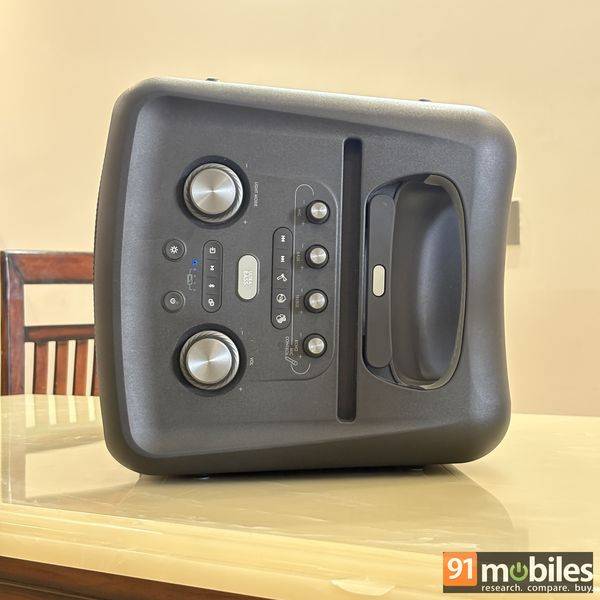
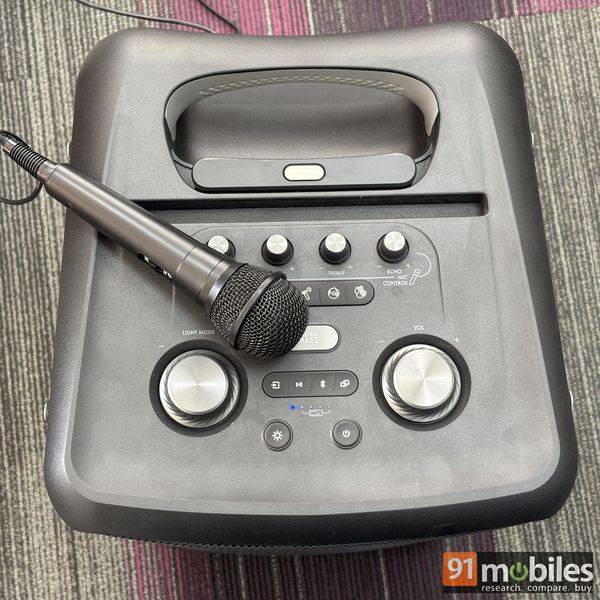
In terms of controls, you can manage almost everything directly from the Klipsch Miami party speaker itself. The speaker houses an array of controls along the top edge, including a pair of large silver-coloured knobs that rotate to adjust volume and lighting modes.
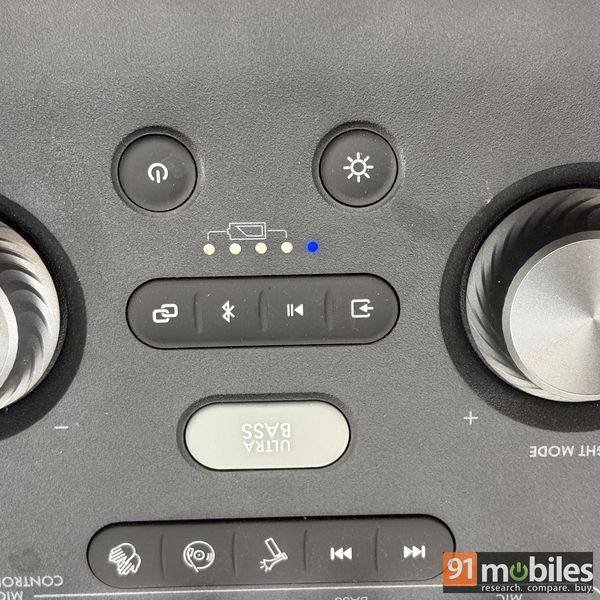
There are also several buttons that sit nearly flush with the body but offer satisfying tactile feedback. These let you power the device on or off, control the lighting, manage audio playback, switch inputs, enable Bluetooth pairing mode, and toggle Ultra Bass. The buttons are evenly spaced, so you don’t accidentally press the wrong ones. A backlit option for the buttons would have been a nice touch.
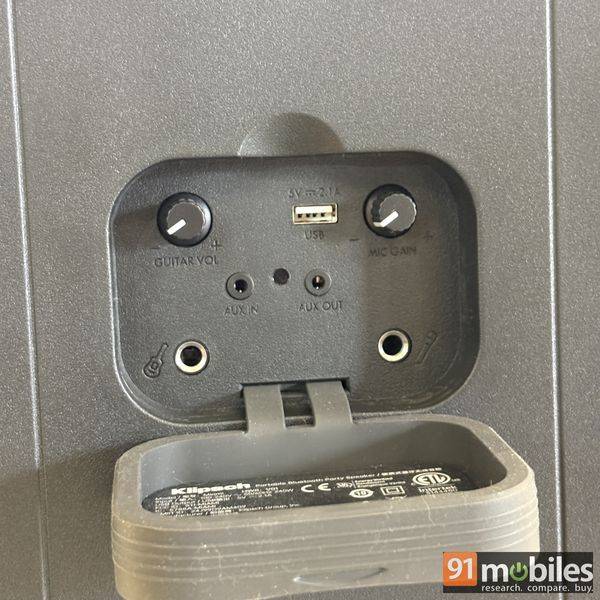
The control section on the top edge even features as many as four small knobs, which are mic controls to adjust its treble, bass, echo, and volume. While small knobs operate silently from one end to the other, the large ones have a subtle feedback at every level. There are two dialer knobs on the back panel, where the analogue inputs are, for guitar volume and mic gains.
App support
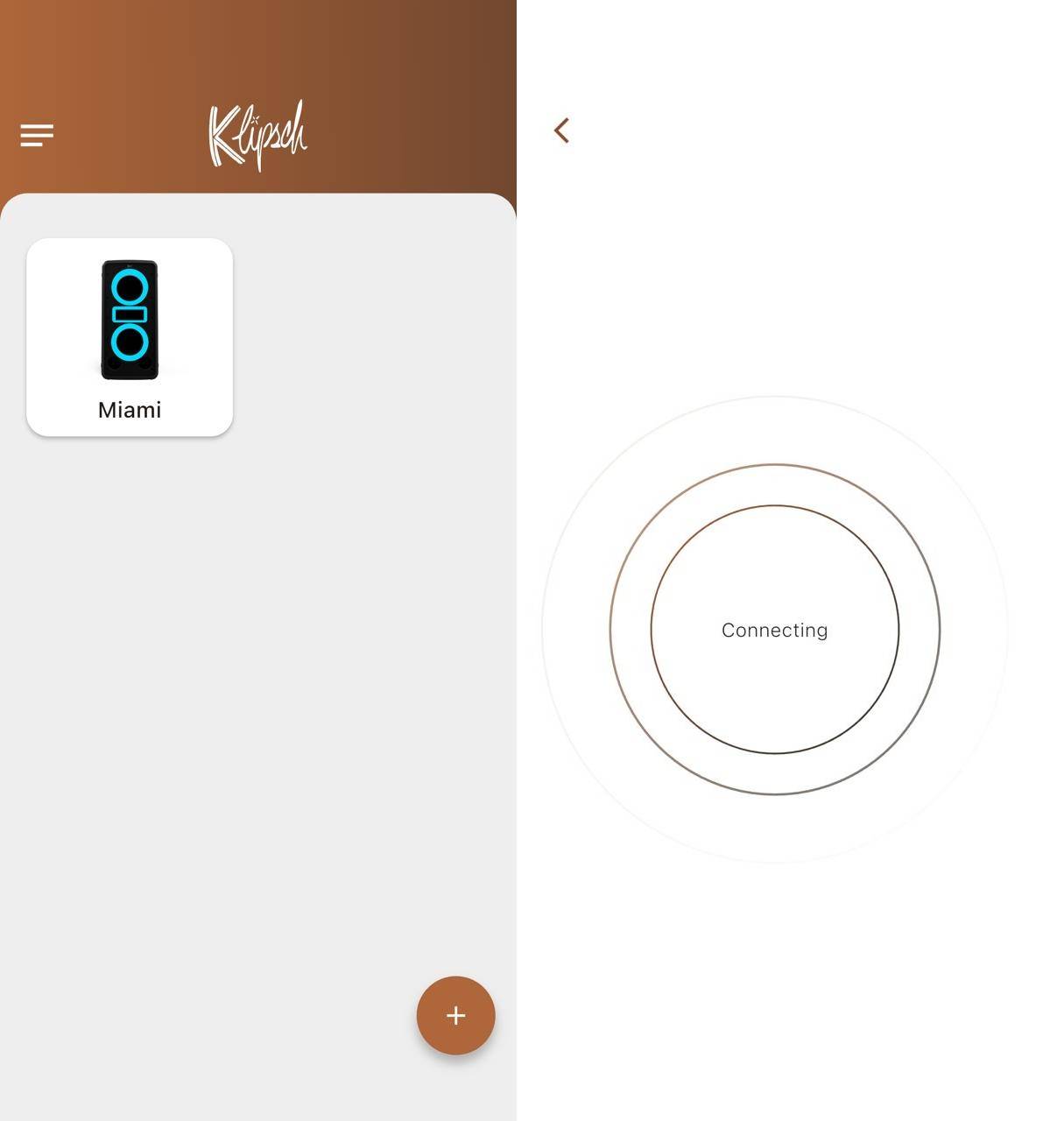
The Klipsch Miami party speaker pairs with the Klipsch Connect Plus, available on both Android and iOS. I tested it on my iPhone 16 and appreciated how straightforward it is. There’s no need to create an account or deal with unnecessary logins. You simply open the app, give a few permissions, and it immediately starts scanning for nearby Klipsch speakers, making pairing quick and hassle-free.
Since the Klipsch Connect Plus also supports multiple speakers from the brand’s lineup, it doesn’t take you straight into the connected device’s settings. Instead, you land on a home screen where the speaker appears as a small widget, requiring an extra tap to dive into its controls. For someone using just a single speaker, this added step feels unnecessary, and the interface itself comes across as slightly dated.
What’s more frustrating is the delay that follows. Even though the speaker is already connected, the app initiates another search before loading the settings page, which slows things down more than it should. This happens every time the app is launched. It is something that can be solved with a software update, but until that happens, you will have to learn to make peace with the process.
The speaker’s settings page UI also feels pretty straightforward, with battery information right up top and tile-style layout for volume, input, playback, and Equaliser. There are drop-down options for Sound Effects and Lighting. Furthermore, the speaker pairing offers a pop-up and settings option that takes you to a new page, where you can customise the name, seek help, take a product overview, and more.
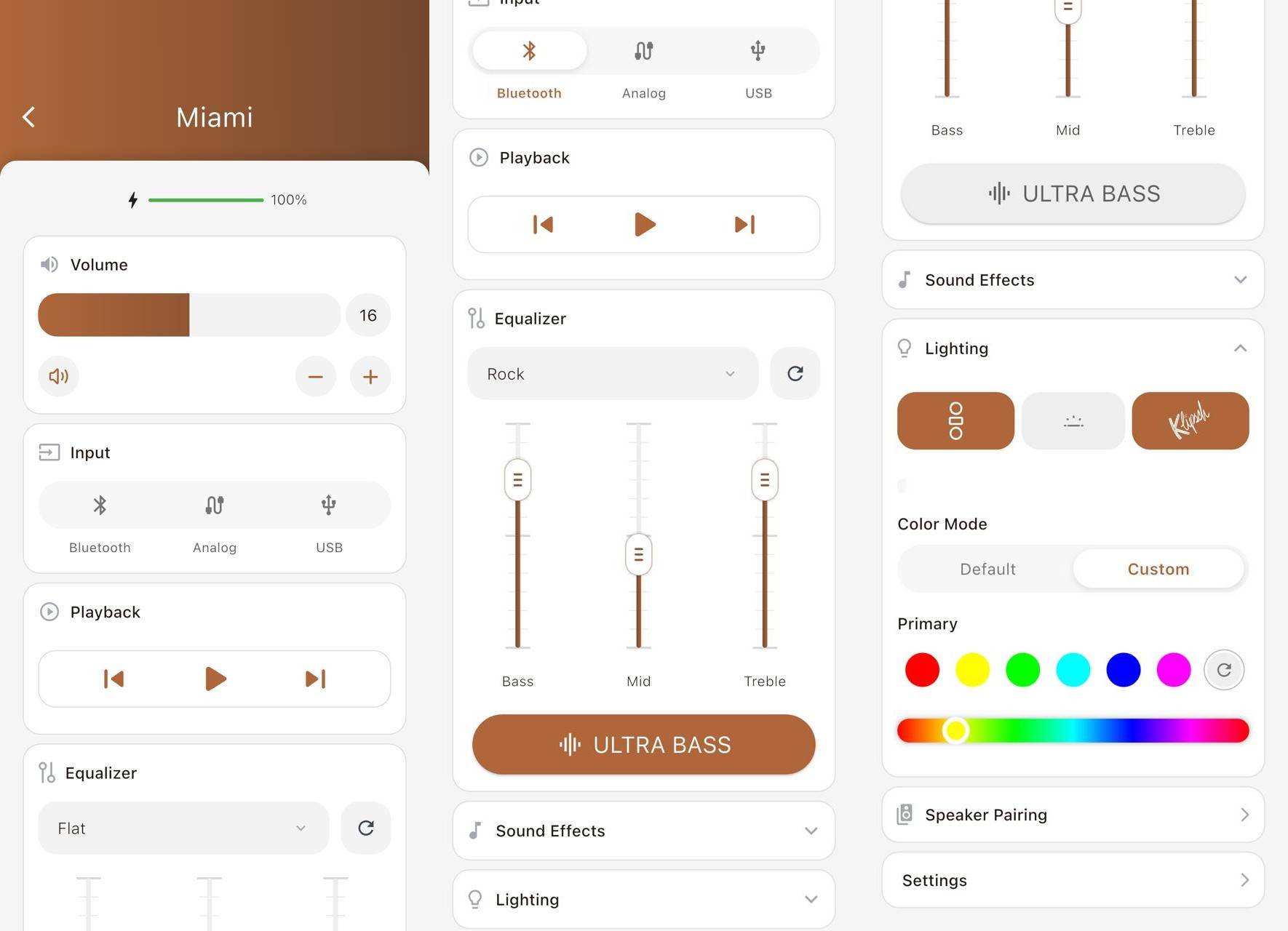
I appreciate the simplicity here, but it does feel a bit limiting. There’s no option to rearrange or customise the tiles based on your usage, which would’ve made the interface more personal and efficient. Battery readout is another area that could use refinement on the Klipsch Connect Plus. Instead of showing the exact percentage of battery remaining, it displays levels in 10 per cent increments. This feels a bit too coarse when you’re trying to gauge how much playback time is remaining.
Audio
The Klipsch Miami party speaker is backed by dual 5.25-inch woofers flanking the brand’s signature horn-loaded tweeter. This setup is complemented by custom-tuned front ports, designed to enhance bass output and deliver a deeper, more impactful low-end response. As stated above, the Klipsch Miami is tuned flat out of the box, which is surprising given it is a party speaker. The flat EQ doesn’t make the sound as balanced as, say, a Marshall or a Sonos speaker, but it still lacks the oomph the 5.25-inch woofers should ideally deliver.
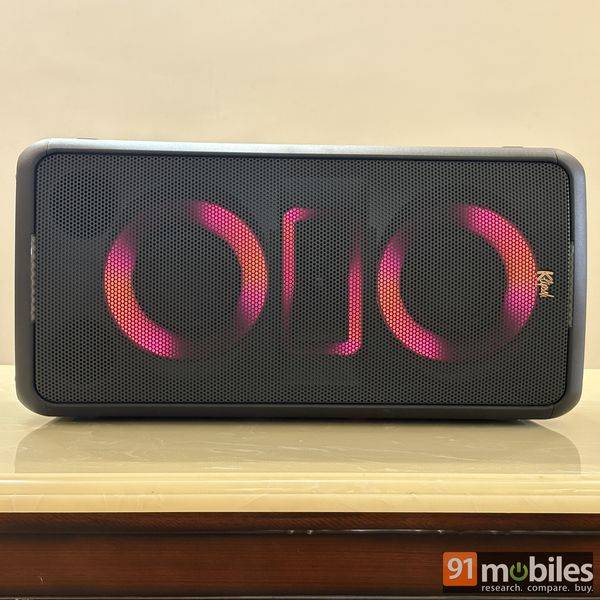
I listened to tracks from Hanumankind, who is currently trending in India’s hip-hop scene. With the default EQ settings, I found the Klipsch speaker not doing justice to its energy flow and high-energy beats. The speaker sounds a touch restrained, which is something you don’t want at a party.
However, you will find Miami taking an interesting turn when switched to Rock EQ within the compatible app. The speaker adjusts its bass just enough, adding the kind of thump that makes party tracks more engaging without completely overwhelming the mix. The low end takes clear priority, slightly pushing the mids, where vocals sit, into the background, just the way I like to listen to my music. The highs, meanwhile, remain controlled and clear, helping the speaker maintain a reasonably wide and lively soundstage.
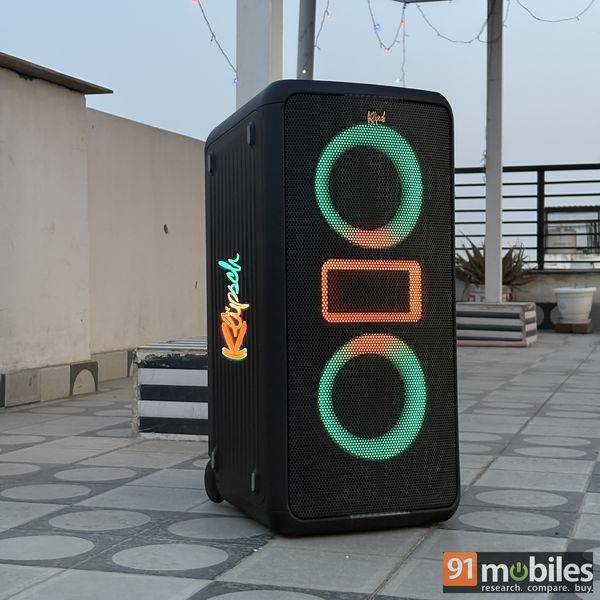
Truth be told, I could only test the speaker at up to 50 per cent volume, and that too on a fairly spacious terrace. Even so, the Klipsch Miami party speaker gets impressively loud without losing composure or clarity.
With “Ez-Ez” by Hanumankind, the speaker leans into the track’s marching-style beat, delivering a satisfying, thumping bass while letting the chant-heavy hook spread wide and fill the space. On the “Dhurandhar” title track, the Miami handles scale well, projecting a broader soundstage and giving the low end a dense, weighty presence. The overall mix feels immersive, though the mids do take a slight step back in favour of the bass. As for “Big Dawgs”, the groove comes through tight and rhythmic, with punchy bass driving the track forward.
Users also get the option to fine-tune the sound with a custom EQ. Additionally, there is an Ultra Boost mode that further elevates the low end, offering a satisfying, chest-thumping punch. That said, the mode can be a bit power-hungry, which brings me to the battery in the Klipsch Miami party speaker.
Battery life
The Klipsch Miami houses a 5,000mAh battery, which is rated for up to 18 hours of playback without lighting and around 10 hours with the lights on. Presumably, these figures are based on default settings, with features like Ultra Bass turned off and volume kept at moderate levels. In my usage, I managed roughly 10 hours of playback with the lights enabled, volume set around level 8, and Ultra Bass used intermittently, which feels fairly consistent with the company’s claims.
Heavier usage leads to slightly underwhelming results. With the volume pushed to around 50 percent (level 16), and both Ultra Bass and lighting enabled throughout, the speaker managed only about two hours of playback. Pushing the volume level all the way to 100 percent could further drop the backup. This isn’t necessarily a deal-breaker. The speaker isn’t really designed for off-grid use, and most party settings typically have access to a power outlet.
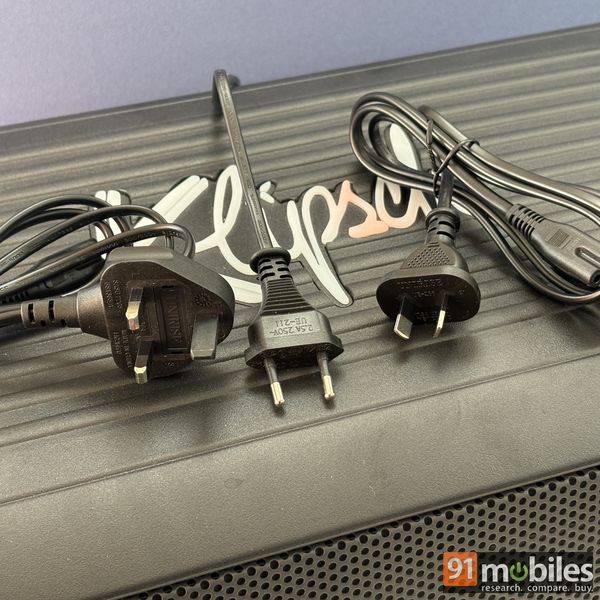
The speaker’s backup is sufficient to ride through a short power outage without interrupting the party. Charging from 0 to 100 per cent takes close to three hours, using a proprietary cable. Interestingly, our review unit shipped with three different plug types, ensuring compatibility with a wide range of power sockets.
Verdict
At Rs 58,990, the Klipsch Miami sits at a price point where expectations are naturally high, especially in a segment dominated by brands like Sony, JBL, and LG that offer louder, more bass-heavy party speakers at nearly half the cost.
What Klipsch does differently, however, is approach the party speaker category with a more balanced sound signature. The Miami doesn’t go all-in on overpowering bass out of the box, which makes it more versatile for mixed usage, from music sessions to podcasts and casual listening. With the app-based EQ and Ultra Bass mode, you can still dial in that extra punch when needed, but it never feels as aggressive or room-shaking as some of its rivals.
That said, this tuning choice is a double-edged sword. For buyers looking for sheer loudness and thumping low-end performance straight away, the Miami may come across as slightly restrained, especially given its large drivers and size. Add to that a few rough edges, like the average app experience, limited durability (IPX4), and an underwhelming battery at higher volumes, and the premium asking price becomes harder to justify.
The Klipsch Miami makes the most sense for someone who values cleaner, more controlled sound in a party-ready form factor, and doesn’t mind tweaking EQ settings to get the best out of it. But if your priority is maximum impact per rupee and plug-and-play party energy, the competition currently offers stronger value.
Editor’s rating: 8/10
Pros
- Solid build, practical design
- Clean, balanced, and loud sound
- Useful EQ and Ultra Bass modes
- Versatile connectivity
Cons
- A bit pricey
- Battery could have been better
- Average app experience