Beyond the Screen: How Lumio is Rewiring the Indian Living Room


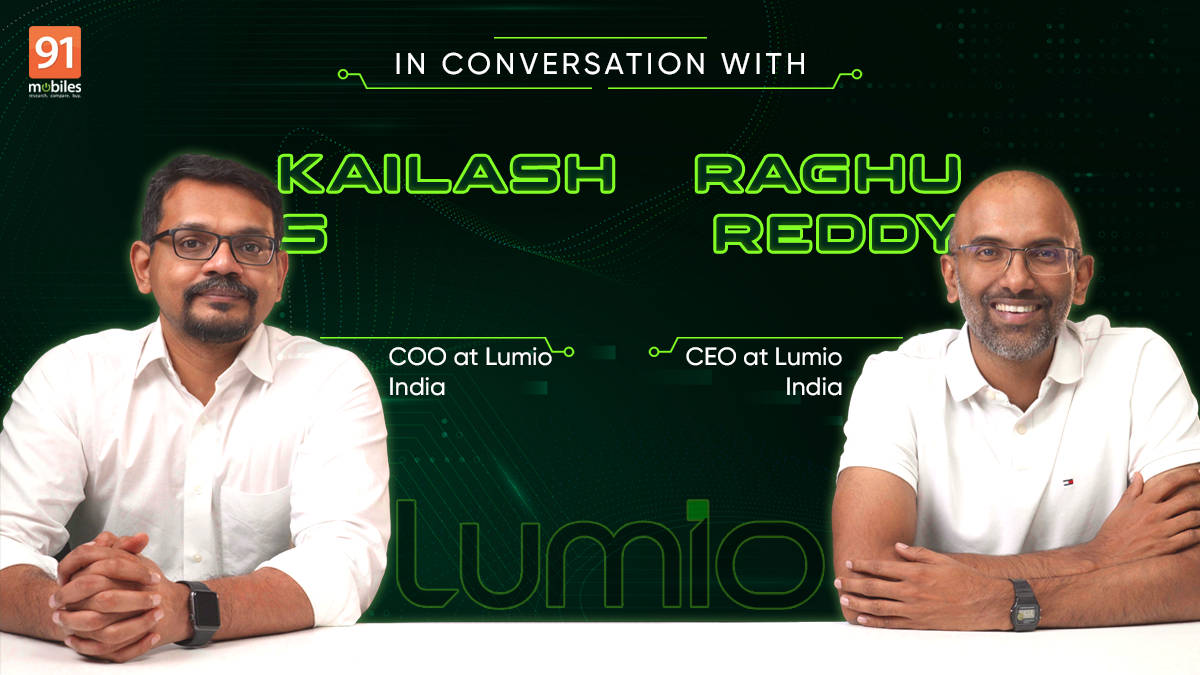
When Circuit House Technologies launched Lumio just over a year ago, the Indian smart TV market looked like an impenetrable fortress of legacy giants and fleeting budget brands. Yet, in just 13 months, Lumio has crossed ₹100 crores in Gross Merchandise Value (GMV), placed its devices in over 30,000 households, and generated more than 3 million brand searches.
For co-founders Raghu Reddy (CEO) and Kailash S (COO), this rapid ascent wasn’t about building a cheaper television; it was about fixing a broken living room experience. On the occasion of Lumio’s first anniversary, the founders reflect on their journey, the launch of their highly anticipated Project Neo, and why the future of television isn’t just about pixels; it’s about software that understands people.
Table of Contents
Curing the “Slow TV Epidemic”
When plotting their entry into the consumer electronics space two years ago, Reddy and Kailash didn’t look for an empty market; they looked for unaddressed pain points. They found a massive one sitting right in plain sight.
“All the smart TVs that have been shipped out since 2016 or 2017 tend to become unusable pretty quickly,” Reddy and Kailash explain. “Some as early as six months, some can take maybe a couple of years, and then they tend to become unusable.”
This “slow TV epidemic” plagued consumers across all price points, from ₹15,000 budget screens to ₹1 lakh+ premium models. Lumio’s first mission was to build “India’s fastest smart TV,” a hardware promise that clearly struck a chord. Today, nearly 50% of Lumio’s customers are upgrade buyers; people swapping out their legacy tier-one brands for a Lumio device because they were tired of sluggish interfaces.
Battling the “Budget Brand” Stigma
The Indian television market is notorious for brand churn. Over the last 15 years, countless companies have flooded the market with cheap TVs, only to vanish months later. When recommending a new brand like Lumio, the inevitable consumer response is often, “Ye brand konsa hai?” (Which brand is this?)
Reddy and Kailash knew that simply undercutting the competition wasn’t a sustainable strategy.
“The easiest way to jump in… is you bring in a product which is cheaper than everybody else,” Reddy and Kailash note. “But we felt that is a very short-term way of doing it. A durable business is built when you’re actually trying to solve for the right kind of problems, and people are actually willing to pay the right price.”
Instead of racing to the bottom, Lumio focused on building trust. They introduced transparent PIN-code service checks on their website and offered a two-year warranty, double the industry standard, to signal to buyers that they were here for the long haul.
The Lumio Arc: Projecting a Bigger Future
Lumio didn’t stop at televisions. Recognising a unique demand, particularly among young professionals and bachelors living in rented spaces where drilling holes for a TV isn’t an option, the brand ventured into projectors with the Lumio Arc.
Before launching, Lumio surveyed 1,000 people and found that 80% had considered buying a projector but were deterred by high costs, complex setups, and the need for messy cables. By creating a plug-and-play device that requires nothing more than a blank wall and a Wi-Fi connection, Lumio successfully cracked the market.
Project Neo: The Remote Control is Dead
While hardware degradation was Lumio’s first target, decision fatigue was the second. It takes the average viewer 20 to 40 minutes just to decide what to watch, hopping endlessly between OTT apps. Lumio initially tackled this with their TLDR app, aggregating content across platforms. But with their latest launch, Project Neo, they are redefining TV navigation entirely.
The core insight behind Neo is simple but profound: the place where we discover content is completely disconnected from where we consume it.
“Discovery happens through the day,” Reddy and Kailash explain. “Your wife could text you something on WhatsApp… or you saw a post on Instagram saying ‘Top 10 movies.’ But when you sit in front of the TV, this is gone.”
Project Neo bridges this gap by turning WhatsApp and Instagram into the new TV remote. Users can simply message their Lumio TV in plain English, Hindi, or Hinglish via WhatsApp. Instead of painfully typing out a search query with a D-pad, you can send a voice note asking for “that movie where Shah Rukh Khan is running on a train,” and Neo instantly pulls it up. See a Reel of a movie trailer on Instagram? Just forward it to Lumio’s handle, and the title appears on your TV, ready to play.
Lumio is also working on a “Tinder-style” swiping feature for couples who can’t agree on what to watch, matching them on mutual preferences. (Though, as joked during the interview, I asked the Lumio team if they could come up with a feature that alerts users when their spouse watches the newest episode of a show without them).
The Next 365 Days
Looking ahead to their second year, Lumio’s ambitions are clear. With their hardware foundations set and software innovations like Project Neo hitting the market, the goal is to more than double their growth over the next 12 months.
More importantly, Lumio is aggressively patenting its software innovations, ensuring that its unique solutions to content discovery remain its own. As legacy brands continue to fight over chip speeds and panel nits, Lumio is proving that the real future of television lies in understanding exactly how, when, and where people actually decide what to watch.