I purchased the Lumio Vision 9 in October last year, a few months after we published our review. Six months later, it remains in my bedroom, as fast and smooth as it was on Day 1. I have had enough time with it to tell you something that an early review cannot: how it holds up when the novelty wears off. The short answer is better than most TVs I have used at this price point, and in some ways, better than I expected. Now that the new Vision 9 2026 series is out, here’s how well the original Vision 9 holds up six months on.
Table of Contents
Why long-term performance matters for a TV
Smart TVs, especially mid-range ones, tend to age poorly. The hardware that powers the UI is often underpowered at launch, and as apps grow heavier and software demands increase, the performance gap becomes impossible to ignore. Streaming apps stutter, menus take longer to load, and what was once a snappy experience starts to feel sluggish. This is the fate of most budget and mid-range smart TVs within a year or two of purchase, and sometimes sooner.
Lumio entered the Indian market last year, making tall claims that their TVs are performance-focused, ensuring they don’t meet the same sluggish fate as other TVs in the segment. After using the TV for around six months, the claim holds true.
Six months in: the performance story
The Vision 9 runs on Google TV, and in October, when I set it up, it was already one of the smoother TV interfaces I had used at this price. Six months of daily use has not changed that. Apps open at roughly the same speed as they did on day one. Switching between JioHotStar, Netflix, and YouTube still feels immediate. The Google TV home screen loads content recommendations without the lag or stuttering that I have seen on other TVs I have owned over the years.
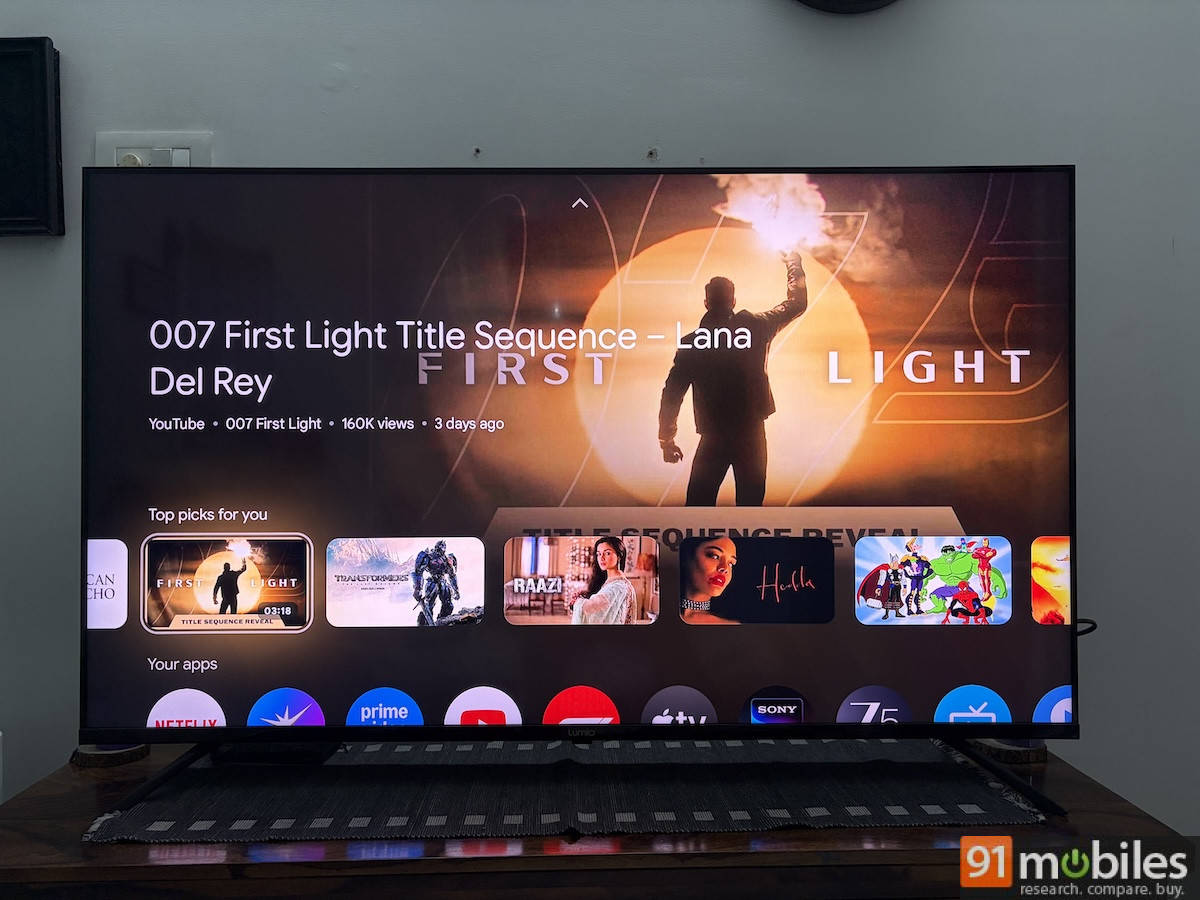
I have used the TV for everything I would in a normal household: evening streaming, weekend gaming sessions on the PS5, and background viewing during work-from-home days. None of these use cases has exposed any meaningful decline in performance. The UI remains buttery-smooth, voice commands via Google Assistant respond quickly, and the TV boots up to the last-used input without hesitation. That last point, incidentally, is now a feature rather than a default behaviour. More on that later.
The Apple TV test
A really good TV, for me personally, is one that doesn’t repeatedly crash the Apple TV app. I’ve had my fair share of TVs that struggle to keep a show or movie playing continuously on the Apple TV app because they don’t have enough memory to handle its high-quality streaming. The Lumio Vision 9, however, wasn’t one of them. Over the last six months, the app has never once crashed on me, whether while watching, browsing, or scrubbing through a show. Blame it on the 3GB RAM or better app optimisation, or a bit of both. But colour me impressed.
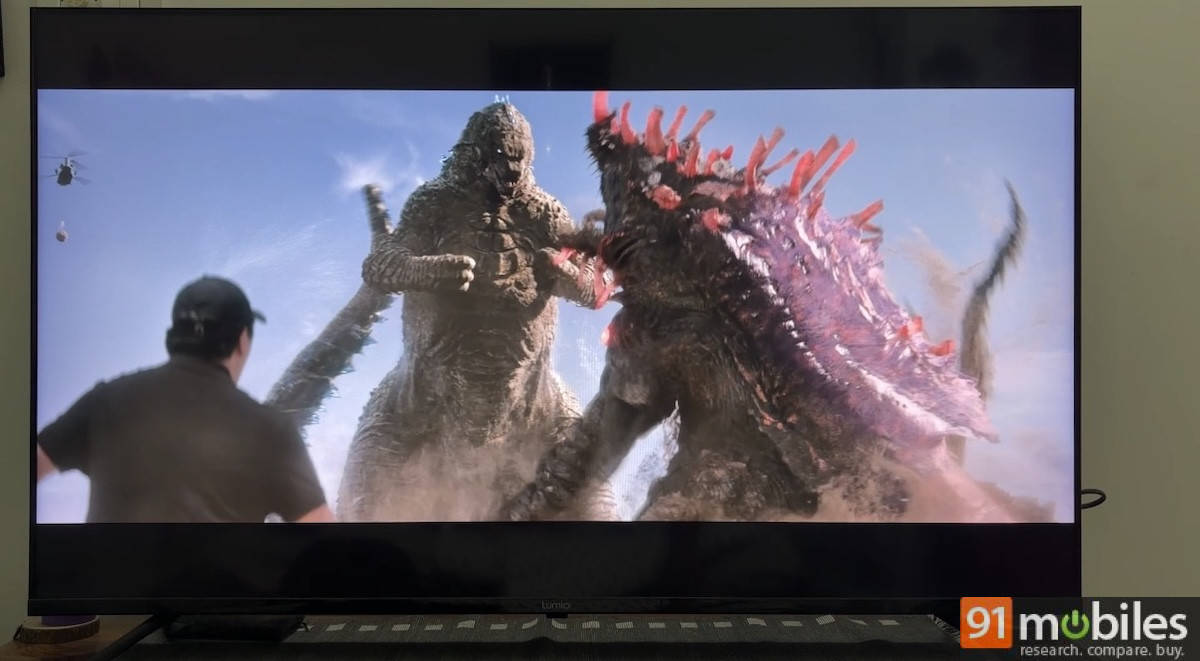
Beyond performance, the picture quality tells a similar story.
Picture quality has generally remained consistent. The QD-MiniLED backlighting with 160 dimming zones continues to deliver the same punchy HDR performance we noted in the original review. The slight black crushing is still present in the same scenarios, i.e., dark sequences with very fine shadow detail, but it remains something you would only notice if you were actively looking for it.
The Lumio Vision 9 never once crashed the Apple TV app. Six months. Not once.
Android 14 changes more than you might expect
In February, Lumio became the first TV brand to update its entire portfolio to Android 14, rolling out the update via OTA to existing Vision TV users. I received the update on my unit shortly after it went live, and it is worth talking about.
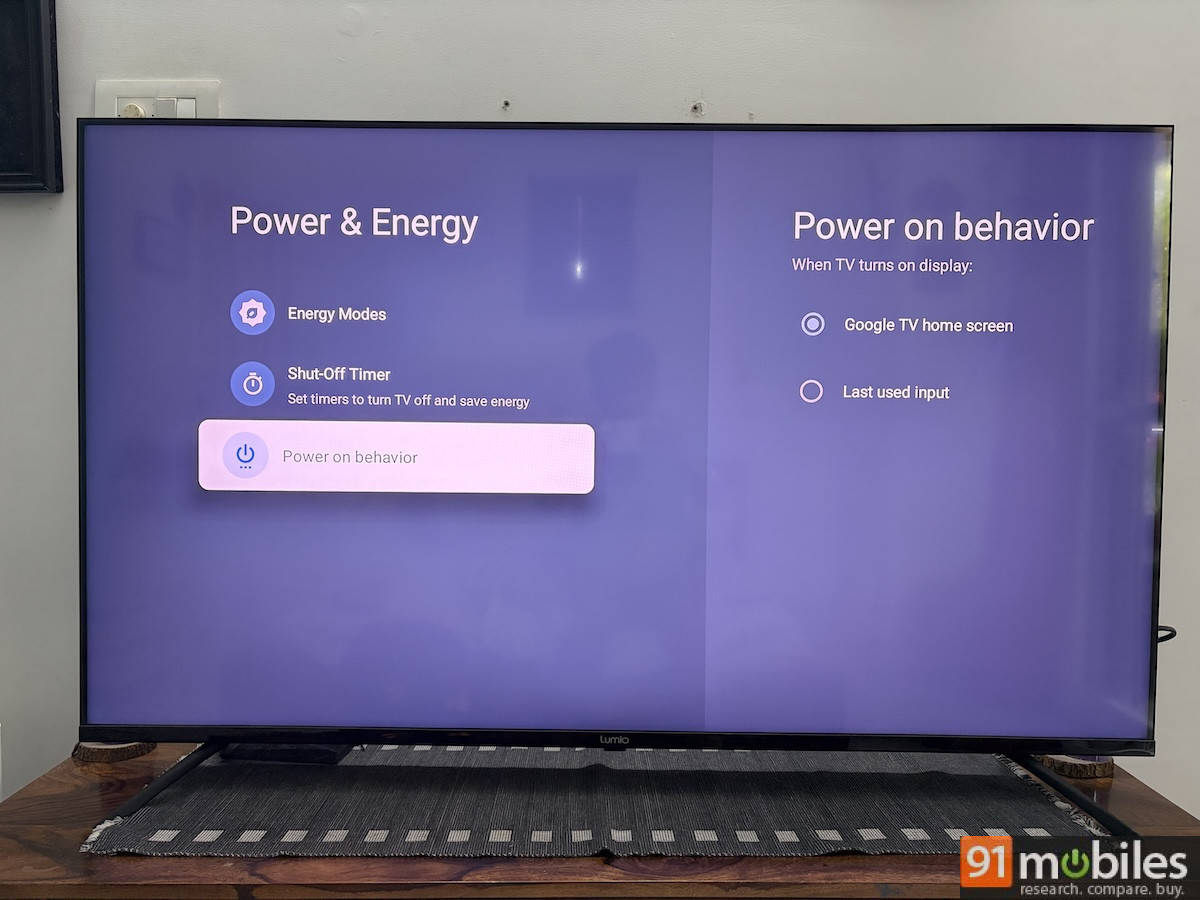
The most immediately useful addition is the power-on behaviour option, which allows the TV to boot directly into the last-used input. This sounds like a small thing until you realise how often the default behaviour of landing on the Google TV home screen was an extra navigation step you never asked for. If you primarily use the TV with a PS5, for example, you can set it so that turning it on takes you directly to the PS5 input without any additional button presses. It is the kind of friction reduction that makes a product feel more considered.
Google Assistant response has improved noticeably since the update. Voice commands feel more responsive, and the assistant is quicker to recognise and act on requests than it was in the months before the update.
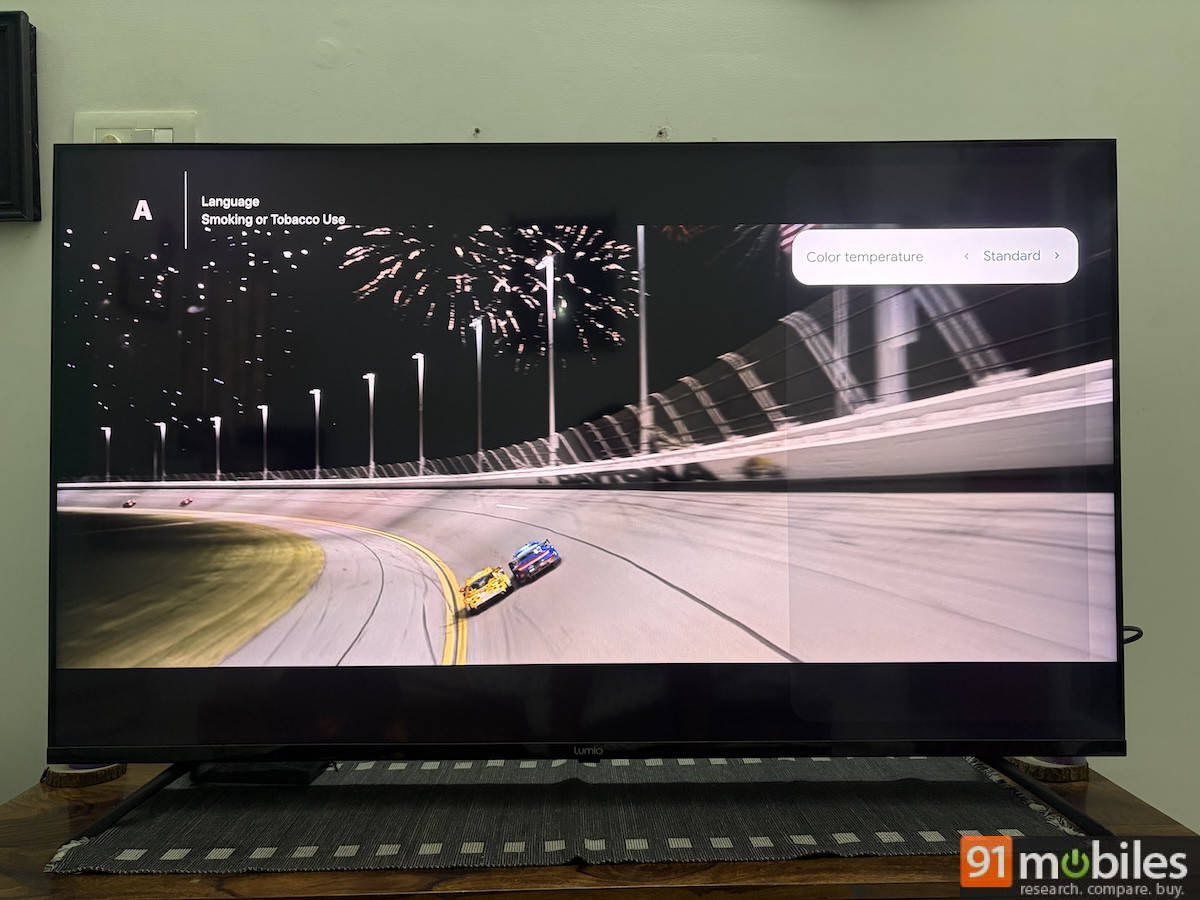
The quick settings and system controls have also been refreshed with a more unified design language, making picture mode and sound profile switching cleaner without interrupting your viewing experience. Everything QR-based Wi-Fi sharing is a new addition that aligns the TV more closely with how smartphones handle network sharing, a small convenience that matters when guests ask for the Wi-Fi password.
What six months of real-world use has confirmed
The original review rated the Vision 9 at 8.8 out of 10, and six months later, I feel it’s still an 8.8, if not a 9 (who doesn’t like a nice round number?). The picture quality holds up, the performance has not degraded, and the Android 14 update has actively made the TV more useful rather than weighing it down. The two cons from the original review, i.e. slight black crushing and audio output that could be better, remain unchanged. Pairing the Vision 9 with a nice soundbar will fix the latter and can significantly improve the overall experience. If you are buying the Vision 9, budget for one.
The broader takeaway from six months with this TV is that Lumio has built something that ages better than its price would suggest. Smart TV performance degradation is real and common, and the Vision 9 has largely avoided it. The Android 14 update arriving as a free OTA for existing users, rather than being reserved for the newer Vision 9 2026 series, reinforces the sense that Lumio is treating last year’s Vision 9 (and Vision 7 by extension) as a long-term product rather than a launch-and-move-on one. At around Rs 55,000, that combination of hardware quality and software commitment is genuinely difficult to match in the segment.