Remember when buying a gaming laptop in India was simple? You either hunted for the magical Rs 80,000 “sweet spot,” or you went full enthusiast, buying a desktop-replacement heavy enough to double as a gym weight. Well, times are changing. The strict borders separating the hardcore gamer, the engineering student, the creative professional, and the hybrid worker are completely dissolving. Nobody wants to be pigeonholed anymore. Today’s buyer wants one machine to rule them all.
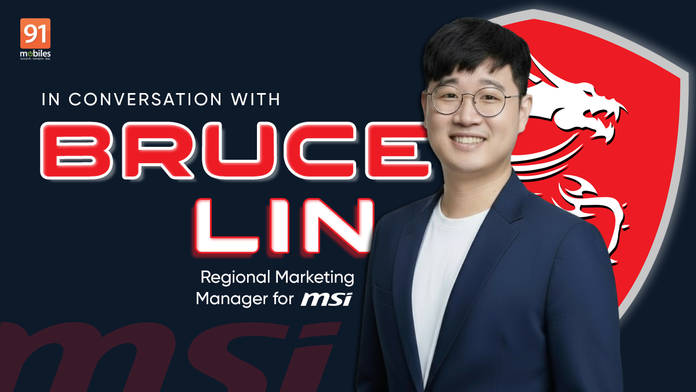
To figure out how the industry is handling this identity crisis, we caught up with Bruce Lin, Regional Marketing Manager for MSI at COMPUTEX 2026. Amidst a sea of flashing RGB and cutting-edge cooling tech, we chatted about everything from component inflation to MSI’s aggressive, localized strategy to conquer the Indian mainstream.
Table of Contents
The Death of the Niche: Enter the ‘All-Rounder’
We kicked things off by talking about form factors. For years, massive flagships like the legendary MSI Titan dominated the enthusiast conversation. But do people really want those behemoths anymore, or is the future strictly thin and light? According to Bruce, consumers are shifting toward a hybrid mindset.
“Nowadays, people do crack the boundary. People no longer consider themselves individually as just ‘gamers’ or ‘workers,’ ’employees’ or ‘content creators.’ They want an all-rounder device for suiting all scenarios.”
Let’s be real for a second: as much as we’d all love a top-tier graphics card crammed into a chassis that weighs less than a bag of chips, physics is a bit of a party pooper. Squeezing massive power into an ultra-thin frame without it melting through your desk is still a pipe dream. Bruce even joked that until someone figures out how to make a next-gen GPU weigh under a kilogram, those beefier gaming rigs aren’t going anywhere.
However, India’s massive demographic of engineering students and creators has forced a fascinating middle ground. They need serious horsepower, but they don’t want a laptop that looks like a neon spaceship when they open it in a lecture hall.
The New Math
Let’s talk money, because component inflation is very real. Defining a “budget” device in India used to be easy. For most, it meant keeping an eye on an Rs 80,000 price tag. But global macroeconomic forces, chip costs, and memory inflation have forced a sharp reality check. Bruce was refreshingly transparent about how the entry-level goalposts have moved.
“Surveys show that for the base entry layer, people still stick with 80k. But due to the price increment on the chipset, memory, and storage, there’s now a 20% higher acceptance in the market already. People are starting to accept that maybe a 90k or 1 Lakh laptop for a base is okay.”
But for MSI, which has its roots firmly planted in the premium segment, the real sweet spot is actually a bit higher. Because we are all holding onto our laptops longer these days, investing in something that won’t feel ancient in two years is paramount. According to Bruce, if you want a truly future-proof mid-tier machine today, you’re looking at a baseline of Rs 1.5 Lakhs to Rs 1.6 Lakhs.
Now, dropping Rs 1.5 Lakhs up front definitely hurts the wallet, but the way we buy tech in India has secretly transitioned into a subscription mindset. Instead of compromising on a stuttery entry-level machine, buyers are leaning hard on digital fintech. By integrating options like Bajaj, Pine Labs, and leveraging India’s incredibly smooth UPI ecosystem, MSI is making that premium price tag way easier to swallow. Breaking a premium machine down into zero-cost monthly chunks makes upgrading to a future-proof laptop a no-brainer.
The “Made in India” Mandate and the Customization Myth
One of the coolest moments of our chat came when we brought up supply chain logistics. In a market where some competitors heavily market “custom-to-order” laptops online, promising a tailor-made system in a few weeks, we asked Bruce if MSI planned to copy that model. Honestly, his response blew the doors off standard industry marketing jargon.
“Their strategy is a bit apart from ours. They make a huge scale of bookings. It sounds like a customizable laptop, but in fact, in the real supply case, it’s not. They just book all the configurations, stock them in their warehouse, and make people feel like they are customizing it. But they have all the variants already in stock.”
It’s a clever bit of marketing theater, really. Instead of playing that warehouse guessing game, MSI is leaning into a completely different superpower: aggressive domestic manufacturing. By pivoting to “Made in India” production lines for their mainstream and high-volume models, MSI can drastically compress the time it takes for fresh silicon to hit retail shelves. Sure, global component shortages still happen, but local manufacturing gives MSI the agility to respond to real-time spikes in regional demand without waiting on a cargo ship.
Turning Brand Stores into Community Hubs
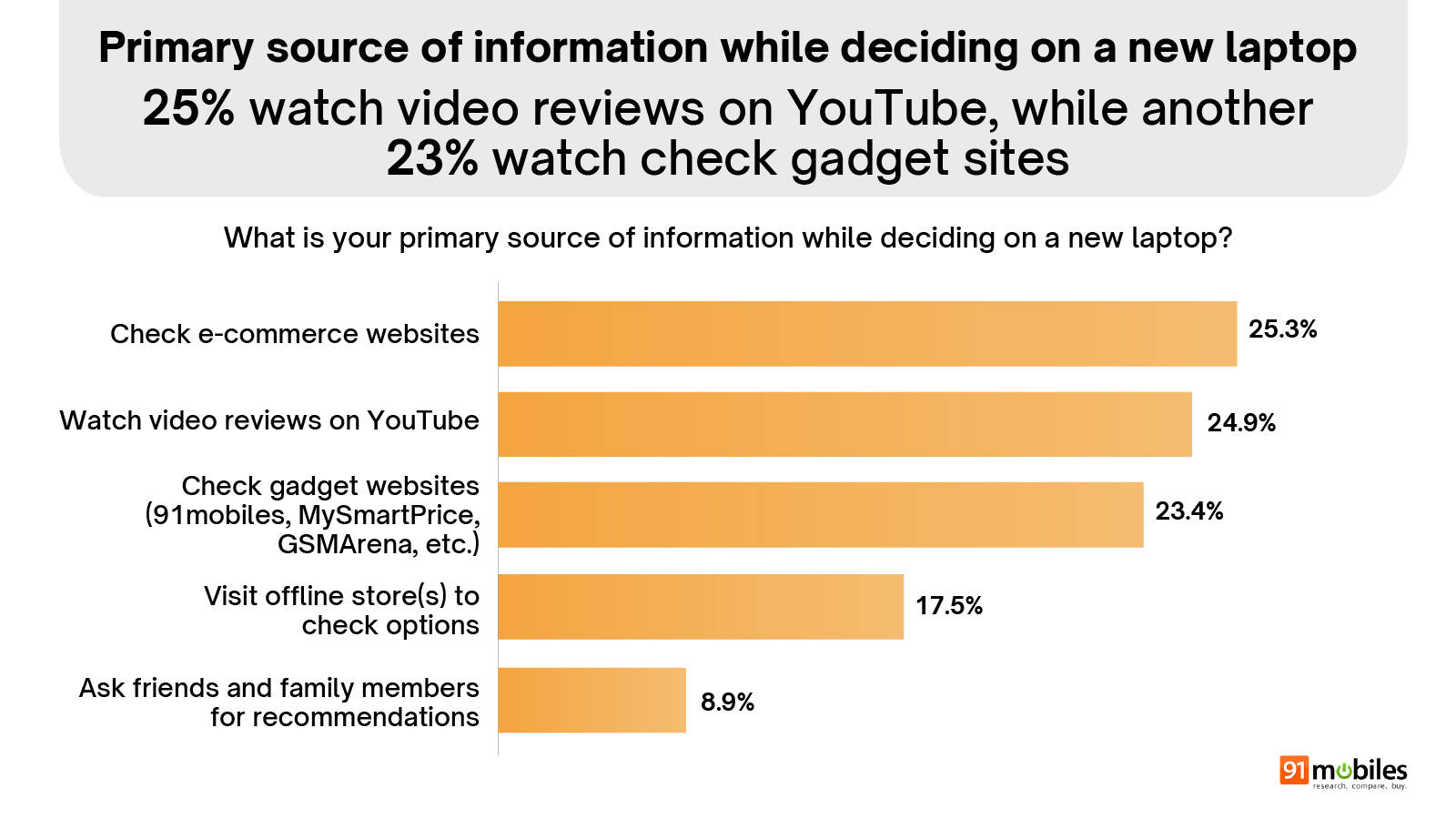
As backed by our Laptop Buyer Insights Survey, Gen Z is undeniably digital-first: they read reviews, pore over benchmarks, and track Reddit threads. Yet, when it comes to dropping serious cash on a performance machine, they still want an offline, physical handshake with the device. They want to feel the chassis stiffness, test the keyboard deck flex, and see the display with their own eyes.
MSI’s response to this has been massive. Back in 2022, they had a modest footprint of just 10 dedicated standalone stores across India. Today, that network has expanded fivefold to 50 dedicated brand stores. They’ve also nearly doubled their service infrastructure to 175 locations, backed up by on-site support. But what’s really cool is how MSI is reinventing the otherwise boring after-sales service experience.
“We organize service events at our brand stores so people can have a free service experience in the shop. People just need to register, and we help them with changing thermal paste, cleaning dust, and doing basic maintenance—entirely free of charge.”
This is honestly a brilliant customer retention move. Think about it: by inviting you into the store for a free spa day for your laptop, MSI strips away the usual anxiety associated with tech repairs. They are successfully turning cold, transactional retail storefronts into actual, service-oriented community hubs.
Ultimately, MSI’s playbook for India is incredibly clear. By combining a rapidly multiplying store network and free laptop spa days with a localized “Made in India” strategy that’s firing on all cylinders, they aren’t just passively watching the market identity crisis unfold. They are actively building the foundation for what comes next. As the old boundaries between work, play, and creation continue to shatter, MSI isn’t just keeping up with the modern Indian tech buyer. Instead, they’re already a few steps ahead, holding the line (and the thermal paste).