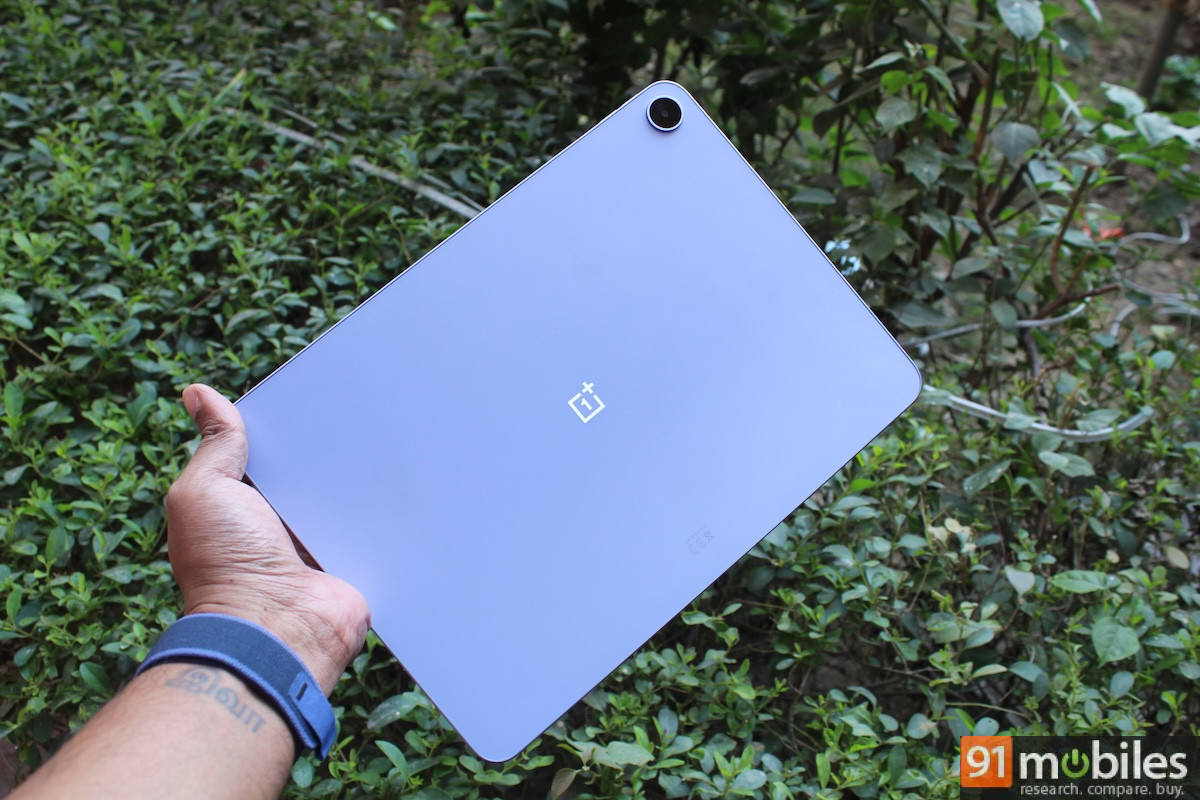
OnePlus’ tablet journey has been a little uneven over the past few years, but it’s clear the brand is now taking the category seriously. The flagship OnePlus Pad has seen steady yearly refinement, with the OnePlus Pad 3 now positioned as the 2025 premium option, and a solid one at that. Meanwhile, the more affordable OnePlus Pad Go (review) finally gets a successor two years later in the form of the OnePlus Pad Go 2.
OnePlus took its time with this one, but based on what’s on offer, the wait might just be justified. From a faster MediaTek chipset to a noticeably bigger battery, the Pad Go 2 sees upgrades across the board. Below are my early impressions, while a full review is coming soon.
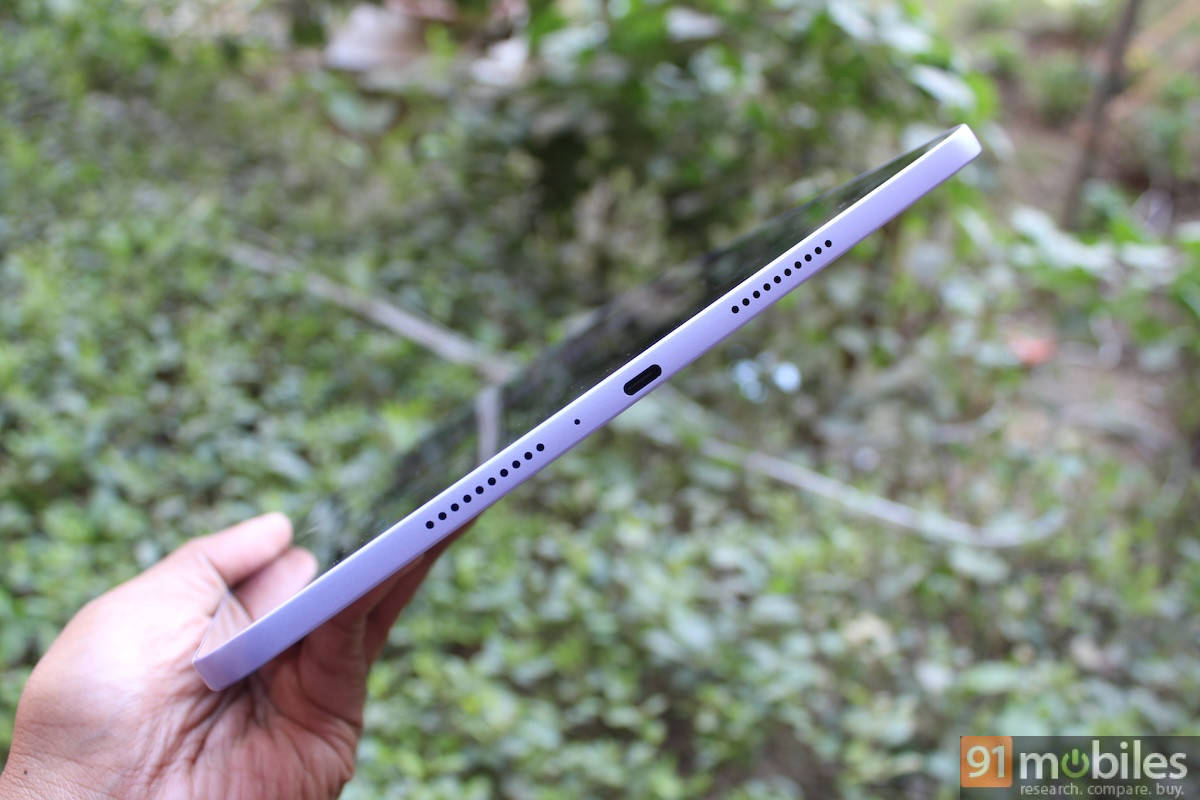
In the box, you’ll find the OnePlus Pad Go 2, a 45W SuperVOOC adapter, a Type-C cable, and some documentation. The 5G variant includes a SIM eject pin. Unfortunately, we received the Wi-Fi-only version, which is a bit of a bummer since this is the first 5G tablet from OnePlus, and it would have been nice to test that aspect.
If you were familiar with the 2023 OnePlus Pad Go, you’ll instantly notice that the successor is a bit bigger and heavier when you hold it for the first time. This is because the screen size has increased from 11.3 inches to 12.1 inches, while the weight has gone up from 532 grams to 597 grams (the 5G variant weighs 599 grams). This is well over 100 grams compared to my personal 11-inch iPad Air, but lighter than the 13-inch OnePlus Pad 3 (675 grams), for your reference.
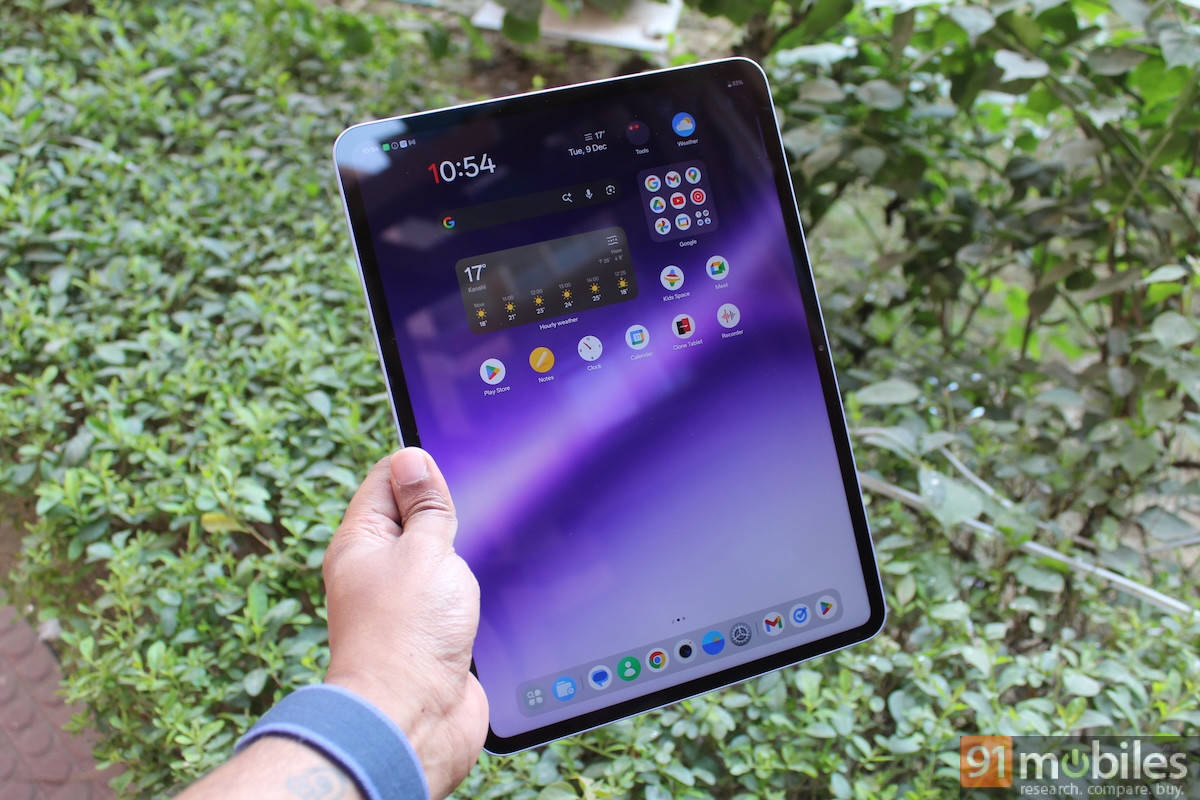
As I mentioned earlier, the OnePlus Pad Go receives several upgrades, including a larger screen. The new 12.1-inch display is big, but not as unwieldy as a 13-inch tablet. It fits more content on screen and should offer a more convenient multitasking experience compared to compact 11-inch tablets. It is a 2.8K screen (up from 2.4K on the Pad Go) with Dolby Vision support, including playback of Dolby Vision content on Netflix. In my brief time using the tablet, the display showed vibrant and punchy colours and good brightness indoors. I haven’t been able to check its outdoor brightness, but with a claimed peak brightness of 900 nits, I expect good legibility under sunlight. I’ll have more to share about the viewing experience, especially while streaming Dolby Vision content on Netflix, in my full review.
To enhance the viewing experience, OnePlus has equipped the Pad Go 2 with four speakers with OnePlus’ Omnibearing Sound Field technology, which intelligently detects screen orientation to adjust the stereo output accordingly. Whether this translates into an immersive sound experience is something I will share in my review.
OxygenOS 16 runs out of the box, and it’s just as clean and fluid on the Pad Go 2 as it is on OnePlus smartphones. There are a bunch of AI features worth mentioning briefly here, with a deeper analysis in my full review. AI Writer, for example, helps in proofreading and polishing what you’ve written based on how you want the tone to be (concise, formal, casual, witty, etc.). AI recorder converts meetings and audio messages into text, while AI Summary provides instant summaries of articles and websites you’re reading. You also get a suite of photo editing tools under AI Editor to erase, unblur, and more.
Lastly, we have the battery, which is now 10,050mAh in size, up from 8,000mAh. This should translate to longer endurance, with OnePlus claiming up to 60 days of standby time or 15 hours of video playback. While you get a 45W charger in the box, the tablet only supports up to 33W charging speeds, much like its predecessor. I’ll be putting the tablet through its paces to see how the battery life fares as an entertainment and productivity tablet.
The Pad Go 2 will come with its own Pad Go 2 Stylo, which will be sold separately and should also support third-party keyboards. We’ll learn more about the Stylo, including its price, during the tablet’s launch on December 17th.