OPPO has kick-started the 2027 flagship race in India with the launch of the Find X10 series. The lineup includes the base Find X10 and the Find X10 Pro Max. We’ll cover the latter in depth here, since that’s the unit we received for review. While it’s not a direct successor to the Find X9 Ultra (review) in the traditional sense, the Find X10 Pro Max sits well above it, priced at Rs 1,99,999. But it does offers a few upgrades over the Ultra, including a newer chipset, a bigger battery, and an upgraded ultrawide camera. While we’re working on a full review, you can read our first impressions of OPPO’s most expensive flagship phone yet.
Table of Contents
Design
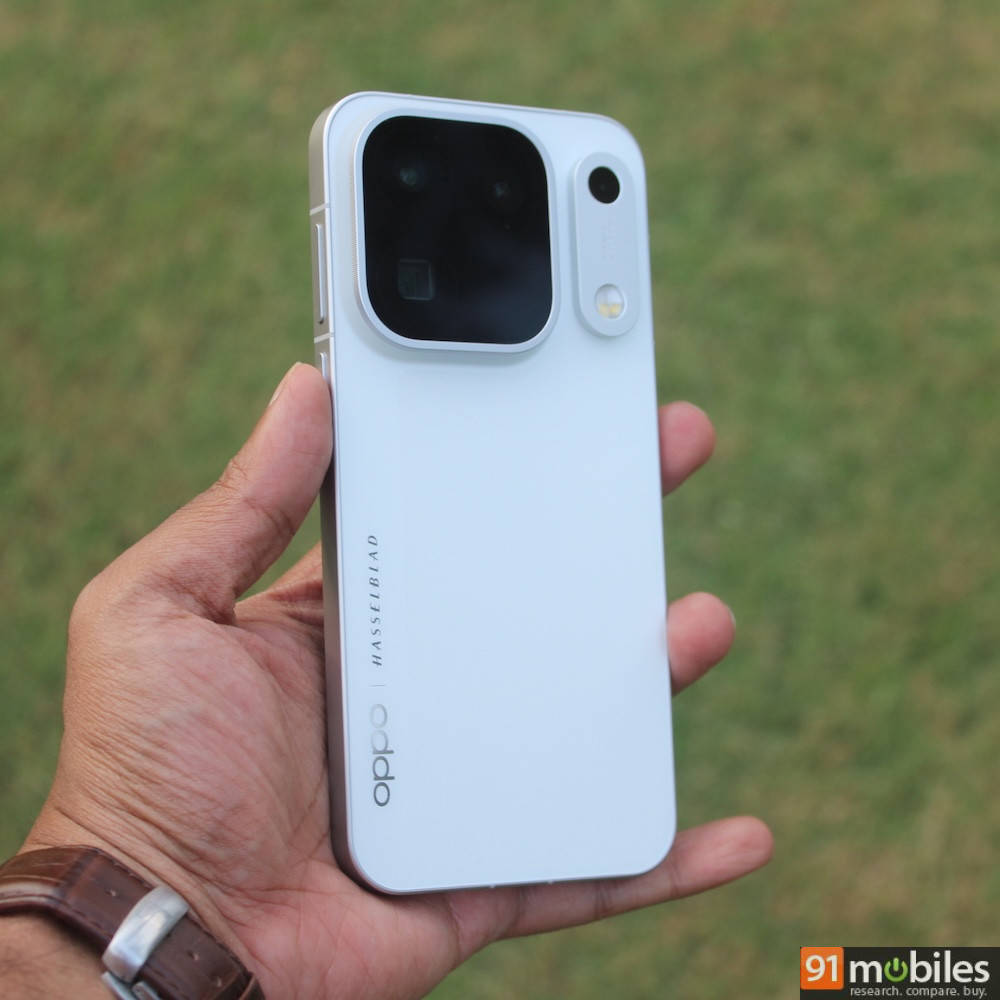
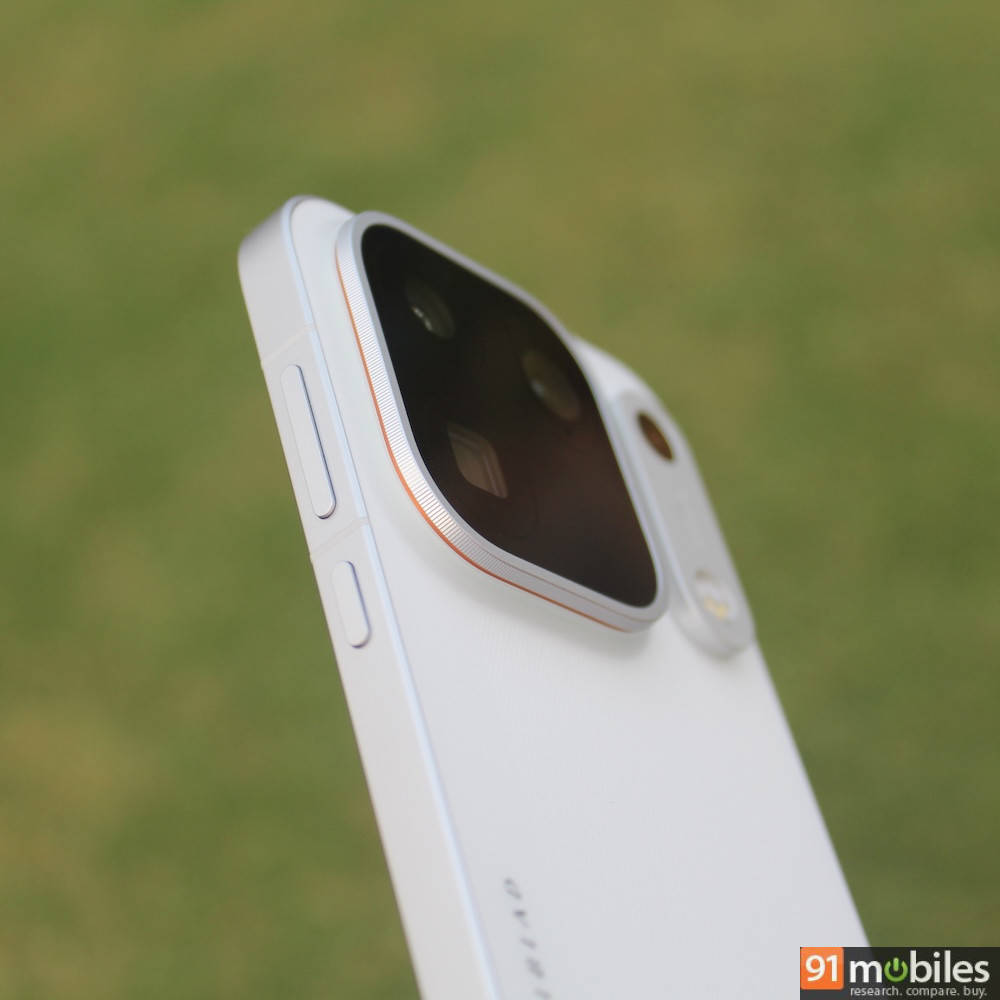
OPPO has gone for what it calls a borderless design, with one-piece sculpted glass that flows into the camera module so the bump looks less like an afterthought. The Pro Max comes in Titanium Grey and Luna White, and Luna White is clearly the showpiece: a silver camera island, a matte orange accent ring that OPPO calls a Hasselblad signature, and a two-tone back that mixes smooth matte glass with a fabric-inspired pattern. Titanium Grey is the quieter option.
 Display
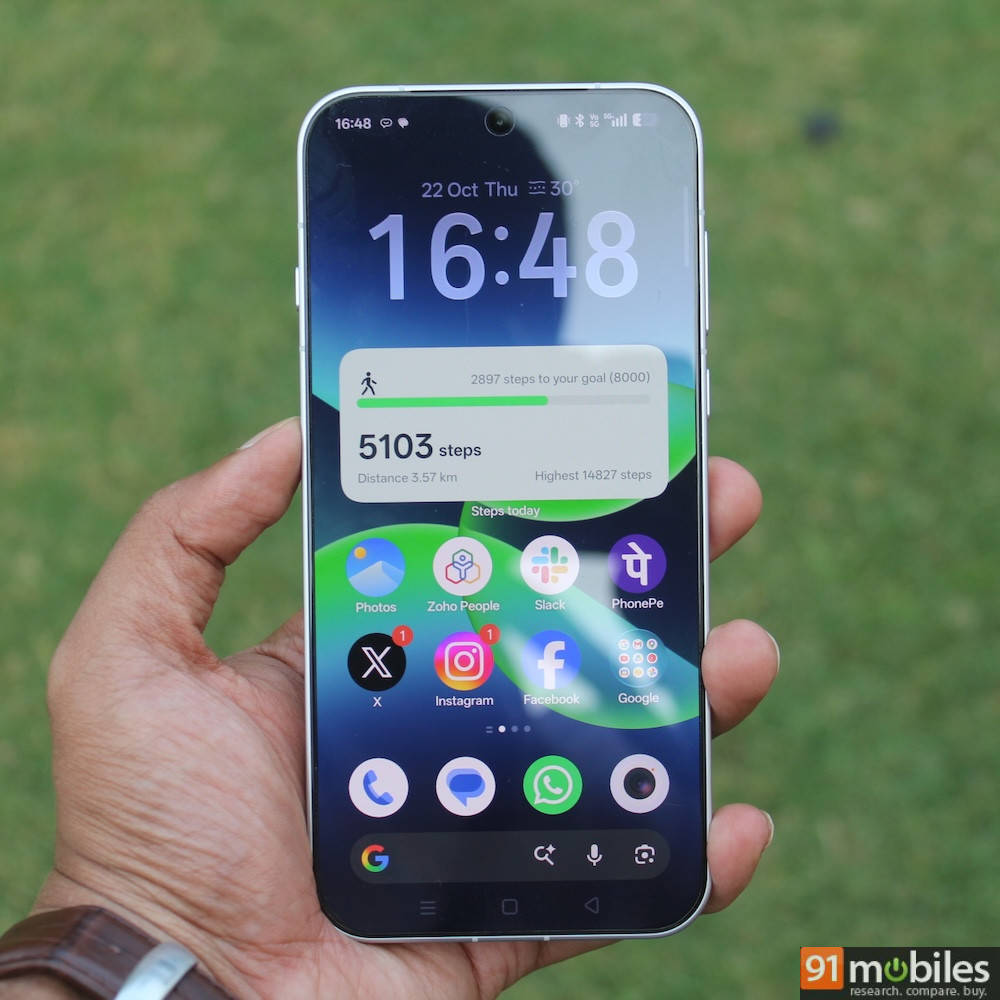
The 6.78-inch LTPO panel is flat, with symmetrical 1.15mm bezels. OPPO claims 3,600 nits of local peak brightness (2,000 nits global), Dolby Vision support, and dimming down to 1 nit with 3,840Hz PWM for night-time reading. The refresh rate adapts up to 120Hz in everyday use, with 144Hz reserved for supported games, which is fine by me – not many apps need more.
Cameras
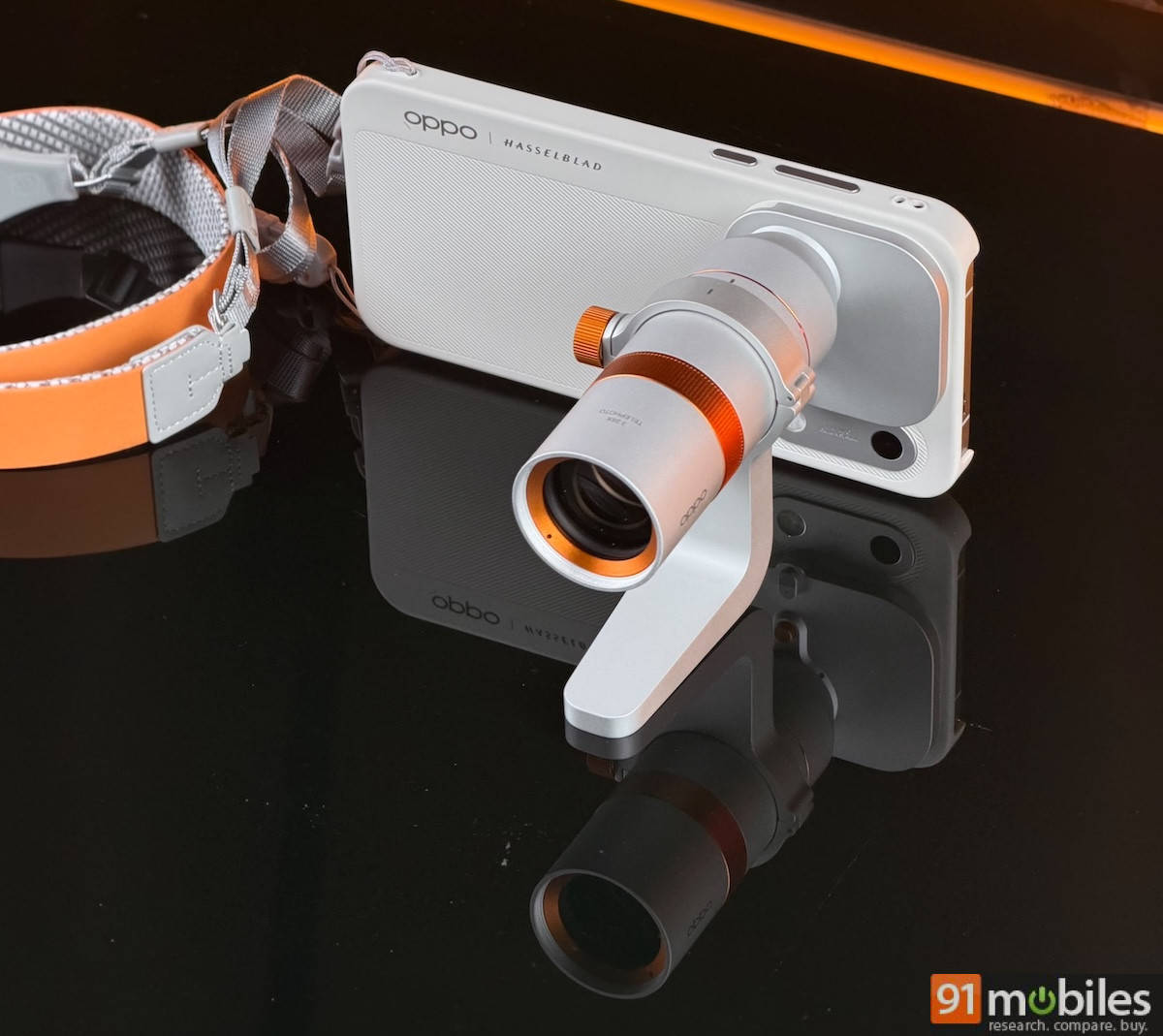
Let me start with the hardware. The 200MP main camera uses a new 1/1.28-inch ISOCELL HPC sensor that OPPO developed with Samsung, with DeepPix technology that OPPO says gives up to 17 stops of dynamic range in video. The 200MP ultrawide has a 1/1.56-inch sensor, which OPPO says captures twice as much light as the previous generation, and a 124-degree autofocus lens. The 200MP telephoto has an f/2.1 aperture and a 10cm minimum focus distance, so it doubles as a telemacro camera. An OPPO Hasselblad Teleconverter accessory stretches the telephoto further, with OPPO claiming 3.28x optical magnification.
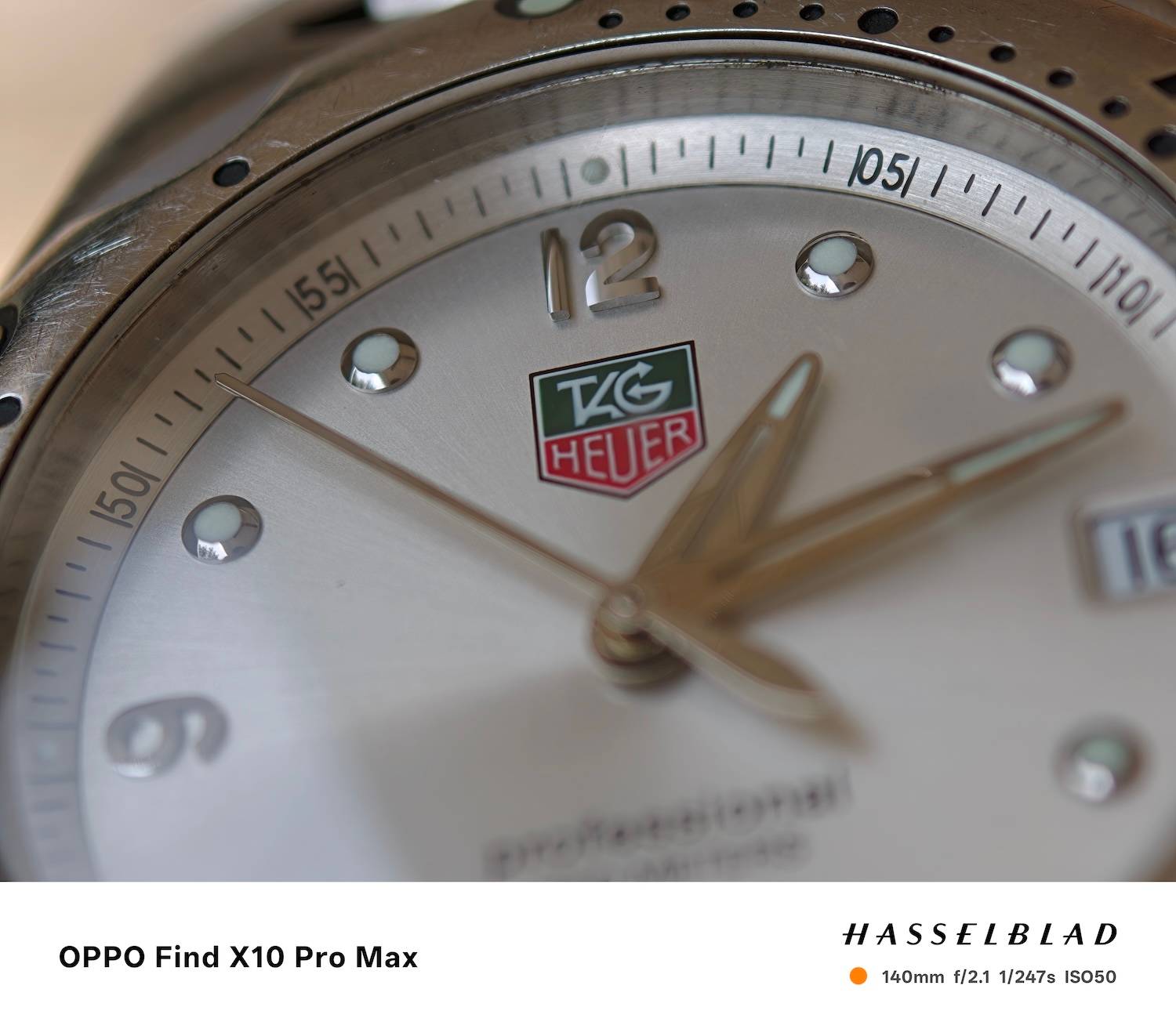
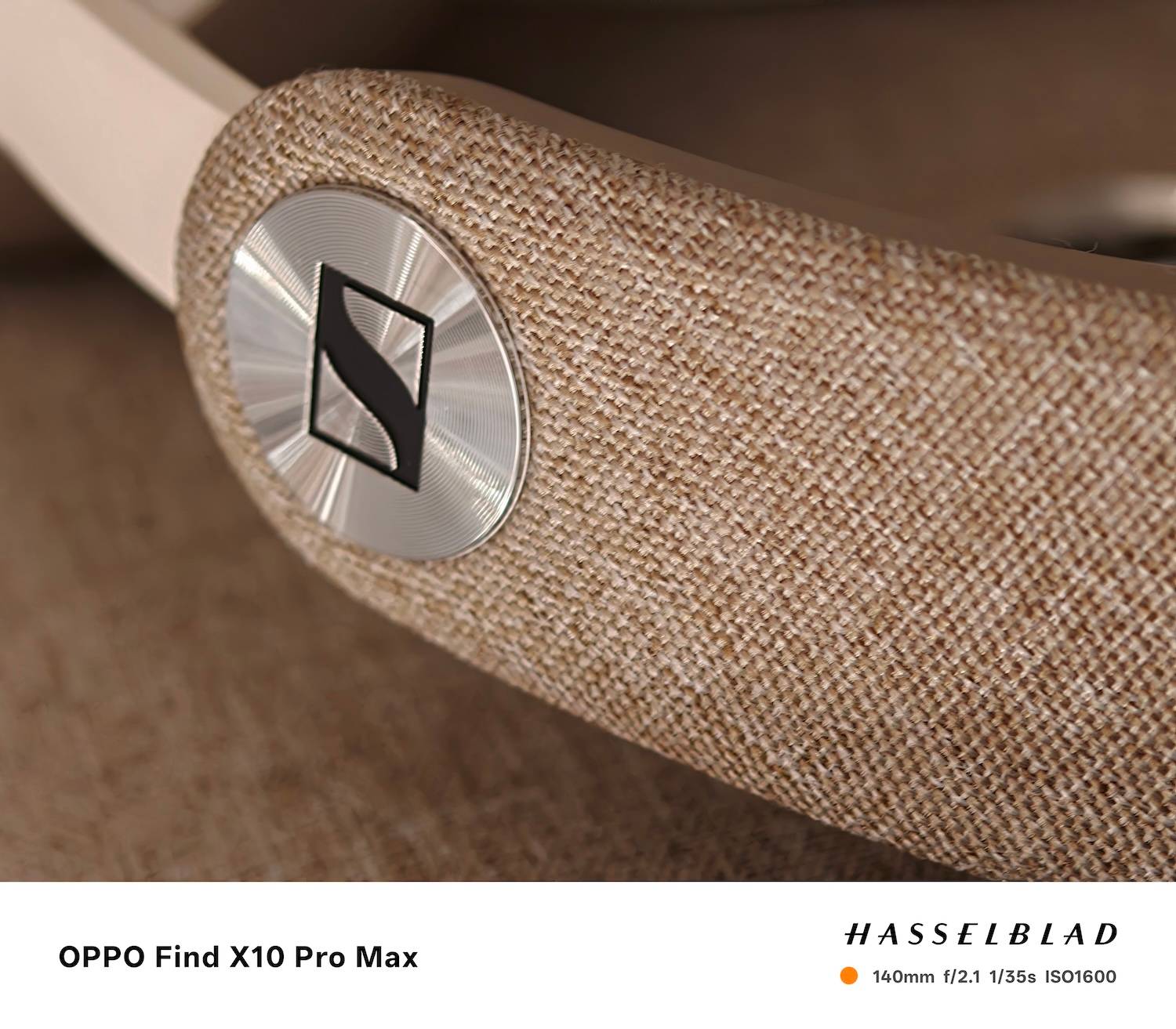





What interests me more than the megapixels is the processing. OPPO’s new LUMO True Image Engine promises to keep colour, tone and detail closer to what you actually saw. A new-generation True Color Camera reads multispectral colour data to improve accuracy under mixed lighting, Hasselblad Master Mode’s tonal approach comes to the default Photo mode, and sharpening, noise reduction and AI-generated detail are dialled back. On paper, that’s the right call – I’d rather a phone leave some shadow in a backlit portrait than flatten it. It’s a slightly awkward neighbour for the AI Photo Agent in ColorOS 17, which edits photos from natural-language instructions, on a camera pitched as true-to-life.
Performance and software
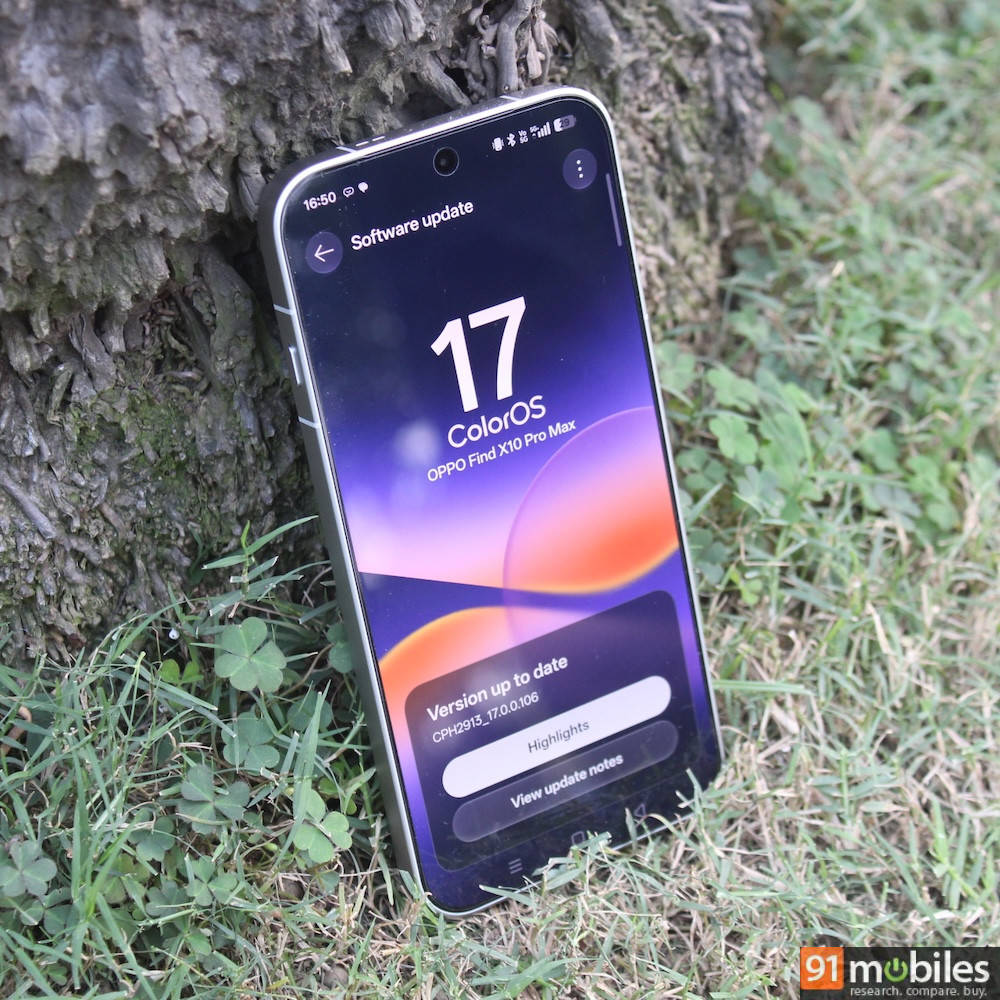
The Find X10 Pro Max runs on the 2nm MediaTek Dimensity 9600 Pro with vapour chamber cooling, and comes in a single 12GB + 512GB configuration. Since this is a brand-new chipset, we don’t have historical data to share as a reference. In my full review, I’ll break down how the chip performs in our synthetic benchmarks and real-world stress tests.
Battery and charging
OPPO has fitted an 8,000mAh silicon-carbon battery with 80W wired and 50W wireless charging and calls it a substantial battery-life upgrade. While it’s a big cell, I wish the charging speed could have been better. That said, I will share the exact charging speed in my detailed review. As for the battery, my initial thoughts are extremely positive. Over the past couple of days using the Find X10 Pro Max as my primary device, the battery life has been stellar out of the box, dropping only around 40 percent through the day, giving me enough to go almost the entire next day.
Early thoughts
On paper, the Find X10 Pro Max is a very camera-first flagship: three 200MP sensors, a restrained imaging engine, serious video tools and a big battery in a body that still looks like it was designed around the camera. Whether that’s worth Rs 2 lakh depends on how much of it you’ll actually use, and on how it compares with the cheaper Find X10, which shares the 8,000mAh battery, the 80W charging and the 200MP main and telephoto cameras, but gives up the 200MP ultrawide, the 2nm chip and the bigger display.
Stay tuned for my full review, where I’ll go deeper into how good the camera system really is, with and without the teleconverter kit, whether the performance gains are noticeable, whether it is a genuinely two-day battery phone, and more.