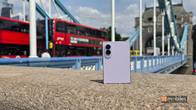
Both the flip and the fold form factors have been around in the foldable smartphone segment for a while now, but a new contender is emerging that could sway many buyers in its direction. I’m referring to the new Galaxy Z Fold8, which is the so-called ‘Wide’ version of Samsung’s book-style foldable. Rather than a book though, it resembles a passport more closely, and I have to tell you this – if you’ve been considering a foldable smartphone before and find the regular flip a bit too small and the fold a bit too big, the Z Fold8 could be the ideal sweet spot. Within just a few minutes of playing with it, I’ve fallen in love, and I suspect you will too.
Table of Contents
Design and build
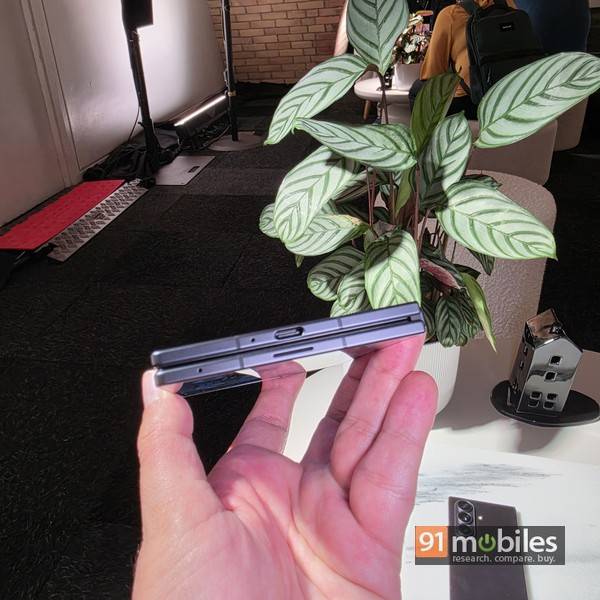
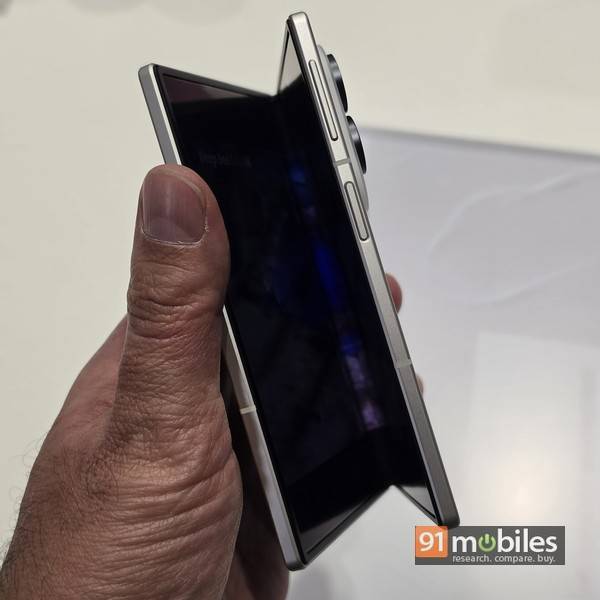
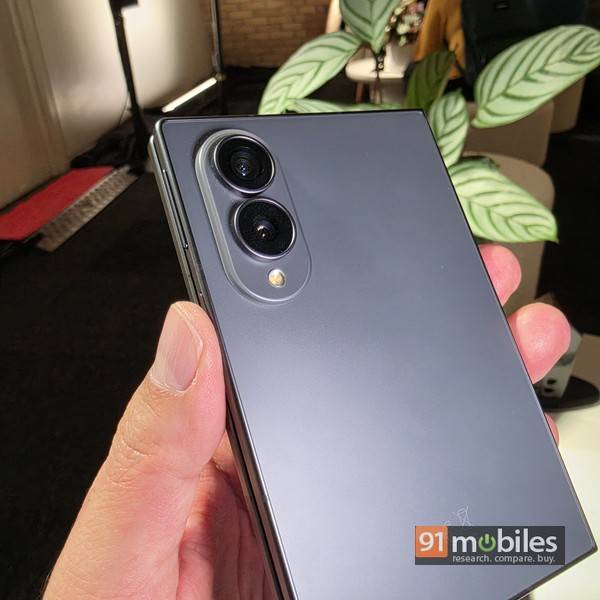
Weighing 201g, the Z Fold8 is said to be the lightest fold smartphone ever, and it’s quite compact too. Measuring 81.9 x 123.9 x 9.7mm when folded, it’s not much bigger than a passport, and that’s a good analogy since I think this device could be your passport to immersive content.
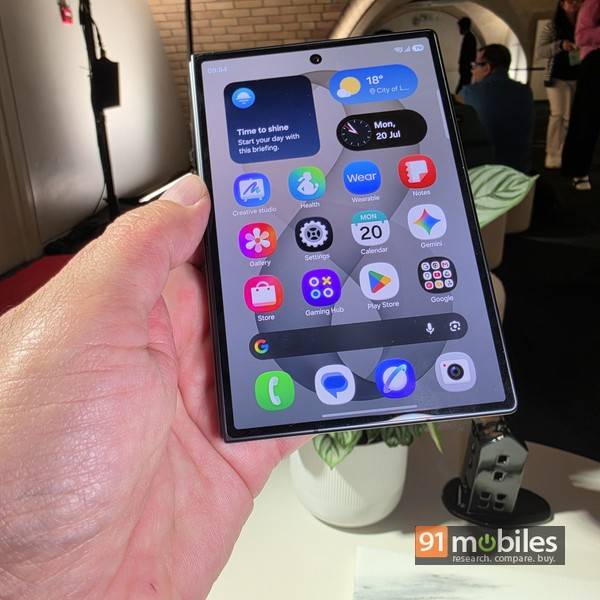
Samsung is highlighting its new Flex Titanium tech as a major breakthrough, resulting in a design that’s slimmer and more durable, and also helps reduce the crease. This technology involves a titanium-based display structure, using a titanium-alloy film with an enhanced titanium plate, capable of absorbing pressure and impact, and also reducing the crease. There’s IP48 rating to indicate resistance to dust and water.
That screen
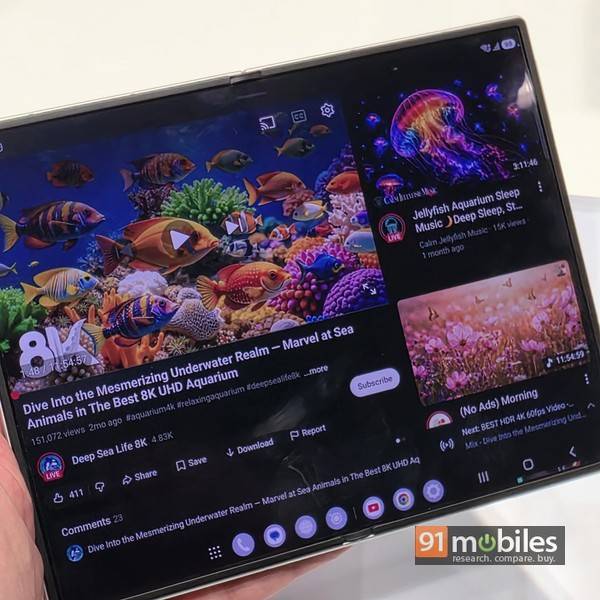
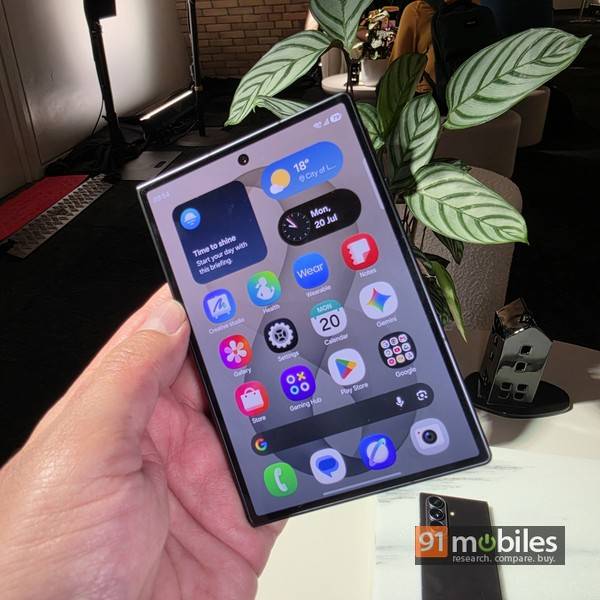
The word ‘immersive’ comes up a few times in Samsung’s messaging around this phone too, and it’s easy to see why. The 5.5-inch cover display is nice for all your regular tasks, and the 120Hz Dynamic AMOLED 2x screen looks nice and punchy too. Open up the device to feast your eyes on the 7.6-inch, 1,848 x 2,448 pixel, 120Hz Dynamic AMOLED 2X main display. With the brightness going up to 3,000 nits, covered with an anti-reflective coating, and bearing support for Vision Booster, the screen looks gorgeous.
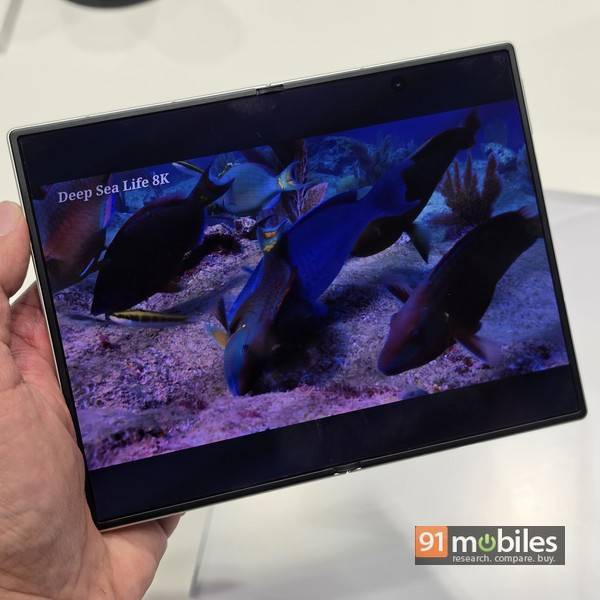
The 4:3 aspect ratio works well for watching videos in landscape, with slim black bands appearing on the top and bottom. And if you switch the orientation to portrait, the aspect ratio becomes ideal for reading content – web pages, magazines, documents, what have you. In terms of build quality, the Z Fold8 seems pretty good, and it carries an IP48 rating too.
Shooting
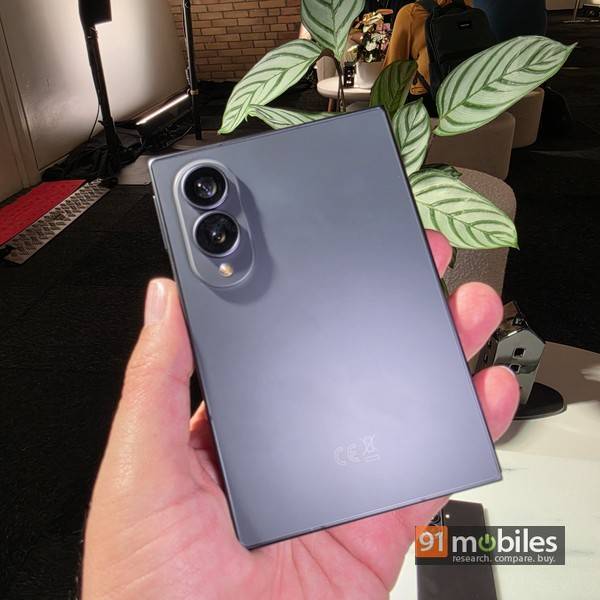
For shooting, you get dual cameras on the back – a pair of 50MP sensors, with the primary one offering OIS and 2x zoom, and the other one handling ultrawide photography. The setup might not seem as versatile as other contenders which offer dedicated telephoto sensors, but Samsung’s cameras have delivered well in the past, and there’s no reason why the Z Fold8 won’t do the same. 10MP sensors handle selfie and video calling duties – there’s one on the main display and another 10MP one on the cover display. There’s a new My FanCam feature that’s quite interesting: it lets you track a selected person in an existing video and reframe it to an aspect ratio of your choice, giving you social-ready videos in a matter of seconds.
The innards
Core specs are true-blue flagship – there’s the Snapdragon 8 Elite Gen 5 for Galaxy SoC, mated to 12 or 16GB of RAM, along with up to a terabyte of storage, depending upon the variant you choose. Despite the compact form factor, the battery capacity is a respectable 4,800mAh, and you can juice it up at up to 45W speeds using a cable or up to 20W wirelessly.
Notably, the Fold8 lineup is the first from Samsung to use silicon carbide battery tech, and hopefully, we’ll get to see bigger batteries in Samsung phones going forward. For now, the Z Fold8 uses it to keep its battery capacity respectable and its chassis super-slim.
Software
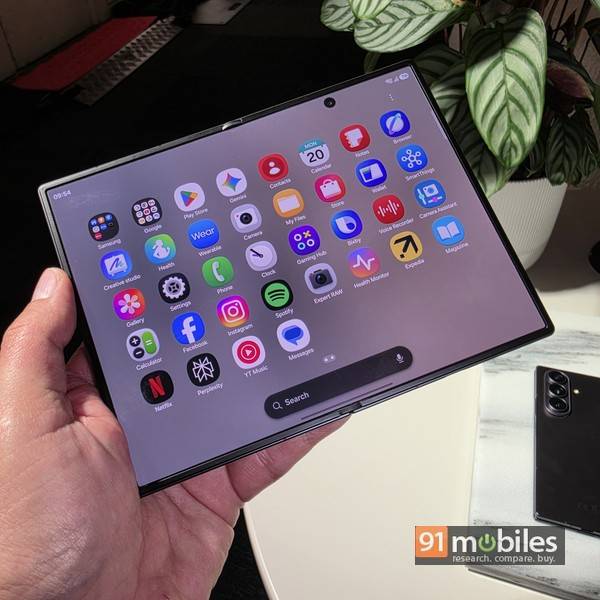
Samsung’s One UI 9 with Android 17 makes up the software side of things, and while I didn’t get enough time with the device to check out the new features properly, I know how intuitive the platform is and the ecosystem benefits it brings. Security should be top-notch with Knox baked in, while Galaxy AI has also been improving with each new iteration. Now Brief (personalised, contextual info) and Now Nudge (surfaces relevant prompts automatically) are features that have proven to be quite useful and make their way into the new device too. There’s Gemini Intelligence and App Automation that can tie in multiple apps, and the ability to just describe what you need and let the AI do its thing, and more. The overall direction is agentic AI, and with each step, Samsung seems to be moving in that general direction.
To sum it up
I’ll have lots more to say about the Galaxy X Z Fold8 after I get to use it properly, but for now, I’ll just say this: it’s a refreshing new form factor that holds a lot of promise. Making content consumption more immersive seems to be one of its key highlights, and it does that without compromising on any of the core features expected of a Samsung flagship.
I can’t wait to get my hands on it again and use it as my daily driver to see what it can do for me, but my sense is that this form factor might just turn out to be quite popular, despite the premium sticker price it’s bound to carry. Let’s see if I’m right about this.
Disclosure: This writer attended Galaxy Unpacked 2026 in London on Samsung India’s invitation