The Vivo X300 is the company’s latest flagship in India, offering near-identical specifications to its elder sibling, the X300 Pro, but in a compact and relatively more affordable package. Like its predecessor, the Vivo X200 (review), it continues to place a strong emphasis on camera capabilities but with a refined design and improvements in battery life and performance. The Vivo X300 also introduces the brand-new OriginOS 6 Android skin in India, replacing the long-running FunTouch OS.
I managed to get my hands on the device briefly, and here are my first impressions of the Vivo X300.
Design & in-hand feel
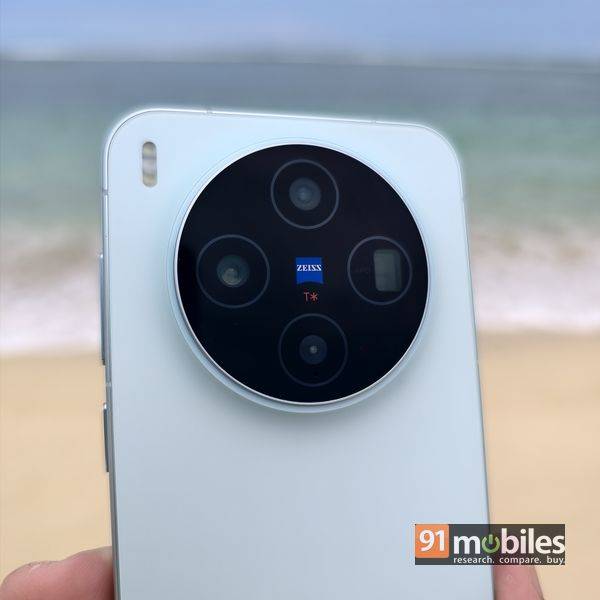
The Vivo X300 carries forward a design language similar to the X200, featuring a circular camera module that has become a trademark of Vivo. This time, however, the module sits more flush with the back panel, giving the handset a cleaner, more refined appearance.
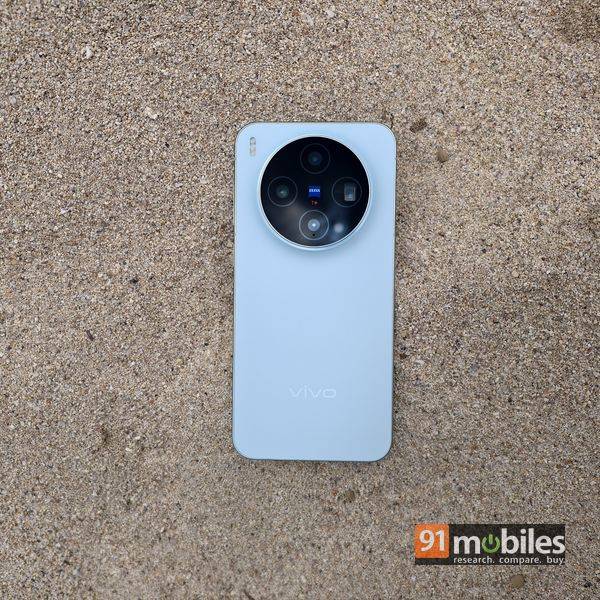

I really liked the in-hand feel of the device, attributed to its compact form factor. The reduced dimensions of the X300 make it feel more comfortable and ergonomic compared to its predecessor and elder sibling, and the compact phone fans will agree. The matte glass back panel offers excellent grip and does a good job of resisting fingerprints, adding to the overall premium feel. The aluminium frame measures 7.95mm in thickness, and at 190 grams, the smartphone is also lighter than the Vivo X200. While being lighter, it offers more battery capacity, which makes it a win-win for the user.
Display
The Vivo X300 features a 6.31-inch AMOLED display with a 120Hz refresh rate and a peak brightness of up to 4,500 nits. The panel offers a pixel density of 460ppi and carries IP68 and IP69 ratings for water and dust resistance.
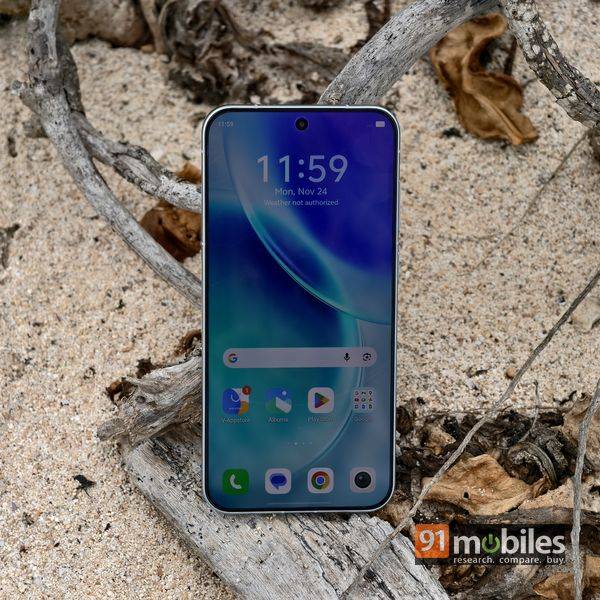
The display is protected by Schott Xensation XT core glass. Notably, this is the same panel used on the Vivo X200 FE, which was well-received for its compact size and strong visual output.
On paper, competitors like the OnePlus 15 and Realme GT 8 Pro gain an edge in aspects like refresh rate and peak brightness, but, in my short experience with the phone, the Vivo X300’s display was fairly pleasant and bright. It was easy to see outdoors without squinting. Colours looked lively, and the screen felt smooth to use with its 120Hz refresh rate, so everything from scrolling to watching videos felt crisp and pleasant. A more detailed critique of the display details would be dealt with in our review.
Software: OriginOS 6
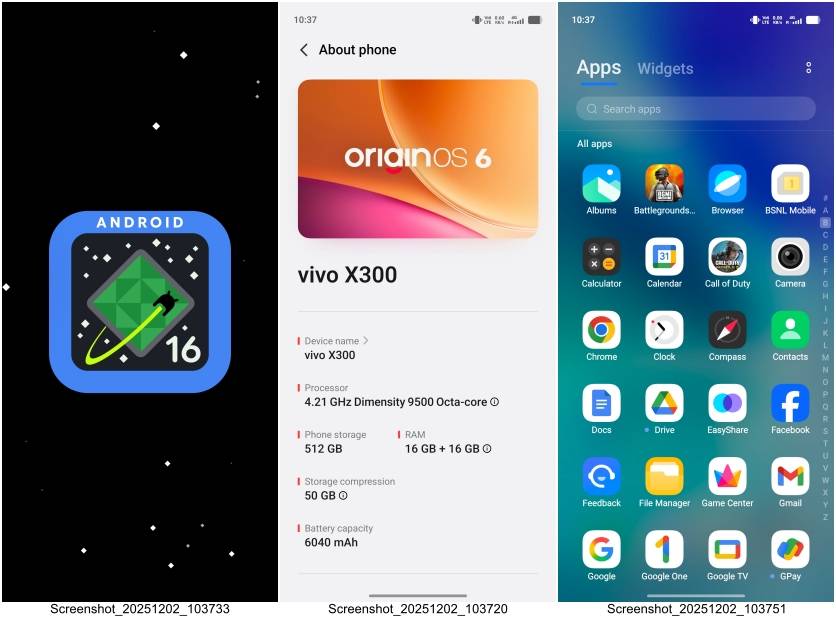
The X300 and X300 Pro are the first Vivo smartphones to ship with OriginOS 6 (based on Android 16) out of the box. The new skin is a significant departure from FunTouchOS, and brings a more refined, feature-rich, and cohesive software experience that was previously limited to the Chinese market.
Performance
The Vivo X300 is powered by the MediaTek Dimensity 9500, a true flagship-class chipset for the sub-Rs 80,000 segment. During initial usage, the device felt responsive with smooth multitasking and quick app launches. Casual gaming sessions did not result in noticeable heating, suggesting good optimisation and the 4,000 mm2+ vapour chamber proving its worth.
This is the second series featuring the Dimensity 9500, competing directly with the OPPO Find X9 models that launched a few days ago. Detailed comparisons between the two will follow in the full review, conducted under sustained workloads.
Cameras
The Vivo X300 sports a triple rear camera setup, comprising a 200MP primary camera (1/1.14″ Samsung sensor, OIS, 2x in-sensor zoom), a 50MP ultra-wide camera with a 119.4-degree field of view and a 50MP 3x telephoto camera. The front camera is a 50MP Samsung JN1 sensor.
The main sensor supports 4K video recording at up to 120 frames per second (fps). Vivo X300 doesn’t support 8K 30fps, but in daily life, no one really uses it, so 4K 120fps sufficiently does the job. Initial testing indicates strong exposure control, effective stabilisation, and good highlight and detail management. Image quality has seen an improvement over its predecessor, though a full assessment under varied lighting conditions will be covered later.

In terms of specs, the Vivo X300 is the only smartphone in its segment with a resolution of 200MP for its main camera. The Realme GT 8 Pro leads in telephoto duties on paper, but when we talk about the front camera, the edge is back with the Vivo X300’s superior 50MP selfie camera with f/2.0 aperture.
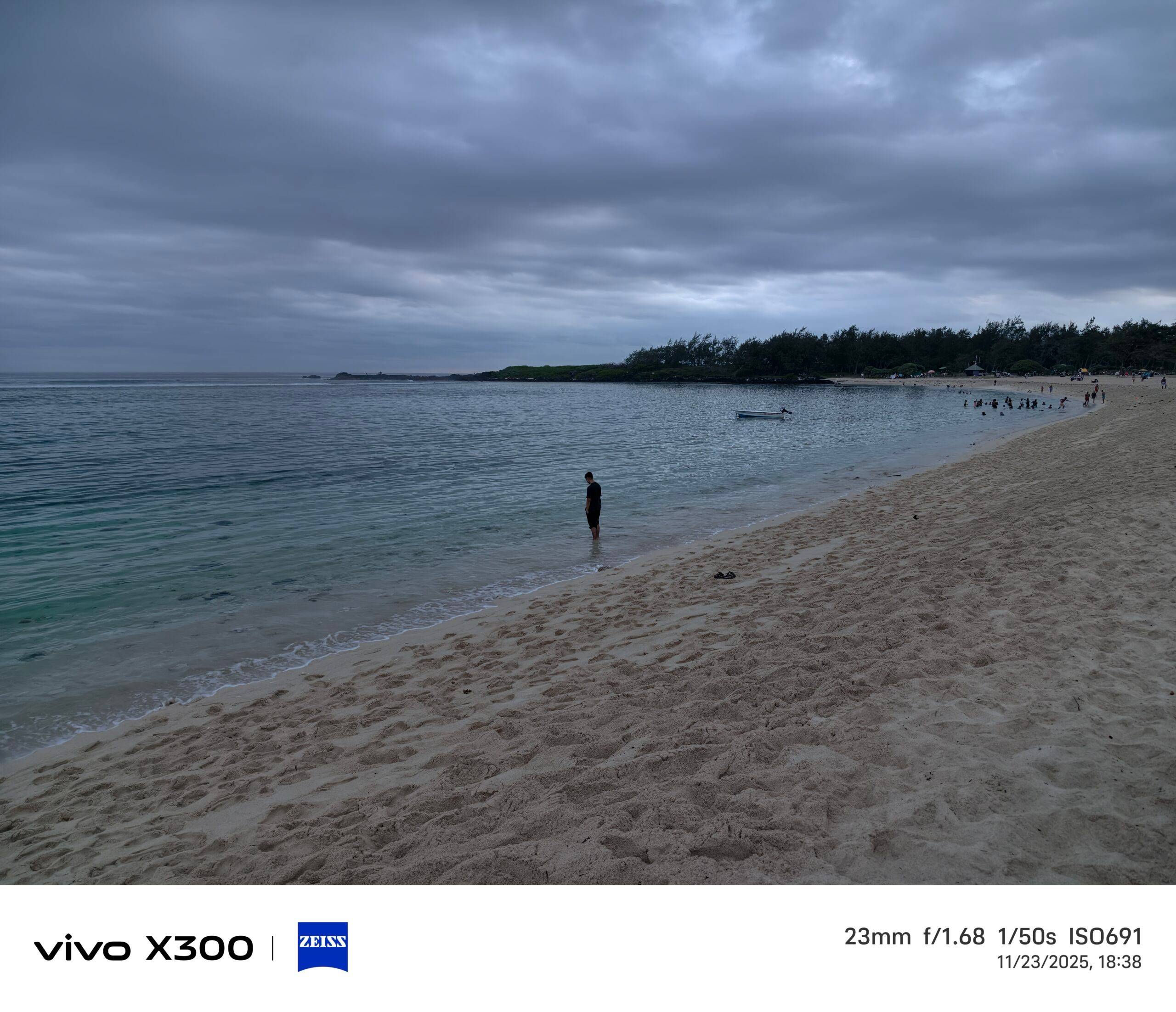







We get to see the same quality of colour science and imaging as the previous generation, but with punchier and more vibrant colours, all while still trying to retain a natural feel. Overall, you can expect promising results with the cameras, which are living up to the Zeiss reputation. We were impressed by our early testing, where the sensors were quick to focus, had plenty of details, and colour calibration, and a full assessment awaits for the full review.
Vivo has also announced the ZEISS 2.35x Telephoto Extender Kit for the X300 series, which effectively transforms the 85mm telephoto lens into a 200mm–1600mm equivalent focal length. The accessory, priced under Rs 20,000, was not available for us to test at the time of writing, but based on demonstrations with the Vivo X300 Pro, expectations from this kit are high.
Battery & charging
The Vivo X300 houses a 6,040mAh battery, paired with 90W wired and 40W wireless charging support.
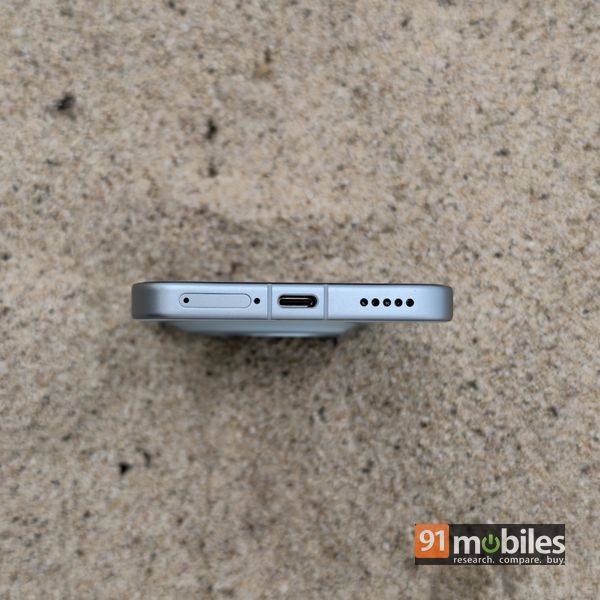
Contrary to what the competition offers with Si-C cells, the Vivo X300 packs a Li-ion battery. While a user cannot tell the composition basis experience, Si-C tech enables OEMs to pack more power in more compact forms. All other Android flagships this year have boasted battery sizes north of 7,000mAh, and the real-world translation of all that power would be evident with longer usage times.
Final thoughts
Based on early impressions, the Vivo X300 delivers a compelling flagship experience in a compact body, with a strong focus on imaging performance. It appears to be well-positioned for users who prioritise portability without wanting to compromise on camera capability, performance, or software longevity. While its starting Rs 75,999 pricing is slightly higher compared to last year’s X200, the increase is backed by noticeable hardware and software upgrades. However, the real area of concern in comparison to the competition is the battery, which our review will address in detail, along with a detailed look at whether OriginOS 6 is a hit or a miss for Vivo in the country.
Disclosure: The writer attended the Vivo media briefing event in Port Louis, Mauritius, on Vivo India’s invitation.