First look: OPPO F33 series is built for big group moments


The OPPO F33 Series is built around a simple idea – the best moments are rarely solo moments. They are the noisy family dinners, the chai breaks after work, the road trips with friends, the wedding dance floor selfies, and the group photos where everyone wants to fit into the frame. The F33 Series is built to capture those moments with ease; it is ready for everything – from fitting more people into a selfie and surviving a rough trek, lasting through long days without battery anxiety, to helping users to touch up photos and videos with less effort.


I’ve spent enough time with the lineup to deduce that the OPPO F33 Pro is the star of the show. It brings together the strongest front camera, the most premium design, the biggest battery, and the toughest durability in the series. The base OPPO F33 is not any less and follows the same idea in a slightly more accessible package, but the F33 Pro is the one that feels built for people who want a little more from every part of the experience. What also helps tie the whole experience together is the MediaTek Dimensity 6360-MAX processor. Built on a 6nm process with up to 8GB LPDDR4X RAM, it gives the F33 Series the kind of smoothness you’ll notice quickly.
Finally, a front camera that understands group selfies
After spending weeks with the OPPO F33 Pro, the front camera is easily what stood out most to me. The OPPO F33 Pro comes with a 50MP ultra-wide selfie camera with a 100° field of view, and that wider framing genuinely changes how you end up using the phone. I did not have to keep stretching my arm awkwardly or asking people to squeeze closer every time we wanted a group photo. I tried it during dinner, a short trip, and for a quick selfie with friends after work, and there was enough room in the frame for everyone without cutting someone out.

What I liked even more was the automatic switch to 0.6x when there were more than two people in the frame. We tried it a few times with larger groups, and it worked exactly as you would want it to. The camera recognised that there were more people standing together and widened the shot on its own, which made the whole thing feel much more effortless. You are not wasting time adjusting angles or stepping backwards because the phone handles it for you.
The front camera also comes with autofocus support, an f/2.0 aperture, an 18mm focal length, and optical image stabilisation. In real use, that translated into sharper selfies with clearer facial details, even when the lighting was not ideal. I especially liked AI Portrait Glow and Colourful Front Fill Light during evening shots because they made faces look brighter and more natural without making the image feel overprocessed. At restaurants, concerts, and night drives, selfies looked much cleaner and more polished than I expected.
Big moments are not always planned
What makes the OPPO F33 Pro work so well is that it feels designed around the kind of moments people actually want to capture. During short trips, family gatherings, or quick breaks with friends, I found myself using the wider selfie camera much more than I normally would because it simply made things easier. You stop worrying about whether someone is getting cropped out or whether you need to take the same photo three times just to fit everyone in. The camera gives you more confidence to take the shot quickly and move on.


The Popout feature ended up being more fun than I expected, too. It lets you combine two to nine photos into one creative collage where people or pets pop out of the frame. We tried it with a few travel photos and group pictures, and it actually made them feel much more interesting without needing a separate editing app. It is one of those small features that feels playful but ends up being surprisingly useful if you like posting stories or sharing photos with friends.
Not just selfies, this thing can vlog too
The rear camera system is built around a 50MP main camera with autofocus, supported by a 2MP depth sensor for portrait effects. In actual use, the camera setup feels straightforward in the best way possible. Portraits looked sharp, colours felt lively without being exaggerated, and the depth effect around people looked clean and natural.
I also liked that both the front and rear cameras are 50MP, which makes the overall experience feel more balanced. You are not getting a great selfie camera and a forgettable rear camera, or vice versa. Both feel strong enough that you can switch between them without sacrificing quality.
For people who like creating content, the OPPO F33 Series adds Dual-View Video, which records from both the front and rear cameras simultaneously. We tried it while filming a short food video, and it immediately felt more engaging because you could show the scene and your reaction in a single clip. It feels especially useful for travel vlogs, reaction videos, or simple day-in-the-life content because it saves you from editing multiple clips later.


The F33 Series also supports underwater photography, which is something I did not expect to see here. Because of the IP69K rating, users can shoot underwater in pools, rivers, and lakes at depths of up to 1.5 metres for up to 30 minutes. Even if most people do not use it every day, it adds another layer of fun to the camera experience, especially for holidays and weekend trips.
A phone that can survive real life
Durability is another major part of the story, and honestly, it is one of the biggest reasons the OPPO F33 Pro stands out. The OPPO F33 Series comes with IP66, IP68, IP69, and IP69K ratings, which mean it is protected against dust, rain, immersion, high-pressure water jets, and even exposure to hot water up to 85°C. On paper, those numbers sound impressive, but in real life, what it means is simple: you stop worrying about the phone so much.

I liked the fact that I could use it in the rain, leave it on the kitchen counter, or carry it around on a humid day without feeling like I had to be extra careful. The phone is designed to handle 36 different real-world water scenarios, including sweat, beverages, river water, steam, rain, and cleaning solutions. It can survive more than 10,000 immersion cycles and up to 12 hours underwater. That kind of durability feels genuinely useful for people who spend a lot of time outdoors or travel frequently.

The phone also gets a 360-degree Armour Body with aerospace-grade AM04 alloy, multi-layer airbag cushioning around internal components, reinforced lens protection, AGC DT-Star D+ glass on the front, and a high-molecular fibreglass rear cover. All of that gives the phone a more solid and reassuring feel in hand because it seems built for daily life rather than delicate handling.

The MediaTek Dimensity 6360-MAX processor also plays a big role in making the phone feel dependable over time. With two Cortex-A76 cores up to 2.4GHz, six Cortex-A55 cores up to 2.0GHz, a Mali-G57 MC2 GPU, and an AnTuTu score of over 630,000, the F33 Series feels quick across gaming, video calls, multitasking, and everyday use. The 4289 mm² SuperCool Vapour Chamber System helps keep things stable in hot weather, too, while SGS certification means the phone is built to stay smooth even at temperatures up to 40°C.
The design is doing a lot of heavy lifting too
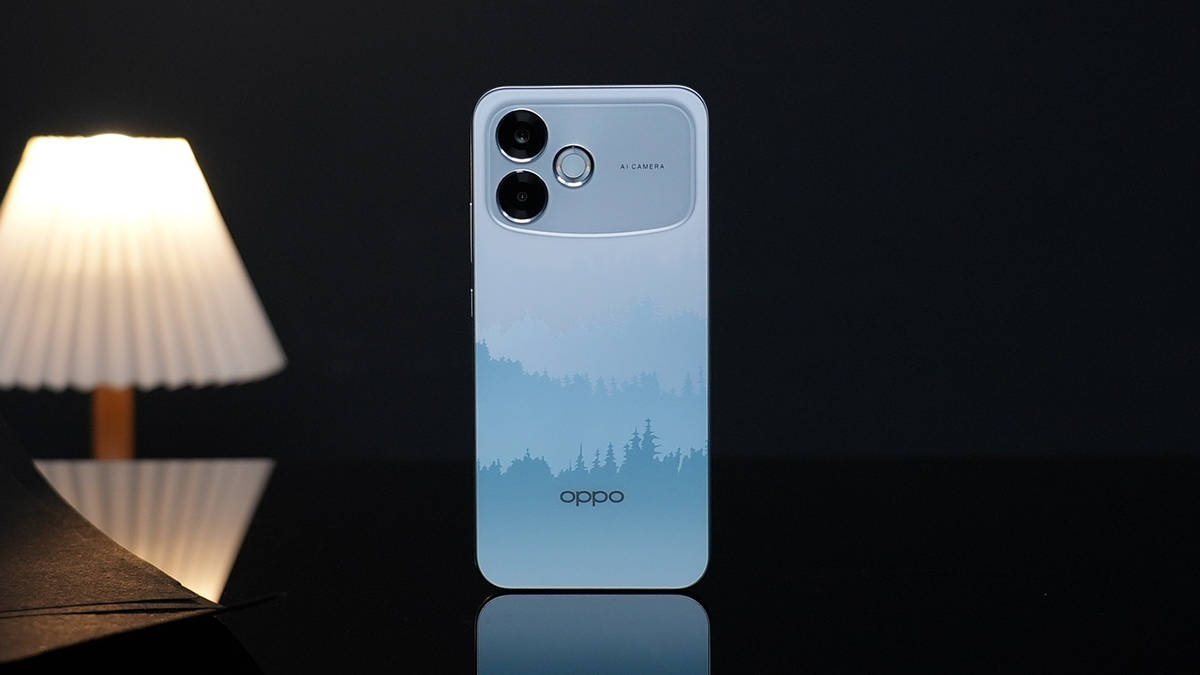
The design deserves attention too, especially on the F33 Pro. The F Series has been completely reworked visually, with a new Starry Sea Lens Module that places the cameras inside a rounded rectangular island with sparkling accents and a ring-flash element.

The result is a phone that looks noticeably more premium the moment you pick it up. I especially liked the Misty Forest finish because the Dynamic 3D Depth effect gives the back panel more character as the light changes. The camera module also looks cleaner and more premium than most phones in this category. The F33 Pro also introduces the segment’s first flagship-level one-piece cold carving build. Using 40,000 RPM CNC carving, the phone creates a seamless high-gloss camera area with a matte soft-touch finish around it. In hand, it feels smooth and premium without becoming slippery.

Passion Red feels bolder and more energetic, while Starry Blue is calmer and more understated. The standard OPPO F33 also has its own identity with Pearl White and Forest Green finishes, a cold-carving build, a one-piece sculpted glass back, and an industry-first luminous loop design around the edges. Both phones manage to stay slim and lightweight, too. The F33 Pro is 8.29mm thin and weighs 194g, while the F33 is even slimmer at 8mm and 193g. That is impressive, given the size of the battery inside.
Big battery, fast charging, fewer worries
Battery life is another area where the OPPO F33 Series feels built around real-life usage. Both phones pack a 7000mAh battery with 80W SUPERVOOC charging, and in day-to-day use, that changes how casually you can use the phone.

While using the phone, I found myself checking the battery percentage far less than usual because there was simply more breathing room here. For people who spend long hours outdoors, constantly use navigation, stream videos during commutes, scroll through social media at night, or keep WhatsApp and work apps running all day, the battery should comfortably last through even very busy days. Lighter users could realistically stretch it much further, while heavier users should still have enough left by the end of the night without needing to top up in the middle of the day.

Charging also feels much less stressful because the 80W SUPERVOOC can add a meaningful amount of battery in a short time. I found that even a quick charge before heading out was enough to stop worrying about the phone for the rest of the day. The series also supports bypass and reverse charging, adding more flexibility for people who are constantly on the move.
Small AI features that end up being surprisingly useful
Long-term smoothness is another area where the F33 Series feels well thought out. The F33 Series offers 72-month fluency protection, ensuring it remains responsive over time.
ColorOS 16 brings features such as the Quick Switch Bar in Outdoor Mode, App Hub for frequently used apps, AI Document Scanner, AI Recorder, AI Transcribe, and O-Lock. These are not flashy features that you use once and forget about. They are the sort of things that slowly become part of your routine.

AI Document Scanner proved especially useful because it made it easy to quickly scan bills, notes, ID cards, and work documents without needing another app. AI Recorder and AI Transcribe are features that can make meetings, lectures, and voice notes much easier to manage. Quick Switch Bar and App Hub also felt genuinely useful because they make it easier to jump between maps, WhatsApp, music, payments, and work apps without wasting time.
The OPPO F33 Pro gets what matters
The OPPO F33 Series combines standout selfie performance, strong durability, long battery life, useful AI tools, and thoughtful design in a way that feels very close to how people actually use their phones today. After spending time with the lineup, the OPPO F33 Pro clearly feels like the more complete option. It is the phone I would pick if I wanted something that could survive rough use, take better group selfies, last longer between charges, and still feel stylish in hand.

The standard OPPO F33 still delivers much of the same experience, but the Pro feels built for people who want their phone to do a little more every day. A big reason the experience feels so complete is that the MediaTek Dimensity 6360-MAX processor quietly keeps everything running smoothly in the background and gives the F33 Series the kind of all-around polish that makes the phones feel premium in your hands every day.
If you want to get your hands on the OPPO F33 series, the standard F33 starts from just Rs 31,999, while the OPPO F33 Pro 5G comes with a starting price of ₹37,999. The smartphones are up for pre-orders now via the company’s official website, Flipkart, and Amazon.in.