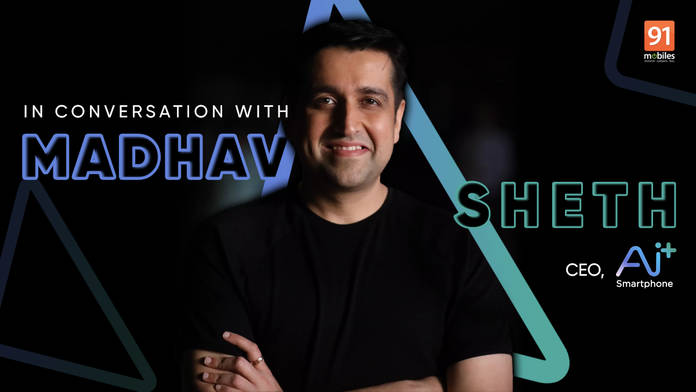
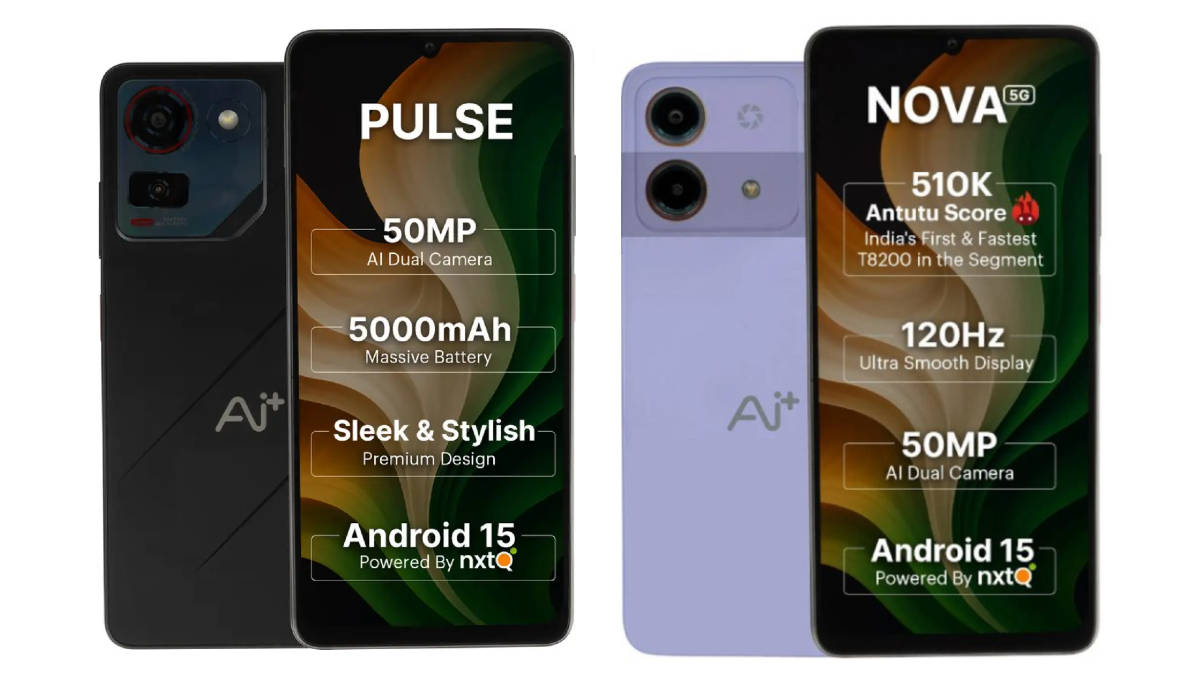
Madhav Sheth’s new smartphone brand Ai+ debuted in the Indian market with a couple of affordable models. One of the USPs of these devices is the built-in NxtPrivacy Dashboard, a real-time privacy tool that allows users to monitor app permissions closely. We caught up with Madhav at his Gurgaon office to talk Ai+, brand strategy, his vision for the brand, and what consumers can expect. Here are some excerpts from the conversation.
Deepak: Let’s start from the beginning — how did AI+ come into being?
Madhav: I think you know my history. I’ve been associated with the telecom industry for quite some time now. The last brand I worked on building was Realme. When I left Realme, the purpose was to create something bigger. But the vision wasn’t aligning with what I wanted to do. If you look at the commitments Chinese brands made to the government back in 2017 and again in 2021 about exports and technology transfers, they never really materialised.
That led me to two important realisations:
1. If something can be built from scratch in India, why not try? It’s not just a business case, it’s a case study.
2. While the supply chain is based in China, India will rely on China-plus-one strategies for a while; quality and independence must still be ensured.
Now, a lot of people assume Chinese supply chains and Chinese brands are the same, but
they’re not. They are independent. What struck me most was that no new Indian brand has
emerged in the last decade. In fact, Indian brands have declined — apart from Lava, most
have ceased to exist or shifted into EMS.
In a ₹4–5 lakh crore market, not having even one Indian brand of significant scale is
shocking. Existing Indian brands barely cross ₹1,000–1,500 crore in revenue, which is less
than 0.25% of the market value. It’s a shame that India, being such a dynamic country, does not have a global-scale smartphone brand. That was the second thought behind AI+.
The third was about data. The wars of the future won’t be fought with weapons, but with
data. Whoever controls data will control the world. And Indians are exposed — we don’t
have a strong DPDP Act for smartphones. Your phone today carries everything: ID, bank,
passwords, and education. Yet our data goes everywhere — collected by hardware makers,
apps, marketers. Are we safe? Probably not. When 80% of our smartphones are Chinese,
most of that data is clearly leaving India.
The fourth point: Chinese companies act only when forced by compliance. A clear example
— from 2014 to 2024, they didn’t pay taxes until raids forced them. India is treated as a
consumption market — 1.5 billion people, with still 40% not connected to smartphones. We
sell 40–45 million feature phones every year, yet no portfolios are designed specifically for
India. We speak of 5G, but large areas still lack 4G. A huge digital divide remains, driven by price. A 2G phone ends at ₹1,500. A 5G phone starts at ₹10,000. Consumers are forced to choose sub-standard devices because they can’t get complete features at affordable prices. Back in 2018, 75–80% of the market was below ₹15,000. Easy credit changed that — EMI schemes of 6, 12, 18, 24 months made ASPs rise artificially. For example, 80% of iPhones in India are sold on EMIs. Similarly, most phones above ₹12,000–₹15,000 are sold on financing.
Consumers are not willingly paying more; they’re forced to stretch to get features they
want. For instance, if a BGMI gamer doesn’t get 120 FPS under ₹20,000, he’ll stretch to buy a ₹20,000 phone even if his budget is ₹10,000. That’s value-consciousness, not price-
consciousness.
Now, AI today reminds me of the megapixel race in 2018–19. Back then, it was 12, 24, 48,
108, even 200 MP — first in India, first in the world. I was part of it too. AI feels similar. But AI in phones today is just the base Google Gemini layer — Circle to Search, etc. Real
innovation comes when the experience is personalised to consumer needs.
That’s why Ai+ was built on three core pillars:
1. Democratisation of hardware — AI for the masses, not just the premium segment.
2. Privacy and transparency — educating consumers with a privacy dashboard that
shows exactly how their phone and apps track them, giving them control to turn
permissions on/off. Unlike Europe or the US, in India you cannot use apps without
giving up telemetry data. Consumers here aren’t even aware of the 30+ types of
telemetry collected. Why should a food delivery app need access to your
microphone? Transparency is key.
3. Data security within India — ensuring data stays in India. We tied up with Google’s
MeitY-approved servers to ensure telemetry data isn’t passed outside.
Deepak: You mentioned these pillars. How has the response been to the devices so far?
Madhav: So far, very positive. We’ve sold close to a million units in just three months, with around 300,000 active users. By Diwali, we’re targeting another 300–400,000 users to cross a million.
The vision has always been to establish Ai+ as a software company, with hardware acting as a carrier. India has immense software talent, but without hardware carriers, innovations
don’t reach the market. That’s what we’re solving.
Deepak: You’re manufacturing in India. What about service support?
Madhav: We follow the standard third-party service centre model, like other brands. Currently, we have 280 centres. Out of 300,000 active users, we’ve had just 124 cases — all were directly replaced, not repaired. This helped us analyse issues directly while keeping customers satisfied.

Deepak: The privacy dashboard you showcased — is that something you plan to license to other brands?
Madhav: No. It’s a patented technology designed by me. I won’t be licensing it. It’s going to remain a key feature for Ai+.
Deepak: And how are you building brand awareness?
Madhav: Through community building. I’ve always believed in word-of-mouth and real engagement rather than big marketing spends. Marketing can give quick awareness, but it’s like spray paint — superficial. Community building creates stronger, long-term trust.
Deepak: You currently have a couple of models. Any roadmap?
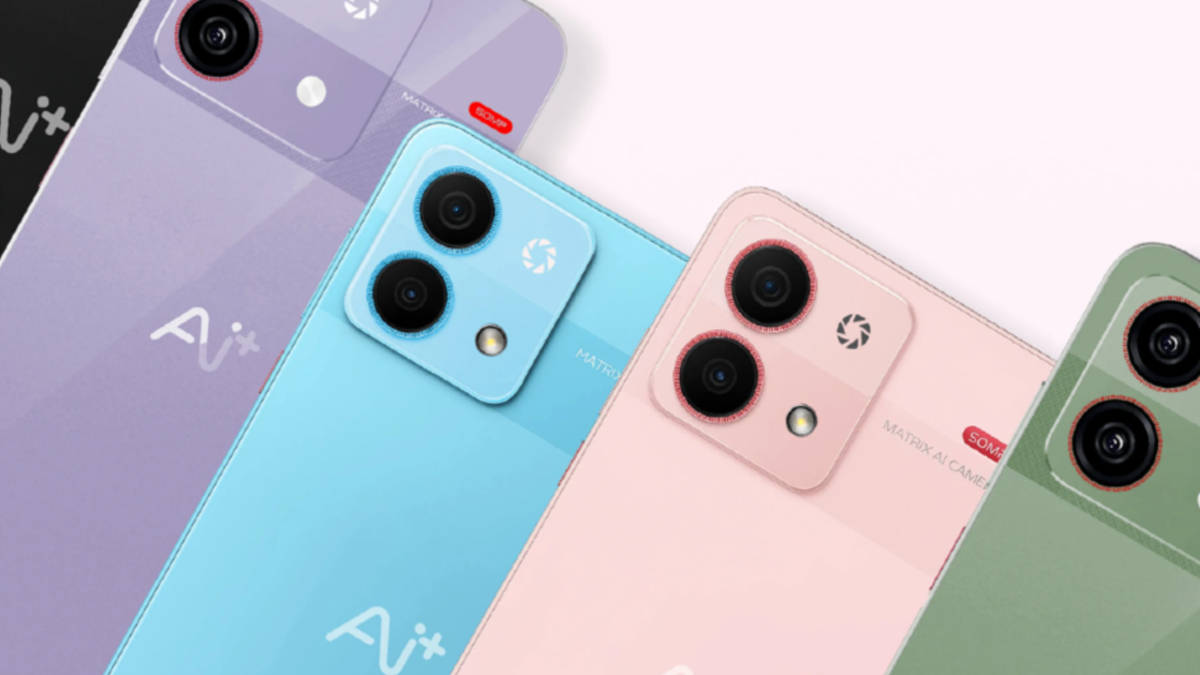
Madhav: Yes. We started with ₹5,000 and ₹10,000 models and will gradually move up. Most brands ladder down, but I want to ladder up — learn, make fewer mistakes, and move higher. Technology is defined not by geography but by utility and convenience. The aim is to bring advanced features at affordable prices while ensuring data security.
Deepak: When do you plan to expand Ai+ outside India?
Madhav: We’ve already started in Nepal and will expand gradually across regions. But India itself is a massive market. My first focus is to fulfil Indian demand before going global.
Deepak: Awareness is key, especially among youngsters — gamers, students, and aspirational buyers who use EMI to stretch budgets. You emphasised privacy, but do you think there’s a disconnect between these two?
Madhav: Not really. The way I look at it: can I give features worth ₹30,000 at ₹15,000? If yes, consumers won’t need to stretch beyond their means. That’s the simple logic.
As for gaming — I don’t believe in labelling a device as “gaming.” Every good phone today,
with the right processor and cooling system, performs well for gaming, photography, and
other needs. It’s about all-rounded devices, not marketing tags.
Deepak: So what’s next for AI+?
Madhav: More good products, with better features and quality at the right price. My larger vision is to build an Indian hardware-software community. We have world-class software talent — why can’t we also design world-class hardware here? With the right platform and
ecosystem, we can.
Deepak: Any other categories you’re looking at?
Madhav: Yes, we’ll expand into the connected ecosystem — tablets, watches, TWS — starting next year. At the launch event, we already showcased our smartwatch and earbuds. We’re experimenting with adding more functionality — cameras in wearables, back panels with new features, and new materials. I love building products, and that’s what excites me most.